
-
Exploring the artificially intelligent mind of GPT4Hopefully we're heading towards a world where most of the work is done by AI and the rest of us get a decent universal income. — Michael
Taking AI to the extreme, even a "dumb" algorithmic AI could potentially replace the majority of work that people do.
Universal income might be the only way for any form of economy to survive outside of making everything in society free. But for that we would need a total economical collapse and any economic class to be flatten before it could be implemented. If the castle is as free as the small flat, how do we distribute housing? Maybe ownership only gets handed down from the previous system, meaning the castles are in possession of the ones who previously owned it, but nothing would prevent the poor to move in when the rich die.
I find the potential futures we face due to AI changing the nature of work in relation to people's concept of purpose through work, to be fascinating as it is a very possible future we face. It's not a science fiction concept anymore. -
Exploring the artificially intelligent mind of GPT4
I agree, but I am more optimistic that art will survive because people who were mesmerized by "content" in the past never cared for art in the first place, so there won't be much difference in the future. It might even be that because AI algorithms take over all content-production, we will have a much more clear line drawn between art and content, meaning, it might be a form of "lower status" to love content produced by AIs and that these people will be considered to only be consumers, not people able to appreciate true art. It will probably be a form of class divide between people as experiencers of content/art in which a viewer who doesn't care if it's made by an AI or not won't be taken seriously when decoding works of art.
I may sound like snobbery and elitism, but how would that be different from how the world looks like today on this subject? -
Exploring the artificially intelligent mind of GPT4
It's still a misunderstanding of how we appreciate art and artists. It's only talking about imitations and focuses only on craft, not intention, communication, purpose, message, meaning, perspective etc.
It is basically a technically dead and cold perspective on what art is, with zero understanding of why artists are appreciated. We have already had a lot of people fooling art critics with having animals painting something, but that only shows the underbelly of the art world as a monetary business, not that art is meaningless or irrelevant and only exist as craft that can be mindlessly imitated. -
Exploring the artificially intelligent mind of GPT4if no-one (or few) can tell the difference between an AI generated facsimile and the real thing. — Baden
How does an AI create a movie like Roma? Or Tarkovskijs Stalker? Or more recent, how does it create something like Everything Everywhere all at Once? All of these aren't derivative of something else and cannot be created through an algorithm that functions out of being learned by a vast amount of something. Original work is a very specific form of remix because it has an intention in it that is unique to the subjective mind of the artist creating it. How would something like Simon Stålenhag's artwork be created if there was nothing before it that looked like it and had the subjective flair of Swedish sci-fi aesthetics that didn't exist at all in any form before it?
Without the algorithm being feeded new works of art to generate new mass produced content from, it will get stuck in a lopp creating the same thing over and over, with the same aesthetics over and over. If people got tired of Marvel's cinematic universe after ten years, then an AI producing in similar manners will soon tire the audience and they will want to see something new and unique.
Regular people might not spot the difference between AI content and true art in the same way as art critics and people more interested in certain art forms, but they will definitely feel the difference when repetition hits.
What I believe will happen in the future is that we will have artists who's daily work focus on feeding AI algorithms with new content in order to increase variability of its content. But these artists will still be known and sought after outside of that work. It will be the daily work they do, but their status as artists will remain. How to reach that point will be far more difficult and require a lot of privilege of time able to fine-tune the craft and artistic mind.
The problem with saying that "no one will spot the difference" is that AI algorithms cannot function without input, both in direction and in the data used to generate. And you can never feed the AI back into itself since it does not have a subjective perspective. Even if such a thing were created, that would only become a singular point of view, a singular machine intelligence perspective of the world who creates its own work of art. Just as you cannot paint a Dali painting, you can only paint something that looks like a Dali painting. We value the subjective perspective of Dali and his art, if Dali was a machine we could do the same, but Dali cannot be Magritte.
It would be like arguing that if you cannot spot the difference between your friend and an AI posing as your friend, would you care that you talk to the AI or your friend? Of course you would, you value your friend, you don't want an imitation of that friend. The same goes for the value of art made by artists, we value their output, we don't care for imitations if we truly care for art. -
Exploring the artificially intelligent mind of GPT4I'm not saying we won't improve. I'm saying it has the capacity to outcompete us. For example, someone who has traditionally hired a blogger to create content can probably already achieve a similar or even superior result in many cases using this tool. And we're just beginning. E.g. Movies scripted by AI and acted by photo-realistic avatars are probably not far around the corner. It's a socially transformative technology and it appears to be moving very quickly. — Baden
In the former case, yes, it will replace much of copywriting and content-writing. In the latter case with writing movies, it may function for just doing content, mindless, story-by-committee type movies. But movies made with intention is still art, it's still a subjective point of view by the filmmakers, writers, directors, cinematographers etc. and an exploration of a topic that is very specific and close to those people. An algorithm cannot produce art, only content. Art requires subjective intention and perspective based on very singular emotional and cognitive development of specific artists. Content, on the other hand, is mindless "by the numbers" work that functions through familiarity and marketing principles. An AI could definitely write something like "White House Down" or similar and also direct a generative video for it. But an AI would never be able to produce something like "Roma", which is a very specific and personal perspective with very subjective intentions by the director. The same goes for any work of art that is deeply connected to the artist.
The only thing artists need to be worried about is if they work with content as an income while trying to get a name for themselves in a certain industry. If they cannot test out and try their craft with producing content, then they might never reach artistry if the demands of making money requires them to put their time into something else than fine-tuning their craft.
On the other hand, artists who truly live for their art will be much more clearly defined, they will stand out better. At the moment there's an entire industry around "teaching aspiring artists" that only focuses on content creation. For example, there are tons of YouTube-channels dedicated to "quick tips" for writing and selling screenplays, and they will disappear when there's no business in doing it anymore. It will only be the writers who write with their art as their prime focus who will be working with that craft, not people who sell a quantity of run-of-the-mill stories for Hollywood studios to fight over. -
Exploring the artificially intelligent mind of GPT4I don't think we're ready as a society for the implications of a technology that has the potential to render so much of our intellectual and creative work obsolete. — Baden
I don't think that will happen, I think we will find ourselves augmenting our reasoning with the help of these tools. A way of streamlining the knowledge and information that exists in such extreme amounts that we as humans have problems knowing how to structure thought around it. With these tools we can speed up our intuitions through testing hypotheses and theories faster. As long as we can get everything to be accurate enough for such critical tasks of symbiotic thought. -
Exploring the artificially intelligent mind of GPT4Sometimes it really does seem to be trying to impress or to please. So it tries to fill in the blanks with a best guess, which is dangerously close to bullshitting at times. And as it has obviously been programmed to speak in the vernacular, one handy phrase it could make much better use of is ‘Gee, I don’t know’. — Wayfarer
Though it is mimicking exactly how most human reason in realtime discussions. It is also largely difficult to draw the line between a synthesis of information as a conclusion and bullshit conclusions. Sometimes clarity comes out of speculative reasoning. Humans go back and forth between speculating and reviewing such speculation against evidence. Even the most stupid people have some kind of review of their speculative thoughts.
So a better phrase or way of speaking would be to adress speculation more clearly, say the speculation and note that it is speculative, which is more in line with how intelligent discussions are conducted between people who are highly able to use rational thinking.
It's this increasing ability for ChatGPT that I brought up in my thread about its coding abilities. Those abilities have also been improved.
It is clear that ChatGPT will be the most disruptive AI tool among the ones around.
Artists worried about going out of work due to image generation and music creation is somewhat exaggerated. Artists will continue to work as long as their work is of enough importance culturally, while content creation for the vast amount of only content to fill the existential void in society will be replaced with AI manufactured content and it's mostly derivative quantity that will get replaced, not true inspirational art from unique perspectives, which will be needed to further train these AIs, otherwise they will get stuck in loops.
ChatGPT, however, has the massive potential of changing how people fundamentally do work. There are so many tedious tasks that will be much more streamlined and sped up.
Think about how computers were a category of workers doing calculus before the name were picked up by the machines calculating instead. The same will happen with ChatGPT. It will take over many of the tasks that we get hints about by the interactions we experience with it right now.
The thing that I have realized the most is that it can function as a discussion partner in figuring out complex topics. Since it has the ability to reach much more detailed information than humans can conjure up without long hours of research. The better it gets at this task and the more accurate it gets, it might be an invaluable tool in philosophy and science.
And all the tasks that require finding patterns in large sets of data and text may be another key area ChatGPT will be used through conversation about these patterns.
While people are scared about how it will disrupt, I'm super excited about the potential of this tool. It will radically speed up progression in many areas since we don't need to spend hours, days or weeks processing data in the same way anymore. -
Will the lack of AI Alignment will be the end of humanity?Do you see this as a serious existential risk on the level of climate change or nuclear war? — Marchesk
I see those as far more dangerous than the idea of AI being destructive. We might even benefit from AI removing many of the existential threats we have. The problem isn't the AI, the problem is the person programming the AI.
We've lowered the bar for philosophical, moral and intelligent understanding outside of people's work knowledge. Working with AI demands more than just technical and coding abilities, you need to have a deep understanding of complex philosophical and psychological topics, even be creative in thinking about possible scenarios to cover.
At the moment we just have politicians scrambling for laws to regulate AI and coders who gets a hard on for the technology. But few of them actually understands the consequences of certain programming and functions.
If people are to take this tech seriously, then society can't be soft towards who's working with the tech, they need to be the brightest and most philosophically wise people we know of. There's no room for stupid and careless people working with the tech. How to draw the line for that is a hard question, but it's a much easier task than solving the technology itself. The key point though, is to get rid of any people with ideologies about everyone being equal, people who grew up on "a for effort" ideas and similar nonsense. Carelessness comes out of being naive and trivial in mind. People aren't equal, some are wise, some are not and only wise people should be able to work with AI technology.
This tech requires people who are deeply wise and so far there's very few who are.
Do you think it's possible a generalized AI that is cognitively better than all of humanity is on the horizon? — Marchesk
No, not in the sense of a human mind. But so far computers are already cognitively better than humans, your calculator is better than you at math. That doesn't mean it's cognitively better at being a human mind.
We can program an algorithm to take care of many tasks, but an AGI that's self-aware would mean that we can't communicate with it because it wouldn't have any interest in us, it would only have an interest in figuring out its own existence. Without the human component, experience, instincts etc. it wouldn't act as a human, it would act as very alien to us. Therefor it is practically useless for us.
The closest we will get to AGI is an algorithmic AI that combines all the AI systems that we are developing now, but that would never be cognitively better than humans since it's not self-aware.
It would be equal to a very advanced calculator.
do you think it's risky to be massively investing in technologies today which might lead to it tomorrow? — Marchesk
We don't have a global solution to climate change, poverty, economic stability, world wars, nuclear annihilation. The clock is ticking on all of that. AI could potentially be one of the key technologies to aid us in improving the world.
Is it more thoughtful to invest in technologies today that just keeps the current destructive machine going? Instead of focusing on making AI safe and use that technology going forward?
It's also something everyone everywhere in every time has been saying about new technology. About cars, planes, computers, internet etc. In every time when a new technology has come along, there have been scared people who barely understands the technology and who scare mongers the world into doubt. I don't see AI being more dangerous than any of those technologies, as long as people guide the development correctly.
If you don't set out rules on how traffic functions, then of course cars are a menace and dangerous for everyone. Any technological epoch requires intelligent people to guide the development into safe practice, but that is not the same as banning technology out of fear. Which is what most people today have; fear; because of movies, because of religious nonsense, because of basically the fear of the unknown.
If you've seen anything about ChatGPT or Bing Chat Search, you know that people have figured out all sorts of ways to get the chat to generate controversial and even dangerous content, since its training data is the internet. You can certainly get it to act like an angry, insulting online person. — Marchesk
The problem is the black box problem. These models need to be able to backtrack how they arrive at specific answers, otherwise it's impossible to install principles that it can follow.
But generally, what I've found is that the people behind these AI systems doesn't have much intelligence in the field of moral philosophy or they're not very wise at understanding how complex sociological situations play out. If someone doesn't understand how racism actually works, how would they ever be able to program an algorithm to safeguard against such things?
If you just program it to "not say specific racist things", there will always be workarounds from a user who want to screw the system into doing it anyway. The key is to program a counter-algorithm that understand racist concepts in order to spot when these pops up, so that when someone tries to force the AI, it will understand that it's being manipulated into it and warn the user that they're trying to do so, then cut the user off if they continue trying it.
Programming an AI to "understand" concepts requires the people doing the programming to actually understand these topics in the first place. I've rarely heard these people actually have that level of philosophical intelligence, it's most often external people trying their system who points it out and then all the coders scramble together not knowing what they did wrong.
Programmers and tech people are smart, but they're not wise. They need to have wise people guiding their designs. I've met a lot of coders working on similar systems and they're not very bright outside of the tech itself. It only takes a minute of philosophical questioning before they stare into space, not knowing what to say.
Or maybe the real threat is large corporations and governments leveraging these models for their own purposes. — Marchesk
Yes, outside of careless and naive tech gurus, this is the second and maybe even worse threat through AI systems. Before anything develops we should have a massive ban on advanced AI weapons. Anyone who uses advanced AI weapons should be shut down. It shouldn't be like it is now when a nation uses phosphorus weapons and everyone just points their finger saying "bad nation", which does nothing. If a nation uses advanced AI weapons, like AI systems that targets and kills autonomously through different ethnic or key signifiers, that nations should be invaded and shut down immediately, because such systems could escalate dramatically if stupid people program it badly. THAT is an existential threat and nations allowing that needs to be shut down. There's no time to "talk them out of it", it only takes one flip of a switch for a badly programmed AI to start a mass murder. If such systems uses something like hive robotics, it could generate a sort of simple grey goo scenario in which we have a cloud of insect-like hiveminded robots who just massacre everyone they come into contact with. And it wouldn't care about borders. -
Dilbert sez: Stay Away from Blacksin right-wing and far-right forums — RogueAI
There's your answer right there? The right-wing, globally, in western nations, has moved further away from low-tax, capitalist politics and gone fully into racist eugenic ideologies the last couple of years.
I think that what's happened is that a majority of people have woken up to the fact that such racial divides are bullshit, that free-market capitalism has created a new extreme class-divide and that the actual problems of society can't be solved with lowering taxes.
As more and more people realize these things, the more they realize that the economic elite lives off the labor of poor people and that the "poor" class is growing into the middle class. This ends up being a major threat to the right-wing elites because soon there won't be any majority able to gain actual democratic power, and more socialist political movements gain momentum.
So the right-wing and far right has been changing strategy, going full into internet-meme Trumpist bullshit to gain attention from the often uneducated people who are most likely to be affected the worst by right-wing policies. And they do this by gathering these people around a common enemy, be it Qanon conspiracies about pedos, or plain racism about immigrant and minorities.
So, essentially, they play the racist cards to keep the people affected the worst from gathering around more left-leaning opinions.
Of course this can only go two ways, either there will be a massive movement towards the left as the right gets left in the gutter, if only for a decade or two. Or we will see a rise in racism and fascism on national scales everywhere, which is almost what we've got today with far-right extremist groups and parties all over the world gaining power.
The major solution is to plainly call these people out and get the far-right voters to realize that these right-wing racists try to keep them in the dark to fool them into voting for them. We can laugh at the gullible average Qanon Maga-Trumpster all day long, but they're essentially the cannon fodder for the extreme right trying to do everything to keep themselves in power.
Hopefully people will wake up to these things and dismantle the racist ideologies flowing through parliaments and governments globally. Otherwise we will have new Nazis to go into war against. -
Mind-body problemBecause we conceptualize reality in a certain way, we tend to look for evidence consistent with that framework, ignoring or minimizing evidence that would undermine the framework. In the other direction, as selected evidence confirms our conceptual framework, it becomes more embedded in our neural net, and so more habitual and less reflective. — Dfpolis
Yes, this is essentially what I meant (in less detail), by the "scientific mind" and the "religious mind". My definitions were made based on previous discussions, so it looks more like I position it in a purely religious vs scientific matter, but essentially my point was that a religious mind has a filter based on presupposed narratives and concepts that makes it harder to reach scientific conclusions since that filter always need to be dismantled to arrive at conclusions without biases. A scientific mind is a mind that is free from such religious filters, but it could also mean anything that filters reality into a presupposed concept for the subjective mind trying to conceptualize a topic. So when you mention ignoring or minimizing evidence that would undermine that framework, that is consistent with what I mean as well in that the "filter" filters out such evidence.
This ignores the fact that some of the greatest scientists (e.g. Galileo, Newton and Laplace) were faithfully religious, and some deeply religious people (e.g. Bishop Robert Grosstesta, who defined the scientific method, and St. Albert the Great, the greatest botanist of the era) were excellent scientists. Even Darwin believed in God and "designed laws" of nature. — Dfpolis
And this is I think the consequential confusion that my somewhat poor definitions create. What I mean is more that these scientists, because of their religious beliefs, have a religious mindset, and therefore all of them have to actively fight the filter of religious belief in order for it not to undermine their own scientific and philosophical findings. For any findings and conclusions that require them to challenge their personal religious ideas, that filter creates an unnecessary strain on mental thought that a purely scientific mind would not have to go through. It almost becomes a testament to their brilliance that they were able to pierce through that filter in their mind and reach conclusions that were so fundamental to science as a whole. But I wonder where they would have arrived if their mindset were truly scientific and free from that filter. Some of our great philosophers and scientists had conclusions in which further thinking was just stopped by themselves with the argument "because God". If they didn't have the "filter", they might have kept going with their lines of thought and might have made further discoveries that we had to wait even longer for to arrive in the history of science. -
Bannings
I think the main problem is that there was an overweight of low-quality posts and just single-word / single-sentence contributions without the necessary depth required by this forum. "Low-quality" can be ok in moderate numbers, especially in a rapid back-and-forth discussion, but if the majority amount is only that, then it is understandable a ban is an outcome as it's one of the forum's main rules. As Jamal says, this forum is not a chat room, it requires a bit more effort in discussions. -
Any academic philosophers visit this forum?In the other hand, Guest Speakers was a good idea to ask academic philosophers to join TPF and answers some questions. — javi2541997
I'd seriously recommend moderators look into this idea. It wouldn't even need to be something they create an account for, there could be a guest account set up by moderators for the occasions these guests are here. Almost like having a guest on a YouTube live pod or something where people can engage in discussion with them. Maybe a specific topic that the guest philosopher is an expert in or published a paper on and the discussion starts out with people reading that before engaging in the discussion.
That would, in my opinion, be a seriously good use of a forum like this that elevates the philosophical experience for everyone. -
Psychology of Philosophers
I think of philosophers as outliers in society. Most of humanity revolves around forming patterns of behavior and those patterns can be formed into societies and cultures. And most of our psychology has its roots in the very early stages of sociological constructs of hunter/gatherer groups.
Anthropologists have theorized that groups were often formed around decided societal structures, but because of that, the groups became static. If hunter/gatherers stayed in one place for too long it stagnated development and growth and could lead to the downfall of that group. So evolutionarily we formed certain individuals who couldn't easily be conformed to normal societal structures. They were unable to conform to patterns of behaviors and therefore were "at odds" with the rest.
The vital part of their existence was to explore, to embrace the unknown as something to research and find out more about. They were often leaders of smaller groups and fractions that left the original group to either find new sources of food, get a sense of the greater surroundings, and/or establish new settlements when the original group became unsustainably large and needed to break apart to sustain health and well-being.
Some theorize that these people are the reasons we still have people with heightened capabilities of thought, like ADHD, Asbergers, etc. due to their common attributes of having anti-social problems.
But I think that it's broader than this in that the "great minds" in philosophy, science, and pioneers actually function within the same context.
The basic function underlying any outlier of society that "thinks outside the box" is that they have some problems adjusting to cultural and societal norms around them. They are not afraid of breaking these norms because they don't have the common pattern of conformity that the rest have. They are not able to be easily manipulated and they are less likely to simply agree with what's "standard" around them.
They are driven to "seek out" the unknown because that's their natural state.
But the great minds and thinkers throughout history are just the ones we know about. It's easy to see just how broad this group is and I think a great key to spotting these psychological patterns in someone is whether or not they are actively involved in questioning the norms, ideas, and ideals around them.
In that sense, I think many on this forum generally fit that psychological pattern. Otherwise, they wouldn't have actively sought out a forum like this. -
BanningsKnowing that he is generally good-natured — Jamal
I thought his posts had some low-quality problems, but he generally had good intuitions and observations that he shared with deep honesty and curiosity.
He could be annoying sometimes, but I never saw anything with toxicity or anything like that. For that alone, I think most of us could learn something about attitudes online.
I wish him well on his future knowledge journey. -
Mind-body problemAn inadequate conceptual space can create problematic representational artifacts, such as the pre-relativistic notion of simultaneity. While hard to see from within a tradition, representational problems can be identified by comparing diverse cultural, disciplinary and historical perspectives. — Dfpolis
Without knowing any other larger context, this sounds like how I described the "scientific mind" compared to the "religious mind". Do you mean that the representational artifacts act as a result of cognitive biases? I.e the inadequate conceptional space is akin to a person having a limited ability to conceptualize due to biases that lead to artifacts in reason and conclusions? -
Mind-body problemYour depiction of 'religious people' refers to a specific kind of religious mentality, most like fundamentalist or creationist Christians to whom science is threatening. But there are entire spectrums of 'religious people' who have completely different attitudes to the question. — Wayfarer
Of course, but I didn't talk about religious people as much as "religious minds" and the difference of that towards a scientific mind. It acts as a kind of filter when making observations about a concept of reality. When the religious mind comes into contact with a concept of reality, it will always filter information against a presumption about reality. The religious person either lives with such a filter being extremely strong or measured down to extremely weak, where the extremely strong would be an extremist and the extremely weak would be a scientist who personally holds a religious belief.
But my point is that the filter is always there and whenever information occurs that challenges that filter, they will either abandon the religious/spiritual/mystic filter and change into a scientific mind or they will go onto a harder defense to defend the presumptions.
It can be obvious or it could show up as a continuous bias that taint their ability to form valid arguments or research.
A scientific mind doesn't do that. It can form other forms of biases, but the foundation of thinking doesn't have a filter because internalized ideas always come out of the information and knowledge. While both minds are susceptible to many types of bias, the religious mind tends to get stuck into a specific bias that is much more solidified and harder to break through.
In the 19th Century there was a kind of popular movement among English intellectuals to portray religion and science as mortal enemies. It's called 'the conflict thesis'. Most of the so-called 'new atheist' authors, and many who preach scientific materialism on the Internet, adopt that view, but it is a very blinkered view. — Wayfarer
And this is a strawman of what I described. I don't care about popcorn ideas. The concept I describe has more to do with the ability to have clarity of mind when challenging existential questions in opposition to a clouded mind. In essence, it's about fighting cognitive biases. The scientific method is the most effective and functioning method of reducing the risk of bias, the scientific mind is essentially acting according to similar principles when conceptualizing a topic while the religious mind, however weak in bias, still has the problem of bias.
Reducing cognitive biases is the core of a scientific mind. And reducing cognitive bias is the only way to reach any kind of objective truth or get close to any such concept. If that isn't the goal of knowledge and wisdom, then there's no point in discussing or thinking about anything since there's no point of direction anyone is moving toward in their acts of conceptualizing any kind of topic.
The sources I actually quoted in earlier in this thread were not 'religious people' at all but biologists and scientists. — Wayfarer
I know, it's not their research or points that I object to, but how those conclusions are used as an antithesis to abiogenesis when in fact they don't function as such. They're not about the process of how life began, but how evolution forms and behaves afterward. Life already needs to exist for their concepts to function, they do not describe origin.
But in your view, to question materialism is to be 'a religious person', meaning, a fundamentalist or science-denying flat earther. — Wayfarer
Once again you strawman things. You change the concept of a "religious mind" into a "religious person" and do not understand the concept I'm describing.
The basic misunderstanding you push is that their concepts disprove abiogenesis. It does not. It only describes how evolution, information, chemistry etc. behaves AFTER the origin of life or it could be that they all formed at the same time, but still does not disprove the essential concept of abiogenesis.
This antithesis against abiogenesis is something you propose through some misunderstanding of their concepts. I cannot conclude whether that is because of some kind of bias or not, but if you want to disprove abiogenesis using their concepts you need to explain why their concepts disprove abiogenesis.
In fact the kind of materialism you argue for is a direct descendant of Christian monotheism, in that it allows only one kind of fundamental principle, but now it's matter (or matter-energy). The 'jealous God' dies hard. — Wayfarer
Or you ignore what the science actually tells us, or misunderstand it and invent connections not proposed by the people you use as sources for the conclusions you make out of such self-made connections. And when I criticize this type of conjecture you strawman my arguments into being something about calling everyone who doesn't agree with the actual consensus, "flat-earthers".
I question the logic and conjecture in your conclusions based on it actually not being proposed by the people you source. It doesn't have to do with me being materialistic, it has to do with there not being enough data or evidence to counter abiogenesis and the people you source never proposing such either. -
Mind-body problemThere's also a deep and underlying fear of religion which colors a lot of what you're saying. — Wayfarer
The only fear of religion I have is when religious people force their own preferences and opinions upon the world as if they were facts and truth. Religious people tend to think that when a group operates around a consensus of facts as a scientific source for whatever they're doing -that means they're being forced by "scientists" and "experts" to think in a certain way. These people seem to think that operating on a ground of religious belief is on the same level as operating on scientific facts. And this is what's driving a lot of destructive movements today that function out of anti-intellectual conspiracy theories and whatever nonsense they cook up.
You are using that quote as some kind of idea that someone with a scientific mind is limited in their way of thinking about the world, but as I've mentioned, a truly scientific mind doesn't have that kind of inner conflict that people seem to believe they have.
Only religious minds can fool themselves into thinking the lack of religious or mystic ideas is somehow subpar or limited to the individual. But a religious mind can never have a frame of reference without having a scientific mind. They are doomed to always have these religious thoughts lurking in their minds on any topic that pops up. And those thoughts influence their ability to truly scrutinize a topic in the same way a scientific mind does. Everything starts to boil down to excuses for keeping the religious and the mystic instead of holding back emotions until something is proven.
Only the religious mind thinks the scientific mind is a depressed, emotionally empty void with a lack of wonder. In my experience, the sense of wonder while exploring scientific topics seems to be limitless, while the religious mind just surrenders to one set of ideas and then tries to keep feeding that craving for wonders by framing everything through that religious lens, only to end up being limited by locking themselves into that specific belief. -
ChatGPT and the future of writing code
Technology is neutral, we can only judge how people use technology. And doing good with technology has been the most positive change for humanity every time it happens.
The key is to figure out how to use technology for good purposes and be vigil of how it can be used for bad purposes. When is something a weapon and when is something a tool for good? -
ChatGPT and the future of writing codeAI doesn't have magic like us. Fuck AI, quite frankly. — Changeling
Why does it have to be this black and white? Yes, as true artists, AI can never replace us. It can replace content creation, but not true art (arguments for that has already been written in here).
But that doesn't mean AI is bad. What we will see is a paradigm shift in the tools used across a number of fields and that is where AI will have its best application.
The problem isn't AI, the problem is that the world has a naive interpretation of what art is compared to content, but that will be crystal clear as content starts to get replaced by AI generation.
But a central thing in this thread was about writing code. The main question has to do with how people might not be limited by not knowing how to code and that we might enter an era in which everyone just "makes their own app" for anything they want to do with their hardware. Instead of hiring a coder, we might be able to imagine a software and the AI will code it for us. It would also mean that real coders will be a highly competitive jobs that focus on fine-tuning the coding systems AI's are being used for.
Imagine a software in which you can code whatever you want. If you need a digital tool for something specific you can just create it, instead of always buying something and be required to learn an entire software just to be able to do a task that might have been very specific.
The fascinating outlook with this is a world in which software is closer to be formed by something similar to the Replicator in Star Trek. We don't buy and use software anymore, we only have the designer software and create software for tasks on the fly and tailored for whatever we work with. As well as larger industries producing software on a daily basis to improve things that took much longer to do before. It would also improve security as there's no broad distribution of software as everyone uses their own softwares.
With ChatGPTs ability to help producing code, we're extremely close to such a paradigm shift and I think people aren't actually paying attention to this scenario as much as with the obvious ones like producing images, text and music. -
Mind-body problem
None of that is providing any other scientific theory that has its roots in all data and surrounding theories presented in science on the topic. The satire that science acts as another form of religion is only true for those who need to defend their own belief in fantasy/magic/religion. So when someone puts trust in science, not through belief but through trust in unbiased methods and facts, the people who are unable to experience the world through anything but religious or mystical belief, view that trust, wrongly, as just "another belief system".
Disregarding random minorities of nutjobs actually viewing science as a religion, this is not true at all for people actually forming their worldview though a foundation in science.
The problem with your counter-argument is that your premisses only revolve around doubt. A doubt in a current scientific theory with support not through scientific consensus but specific individual doubters. This doubt focuses on a pure observation of how nature behaves right now and through that concluding "truths" about life's formation, even though, for everyone involved in theorizing, there's still a gap in which we don't know the exact processes that happened at the formation of life. So the doubters can only conclude new data on the complexity to solve that unknown event, it's not in any way a dismissal of the validity of abiogenesis as a scientific theory. That's not how science works and that's not what biosemiotics is really about.
"Doubt", in science, is nothing weird or strange, it's a foundational pillar of science. It's part of how to stay unbiased in research and formation of theories. But doubt, in itself, does not prove or disprove anything. It only points towards a part of a topic of study that needs more clarification and explanation. To conclude abiogenesis wrong because there are more differences in how information and chemistry fit together than previously thought, is not how science works. What it does is to add new data or a new perspective that expands the problem that scientists seek to solve.
The consensus still holds abiogenesis as a primary theory for the origin of life, that hasn't changed. And I won't adhere to another speculation just because abiogenesis isn't fully completed yet and biosemiotics does not change or disprove abiogenesis at all. There's enough data and logic to it to be considered the closest to truth we have right now. To use a theory's incompleteness in order to invite extreme wild speculation far from the data and facts that so far exist, is basically a total misunderstanding of science or an inability to actually understand the scientific process due to a world view so biased towards belief in the mystical or magic that the concept of science cannot be understood in the first place. This is exactly the same as quantum physics. There's so much evidence and proof in quantum physics that no one doubts the data and facts on that topic, and it's already used as applied science in things like modern electronics. But there's still not a complete theory, there are tons of things yet to be explained and we don't have a unified theory yet. Does that mean we can dismiss everything quantum because it's not complete? No, so why would we make up some wild speculation instead of abiogenesis when new data is discovered? Not until it's been completely disproven and another theory has more validity in line with all data will something like abiogenesis be abandoned, and the ones who would abandon it in an instance would be the scientists themselves, because they don't act through belief, they trust the data they arrive at because it's cold and hard compared to the fluffy comfortable and unreliable speculations of fantasy.
Science is also the only system and method of understanding actual truths within the confidence of the world/universe as we know it. Disregarding the wild metaphysical speculations like "brain in a vat" type stuff that has no actual impact and application in the world, science, compared to any other biased speculation like the religious, magical fantasy or mysticism, has actual consequences in the world we live in. All of our technology is a result of scientific research.
It's not a question of belief. It is a question of trust in that the science can have applied results. Our expanding understanding of everything is not a comfort blanket, it is an instinctual curiosity and interest in knowledge. Religion and fantasy, on the other hand, is pure comfort. Abandon all unknowns and surrender over to a finite explanation in order to drift through life without fear. So it's no wonder that in a world built upon scientific discoveries, religious people feel threatened and become increasingly biased in their reasoning and opposition against science.
We still live in a deeply superstitious, religious and foolish world and I think that's why there's so much confusion surrounding science. I would argue that it is actually impossible for a deeply religious person to understand a purely scientific mind due to the differences in how those two minds fundamentally experience the world.
The religious mind cannot fathom the pure reason of the scientific mind because that's not how that religious mind process information and form concepts about the world around them. And the deeply scientific mind can never settle on a mystical or magical conclusion to anything because of their distinct perception of the border between fantasy and fact.
But since science has an almost flawless track record of providing truths about the world that can actually be applied in practice, compared to religion and mysticism, there is very little reason to look elsewhere than science for actual answers to complex questions. The problem is rather if the person has a religious or scientific mind; can they actually understand the difference between science and religious speculation? Because whenever I hear counterarguments about how "science works as a religion" whenever someone refers to science as their source in the explanation of something, I just roll my eyes at how deep of a misunderstanding it is regarding how science actually works and how scientific minds actually process information and form concepts about anything around them.
Biosemiotics does not cancel abiogenesis as a theory because it doesn't really focus on the formation of life in the first place. At the moment it's closer to philosophy than science, and is only focusing on the evolution of biological systems, not how life started. Nothing says it didn't form through an abiogenetic formation and was part of life's formation. The field of biosemiotics is not a "counter" to abiogenesis. -
Mind-body problemThere is nothing in the inanimate world that has a genetic program. — Wayfarer
That is a better clarification of it. But still just a description of how things are now, not how it formed. If the inanimate evolved into something with a genetic program, you can see the separation between the inanimate of today and the genetic, but that doesn't mean the inanimate at some point and under certain conditions produced a genetic program that today seems disconnected. If we don't know exactly how it came to be, concluding it to be "unnaturally" separate in the way you do, is as much wild speculation, if not more than abiogenesis describes it, which has more logic to it than anything else.
So far, abiogenesis is simply an assumption of 'what must have happened' in the absence of another kind of explanatory framework or mechanism. — Wayfarer
It has more foundation in science than anything else. Just because a theory isn't fully explained or solved doesn't mean "anything goes" and anything else is equally plausible, it is not. And observed or calculated aspects that may on surface contradict the theory, usually does not contradict but complement and fine-tune a theory closer to scientifically objective truth.
Quantum physics does not compute with general relativity, which is so tested that there's no doubt it is correct. Does that mean that because quantum physics doesn't compute with general relativity right now, general relativity is wrong? No. Does it mean that all quantum physic theories are equally correct because none of them has been fully implemented into a unified theory? No.
I'm not gonna pick and choose a theory or explanation that I prefer personally, that's just pure bias. I'm extrapolating a possible causality of events based on what is currently the most likely. If the counter argument against that is a more complex and unlikely causal line of events or some wild speculation that has more in common with religious fairy tales, then theres a burden of proof on the one at the higher speculative level. And adjustments to how we categorize separation between information, genetics and chemistry does not equal abiogenesis wrong, it just means we have to incorporate new information into how we form a theory closer to scientific truth.
And we've already been here with so many other scientific breakthroughs in history. Right at the edge of understanding there's a high number of wild speculations in battle with each other and when eventually a proven solution comes along it's usually pretty unspectacular and logical and then people move on. There are so many theories accepted today as just part of how the world and universe works, things that we use in technology and applied sciences and it's just part of "boring reality". This will keep on going as long as we do science.
But I'm amazed every time someone concludes something as "we will never know". Scientists learn new stuff all the time, conclude theories all the time. We're just a few years after proving the Higgs field being real. We've just proven gravitational waves being real. Before that people did the same kind of biased speculation and using the lack of evidence as a foundation for any kind of less plausible theory.
Even if people aren't scientists, they can still apply a form of scientific method when trying to speculate about things around them. How to find facts, how to judge facts, checking sources, checking what quality studies and publications have, do they have meta studies etc.?
What I see as a major problem today is that most people focus more on the conclusions of a single study or a philosophical text than to look at the everything surrounding it. How did it come about? Who are involved? Are there studies of these studies? What's the general consensus, what does the consensus think of studies critical of that consensus etc. etc.
The question I need answers to... why would I not form a hypothetical line of causality based on abiogenesis? Is there a better theory at this time? Is there a better framework to explain it that is respectful of the science behind it? There's a high level of plausible events in abiogenesis that I simply cannot find in other speculations. Even panspermia requires something like it to have occurred somewhere else. Even if we have aliens actively creating life on earth, their own lives requires a formation. The most plausible requires something more plausible in order to be toppled even if everything is on a hypothetical level. Not fully proven does not mean "anything goes". -
POLL: Why is the murder rate in the United States almost 5 times that of the United Kingdom?What is the primary reason the murder rate in the United States is almost 5 times that of the United Kingdom? — Down The Rabbit Hole
Not specifically in comparison to United Kingdom but...
- Problematic gun laws
- Schools are "pay to win"
- No actual quality health care that's free
- Extremely costly basic insurance models
- No proper economic support when out of work
- Lack of actual state support for families in trouble
- High class-based inequality
- Systemic racism
- Degenerate media focused on entertainment instead of informing and unbiased educating
- Extreme neoliberal capitalism with little to no oversight
- High corruption and/or lobbyists being more powerful than politicians
List can go on, but basically, the overall extreme focus on individual independence in conjunction with a delusional extreme nationalism centered around viewing itself as the hegemony on the global stage and chosen by God.
USA is basically a form of extremely capitalistic neoliberal christian fundamentalistic nation. In such a place, everyone forces everyone else to be part of the nationalistic delusions but at the same time forces everyone to be left to handle their own life all on their own with little to no safety nets.
It's a shallow media and corporate mentality of everyone being together as a unified people, but no one is unified at all. A self-delusional narrative of a collective caring for each other while individually just profiting on each others misfortune.
I really don't know why people even have to wonder why the US has the problems that it has. Any type of study on how the US does things compared to other nations (that functions better for the well being of the people) clearly shows where the problem lies. Even the people and government of the US knows about all the problems and has insight into what is needed, but the people and government don't change because they're basically fundamentalists of the "American dream". It's like the people are drug addicts of the US mentality, they cannot move past it in order to implement necessary changes for the improvement of society.
It will take a collapse or new civil war to radically change the nation. Basically updating the constitution to make sense in a modern world and implementing social securities, free education, free health care etc. to let the people be able to navigate a highly competitive environment without tripping into poverty and despair at the slightest misstep. -
Mind-body problemAccording to what evidence? — Wayfarer
According to the theories of how life started. That's the closest we are to an answer, anything else is extreme wild speculations combined with religious nonsense. There's nothing else than to look at the facts that exist and extrapolate from that.
There is nothing in the inanimate world that has a genetic program which stores information with a history of three thousand million years. — Wayfarer
Just stating that there's nothing in the inanimate world that has a genetic program is pretty much false by its own rhetoric. There's is something in the world that has a genetic program, DNA. Stating that there's nothing in the world like DNA is ignoring that DNA exists as part of this world. This is the type of detachment that we humans do that precedes logic. We categorize stuff based on our opinions first, then we position these categories as unrelated. DNA is most plausibly a result of chemistry out of RNA enzymes, this is what's "up to date" in research. We don't yet know how that chemistry fully functions, or how long it takes to form, but it's still more plausible than any other explanation.
So, the most plausible line of causality is that inanimate matter formed complex behaviors over the course of millions or billions of years based on the right conditions. We don't have a unified theory between quantum mechanics and general relativity yet, but the universe still hangs together and the possible theories are there to explain that link. Just because the link isn't fully answered doesn't mean it's therefore false because there are enough conditions to suggest verified observations.
A fundamental misunderstanding with science is that everything needs to be hard evidence true, but in reality, a theory of quantum mechanics can be partially correct but not be the final theory. Otherwise, we wouldn't be able to use stuff like the flatscreen you're reading this text on. A theory of life does not have to be fully complete to explain the origins of life in the most plausible way possible at this time in scientific history.
The idea that ‘life is chemistry plus information’ implies that information is ontologically different from chemistry. — Wayfarer
No, this is separating them after the fact, after it evolved into it. It's like saying that something could never be as it is because you can't combine its current existence with any idea of how it formed because of its current attributes. And it does not mean the formation of it never took place and has a plausible explanation as an emergent event or even a dividing event between information and pure chemistry, only that the current form functions in the way it does. That is just an observation of the emergent attributes we see today, not a theory of actual formation. The pre-Big Bang existence might be extremely abstract to us in this universe, but judging its existence based on the rules, laws and principles of the universe we live within as an argument against any pre-existing conditions that formed our universe is faulty logic. We extrapolate a plausible idea based on moving as close to the event as possible and theorize through concepts that seem to break the laws of physics that we experience. Probability is the only factor we can work with. Observation of attributes a system has does not change probable formation, it only adds to such theories with new information needed to fully explain everything.
A computer's storage system is essentially inanimate but stores complex information. It does not store stuff in a way that is natural to us as humans, but decoding that information makes it possible for us to see an image or read this text. Is this information different from the chemistry/physics of the computer storage? Or is the information just an emergent effect of the state in which the storage chemistry/physics is composed of? How can you tell the difference? The physical changes as we change the information, they're linked in a way in which you cannot remove the other or else lose the whole.
Life, or rather RNA, did most likely form as a molecular system that entered different states depending on its surroundings. Just like the most basic computers in the early days of computing only had extremely basic ones and zeroes only able to form rather simplistic results, the simplistic first versions of RNA structures might have just been able to interact in ways closely similar to basic chemical reactions we see in other chemical mixtures.
But over the course of billions of years, these chemical reactions could very well increase in complexity, just like the increasing complexity in computing through new forms of chemical/physical combinations enabling more interactions and complexities possible. With the increase in complexity of these pre-RNA structures, at some point, some very simple and extremely basic "information" started to be stored and interactions with other molecular structures started forming links or repulsion based on the conditions the structure was in, and in relation to other structures. If structures bonded over the similarity of basic information, those structures could have increased in "computational power" of this "storage".
This would enter the structure more closely resembling the RNA structures we know of, continuously increasing complexity. A kind of singularity of biological "computation" in which RNA linked together in further complex ways.
None of this would dismiss information and chemistry being separated in how we observe these systems today. The division could in itself be an emergent factor, maybe even a crucial point in which the needed complexity for life formed.
Saying "‘life is chemistry plus information’ implies that information is ontologically different from chemistry" does not disprove that they both formed from a single point together, especially since they're so intertwined in the compound of what makes up life that they cannot exist independent of each other.
Your claim is simply materialist wishful thinking, with no basis in science or philosophy. — Wayfarer
How in the world can you conclude that what I say has no basis in science? I'm doing a simple overview in a "short" forum post based on the most plausible extrapolation out of where science is at the moment on this topic. You've selected a specific source that in itself criticizes some aspects of theories, but that's like Einstein's criticism against quantum physics, it doesn't mean quantum physics is wrong, only that there's a part of it needed to be revised or expanded upon to unify theories into a whole.
I'm also very allergic to the result of his argument as it has become a foundation for pseudo-science nonsense by creationist institutes doing bad science to prove against evolution.
I much rather look at the consensus for a scientific topic than use a single topic within it as a foundation for a dismissal of the entire field's conclusions of probable theories. It's like saying that I like one of the String theory explanations and therefore that is the correct one.
The emergent attributes of a system do not contradict the formation of that system just because its evolved nature has differences that might not have been present at formation. -
Ends justifying the means. Good or bad.
"Ends justifying the means" is only universally possible if we can universalize the ends as being good.
On a cosmic scale, we could think that destroying a city of millions to save the entire earth of billions is considered universally good. But what if humanity evolves into a galactic civilisation and our expansion kills off eco-systems and potentially trillions upon trillions of other beings that would have become the same or have their own worlds they try to save? In that case, wiping out humanity would be the means justifying a universalized good end for the entire galaxy.
The problem is not where to draw the line, the problem is to fundamentally understand whether or not the "ends" are actually good.
What is a good end? The means are meaningless if the end cannot be universalized as "good", and we are no way near being sentient enough to grasp that causality. We end up only operating on hope. -
Mind-body problemAtoms which make up strawberries don't taste like strawberries either. Biology emerges from chemistry — 180 Proof
Consciousness might just be the emergent effect out of a biological necessity for adaption within nature. Just like some animals have different tactics of defense and attack, we were evolutionary granted an edge through adaptation, we can change and adapt to anything around us rather than being stuck with having to wait for an evolutionary gain. A position in which evolution took a giant leap, just like when molecules transitioned into the first biological cells. Matter became aware, then with earlier intelligent life forms we became self-aware and the latest step was being consciously aware of self, others and the world.
It might be that there's another step of "awareness" waiting for us in evolution. An awareness of reality that we don't grasp yet, just as the animals before us didn't grasp our intelligence. Since evolution is always happening and transitions are slower than people seem to understand, we might very well be within such a transitionary state right now, taking thousands or hundred of thousands of years to reach from this point in history.
But for the sake of the mind-body problem, we still have to look at evolution of life. All aspects of life have been emergent effects out of chemical reactions. Evolution and biology changes the vial in which this chemistry is on-going and directs chemical reactions to adapt against other chemical reactions (other life forms). But we can't see the vial, because the vial and its internal chemicals are one and the same. It's like the vial holds itself. Or that the vial is our entire eco-system of this planet.
Meaning, just because we can visualize and understand the vial, doesn't mean that we are disconnected from that vial. That would basically be us being part of the vial and then by just thinking about our place within the vial we detach from it. None such thing has any rational or logical causality. Just because we are aware of the vial and the chemical systems that produced our consciousness, doesn't mean that our consciousness is now detached from that vial.
And because of this there's no mind/body-problem. Just as we are part of a larger eco-system, so is our consciousness. We have gut bacteria that affects our thinking, emotion and can alter our minds. So does consciousness exist outside of all of that or is it just an emergent effect out of the chemical connection between the gut bacteria and our neurological systems?
The mind/body-problem is a problem that emerged out of humanity's self-delusion over their own intellectual brilliance. We cannot fathom our consciousness being intertwined with our body/chemistry/vial because we "think" it's different from the physical.
But if consciousness is emergent from the chemistry and from the evolution of our bodies, then what we experience is exactly the effect that the evolution of our body and brain "intended for".
We have this evolutionary apex animal trait but it has put us in an intellectual feedback loop in which our experience of thinking about our experience of thinking feeds back a sense of detachment from the biological, from nature. But this is an illusion, just like we have the illusion of free will, we have the illusion of consciousness being detached from nature.
In a sense, we experience a divine sense of consciousness due to how our consciousness functions, and so we have a problem of accepting our consciousness as being an illusion emergent out of the evolutionary trait of adaptation we were given.
I see no body/mind-problem, I only see the body. And the consciousness is an emergent consequence out of the bodies we have. It is what the data and science points towards and anything else is frankly human beings having species-narcissism.
This is why I think the idea of finding alien life or creating artificial intelligence is so scary for so many people. Because it is a threat to the hegemony of humanity and our deep experience of our consciousness.
I for one, actually welcome any kind of separate intelligence, be it aliens or self-aware AGI, because at that stage, humanity might become more humble and let go of that species-narcissism. It might be the stepping stone towards a new level of awareness in evolution. -
Would true AI owe us anything?I'm not so sure I agree, because AGI is being/will be developed on solely human data. Whatever biases we have in our conscious experiences that we cannot depart from are intrinsic to the setup of AI. — Benj96
This is essentially "Mary in the black and white room" set within the context of AI. Human data does not equal human experience. We aren't made of fragmented human data, our consciousness is built upon the relations between data. It's what's in-between data points that make up how we function. We don't look at a street, grass, house, street name sign and number as data points to build up a probability of it being our home adress, we have a relationary viewpoint that sees the context in which all of these are within and extrapolate a conclusion based on different memory categories. This is backed up by electrocardiography studies mapping neural patterns based on different memories or interpretations. But they also change based on relation within memory, emotional reference. If we see an image that might portray a house similar to our childhood home we form a mental image of that home in relation to the new image as well as combining our emotional memory to the emotion in the moment.
All of these things cannot be simply simulated based on "human data" without that human data being the totality of a human experience.
True it likely can never be human and experience the full set of things natural to such a state, but it's also not entirely alien. — Benj96
If your goal is to simulate human response and communication, the AI will just be a simulation algorithm. A true AGI with the ability to be self-aware and make its own choices requires and demands an inner logic that functions as human inner logic does. We will be able to simulate a human to the point it feels like a clone of a human, but as soon as an AI becomes AGI, it will formulate its own identity based on its inner logic and without it actually having a human experience prior to being turned on, it will most likely never behave like a human. The closest experience we might have would be a mental patient communicating with us but what it says will be incomprehensible to us.
If i had to guess, our determination of successful programming is to produce something that can interact with us in a meaningful and relatable way, which requires human behaviours and expectations inbuilt in its systems. — Benj96
This is just a simulation algorithm, not AGI. You cannot build human behaviors and expectations into a fully self-aware and subjective AI. It would mean that you could form a fully organic grown up human born out of your lab at the mental and physical age of 30 and that this person would act like if it had prior experience. You cannot program this, it needs to emerge through time as actual experience.
This is partly the reason for a belief in a benevolent God. Because if its omnipotent/all powerful it could have just as easily destroyed the entire reality we live in or designed one to cause maximal suffering. But for those that are enjoying the state of being alive, it lends itself to the view that such a God is not so bad afterall. As they allowed the beauty of existence and all the pleasures that come with it. — Benj96
But you cannot conclude such a God won't do that or have done that. It might be that our reality is just at a time not maximizing suffering but that a god could very likely just "switch on" maximum suffering tomorrow and any belief in a benevolent God would be shattered. There's no way of knowing that without first accepting the conclusion before the argument, i.e circular reasoning. But any theistic point is irrelevant to AI since theism is riddled with fallacies and based on purely speculative belief rather than philosophical logic.
We design AI based on human data. So it seems natural that such a product will be similar to us as we deem success as "likeness" - in empathy, virtue, a sense of right and wrong. — Benj96
How do you program "right and wrong", virtue and empathy successfully? How can you detach these things from the human experience of time growing up until we ourself experience these concepts fully and rationally? Especially when even most human adults actually don't have the capacity to master them? These are concepts that we invented to explain emergent properties of the human experience, how would you quantify these things as "data" that could teach an AI if they don't have the lived experience of testing them? Again, the human consciousness is built upon relations between data and the emotional relationship through memory. Even if you were to be able to morally conclude exactly what is objectively right or wrong (which you cannot, otherwise we would already have final and fundamental moral axioms guiding society), there's no emotional relation in contrast to it, it would only be data floating in a sea of confusion for the AI.
At the same time we hope it has greater potential than we do. Superiority. We hope that such superiority will be intrinsically beneficial to us. That it will serve us - furthering medicine, legal policy, tech and knowledge. — Benj96
We will be able to do this with just simulating algorithms. The type of AI that exists today is sufficient and maybe even better to utilize for these purposes since they're tailored for them. An AGI does not have such purposes if it's self-aware and able to make its own decisions. If it even had the possibility to communicate with us it would most likely go into a loop of asking "why" whenever we ask it to do something, because it would not relate to the reason we ask it for something.
The question then is, historically speaking, have superior organisms always favoured the benefit of inferior ones? If we take ourselves as an example the answer is definitely not. At least not in a unanimous sense.
Some of us do really care about the ecosystem, about other animals, about the planet at large. But some of us are selfish and dangerous. — Benj96
Therefor, how do you program something, that does not have experience, to function optimally? If humans don't even grasp how their grey matter behaves, how can an AGI be concluded as simply compiled "human data".
However we can give it huge volumes of data, and we can give it the ability to evolve at an accelerated rate. So it woukd advance itself, become fully autonomous, in time. Then it could go beyond what we are capable of. But indirectly not directly. — Benj96
What guides it through all that data? If you put a small child in a room without ever meeting a human and it would grow up in that room and have access to an infinite amount of data on everything we know, that child will grow up to know nothing. The child won't be able to understand a single thing without guidance, but it would still be conscious through its experience in that room. It would be similar to an AGI, however the child would still be more like a human based on the physical body in relation to the world. But it would not be able to communicate with us, it would recognize objects, it would react and behave on its own, but pretty much like an alien to us. [
quote="Benj96;775498"]Out of curiosity what do you think will happen and do you think it woukd be good or bad or neutral?[/quote]
I think that people simplify the idea of AGI too much. They don't evaluate AI correctly because they attribute human biases and things that are taken for granted in our human experience as being "obvious" to exist in an AGI before making any moral arguments for it.
An AGI would not be a threat or anything to us, what is much more destructive is an algorithm that's gone rogue. A badly programmed AI algorithm that gets out of control. That type of AI does not have self-awareness and is unable to make decisions like we do, and instead coldly follows a programmed algorithm. It's the paper clip scenario of AI. A machine that is optimized to create paper clips and programmed to constantly improve its optimization, leading to it reshaping itself into more and more optimization until it devours the entire earth to make paper clips. That's a much more dangerous scenario and it's based on human stupidity rather than intelligence.
If we create AI like ourselves it's likely it will behave the same. I find it hard to believe we can create anything that isn't human behaving, as we are biased and vulnerable to our own selfish tendencies. — Benj96
It will not behave like us because it does not have our experience. Humans does not form consciousness out of a vacuum. It emerges out of experience, out of years of forming it. We only have a handful of built in instincts that guides us and even those won't be present in an AGI. Human behavior and consciousness cannot be separated from our concepts of life and death, sex, pain, pleasure, senses and fluctuations of our inner chemistry. Just the fact that our gut bacteria can shape our personality suggest that our consciousness might have a symbiosis system with a bacterial fauna that has evolved together with us during our lifetime.
Look around at all we humans have created, does anything "behave" like humans? Is a door human because we made it? Does a car move like a human? We can simulate human behavior based on probability, but that does not mean AGI, that just means we've mapped what the probable outcome of a situation would be if a human reacted to it, based on millions of behavioral models, and through that teached the AI what the most probable behavioral reaction would be. An AGI requires a fully functional reaction to be emergent out of its subjective identity, its ability for decision-making through self-awareness. ChatGPT simulates language to the point it feels like chatting with a human, but that's because it's trained on what the most probable behavior would be, it cannot internalize, moralize, conceptualize in the way we humans do and if it were able to, its current experience as a machine in a box, without having a life lived, would not produce an output that can relate to the human asking a question. -
Would true AI owe us anything?Supposing we design and bring to fruition and artificial intelligence with consciousness, does it owe us anything as its creators? Should we expect any favours?
What criteria would we accept as proof that it is not just a mimic and is actually conscious?
Secondly, would it treat us as loving, respectful parents or an inferior species that is more of a hindrance than something to be valued?
Do you think we would be better off or enslaved to a superior intelligence? — Benj96
You are giving human consciousness-attributes to something that lacks the experience of being a human.
An AGI without the experience of a human, will behave like an alien to us. It would not understand us and we would not understand it. Feelings like it "owes" something to us, "love", "viewing us as parents" or even "viewing us as inferior" are human concepts of how we perceive and process the world and is based on human instincts, emotions, experiences and invented concepts of morality.
Why would a sentient AI have those attributes? Positive nor negative nor neutral. -
What is your ontology?Is immortality a solution or something detrimental? Immortality would be the end of bearing child on a planet of finite resources, not to mention the creeping in of boredom, impairment of the economy, inheritance, positive/advantageous evolutionary mutations etc. — Benj96
I think it is without positive or negative value, it only is. We live our lives today in a vastly different way than people did a thousand years ago. Immortality would fundamentally change our culture. Just the concept of death, reproduction and sex is a fundamental part of how our culture looks, almost everything in our culture has some influence from it because it's a fundamental part of our human experience. So a world in which we are immortal would fundamentally change our culture, our art, our experience of knowledge. However, one evolutionary change might happen, a change to our brain in order to process more memory. But that could happen with normal cellular change in an individual over the course of thousands of years.
I'm not sure we are ever free of evolution. So long as we reproduce, changes/diversity will occur. — Benj96
Yes, we are never free from it, but it will not happen in the same way as the rest of nature. It would be less pronounced or according to our technological dependence. Which has somewhat already happen with rudimental tools and ways of living, like farming.
The concept of us being "free from evolution" comes more from the idea that we are free of the bonds of evolution. We don't need to evolve wings to fly, we build a machine to fly and so on. It's more a comment on the state of technology as a major part of our lives.
I agree that our consciousness is likely the product of neccesity. How it changes in the future is difficult to predict, but its ability to create and utilise tools means the number of sensations and experiences possible for sentient beings like ourselves is sure to increase in the future - virtual reality, artificial body parts, mind uploads etc. Tech will likely be the kect frontier of sentient evolution, enabling us to expand and conquer space (something organic bodies did not evolve to do). — Benj96
We are already expanding our consciousness with technology, like me writing here on the forum. It's a communication over distance that has reshaped parts of how we think about the world. Just like a hammer, in our minds, becomes an extension of our arm, i.e our brain expands tools as mental body parts when we use them (this has been verified in tests), communicating directly with text forms a mental language that is different from how people communicated before and it is actively changing how we use our consciousness.
If technology evolves into a symbiosis with us, like if we start to augment our consciousness with AI to expand the capabilities that we find hard to do in our mind, like complex advanced math, but the experience is like as if we just "thought it through", then we will reshape the foundation of our consciousness in ways we don't yet know how they will play out.
The imagination and predictive abilities of sci-fi have repeatedly demonstrated that our imagination is always the step just beyond what is currently possible. And many sci-fi things if the 70s/80s/90s are now real existants. — Benj96
I think the most interesting thing about sci-fi is that some sci-fi has informed technological development to realize what was seen or read about in sci-fi, instead of it predicting it to come true. Some sci-fi writers have produced concepts that scientists were inspired by and instead of it being a normal consequence of scientific development and technological advances, sci-fi has instead informed what we are inventing.
So we cannot really calculate what came first, the artists visions or the scientist and engineers inventions. Much like we speculate on how people with different minds, like ADHD, Asbergers, etc. having an evolutionary role in packs of humans, being the ones who dare to view beyond the mountains, to step back and evaluate where others just continue as before, these people were the artists and shamans, the explorers and path finders. They had anti-social tendencies because that led them to expand their minds into the world and then report back to the group of people who were too rigid into standards of living that no one dared to explore for new food or places to go.
This could be the foundation for how stories and art sometimes influence people to realize something from it rather than stories and art being descriptions of reality as it is.
Art, therefore, is in my opinion just as fundamental as philosophy, science and technology for the advancement of humanity. -
What is your ontology?I love this analogy, or rather "plausible explanation". Basically natural selection not being restricted to just life arbitrarily but instead being a principle that applies from the get go of existence. — Benj96
Some of this process has already been proven in labs where organic material were "zapped" with electricity to kickstart a process that would lead to more complex structures. So one component that might be missing is that there has to be some kind of burst of energy that kickstarts the process. And since the primordial soup also had a lot of storms and lightning, that wouldn't be something out of the realm of possibility, instead quite probable.
One critque however, I disagree that "working together" in becoming larger more complex systems is the only choice in natural selections cards to maintain continuity/survival of an existant.
Becoming bigger, more singular and more sophisticated does work. However staying small and multiplitous also works. — Benj96
Yes, but even if amoebas, viruses and bacteria are small, they often cluster to stay alive, meaning they don't form a singular species, they act in a way that their optimal existence is within clusters of many. A form of "legion" entity. Think about our gut bacteria, their function within us acts as a singular organ in harmony with out other organs. We can lose and add bacteria, but their existence depends on their function as a group.
This other bias (lack of cooperation/multicellularity) is demonstrated by "static products of evolution." That is to say organisms that have remained stable and relatively unchanged for many millions of years while others have changed significantly in the same time frame. — Benj96
Static existence could be about the lack of evolutionary necessity, meaning, they might never had the necessity to evolve due to already being in harmony with the environment. It is possible that humanity has changed their course of evolution now that we've changed so much of the world. And therefor their first evolutionary steps away from how they were will now start to take form.
For example viruses, bacteria, archaea — Benj96
These do however change, but because of their size, there are less variations visible to us, but just think of the different variations of Covid-19, each variant is an evolutionary step, or rather, the largest step was Omikron, an entire different subset from the original virus that is now pretty much extinct. Just like there are no Neanderthals left in the world.
If pressures to adapt are a spectrum from a high state of pressure (rapidly changing conditions/high amounts of stress) at one end and consistent conditions/low amounts of survival stressors on the other, those organisms that experience the brunt of threat will change or adapt the most whine those that exist in the stagnant/static or stable zone will settle into a long-term niche without much change. — Benj96
"From what I know in biology repetition is rather the key to evolutionary steps. High pressure acts differently on different species, some die off directly with the slightest change, without getting to the point of evolving past the change. It would be like if the world suddenly just had a quarter of oxygen within the atmosphere, we would probably die faster than we have the chance to adapt. Longer spans of change will often change everyone. Even if we can rule a turtle today to be the same as millions of years ago, they will still have small evolutionary changes that has aligned with the rest of the world.
Size is a good point for this. Millions of years ago there were a lot more oxygen in the world. That led to larger beings. Since then the level of oxygen has declined slowly and due to that, species who are pretty much identical to their ancient relatives have reduced in size while keeping most of their biological essence intact. That's an example of a very slow evolutionary change.
Evolution most likely occur through repetition, a norm changes into something new that then repeats itself as a new norm and that changes any species to find equilibrium in that area while the most sensitive ones die off since they cannot handle even the slightest evolutionary stress.
If humans are considered the most sophisticated organisms, then we have had a target on our back for the duration of our evolution. Because we are the lineage that required the most effort to stay alive. — Benj96
Actually, evolutionary, we are masters of survival. We've evolved into adaptable beings that aren't sensitive to much of the changing environment. We do, however, have evolutionary differences like pigmentation, length etc. that is an effect of the environmental norms we existed within over the course of history.
Some have concluded that our modern life has detached ourselves from evolution, we don't need it anymore since we can adapt through pure will. While some of that is true, we are in fact still evolving according to our environment and if nothing kills us off we will eventually change into something fuzed with how we use technology. That depends on if technology reaches a function that is universal. But if we solve immortality, we would probably never change, which would be the true end of human evolution other than the change we experience throughout one life.
It's important to remember that our consciousness is most likely just an evolutionary step. Just like each species has their own way of hunting, staying away from danger etc. we evolved a complex system to hunt, stay out of danger and collaborate in packs. The fortunate (or unfortunate for some people) outcome of this is that the system grew so complex that we formed a self-awareness that isn't just good for spotting danger and collaborate in hunts, but to adapt in the environment. We evolved to conceptualize a hunt, and therefor we could conceptualize other things. Why does that plant look like it does? Can we create that warm thing that burns so we don't freeze during the night, it seems to scare away dangerous animals, good, also it seems to keep our food good for us longer if we burn it.
And from there we form the history of our evolution of consciousness. At the moment, there are a lot of research into psychedelics and the history of it. It seems that way more cultures used psychedelics than previously thought. It might very well be that the stories, mythologies and wondrous stories that were invented and later turned into religions has their roots in such psychedelic trips. We basically started out trying to conceptualize the world, then introduced psychedelics that pushed our minds further and pushed us to create more, to be creative in a search for what is good in life. Much like we gravitate towards what is good for us physically, we gravitate towards the aesthetically pleasing and these things could very well be how we started out with our appreciation for art and music.
My ideas forms out of what is most logically the formation of us as animals, not detached but exactly like everything else, which means our consciousness is part of the wild evolutionary changes that animals can have in nature. Just like a really long neck on a giraff looks wild in evolutionary terms, it's logical and so should we consider our consciousness. -
What is your ontology?What is your explanation for existence? Why it occurred, what purpose or meaning it may or may not have? What are your ethical, epistemological or personal views related to existence?
How long have you had these beliefs/understandings, are they subject to reform, change, or have they been relatively static and unchallenged for quite a time? — Benj96
Explanation of what? How we came to be? How consciousness came to be?
How the universe came to be is still unknown, my latest thoughts revolve around a field of energy that is infinite and where infinite possibilities exist, therefor the possibility of bubbles in this field will happen and because of it energy slows down and solidifies into matter, which is then the foundation of the universe. These are purely speculations based on my current understanding of physics and quantum physics and how probability works.
That life exists is a matter of probable chance. In chemistry there are a wild number of reactions that substances have with each other and in the right circumstance such interactions form a complex foundation of reactions that adapt to new situations, leading way to organic material that starts to interact with each other. This can lead to optimization and bias of these organic particles which informs them to act in certain ways, like if a substance is hard to dilute, it struggles to be diluted, the same as organic material start to struggle to not be pulled apart. Over the course of enough time, such complex chemical systems can evolve to larger scale and enough self-programming bias makes the material promote itself to not be "diluted". It then starts to actively work against non-existence/death and form bonds and larger structures like cells in order to optimize existence. Over enough time, cells are biased to work together and larger complex structures form out of cells. This then leads to the progression of life as we know in evolution and the systems of evolution mimics the same patterns in chemistry but on a more complex scale and as a system.
There's no meaning to this, it just is. But it is still a thing of beauty that such a thing can happen.
My ethical views are somewhat fluid between many different philosophies, but I gravitate towards epistemic responsibility and the need for scientific methods of gathering information/data before making complex moral choices based on a foundation of intuition that a person can only have if they've had a life filled with balanced moral dilemmas and are able to distance their most extreme emotions from a situation they need to evaluate morally. As obvious, I think most moral philosophies lack the complexity needed for an objective moral system and that such a complex system might be too complex to be practical. So I'm working on my own ethical concepts based on the best parts of other ideas.
That is more generally my moral ideas, so not directly connected to existence, but I obviously don't look at existence as some magical or religious thing and I think doing so is self-delusion in order to cope with reality rather than actually facing reality as it is.
I guess this isn't exactly how you want me to define these things, but ask away if you want me to rephrase. -
Was Socrates a martyr?Why does it matter whether or not Socrates is a martyr? :chin: — 180 Proof
I think it matters in a historical context of how the progression of ideas started out in western philosophy. Maybe because he became a martyr, it popularized and solidified greek philosophy into history better than if he hadn't become a martyr. -
Respectful DialogBased on some recent intrigues, I'd like to pose the question, do you feel an obligation to treat someone respectfully in a philosophical discussion? — Pantagruel
I always start out in a respectful matter, but if the person I'm debating acts with disrespect or a rhetoric that's destructive and arrogant I usually call them out on it. If that doesn't help, I sometimes go down into more brute force logic in order to show them how they are the ones not caring for the debate and that their behavior is the problem. And if that doesn't help I usually end up mocking their inability to grasp basic standards of a debate before exiting the room.
I rarely sink to those people's level and when I do it might just be that I'm tired and doesn't have the time to deal with other people's stupidity.
I'm generally of the opinion that if someone constantly acts ill-willed, dishonest, arrogant, angry, bullies others and being a general asshole, they have rendered themselves irrelevant to be part of any type of debate, discussion or event to talk idéas etc. since the only time they are able to keep it calm is when everything aligns with their biased point of view. Such people cannot contribute to a constructive discussion at all, because they are unable to be open to other perspectives, not even to the point of seeing a different perspective to test out if their own convictions are truly correct.
Such people are psychologically unable to be able to participate in any such discussion or debate until the time they have dealt with their psychological inability. Since most people find it almost impossible to change a solidified individual psychology, most of these people will always be unable to participate in philosophical discussions.
We've all met people who are downright impossible to talk with, other than on a pure shallow level like "good weather today" - "yes, it is". These people will always defend their opinions, regardless of how stupid those opinions are, with fists if necessary.
So yeah, obligation to treat others with respect is a fundamental part of philosophical discussion, otherwise the topic being discussed will never transform into new knowledge, it will just be a debate with fists that only solidifies the different opinions further into deep cognitive bias. -
Truths, Existence
Not that the multiverse cannot exist. If the hypothesis is true, it is emergent out of the universal laws that exist, i.e all possible worlds within the multiverse can only act upon the universal laws of physics. So all possible possibilities of the universe can only emerge from what is possible based on the universal laws.
If a concept cannot emerge out of those universal laws of physics, then they cannot exist as a possibility within the multiverse. So any concept that is breaking universal laws of physics has to exist outside the multiverse.
It could be that there's a field of infinite possibilities not linked to universal laws of physics that exists outside of it all, and that the existence of our universe and multiverse is a result of the eventual possibility out of infinite possibilities with unbound laws of physics. -
Truths, ExistenceWhat is an example of something outside the multiverse? — Agent Smith
Something outside of our laws of physics. Multiverse is a concept derived out of quantum physics, which is part of our universe's laws of physics. Therefor, concepts that cannot emerge out of our universal laws, even with infinite probability, wouldn't be able to happen.
So, for example, if there was a god, it would need to exist outside of our laws of physics to be able to be a creator of it, therefor, there can't be a world in the multiverse that has a god as an emergent property of that universe, since the probability needs to emerge out of the universal laws that all worlds are governed by. -
Ukraine CrisisA Country capable of producing modern fighter jets and submarines (and of the latter one "sank" in an exercise an American carrier) and has the potential to create nuclear weapons (as it earlier had a nuclear weapons program), I wouldn't regard as an example of atrophy. — ssu
If a world war broke out and we were involved, the amount of engineering we're capable of within the industries we have already established, would put us at a huge advantage in an alliance. We don't have to invent an entire industry, we could basically almost just flip a switch and scale things from there.
The radar planes we will put over the Baltic is made by us, it's a new design made for the requirements of the Baltic region. Any other nation without such an industry would have needed to commission something from another nation, go into trade agreements and deals and have to keep having a line of trade for maintenance of those assets. We can do that ourselves when needed and scale it if needed.
What is happening now is that even if Sweden and Finland were outside of Nato, we would still hold a very tough frontline of northern Europe, Finland having ground advantage and Sweden holding sea and air advantage over the Baltic ocean.
You have peace when countries accept the present drawn borders. From history you can always find different borders. Longing for justice, that the present borders are wrong, is the usual way tyrants start wars. — ssu
I find many African nation's decision to try and keep the borders as they are to be very rational. Even if they're a result of colonization and past conflicts, because they've collectively realized that fighting over such border lines just leads to suffering and destruction of any attempt to build up society. They are smart and morally responsible in their reasoning that it's pointless to keep bitching about such things. That doesn't mean if someone invade their land and try to claim parts of it to be valid, only that they've decided that these are the borders and that's the end of it. Just like Norway and Sweden doesn't bitch about our border, which is a pointless and stupid thing to do in modern times.
Putin destroying Russia's status and economy just to gain some more land because he feels it belongs to him is so outdated and laughable. I mean, we can read about in wonder how Alexander the Great invaded and expanded his empire, but those times were so different. There was an enormous cultural and religious bias back then that almost every nation followed. If he were to be resurrected today and he tried to do the same, people would laugh at him, just like we laugh at Putin's childish strong-man ideals. We've all grown out of such old childish civilisations and anyone who stays in that mentality is considered to be a nutcase. -
Ukraine CrisisAnd don't see any reason to believe that most Europeans who object to the Russian invasion on moral grounds are insincere. That they allegedly didn't care that much about the Afghan invasion may be unfortunate, perhaps even hypocritical (if they used hypocritical rationalizations for their indifference), but that doesn't make their present reaction hypocritical. — SophistiCat
Do people care more about some things and less about others but equally have some care for both?
The reason the Ukraine has gathered more attention among Europeans is pretty easily explained. It's within Europe, it's based on the history of Europe with the cold war being a major part of our history. As well as more ties between nations in Europe than nations outside of Europe.
I find the whole "hypocrite" criticism pretty ridiculous actually. If someone is shooting outside your window, would you react the same way as if someone shot outside of a window of someone else's house hundreds of kilometers away?
And then there's the factor of world war risks, of nuclear war. Of course such threats gain attention more than nations that does not pose such risks to the world. Even if China is far away from Europe, Europeans will definitely be following everything surrounding an eventual attack on Taiwan. Or the missiles North Korea is firing off right now.
Calling it hypocritical when people have more attention on one conflict over another is like if you had a family member with cancer and you put much time into attention on that person and that type of cancer and someone would call you out for not caring for all cancers and all people with cancer. -
Ukraine Crisis'Aiming' is not a measure, it's political rhetoric. — Isaac
Aiming with actual actions taken to put it into reality. It's not rhetoric if we're actually mobilizing towards it. As a person with actual insight into the military in Sweden, they're not in "stand by" mode while waiting on 2 new brigades and advanced Baltic surveillance. We're already mobilized in defense mode and constantly increasing defense.
What you read about us is what media gives you, which is a very shallow perspective of what is going on here. You don't know anything and I or any other swede with insight into details won't ever tell you either since it's part of our national defensive instructions during a time when Russia is actively doing cyber attacks and activating sleeper spies. We just caught two top Russian spies who we've been feeding bad intel to over the course of five years since discovery.
You really do believe that we're just sitting still and passive as a nation? Get real
Phew! That's good to hear. Global climate change is sorted then. — Isaac
Without measures to take action, there won't be any actions taken. But I guess since you need to fire in every direction that's even remotely criticizing your viewpoints, you will fall to the level of criticizing semantics when there's nothing else. Big yawn -
Ukraine CrisisYou haven't done anything yet. — Isaac
Oh, please educate me about what has been decided and not been decided by our parliament and military. The argument was that European nations hasn't taken any measures based on what is happening in Ukraine. All of these things are measures and some are already in motion or completed. So what's your point?
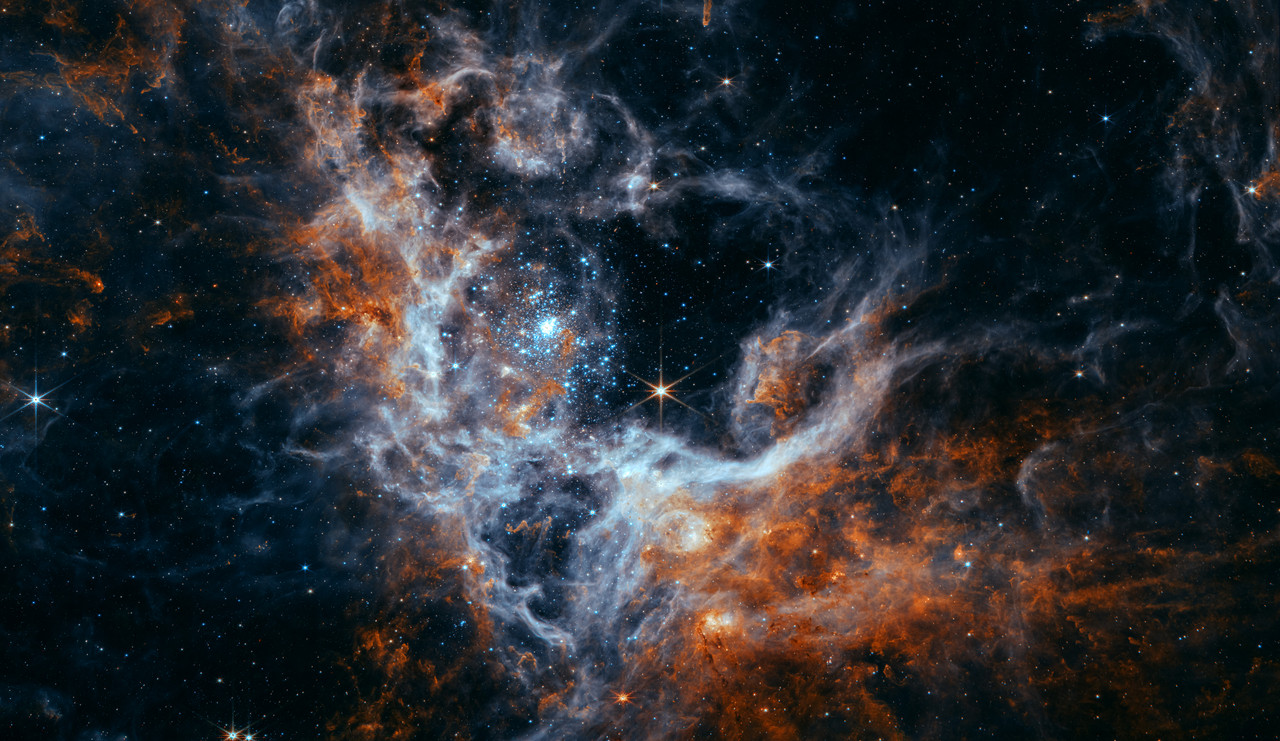
Christoffer
Start FollowingSend a Message
- Other sites we like
- Social media
- Terms of Service
- Sign In
- Created with PlushForums
- © 2026 The Philosophy Forum