
-
Donald Trump (All General Trump Conversations Here)Seriously though, advocating for so-called voting competency tests is an all round terrible idea. One could hardly think of a better way to entrench economic and social inequality in so direct a manner right at the level of political expression. Like, maybe think about building a robust and accessible education system first before resorting to punitive measures? This is why liberals are always enablers of fascism.
-
Donald Trump (All General Trump Conversations Here)May you, on the other hand, have always kakaphonous in your ear and be subject to the authority of the ignorant, stupid, crazy, and evil. - Or are you already? — tim wood
Ok fascist.
"I'm against craziness - I just want to institute fascist measures and accelerate support for Trump across the board, I'm so bog standard".
How did Trump win, and why will Trump win again? Exhibit A,Tim Wood. -
Donald Trump (All General Trump Conversations Here)Mixed feelings. I think on the whole it was better that Trump got STFU'd. But I despise that a spineless corporation like Twitter has that kind of power. They will inevitably reinstate his account once Trump gets his second term anyway.
-
Donald Trump (All General Trump Conversations Here)I think worse things should happen to Trump.
-
Donald Trump (All General Trump Conversations Here)I love that people like Tim, who is living through a political moment in which an entire population of people voted for Trump because they felt their voice was not being heard, thinks the solution is to deprive people of voices even more.
One can only conclude that Tim is a Trump supporter. -
Currently ReadingHaving just finished the book, it's like a retrospective embarrassment to me that I haven't come to it sooner - that it took his death to kick my butt to read. I mean -
"By recognizing it as a political system, the "Racial Contract" voluntarizes race in the same way that the social contract voluntarizes the creation of society and the state. It distinguishes between whiteness as phenotype/genealogy and Whiteness as a political commitment to white supremacy, thus making conceptual room for "white renegades" and "race traitors." ... Correspondingly, the "Racial Contract" demystifies the uniqueness of white racism (for those who, understandably, see Europeans as intrinsically White) by locating it as the contingent outcome of a particular set of circumstances ... In a sense, the "Racial Contract" decolorizes Whiteness by detaching it from whiteness, thereby demonstrating that in a parallel universe it could have been Yellowness, Redness, Brownness, or Blackness. Or, alternatively phrased, we could have had a yellow, red, brown, or black Whiteness: Whiteness is not really a color at all, but a set of power relations."
Absolutely killer. The dissent article is a fitting tribute. -
Currently Reading"Within these racial polities, the Racial Contract manifests itself in white resistance to anything more than the formal extension of the terms of the abstract social contract (and often to that also). Whereas before it was denied that non-whites were equal persons, it is now pretended that non-whites are equal abstract persons who can be fully included in the polity merely by extending the scope of the moral operator, without any fundamental change in the arrangements that have resulted from the previous system of explicit de jure racial privilege.
...Nonwhites then find that race is, paradoxically, both everywhere and nowhere, structuring their lives but not formally recognized in political/moral theory. But in a racially structured polity, the only people who can find it psychologically possible to deny the centrality of race are those who are racially privileged, or whom race is invisible precisely because the world is structured around them, whiteness as the ground against which the figures of other races those who, unlike us, are raced-appear. The fish does not see the water, and whites do not see the racial nature of a white polity because it is natural to them, the element in which they move. As Toni Morrison points out, there are contexts in which claiming racelessness is itself a racial act".
Gosh it's like the debates haven't changed changed for two and a half decades. -
Currently ReadingLeigh Phillips and Michal Rozworski - People's Republic of Walmart: How the World's Biggest Corporations are Laying the Foundation for Socialism
Charles W. Mills - The Racial Contract (@180 Proof, he passed away this week :sad: )
Jon Roffe - Abstract Market Theory -
Beautiful and know it?Sometimes it's not about what is said, but who is saying it. Compliments can be a fraught game of social power - especially from men, who then expect the women they complement to then act 'nice' in return. And then there's the danger of men who, when women do not conform to the image they expect of them, after probably imposing on their time and space, find them 'annoying' - as if the latter owed them anything whatsoever.
-
Joe Biden (+General Biden/Harris Administration)Yes - as if it were ever in question. But that's par for the course for every American president. It's a job requirement. Trump just had the quirk of personality to make a brand out of it.
-
Joe Biden (+General Biden/Harris Administration)Biden is only better than Trump in respect of not being a meglomaniacal lying narcissist. — Wayfarer
Except that's not true at all and Biden has broken most of his campaign promises. Although I'll give him credit for pulling out of Afghanistan. And we're talking about someone who has been eyeing the presidency for decades. This man is nothing if not a power hungry vampire. -
Joe Biden (+General Biden/Harris Administration)Imagine people thinking that Joe Biden was going to be any better than Trump for the environment.
https://www.dailyposter.com/does-not-present-sufficient-cause/
"The Biden administration just declared that the IPCC climate change report "does not present sufficient cause" to halt its plan to vastly expand offshore drilling, according to federal documents reviewed". -
Scotty from MarketingMy fav article yet on the whole thing:
China Panics After Learning They’ve Only Got 25 Years Until Australia Gets 8 New Submarines
According to Scotty From Marketing’s newest announcement aimed at drowning out the news that Christian Porter MP is paying his legal fees through a blind trust that has been topped up with millions of dollars by a faceless stranger who he has never met, Australia is getting eight cool new submarines!
Yesterday it was announced that several cabinet Ministers were given special border exemptions to meet in Canberra and begin nutting out this new deal that not one voter asked for or cares about.
According to these new announcement, Australia, the UK and US have formed a new security partnership named AUKUS – a new acronym that President Joe Biden doesn’t seem to know too much about considering the fact that he couldn’t even remember the Australian Prime Minister’s name in a press conference earlier today.
As a first initiative, AUKUS will build nuclear submarines for Australia’s fleet. There will be eight of them. They will not have nuclear weapons, they will just be nuclear-powered, which in itself is a pretty scary responsibility for a government that can’t manage to run a services website that doesn’t crash under the mildest web traffic. -
TPF Quote CabinetHito Steyerl on Art and Life:
Artistic autonomy was traditionally predicated not on occupation, but on separation — more precisely, on art’s separation from life. As artistic production became more specialized in an industrial world marked by an increasing division of labor, it also grew increasingly divorced from direct functionality. While it apparently evaded instrumentalization, it simultaneously lost social relevance. As a reaction, different avant-gardes set out to break the barriers of art and to recreate its relation to life. Their hope was for art to dissolve within life, to be infused with a revolutionary jolt. What happened as rather the contrary.
To push the point: life has been occupied by art, because art’s initial forays back into life and daily practice gradually turned into routine incursions, and then into constant occupation. Nowadays, the invasion of life by art is not the exception, but the rule. Artistic autonomy was meant to separate art from the zone of daily routine — from mundane life, intentionality, utility, production, and instrumental reason — in order to distance it from rules of efficiency and social coercion. But this incompletely segregated area then incorporated all that it broke from in the first place, recasting the old order within its own aesthetic paradigms. The incorporation of art within life was once a political project (both for the Left and Right), but the incorporation of life within art is now an aesthetic project, and it coincides with an overall aestheticization of politics. -
Jurassic Park ReduxA particularly unintelligent definition of intelligence, which ought to rather turn on making distinctions of significance.
-
Jurassic Park ReduxIt’s a distinction that ought to be maintained. — Wayfarer
For what purpose other than some mythico-religious (ie. artificial) sense of nature? You keep pointing out to differences as though the significance of such differences are obvious and self-evident. But that they are not, is just the point in question. You keep pointing out a different means of engineering, as though the mere fact of it being a different means is self-evidently a difference in kind. But for two pages now this has gone unargued for, or even clarified as to what is being ought to be argued for, for that matter. It's no good to just point your finger ever more vigorously and say 'can't you just see?'. -
Jurassic Park ReduxI think the thing which really got under my skin about the mammoth story was that basically it is sensationalist. They make a half-arsed attempt to present it as ‘environmentally helpful’ but if you read the whole piece, other scientists are scoffing at that. Basically it’s sensationalism, first and foremost, as Jurassic Park itself was. — Wayfarer
But surely you're the first one here to fall victim to such sensationalism? A typical fruit shop ought to be more terrifying to you than this kinda-distant, not-affecting-too-many-people-just-yet kinda story. Especially if you're concerned with genetics.
The development of the "supermarket tomato" by G. C. (Jack) Hanna at the University of California at Davis in the late 1940s and 1950s is an early and diagnostic case. Spurred by the wartime shortage of field labor, researchers set about inventing a mechanical harvester and breeding the tomato that' would accommodate it. The tomato plants eventually bred for the job were hybrids of low stature and uniform maturity that produced similarly sized fruits with thick walls, firm flesh, and no cracks; the fruits were picked green in order to avoid being bruised by the grasp of the machinery and were artificially ripened by ethylene gas during transport. The results were the small, uniform winter tomatoes, sold four to a package, which dominated supermarket shelves for several decades. Taste and nutritional quality w ere secondary to machine compatibility. (James C. Scott, Seeing Like A State)
This was 70 years ago now. It boggles the mind to think how much engineering has subsequently gone into the tomato, let alone everything else we eat. At least in the Global North. It strikes me that we've 'naturalized' 'artificiality' to such an extent that it takes something as 'sensational' as bringing back the mammoth snap us 'into' - even momentarily - the recognition that we live in naturally artificial worlds from the get-go. -
Jurassic Park ReduxLike, it's all there if you look for it!:
Money moves the plot of Spielberg’s Michael Crichton adaptation at an almost molecular level. Both the arrival of outsiders to Isla Nublar and the escape of the dinosaurs are motivated by cold, hard cash. After a velociraptor kills a worker in the opening scene of the film, his family launches a $20 million lawsuit against parent company InGen. We later learn from the park’s mousy lawyer, Donald Gennaro, that the incident gave the park’s insurance company and its investors second thoughts about backing the project, prompting the hiring of outside experts Alan Grant, Ellie Sattler, and Ian Malcolm to inspect the park. Without the concerns about continued cash flow, our favorite paleontologist, paleobotanist, and mathematician would never have felt a single tyrannosaurus-foot impact.
The shutdown of park security systems that leads to the escape of the dinosaurs is even more rooted in filthy lucre. The majority of the animal paddocks are brought down by Dennis Nedry, the overworked and underpaid (according to him, and I for one don’t doubt it) computer programmer responsible for the park’s largely automated systems. Nedry is offered a bribe from a rival company to steal dinosaur embryos and sneak them off the island, a bribe he accepts in large part because the park’s owner, Hammond, has refused his request for a raise.
Hammond rejects Nedry’s entreaties explicitly on the grounds of the moral hazard inherent in paying Nedry more than Hammond feels he deserves. Nedry’s financial problems, Hammond insists, are Nedry’s financial problems. “I don’t blame people for their mistakes,” Hammond says crossly, “but I do ask that they pay for them.” If Hammond had been more concerned with paying people what they’re worth instead of teaching them a lesson about hard work and responsibility, there’d be a few more empty velociraptor stomachs on Isla Nublar.
But liberals will read this is a morality tale about hubris and human overambition. -
How is language useful?I like Daniel Dor's thesis that language's utility (or what he calls 'functional specificity') consists in coordinating imagination. In particular, it works to bring what is not 'present to experience' (i.e. what is literally in front of people) to mind. Like, if you want to understand the specificity of language (symbolic language in particular), it's worth comparing it to other means of communication. Like, for instance, gestures (pointing, showing fists, screeching). In this latter case, the immediate environment needs to be 'part' of the communicative process: I point to that thing there, I show my fists to indicate my willingness to fight, etc. But (symbolic) language allows us to communicate about things which are not experientially available in the immediate environment. It is the difference between presentation and re-presentation. This is really damn useful.
Dor: "In the creative activity of imagination, the listener may in principle imagine in a wide variety of ways, all of which would always follow the analogue complexities of his or her own experiential world, never that of the speaker. The code [of a language] should thus be able to instruct the listener in a process in which he or she has to create not only a more or less focused image (an object of imagination, not necessarily a visual representation)—but also a focused image that more or less corresponds to the original experience of the speaker: an image of the same type. This is a very ambitious goal. The strategy of instructive communication does this through the coordinated investment of enormous social energies in the never-ending process of careful mapping and marking of those points in experience, and those ways of speaking, which the different speakers within the community may, more or less reliably, count on in the process". -
Jurassic Park ReduxIdk, an appeal to etymology doesn't strike me as particularly convincing. But so be it.
-
Jurassic Park ReduxSurely you can recognise the difference between 'artificial' and 'natural' — Wayfarer
Well I recognize it as an artificial(!) distinction that is contextual and useful in some circumstances while not being very useful in others. If there's a use here, I'd like to see it argued for, rather than taken for granted on the basis of some kind of implicit intuition. -
Jurassic Park ReduxScience is creating completely novel life-forms, not variations of existing life-forms. — Wayfarer
Nature doesn't create novel life forms? -
Jurassic Park ReduxWe have been creating synthetic animals for the longest time; the means have just been different. Our 'best friends' - dogs - are effectively synthetic. So much so that most of them would simply die without humans around. And that's to say nothing about the artificial selection pressure that we've exerted upon livestock like cows, sheep, chickens and so on. Even - and especially - plants. Hell, even the world's approach to Covid has largely been virogenic, an experiment in fielding viral mutations on a global scale, with the lab rats of the greater mass of the human population. Which is itself part of a larger pattern of cultivating pathogens for centuries, a result of our living arrangements. At best this is a question of precision of the 'syntheticness' in question, and not a change in kind. Nature is a freak to begin with. Or: there is nothing natural about nature.
-
Jurassic Park ReduxHe is banking on the endeavor resulting in innovations that have applications in biotechnology and health care — Wayfarer
And who runs biotech and health care?
I have no doubt as to the purity of his intentions. He's probably a lovely, intelligent, interesting bloke. Unfortunately this won't be up to him. That's how the world works. -
Jurassic Park ReduxIn principle I am totally on board with this. We have used technology to create the biggest and most devastating mass extinction in the history of the planet, so I'm all for using it to undo it too. In practice though, this kind of tech will most likely be used in ways to pursue more profit while accelerating exploitation in some manner. Which of course is how Jurassic Park ought to be read: not as an indictment on Prometheanism, but an indictment on capitalism.
-
Currently ReadingArundhati Roy - The Cost of Living
Arundhati Roy - The Chequebook and the Cruise Missile
Hito Steyerl - The Wretched of the Screen -
Why not Cavell on Ethics?Cavell singlehandedly demolished almost all the usual philosophical discussion of ethics for me. Like, in comparison with Cavell, most ethical discussion really comes off like toy discussion, like theorizing for the lives of the Sims rather than real, flesh and blood people. It's been a while since I read the Claim of Reason but his 'grounding' of ethics in forms of life is one of those things I've barely seen elsewhere, although I've been meaning to follow up some secondary/elaborative lit on the issue. In any case I would even suggest that your questions about ethics - "what are we doing? What are we aiming at?" ought to be read back into ethics as the sine qua non of ethical practice itself: that the demands that ethics makes on us are demands to grope at finding whatever partial, workable, passable solutions to just those questions. And those are questions of life and practice that cannot be closed off by any theoretical investigation that would provide any kind of ethical guidebook from on high.
But really, once you've read Cavell, most discussion of ethics - in a philosophical setting anyway - come off as unbearably stilted and artificial. It's great. -
Madness is rolling over Afghanistan"The eight generals who commanded American forces in Afghanistan between 2008 and 2018 have gone on to serve on more than 20 corporate boards, according to a review of company disclosures and other releases.
Last year, retired Gen. Joseph F. Dunford Jr., who commanded American forces in Afghanistan in 2013 and 2014, joined the board of Lockheed Martin, the Pentagon’s biggest defense contractor. Retired Gen. John R. Allen, who preceded him in Afghanistan, is president of the Brookings Institution, which has received as much as $1.5 million over the last three years from Northrop Grumman, another defense giant. David H. Petraeus, who preceded Allen and later pleaded guilty to a misdemeanor charge for providing classified materials to a former mistress and biographer, is a partner at KKR, a private equity firm, and director of its Global Institute.
The generals who led the mission [in Afganistan] — including McChrystal, who sought and supervised the 2009 American troop surge — have thrived in the private sector since leaving the war. They have amassed influence within businesses, at universities and in think tanks, in some cases selling their experience in a conflict that killed an estimated 176,000 people, cost the United States more than $2 trillion and concluded with the restoration of Taliban rule."
https://www.washingtonpost.com/politics/2021/09/04/mcchrystal-afghanistan-navistar-consulting-generals/
WoMeN aNd ChIlDrEN. -
The Supremes and the New Texas Abortion LawNo, no you're not. And besides, Afghanistan was clearly just practice for the US. Aspiration for the home front. Afghan women: American woman of the future.
-
The Supremes and the New Texas Abortion LawAfghan women are immiserated to the degree that the child mortality rate is the highest in the world. Nothing expresses the sanctity of life and the love of children like the highest child mortality rate on the globe. — praxis
Gosh that's terrible. Imagine if the US was running the place for the last twenty years.
Oh wait. -
The Supremes and the New Texas Abortion LawWell at least the women of Texas have you to thank for -- what was it again? — Srap Tasmaner
Nothing, like anything anyone does here, which you know perfectly well, you posturing high-horse'd git.
This kind of low hanging rubbish ought to be beneath you. How disappointing it isn't. -
The Supremes and the New Texas Abortion LawMaybe you can explain to us what you yelling at Hanover — Srap Tasmaner
Hey Hano was the one who got mad at me for not taking a bunch of degenerate woman haters with the seriousness and dignity they deserve.
I figured that setting bounties on women is like, a pretty good case for that, but apprently no, we have to believe that these really are good hearted but maybe misdirected folks. And not like, American ISIS. Which they are. Yallqueda fundamentalists. -
The Supremes and the New Texas Abortion LawYes, the philosophy of power and domination and its exercise upon the bodies and freedoms of women. Which is what this is about.
Flame much? — Hanover
Why do you think it's a flame? Sorry that the white people get a pass from you.
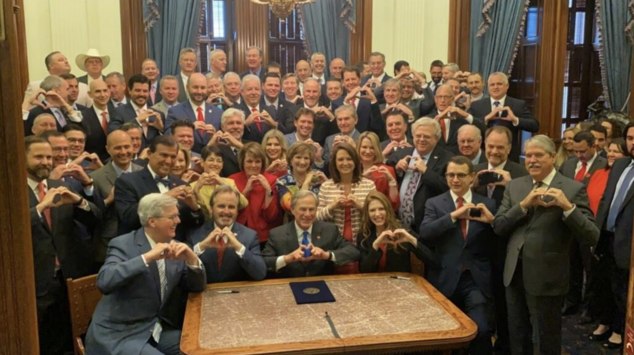
But you're right it's probably not fair to compare the Taliban to a room of ruthless motherfuckers like the Texas legislature. Who sic bounty hunters who can self-deputize upon women who are made to fear every living person they see in the case of an unwanted pregnancy.

Streetlight
Start FollowingSend a Message
- Other sites we like
- Social media
- Terms of Service
- Sign In
- Created with PlushForums
- © 2026 The Philosophy Forum