
-
PrivilegeIt's not enough that it ought to have that power, it needs to actually have it, and that's an empirical matter. It either will or will not result in the necessary change — Isaac
No. The phrase is a framing device. It draws attention to a feature a reality. That's all. It won't 'result' in anything unless people act with it. And I didn't say it 'ought' to have anything. It already has its critical power insofar as one can recognize how fucked up it is that normalcy can count as a privilege. Pro's only mistake is to think this is a problem with the use of language, and not with the world itself. -
PrivilegeI argue against it because it is inaccurate and counterproductive. — Pro Hominem
Not at all. As creative noted, the dissonance between what ought to be a state of 'normalcy' and it having count as a privilege is precisely the point of the term. It draws its critical power from precisely the uneasy collapse of the two. To not treat normality as privilege - given the current state of things - is to miss the point. Which is what you are doing.
If the term is inaccurate, it is, as it were, an ontological inaccuracy, one that ought to be remedied at the level of action, not language. The goal being to make it nonsensical, which it currently, sadly, is not. -
PrivilegeTHE PROBLEM IS NOT SOME PEOPLE BEING TREATED APPROPRIATELY, THE PROBLEM IS SOME PEOPLE BEING TREATED INAPPROPRIATELY. — Pro Hominem
But 'the problem' is not white privilege, but the fact of it being unacknowledged in situations where it ought to be. As far as your purely nominal disagreement, it simply seems that irony is lost on you, and that if a white person feels 'resentment' at the term, then I'd venture that's exactly when the term is the most appropriate.
White people just don't like being racially marked. They think being so is only meant for others. This kind of hysterical reaction over nomination is exemplary of that. -
PrivilegeWhite privilege ... is the ABSENCE of being treated unfairly because one is non-white. — Pro Hominem
Couldn't put it better myself.
It is not necessary or helpful to demonize all white people — Pro Hominem
Imagine thinking acknowledging privilege amounts to demonization. -
Donald Trump (All General Trump Conversations Here)The RNC - in which the GOP adopts Führerprinzip as their (only) organizing stricture. After, of course, opening with the chant of "12 more years".
-
The Road to 2020 - American Elections"In many respects, the RNC is an ugly mirror image of last week’s Democratic convention. Neither offers any real solutions to the growing number of Americans desperately trying to keep their heads above water in an unprecedented crisis; each offers only empty signaling instead of actual policy, right-wing grievance for the RNC, and lip service to tolerance, inclusion, and civility for the DNC; each talks up the limitless potential of the American people that mysteriously can’t extend to halting the pandemic, for Republicans, and achieving universal health care, for the Democrats; both are corporate-funded affairs headlined overwhelmingly by millionaires and billionaires pretending to be the tribune of workers
...These parties need each other. It’s the increasing lunacy of the GOP that keeps frightened liberal voters satisfied with the meager crumbs of progress promised and unevenly delivered by the Democrats; and it’s the Democratic Party’s abandonment of the New Deal and embrace of shallow corporate liberalism that keeps white working-class voters flocking to a GOP that only uses and abuses them. This is the bleak symbiosis that keeps the United States steadily drifting further and further rightward as crises pile up".
https://jacobinmag.com/2020/08/gop-rnc-republicans-trump-insanity -
Joe Biden (+General Biden/Harris Administration)Yes yes, make what excuses you will for that human scum.
-
Joe Biden (+General Biden/Harris Administration)Presumably you mean bits like this?:
"Pictures of children behind chain-link fencing were captured at a site in McAllen, Texas, that had been converted from a warehouse to an immigrant-detention facility in 2014. Social media users who defended Trump’s immigration policies also shared a 2014 photograph of Obama’s Homeland Security Secretary, Jeh Johnson, touring a facility in Nogales, Arizona, in 2014, in which the fencing could be seen surrounding migrants there as well. That picture was taken during a spike in the number of unaccompanied children fleeing violence in Central American countries."
"Thomas Homan (who was director of removal operations at ICE under President Obama). ... said during a June 21, 2019, panel discussion hosted by the anti-immigration advocacy group Center for Immigration Studies that “‘The kids are being [housed] in the same facility built under the Obama administration. If you want to call them cages, call them cages. But if the left wants to call them cages and the Democrats want to call them cages, then they have to accept the fact that they were built and funded in FY 2015.”
This is a fun game. Name some other acts of ethical and political depravity and there's no doubt we can find it in Biden's illustrious career of fucking people over. -
Joe Biden (+General Biden/Harris Administration)Don't forget eater of babies, or cager of children and destroyer of families. — tim wood
Well now that you mention it, yes, Biden absolutely did lock children in cages and very likely destroyed tens or hundreds of thousands of families with his '94 crime bill which helped the US become the prison state that it is. He probably hasn't eaten a baby but it probably did cross his mind to take a bite while he was sniffing the hair of all those young girls he liked to heavy pet on camera. -
Donald Trump (All General Trump Conversations Here)Its' true - everyone and their dog knows that Trump is a wanking fuck-wad, and there's little use for further confirmation. And the results are indeed obvious - the US is a pitiful state, a population ravaged by disease, broken mechanisms of democratic control, corporate capture of government and judiciary, a people resentful and divided, and an international laughingstock.
-
Donald Trump (All General Trump Conversations Here)What's that? Trump is full of shit again?:
"PRESIDENT DONALD TRUMP’S campaign, ordered by a federal court judge in Pennsylvania to back up its claims of fraud in the state’s vote-by-mail system, has documented only a handful of cases of election fraud in recent years — none of which involved mail-in ballots. The revelation, which came in the form of a partially redacted 524-page document produced by the Trump campaign last week, undermines the claim by Trump team operatives that mail-in ballot fraud is a grave risk to Pennsylvania voters."
https://theintercept.com/2020/08/20/trump-election-fraud-pennsylvania-court/ -
Joe Biden (+General Biden/Harris Administration)Biden, the man, is definately a degenrate ratfack who, the day he drops dead, will leave the world a better place. It's hard to think of many others so instrumental in helping usher forth policies that have immerserated not only millions in the US, but in other parts of the world as well. Oh and he's probably a rapist too so there's that.
-
Why were my threads on Computer Psychology deleted?How about writing a post on the topic yourself, which would illustrate what you consider to be appropriate? — Hippyhead
I accept comissions. 30c a word. -
Why were my threads on Computer Psychology deleted?PM me with what you want to write, we'll go over it.
-
Why were my threads on Computer Psychology deleted?They read like strings of barely connected propositions with ill defined terms. They were certainly no good as conversation starters.
-
Why were my threads on Computer Psychology deleted?First, don't post three threads on the same topic in rapid succession. Second, they made very little sense.
-
Why was my thread closed?I closed it because it was devoid of argument, unnecessarily personal, and the equivalent of making its point by saying "that's just like, your opinion". It was a model of exactly how not to make a thread. It ought to have been deleted had there not already been a few comments posted in it.
-
Joe Biden (+General Biden/Harris Administration)
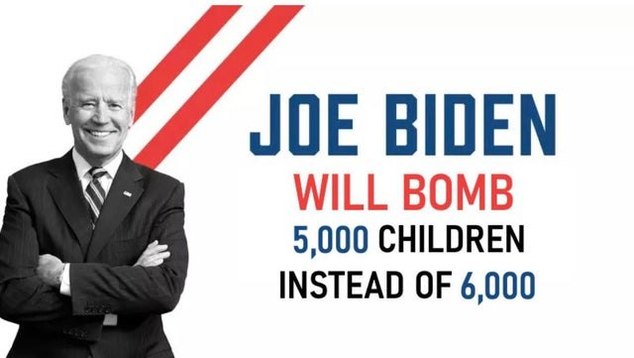
Honestly this man revulses me more than Trump. At least Trump is clear that he is a degenerate ratfuck and revels in it. This guy is a degenerate ratfuck and pretends not to be. -
Donald Trump (All General Trump Conversations Here)Wait you think he knows any of them? Or just, like, the law in general?
-
Theism is, scientifically, the most rational hypothesisAn appeal to ignorance filled in by a stop-gap 'God'. Infantile theology.
-
Change Site Settings?Go to your profile (https://thephilosophyforum.com/profile/7636/tiredthinker), hit 'edit profile' under your profile pic, then 'set preferences', then untick all email notifications.
-
Currently ReadingIt's a very good introduction to structuralism. Well written, broad (covers lots of topics from math to biology to linguistics), and not too long (just under 150 pages). It's a little dated maybe, but reading Piaget, you get it from the horses' mouth, as it were. It happens to be really good in order to get a sense of the limits of structuralism as well, even while Piaget is a champion for it.
-
Ontology, metaphysics. Sciences? Of what, exactly?first person participle — Wayfarer
This is literally not a thing. It's gobbledegook. I'd be 'over and out' too if I was caught out making nonsense phrases up. -
Ontology, metaphysics. Sciences? Of what, exactly?Meant ‘pronoun’ — Wayfarer
No you really didn't, because you've repeated this made-up grammatical point over and over again in your various posts on this topic. In your first post you even referred to a 'first person participle' which... is not a grammatical category. Like, it's a made-up phrase. And say you meant "pronoun" - "the pronoun of 'to be' is 'I am'"? That doesn't make sense either. -
Ontology, metaphysics. Sciences? Of what, exactly?
-
Ontology, metaphysics. Sciences? Of what, exactly?And it has, you'll note, nothing to do with the first-person in any way, shape, or form.
-
Ontology, metaphysics. Sciences? Of what, exactly?I did not provide 'an ontology of commitment' - a meaningless phrase. I provided a broad account of what is entailed by having any ontology simpliciter.
-
Ontology, metaphysics. Sciences? Of what, exactly?Was there something about the account of ontology in terms of commitment that was unclear to you?
-
Ontology, metaphysics. Sciences? Of what, exactly?If there are species of being, what is the genus? — tim wood
These are all questions to ask about specific ontologies, each with their various comittments. -
Ontology, metaphysics. Sciences? Of what, exactly?Fair to say you reject the notions of "general terms" and "general features"? — tim wood
No. If one's ontology commits one to general terms and general features, then so it. I'm being as neutral as possible here, I'm not arguing for any particular ontology. If you think 'kinds' is already too prejudicial, then presumably you might be committed to a monism in which there is only one entity with no categorical division. That's ontology too. It can be as broad or as specific as one wants it to be.
The fireman thing is trite and not worth responding to. -
Ontology, metaphysics. Sciences? Of what, exactly?Here, how about, instead of taking my word for it, you read up on what actual etymological investigations have to say? Here is Charles Khan's "The Greek Verb To Be' and the Problem of Being [PDF], an absolute classic of scholarship which is probably about as authoritative as can be. 13 pages, not including notes. An easy read.
-
Ontology, metaphysics. Sciences? Of what, exactly?The vocabulary of commitment is one I've always found useful in explaining ontology: i.e. ontology refers to the kinds of entities one is committed to being. Does one's ontology admit supernatural beings? Or, if one is an atomist, does one only commit to the existence of atoms while everything else is an epiphenomenon? So to have an ontology is to have ontological commitments to the kinds of things that have being (while, presumably, ruling others out).
Metaphysics I think is best thought of in terms of explicating the status of those commitments. So traditionally, metaphysics had to do with the study of necessary beings, aligned with the temporality of eternity. In which case you're dealing with questions of modality and temporality. A different metaphysics might yield a different conception of both, so that one relaxes the commitment to necessity and pays more attention to contingency and the so-called sublunary aspects of 'becoming' and so on. The temporal question also bears upon issues of principles/beginnings (arche) and ends (telos): are there purposes to things? If so, where do they come from, and where do they lead?
Condensed, one can say that if ontology deals with 'what', metaphysics deals with 'how'. There's all manner of room for variation and recombination here of course, but as introductory guiderails these will work pretty good. -
The Lazy ArgumentI think it should be emphasised just how much the lazy argument was meant to be refuted. The Wiki article rightly notes that it was used by the Stoics to try and think about a more rigorous notion of fate, and it's point is precisely to provoke one into thinking harder about how 'fate' ought to be conceived.
-
Kamala HarrisAh yes, picking the fucking cop just as people are asking to defund cops.
Or as someone else put it, the field is now down to a segregationist/rapist & criminal prosecutor vs. a billionaire/rapist & christian dominionist, all four of whom are ardent capitalists.
Streetlight
Start FollowingSend a Message
- Other sites we like
- Social media
- Terms of Service
- Sign In
- Created with PlushForums
- © 2026 The Philosophy Forum