
-
Could a word be a skill?Here's a bit of verse by George Herbert which I like; it demonstrates word skill. It's quite simple English. The English speaking world had gone / would go through periods of disdaining this kind of plain English and would prefer as multi-syllabic as possible. Writers of complex English had word skill too -- it isn't just the simpler language writers that demonstrate it.
BY GEORGE HERBERT 1593–1633
Love bade me welcome. Yet my soul drew back
Guilty of dust and sin.
But quick-eyed Love, observing me grow slack
From my first entrance in,
Drew nearer to me, sweetly questioning,
If I lacked any thing.
... -
Could a word be a skill?Interesting questions.
Great writers know what to do with words. First-rate writers don't need "great words" -- exotic, rare words that occur about once in every 100 million words uttered by speakers of the language, and have very, very specific meanings. Great writers generally tell compelling stories with run-of-the-mill words: words that compose the heart of the corpus of English (don't know about word usage in other languages).
Run-of-the mill writers reach for too many words, too many different words, and too many rare words--because their word-skill confuses glitter with real gold.
Of course, we need more than words:. If of words not organized our properly strings are, they don't mean much. Sentences have to be structured well too, then paragraphs, then chapters, and there's the book. -
What is the core of Corbyn's teaching? Compare & ContrastI read that Corbyn has never voted for an anti-terrorism bill. True? False? If true, why?
-
What is the core of Corbyn's teaching? Compare & ContrastWhat, hung like a pony or a horse?
-
On Not Defining the Divine (a case for Ignosticism)However, I intuit a very nicely formed universe. Things are very nicely and well put together – too well for it to be a coincidence. — Thinker
How many universes have you experienced? Only one? Same here. Of course it's "nicely and well put together", but not too well or not too nice for it to be a coincidence. It just is what it is, and as long as we feel good, it seems nice. When we get sick and start to die, however, it is the same universe but then we experience more of its features--like dying and death.
in addition, we have this great facility called consciousness. Very convenient to have consciousness — Thinker
... consciousnes - and - emotion... — Thinker
I like consciousness and emotion -- great stuff, they are. But many animals aside from us animals have emotions, and a few (so very few) have consciousness. Were it a blessing, wouldn't it be more broadly distributed?
There is a divine hand – somewhere. I tell you – after I have had a prolonged still mind – I feel the presence of God. Can I prove God exists – NO — Thinker
I have no desire to rattle the stillness of your mind. If you feel the presence of god after stilling your mind for a prolonged period of time, fine. But it could be that the presence you feel is the consequence of a thoroughly and deeply stilled mind.
I am now ready to be crucified. — Thinker
You are not!
For one thing, you haven't stated anything that is likely to get you crucified -- not around here, anyway. You have to threaten the powers that be, to start with, you know -- shake the foundations. And make people very uncomfortable. Plus you need more than the average charisma.
BTW, what do you think happened to god in the incarnation? -
On Not Defining the Divine (a case for Ignosticism)We can define and discuss the divine with precision as long as two conditions are met:
First that we are defining the real gods of our own creation (which are all the real gods there are) and
second, that we are informed and think carefully about these gods
Such gods that we did not make up, can not see, hear, touch, smell, taste, or know anything about--those gods are entirely beyond our reach.
You want the Aged Patriarch? Hairy thunderer? Cosmic muffin? Take your pick -- but make it consistent.
The reason the real, made up gods can be discussed and understood is that they are our own creation, and the reason we need to be informed and think carefully is that our made up gods have significant flaws. For instance, a god described as omnipotent, omniscient, and omnipresent is not really understandable. We made it up, but we can't understand our own creation. The god that is all good but allows evil to occur is another problematic matter. Why would an all good god allow truly appalling evil to exist? That is just another example of how we have not worked through the logic of our own creation. What happened to god when he became incarnate in Jesus? Did he leave heaven? Did some of him leave heaven? Did he stay in heaven? But then, how could he be Jesus here and god in heaven at the same time?
These problems can be resolved to our satisfaction if we have the nerve to stand up and say, "This doesn't make sense!" Clarify god as you wish, then prepare to be crucified.
As for the other gods -- the ones we know nothing about and didn't create -- I agree with you 100%. There is nothing we can say about them because we know nothing about them. -
The potential for eternal lifeSo potentially, if we could tackle every single cause of death, the human body should have no expiry date. — AXF
It's not just a matter of fixing the various causes of death. In order to live without death the body would not only have to "not die", it would also have to continually renew -- rejuvenate -- itself. This goes beyond replacing cells. Even the agéd, teetering on the edge of the grave, continue to replace cells until they fall in and life stops. As far as I know, no organism on earth has managed to do this. While there are some trees that are a couple of thousand years old, one would not call them vigorous specimens.
Rejuvenation is more complicated than mere longevity. Just take the skin, for example. Young skin is very elastic. As we age, it loses elasticity--a small piece of what happens throughout the body, and starts happening long before we become "agéd".
The other problem is existential, and it's as huge, if not more so, than the problem of biology. Even if it only took one fix to cause one to live a healthy perpetual life (and not frequent treatment), one would face not just an eternity of novelty, but one would also face an eternity of perpetually fresh losses. Novelties would arise, again and again and again, but would cease to be novelties. Everyone else who was not "fixed" would die, again, and again, and again.
I suspect the suicide rate for the 'fixed' immortals would be rather high. -
Does "Science" refer to anything? Is it useful?This is a great example of junk science.
Here is an example of bad science from today's Guardian (June 6, 2017): Is white bread better for you than brown sourdough? It depends on your gut
10 subjects ate factory made white bread for 1 week, while 10 other subjects ate sourdough whole wheat bread for one week. Then they switched for a second week. Meanwhile, the subjects' blood was checked for several markers.
On average, it didn't make any difference, but individually, there were varying responses.
What does this tell us?
Nothing.
One would expect that what one eats would have an effect on one's biome, one's blood profile, and so on. Bread supposedly made up 20% of the subjects' calories, but no effort was made to track what else the subjects had been eating, aside from bread.
1 week on factory bread then 1 week on the sourdough bread? Way too fast to detect significant differences. No effort was made to determine what differences in the individual resulted from either no response or some response to the different bread diets. -
Does "Science" refer to anything? Is it useful?Science is essentially an umbrella marketing term for fundraising and shielding against criticism — Rich
Rubbish. But there is a range of quality in science from base to solid gold.
When someone does a retrospective survey of 500 people and asks them what they ate for breakfast for the last 5 years and whether they have had a heart attack, and then claims in a journal article that eating oatmeal reduces cholesterol, that's bad science. It's not even science. It's a subterfuge of the oatmeal conspiracy.
On the other hand, if you conduct a tightly controlled double blind study on 500 people of the effects of a compound over a period of 2 years to determine whether it lowers cholesterol by a certain percentage without causing untoward consequences, that's better science. The work done in bio-molecular labs that shows how the molecules in the compound reduce the production of cholesterol in humans is better still.
That real science is done in the service of Pfizer and Glaxo Smith Kline does not detract from its quality, any more than writing novels for Random House detracts from the quality of the books. (And, of course, science is done without profit in mind, too. But somebody has to pay for it.) -
Does "Science" refer to anything? Is it useful?I don't have a problem with the term, science -- or philosophy either. They aren't precise terms, but they don't have to be, either. People in the "arts" actually do specific, technical work -- not "art in general" and the same goes for philosophy, science, literature, and so on. Scientists don't do "science" they do fresh water biology or QM physics.
-
Parenting...In case I forget it, happy birthday.
My, you have an unappetizing problem on your hands. Brothers and sisters trying to establish the role of parent over their younger siblings is the stuff of unpleasant Grimm faerie tales. "And then the wicked child summoned a witch who turned her older brother into a chicken which the wretched brat promptly beheaded with an axe."
If at 15, your sister doesn't recognize you as some sort of parent, it probably isn't going to happen.
You being the potwalloper (owner of a hearth on which to boil pots -- a householder) do not have to put up with more crap from you teen-age sister than you want to put up with. However, it won't be at all easy or simple to change your sister's behavior.
You are entitled to lay down certain rules. I would recommend rules which your sister is capable of actually following. Like, "You have to speak respectfully to me." "You have to tell me the truth about important things."
What's your leverage? Not too much. At 15 she could, if she wanted to, walk out the door and not come back. That would make you feel much worse, and would be bad for her. So... there will be major limits on how much of an affect you can have on her.
If her behavior is dangerous to herself, (I can't tell from what you say) you might have to call on expert assistance. I don't know what they call it in Canada, but in the US it's called "child protection". Or maybe a mental health facility could be helpful. She is still a child legally. However, at 15 it is getting late for any agency to step in and fix things up.
Children her age are notorious for being difficult to put up with. Adolescent brains aren't adult brains. Imagine having 3 or 4 teenagers to put up with! Be patient. Trust, but verify. Be kind, but not a doormat. -
Does "Science" refer to anything? Is it useful?Does "Philosophy" refer to anything? Is it useful?
It does not refer to anything but a loose federation of people of various fields, investigating different things that sometimes overlap in subject matter, methodology or equipment. There is no essential feature that makes a field "philosophical", and there is no such thing as a "philosophic method".
Continuing to use the term "philosophy" adds no value to discussion. In conclusion, then, "philosophy" has become an honorific term that is exploited and abused, including "philosophers" themselves (to promote their social status image as a modern priest of knowledge of sorts, something some will not easily let go of), when in fact this term cannot be uncontroversially defined and has no practical use. It is time to transition away from this term and embrace a more anarchistic and nominalistic conception of inquiry. (A better term for a "philosopher" is a "parasite").
He knows more than you do. He has a masters degree -- in PHILOSOPHY! -
Art, Truth, Bulls, Fearlessness & Pissing PugsI understand the idea that people are exploited and suppressed because the economy is organized as a system for exploiting and suppressing people. This applies to most people under capitalism: the workers are meant to be exploited, and most people are workers (that is, they depend on a wage whether they lecture in philosophy or dig ditches).
The idea of encouraging home ownership during the depression wasn't entirely benevolent. The people who did the thinking for the rich and powerful understood that renting wage earners without families were loose cannons. They could afford to blow up the system. Load them down with a mortgage and family and they would be afraid to blow up the system, since they now had a piece of it to which they were firmly riveted.
Home ownership did pacify the masses to some degree.
That blacks were left out of this system wasn't because they were trusted to stay meek. "They" didn't want blacks and whites on friendly terms or (they didn't say this at the FHA) sexual terms. Poverty and exclusion were the lot of blacks. Then, and later (like, now) there were police and prisons to control blacks. Poverty, police, and prisons.
IF all this is true, we can't then blame white people for being racist and oppressing black people. The oppressors are the scheming rich folk, who can oppress because they are rich. White folk were separated out from blacks early in the game and the two groups were subjected to separate exploitation systems, and they still are.
Prejudice is the affective result of concrete oppression. -
Art, Truth, Bulls, Fearlessness & Pissing Pugsthese SJW types don't get the difference between, say, the inter-generational effects of past racism, and the on-going contemporary forces which might be perpetuating the statistical inequalities they aim to affect. — VagabondSpectre
Well, as university students they are likely to be quite young and from fairly comfortable, largely segregated white backgrounds. I'm guessing that the problems of poverty and raw racism are something they've learned about through books, speeches, and TV programs, and not face to face experience. Black youth that sound as sophisticated as some of these young university blacks do didn't grow up in the ghetto, either.
Because they are young and live unexamined lives they probably can't account for their own quirks, let alone other people's. This isn't unique to the current crop of SJWs.
Once they get out of college (if they ever do) and get jobs and live in far less rarified precincts than campus dorms, they'll eventually get this naiveté ground off by abrasion.
The greatest misfortune for these young volk would be to sound like they do now--for the rest of their lives. -
Art, Truth, Bulls, Fearlessness & Pissing PugsPart II
The Second Great Migration of blacks from the south to the north began in the latter years of the Great Depression when manufacturing finally began to expand, both from modest economic recovery and from the beginning of arms manufacturing for WWII. Hundreds of thousands of black workers went north and found a still severe shortage of housing.
In Chicago only a few neighborhoods were open to blacks purchasing homes or renting. Because of the severe shortage of housing, black were willing to pay premium prices for housing, but to no avail.
A second form of discrimination in housing was organized to capitalize on black housing needs. Speculators (generally real estate operators or lawyers) bought physically distressed properties in either black or mixed neighborhoods in South and West Chicago and sold or rented them at inflated prices to black workers through a contract for deed. Substantial downpayment and higher-than-average monthly payments were required. If the buyer missed a month's payment, the seller could repossess the property and evict the buyer. The repossessed building could then be sold to somebody else.
Rental property was over-loaded with tenants. Larger apartments were subdivided by tenants (often by DIY efforts) in order to cover their high rent. Black people buying a building did the same thing -- subdivided maybe twice over, so that they could pay off the building and not miss payments, thus losing their whole investment.
Over time, this predatory system extracted a tremendous amount of wealth from the black community in Chicago (just one community among many). Mark Satter -- a bona fide Jewish Social Justice Warrior lawyer who fought to end this system of systematic exploitation in the 1950s (unsuccessfully), calculated that the large black community of Chicago was losing about a million dollars a day through this property predation.
In the meantime, white home owners were accumulating value in their houses. They were not becoming rich, they were only gaining a margin of security. It was generally their only asset. Their future security depending on its preservation. They worried intensely about blacks moving into their neighborhood, because they had been assured many times (it was in their loan agreement) that they could not sell to blacks, and if their property value dropped (as a result of blacks moving in) then they would lose whatever value they had accumulated.
Banks, real estate agents, and the FHA itself wanted to make sure home values didn't drop. Again, local real estate agents provided a workforce for maintaining segregation. They made it clear to white home owners that selling to blacks would be a personal economic disaster for them. Real estate agents were in a position to make value drop by stampeding white people out of a neighborhood. "Sell right now! The niggers are coming, and your property value will fall into the basement." So, people did sell, and moved to more distant, more secure suburbs.
Were blacks actually a threat to property value?
Yes and no. No, in that they were often willing and able to pay a premium to get housing at all, and decent housing even more. (Many of the southern black people in Chicago were hard working and thrifty.)
Yes, in that the housing density in black neighborhoods was extremely high, and the housing stock (mostly owned by absentee landlords--slum lords, quite often) were poorly maintained. High density and a lack of maintenance is a bad combination for any demographic group. The black neighborhoods became physically degraded.
Crime existed in the white neighborhoods before the presence of blacks could be a significant consideration (say, 1935). People produce their own anti-social elements who then engage in the usual sort of crime -- burglary, theft, knifings, vandalism, public drunkenness, disorderly behavior, a quite rare killing or two, and so on.
Why did the black neighborhoods produced much more crime?
Several factors. A major factor in crime generation is parental supervision. Because of the unusually high cost of housing in black neighborhoods, both parents needed to work at least 1 job to produce enough income to make ends meet. Because the parents were working, the children were unsupervised after school. Unsupervised children generally get into trouble of one kind or another whatever their race or socio-economic background.
Chicago's public schools could not handle the very high census of students in a small area that segregation caused. The schools went to two shifts --AM and PM. The quality of education provided was thus degraded, and children were left unsupervised not for an hour or two after school, but all morning or all afternoon (in families where both parents worked).
Many blacks were unable to achieve economic stability and ended up on welfare -- then the Aid For Dependent Children program (AFDC) which excluded males from benefits, pretty much. AFDC was support at a poverty level.
So, the black community deteriorated, crime became worse (we haven't reached the 1970s, yet), education was inadequate, social services was inadequate, and so on. Bad.
None of this was the result of racism on the part of the white workers who bought houses on the FHA program. They didn't keep blacks from doing the same thing. It was governmental, banking, and real estate sales institutions that instituted and enforced the rigid segregation. Of course, there was a certain amount of native racism among white working people -- much of it probably xenophobia as much as racism. But official policy bolstered, aggravated, and shaped native racism or xenophobia as a part of its segregation objectives. -
Art, Truth, Bulls, Fearlessness & Pissing PugsPart I
They have to rely on
crap like "the intersection of oppression of an individual belonging to two separate but equally oppressed groups highlights the post-modern social need for complex de-colonialization..." — VagabondSpectre
because the actual history of systematic oppression is not so easily simplified. For instance, SJW should know that in 2017 many blacks are economically disadvantaged because they have been systematically denied mortgages by the Federal Housing Administration (FHA) rules since 1934--when the FHA program was conceived.
The FHA (established by FDR) eased the critical housing shortage and stimulated the economy in the bottom of the depression by guaranteeing mortgages to purchase homes. Without something like FHA, banks had lent money to buy housing to only the most credit worthy, but with short payback periods.
All well and good. But the FHA explicitly excluded black people from its services. Blacks were ineligible for FHA mortgages, as was any house located on a block where even 1 or 2 blacks lived. Further, FHA required covenants attached to the deed which stated that the house would not in the future be sold to blacks (and Jews, sometimes, and sometimes asians).
Everyone involved in the administration of the FHA loan program (government, banking, and real estate) pretty much agreed: black and white people should not live close-by each other. They should remain segregated. They should live in separate communities. Further, they all pretty much agreed that black people (despite the adequate incomes and savings they might have) were bad credit risks.
The average white worker who sought a loan with an FHA guarantee had no choice about the racial mix of the neighborhood he could buy into. It had to be an all white neighborhood. Period. In the future he would have no choice about the race of a buyer to whom he might sell his house. It had to be a white buyer.
The FHA loan program enabled white workers to accumulate more wealth than they could have accumulated by any other method. Over the long run, most houses appreciate in value, and a 30 year mortgage assures the home buyer of a small enough payment that they will be unlikely to default.
Had the FHA, banking system, and real estate industry not forced white and blacks into segregated housing, many blacks would have also benefitted from accumulated wealth, and many white-only neighborhoods would have been integrated from the very beginning, since a lot of FHA housing was in newly created communities. -
Art, Truth, Bulls, Fearlessness & Pissing PugsFrank Bruni's opinion piece in today's New York Times (June 4, '17) is about your topic. He says, "But we’re never going to make the progress that we need to if they hurl the word “racist” as reflexively and indiscriminately as some of them do, in a frenzy of righteousness aimed at gagging speakers and strangling debate." then he gives some egregious examples you can add to your collection.
Are these real examples? — Noble Dust
You can't make up stuff this stupid.
The thing I dislike about on- and off-campus social justice warrior types is this: We have numerous, real, tangible, non-symbolic problems that need real, tangible, non-symbolic efforts applied to them. These problems -- economic, environmental, etc. provide real opportunities for 'enterprising' young social justice warriors to do battle. They have the disadvantage of being a bit gritty and a lot ambiguous at times. The living wage drives (pay people a minimum -living- wage, something like $15 an hour) need soldiers in the field. Work on causes like that, instead of nattering on about racism to one's fellow campus residents.
I have a few social justice warrior genes. It didn't manifest itself when I was in college. (Backwater State College in the mid 1960s just wasn't the time or place, yet.) It isn't a dominant trait, so mostly it came out in middle age in an awkward way. I'd rather not provide embarrassing details. But feeling all social justice superior is pleasant, and I'm sure our campus 'radicals' like that rush. -
What will Mueller discover?Gerrymandering, institutional barriers laid in the way of voters are not new, and not good. If both parties are doing it, then it's worse.
140 million voters for national office, millions for senators and reps, hundreds of thousands for state officials, etc. means that direct democracy is out of the question. I agree it is probably undesirable.
California has passed some good law by Initiative and Referendum (thousands of propositions have been put before the electorate) but they have also passed some counter-productive legislation. Property taxes were lowered and the rate of increase given a very low ceiling by the 1978 Proposition 8. The resulting drop in revenue, and the inability to increase taxes at the local level (which is where education funds mostly come from) has caused serious harm to California's cultural infrastructure. -
Is Putin doing a good job?"In what sense has it fallen?" he asks. #()%*&#()@%*&!
1. The Communist Party and government structure existing in the USSR ended. (Not saying the communist party ended, just that it's structural overlap with the government ended.)
2. Armenia, Azerbaijan, Belarus, Estonia, Georgia, Kazakhstan, Latvia, Lithuania, Moldova, Kyrgyzstan, Turkmenistan, Tajikistan, Ukraine, and Uzbekistan are not longer part of the successor state, Kaputistan.
3. There were extremely significant changes in economic policy by the successor states (Russia, et al.
4. The rest of the world recognized that the USSR had ended. Russia and Armenia, Azerbaijan, Belarus, Estonia, Georgia, Kazakhstan, Latvia, Lithuania, Moldova, Kyrgyzstan, Turkmenistan, Tajikistan, Ukraine, and Uzbekistan are now (more or less) all independent national states.
What would a reconstituted Communist Party be like? I would think that for many people in Russia, going back to the Communist party would be on par with a dog returning to its vomit. I doubt that the 14 ex-USSR states would willingly become part of a renewed USSR type arrangement. (Of course, they don't have to be given a choice, but I don't know if the Russians have the stomach to force them.)
I can't quite imagine what a reborn Communist Party would be like. It would probably be very odd. -
Art, Truth, Bulls, Fearlessness & Pissing PugsBLM DEMANDS HBO FIRE MAHER!"...
Something about this phenomenon disturbs me beyond words and to no end, and it's happening everywhere right now; it goes like this:
- Someone does or says something that is perceived by some to be possibly offensive...
-Passionate calls for retribution immediately ensue (they start online and on the basis that someone possibly got offended)...
-Truth is exchanged for the feelings of the righteous/offended (which in the environment of emotional outrage accusations become amplified into their most extreme versions. I.E: insensitivity morphs into racism, and racism morphs into violent fascism). — VagabondSpectre
You got it.
x = statement valued at 1
a = multiplies statement by 10
b = multiplies a by 10
c = multiplies b by 10
1 innocuous statement ("house nigger")
a torques out and declares an offense against themselves, or worse, somebody else
b torques out and declares racist assault
c torques out and declares a fascist conspiracy
1 = 1000.
Through this multiplication process one can have nothing at all happen to them, yet claim to feel enslaved, raped, lynched, etc. A light breeze from a butterfly's wing turns into a hurricane of accusations, ending with their feeling totally vindicated that they spoke truth to power.
It's nonsensical. But then... it isn't as if that is the only non-sensical thing that happens in these times. -
Is Putin doing a good job?So, I've been one of those people who always thought that Russia is one of the few countries that bona fide ought to be the richest. It has resources in abundance and a decent population. T — Question
You have to look at the history of Russia / USSR / Russia-again.
What was it about centuries of Tzarist autocracy that would have encouraged a highly innovative enterprising economy? What was it about the Revolution of 1917 that would have unleashed the eager forces of uninhibited production? What was it about WWI and WWII that might have made a difference? What was it about Joseph Stalin that would have encouraged paradigm-busting social developments (hint: a bullet in the head)?
True, Russia / USSR / Russia-again had and has resources and decent people but they haven't been fortunate in their rulers who at times were lavishly indecent -- appalling monsters in some cases.
Force always has the last say. The West is failing to realise this. — Agustino
Or, maybe the West is trying to be a little more civilized than they have been in the past. The West has had plenty of practice in the exercise of force. -
Art, Truth, Bulls, Fearlessness & Pissing PugsIn the Marx Archives there are extensive writings on the Godzilla of Capitalism -- it's strangely an unexploited area of study.
-
Art, Truth, Bulls, Fearlessness & Pissing PugsPoor Poseidon lost his grand regalia
Naughty Neptune ain't showin' genitalia.
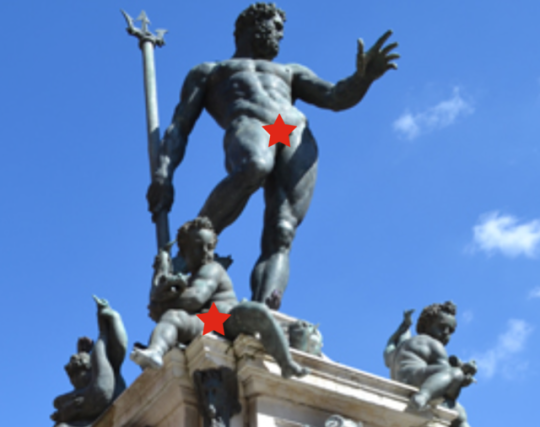
-
Art, Truth, Bulls, Fearlessness & Pissing PugsImpertinent. I'm biting my tongue. — Mongrel
Just to be clear, it was the decision of whoever put the statue there that was impertinent -- or rude. Isn't that what the dispute in NYC is about? Was it rude or clever to add the girl statue to the platform on which the bull rested? -
Art, Truth, Bulls, Fearlessness & Pissing PugsI've discovered your wealth of contradiction. — Mongrel
I contain multitudes and it seems to be getting worse. -
Art, Truth, Bulls, Fearlessness & Pissing PugsSponsored, paid for, contracted, commissioned... art should meet the requirements of the sponsor, if the artist wants more work in the future. Work that is created without a sponsor, but which the artist would like to be well received, should certainly touch the interests of the public that will be looking at it.
But... if an artist wants to make art that is irrelevant to the public, (let's say a depiction of Poseidon and earthquakes) more power to him, but the public might not know what the statue is about. Poseidon doesn't figure very large in the public imagination, these days. -
Art, Truth, Bulls, Fearlessness & Pissing PugsI thought that placing the girl figure in front of the bull figure was impertinent. On its own, the girl figure has much less aesthetic and symbolic value than the bull figure. The girl figure was enhanced merely because of the juxtaposition, and the bull was devalued for the same reason.
The bull is an old symbol of a confident up-market. It isn't about male-female interaction or women's progress in Corporate America. (The opposite symbol of a bull market isn't a cow market, it's an equally powerful bear market.) If the artist wished to affirm that womanhood in the corporate suites is powerful, then the girl figure would have best been placed facing a doorway into a corporate palace--of which New York City has a few thousand.
The leg-lifting-dog, which I would have made larger and more anatomically articulated, does to the girl what the girl does to the bull: It gets something for nothing. -
What will Mueller discover?That Trump is hiding a good deal seems far more compelling than a theory that he is merely stupid or petulant.
If he has high crimes and misdemeanors to hide (acts which he had to have committed very early in the game) it was because he was too arrogant to listen to institutional advisors about what a president can and can not do. As an independent business operator, he could make contacts with whoever he wanted -- like Vlad the Schemer, for instance. As an elected official, (and the top one at that) he no longer had so much freedom of action.
Because he had opted to use family members (like his son-in-law Kushner) it would appear he might have thought he could still operating the family racket, just make the racket bigger. -
Art, Truth, Bulls, Fearlessness & Pissing PugsIt's public art, so it should reflect the contemporary story. — Mongrel
I don't see why the "publicness" of an art work should reflect "this", rather than "that" kind of story. The public has many points of view, and if the art work is made of durable stuff, the public might have quite different opinions over time.
Post 2008-2009, the Bull is a symbol of something dangerous not only to the US, but to the global economy. It's not American strength (in this art viewer's eyes), but the force behind a speculative bubble whose popping ends up hurting the people at the bottom. The girl represents the spirit of youngsters who want regulations to be put in place. — Mongrel
Bulls aren't about bubbles, they are about confidence in the future. Besides, the 2007 debacle was not a typical bubble, anyway. The Tech Bubble that burst in the last part of the 20th century didn't run any risk of freezing up economic activity. The collapse in 1929 was a more typical bubble -- built on gross over-extension of credit in stock speculation. Wasn't the major problem of 2007 the presence of so much rubbish in the system--the bogus mortgages, the dubious credit default swaps, etc? Banks were leery of lending for fear their borrower (other banks, corporations, etc.) had taken on too much of this garbage and would default.
The Bull more accurately represents the confidence that "the rising tide will lift all yachts". Of course, one has to have a yacht to start with. -
Art, Truth, Bulls, Fearlessness & Pissing PugsOutrage holds an unfortunate amount of sway in the digital era... — VagabondSpectre
That's right, and people routinely move from slight annoyance to outrage in a half-step. Outrage is just rhetorically more useful. I don't think that anybody owns history. Whatever we are -- holocaust survivors, Native Americans, gay men, blacks, whites, Norwegian autoworkers, Turkish farmers -- we don't own the history we are involved in.
There are many thousands of unique groups with particular historical experiences and no group holds a patent on itself, or its own history. We can elect our biographers if we want, but if someone else also wants to tell our story, there is nothing we can or should do to stop them from telling it. Once told, if we don't like it we have legal recourse. We can also write it ourselves. -
Art, Truth, Bulls, Fearlessness & Pissing PugsIf the streets of NY are the property of those who live there... As such the public has the right to dismiss either of them at will, or both. — VagabondSpectre
More likely the streets of NY are the property of the City of New York. -
Art, Truth, Bulls, Fearlessness & Pissing PugsIt's getting harder for artists to make art that is both original and doesn't offend too much to be tolerated. What's an artist to do? Art has spun around from hard core realism to abstract expressionism.
They just go ahead and paint what they want in whatever style they want and let the paint chips fall where they may. Method is no longer an edge that can be sharpened. Everything has been done. So, what's left is social statement. Here's an example of Sam Durant's work:
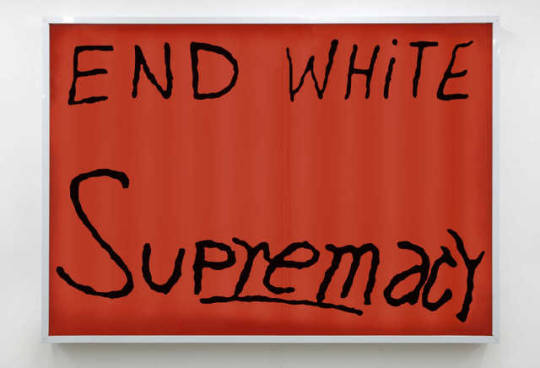
It is not an original work of art; it's just a slogan picked up from the Zeitgeist feed.
Durant got himself in hot water at the Walker Art Center in Minneapolis last week. He had built a sculpture that looked like a large gallows and referenced the hanging of 32 Dakota men in Minnesota in 1862 (among other hangings that included Saddam Hussein). There would have been more hanged in 1862, but Lincoln had pardoned some of the men).
Once news got out that the sculpture would be featured in the renovated Sculpture Garden, Dakota people objected on the grounds that "this isn't Durant's story to tell." They weren't consulted, and they objected strenuously. The conclusion of the story is that the Gallows sculpture will be given to the Dakota community who will tear it down and burn it.

-
Art, Truth, Bulls, Fearlessness & Pissing PugsThoughts — VagabondSpectre
I'd have made the dog bigger. -
Life is a pain in the assThe problem is that socialists seem to think that resources are infinite. — Harry Hindu
Some socialists seem to think this, and some capitalists also think so.
Human ingenuity is a great thing, but we should have learned by now that there are serious costs to using up resources that are readily available, and going after resources that aren't so readily available. Surely, the planet still contains a lot of resources. Just as surely, the easy materials have been extracted. -
Life is a pain in the assEven then, there isn't enough money that we can take away from the obscenely rich to pull everyone out of poverty. Who do you choose to keep in poverty? Like I said, we either make everyone poor, or keep things like they are with some tweaks. — Harry Hindu
Liquidating the wealth of the rich and distributing it evenly among 7 billion people isn't what is being proposed. Certainly, the rich would lose their wealth, especially capital assets like land, factories, shipping, retail properties, etc. They will also be divested of any interests they have in capital assets. What they will be left with is a box of personal property (i.e., their favorite blanket) an outbuilding to live in, and odds and ends.
The capital assets of the formerly rich will be turned to produce for the needs of the people. Food, clothing, housing, mass transit, cultural goods (books, music, etc.), and such basic things. The People will need to take charge of this production, because the rich will no longer be hiring overseers. This presents no problem. Hired hands already perform all of the labor that creates wealth. Everyone from managers to janitors is already at work in the plants.
The tricky part will be coordination. Resources, factories, and needs will have to be sorted out and matched up. This can be done through a sort of market system. -
What is the core of Corbyn's teaching? Compare & ContrastLike this. So even if the smartest, most informed people in the nation go to vote, their vote doesn't matter. They don't have sufficient votes. In the end it's still the below average that decides. — Agustino
You are assuming that the "below average" (unenlightened's stupid, the ignorant and the irrational) would somehow vote differently than the "average" or "above average". How well people perceive their own interests is quite possibly only weakly correlated with intelligence.
Those who fear the changes that vigorous response to global warming might bring (no more coal mining, for instance, no more dirty industries of which there are many) and in which their jobs are located are likely to vote for a candidate who does not promise a vigorous response -- or better, no response at all. The same thinking might apply to very wealthy people who own dirty industries -- coal, oil, chemicals, etc. Their wealth, instead of their jobs, might be very negatively affected by a vigorous global warming effort.
It is also possible that there are dull air heads and not terribly thoughtful people who vote for candidates in favor of strong responses to global warming because they entertain fantasies about a purified, fresh new world free of the smell of asphalt.
Only in the long run does global warming matter, and as John Maynard Keynes observed, "In the long run we are all dead". No one -- smart, stupid, or indifferent -- is good at long range planning and implementation. Wise people understand that there is such a thing as long-term consequences, but even wise people can not figure out how to implement consistent policy over 100 years time.
Trump's walking away from the Paris Agreement is not an example of stupidity; it's an example of reprehensible, counter-productive policy. Trump is choosing to appeal to his base, and to fuck over the longer term interests of the American People, and the world's people. -
Relativism and nihilismThe splendid jargonized pyrotechnic caricatures of postmodernism discussed in your references are apt demonstrations of what happens when people come to believe their own bullshit.
Bullshit took off in the 1960s, in ever so many ways.
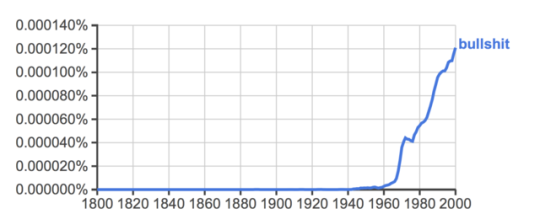
Google Ngram -
Fuck normal people?But Jesus does not seem to have been interested in redistribution of wealth in order to maximize welfare... — Cuthbert
Right. Salvation won't be brought about by a redistribution of wealth. What is critical in Matthew 25:35-36 are acts of mercy and unconditional love freely performed. Salvation is one thing, economic and social policy is something else.
BC

Start FollowingSend a Message
- Other sites we like
- Social media
- Terms of Service
- Sign In
- Created with PlushForums
- © 2026 The Philosophy Forum