
-
Is climate change overblown? What about the positives?China is still building coal fired plants, however, and even in a command economy reasonably safe nuclear plants take quite a while to bring on line.
Carbon emissions are becoming less intense (x amount of carbon per y share of GDP), but it is still increasing and according to Chinese sources will continue to increase for a period of time because China is still in it's planned process of industrializing and urbanizing -- both of which involve increases in carbon output. (https://blogs.scientificamerican.com/guest-blog/making-sense-of-china-s-drop-in-coal-use/)
Granted, they are building more nuclear and solar plants, but in such a huge economy still being transformed, "Peak carbon" has probably not been reached yet. And the year after peak carbon doesn't mean no carbon, it just means a bit less carbon. That applies to the rest of the world's economies too. And don't forget India which will be an increasingly massive producer of carbon from various processes.
The US remains #2 after China in world carbon output. -
Is climate change overblown? What about the positives?Global warming won't result in evenly distributed consequences, beneficial or not. For instance, the earth's polar regions are -- and will continue to warm -- more rapidly than equatorial regions. So, what's the problem with that?
Melted polar ice will raise ocean levels enough to obliterate most of the world's coastal cities and lands, where the largest concentrations of people live. This won't happen overnight, but it also won't be avoided overnight, either. Fisheries and farm land will also be disrupted (most fish are hatched along shorelines).
Continental regions will not experience global warming evenly, either. The American southwest region is expected to experience deepening drought and excessive heat. The north mid-lands will experience not just more rain, but more rain in more frequent heavy rainfall. So, what's the problem with that?
A lot of people live in the SW, and as it becomes hotter and drier, their continued residence there will become increasingly unsustainable. They will have to resettle at great cost. As for the northern plains states, the source of a huge share of the nation's and world's food, they tend to be flat. A 10 inch rainfall on top of higher average rainfalls generally means flooding (which is bad of course) but it also means a drop in crop yields as flat fields stay under water for too long a period. A drowned corn, wheat, bean, sunflower, etc. crop in July means no crop at all. Even with a longer growing period, midsummer crop loss means no crop that year.
The glaciers in Asia are melting. The ice will be gone sometime in this century. Yes, there will be heavier -- and more unpredictable -- monsoons. A 20 inch rain would seem to solve the problem of glacier loss, but it doesn't. A sudden heavy rain (say, 10-20 inches) is too much to deal with. The soils can not begin to absorb that much rain, and it runs off causing severe flooding.
As one approaches the equator (even as close as the southern US) excess heat will make it increasingly difficult to spend the usual amount of time outdoors during the summer months required to run agriculture, fisheries, infrastructure repair, roofing, and so on. This will most likely be a late 21st century problem, but that's only 60 years away.
So yes: there will be benefits. One will be able to ship goods through the arctic ocean between Europe and Asia. The downside of a warm arctic is more methane in the atmosphere as the tundra melts and starts rotting, and releasing methane hydrates. Methane is a much more powerful greenhouse gas than CO2.
A warm Arctic might also mean a disruption of surface and deep ocean currents. So who cares? If the gulf stream is disrupted, Europe will get a lot colder. (It won't warm up enough to eliminate winter.) A much colder, and maybe drier Europe, will not be pleasant. -
EntrenchedI think there are several things at work:
1. As people watch the debate, they rehearse arguments to themselves that support their previously held opinions.
2. When people discuss debates with others who agree with them, this reinforces previously held views.
3. People seek out confirmation of their opinions (biases). After watching a Clinton/Trump debate, for instance, I would turn to my preferred media (like the NYT, In These Times, The Nation, etc.) for confirming opinion. I would not go to Fox News or some conservative internet site for debate analysis.
4. It isn't only the actual opinions that people hear that affect their opinions. Tone of voice, dress, facial expression, stage setting, audience reaction, and so on also affect how people respond to debates. For example, Clinton's voice became raspier (in my opinion) as the campaign progressed--most likely an effect of too much "yelling" for lack of a better word, leading to vocal chord irritation. Sanders voice, by comparison, was much less stressed. Ditto for Trump. I found Trump's face very unattractive. I liked Rubio's face the most of any candidate, but didn't and never would have voted for him. Bill Clinton's voice also became pretty stressed during his campaign in the 1990s. -
EntrenchedCan debate entrench people in their views? — Jeremiah
Yes. There has been research that debates reinforce beliefs already held and do not dramatically change opinion.
An example:
https://journalistsresource.org/studies/politics/elections/presidential-debates-effects-research-roundup
“On the Communicative Underpinnings of Campaign Effects: Presidential Debates, Citizen Communication, and Polarization in Evaluations of Candidates”
Cho, Jaeho; Ha, Yerheen Ha. Political Communication, 2012, Vol. 29, No. 2, 184-204. doi: 10.1080/10584609.2012.671233.
Abstract: “Previous research on presidential debates has largely focused on direct effects of debates on viewers. By expanding the context of debate effects to post-debate citizen communication, this study moves beyond the direct and immediate impact of debate viewing and investigates indirect effects of debate viewing mediated by debate-induced citizen communication. Results from two-wave panel data collected before and after the 2004 presidential debates show that, as previous literature has suggested, debate viewing leads to partisan reinforcement and that these debate effects are in part mediated through post-debate political conversation. These findings provide a new layer of complexity to our understanding of the mechanisms underlying debate effects.” -
What is the difference, if any, between philosophy and religion?OK, I'll drop the claim about UUs. I'll also back off my assertion about ethical societies, since my actual experience with them is pretty limited. Maybe there are religious groups sans supernatural, maybe not.
But I'll hold onto this: Whether an attendee of explicitly religious or explicitly secular organizations, what people actually believe does vary. There are people who attend religious services who don't, in fact, believe in supernatural stuff. There are very secular atheists who hold onto some supernaturalistic ideas. Why? Because people just aren't 100% consistent in what they think, or 100% consistent between what they do and think. People waffle, slip and slide, and sneak in the back door of all sorts of things, including belief and disbelief.
Under the best of circumstances, we are not entirely rational beings. What we rationally think doesn't strictly govern what we feel, and what we feel can alter what we think -- round and round we go. -
What is the difference, if any, between philosophy and religion?What is it about them that makes you consider them to be religions?
I've been impressed by Alain De Botton. He's written Religion for Atheists, but the gist of his book is that religions have great qualities (like traditions that remind us what is important), he just rejects the idea that God exists. — anonymous66
I consider them "religious" because they seem to think they are practicing a religion. I attended socialist meetings for a long time, which had a similar feel to them, but we explicitly did not think we were practicing a religion. We thought we were practicing politics. Maybe we were mostly whistling dixie, but that's another story.
I like this: "religions have great qualities (like traditions that remind us what is important)".
Religion provides useful services that are not provided by secular society -- not just in the present era, but in past times as well. Society is usually composed of competing interests, some of which--if unchallenged--have the capacity to totally degrade society. Nazi Germany is a prime example. Catholic and Protestant organizations in Germany by and large failed to challenge Nazi ideology early on, when a vigorous challenge might have had more consequence.
Religion, of course, can have deleterious effects on society too. Fundamentalist Christianity is a prime example. So also is the equivalent strains in Judaism, Islam, Hinduism, or any other religion. In these cases, it is secularists who must do the challenging. -
What is love?Why do we use just one word for love? Well, that's just English for you. There are many other words and phrases in English that describe nuanced understandings of love. The precise meaning that is intended for "love" has to be judged by context. The difference between "I love popcorn" and "I love my dog" is pretty clear. The difference between "I love my dog" and "I love my wife" might not be all that clear cut, given the possible state of relationships between people. Partners sometimes wonder where they stand Vis-à-vis the dog.
Emotions are generally a mix. There are a variety of kinds of love, and we feel more than one at a time. We mix other feelings with love, too. That's just the nature of the beast (i.e., us). -
What is love?I - and others - have mentioned them. They are
Agápe (ἀγάπη agápē means "love: esp. charity; the love of God for man and of man for God. unconditional love. This type of love was further explained by Thomas Aquinas as "to will the good of another."
Éros (ἔρως érōs) means "love, mostly of the sexual passion."
Philia (φιλία philía) means "affectionate regard, friendship," usually "between equals."
Storge (στοργή storgē) means "love, affection" and "especially of parents and children" It's the common or natural empathy, like that felt by parents for offspring.
There are other Greek words for love and affection, and there are other (modern) interpretations of these types of love. Naturally, there is a good deal more to say about the ancient Greek meaning of these words. Search Wikipedia. -
Relationships- Are They Really a Source for Meaningful Life and Optimism?Shouldn't we be discussing that Pussy IS Really a Source for Meaningful Life and Optimism? Sorry... I meant "relationships"? — intrapersona
What you are experiencing in this pointless discussion is what passes for pussy (errr, meaningful relationships) among philosophers. Actual pussy is not interested in this kind of intellectual pusillanimous pussyfooting. -
Relationships- Are They Really a Source for Meaningful Life and Optimism?You measure your height WITH YOUR MIND — intrapersona
How, exactly, does "your mind" measure anything all by itself? -
What is the difference, if any, between philosophy and religion?You're concentrating on the people. I'm talking about the institution and/or belief system. — anonymous66
There are no disembodied institutions or belief systems apart from people. No matter the institution or the belief system, it is always peopled (or it is dead).
Can you give an example of a religion (not people who claim to be followers) that doesn't include supernatural beliefs? — anonymous66
I was thinking of some very small groups like 'ethical societies', secular humanist organizations, some unitarian groups that are just about free of supernaturalism, and the like. -
What is the difference, if any, between philosophy and religion?Well, there are these r u m o r s of polygamy, child rape and organized crime (Mormons tied in with the Mafia -- Italians and Mormons??? -- very odd) but Mormon is a religion of Peace, so they just couldn't be doing all these horrible things.
-
What is the difference, if any, between philosophy and religion?Mormon Satires:
Rosalie Sorrels, 1961
Mormon satirical song based on Adele's Hello
-
What is the difference, if any, between philosophy and religion?Joseph Smith — lambda
Have the Mormons been blowing things up lately? Unless you consider Mormon missionaries terrorists, they don't seem to be appropriately grouped with Jihadists. -
What is the difference, if any, between philosophy and religion?Thanks for the clarification. I hang around Lutherans, but was raised a Methodist -- they think it strictly symbolic. Pretty much, anyway. But I could be wrong.
-
What is the difference, if any, between philosophy and religion?Most religions require belief in the central supernatural elements. For instance, mono- and poly-theistic religions require belief in god(s). Must one believe in transubstantiation (bread and wine become the body and blood of Christ)? Some? many? believers downgrade transubstantiation to a symbolic transformation. (Among Catholics and Lutherans, the Eucharist isn't considered symbolic. Lutherans, however, limit the transformation to the celebration of the Eucharistic meal. left over bread and wine revert to their original nature.)
I'm not clear about Buddhism. Anybody?
The so-called humanistic, ethical "religious" "movements" like secular humanism avoid any supernaturalism.
All that aside, it is the case that what believers actually hold to be true about the supernatural varies a great deal. For instance, not all Christians believe Jesus rose from the dead. Not all Catholics and Lutherans believe in transubstantiation. Not all Christians believe in miracles. Not all Jews believe in God.
How can this be?
Membership in the believing group, identity with the believing group, loyalty, abiding interest, etc. are also features of religion, as well as supernatural elements. Some people identify religion as "a good thing" even though they don't really believe any of it. And they don't show up on Sunday (maybe Christmas Eve, though).
There are priests, pastors, preachers who don't really believe what they are saying. This, however, is likely to lead to intense cognitive dissonance and usually would result in the priest, pastor, preacher departing--either on his own or with assistance.
Some people are outliers, doubters, disbelievers, skeptics, about a lot. They don't believe in various planks in the religious platform, aren't loyal to their country, don't believe in the law most of the time, doubt the honesty of all politicians no matter what, don't really believe their helping-profession job actually does any real good, don't really believe in the sanctity of the marriage they are in, aren't good soldiers, are likely to steal from the till if they get a chance, and so on.
Then there are true believers who are faithful down to the last comma and dotted i--and people in between the two extremes.
That's just life. -
Relationships- Are They Really a Source for Meaningful Life and Optimism?Is "lol" a subjective fact or an objective truth, and how would one tell the difference?
-
Relationships- Are They Really a Source for Meaningful Life and Optimism?The statement "All truths are subjective" does not correspond to any objective fact. — m-theory
Yes it does. — Terrapin Station
I get what you are saying.
You are saying that the term "truth" and the term "subjective" mean the same thing, but that is not an objective fact — m-theory
No I'm not saying that truth and subjective are the same thing. <sigh>
It seems like you're not really interested in trying to understand what it is that I'm saying. Either that or it's extremely difficult for you to understand. — Terrapin Station
And this, boys and girls, is an example of a meaningful life relationship for philosophers. Were they not separated by the chasm of cyberspace, they would, about now, be ready to fall into each other's arms. -
Relationships- Are They Really a Source for Meaningful Life and Optimism?He didn't say it per se, a character in a book he wrote did. The reason being that other people make us self-conscious, make us view ourselves as an object from the outside. — Wosret
The story is "No Exit" and the passage is:
“All those glances that I eat … Ha, you’re only two? I thought you were much more numerous. So that’s hell. … I never thought You remember: the sulfur, the stake, the grill .. Oh What a joke. No need to grill: hell is other people”. -
Relationships- Are They Really a Source for Meaningful Life and Optimism?Hell is other people. - Sartre — darthbarracuda
Is J. P. the devil? -
What is the difference, if any, between philosophy and religion?There is much more ritual in religion than in philosophy.
Singing is far more common in religion than in philosophy.
Religion is far less 'open ended' than philosophy
Religion more readily judges the meaning of behavior than philosophy
Passion is probably more common in religion than in philosophy, but that depends on the topic and the debaters.
Religion is more of a going concern than philosophy -- more assets, more adherents, more employment, much better cash flow.
Professional theologians and philosophers share generally similar education levels.
Educated religion-shy western Europeans are currently religious outliers. -
Are the Notions of God and Personal Immortality Emotional Security Blankets?Are the Notions of God and Personal Immortality Emotional Security Blankets? — ThePhilosopherFromDixie
Perhaps, but what of it?
I just finished up IRON WIND, a book comparing French and Polish, Jewish and Catholic responses to the Nazi occupation of Europe. For the Jews viewing their own destruction as a people, and their impending individual deaths, the question of whether believing in God was some sort of "security blanket" was a critical question.
For some Jews, belief in God offered a way of sustaining their personal and collective identities in the face of certain annihilation. For others it was a burden, if they could not find a way to account for their faith and God's apparent abandonment of them. Many were, or became disbelievers. Some recognized their faith as some sort of "security blanket". In the end, they died at the hands of the Nazis, whatever they believed.
Most of us are able to contemplate the existence or non-existence of god as an academic question. But one thing applies to us that applied to the doomed Jews: Whatever we believe, we are going to die just the same. So, if belief in God offers comfort, to whom is that a problem? What are you (or anyone else) offering as an improvement?
Officially, I don't believe in the god that I grew up with. I've found ways of understanding god that I like better, but I don't find these overly convincing either. I'm 70; death isn't all that far away now. Hoping for more time on earth (which I definitely do) is a sort of security blanket, too. Of course the old security of life-eternal was comforting--assuming one was spending it in heaven and not hell. But I find it very difficult to believe in such a thing as this brief existence and then another, eternal existence. Belief in god has (for me) become a problem of cognitive dissonance, not a security blanket.
There are more pressing issues of faith that Iron Wind presents clearly: Why were French and Polish Catholics NOT more concerned about the fate of their neighbors, the Jews? What we do or don't do as people who have, or don't have, faith is far more important than how we feel about dying. -
What is the purpose of Art?spiritual. — Punshhh
I liked your post except for that one word, spiritual. It has become a very "spongy" word, profoundly vague, indefinite, with no solid definition. I wish the word hadn't been debased by so much use to indicate something, but who knows what? -
What is the purpose of Art?Maybe art does not have a direct evolutionary purpose but is a by product of creativity and inventiveness. — m-theory
Our predecessors spent a long time in the stone age without apparent innovation, invention, or creative product--at least as far as we can tell from the archeological record. Then around 40,000 - 25,000 years ago they emerged from a long static period--think Lascaux cave paintings, small carved figures, and more complex lithic tools.
I wouldn't myself argue that art has an evolutionary purpose -- we really don't have any way of knowing -- I'd argue for the by-product approach. Creativity wouldn't limit itself to tool making, hide scraping, meat cooking, or weaving; it would overflow into "pointless", expressive activity. Not without some more technology, of course. If a an advanced cave man is going to spread paint around on himself and the walls, he has to make it first--grind some stuff up, and mix it a bit, learn how to deploy it. If he's going to string some shells on a piece of fiber, he has to learn how to drill a little hole in the shell without wrecking it. And so on.
All that is required once we get to this point is enough time and safety to practice expression.
As time went on, all sorts of technology was created. For instance, someone, some modern group of people, figured out how to extract a very strong glue from birch bark, for instance. They used it to fasten points to shafts. Getting glue out of bark is a not-at-all-obvious process. Their method required innovation, experimentation, an understanding of several different materials, and the careful application of heat. From such technology can come more complex creative work. -
What's up with people who contradict themselves on their own sincerity & can't see their own faults?This all goes to show that life is just a living nightmare.
-
The saga of brothers Alex and BobFirst, change the names in one of the scenarios. It's confusing to have two situations with Bob and Alex. How about Lewis and Vladimir for one case, Bob and Alex for the other.
People make mistakes. Alex's is the primary mistake and it is his responsibility to pay for the cost of speeding (the increased insurance rate). Bob's mistake is secondary. He bears no blame for Alex's speeding. Bob isn't obligated to pay Alex for part of the twice-increased premium. On the other hand, maybe he shouldn't have agreed to cover Alex in the first place. Alex, drive more cautiously and pay the cost of speeding.
Bob, was there nowhere you could buy some oil and add it? Bob, cough up some money for the ruined engine.
Bob and Alex should stop doing business with each other. -
What is the purpose of Art?I haven't seen the real thing, but what I posted is not a good representation of it, pretty sure.
-
What is the purpose of Art?
I am very sorry. I apologize for any inconvenience this may have caused you, but I meant to type "Van Gogh" not Pablo Picasso. Apparently I wished to impoverish Pablo. Van Gogh and Oscar Wilde both died broke. If this error resulted in losses, you may be eligible for financial compensation from somebody--maybe the owner of this website. Or maybe John D. Rockefeller, IV.
On the one hand, I wasn't aware that Picasso was rolling in cash; on the other hand, you may not be aware that Picasso did not paint starry nights.
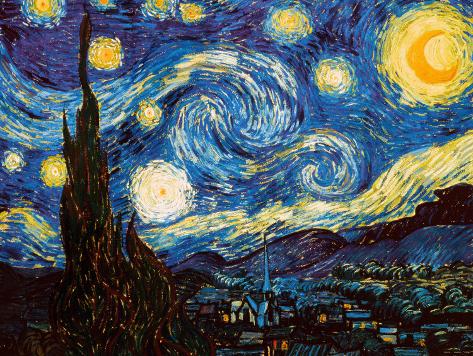
Van Gogh -
What is the purpose of Art?My guess is that all trees started out as bushes, and it became very crowded. Some clever tree decided to expand up, rather than out, and this worked out quite well for everybody concerned -- except the bushes, of course.
-
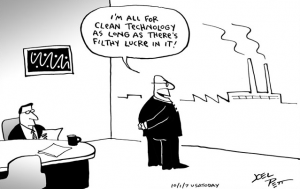
What is the purpose of Art?Well, I am a socialist, after all, but I picked up the term before I started thinking a lot about capitalism. Lot's of people have used the term "filthy lucre" over the years, and it's scriptural (in the King James Bible, anyway).
It is used in the King James Version of the Bible. like here, Titus 1:7... "For a bishop must be blameless, as the steward of God; not selfwilled, not soon angry, not given to wine, no striker [hurtful], not given to filthy lucre;"
-
What is the purpose of Art?Haven't read it. I picked up the term from English literature, or background reading, some where. Sounds like an appropriate read, though -- considering my attitude toward capitalism.
-
What is the purpose of Art?Were the disrupters of realistic and traditional representational art in the latter part of the 19th and early 20th century managed by the Old Elite? I don't think so.
PicassoVan Gogh wasn't selling his sunflowers and starry nights for a Queen's ransom (just how much does Queen Elizabeth go for these days?). As I recollect the big money never reached the famous artists, and their works didn't start commanding big sums for quite some time. People like Gertrude Stein were able to pick up a lot of later-valuable art on the cheap, weren't they?
The "art market" is a whack job on people with more money than they know what to do with. It's a racket managed by the owners and buyers of art and the galleries and auction houses who have a great deal to lose by not overpricing all of the art they wholesale and retail. I suppose some artists benefit right away from this racket, but most of them don't seem to.
I'm going to exit the closet and declare that I like Jackson Pollock, Mark Rothko, Andy Warhol, et al more than a lot of the stuff I've seen in museums. (I've come to this liking late in life.) I liked the Luther portraits by Lucas Cranach and Company that are in the big German State Luther exhibit currently in Minneapolis (and two other cities before it goes back to Germany for the 500 year anniversary). It's a very plain but forceful portrait, solid background, nothing decorative about it.
Harlan Ellison has a great quote in his fine science fiction short story, "The Man Who Rowed Christopher Columbus Ashore: "It is not amazing that there is bad art. What is amazing is that there is so much good art everywhere." That's sort of my take on art--of all kinds. There are wonderful artists producing terrific music, great designs, architecture, sculpture, plastic and representational forms, dance, film, fiction, and so on.
The filthy lucre of the market makes the plenitude of great art possible and available to non-elite riff raff like me. The market giveth pure gold and miserable dreck alike. Of course there is a lot of crap on YouTube. That's not a fault of the market place or Youtube. The crap is the fault of ubiquitous recording devices, ease of up-load, and an open door. Let's keep it that way. It enables dissidents to put up unpopular screeds and philosophers to discuss dry topics, as well as enabling the not-overly-talented to display their not-too-extensive abilities.
Crap is the price of pure gold. -
Embracing depression.shouldn't I embrace a cure to the underlying problem (back ache) if it were available? — Hanover
Exoskeleton. They're on the way -- maybe 2030? the Wall Street Journal said. Hang in there. You won't leap out of bed in the morning, but your exoskeleton will, dragging you along with it. You don't want to go to work, but your exoskeleton does (it likes messing around with the other exoskeletons) so that's where you're going to go. You want to go for a swim, but your exoskeleton hates water, so... no surf for you. -
What is the purpose of Art?Have you studied much art? — Noble Dust
I would have to study art, because I seem to have approximately zero talent in art. -
What is the purpose of Art?Agreed in that I don't think a definition of art has much importance, but Duchamp was ... Fujimura moves in the irrelevant high art circles that have increasingly less and less influence on culture. — Noble Dust
My apologies for blithely stepping into a subject area about which you know a great deal more than I do. Thanks for the very interesting comments.
No, it's not this simple. So often, the artist isn't aware of how the audience will interpret the art. Dylan was confounded by how deeply his audience interpreted his lyrics. Now, who's "right" here? Dylan, or the audience? No one is "right". — Noble Dust
I don't think we should sever the text from authorial intent, but people do this all the time -- use a text, a sculpture, a melody, almost any object -- and project onto it whatever they feel or think, like a Rorschach image. Is that fair game? Well, sure -- as long as they don't claim to know more about what Dylan meant than Dylan himself.
The arts have done well in this past century up to the present moment. There are many outstanding works of drama, music, literature, opera, sculpture, poetry, fabrics, film and photography, painting, etc. produced in the post-Duchamp market economy. All of it great? No, of course not. There has been a good deal of awful stuff turned out across the board. Has more rubbish been produced in the 20th century than in previous times? Maybe -- there are more people producing than in previous times, and with less elite control over what gets done. -
What is the purpose of Art?What is PDQ? — Noble Dust
PDQ = Pretty Damned Quick.
But by creating it, do we even know what it is that we're creating? — Noble Dust
Yes, I think we do. Now, whether somebody else LIKES IT is another matter, and quite often people who don't like something are unwilling to call it "art".
Agreed, excep we seem to have different estimations of the purpose of that thing we do, namely art! And here we have a fundamental problem with art; it's definition... — Noble Dust
It's not a problem. We can have different estimations of the purpose of art. That's fine, and we can define art however we like. Besides, Marcel Duchamp -- that TITAN of ART who entered a urinal in the 1917 Armory Art Show in New York City -- said that "If you call something art, then it is art." So that settles it. Art is whatever you think art is.
Duchamp wasn't a nit wit; he was putting the art world on with his signed 'found art' urinal. He also did interesting paintings and assemblages.
We can dither over the preferred definition of art till the cows come home, as if there were clearly drawn lines around what "must be art' and what "can't be art". "Art" is by definition open ended. You can't have art AND a closed ended definition. As a structural member, a piece of steel is a closed-ended object. It either meets formal structural standards, or it doesn't. As a sculpture, a piece of steel is open ended: it has no formal standard to meet. It doesn't have to look like anything in particular; it doesn't have to do something; you don't have to like it. If Joe Blow made it as an art work, then it is art. Don't like it? Fine. Don't look at it.
There isn't any grand mystery here that hasn't been uncovered. Stop looking. -
Why is social conservatism generally associated with religion?So let me clarify: In the present world where today's posters live, whether you are religious and conservative, religious and progressive, atheist and conservative, or atheist and progressive, is to a substantial degree the historical contingency of from whom, where, and when you were born.
Whether being "religious" and being "conservative" has always gone together depends, to some extent, on the historical contingency of how you look at the past. I look at Jesus as someone who was (presumably) very religious (what with his being God and all) and was decidedly not a conservative (what with his overcoming death, and inaugurating the Kingdom of God, and all). Somebody else might look at Jesus and arrive at a different conclusion.
On the other hand... Most of the Pharaohs were presumably religious and conservative -- except for the revolutionary Akhenaten who was a monotheist in a long line of polytheists. The Vestal Virgins of Rome were both religious and conservative, they being servants of Vesta, the goddess of hearth, home, and family, and also the keepers of important documents, like the Emperor's will. Agustino thinks Islam was conservative from the get go. That may be. Others might not look at it that way.
But whether YOU are religious and paleo-conservative or religious and a left wing revolutionary is largely a historical contingency.
BC

Start FollowingSend a Message
- Other sites we like
- Social media
- Terms of Service
- Sign In
- Created with PlushForums
- © 2026 The Philosophy Forum