
-
Evil = Absence of Good => A Grave Error?The fact God is transcendent would imply that He both exists and doesn't exist at one and the same time. Or better said, God is beyond Being and Non-Being or beyond metaphysics as @Michael Ossipoff says.
-
Evil = Absence of Good => A Grave Error?
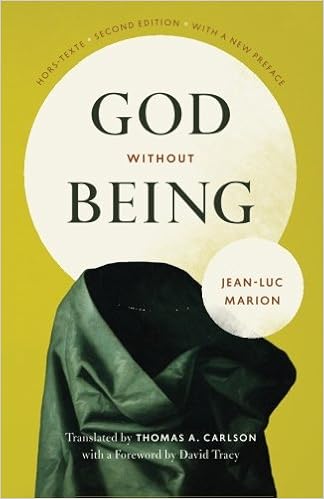
Personally I find Spinoza's ontological argument for Substance valid if we were to transfer it to God. But what do you think of this Catholic theologian:I know you are joking, but seriously haha... What would he answer? He can't stop existing and there isn't a point where he didn't exist... So... Does he know why he exists? xD — Beebert
-
Evil = Absence of Good => A Grave Error?
Yes >:) - He'd say "why not?!".Would God be able to answer someone if someone asked him; "God, why do you exist?" — Beebert
Reveal(just joking LOL >:O ) -
Evil = Absence of Good => A Grave Error?
Well again, as I said before, human beings will be judged by the Law, and are in fact bound by the Law. So if they do evil, then they are to be judged for it. Remember that Abraham didn't actually do evil, if he were to have done it, he would have been judged for it. So the terrorists in question will be judged since they are under the Law - they are not God. And the fact that they think they are God, and are thus above the Law is actually blasphemy.I agree with you, it is probably a correct interpretation and I would hold the same view, but still: The terrorists would probably also like this interpretation and use it to their advantage... They would probably say that they hear God's voice, perhaps even that he communicates with them as directly as he did with Abraham, that this relationship is more important than their commitment to the law and therefore... They might say "I break the Law and destroy the World Trade Center for the sake of God - namely my faith!" — Beebert
Both really, BUT some of those 613 commands of the Torah are particular commandments to the Jewish people, not to everyone else. Noahide Laws + 10 Commandments (for Christians) form the "core" of the morality of everyone else.By the Law here, do you mean how we have treated our neighbour, mainly if we have clothed the naked and visited the sick and helped the homeless etc? Or do you mean if we have followed the 613 commands of the Torah? — Beebert -
Evil = Absence of Good => A Grave Error?
Well God prevented Abraham, not Himself, from breaking the Law in that case.True, the law wasn't broken by Abraham, and God prevented it. But why? — Beebert
I don't think it is coherent to say that God breaks the Law, for God simply is His own justification, so God doing evil, or breaking the Law, etc. is incoherent.Isn't the answer to that also because GOD never breaks this law? — Beebert -
Jesus or Buddha
Oh... I was thinking more with the man himself :PI'm sure John Piper could set me up with a fine young Christian lass. — Noble Dust -
Evil = Absence of Good => A Grave Error?
Because God doesn't demand them that (therefore this premise would be false)? Human beings are bound by the moral law, and they will be judged by the Law. So if you break the law (remember that Abraham didn't actually break the law), then you'll be judged for breaking the law.God demands them to kill for the sake of faith — Beebert
No, the actions wouldn't be considered good. Remember that with Abraham, he didn't believe God was commanding him to do evil, for he believed in his heart that Isaac would live, since God promised him earlier that Isaac would live. It was however a teleological suspension of the ethical, in that Abraham's direct relationship with God was more important than his commitment to the law. The good was his faith, not his actions. So Abraham didn't actually break the law, it was just his readiness to break the Law for the sake of God that was in question - namely his faith.it is certainly a risk to say that God is above his law and can demand people to do evil things and consider it "good"(though I know that God prevented Abraham from killing Isaac)... — Beebert
Yes, exactly, for man is not God.I mean, you say that God is beyond good and evil but yet that man is to be condemned if he acts "beyond good and evil", if I have understood correctly? — Beebert
There is no indication that God wants you to act beyond good and evil, which is for example why He stopped Abraham from killing Isaac. That's also why we're judged by the Law. It was but a test of faith, of bringing Abraham closer to God and making him trust God more than he trusts himself that such was demanded of him. The story and the rest of the Bible though does make it clear that such demands are exceptional, and God doesn't actually intend any creature to do evil unto another.But what if God wants us to act beyond good and evil? — Beebert -
Jesus or Buddha
Incidentally, I think she may be right :-OUsing that logic, a woman who was raped by a police officer could say all police officers rape women. — John Harris
Reveal>:O -
Evil = Absence of Good => A Grave Error?
For the same reason that good isn't just the absence of evil either :P . The fallacy there is that two different aspects of reality cannot be defined in terms of each other, but must rather be defined in-themselves. The experience of evil, is different than the experience of good. So defining evil in relation to good is just as false as defining good in relation to evil. It would mean to reify it.Why couldn't evil be real and goodness the absence of it? Why couldn't there be a Form of Evil as the one true reality instead of a Form of the Good? — Thorongil
What's the problem with this? God is God, He's not a human being. I find this highly incoherent, trying to judge God by the very Law (which you call morality and is written in everyone's heart) that God Himself has created :s Human beings, and those under the Law can be judged by the Law, but God? That's silly - it is blasphemy, treating God as one of your fellow creatures that you can judge. God is His own justification, He is above good and evil. How could anything God does be evil, ie against the Law, when God is the Creator of the Law and supreme over it? God ordered Abraham to sacrifice Isaac. Can you imagine being Abraham, and approaching Mount Moriah, knowing that you have to pull that knife and thrust it into your son's neck?! That seems horrifying to us, and it is. It is completely against the moral law that is written in our hearts. But God is above the Law. That is why Abraham was right to have faith in God, believing both that he will kill Isaac, and that Isaac will live - even though it was absurd. For nothing is impossible for God.Why worship a God who deliberately creates evil? — Thorongil
No it wouldn't. This is precisely the difference between creature and Creator. I have no right to destroy God's creation, for it is God's, not mine. But God has a right to destroy all of creation if He so desires, for it is His. I don't understand why so many people insist that God must be an anthropomorphism of the human :s Why make out of God a creature like us? :sJust as we wouldn't follow or admire a human being who caused evil, so we shouldn't do the same of God. It would be morally obligatory to oppose such a being. — Thorongil
As for why I admire God, it is precisely because He is transcendent, and thus beyond Good and Evil - that He is Lord over all of Creation, unbounded by anything, entirely free, and He doesn't owe us anything. Many people have this tendency to have expectations from God, but God doesn't owe a creature anything. He decides what to do with His Creation, for it is His. No human judgement can comprehend God. Once someone gets this, there is a profound humility towards God that is felt, as well as acceptance of life as it is. It is much like the end of Job's story. Job cries to God and wrestles with Him, until God booms to him that he has no right to question His creation to begin with!
He has created such beautiful things as the stars in the heavens, the galaxies, each of the animals, the angels, the demons, and everything that exists. Job should be grateful even that he had the chance to see the rest of creation, even if for a single second. And behold Job is protesting because he is suffering. So what? Who is he to have expectations of God and demand that life be as he wants it to be? Is he greater than God to judge God? It is God's right as His Creator to allow anything to happen to him. Job has no right to demand something out of God. How can God owe any man anything?! -
Evil = Absence of Good => A Grave Error?
This is a philosophy of religion discussion... it's not placed in Ethics this topic, you know...That isn't "evil". It's just misguided, lost, malicious &/or dangerous people. — Michael Ossipoff -
Evil = Absence of Good => A Grave Error?
That's like asking why love pulls people together. It's just it's nature.Hmmm...true opposite must be the complete absence. Why does hate push people apart? — Lone Wolf
But the true opposite isn't a complete absence, that's precisely my point. The complete absence of that which pulls people together doesn't push them apart also, this is an important point.
Selfishness, pride, etc.?but what are the elements of hate? — Lone Wolf -
On perennialismI think Wayfarer has never really questioned his attitudes with regards to this. Apart from my last post which he has not addressed, it seems that he has just taken some of his personal impressions to be the truth and that's that, never really thought if it could be otherwise.
-
Evil = Absence of Good => A Grave Error?
Opposite means contrary to it. If love is what brings people together, then its opposite isn't the mere absence of love, but rather hate, that which pushes people apart.What makes it the opposite? What does opposite really mean? — Lone Wolf -
Evil = Absence of Good => A Grave Error?
Not only must it not be loving, kind, etc. but it must be the opposite of those. There's a subtle difference there. I can be unloving for example, without being hateful and resentful. That's precisely why evil (injustice, malice, etc.) isn't merely the absence of good, but rather its opposite.In order for something to be evil, it must not be loving, kind, patient, or joyful. I agree here. :P — Lone Wolf -
Evil = Absence of Good => A Grave Error?In fact, even the above isn't very well said. Clearly the presence of X implies the lack of presence of everything else at that point in space and time. But we can't say X is the absence of Y - for then we should add that X is also the absence of A, the absence of B, etc. It is rather better to say that for X to be present, the absence of Y is required. So for good to be present, the absence of evil is required (though such would not be sufficient). Inversely, for evil to be present, good must be absent (but again this wouldn't be a sufficient condition).
-
Evil = Absence of Good => A Grave Error?
Agreed, but X isn't JUST the absence of Y.If X is not Y, then X must be absence of Y, because Y is not in X — Lone Wolf -
Evil = Absence of Good => A Grave Error?
Can we see red and white in the same place at the same time?Can we have light and dark at the same time in the same place? — Lone Wolf
Notice that the fact we can't doesn't tell us that white = the absence of red :P
Not really, because good and evil are opposites, just not in a logical sense where one is the absence of the other (and just that). They're opposites like red and white are opposites (as colors, when one is present the other must be absent but the other is not JUST the absence of the former).If evil was a completely separate substance, then it should be possible for a deed to be evil, and full of goodness too. — Lone Wolf -
Evil = Absence of Good => A Grave Error?
No, because I don't think we can straight-jacket how God perceives. God can be angry, vengeful, jealous, distant as well as loving, kind, close to us, etc.Anyway, would you agree with Isaac of Nineveh's view? — Beebert -
Evil = Absence of Good => A Grave Error?
Nietzsche felt Spinoza was a kindred spirit at times, but I think that's merely an impression. If you look at their characters and what they wrote, it becomes clear. Spinoza was a virtue ethicist, Nietzsche an immoralist :POkay I see, Perhaps you are right here about Spinoza. I only know that Nietzsche found Spinoza to have basicslly understood what "evil" is... And I have not read his Ethics so I shouldnt comment too much on this — Beebert -
Evil = Absence of Good => A Grave Error?
Nietzsche was a failed Spinozist, since he takes the fact that evil and good have no independent existence as meaning that they have no existence whatsoever, which Spinoza would vehemently deny.And to be honest with you, dont you think that this definition of evil(Spinoza's) is a bit similar to Nietzsche's, just that Nietzsche took it even further? That is my understanding from especially Works like Daybreak and Beyond Good and Evil. — Beebert -
Evil = Absence of Good => A Grave Error?For example, Spinoza would say that beating someone is definitely evil. But the evil isn't "in-itself" but rather must be defined in terms of you and the other person. It has no independent existence.
-
Evil = Absence of Good => A Grave Error?
That's basically saying that they can't be defined in-themselves. They need to be defined in relation to, for example, the Law - or at any rate, something other than themselves. His point is that a thing is not evil in-itself, but rather in its relationship with other things. So it really is an existential fact that:What it seems to me like Spinoza says, is that neither good nor evil are real, intrinsic properties. Instead, goodness or evil are concepts we employ when we compare things. — Beebert
But that goodness isn't an in-itself of music but comes from the interrelationship of melancholy and music.Music is good for one who is melancholy — Preface Part IV Ethica -
Evil = Absence of Good => A Grave Error?
The fact that the damned and the saved encounter the same thing is a necessity, for God is omnipresent isn't He? How could the damned escape God?! Is God not stronger than any attempt to escape Him? Isn't that what his omnipresence means?Well then you and I possibly agree here I think. If I have understood you correctly that is... — Beebert
I think the problem with a lot of modern (and not so modern) theology is that it doesn't take the transcendence of God seriously enough. -
Evil = Absence of Good => A Grave Error?
No, he didn't say that, he just said they have no independent existence, not that they have no existence whatsoever. Christians know that good and evil are defined in relationship to God's Law, and thus also have no independent existence apart from the Law.Yes exactly, so according to Spinoza Good and evil are not intrinsically real. — Beebert -
Evil = Absence of Good => A Grave Error?
Yes, exactly! And that fits perfectly with my conception of evil and good being defined in-themselves, and ultimately in relation to the Law (thus, as Spinoza says, having no ultimate reality in and of themselves).Well, werent you the one who claimed that hell is just a different perception of God, where one suffers instead of feeling bliss? Despite the fact that the damned and the saved encounters the same thing? That ls, they encounter the same thing buy experiences it differently because of their inner condition? — Beebert -
Evil = Absence of Good => A Grave Error?You do know that Spinoza denied the reality of evil? — BeebertAs far as good and evil are concerned, they also indicate nothing positive in things, considered in themselves, nor are they anything other than modes of thinking, or notions we form because we compare things to one another. For one and the same thing can be good, and [evil], and also indifferent. For example, Music is good for one who is melancholy, [evil to] one who is mourning, and neither good nor [evil] to one who is deaf. — Preface Part IV Ethica
-
Evil = Absence of Good => A Grave Error?
I don't think so. Regardless, I was referring to his methodological proceeding of defining everything in-itself rather than through another.You do know that Spinoza denied the reality of evil? — Beebert -
Evil = Absence of Good => A Grave Error?
If we do that, then we end up in the conundrum of whether evil exists. If evil is non-being, then evil doesn't exist. So all your experience of evil must be illusory. Furthermore, hell must not exist, since hell is full of evil, and evil is just non-being.But hasn't many Christians tried to define it thus: Good=being, evil=non-being? — Beebert -
On perennialism
It's too vague to agree or disagree with. It could be interpreted in a variety of ways. Some of these interpretations I would agree with, others I would disagree."Justice. To be ever ready to admit that another person is something quite different from what we read when he is there (or when we think about him). Or rather, to read in him that he is certainly something different, perhaps something completely different from what we read in him.
Every being cries out silently to be read differently." — Beebert
Yes, I encountered this one before. I agree, Christ is both."It seemed to me certain, and I still think so today, that one can never wrestle enough with God if one does so out of pure regard for the truth. Christ likes us to prefer truth to him because, before being Christ, he is truth. If one turns aside from him to go toward the truth, one will not go far before falling into his arms." — Beebert -
On perennialism
Would you say that you were more like a progressive or a liberal when you were young and have become more socially conservative over time as you aged then? Or did you lean towards social conservative from youth, apart from being "on the left" religiously?Over my teenage years -this is the sixties, remember - there was the whole Woodstock thing, the hippies, Vietnam protests - I participated - and so on. I got high with a little help from my friends. I wasn't the least bit interested in religion, but I sure was interested in enlightenment. I had glimpses of the clear light, I thought, hey there's something here that none of 'the straights' understand. This is why they're, like, f**** up the world with nuclear arms and so on. — Wayfarer
Why do you think Christian history being bloody would preclude Christianity being true? And I'm not even claiming Christianity is true here, for the sakes of this discussion, any other religion in a exclusivist sense could be the true religion. In other words I don't see the relationship between a religion having a bloody history and the religion being false, or not the only (or rather highest expression of) truth.One question I would ask is, if it were, why is Christian history so bloody? — Wayfarer -
On perennialism
But can't the same be said about you? Can't it also be said that your own commitments with regards to this come out of your politics? I mean I've been asking you for why you think your position is true, and you haven't yet given one single reason. Instead you tell me about a genealogy of you and your family, how you live in a Christian household, etc. but that's not what I'm asking at all :s ...But I think it unnerves the authoritarian personality, because of the difficulty of dealing with multivalence and the apparent contradictions between traditions. They want clear answers, hence their appeal to the One True Faith. I think that comes out in their politics also. — Wayfarer -
On perennialism
Okay, that's all fine, I'm not questioning that. I'm rather interested to know if you ever considered that truth may be a "one true faith" kind of truth, and if so, why did you rationally - and not emotionally or based on considerations of usefulness - reject that idea? That's all. I have no qualms with you believing in perennialism, I just want to know why you think it's true rather than why you find it useful, etc.My admiration for the idea of 'perennialism' is not because of 'picking and choosing' or 'being politically correct'. My dear one works for a Christian aged care organisation, and most of my extended family are committed Christians. I myself still have many Christian leanings. But I have been drawn to Buddhism for many reasons, which I won't bore anyone with. My two (grown) sons are generally pretty indifferent to any kind of spirituality, but if they declared that they were interested in Christianity, then I would have no qualms about that whatever. But nevertheless, I try and live as a practicing lay Buddhist in a Christian household in a generally secularist culture.
That is why I would like to think that there is an over-arching reality of which the different faith traditions are expressions. But that seems to much to countenance here on this forum so I'll shut up. — Wayfarer -
On perennialism
So is a philosophy forum not meant to be for people who are searching after the truth? What if this truth happens to be a one faith truth? :s I'm just asking you to consider the possibility.This is a philosophy forum. There are many Christian theology forums out there. — Wayfarer -
On perennialism
Yes, I can see that you can't abide it, but your inability to abide it doesn't mean that it's not true, which is what we should be discussing.I can't abide 'triumphalism' in any way shape or form. Or the implicit and sometimes explicit authoritarianism that is an inevitable consequence. — Wayfarer
The point with your criticism of me with regards to pluralism is that you deny the triumph of truth. You don't seem to understand that there is a relationship between truth and authority - in that truth is authoritative. If truth is no longer authoritative, then we end up in a post-truth world, and I think we have actually been in a post-truth world for a very long time - largely because of people like you, I would add. When you irrationally undermine authority and 'triumphalism' then you also undermine truth, for how can truth exist if it is not authoritative? Is it not its authority that guarantees its truth so to speak? Its unavoidableness? It is the authority (its unavoidableness) of the law of gravity that guarantees its truth.
Your argument is basically - well if we accept any non-pluralistic truth or set of beliefs, then we are more likely to have conflicts than otherwise. Conflicts are bad (since they can lead to things like the Inquisition), the truth is good and therefore truth cannot be non-pluralistic. It's a pragmatic argument through and through, it has nothing to do with what actually is true, but with what you think truth ought to be on a pragmatic level. So you don't even consider non-pluralistic truths - you reject them, almost on an a priori basis. How it that being rational - being a seeker of truth - rather than of your own fancies?
Yeah there's Big Brother on one side, and Brave New World on the other. We're so close to the latter, that swinging towards the former is just a way to avoid imminent disaster.What irks me about Agostino is the undercurrent of Christian triumphalism, accompanied by crypto-facist political tendencies. Let's not forget that the Inquisition had torture instruments inscribed with the motto 'For The Greater Glory of Christ', eh? — Wayfarer
No, not as a consequence of sin, but rather as a consequence of weak-willed people, who no longer believe in truth - they prefer social utility to truth. To avoid conflict, they will renounce truth - exactly like you! "Oh let's not talk about that because it's a hot button issue" - really Wayfarer, who are you kidding? Yourself? You either stand up for truth, or you don't - if you lack the courage to stand up for truth, then you should at least admit to it, instead of pretending that's not the case and forming ad hoc rationalisations to explain your behaviour such as hot button issues and the like.We do live in a pluralist culture - I mentioned this before, Agustino regards it as a consequence of sin (is that right?) — Wayfarer
"Oh, it's useful to say all religions are true, I'll get along better with my coworkers! Let's do that". New Agers pick and choose truth based on how useful it happens to be in the particular circumstance. But how is usefulness to be decided? Certainly not based on truth! It is rather decided on their whims and desires - their whims and desires become truth - they become authoritative.
See, I am not like you. I would rather be rejected by the whole world and society and hold fast unto truth, rather than accept untruth in order to be well liked, respected, with many friends, etc.
Why can't we proclaim 'one truth faith'? Again, this is an a priori for you. You're just rejecting it because it's not socially useful - it's likely to lead to conflict. But that has nothing to do with what the truth is, which is what you should be considering, independently of your prejudice.But I think a plurality of perspectives and views is unavoidable. We can't proclaim 'one truth faith', especially on a philosophy forum (although I think it is perfectly acceptable to believe it.) — Wayfarer -
On perennialism@Erik, you should watch that video in Thorongil's post. It relates to what we were talking about before in the Post-Truth thread regarding philosophers needing to follow tradition, or being able to free themselves from it.
-
Post truth
(Y)There was no line in which we crossed to enter a post-truth stage. We have always been hugely consumed by lies, motives to dismiss evidence, inclined towards self-deception, manipulated propaganda, attracted to superstition, and so on. I think you can sketch out factors in which sectors of the population has gotten better in this respect and worse in others. — Saphsin
Agustino

Start FollowingSend a Message
- Other sites we like
- Social media
- Terms of Service
- Sign In
- Created with PlushForums
- © 2026 The Philosophy Forum