
-
Is the distinction between metaphysical realism & anti realism useless and/or wrongSo what’s the full- strength version?
-
Is the distinction between metaphysical realism & anti realism useless and/or wrongMy comments about truth being a single-placed predicate are intended to show that there are uses for assigning truth to sentences outside of our attitudes towards them. I've highlighted these elsewhere -
Surprise
We are sometimes surprised by things that are unexpected. How is this possible if all that is true is already known to be true?
Agreement
Overwhelmingly, you and I agree as to what is true. How is that explainable if all there is to being true is attitudes? How to explain why we share the same attitude?
Error
We sometimes are wrong about how things are. How can this be possible if all that there is to a statement's being true is our attitude towards it? — Banno
But constructivism doesn’t entail that there are no facts outside our knowledge of them. I see the point about constructivism as being, not that there can’t be unknown facts, but that whatever facts we come to know are incorporated into the way we construe the totality of experience, our worldview. Or not, in which case we might have to change it. That we are not passive observers of an already-existing world but are active participants in it. -
Donald Trump (All General Trump Conversations Here)He will have to hitch hike to work, Shaye Moss has just taken possession of his Merc.
you simply regurgitate the unsupportable "witchhunt" claims of Trump and his propoganda machine. — Relativist
Never! Who would ever do such a thing? -
Is the distinction between metaphysical realism & anti realism useless and/or wrongAlthough that said I still favor constructivism which as a general approach is more characteristic of continental philosophy than Anglo.
-
Is the distinction between metaphysical realism & anti realism useless and/or wrongAgree I’ve lead us off into the long grass
-
Is the distinction between metaphysical realism & anti realism useless and/or wrongI haven’t grasped a form of qualitative value judgement, in keeping with an ethical discipline, in phenomenology, even if some sort of specialized perception for what is, is its objective. — Mww
Maybe not but isn’t existentialism generally concerned with ethical normativity post Death of God? -
Earth's evolution contains ethical principlesMy approach is based on facts; — Seeker25
Not at all. It's based on sentiment. -
Vervaeke-Henriques 'Transcendent Naturalism'Awakening from the Meaning Crisis - Book One has been published.
WE LIVE TODAY in the aftermath of what philosopher Charles Taylor described as the “great dis-embedding.” While we once commonly understood our relationship to nature as being a part of the greater whole, we now find ourselves separate and isolated from its perpetual flow, desperately trying to inhabit an impossible Frankensteinian “view from nowhere.”
Some claim we’re above nature and capable of bending it to our will. Others diagnose our state as beneath nature, not worthy of participating in its cycles. They say we’re a scourge, and the planet would be better off without us.
This paradoxical confusion about our species’ role in the Cosmos has a common denominator.
After unknown thousands of years of faith in the inherent meaning in and of life, since the scientific revolution and the Enlightenment, a dark wave of nihilism has washed across our global village. We’ve mistaken part of life’s complex experience, the problems, and waved away the greater emergent whole of their meaning.
How did this meaning crisis happen?
Awakening from the Meaning Crisis: Origins traces the history of what led to our contemporary malaise, offering scientific, spiritual, and philosophical interweaving threads that ground us in the troubling truth of our extraordinary evolution. -
Is the distinction between metaphysical realism & anti realism useless and/or wrongAll that to express interest in a forthcoming (?) metaphysical heuristic predicated on abandonment of “the very idea that our cognition should be nothing but a representation of something mind-independent…”, at least with regards to empirical knowledge. — Mww
As I keep saying, there is need for a value judgement, a qualitative criterion of what is best. In Platonism it was the Idea of the Good, later subsumed into theology by the Church Fathers. In Indian philosophy (which is actually a misnomer, as those schools are called darsana. Unlike the term “philosophy,” which originates from the Greek word for “love~wisdom,” darsana emphasizes direct seeing or experiential realization. It is not merely speculative or discursive reasoning but involves an intimate and transformative understanding of the nature of being). Which is what, for example, Heidegger drew attention to with ‘forgetfulness of being’ and ‘alētheia’ or unconcealment.
In any case philosophy as now generally understood has lost sight of that qualitative dimension, on the whole, and with notable exceptions. But the import is that the acuity of perception to see ‘what is’, is an ethical discipline rather than an objective methodology, let’s say. -
Donald Trump (All General Trump Conversations Here)While Trump’s choice of Gaetz to lead the Justice Department is a clear sign that his second administration will be catastrophically chaotic, vengeful and corrupt, that should never have been in doubt. Trump made no secret during his campaign of his desire to persecute his political enemies. Anyone he chose as attorney general would share his interest in turning the justice system into the enforcement arm of the MAGA movement. The selection of Gaetz just rips the mask off. With it, Trump is trolling not just his defeated opponents but many of his craven establishment supporters. It’s like Caligula trying to make his horse a consul. — Michelle Goldberg
Although that's probably a little unfair to the horse..... -
Existential Self-AwarenessBoredom was very important to Schopenhauer, as it showed Will's negative (lacking that is) nature. — schopenhauer1
I've thought about this. Obviously something I suffer from, as do many. But I think from a Buddhist perspective, it is an aspect of Kleśa, 'defiled cognition'. It is a form of delusion, and possibly also craving, namely, craving for things to be other than what they are. Of course, realising such a state of inner poise such that one is not subject to boredom seems remote, but I thought I'd mention it. (I suppose in my own case, that being the one I'm most intimately familiar with, it manifests as restleness, general low-level cravings to eat or watch something, and a bodily feeing of slight unease.) -
Donald Trump (All General Trump Conversations Here)But we’ll survive it, and hopefully come back stronger and better organized. — Mikie
https://thebulletin.org/doomsday-clock/current-time/
And into the china shop, walks the bull. -
Donald Trump (All General Trump Conversations Here)Yeah I must stop doom-scrolling and posting about Trump. I see no silver lining whatever, only a long series of f***ups and outrages, which have already commenced two months before the actual inauguration. God knows what will happen when he gets behind the Resolute Desk, but it's going to be awful, all the while the sycophants and suckers rationalising and gaslighting everyone. 'A republic, if you can keep it.'
-
Is the distinction between metaphysical realism & anti realism useless and/or wrongMaybe we do need to distinguish between semantic realism and metaphysical realism. — Michael
I think that's close. I do notice that many discusses revolve around what might constitute a properly-worded proposition, what can be truly said. But then, that's in keeping with the overall tendency in Anglo analytical philosophy. Whereas I am trying to develop a metaphysical heuristic (and sorry if that sounds a tad pretentious.) I think you would agree that the latter approach is more in line with continental and phenomenological philosophy.
One thing I've noticed in many such debates, is the expression 'out there' as a criterion for 'what really exists' or 'what is real'. It is implicitly distinguished from what is 'in the mind'. But notice the implicitly realist mind-set in that terminology. Whereas in the heurestic I'm interested in the distinction is not nearly so clear-cut. One of the useful quotes I've picked up from this forum describes it thus:
Ultimately, what we call “reality” is so deeply suffused with mind- and language-dependent structures that it is altogether impossible to make a neat distinction between those parts of our beliefs that reflect the world “in itself” and those parts of our beliefs that simply express “our conceptual contribution.” The very idea that our cognition should be nothing but a re-presentation of something mind-independent consequently has to be abandoned. — Dan Zahavi, Husserl’s Legacy
And, contrary to the opinion expressed in the OP, that it 'makes no difference' whether one is realist or not in this regard, I think it makes a world of difference. -
Donald Trump (All General Trump Conversations Here)Don't know whether to laugh or cry. But probably the latter.
-
Is the distinction between metaphysical realism & anti realism useless and/or wrongAs I see it, nearly all these debates are implicitly centred around the correspondence theory of truth, the way in which propositions do or do not correspond with actual states of affairs in the world. I think the poorly-named 'antirealist' attitude is nearer to constructivist theories of truth, that our judgements of what is the case are constructed on the basis of the combination of sensory and rational judgement. In other words, it calls into question the criterion of 'mind-independence', but not on the same grounds that correspondence theory appeals to it. It does so on the basis of another perspective. From this perspective, experience is not a direct reflection of an external reality, but rather constructed through processes of cognition, cultural context, and sensory experience. This view questions mind-independence by suggesting that what we take to be true is deeply conditioned by the structure of our conceptual frameworks and the limitations and particularities of perception.
While correspondence theory appeals to a straightforward, objective standard for evaluating truth (like Banno's kitchen utensils), constructivist or coherence theories call attention to the interpretative acts that shape judgment. This doesn't mean that anti-realists deny the existence or even the reality of an external world; rather, that the truth-value of our propositions depends on how we organize, interpret, and construct our experiences of it. So what it calls into question is the chimeric notion of 'mind-indepedence' (which is what Banno appeals to with respect of all the cups he cannot see). -
Donald Trump (All General Trump Conversations Here)Needless to say, the glaringly obvious facts that crimes were committed is proof positive that Smith's investigations and indictments were appropriate. — Relativist
Regardless, it's already obvious that one of DJT's major aims is to extract vengeance on the Department of Justice for prosecuting cases against him. There's an entire emerging counter-narrative that these prosecutions constituted 'weaponisation of the justice system', the premise being that they were unjust prosecutions brought for improper political purposes. But as always, Trump projects all of his most nefarious actions onto his opponents, and is intent on launching improper prosecutions against anyone he can, on no grounds other than vengeance Which is why he wants to appoint a completely unscrupulous lackey, Matt Gaetz, who's suitability is beyond ridiculous.
Oh, and news just in, he wants to make the ridiculous Robert Kennedy secretary for health. I mean, honestly, it's still two months out from inauguration, and already the whole debacle is becoming a s***show. And we've got four years of it to go. :fear:
And I implore everyone in this thread to stop feeding the MAGA troll. Only encourages it. -
Can One Be a Christian if Jesus Didn't RiseI came of age in the 60's as I often mention and the way I used to view Jesus then was as a peripatetic teacher of spiritual enlightenment. The Kingdom of Heaven was the state of Self Realisation as described by Indian gurus such as Yogananda and Sri Ramana. The latter's teachings supported this view as Ramana had been educated briefly at Christian schools and would frequently quote Biblical aphorisms to illustrate convergence between his teaching and the Bible (typically, 'I AM THAT I AM' Ex 3:14 which Ramana said is the Self, the I AM of all beings.)
Of course this reading tends to infuriate doctrinal Christians as Hindu teachers are by definition not 'saved', not having 'kissed the ring', but there were always a few maverick Christians who managed to straddle both cultures. One was Venerable Bede Griffith who lived most of his adult life in a Christian~Hindu Ashram and whom I saw at one of his last public lectures, in Sydney in the early 1990's. One might also mention Somerset Maugham's The Razor's Edge which made quite an impression in the 1950's and which he wrote after a pilgrimage to Ramana's Southern Indian hermitage (subject of an atrocious film starring Bill Murray in 1984). Another influential book from that period was Alduous Huxley's The Perennial Philosophy.
Then there was the entire Zen-Christian subculture which was inaugurated by Thomas Merton (one of my mother's favourites, as his autobiography Seven Story Mountain was very popular in the 60's). There was thereafter an entire cadre of Catholic Zen teachers who blended elements of Zen Buddhist liturgy and practice with their own (Hugo Enomiya-Lassalle, Ama Samy, Reuben Habito, William Johnston among others.) Raimon Panikkar is another name worth knowing, a Jesuit of Spanish and Indian descent, who divided his time between India and Europe.
Salutations to all of these wisdom teachers. :pray:
In any case, the universalist theme always made perfect sense to me, as it situated Jesus in a broader context, as an epitome of a kind of higher consciousness which described in many cultures outside the Middle Eastern. It is of course open to all kinds of criticisms and I wouldn't die on a hill defending it, but it makes sense from an anthropological perspective, aside from anything else.
-----
(Perusing the Wikipedia on Panikkar 'He earned a third doctorate in theology at the Pontifical Lateran University in Rome in 1961, in which he compared St. Thomas Aquinas's philosophy with the 8th-century Hindu philosopher Ādi Śańkara's interpretation of the Brahma Sutras.[3] Just the kind of thing that interests me.) -
Post-truthSince the end of the Cold War, western governments (with the US at the helm) have dominated the information landscape and abused that position to influence their population in a way that can only aptly be described as 'brainwashing'. — Tzeentch
Rubbish. I could stand on a street corner in Washington DC and pass out flyers accusing the US Government of corruption and at worst be moved along by the DC police. I was a Russian citizen who expressed hostility to the war in Ukraine, I could be arrested and jailed without trial. There’s no moral equivalence there, and you should thank your stars you’re in a society which gives you the ability to express your dissident opinions, because it’s under threat. -
Is the distinction between metaphysical realism & anti realism useless and/or wrong'If there is one single point which underlies the entire illusion of modern scientific materialism, it is the idea of the mind-independent object'.
'Of course there are mind-independent objects!'
'Well, name one.'
:chin: -
Post-truthI don't buy the 'all sides are the same' argument at this point in history. In US politics, one particular important player is notoriously mendacious, self-interested and unfit for public office. But - who cares? The recent GOP Congress was notoriously dysfunctional, consumed by internicene disputes and pointless inquisitions. But they were returned anyway, with an increased majority. Meaning: the electorate doesn't know or care, they think it doesn't matter. Or, maybe that all sides are the same.
-
Post-truthThe problem is, all sources of authority have adopted 'post-truth'; governments, international institutions, media, science - it's all tainted.
It appears the only way forward is for the common people to completely reject traditional sources of information, and rebuild the truth from the bottom up. I suppose it's just a matter of time before the house of cards comes tumbling down and people will be forced to do so. — Tzeentch
Wouldn't that require complete abandonment of culture and society, medicine and technology? 'The bottom' you would need to start from would be like existence in a pre-agrarian society, a literal re-invention of the wheel (and fire, for that matter.) -
Quantum Physics and Classical Physics — A Short NoteI read Federico Faggin's 'Silicon' last year, and have started his 'Irreducible'. This last one is difficult material and there's a lot about it I don't understand, but there are some elements beginning to crystallise.
-
Earth's evolution contains ethical principlesThesis
The evolution of the Earth, over 4.6 billion years, has given rise to the laws and principles that regulate both the natural environment and our existence. Within these evolutionary trends, we can find the essence of the ethical principles and moral norms that humanity seeks to identify. Therefore, understanding the evolution of our planet can help us establish and explain the foundations for more harmonious and sustainable coexistence. — Seeker25
Firstly, well-written OP — kudos for presenting a cohesive argument. However, I wonder if the reliance on 'evolutionary principles' here may be leaning into an idealization. It seems to attribute a kind of intentional moral guidance to evolutionary trends, which could be seen as filling the gap left by traditional creation myths. If we look at your Practical Examples, 'evolution' could almost be replaced with 'God' or 'the Creator,' and the text would still resonate, for instance, 'God has endowed us with...'
I don’t mean to imply this as a criticism of personal belief, as I understand you’re presenting this as a secular framework. But I think it's worth questioning whether attributing ethical direction to natural processes risks an overly idealistic optimism. After all, evolutionary processes are not inherently moral; they produce life and diversity, but they also result in competition, predation, and extinction.
It’s a fresh perspective, and I hope these questions don’t come across as too cynical. I just think a pinch of skepticism might help refine this viewpoint and open up further discussion on how we align human ethics with, rather than simply model them on, natural processes.
I would recommend you need to expand your reading. There have been scientific proposals that explore ideas you might find compatible, such as Scientists Propose ‘Law of Nature’ Expanding on Evolution. But evolutionary biology is a very complex subject so don't look for easy answers. -
Donald Trump (All General Trump Conversations Here)Trump selects Matt Gaetz as AG
President-elect Donald Trump has chosen Republican Rep. Matt Gaetz of Florida to serve as his attorney general.
“Few issues in America are more important than ending the partisan Weaponization of our Justice System,” Trump wrote Wednesday in a post on his Truth Social platform. “Matt will end Weaponized Government, protect our Borders, dismantle Criminal Organizations and restore Americans’ badly-shattered Faith and Confidence in the Justice Department.”
Gaetz said in a post on X that it would “be an honor to serve” in the role.
The congressman remains under investigation by the House Ethics Committee for sexual misconduct, with the bipartisan committee saying in a rare statement in June that some of the allegations against Gaetz “merit continued review.”
Being probed are allegations that Gaetz may have “engaged in sexual misconduct and illicit drug use, accepted improper gifts, dispensed special privileges and favors to individuals with whom he had a personal relationship, and sought to obstruct government investigations of his conduct,” the committee said at the time. — CNN
I would say the reputation of Gaetz in Congress, even amongst Republicans, is 'notorious sleazebag', although 'weasel' and 'snake' might also be appropriate epiphets.
-
Missing features, bugs, questions about how to do stuffsurely it must have something to do with the non-alphabetic characters in the thread title. Not that I know, but it seems obvious. Probably something to do with indexing.
-
Post-truthApparently Capitol police are not happy about the prospect of J-6 pardons.... — tim wood
can you blame them? The whole US public sector is alternately furious and terrified of what is going to happen. The EPA will be gutted, the Justice Department will have waves of firings. Anyway, I'm going to stop posting about it, I have to try and get it out of my mind. -
Post-truthPost Truth will really have it's day in the sun on Trump's Day One, when he pardons all those who had been criminally convicted for the January 6th outrage, and then commences to gaslight the nation that they had been imprisoned due to the weaponisation of the Justice Department.
-
Is Philosophy the "Highest" Discourse?I know how Wayfarer thinks of "higher". He thinks we moderns have lost, not merely an older set of cultural attitudes, beliefs and dispositions, but some actual higher knowledge and understanding of a transcendent nature—an understanding of reality itself which has been lost to the modern psyche. — Janus
thank you, fair assessement.
He doesn't want to accept that it is really just faith, even among those who are supposedly enlightened or "born again". — Janus
Well, for those presupposed to doubt it, there are plenty of grounds for doubt. For those predisposed to believe it, there are plenty of grounds for belief. The difficulty is, that it is not a question that is easily adjuticable, at least by objective measures. But I do say that, absent a real dimension of value, philosophy tends to devolve into disputes over the meaning of propositions, rather than a life-changing wisdom, which I believe was its original intent.
As the old saying goes "there is no accounting for taste". — Janus
Which entails subjectivism and relativism. -
Can One Be a Christian if Jesus Didn't RiseSomething that might be considered is the requirement for a purportedly universal religious faith - Catholic means universal or all-encompassing - to be meaningful to an extremely wide range of listeners. After all at the time of Jesus Christ culture, outside Rome and Athens anyway, was still largely agrarian and tribal. And even in the thousands of years since, and until very recently, a large majority could be barely expected to grasp the niceties of philosophical theology. So it has to operate on different levels for different kinds of listeners. The so-called literalist intepretations of scripture which are often the target of considerable cynicism might be suitable for a very general audience who really need to understand the meaning through symbolic imagery.
It is significant that one of the first Patriarchs of the Christian faith, Origen, was extremely critical of what is now called 'biblical literalism' (while acknowledging that my knowledge of his highly recondite and voluminous teachings is minimal. ) Origen saw scripture as embodying three levels of meaning, which he associated with the body, soul, and spirit. The "literal" or "bodily" meaning corresponded to the text's immediate, surface-level meaning—its narrative, historical, or instructional content. While he recognized the importance of this level, he regarded it as only the entry point into a richer understanding.
Moving deeper, Origen proposed a "moral" or "soul-level" interpretation, where the text speaks directly to the reader's personal ethical development and inner life. At this level, scripture reveals insights meant to guide individuals toward moral transformation and closer alignment with divine virtues. Finally, he emphasized a "spiritual" or "allegorical" level, which he considered the highest form of interpretation. This level seeks to unveil the hidden, mystical, and theological meanings of scripture, pointing beyond individual ethical concerns to universal, transcendent truths about God and the soul’s relationship with the divine.
Origen criticized a purely literal reading of scripture, arguing that such an approach risked misunderstanding the true nature of God and the spiritual truths contained in the texts. Literalism, he contended, could result in absurdities or even portray God in ways incompatible with divine goodness and wisdom. He saw literalism as a failure to grasp the inspired, multidimensional character of scripture, which he believed was written in a way that intentionally concealed its full meaning to encourage deeper contemplation and insight.
And this in the second century AD!
I think modern fundamentalism, of which Biblical creationism is an example, has done the faith no favours in this respect. But then, it is important to know that Darwin's books were never placed on the Index of Prohibited Books of the Catholic Church nor were formally criticized by any of the mainstream Christian denominations outside the USA. Biblical creationism which claims that evolutionary theory contradicts the meaning of Scripture is largely of 20th century American origin. But then, we live in extremely confusing times, in many ways. Back in the paleo- and neolithic times, paleontologists can grade different epochs of prehistory by the kinds of chipped stone tools they find, which changed only slightly over thousands of years. Now, everything is changingabout every 10 minutesvery rapidly, all the time. So allowance has to be made for that. -
Is Philosophy the "Highest" Discourse?Given the way scientific specialization has occurred, philosophy probably represents "science" conceived as an undifferentiated totality. — Leontiskos
Without wanting to hijack the thread, this is where the big debate about the decline of scholastic metaphysics and the ascendancy of nominalism and empiricism figures. I often cite an essay What's Wrong with Ockham?, Joshua Hochschild. It's a dense and difficult piece but I think you might appreciate it. He quotes:
Like Macbeth, Western man made an evil decision, which has become the efficient and final cause of other evil decisions. Have we forgotten our encounter with the witches on the heath? It occurred in the late fourteenth century, and what the witches said to the protagonist of this drama was that man could realize himself more fully if he would only abandon his belief in the existence of transcendentals. The powers of darkness were working subtly, as always, and they couched this proposition in the seemingly innocent form of an attack upon universals. The defeat of logical realism in the great medieval debate was the crucial event in the history of Western culture; from this flowed those acts which issue now in modern decadence. -
Is Philosophy the "Highest" Discourse?At first he who invented any art whatever that went beyond the common perceptions of man was naturally admired by men, not only because there was something useful in the inventions, but because he was thought wise and superior to the rest. But as more arts were invented, and some were directed to the necessities of life, others to recreation, the inventors of the latter were naturally always regarded as wiser than the inventors of the former, because their branches of knowledge did not aim at utility. Hence when all such inventions were already established, the sciences which do not aim at giving pleasure or at the necessities of life were discovered, and first in the places where men first began to have leisure. This is why the mathematical arts were founded in Egypt; for there the priestly caste was allowed to be at leisure. (981b)
[W]e do not seek it for the sake of any other advantage; but as the man is free, we say, who exists for his own sake and not for another's, so we pursue this as the only free science, for it alone exists for its own sake. (982b) — Aristotle, Metaphysics, Book Alpha -
Is Philosophy the "Highest" Discourse?one of the best definitions of phil. that I know: "inquiry about inquiry" — J
Isn't that what meta-philosophy is?
Metaphilosophy is the self-reflective inquiry into the nature, aims, and methods of the activity that makes these kinds of inquiries. — Wikipedia
This whole thread is metaphilosophical. -
Can One Be a Christian if Jesus Didn't RiseI considered declining Confirmation as well, but I was more or less made to go through with it. — Leontiskos
I was sent to an Anglican school, but father was very unsympathetic to religion so left it up to me. Although to be honest, part of it was that it seemed to require a lot more homework. Also, this was happening at around that time:
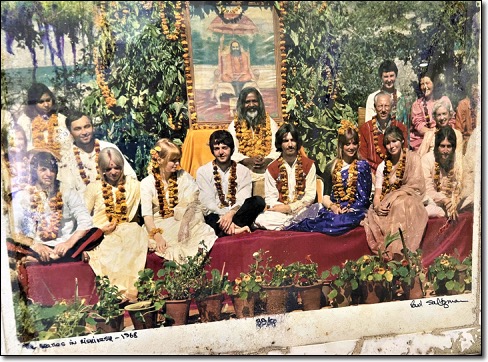
which seemed a good deal more interesting than Sunday School :-) -
A Mind Without the PerceptibleOur Cosmos, at least since the Big Bang, appears to consist mostly of Matter & Energy... — Gnomon
Mostly? :yikes:
As far as panpsychism is concerned - please have a read of the post I entered in the Quantum Classical thread about Federico Faggin. I'm just dipping my toe in those particular waters, but it's a very different conception of panpsychism, based on the conjecture that consciousness is a quantum field state, not an attribute of what we understand as matter. Perhaps the universe is part of the fabric of consciousness. -
Can One Be a Christian if Jesus Didn't RiseAgree. I think I understand the radical nature of the Resurrection. It's not reasonable, or 'nice', or comfortable. I guess the fact that I believe it, makes me Christian in some sense, whether I go to Church or not. (Maybe I'm a part of the 'Church Invisible'.) That said, I couldn't in conscience recite or believe in the Nicene Creed, I have some fundamental disagreements with orthodoxy which is why I declined Confirmation.
-
Can One Be a Christian if Jesus Didn't RiseAgree with the quoted verse from Paul. I don't self-identify as Christian, nor attend Christian services apart from those associated with social events such as weddings. However like many I'm 'culturally Christian' and not atheist.
An anecdote. Many years ago, there was a minor flap in the media because some archaeologist claimed to have found the physical remnants of Jesus in an ossuary. There was an enormous hue and cry about it. We were discussing it around the dinner table. One of my very near relatives, no longer with us, was opining that it didn't really undermine Jesus' core message of love for all, tolerance, etc etc. There was some agreement from others present. I became quite insistent that, no, if Jesus didn't physically ascend, then it completely changes the nature of the Christian faith. I said that you couldn't reject that belief and remain meaningfully Christian. At which point I had a cup of tea thrown over me. But I still maintain that belief. -
A Mind Without the PerceptibleThey are not exactly in the cause and effect relationship as in the mechanical or material objects in the world. Because every mind is unique, private and inaccessible by all other minds, as well as perceiving, reasoning, feeling and inferring on the world, other minds and the self etc etc.
Mind needs body to exist and operate, however, body doesn't cause mind for its operations.
Body is another object of mind's perception. — Corvus
Agree.
Consciousness may be irreducible to the physical but that does not imply that it could exist without or prior to the physical. — Brenner T
Well, maybe, but how would you go about exploring the question? Of course, it's a famously knotty philosophical problem. That is why I referred to Franklin Merrell-Wolff, who is philosophically close to Advaita Vedanta and 'consciousness without object'. I know he's arcane, but at least this provides an alternative philosophical framework, and one that has some commonalities with Bishop Berkeley's.
Philosophically, the key term is 'prior to'. There is temporal priority, coming first in a sequence of events. But then, there's also ontological priority, of what is more fundamental as matter of principle.
One way some philosophers have considered consciousness is not as dependent on external objects, but as potentially fundamental or prior in the ontological sense. Just as a blank canvas is a medium before a painting appears on it, some philosophers have suggested that consciousness could be a kind of ‘canvas’ or medium that enables the appearance of objects, rather than the other way around.
Wayfarer

Start FollowingSend a Message
- Other sites we like
- Social media
- Terms of Service
- Sign In
- Created with PlushForums
- © 2026 The Philosophy Forum