
-
Cultural Relativism: Science, Religion and Truth?
A couple of posts above, you brought in the term schizophrenia,for no apparent reason in the middle of an argument about irrationality. It just seemed a bit out of context and incongruous. There might be people on this forum who have been given this diagnosis. I am not implying that you do not understand the meaning of the term, but I still want to emphasise that the word, schizophrenia, should not be misused, in a colloquial sense, to imply a split personality. -
Ourselves, in 3D Reality ?I would just wish to add that in choosing the idea of 3D for my title, I am not wishing to limit the specctrum of known realities and awareness to be conceived only in terms of the idea of three dimensions as I believe in the existence of four, five and many other dimensions.
-
Ourselves, in 3D Reality ?
I would imagine that some groups which get together to discuss philosophy remain shallow and err in the line of popular philosophy. I am certainly not dismissing the value of online philosophy and have found this site to be fantastic for exploration.
I am simply offering speculation for thought, and trying to redress the balance of people being locked in their own philosophical bubbles online but in social groups as well. But I can speak with a smile on my face, laughing at how I have woken up a couple of times, dreaming about imaginary replies on the forum.
It is not likely that any of us will ever meet, person to person, as we are many miles and countries apart. But the fantasy might conjure up imaginative possible scenarios and interactions fot lighthearted daydreams in a gloomy world,.This is about our about fantasies for inspiring us as we go forward on this forum, and in the personal and wider aspects of our philosophical adventures. -
Ourselves, in 3D Reality ?
Perhaps, I should say that I am both being serious and, at the same time, being both playful and surreal in the post I created.
I do wonder what would happen if these discussion happened in real life, and how they would differ from discussion on a website. I am not used to interacting on a website and probably would have never have done so if the pressures of social distancing had not led me into this direction.
However, I am left wondering about the nature of our exchange of our ideas and communication of ideas in the social context. Personally, I found that while I was training in psychotherapy, I took part in psychotherapy training which led me to the edges of exploration of what it is to be human. I had an experiential workshops in which the facilitator led me to cry, and that was the first time that I was aware of crying in public as an adult.
Here, I am speaking of the whole level of emotion which becomes apparent in groups. I do believe that the expression of emotion is a part of the whole relationships we have with others. Perhaps it is a social dynamic, or perhaps It is part of our biological nature. In this respect, I would say that chemicals, especially testosterone, but on a lesser scale, perhaps caffeine, stop us from crying as adults.
But getting back to my post question , in both seriousnes and jest, I am still wondering about the way in which daily interactions with others influence our philosophical explorations, and how this can be deconstructed because we are still human beings relating to one another in the raw level of day to day, dimensions of material reality. -
Can Art be called creative
I just do not understand what you are trying to argue. Are you a depressed artist? If you are, I do empathise because my greatest love is creating art, even above philosophy. -
Ourselves, in 3D Reality ?My first writing of this was a bit long, so I have edited it to make it an easier read, for relaxing on a Friday evening.
-
Evictions, homelessness, in America: the ethics of relief.
I see that you have written a serious and very appropriate site, while I have just been writing one which is probably frivolous and fantasy. But perhaps that is because, deep down, I am wondering about the whole question of the future, homeless, poverty and the whole world into which we are being thrown into and it is hard not to cave into a state of despair thinking about it all.
I am not in America but in London, which was thrown into tier 3, with no foreseeable way out of the deep mess. Businesses have collapsed and more will collapse. Many are turning to food banks and the whole idea of Christmas seems a complete joke.
Personally, I am not working and just managing to use savings without recourse to benefits for the moment, at least. I realise that the benefits system probably does not exist in America. However, even in England, there is a whole emphasis on protecting the NHS but apart from that, I think that the whole welfare state and benefits system will probably collapse at some point.
So, it is a complete mess, with all the prospects of long term mass unemployment, poverty and homelessness. It is almost unbearable to think of the future, unless some wonderful, creative solutions emerge somehow but I am now stepping into fantasy once again, but that is not without an awareness of the black hole in front of us. -
Can Art be called creative
When I spoke of art as being the source, and not simply the result of creativity, I was speaking of how others' artistic creations inspire us in our own art making.
I am not sure what point you are saying about the discussion I had with Possibility. I was simply making a reference to a comment she made to me on another thread. I am not aware of any dancing, and am a useless dancer, but love dance music to play when I meditate. -
What are you listening to right now?I just recommend the Waterboys song, The Whole of the Moon, to the Madfool as an ultimate philosophy song, and I would also recommend The Alarm's, Absolute Reality.
You can probably find them on You Tube, but I don't use this. There are hardly any music shops left, which I think is sad because they are quite a subculture, but I do find some amazing albums through surfing the shelves in charity shops. I have found all sorts of wonders, ranging from The Toilet Boys, The Inspiral Carpets, Spiritualised, The Pixies and The Sex Gang Children.
One album which I found recently in this way, and think is wonderful is, Word Gets Around, by Stereophonics.I believe it is the first one theyy made, but I prefer it to later ones, especially the track, Check My Eyelids For Holes. -
Practical value of Truth with a capital T
Having been one of the people who began a thread about the subject of truth on this site recently I think your question depends on psychological perspectives and context. Some people are looking for a clear answer and some are happy to live with uncertainty.
In terms of context, I think one's underlying framework of thinking and basic ideasis are the main criteria from which the question of truth is explored. If one starts from a certain religious, or some other philosophical perspectives in which one believes that there is a central underlying truth to be found it is likely to be of great significance to reach out and discover it. But, if you believe that truth is relative, then finding ultimates is not a necessary objective.
Personally, I am neither of the view that there is one absolute truth or the view that searching for truth is meaningless. In my own life, and from discussion in this thread, I would say that we cannot find an absolute truth but the need to find frameworks and personal, authentic truths is an important aspect of life and essential to philosophy. -
The Ultimate Truth! The Theory Of Everything! The Contradiction!
I think that your point that ,'the need to unite is a divine directive and the need to divide is a demonic desire,' captures an important aspect of truth in itself. When we see opposition and conflict we do often recoil, oppressed by the confusion and the darkness is like an unfathomable. I love the title of RD Laing's book, 'The Divided Self', and it is perhaps more profound than the book, as antipsychiatry is almost dated in its arguments.
To some extent, I think that we do see the opposites as part of our own fragmented egoic consciousness. But, to say they do not exist at all would be verging on the absurd, although I sometimes think that continuums are more helpful than binary thinking. But some might say that I am making things even more complicated and foggy. But on a most basic level, I think it is too simple to classify life into good and evil, and any attempt to do so lacks philosophical imagination.
Yes, the whole question of a paradox or the lack of them is interesting.
I think that I am finding the whole question of truth in my recent thread to be a helpful scope for my thinking. But I think that if we found the answer completely, or solved all the paradoxes we would lose some of our meaning and purpose. Perhaps, I am speaking like a mystic here, in love with my own quest.
And, in that respect, I recommend The Waterboys' song, 'The Whole of the Moon'. A wonderful song and band. I don't know if you know it, and I don't use You Tube, but I am sure you could find it there. Anyway, I believe that Mike Scott wrote the song comparing his own quest for truth with that of Prince. And in that sense, you can say that rock music is as primary to my thinking as mathematics is to you. -
The Ultimate Truth! The Theory Of Everything! The Contradiction!
Strangely enough, when I read your idea last night I was thinking that God and the devil is the most fundamental paradox. It is the whole issue of opposition, like good and evil, male and female, light and dark, heaven and hell.
Nevertheless, I do believe that your consideration of paradoxes involves more than the matter of opposites. Perhaps you are asking whether they exist a priori or if they are mere aspects of the divided, binary consciousness of our thinking? -
Can Art be called creative
You just don't seem to understand art or creativity. Why do you place 'originality' as supreme over all else?
However, the main reason I am posting you again is because you say that philosophy is ruining your life. I wonder what do you mean by this? -
Cultural Relativism: Science, Religion and Truth?
I definitely feel that the linguistic approach of twentieth century philosophy was rather shallow. I have mixed feelings about postmodernism. In the way they look behind surfaces, but sometimes they seem to just deconstruct and lose sight of the original questions.
I like systems approaches, but also like to look out for new angles and insights because I refuse to believe that philosophy has reached its end, and that would make everything seem like it is the end of the world. -
Can Art be called creative
But I think that you are missing the whole spirit of the artistic quest, which I don't see as being limited to the visual arts.
I think that each artist does see the world differently. Apart from visual art, do you not appreciate literature and music?I don't think it has to be classical literature alone. My own literature tastes include plenty of dark fantasy and science fiction. I also love plenty of on the edge music ranging from goth, metal to psychedelic, and the weirder the better.
i see the arts, appreciatiing them and creating art is a whole way of transforming and transmuting the mundane and painful aspects of life. Without the arts I think that life for many would be unbearable and each person's art is unique, which I think is a better word than original.
I also think that philosophy and writing these posts is a form of art. Here, you could say the posts we write may not be entirely original insofar as they may touch upon ideas touched upon previously. But, they include variations, subtle differences rendered through different ways of viewing issues and the stylistics of the writer, and in that sense, you are an artist too. -
The Ultimate Truth! The Theory Of Everything! The Contradiction!
I would suggest that Fritjof Capra's systems view is a model which is about the most expansive model, as far as I have made of the scientific views and I am not a mathematician. However,it seems to me that physics is one which is able to incorporate mathematical truths in the wider scheme of understanding the basic laws of matter, energies and underlying laws of these
That is because all theories are models and Capra's systems view works, because it starts from physics but does not make a claim to having one ultimate truth in itself. It is holistic and applicable to various fields and spheres of thought, as a means of building up various scientific ideas like a jigsaw puzzle. I am sure it would leave room for some paradoxes too.
By the way, I am not dismissing the actual theory you are putting forward, but just reflecting on the possibility of any scientific theory that would claim to be the ultimate theory. And that comes from my own question about truth in the wider territory covering both science and religion, and I had just been thinking about that there, so I thought I would put Capra's system view to you, as you are thinking and wondering about a scientific theory of everything. I think that the most one is one which is a starting point for pursuit of individual, separate truths. -
Can Art be called creative
I can't believe that you are trying to dismiss the whole profession and experience of art therapy as not being 'creative.'
I am wondering what is your actual definition or understanding of creativity? Having read your posts about art it seems that you would dismiss art all together. If art and the arts are not the primary source of creativity where would you suggest we look to as the more 'creative' alternative? -
Cultural Relativism: Science, Religion and Truth?
I was interested that you explored the area of theosophy. I have read some of the writings of Rudolf Steiner as well as some of the writers who formed the theosophy movement.
Have you come across Benjamin Creme? I have read several books by him and attended some workshops in transmission medication, which was the meditation founded by him. I found the transmission meditation to be the most helpful form of meditation personally, but some of his ideas are rather far fetched. In particular, for years and years he had believed that the Maitreya was living in East London waiting to emerge.
It is really since getting into the ideas of Creme that I try not to get carried away with the extremes of the esoteric, and touch base with science. In this respect, I find the systems view of life, advocated by Fritjof Capra to be extremely helpful as it is holistic and a good basis for drawing upon a variety of other, divergent perspectives. -
Cultural Relativism: Science, Religion and Truth?
It is interesting to hear about your own experience of feeling possessed at one stage on your life, although I am sure that it must have been for you. I have seen the extremes of psychosis in friends' illnesses and in my work.
Apart from my friends from school who became ill mentally, I also had two friends I knew at college who became unwell and committed suicide, and both had struggled desperately with mental health problems, with an underlying flavour. One was despairing about his inability to live up to St. Paul's teachings and the other had not been brought up as religious at all, but still thought God was communicating with him.
Although I had worried about religion and puzzled over the passage in the Bible over the unpardonable sin in the Bible at age 13, it was really as a result of my friends committing suicide that I began questioning religion so much. When I began university I was still going to church and by the end I was experimenting with drugs, trying to make sense of everything. But I don't want to get too carried away talking about my own life on this site because I am trying to make the point that it was seeing destructive religious belief can be, resulting in mental illness and despair that really led me to question the foundations of my own thinking.
The main thing that I would say is that religious questions are a key factor at the heart of issues relating to mental illness. I was once advised by a college tutor that in mental health care, nursing staff should never get into any discussion about religion or politics.
Obviously, it is an extremely sensitive area and I would not recommend staff self disclosing personal beliefs but I do think that mental health professionals need to listen to patients' struggles, rather than dismiss them. It is not very helpful if nurses and psychiatrists simply ignore the struggles over beliefs and philosophical questions and simply offer medication.
I do wonder if we are moving culturally into a time of mass psychosis. I do believe that Covid_19 is real but think that all the rules and regulations and confusion could be making it worse rather than better. It is leading to a lot of extreme anger and fear.
I certainly wear a mask, although I find it gets in makes me unable to see properly because it makes my glasses steam up. I am not entirely convinced that it is as much protection in terms of stopping the spread of viral germs as some choose to believe. Sometimes I think that people wear a mask as a ritual and a means of telling themselves that they are stopping spreading the virus.
In the mess we are in I am not sure if the religious or the scientists can help us. I have a religious friend who believes that it is the end of the world. I like to hope that is a time in which people have to think critically , and in doing so that people will have to be more consciously aware of ethical issues and the wider picture of human life and the future. -
Can Art be called creative
I am talking about art psychotherapy. I was undertaking the training, although I did not complete the training. But art therapy is a profession in it's own right, even though it is not given much funding. Having taken a year out , I did not going back and one factor was the increasing lack of jobs in this therapy, and some questions about its effectiveness. There is a need for evidence-based research to back up its value.
However, I have run creative art groups in mental health settings and think that creative expression and discussion of the art can provide a benefitial intervention. It can just be about drawing or can be about communicating specific stories or internal experience. This can be particularly true of people who have been placed in mental health settings, sometimes against their will, and being forced to take medication that they do not wish to to take. Of course, there is a tension between the expression of emotion and art ability.
Some people may feel inferior to others if they compare it with others' art, and certainly I have strived to emphasise that such comparisons should not to be made. However, this is a grey area because I know that when I am making art I do care about the quality of the art I make. So, sometimes it felt hypocritical in trying to overcome the idea of preventing the distinction about quality and this did influence me not to pursue a career in art therapy, as I was questioning my authenticity in the role.
course, art therapy or art psychotherapy does not have to be in group settings, and this may make group comparison to be less of a matter of importance, although the relationship between the the client and the therapist is in itself of great significance. Here, it is drawing upon the whole psychoanalytic idea of the transference, but this large topic is, perhaps, beyond the scope of this thread discussion.
But, in an ultimate sense, we could argue is there good and bad art? From an early age at school, it
always seemed important to me that my art was chosen to go on the wall, but for many others it was probably more important to be chosen as one of the first for a football team. As one progresses in art at school it is about getting good grades and,if one proceeds in adult life in an art career, art exhibitions are important markers, for sharing work with other people.
So, this brings us back to the whole point of art therapy, which is about catharsis and expression of emotion through images. I think that it can also be about enjoyment, especially as it is about tactile and sensory exploration.
Apart from being an intervention in mental health care, art therapy has been used with children in schools and in other institutions. I have no personal experience of running any art facilitation with children, but I know of others who offer testimonials of how art and art therapy can offer major benefits for children, especially those who have experienced great difficulties. -
Can Art be called creative
Art can be away of dreaming and you only have to think of the surrealist painters.
I studied art therapy and I saw that it was a way of tapping into the deep levels of imagery, uncovering layers of meanings and emotions which could put into words in many instances. This level of expression has healing potential, as well as enabling people to feel empowered by their own creative abilities. -
If Philosophers shouldn't talk about the big stuff in the world, who should?
I agree with you that the philosophers should be involved in decision making, rather than matters just being decided by politicians and scientists.
I think that this especially the situation in the current pandemic. I think I have said this on some other threads, but of course I am sure that the people in power do not log into this site. Unfortunately, philosophy is not given much credibility at all.
I do have some background in philosophy, having studied Social Ethics as a degree. I went into this with a view to looking at important critical social issues. But I think most people, including some employers, have regarded it as a Mickey Mouse degree. I have worked in mental health care but do not have a job at present.
I have been getting into a fairly deep discussion about truth and science (and religion) in the thread which I began on cultural relativism and truth. But aside from the whole question of truth I think that your thread is raising the question of the way in which philosophers is undervalued. I think it is almost approached with prejudice by many people. When, in everyday life conversation, I mention my interest in philosophy, I feel that most people are very dismissive, as if it has no importance.
Sadly, it seems that philosophy viewpoints are almost relegated to the dustbin whereas the ideas of pop singers and celebrities are often heralded in the media. Aside from the whole question of science vs philosophy, perhaps the problem is that we are living in an age of images and a shallow portrayal of truth in the media, and perhaps philosophy is seen as lacking in glamour.
The image of someone reading and contemplating the importance of life and death issues just lacks appeal, while in actual fact everyone is starting to do that now, as the world Is turned upside down. -
There is definitely consciousness beyond the individual mind
Yes, I see your point and agree that 'wilful intentionality' may be important for determining what is considered to be narcissistic -
1 > 2
Precisely, we don't all want to be treated in the exact same way. That is where difficulties of social contracts come in.
In speaking of universalisation, we almost getting back to Kant's categorical imperative, of considering the idea of considering the universalition of principles, of everyone doing a certain act, such as lying. However, he was concerned primarily with moral duty and intention as the main principle rather practical consequences.
But your point is valid. So, how are we meant to find practical means to overcome our individual egos battling for attention and importance in the jungle of life? Even if people with common goals unite they may still be minorities, overshadowed by majorities who disagree, as the history of politics show us. And, this year and all the conundrums arising has been the most turbulent ever, in recent history. -
There is definitely consciousness beyond the individual mind
I think it would be a big mistake to regard reflection upon our consciousness as being narcissistic. That is because consciousness is the core and depths of our being. Surely, narcissistic is looking at ourselves and our image at a surface level, independently of whether or not there is consciousness underlying our individual minds. -
Can Art be called creative
I got into the whole area of the debate of 'original' with many on my own post on the idea on original ideas a week ago. One theme which emerged was that being the first does not necessarily preclude inventiveness. In particular, @Possibility suggested that one useful measure is the following categories :originality, accuracy, comprehensibility and popularity. I think these could be useful in considering where you others stand in considering the authenticity of creativity in art. -
Cultural Relativism: Science, Religion and Truth?
I think that science, philosophy and religion are distinct categories of experience and methods. They can all converge at some points and probably each one of us has to find our place on this map.
For many, in history it may have been possible to combine all three. I think that it is becoming harder, especially as scientific knowledge grows.
The main aspect which seems to be distinct in most religious perspectives is a belief in a supernatural or, at least, a superhuman order in the Eastern traditions.Philosophers or scientists can decide whether or not to take the religious aspect on board, or reject it completely.
But, as you say, it is about honesty, and we do not have to come to ultimate solutions immediately. I think that philosophy allows us to juggle the possibilities before us in the most authentic and critical way. If anything, I fear that many scientists may think that they have the monopoly on truth, regarding religion as magic 'nonsense' and even seeing philosophy as redundant and unnecessary. -
1 > 2
Yes, I think that your idea of ego makes a lot of sense, especially when you say that, 'egoism comes into existence with existence itself'. Here, it can be seen as being like a driving force within the human being, because, of course, you are speaking of humanity, who have evolved with language and reflective consciousness.
I see your perspective as being more in line with the existentialist vision rather than the psychoanalyst. The question which I am left with is whether your perspective is descriptive or prescriptive? We are all striving for our own pathways of existence and does this mean that it is the way it is, or that we should seek to make sure that this can happen?
Perhaps it is a good thing if the rights of the individual can be seen as important rather than the collective needs of groups being seen as primary. Perhaps we have been living in a world which places value on institutions, especially the family. We cannot just assume that we all living in little, happy communities.
Generally, I tend to be on the edge between an existential and psychological viewpoint. If anything I would wonder if Jung's idea of the shadow touches upon the whole area of egoism because he speaks of the way in which socialisation forces us to repress important aspects of ourselves, and that we need to reclaim some of these repressed elements which are a shadow, not inherently bad, but if left unconscious, can be destructive. Perhaps we repress some of our essential egoist elements and this can result in depression and despair, or destruction tendencies.
I wish you the best for writing your new book. I have writing on this site, almost compulsory, since I found it in September. But I cannot imagine that I will do this always, because I will want to get on with my own creative projects as well. But in the meantime, having never been on a forum before, it is a wonderful means of communicating idea with people from many cultures, and it makes a change for me, used to writing in my notebooks. -
If Philosophers shouldn't talk about the big stuff in the world, who should?
Perhaps the scientists are just standing on the shoulders of the philosophers who thought out the questions for the scientists to investigate. The philosophers were the primal explorers and even now, the scientists may think they know all the answers, but even they may disagree amongst themselves, and perhaps need the philosophers to help untangle the knots of uncertainty, not necessarily with answers, but with the invention of new questions. -
1 > 2
Probably by even communicating on this forum we are social animals.
If we did not respect others at all, life would be constant war and conflict every moment, as everywhere we go we have to meet others, bigger and stronger, like in the school playground. -
Can Art be called creative
I think that your question is a good one, and it was one I have thought about a lot when making visual art.
Often, I have taken photographs in the street as a basis for creating drawings or paintings because it would just be too awkward to sit outside and sketch. However, when I have been doing the art, even though photography is an art form in its own right, I have not wanted to replicate the photos purely, but develop the art. In that sense, I have not wished to copy, and ideally go beyond realism.
Realist art if it is too exact can be too much about trying to copy reality. Actually, I am inspired by the whole superrealist perspective which shows everything in a more abundant and full way. I like to create pictures which go beyond the real and have used the pointillist technique. The building up in dots seems to be away of capturing energy and, even, the nature of the infinite.
All in all, I would say that art should not strive to merely replicate, but to add a hidden extra element.
This is true of fiction, and probably other forms of art, because if one reads a great novel, it is not just a depiction of the surface of life and conversation.In novels, it can be seen as the building up of a worlds in itself, such as those created by Tolstoy, Dickens and Joyce. This is particularly interesting in science fiction and fantasy writing, because the writers conjure up alternative universes for the reader to enter. -
Cultural Relativism: Science, Religion and Truth?
I do agree with you when you say that the 'process is broken', regarding the whole issue of proof.
I think it is hardest still if you are brought up with a mixture of religion and science, but not one fully. I think that is why I struggle with questions a lot, because I was taught a lot of contradictory ideas at school, and I am not just talking about the issue of evolution. I think some of it was around morality.
The reason I do believe that it was education that gave me a whole load of clashing is that I know that many people I went to school with have struggled with the contradictions too. In fact, two of the friends I am in touch with from school have had psychotic breakdowns, in which the context is of a religious nature, involving ideas such as the devil and the fallen angels.
I have struggled with ideas I was taught including the fall of the angels, although I think that idea is more from John Milton's, 'Paradise Lost', rather than Biblical. I do think that if I had not read like I do, ideas in the social sciences, as well as philosophy, I think that rather than just spending time contemplating ideas, I could have become psychotic. The two friends I speak of do not read philosophy and the kind of books I read. Actually, I was not aware that they were struggling with questions around religion until they became unwell mentally.
I have also come across people who have not been brought up with religious backgrounds at all who have developed religious psychosis too. I do believe that the clash between religion and science in our relativistic culture is the source of such psychosis. Personally, I have never got quite to that point, and for me it has just been an underlying worry, but I do believe that my own philosophy exploration is not simply a form of mental illness but a quest. -
Cultural Relativism: Science, Religion and Truth?
Yes, I think your argument is correct really. We cannot know truth in the absolute sense. As you state, 'Real truth is subjective, as authenticity, what a person truly believes.'
I do think that the best we can do is come up with the truth as we see it from our own honest perspective. Of course, views may change at different times in our lives depending on how the facts present themselves to us.
But in my own authentic understanding I often look at matters, especially in the area of religion and can see the arguments on both sides, with my own opinions tipping from one direction to another from time to time. The question on which I hover on the point of uncertainty most is the subject of my previous thread, the question of life after death. I tend to go around in circles. Most people tend to think yes, or no, but in this respect, there must be a real answer, so obviously some are wrong, but perhaps it doesn't matter really.
I think one other issue can sway subjective truth is what we wish the truth to be. It is easy to filter beliefs according to what we wish the truth to be.
Or, in my case, I sometimes think of the worst possibilities, especially if I am in a negative state of mind. Then, building up my fears, I then have to convince myself that is not true. -
Cultural Relativism: Science, Religion and Truth?
In your last post, you make a valid point, that, '"Relativism" brings in the cultural factor and we were not always an amoral society,' and you add, 'Something has gone dreadfully wrong.'
Yesterday, I was reading a book, 'The Death of Truth,' by Michiko Katutani(2018). He argues that relativism has been rising since the 1960s, originally adopted by the left wing, and later by some right wing ones, leading to the idea 'that there are no universal truths, only smaller personal truths_ perceptions shaped by the cultural and social forces of one's day.
Katutani traces the way in which postmodern deconstruction and nihilistic views are being given prominence,especially on the internet. He points to the way in which leaders can use relativism as a starting point for manipulation and an indifferent attitude towards truth, especially in the political arena I think that this is an interesting and important argument. -
Definitions of BeautyPerhaps ugliness is the most supreme form of beauty, in all its manifest forms, when we look at life under the microscope and go beyond the shackles of the unexpected, everyday encounters and begin to venture into the unknown, shocking, depths of reality.
-
1 > 2
I think it is about self interest, but with a need to respect others.
Right now, the rules are that I can buy a drink if I buy food. So, reading a book is okay if I eat and drink, but becoming fat would be worse than sterility. I do get involved in philosophy discussion sometimes in the process, which is far better than football, although music is my football.
But I don't want to mess up Gus's thread any longer with the narcissistic aspects of my own ego. But I do believe in the importance of the ego, so I am trying to argue in favour of the argument of the post thread, and the importance of the individual. -
Cultural Relativism: Science, Religion and Truth?
I noticed your comment about the 'real' and 'meaning,' and believe that the questions about these areas are very real, despite the apparent cultural relativism of our times. -
1 > 2
I think that you are going to feel bombarded by all the responses you have, and all the startling, offbeat ones.
I had noticed that you had not posted on this site for a long while, and had thought that you had become completely fed up with this site. If nothing else, perhaps all the responses you are getting, suggests that your whole philosophy of egoism is an important area, worthy of debate. -
1 > 2
As far as I am aware, I am not sterile or lacking in empathy. I am not suggesting that we, as individuals, should be totally detached from others, without needs for friendship, but sometimes it does seem as if the whole emphasis on group supremacy seems to rule. For example, I have gone into a pub, with a book, wishing to be left alone , just to be given space to read and, despite the social distancing rules, I have been told to move, to make way for groups.
I am not wishing to spend my life entirely alone, and wish to converse with others for discussion, and even sex, but think that there is a danger that the individual quest is seen as irrelevant in the spectrum of consideration of groups as being of supreme importance.
I am not dismissing the need for some kinds of social bonding, but, at the same time, individual lives and quests should not be dismissed, under the guise of group majority. We are not mere parts of groups, but individuals, with our own mythic journeys, which should not be seen as secondary to the group mind. Perhaps the individuals who stand outside, as the creative outsiders, may be the ones who usher in and bring forth the most creative possibilities. -
Cultural Relativism: Science, Religion and Truth?
I did wish to become an art therapist or a psychotherapist. However, there are very few jobs in this field.
I think I do not see paid work as the real 'work ' necessarily any longer. I see getting a job just as a way of supporting myself financially in order to do the more important 'work' of art, writing and philosophy.
I don't think that I would wish to become a therapist any more. I find sorting out my own feelings and thoughts hard enough, let alone those of others. But I do listen to others and try to engage in meaningful dialogues about life and all its conundrums.
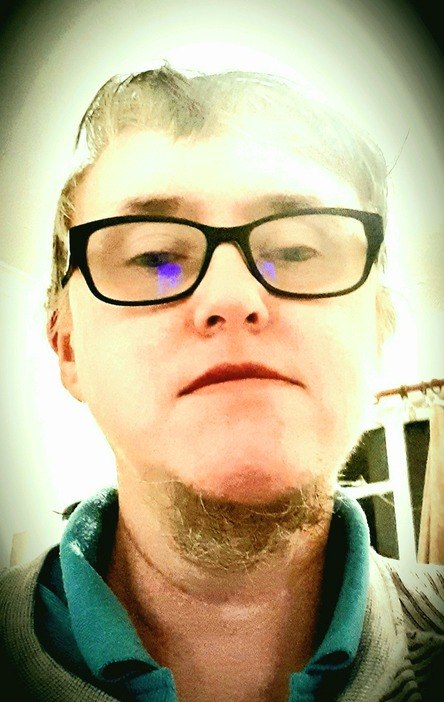
Jack Cummins
Start FollowingSend a Message
- Other sites we like
- Social media
- Terms of Service
- Sign In
- Created with PlushForums
- © 2026 The Philosophy Forum