
-
Deep SongsThe Smiths: Vicar in a Tutu
a Vicar in a tutu
He's not strange
He just wants to live his life this way
https://genius.com/The-smiths-vicar-in-a-tutu-lyrics -
The importance of psychology.
What a strange thing to say. Science is science. If something is indeed a science, then it should be science all the way down.The problems with applied psychology have nothing to do with whether or not psychology is a science. — T Clark
But in practice, it so often isn't. Take, for example, the measuring of IQ in preschool children, which is so important for making decisions about their future. The child is tested once, and yet so much hinges on that one result. Children are sent to special education schools, their futures cemented, all based on the results of one test. This is not scientific.
Pick up any introductory book on the theme of scientific methodology, and you'll see the first chapters are devoted to errors in measurement and how to minimize them. One of the main ways to do so is to repeat the measurement several times and then calculate the mean. In practice, this isn't the norm. -
Don't have enough time and money to do philosophyPhilosophy that is cut off from real life is of no relevance.
-
The importance of psychology.Yes, definitely a very difficult and contentious issue in clinical psychology. What do you propose as an alternative? — Isaac
If they are supposed to have that same measure of legal power, then psychologists should get their act together and agree on one theory and enforce it, one objective system of measurement.
Far too much is left to the whimsy of the individual psychologist and their personal preferences.
It's absurd, given the measure of legal power they have, and yet can afford so much whimsy. -
The importance of psychology.And which leaves me wondering just what exactly psychology is. Maybe just a family name for differing methods and subjects they're applied to? — tim wood
It seems that psychology has largely taken over the role that religion/religiosity used to have. So that it is now psychology that prescribes to people what they are supposed to believe is real and what isn't, what is morally good and what isn't.
The authoritarianism and the dogmatism have, of course, remained the same. -
The importance of psychology.
The issue is applied psychology, as it is applied by people in positions of power, whether they have a degree in psychology or not, and the legal power that these people have.Even if your theory had a shred of evidence from nearer than a hundred years ago, you've not shown at all how it would actually prevent the application of the scientific method, only that it would present the field with some unique challenges. — Isaac
And this isn't even about "the few bad apples". It's that someone in position of power can tell you "who you really are" and "what your problem is", issue a legally binding document that stigmatizes you, and you're supposed to accept all this, like the obedient sheeple that you're supposed to be.
In the abstract, the field of psychology is interesting and seems relevant enough. But when actually applied, it's an entirely different story altogether. -
The importance of psychology.There are also countless theories in physics, until we settle on the best one. Then we continuously revise. — khaled
But in the meantime, there are real consequences for people from psychologists. People get stigmatized with psychological diagnoses, lose jobs, get their reputations smeared.
There being a multitude of theories in a particular field is fine, as long as there are no serious harmful consequences for people on account of that. -
The United States Republican Party
And, of course, there was once the Democratic-Republican Party.That parties have dramatically changed in time is in my view a noteworthy fact, not something totally unimportant. — ssu
Such an ironic name. -
Should we expect ethics to be easy to understand?I guess consolation and justice also have a Gaussian distribution, at large enough sample sizes ...
-
Boycotting China - sharing resources and advice
Following what said earlier:If people and governments boycott say, Germany or South Africa for their state policies, I can see no reason why this shouldn't apply to China. It may well be the case that it isn't going to work, but from an ethical point of view, at least we try to do something to redress an unacceptable situation. — Apollodorus
By Buddhist logic, if you buy products that you know were produced in an unethical way, you are innocent of any wrongdoing so long as you didn't have any intention to cause those unethical ways or didn't directly have anything to do with those unethical ways.*
It seems that some (many?) people think this way, this is why they have no problem buying goods that they know were stolen or goods where it is clear that they are sold far under price (which means that someone isn't getting payed for their work in the process). It also explains why they don't feel responsible for pollution (because they don't drive their car or heat their house with the intention to pollute).
So if the intention mechanism is like this: "I didn't do X with the intention to get Y; thus, I am innocent of Y and needn't do anything about it", how then can people be made to take responsibility for the unintended consequences of their actions?
(*Granted, in Buddhism, there are lists of things that are specifically and directly prohibited, such as buying or accepting something for which you know was stolen.) -
Why is the misgendering of people so commonplace within society.At this point, we can't know if it was a scam. He had a history of pedophilia and sexual assault, so this should be cause for alarm. But some politically correct government officials thought it so important to respect his particular self-declared gender identity to put it first.
It's a cautionary tale of what can happen if people's own ideas about their gender identity are given primacy. -
Why is the misgendering of people so commonplace within society.An intact male convict was allowed into a female prison, simply because he claimed to identify as a woman.
-
Why is the misgendering of people so commonplace within society.One of the heights of this political correctness was this:
/.../
This meant, that for the first time, legally male prisoners with fully intact male bodies could be allowed to live freely alongside female prisoners in one of the 12 women’s prisons in England.
https://fairplayforwomen.com/prison-review/
/.../
What happened? Women in prison were raped by men who identified themselves as women. -
Argumentum Ad Aetatem
This part:You're not agreeing. I had a bad relationship with my parents. — Tom Storm
suggests that that particular conversation took place in an atmosphere of trust, even if it was just temporary.What did cut through was when my mum said as an adult she understood some risks I didn't understand and that she wanted me to follow direction until I was older enough to understand the issues. Made sense to me. — Tom Storm
Even a generally bad relationship with one's parents can have some bright moments, or at least such that aren't all bad. -
Should we expect ethics to be easy to understand?
Yet the antisocials and the freeriders can do extremely well in life. How do you explain that?Antisocial, free-riders are outnumbered over 8-to-1 by eusocial, cooperators; otherwise, h sapiens would not have achieved any viable social arrangements larger than hunter-gather familial clans. — 180 Proof -
Boycotting China - sharing resources and advice
I agree. I've seen this phenomenon in, for example, meat eating Buddhists. Now, these peple vow not to take life, so they wouldn't kill or order the animals to be killed. Some of them wouldn't even kill a mosquito, but they have no problem with eating cows, pigs, chicken, etc. They believe they can buy meat at the supermarket, and that this way, they are in no way participating in the industry of killing animals and meat production. That since they themselves did not kill the animals, did not intend to kill the animals (or didn't intend to order them being killed), they can eat them guilt free and without fearing any kammic consequences.It's not necessarily about avoiding the harm caused by the actions themselves. It's about avoiding the harm caused by developing a psychological means of allowing oneself to be complicit in causing harm. Once you have those defenses so firmly in place that you can see the suffering you're complicit in yet feel no compulsion to act, you have a means by which any complicity can be accepted without dissonance, and I think that's a dangerous tool to encourage a population to develop. — Isaac -
The importance of psychology.With no further introduction to give, I ask the reader whether they think psychology is an important field or whether any of the above makes sense to assert about the importance that philosophers purported was the examination of one's life?
Can or ought this be done through psychology, why or why not? — Shawn
If only there wouldn't be so many schools of psychology, so many different theories about the same thing! -
Argumentum Ad AetatemSimply saying 'because i said so' does not foster good relationships between people, and is fallacious. — Bradaction
That depends on whether the relationship is already bad or not. In an already bad relationship, adding more authoritarianism will not improve the situation.
But in a good, functional relationship where there is trust, the occasional "because I said so" will not cause any harm and will serve a good purpose, because both parties already assume that the person has a good reason for whatever they want, even if they don't say so at the time.
Criticial thinking skills and their implementation cannot make up for a lack of trust and they cannot make up for a fundamental lack of goodwill and affection. -
Argumentum Ad AetatemSometimes we are too young to understand. I had this argument used on me by my parents a few times when young. It did not bother me. I understood that I lacked capacity to understand at the time, which was completely true.
Example: I asked why I couldn't accept a lift from a stranger. I didn't understand what my parents meant by potential danger or comprehend why someone might present risks to my safety. What did cut through was when my mum said as an adult she understood some risks I didn't understand and that she wanted me to follow direction until I was older enough to understand the issues. Made sense to me. Experience is a significant factor in understanding and even in having capacity to understand and reasoned argument sometimes falls flat or introduces other problems. — Tom Storm
And, of course, this whole conversation with your parents took place in an atmosphere of mutual trust, which made the conversation a very specific one, quite different from a plain syllogism written on a page somewhere. -
Argumentum Ad Aetatem
And age is also a statement regarding one's legal status, and everything that comes with that.Age isn't a literal position, but rather a statement regarding the amount of information one has available. — Cheshire
For some things, some peple truly are too young, such as drinking alcohol or driving a car. -
Standards for Forum Debates
I'm not distracted by the competition. It's hard to fight when it's not clear what the weapons to be used are and what counts for victory.As to these two comments, I agree that the competition can be distracting, leaving open the question of why we'd do that to ourselves. — Hanover
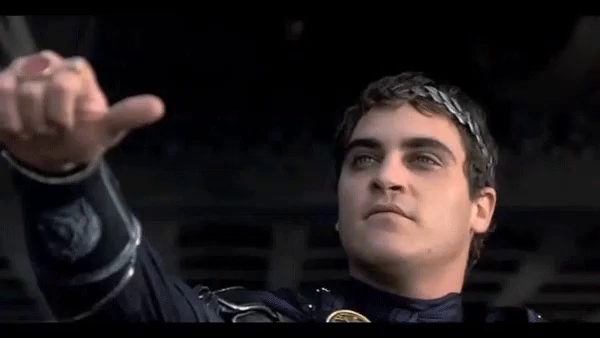
And we'd need an emperor to decide, of course.
- - -
-
Don't have enough time and money to do philosophyYou want to do philosophy for philosophy's sake??
And Schopenhauer was a spoiled trust fund kid. -
Why do so many people on here have bird thumbnails?Our true spirit bird is probably the broiler chicken. — Nils Loc
We used to have them at home, on a farm, they were free to roam around. They were such smart and amiable beings. I would cuddle and play with them.
So many people see a broiler chicken and think it's stupid and good only for one thing: to be killed and eaten. But they are so much more than that. How different animals can be, depending on how one treats them. -
Why is the misgendering of people so commonplace within society.The simple fact of the matter is this: Just because someone doesn't use a preferred pronoun, even after they've been told repeatedly, does not mean they are fucking with you, or they don't like you, or they think you can't be that way. It could be that they just don't care enough about you to make a mental note. If the perpetrator of "genocide" wants to engage the person then the burden is on him to work some courtesy into his/her/it's communication. But if the "victim" is the one making contact, they should go some where else if they don't like what they are getting. When they go, they should not fall into the trap they eschew by speculating about motivation. If they want to know, ask. — James Riley
The thing is that what the OP is talking about is just one way, one-sided.
The LGBT+ person walks in, tells everyone how they want to be addressed, but they don't afford the same courtesy to others. Or the LGBT+ person doesn't even say anything, but expects others to get the pronouns right.
No, the LGBT+ person wants to be treated as speshal, so fucking speshal. -
Why is the misgendering of people so commonplace within society.
And so many fucking likes!!For something about which no fucks are given, this topic attracts a lot of posts. — Banno
Back when I was growing up, into my teens, one considered oneself lucky to be considered a person at all. Also, when adults would speak about a child they perceived as "problematic", even in the child's presence, they would refer to the child as "it", so that the child could hear it.
"It has no feelings."
"It doesn't understand."
- - -
I suppose people need to use their time and energy somehow. And since they don't spend their days toiling under the sun (literally), they focus on other things. And living packed together like sardines like they do, they focus on things like correct gender pronouns ...Oh I definitely give a fuck about the loss of focus. The shift in the 'big issues' of the day from third-world poverty to first-world individualism is literally killing people. I just don't give a fuck about being misgendered. — Isaac -
Why is the misgendering of people so commonplace within society.
So this is specifically about those "people who claim to be in support of the LGBTQIA+", but who don't get the pronouns right?As someone who identifies as non-binary, and understands that Gender is separate to Sex, it is astounding to me how people who claim to be in support of the LGBTQIA+ community continue to misgender and use incorrect pronouns. What is most concerning about this, is that it seems to be a systematic denial and refusal to accept Gender non-conforming people into society. — Bradaction -
The United States Republican PartyBut I've always been attracted to being different from the pack,
and doing things the hard way; and loving these worthless bastards has got to be the hardest thing in the world! — James Riley
Oh, come on, you have got to be more creative than that! -
The United States Republican PartyLooking at the Republican Party philosophically, my question is this: what do they stand for, at bottom? I’m talking about the leaders. For years it’s been tax cuts and claims of wanting smaller government.
What about today? — Xtrix
Social Darwinism, as always. -
The United States Republican PartyRepublicans like Trump because he hates the same people they hate. It's all about the hate. I was quite the hater until I saw them do it, and then, not wanting to be like them, I decided to try to love my enemy. Jeesh! What a long hard slog that is! It's so much easier to hate. And, I have to admit, I kind of like hating. But I do want to put as much distance between me and them as I can, which means I have to try and love them. Yikes! — James Riley
Don't "love your enemies", because what comes of it is not love, it's passive aggressiveness. -
Poll: The Reputation System (Likes)
How do you propose to guard aganist subversion and sabotage?Let it run for another week or so, then take a look at the post history of the folk with the most likes. If they're the kind of posts/posters you want to encourage, the system works: if they're not, the system doesn't work. — Isaac -
Why do so many people on here have bird thumbnails?
I heard birds have no satiation instinct and can actually burst from overeating. (Young kittens and puppies also don't have a satiation instinct, but if properly domesticated, they learn it.)Birds eat like there’s no tomorrow. — praxis
Who'd have thought that satiation is something to be learned. -
Poll: The Reputation System (Likes)Always when reading your posts, I try to figure out why you have a Taxi Driver reference in your avatar. I just don't get it.
-
Poll: The Reputation System (Likes)Yes. The forum's stakeholders need to decide on the direction in which they want the forum to go.
-
Standards for Forum DebatesStandards for Forum Debates
I have a question:
What is the purpose of a debate? What is attempted to be accomplished by a debate? -
Standards for Forum Debates
I so want to do it, either side, and my posts on this are scattered all over the forum. But I just don't have the time, I can't even log in to the forum every day, sometimes even for several days in a row.but what about someone else? — 180 Proof
I have an enormous amount of work in the garden, and while I pull weeds and dig over the soil, I think of witty retors to the forum posts I read, although by the time I'm able to long in, the moment's long gone ...
Like ... -
Making someone work or feel stress unnecessarily is wrong
First of all, some (or many?) people will not be able to afford the automation and will have to make do the old fashioned way.What will the future of capitalism look like when everyone is utilizing autiomation? — Christoffer
Secondly, some people will probably rebel against automation.
There is a vast number of futuristic films that explore the possible scenarios of how the above two premises work out. -
Poll: The Reputation System (Likes)What should we do with the reputation system? — jamalrob
I think that you'd first need to decide what you want this forum to be like, what direction it should develop in.
For some purposes, the reputation system is good, for others it's not, as already mentioned in the above posts. It all depends on what you want with the forum, what purpose it should serve, what goal it should ty to attain.
I don't know what the stakeholders' vision for this forum is, so I can't vote. -
Necessity and godAlong these lines, I'd point out that the most important truths we learn are through fiction. What then of this fiction that speaks the truth? — Hanover
Not to be glib, but you're supposed to feel that truth in your heart.If fiction is the path to truth, you've lost at least one basis to abandon religion. You don't have to believe the sea parted, just that there is a truth being told there.
— Hanover
But what is that truth? The moment you say what it is, you are wrong. — Banno
Bettelheim's The Uses of Enchantment: The Meaning and Importance of Fairy Tales is probably one of the most well-known (even if not original) studies of the importance of fairy tales.
For the more serious reader, there's Heuscher's A Psychiatric Study of Myths and Fairy Tales; Their Origin, Meaning, and Usefulness.
Why do we watch Star Wars or the Hobbit films and such? To feel good, to feel like we can handle life's problems, to feel like life has meaning. A feeling that can otherwise be extremely hard to come by; it's so elusive, yet so important for one's wellbeing and proactiveness.
baker

Start FollowingSend a Message
- Other sites we like
- Social media
- Terms of Service
- Sign In
- Created with PlushForums
- © 2026 The Philosophy Forum