
-
Basic Questions for any Kantians
Just a general comment, when I was finishing my studies, a portion of my teachers were into phenomenology, often following the thought of some of the lesser well known figures.
In so far as I followed such arguments, I rarely found them convincing or persuasive. Parts of Husserl and Heidegger are good, but a lot of it looks to me to be what you mention, making obvious things really, really complicated. -
Basic Questions for any Kantians
Clearly "taste" is the wrong word, I'd have to say, it's a matter of one's own philosophy.
As to the Lexus example, and the bells and whistles, there's something to that in some phenomenology.
I tend to agree with your view and it's not many people who would claim that Husserl went beyond Kant. -
Ukraine Crisis
Russia behaves as would any other country given its size and military.
The "colonial mission" to "civilize the barbarians" has remained unchanged. — Apollodorus
Fisk's The Great War for Civilization is a masterclass on this, though it focuses in the Middle East, it's an amazing book. -
Ukraine Crisis
Not at all.
Russia has committed war crimes in Chechnya and also in Afghanistan and most recently in Syria. There are no innocent states.
But the crimes committed by states is proportional to the power they have. -
Ukraine Crisis
It's the common theme for super powers. Britain, Spain, etc, is the same thing, but now there's more tech involved. -
Ukraine Crisis
Yes. I remember the Kosovo situation, Western Intellectuals really went crazy in that one. As if anyone really believes they actually care about Muslims. Not if you look at the Middle East and other parts of the world.
They are playing a dangerous game, likely to win some political points (Russia too, but they have security concerns, as does Ukraine), but this is not the place to do such things.
The Western Intelligence community is extremely ideological, though they pretend to be "neutral".
Yeah. It's really dangerous and stupid. -
Ukraine Crisis
Frank, it's propaganda on both sides, we happen to choose which one we think is most plausible. I'm not pretending to be viewing this thing from a "view from nowhere", which we know doesn't exist.
I'm basing my comment on the fact that there have been many reports of an imminent Russian attack, which has not materialized each time it was stated. It got to the point that the Ukrainian president told the West to tone it down, or it would increase tensions.
It's not as if there's no lack of history of this with the Gulf of Tonkin, or Iraq's WMD.
Having said that, it would be really stupid to actually engage in such an act. But it's no less smart to keep saying that things are really immanent, and they haven't happened. -
Ukraine Crisis
I mean, if they (US and UK intelligence) continue saying such non-sense, it would not be surprising if they'd actually do some false flag operation and blame it on the Russians.
Things aren't as easy for them since the Iraq intel fiasco. -
Basic Questions for any Kantians
Hey Joshs :cool: There's no wavey icon here, so that'll do instead.
Eh, it becomes tricky. I think this depends on how one thinks about rationalism actually, and how much Descartes to Hume could be said to be aware of "things-in-themselves".
Of course, though "synthesizing" rationalism and empiricism, one would have to say that, on the whole, Kant is very much in the rationalist camp in so far as he attributes to our mental powers so much more than Locke and Hume.
Though proceeded by others - clearly - the phenomena - things-in-themselves distinction is crucial here, as is the reigning in of speculative metaphysics. These arguments cause lots of arguments in favor and against.
Then you have, roughly, Humean, "empiricists", of a (to me) poorer quality than Hume's.
Descartes, generally, is not much praised these days, with few outliers, like Husserl and Chomsky.
The important thing to me and what I think makes Kant such an important figures, is that up to Kant, almost everyone agrees who the great philosophers were. Beyond him, there is no agreement, with the possible exception of the major American Pragmatists.
Marx, Nietzsche, Russell, Husserl, Heidegger, Quine, Carnap, Whitehead and others are extremely polarizing. -
Basic Questions for any Kantians
That's right.
But Kant's a-priori presuppositions are, strictly speaking, false. We may individuate space and time as being different things, but they're not. We can't envision space without time, and maybe even time without space.
It's crucial to remember that Kant was a Newtonian, he took Newton's concepts of space and time to be a-priori, but these were empirical postulates made by Newton.
This doesn't mean that there's nothing a-priori, on the contrary, likely most things are, in some sense. But they're not obviously evident to discover, I don't think. -
Basic Questions for any Kantians
Yes. I'm currently reading Descartes now and I have to say, most of the criticism hurled at him is extremely unfair. He was eminently reasonable, clear and persuasive, he was doing the best he could with what he had.
And to his credit, he treats "ordinary people" with much respect and even admiration, which is contrary to what a lot of the other figures did.
Whether Husserl goes "beyond" Kant, is a matter of taste. Fair or not, we haven't really moved beyond the framework made popular by Kant. We have to modify some of his ideas, such as "spacetime" instead of space and time and most of us would say that his categorical imperative is impossible to live up to.
But had he been a better writer, I think it would have been better for everyone. At least his Prolegomena is pretty accessible, all considered. -
Basic Questions for any Kantians
Heidegger has his own philosophy which depends on the use of language, it's a kind of description of the world attached to a way of thinking. Kierkegaard too, to a lesser extent.
Yet look at Dreyfus' interpretation of Heidegger, it's very clear. Some may debate how accurate it is, but it can be quite useful.
I think Aristotle is verbose and Locke isn't a good writer, yet both have much to say.
Descartes and Hume, are quite clear, though Hume is harder to understand because the topic he's speaking of is quite abstract in certain areas.
The point here being that these topics are already hard, verbosity only makes it harder without necessity (in the vast majority of cases). Of course, some people simply lack style or the capacity for clear expression. That's fine.
Once you enter Hegel territory, I'm very suspect much of substance is being said. -
What is it to be Enlightened?Probably something like being aware of how little we know and to moderate our aspirations and expectations accordingly.
It seems to be an important theme guiding a good deal of the classical figures in western philosophy.
It's certainly true that our science has increased considerably, but this shouldn't lead us to believe that our epistemic situation has changed much.
And then again most people who are labeled as being "enlightened" very much reject being called such a thing. -
Basic Questions for any Kantiansthat clarity for clarity's sake is a complete failure. Good if one is fascinated by puzzles (e.g., those Gettier problems) I guess, but dreadful if one has a passion for truth. — Astrophel
That's exactly right. In general, it's good to be clear and precise. But some people try to be so precise they end up saying nothing at all.
On the other hand - and this applies to Kant - one should be able to express these sophisticated ideas in a manner that most people would at least get a "flavor" of, if they wished to get the gist of the topic.
One can, I think, express Kant's basic notions without much verbiage, which is something he is guilty of. Look at Schopenhauer, for instance, he states many of Kant's ideas in a very clear manner (most of the time). -
Ukraine Crisis
It's part of the same old playbook, if you agree with out economic policies, you're in the club, if you don't, we don't care.
Some European countries can ignore this on some occasions. As can China and Russia, but not others. Obviously this isn't liked by the powers at be. -
Ukraine Crisis
Maybe.
Then again Greece doesn't have much of a military itself, so a war in that situation would be rather quick and favor Turkey. Of course, if you have alliances then it can become a big problem.
I think they need to save face on both sides and Ukraine should stay out of NATO, maybe get some "concessions" from Russia. If that's appeasement then, I rather that than war. -
Ukraine Crisis
NATO's not going anywhere regardless of what should happen. What I fear is that the hawks inside this situation think that using diplomacy to settle this is the equivalent of appeasement.
It would be beyond crazy if Western Europe got itself in another war with itself. I don't think this would happen anymore. Germany is now extremely reluctant to use military force, and would likely be somewhat of a restraint to others.
But again, NATO is not going anywhere.
Ok.
The "West" merely want a president who is favorable to them economically as you say, and which doesn't protest with actions, against powerful actors. I think saying that they want to destroy Russia is a bit much, they want a client state. One may argue that this destroys a countries autonomy, and sure, this makes sense.
While I understand the troop deployment, it's a tense situation. One mistake by a soldier or general and this would get very ugly. I wouldn't want to be Ukrainian right now.
And yes, I agree. I'd only add that it not only applies to NATO, EU and the US, ANY major power wouldn't admit to making mistakes or admitting faults in international affairs. It's almost never done. Exceptions being WWII, to some extent.
It's mind boggling that after Iraq and Afghanistan and the rise of ISIS, people who normally lambast the media for being BS artists, now rely on these same sources as being a good source of info for yet another potential war. Craziness. -
Chomsky's Mysteries of Nature: How Deeply Hidden? Reading Group
I can only speak of the larger significance of Chomsky's linguistic theory as it pertains to philosophy. I know a little about the linguistics aspects, though nowhere near enough to speak about the specific details with the authority I would like.
His program tends to be a minority one in linguistics, though obviously this doesn't speak to the truth or falsity of his theory. A glance at some of the literature reveals that a good deal of the criticism is based on empirical assumptions that are just wrong, as a matter of fact. This is shown most strongly in the dogma of externalism in relation to language use.
Connected to this is a view which seems to me to restrict what "empirical" evidence means, to that which is publicly observable. This happens to leave out that which allows us to observe and make theories in the first place: experience. That's not publicly observable, but it is empirical. You can deny it if you wish, just as one can deny how old the Earth is, but it doesn't touch the fact.
Since we can see that people use words to refer to things, and the things referred to are observable, it's assumed this is what language does, refer to external things.
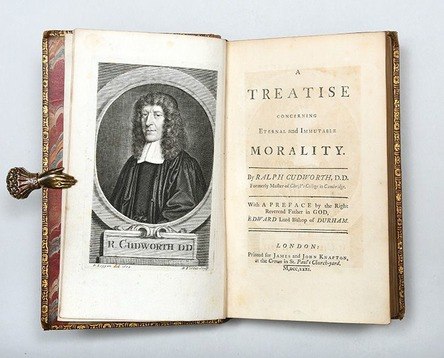
What's also left out, is this extremely rich, sophisticated and extremely sublime aspect of innatism. It's never denied for any other animal, so far as I'm aware (perhaps with the exception of radical behaviorism in the 50's). There's a lot to say about this topic, much of it fascinating - particularly in the philosophical tradition, in which some history has been obscured and important figures, like Cudworth or More are not even known.
But's that would be the topic for another thread.
Beyond this, I can't really say much. -
Ukraine Crisis
Yes, Germany has it tough in terms of military. France used to have an independent path in world affairs - more or less - and did not join NATO until rather recently. If they so wished, they could theoretically form a kind of military union with the UK, though again, one would have to see what the US says about this.
I mean, I agree, NATO has no reason anymore, to continue as an entity. Alliances between countries should more than suffice. The USSR no longer is a threat, not that was a big threat before - compared to US power anyway.
What you say about Russia doing a quick attack - yeah maybe, but it would be very, very risky. I highly doubt this would happen, but we don't know. NATO should soften a bit, in return for some Russian troops leaving, ending with a formal signed statement that Ukraine would not be allowed to join NATO.
Something like that. -
Ukraine Crisis
It's an interesting tension. The EU could have it's own military alliance, not dependent on NATO. Yet they don't do it, I think they don't want to pay the bills when they have very strong military support.
I also think that in principle all these things should be left to a free and open democratic community. But we still have the problem of making the EU democratic, which is very far away. I don't know how the EU could be made to change internally, because it's a mess. They need more transparency, more communication with the population and much more.
And an EU FP could still be aggressive, like all major states are. Nevertheless, they should have the option, of course. It's just amazing to see that after two World Wars, they can't organize together.
Russia is acting according to its own interests, of course, and what they're doing makes sense from a "real politick" perspective. And they don't merely back down because they're threatened.
And sure, Russia also has serious internal problems with corruption, inequality and undemocratic aspects. I hope they can improve, it's a tough situation.
Yeah. The Nazi's did what they did for a reason, as did the Soviets. Had legitimate German concerns been listened to years before WWII, the whole thing could have stopped the war. It's easier to just label them as evil (which they were, no doubt) and not think about it anymore.
Same with the Soviets, in the end, elite interests within the Party overthrew democratic institutions in favor of strong, authoritarian state bureaucracy.
There are no "good guys" in world affairs, or it's very rare. There are good people and groups and acts, and many horrific ones too. -
Ukraine Crisis
Makes sense, they need international partners after all.
As I've told him, I don't agree with the way he expresses himself and some of his claims, I wouldn't agree with. I don't think this is helpful analytically or for communication purposes.
However, I'm fully aware that I could be called a coward or lacking a spine or convictions. It's a matter of temperament.
However, he's obviously very knowledgeable, has always been nice to me and reads some very interesting books. -
Ukraine Crisis
I don't know what will happen, I'm keeping my fingers crossed that diplomacy will work.
I believe that if an agreement is made that Ukraine will not join NATO, the troops will leave. Otherwise, it's suicide.
I don't know, people differ a lot in politics. I tend to avoid thinking in terms of "good guys" or "our side" vs. "bad guys" or "them". It's just a different set of (very often) elite interests.
That's how I view it anyway. -
Ukraine Crisis
Building up forces around and in Ukraine. Putin may be many things, but he isn't stupid, much less suicidal. If he invades Ukraine, it's game over. Nevertheless, if he doesn't put troops in the border, Ukraine may feel it could join NATO without consequence, seeing Russia doesn't seem to mind.
He is feeling threatened because Ukraine was gesturing towards joining NATO. As would the US feel threatened if Mexico gave signals it wanted to join the Shanghai Cooperation Organization. -
Ukraine Crisis
What's this out of the blue?
It's not black or white. We can say things clearly: Ukraine has a right to self-defense, Russia has a right to safe borders, what NATO is doing is extremely dangerous and leaves Russia with little option.
The reason they have an army there is to prevent Ukraine from joining NATO. If they just sit back and bend over, they'll get it, as they have been since the USSR collapsed, NATO moved, not inches to the East, but hundreds of miles, when they were promised "not an inch".
What's crucial here is that Ukraine does not border the US - in fact, it's very far away.
If Russia was seriously considering joining a military alliance with say, Mexico, then they would be the aggressors and the US would have the right to place troops on its borders.
Nothing to do with being "Anti America", that's an empty phrase, with virtually no meaning. -
Chomsky's Mysteries of Nature: How Deeply Hidden? Reading Group
There's no reason to expect a species to need science to survive. Most living organisms are bacteria, they do quite fine without positing any theory at all.
It's very much going to sound like "stoner talk", but, I think the correct take is to ask "how does this even make any sense?" to almost everything.
We all have the intuition that nothing would be "cheaper" than something - maybe that's wrong as a matter of cosmological fact.
But it doesn't make sense, because, clearly nothing is less problematic than something, but then it isn't. And what are numbers anyway, why can't we seem them in the world?
How can I even lift my arm up? And so on. That's how I think.
There are practical limits to understanding: brain size, limits to our senses, etc. In short, there's no reason to expect us to understand anything. That we can understand anything, to any degree, is remarkable. -
Ukraine Crisis
These power systems don't go down without a fight. And as usual, the so called "national interests" reflect the interests of the elite within that society, US, UK, etc.
When elites differ, you can have divergent policies in economic and military affairs, though these aren't too common. -
Ukraine Crisis
Correct. Same with Japan, they had an internal debate as to how to handle the post WWII world.
The world needed supplies, the US needed market for surplus production. -
Ukraine Crisis
Of course, the US needed allies and a market for exports. The Marshall plan was not done out of pure charity. -
Israel killing civilians in Gaza and the West Bank
It's very misleading. Putting a long story short, what Israel does, however horrible it is, does not bother the US much, rhetoric aside. Public Opinion is now pushing the US government to be more critical of Israel, and is having some effects. But case after case, the US calls the shots. -
Israel killing civilians in Gaza and the West Bank
Condition aid to Israel based on withdrawal from the Occupied Territories.
As they go on fulfilling promises, aid may be given. If not, it can be reduced or taken away. -
Chomsky's Mysteries of Nature: How Deeply Hidden? Reading Group
Sure. Nothing's ever innocent in this respect, as long as we're human beings, we are going to have biases for everything, if we didn't we'd likely be dead, that's the way to avoid bias. And by "bias" here, I simply mean having a certain perspective on how things should work or look like.
Today, we are dealing with very sophisticated and strange theoretical posits, such as "Many Worlds" or the multiverse and other strange hypothesis, which could turn out to be correct.
And sure, in 300 years, we are going to develop different intuitions and lack certain others. We can't get rid of some of them, such as seeing the sun rising and falling, even though this does not literally happen in the universe, but we can't deny our eyes, even if we know better.
But other intuitions, we take for granted, like gravity on a day to day basis, for some people anyway. -
Ukraine Crisis
Varoufakis' And the Weak Suffer What They Must? his book and many lectures on Adults in the Room, and Mody's Eurotragedy are very eye-opening.
Euro leadership is essentially a power struggle in which they French thought they would be able to command the German economy. And no political union worthy of the name, was ever seriously considered.
The bureaucrats in the EU in the end had a far more conservative (neo-liberal) approach to the economy compared to the US! It's insane, some kind of market worship. Germany mostly wins, at least the German elites.
But it's hard to see them turning around. A crisis like this does not help. -
Ukraine Crisis
One of the positive consequences of Trump, totally freak-ish, but, could have led to something, was when Germany (and maybe France too) said, essentially, it's time for Europe to have it's own defense. Which makes sense, but, never materialized. I doubt the US would permit it, because NATO has to have a reason to continue existing.
As for bullying China, well, they're getting bullied with Taiwan, with serious provocations on both sides, but more incendiary for the West, generally. Not that I think China should just invade Taiwan, which has a pretty decent government, and so on. But even if they wanted to invade, that would also lead to a nuclear war, Taiwan could not defend itself against China for too long.
I know, the Germany thing is a pipe dream, but, at least its being vocal about it. It's nice to have some opposing voices when this situation is so tense. I totally agree that the US, Europe AND Russia should form a coalition.
I believe Putin once asked Clinton, only half jokingly, if Russia could join NATO, I think Clinton asked the generals, they didn't like that idea.
Man, once you dig into the EU as an institution, you just see a total tragedy. They out of all people in the world, because of two World Wars, should now better. The leadership, apparently does not. -
Ukraine Crisis
It makes sense for China to support Russia here, given the Taiwan situation, which surely merits its own thread. In that case, I think there is more room for considerable nuance, but still tense.
In any case, it's not as if NATO is giving Russia much of a choice in terms of having partners. Incidentally, as you know, the US has been losing power since WWII, so they just can't stand other countries defying "the international community" [aka whoever supports the US]. The opinion of the rest of the world, doesn't fit into this scheme.
What gets me is that, pointing these things out, somehow makes others think that one is "Pro Putin" or "Pro Xi". This is silly.
Ugh the EU, what a mess. It could be a great example for the world, but having a monetary union without a political one may lead to its disintegration, following fanatical market thinking.
I hope Germany could persuade cooler head to prevail. The UK is lost cause at this moment. -
Basic Questions for any KantiansNoumenal for Kant would be what Lucy Allais describes as "intelligibelia". There are positive and negative conceptions of the noumena, on this reading.
Positive noumena would include things like Leibnizian monads or Cartesian souls, things which we don't know if knowledge of them is even possible, nor how we could cognize them.
She says: "Understood in the negative sense, the concept [of noumena] simply involves thinking about spatio-temporal objects of our experience and abstracting what we know about the through the senses." -
Ukraine Crisis
I agree with that. While Biden has done decent things - at the very beginning - for people, his foreign policy in action, not in rhetoric, is not much different from Trump's.
Which is scary considering how bullish Trump was.
Not much good will be achieved by escalating tensions even more. -
Basic Questions for any KantiansCan Kant’s noumenal world to be understood to potentially have any kind of physical form (waves, for instance) which we cannot apprehend directly? Or is the use of the word ‘physical’ here entirely superfluous? — Tom Storm
Not physical, no. But not mental either.
It's unknown grounds, according to him. One can read him as a neutral monist in this respect.
Manuel
Start FollowingSend a Message
- Other sites we like
- Social media
- Terms of Service
- Sign In
- Created with PlushForums
- © 2026 The Philosophy Forum