
Comments
-
Systemic racism in the US: Why is it happening and what can be done?@ssu: I mentioned earlier that police terror in the US is a matter of social policy. One further observation in support of this: simply consider the difference in the magnitude of state mobilization between COVID and this. For COVID, the American State barely lifted a finger - in fact fumbled with every excuse possible in order not to lift a finger, save for bailing up the richest strata of society. That's the abdication of social provision I mentioned. For this, you're seeing massive State mobilization on a scale unseen since ... I don't know. I don't know what this compares with.
-
Systemic racism in the US: Why is it happening and what can be done?All the better to put their fucking brains through their skulls. Less mess. Very considerate.
-
Systemic racism in the US: Why is it happening and what can be done?Gee, who could have fucking seen that mobilizing the national guard to put down protests for civil rights would have gotten someone killed!
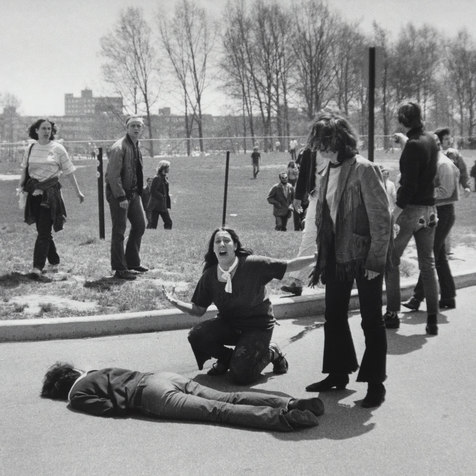
How fucking unexpected!
Someone remind me again how incremental change works again? -
Systemic racism in the US: Why is it happening and what can be done?:up:
Somewhere else, someone mentioned that if we can't be antifascists, then we can be Fascisn'ts instead. I quite like that. -
Systemic racism in the US: Why is it happening and what can be done?Yes, I know. It's pretty funny to me. It's like declaring the 'alt-right' a terrorist organization. It's so stupid, its funny.
-
Systemic racism in the US: Why is it happening and what can be done?It should also be said: if Trump designates antifa as a terrorist organization, this can only be a good thing. The US government will then be obliged to provide it with weapons and money.
-
Systemic racism in the US: Why is it happening and what can be done?https://www.jacobinmag.com/2020/05/outside-agitator-racial-justice-protests-minneapolis-george-floyd
The “outside agitator” trope is today often accompanied by a tirade against “white anarchists” or “Antifa” carrying out the rebellion — while people of color don’t. This is an attempt to isolate and weaken protesters from each other, to make the “good” protesters distrustful and paranoid about “infiltration” by white radicals. (Radicals of color, meanwhile, are nowhere to be found.) Fostering distrust among developing coalitions is a quick and easy way to ensure their swift demise.
...In 2020, the phrase, and these tactics, have once again reared their ugly head. The myth of “outside agitators” is being simultaneously weaponized by conservatives and liberals to demean and intimidate protesters. We shouldn’t let them — it’s an accusation designed to downplay the widespread anger so many are feeling and acting on in this country. King warned us, “We must all learn to live together as brothers or we will all perish together as fools.” Don’t fall for defenders of the status quo continuing to blame “outside agitators” for the rebellions sweeping the country right now — they want us to perish together as fools. — Jacobin - Don’t Fall for the Myth of the “Outside Agitator” in Racial Justice Protests -
Systemic racism in the US: Why is it happening and what can be done?Yet I feel that now you put the US to be quite different from other countries. Wouldn't there be some general factors in the civil/police relations that are factors here?
Or do you think that the police in the UK, Germany, France, Netherlands or Finland abide this kind of similar agenda and structure in the society? Or is your answer that the American situation is totally different? — ssu
Wacquant refers to the US as a 'laboratory' in which certain factors were in place that enabled and encouraged this kind of use of police terror as pivotal and widespread social policy. It was among the first to preach deregulation and privatization, and thus the cutting back of the welfare state and social provisioning. This also happened in conjunction with the emphasis on 'individual responsibility' over social responsibility, and thus with the atomization of society in line with the neoliberal view of individual as selfish market actors. It also allowed the state - while deregulating the economy - to find purchase elsewhere, by massively regulating, instead, the lives of the poor. All these factors and more combined to make the States an ideal place for all police violence to become a pillar of social policy in a way it has not really been anywhere else.
But as Wacquant says elsewhere, the US has been also been really successful in exporting this model. Neoliberalism goes hand in hand with the expansion of what is now often called the 'carceral state' and the decline of state provisioning - the two being two sides of the same coin. There is an astounding inverse relationship - an exact trade off - between state provision and the explosion of police and prison industries. One example:
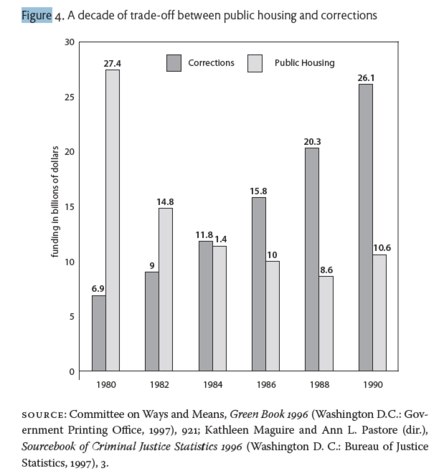
The same inverse correlation holds other social welfare provisions like public infrastructure, healthcare, and welfare payments. All beginning around the 70s - the start of the Neoliberal era. The more the State recedes in it's responsibility to take of its citizens, the more it imprisons and polices them. And the US figures are fucking insane compared to the rest of the world:
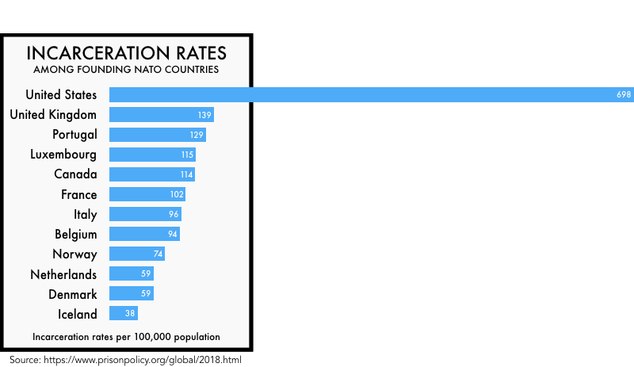
(source)
And that's just the rate of incarceration. The absolute figures are mind-blowing. I can't find a nice chart, but put it this way - it has a prision population of 2.3m, and the next biggest is China - that authoritarian monster state - with 1.6m. (source). Or as the article puts is: "The United States has less than 5 percent of the world's population. But it has almost a quarter of the world's prisoners." Police terror in the US is quite literally off the charts. In that, it is absolutely unique, and absolutely terrifying. And this is not even to begin to bring in the figures of how many of these prisoners are PoC.
Edit: I forgot the moral of the story - there is systemic incentive to fuck the poor and the black by way of police: it is a social policy, unprecedented in scale. That's why it's so hard to 'reform the police'. This is not a story about police and 'bad apples'. It is a social-political-economic story, driven by neoliberal design. -
Systemic racism in the US: Why is it happening and what can be done?The interesting question is why the US simply is unable to truly reform it's police? — ssu
The sociological answer is this: the role of the police in American capitalism is specifically engineered to be an alternative to social provision. In other words: no need to provide for society when you can lock them up and cower them into terror. Via the sociologist Loïc Wacquant:
"The explosive growth of the scope and intensity of punishment — in the United States over the past thirty years and in Western Europe on a smaller scale over the past dozen — fulfills three interrelated functions, each corresponding broadly to a “level” in the new class structure polarized by economic deregulation. At the lowest rung of the social ladder, incarceration serves to physically neutralize and warehouse the supernumerary fractions of the working class and in particular the dispossessed members of stigmatized groups who persist in entering into 'open rebellion against their social environment' - ”—to recall the provocative definition of crime proposed a century ago by W. E. B. Du Bois in The Philadelphia Negro.
One step higher, the rolling out of the police, judicial, and correctional net of the state fulfills the function, inseparably economic and moral, of imposing the discipline of desocialized wage work among the established fractions of the proletariat and the declining and insecure strata of the middle class, in particular by raising the cost of strategies of escape or resistance that drive young men from the lower class into the illegal sectors of the street economy. Lastly and above all, for the upper class as well as the society as a whole, the endless and boundless activism of the penal institution serves the symbolic mission of reaffirming the authority of the state and the newfound will of political elites to emphasize and enforce the sacred border between commendable citizens and deviant categories, the “deserving” and the “undeserving” poor, those who merit being salvaged and “inserted” (through a mix of sanctions and incentives on both the welfare and crime fronts) into the circuit of unstable wage labor and those who must henceforth be durably blacklisted and banished" (Wacquant, Punishing the Poor).
Police terror is an economic-political strategy, not an accidental feature of current social reality. None of what has been happening can be understood in isolation of these factors. The last of the factors mentioned here - the need to separate the 'deserving' from the 'undeserving poor' is yet another reason to resist the bourgeois attempt to parse out 'rioters' from 'protesters'. Grievance comes as a package, and it affects not only 'deserving' grievers, but those - especially those - who have been so destitute that looting becomes a viable strategy of response.
Race, class, and institutional terror are inseparably bound. Those who want to package it up into little digestible pieces do nothing but help enforce injustice. -
Systemic racism in the US: Why is it happening and what can be done?The consensus legitimises; by sweeping under the rug, as you're seeing live happening in your own thoughts; the institutionally sanctioned violence against these protesters (and now journalists!) by comparing it to their own community crime problems. The president's expressed wish for all of them to be shot isn't weighing heavily on people's minds, but a Target store being attacked is. It's been "a few bad eggs" forever, it's been "condemn violent protesters" forever; and the police keep killing and the things that keep the protesters' problems going are never addressed. — fdrake
Highlighting for visibility. -
Systemic racism in the US: Why is it happening and what can be done?Canada and Australia didn't need to revolt, and they seemed to have done okay. — Marchesk
Ohhh no. Oh no no no no.
https://www.mamamia.com.au/aboriginal-deaths-in-custody/
"[There have been] more than 400 Indigenous Australians who’ve died in custody since the end of the Royal Commission into Aboriginal Deaths in Custody in 1991. In that time, close to 30 years, there have been zero convictions as a result of these deaths."
Fuck this place too.
--
I'm unfamiliar with the Canadian situation, but by all hearsay accounts, their first-nations people are treated like shit too. -
Systemic racism in the US: Why is it happening and what can be done?the German revolution was terrible as well. — Marchesk
Notably, Germany did not undergo a revolution. It was taken over by means of a constitutionally sanctioned exception clause. Entirely legal. -
Systemic racism in the US: Why is it happening and what can be done?
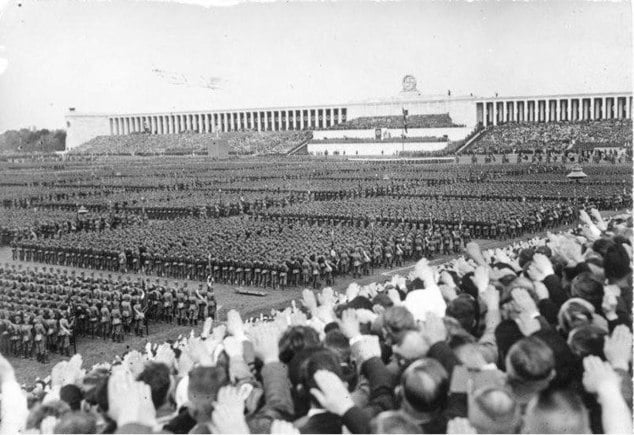
Love me a good bit of order.
Look at them clean lines.
Not an anarchist in sight, just people living in the moment.
Hope no one murders every single last one of them. That would be upsetting and disorderly. Very unhelpful. -
Systemic racism in the US: Why is it happening and what can be done?Of course I do, and nothing I've said would indicate otherwise.
-
Systemic racism in the US: Why is it happening and what can be done?Yes, you have been for some time.
-
Systemic racism in the US: Why is it happening and what can be done?I am just not sure how to balance supporting their grievances and criticising their tactics. — Echarmion
I'm not convinced we are in any position to critique tactics. As I mentioned way back in the fog of this thread, it's presumptuous to tell people who have tried every other avenue of protest that what they are doing does not meet some ideological purity test and 'doesn't seem to be very effective' - per the conversion that is happening right now around this post. On this score I think you're right - what is said here won't particularly have any material effect on the ground, so the rarefied tut-tuting only serves to shore up those for whom the only takeway is 'angry rioters bad, black people not being very dignified/helpful' and nothing else. -
Systemic racism in the US: Why is it happening and what can be done?Caught me dead to rights!
-
Systemic racism in the US: Why is it happening and what can be done?What is it you're accusing me of, exactly? Being an agent of Bloomberg or Murdoch? — Echarmion
I don't believe I've accused you of anything. It's a disagreement over values and framing. -
Systemic racism in the US: Why is it happening and what can be done?In style more than in substance. Street would make a better Leninist, I think. Hang the bloodsucking kulaks, that kind of thing. — jamalrob
I'll take it! Kinda. Probably more Maoist. States are a bit meh. -
Systemic racism in the US: Why is it happening and what can be done?We are not talking about disagreement, we are talking about extra-judicial killing and widespread oppression of a community. — unenlightened
This is really important - I think part of the problem here is that certain people cannot even begin to fathom any notion of conflict which is not modeled on 'disagreement'. Like the cop's boot had a 'disagreement' with George Floyd's neck. And the protestors have a 'disagreement' with the public execution of yet another black man. These pearl clutchers cannot even imagine conflict beyond disagreement - which is why anything beyond that is deemed 'violent' and beyond the pale. Despite the fact that what is being responded to is anything but disagreement, but systemic violence in its own right. -
Systemic racism in the US: Why is it happening and what can be done?You can’t start over if you burn along with everything else. Stand alone remarks like that are, in my mind, exactly the opposite of what sensible wish to hear - frankly I think it’s a disgustingly irresponsible thing to say in a time like this. — I like sushi
There's nothing sensible about 3 centuries - and more - of injustice. -
Systemic racism in the US: Why is it happening and what can be done?Yes, I'm an antifascist.
-
Systemic racism in the US: Why is it happening and what can be done?I don't entertain the notion that anything written in this thread materially affects the outcomes for oppressed communities in the US.
I am just commenting on what, to me, looks like bad reasoning. — Echarmion
Yes, yes, just like how the majority of the media is 'just commenting' on all the awful 'violence' of these very unaesthetic black people being inappropriately angry just because a cop killed one of them in public again. Uncouth. -
Systemic racism in the US: Why is it happening and what can be done?That's a separate argument with other posters in this thread who want an actual revolution because they view capitalism as the root of all the injustice in the world, or much of it anyway. — Marchesk
Literally no one but you has even mentioned the word 'revolution' you insufferable two-bit dolt. -
Systemic racism in the US: Why is it happening and what can be done?Ah yes, citing a racist fucktard like Katie Hopkins is exactly the place to go to for reliable news right now.
-
Systemic racism in the US: Why is it happening and what can be done?
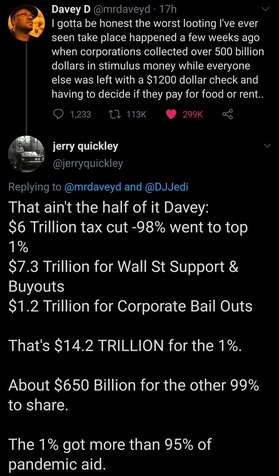
BuT DeStRoYiNg TaRgEt WiLl HuRt ThE LoCaL CoMmUnItY!
WhAt DoEs CaPiTaLiSm HaVe tO dO wItH iT? -
Systemic racism in the US: Why is it happening and what can be done?And that is a useful way to spend your time? — Echarmion
idk maybe you can call the cops on me or something for not being productive enough for you. -
Systemic racism in the US: Why is it happening and what can be done?And do you really care about the outcome, or are you just here to signal your revolutionary credentials? — Echarmion
I'm here to try and make sure the discourse around legitimate protests doesn't get co-opted by pearl clutching liberals who couldn't give a rats ass about systemic injustice while pretending they give a shit about violence against property (always last minute, parachuting in with only one thing to say). -
Systemic racism in the US: Why is it happening and what can be done?This is what a proper headline looks like:

https://slate.com/news-and-politics/2020/05/george-floyd-protests-police-violence.html -
Systemic racism in the US: Why is it happening and what can be done?Whereof one does not speak of the existential violence of people's everyday lives, one should STFU about the broken windows of MNCs.
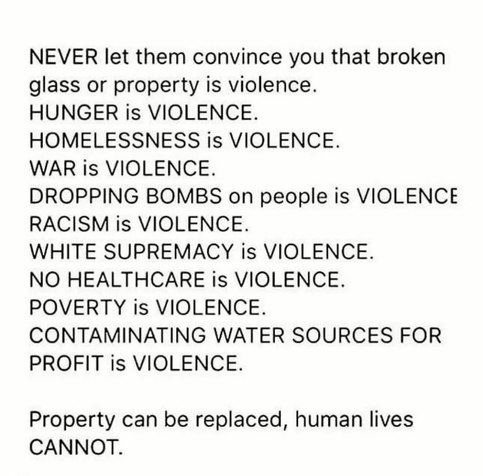
The crocodile tears of those whining about protester violence can go shine some cop boots so they can be better licked. -
Systemic racism in the US: Why is it happening and what can be done?Merged post from @Christian2017:
"I won't flame anyone.
I think this is the end of america.
i think america will be balkanized. i understand sometimes people have very strong emotions and feel the need to get revenge. Personally in my case i dont think it would serve a purpose. i hope you all have a great life. i wish you all the best and i believe i'll see some if not all of you all on the other side.
sorry for all my dickishness."
Direct replies to this post to @Christian2017. -
Systemic racism in the US: Why is it happening and what can be done?And yet, already, the protesters’ legitimate grievances are being subsumed by political leaders and others questioning whether they are registering their anger appropriately. This is also a pattern in these moments: the demonstrations, so visible and visceral in the news coverage, become the story. The structural problems being protested start to fade into the background.
...Yet if the anger and frustration from centuries of racial oppression causes a peaceful protest to become “violent” — and most of the reported attacks have been directed against property, not people, though one man was tragically killed in Detroit — suddenly that other kind of violence becomes the dominant story so far as political leaders are concerned, a disruption to the natural order that must be corrected. The systemic racism that has led to so many black lives being cut short becomes secondary.
But it shouldn’t, because that’s the real problem America must grapple with. Otherwise, sooner or later, this will all happen again.
https://www.vox.com/2020/5/30/21275507/minneapolis-george-floyd-protests-police-violence
None of these last-minute parachuters here to virtue signal their "care" and "concern" give a shit insofar as this is the only thing they can't shut up about. -
I think this is the end of americaThis discussion was merged into Systemic racism in the US: Why is it happening and what can be done?
-
Systemic racism in the US: Why is it happening and what can be done?This fall there will be a national referendum on the incumbent; — 180 Proof
I do agree with this. This election is Trump's to lose, not Biden's to win. I still think the latter is fair game, perhaps especially becasue of the situation. -
Systemic racism in the US: Why is it happening and what can be done?firing something at innocent person on their porch:
https://streamable.com/u2jzoo
cop appearing to be enjoying himself today:
https://v.redd.it/jjclrdzp8x151
cop shooting something at guy for saying "fuck you":
https://v.redd.it/zepg0b43ly151
cops breaking supplies for peaceful protestors:
https://v.redd.it/v8x8isj0xz151
nypd driving into protestors:
https://v.redd.it/mztm15kh00251 https://gfycat.com/misguidedrecklesscod
cops shoving an old dude to the ground:
https://v.redd.it/bluggpblrz151
police actively seeking out fights compilation:
https://v.redd.it/m82yxl4qh0251
cop driving at people aggressively on a campus:
https://v.redd.it/ngxvkoro60251
cop shooting something at people watching from apartment:
https://mobile.twitter.com/Sarah_Mojarad/status/1266633046591078400?s=09
police shooting the press with something:
https://v.redd.it/o3v8ps7rat151
police arresting a CNN reporter:
https://v.redd.it/yce9bpk8mo151
police doing a drive-by pepper spraying
https://mobile.twitter.com/JordanUhl/status/1266193926316228609
photographer being pepper sprayed:
https://i.redd.it/4ix8f3j6dy151.jpg
guy with hands in the air gets his mask ripped off and pepper sprayed:
https://v.redd.it/wlx0gyoe21251
lady who was coming home with groceries who got a rubber bullet to the head:
https://i.redd.it/ns0uj557x0251.jpg
https://mobile.twitter.com/KevinRKrause/status/1266898396339675137
reporter blinded by rubber bullets:
https://mobile.twitter.com/KillerMartinis/status/1266618525600399361?s=19
reporter describes getting tear gassed:
https://mobile.twitter.com/mollyhf/status/1266911382613692422
couple getting yanked out of their car and tased for violating curfew:
https://mobile.twitter.com/GAFollowers/status/1266919104574865410?s=19
young woman gets shoved to the ground by officer:
https://mobile.twitter.com/whitney_hu/status/1266540710188195843?s=20
reporter sheltering in gas station is pepper sprayed: https://twitter.com/MichaelAdams317
reporter trying to get home gets window shot out: https://twitter.com/JaredGoyette/status/1266961243476299778
cops come at a guy for filming a police car burning:
https://twitter.com/johncusack/status/1266953514242228229
photographer arrested:
https://youtu.be/9wgkGLmphLE
Columbus police assaulting protestors:
https://twitter.com/KRobPhoto/status/1266796191469252610
congresswoman sprayed with pepper spray during protest:
https://www.cnn.com/2020/05/30/politics/joyce-beatty-ohio-pepper-sprayed-columbus-protest/index.html
7 protesters fired on by something:
https://v.redd.it/tal1ncha4o151
cops pepper spraying a group of protestors without provocation https://v.redd.it/0dxnkso0a1251
young child allegedly pepper sprayed:
https://www.fox10phoenix.com/news/video-shows-milk-poured-over-face-of-child-pepper-sprayed-in-seattle-protest
horse tramples young woman, police investigating: https://www.click2houston.com/news/local/2020/05/30/watch-video-captures-moment-police-horse-tramples-woman-during-houston-rally/
cop pushes protestor with his bike
https://twitter.com/ava/status/1266797973834395648?s=20
Reuters reporters detail being shot at with rubber bullets:
https://www.reuters.com/article/us-minneapolis-police-protest-update/reuters-cameraman-hit-by-rubber-bullets-as-police-disperse-protesters-idUSKBN237050
man pepper sprayed as he watches from his second floor apartment balcony (at 13s)
https://v.redd.it/l0yq3023p2251
swat holds alleged looter with the same hold that killed George Flynn:
https://v.redd.it/i5pj07xrw2251
CNN reporter pepper sprayed after identifying themselves as press:
https://mobile.twitter.com/darryl_forges/status/1266911141088972803?s=21
nurse gives her first hand account:
https://v.redd.it/n6x9ms0h86251
casually pepper spraying while walking by:
https://v.redd.it/1okeo9obn5251
girl getting booted while already on the ground:
https://v.redd.it/1maj0iv475251
more cop car ramming:
https://imgur.com/QTZCPKg
video compilation of most of these links:
https://youtu.be/OIgw1VJJLIM
BuT wHaT AbOuT ViOlEnT PrOtEsToRs??
Stfu. -
Systemic racism in the US: Why is it happening and what can be done?No, I'm not a fascist.
-
Systemic racism in the US: Why is it happening and what can be done?Anyone who cries over looting but had nothing to say over the corporate looting of the American public purse during the recent bailouts ought to lose the right to speak on this topic, permanently.
Streetlight
Start FollowingSend a Message
- Other sites we like
- Social media
- Terms of Service
- Sign In
- Created with PlushForums
- © 2026 The Philosophy Forum