
Comments
-
What should motivate political views?So what do you see as the motivations behind holding political views? — darthbarracuda
The first place to start is what comes to most people's minds first: What are my interests, what are the interests of my family, my closest friends? In a wider circle, there is my neighborhood, my community. Farther out there is the state or province, region, or nation in which everything that is important to us is situated. Then there are many other nations, and their interests. But what really concerns us is our immediate needs and wants (and those around us).
I'd start with pragmatism: What is going to work for us (me, my family and my friends) as we seek what we must have (food, shelter, clean water, fuel (in winter), etc) and what we very much desire to have (freedoms to live our lives in a way that is compatible with our community). I want the freedom to read what I want, see the kind of films that I like, hear the kind of music I prefer, talk about politics along the lines that make sense to me, and so on. I don't have to agree with everyone in the community, or they with me, but everyone's best bet is to live without interfering with each other too much.
I do not have a history of being political. — darthbarracuda
Then what you have needed and wanted must have been more or less yours for the taking. We can avoid "being political" when what we need and want IS available and entirely consistent with the community. You have a job with which you support yourself; housing, food, clothing, essential services, access to at least urgent medical care if needed, adequate transportation, and so on. These things exist because you are the beneficiary of earlier political efforts.
We generally "get political" because we have needs that are not being met. Lots of people who had no "political history" got political because they lacked basic civil rights, could not support themselves even though they were working, were considered sick and criminal on account of their homosexuality, could not get decent prices for their crops, had no access to public transit, were being forced out of their homes because property taxes were extremely high, couldn't find apartments, and so on and so forth.
My first "real" self-interest political activity was in the gay community. In 1971, being gay left one vulnerable to anti-gay discrimination: trouble renting an apartment, job seeking, arrest while seeking sexual partners [but not having sex] in public places, and so on. Vietnam had been a political cause, but it wasn't "personal" -- I was at no risk of being drafted (poor vision). It just seemed wrong.
In the early 1980s my political interest shifted to socialism, and it remains a personal political interest, because I don't like the way our economy works, especially on the micro level of jobs, wages, unemployment, really tedious work, and so on. Everybody says socialism is a waste-of-time dream, and not a very good dream at that, but they also have nothing better to suggest as they themselves struggle with life under capitalism. -
How accurate is the worldview of the pessimist?You have Schopenhauer's argument that want and desire create suffering as this leads to strife in the challenges of life, strife in existential boredom, and strife in relationships to other people and our surroundings. However, people will simply deny they experience this. Whether they lie (to themselves or others) to make a point or not, they can at least publicly denounce that they feel any of this strife. — schopenhauer1
I have experienced a lot of sturm and drang in my life, lots of strife and conflict. I admit it. My main regret is that I was not more successful in directing sturm, drang, strife, and conflict to the self-satisfied sons of bitches with whom it belonged. Unfortunately, a lot of it ended up on my head, a la boomerang.
You have someone like a Hartmann, who predicts that we will eventually run out of optimistic ideas in science, progress, religion, society, etc. and then realize a sort of ennui of life and die out. But this is far in the future, in completely depresses most people to even think that this will happen. — schopenhauer1
The world will end with either a bang or a whimper. I guess ennui is the whimper. Plausible. I'm not sure of running out of optimism, but I think we will (at some point in the future) find ourselves at an impasse where our problems are met with no new, and successful scientific and social solutions. There is no guarantee that a fix for every problem will always be found.
So there you have it- the pessimists will just be called wimps and be recommended 1) positive psychological thinking (make meaning out of meaninglessness) 2) anti-depressants 3) keep it to yourself and just deal with it 4) suicide. — schopenhauer1
It is true that "depression" is over diagnosed by doctors and is the easiest description to apply to people who don't seem to be "perky" or "resilient" enough. "Well, he or she is depressed." "He got fired and had a bout of depression." "She had a baby and is depressed." "The canary died and now the cat is depressed." "Their mother died and the family is depressed." "The dog hasn't been on a walk for a week and is depressed." "He's broke and sick and is depressed." That people might be experiencing anger, grief, fear, dread, boredom, worries, physical sickness and pain, and so forth is most easily covered by rounding it all down to "depression". If one complains too much one is a whiner, a trouble maker, or is having a pity party. Suck it up. Etc.
But these aren't pessimists. Optimists and pessimists alike have experiences which leave them in extreme states of emotional upheaval, which they are expected (by themselves and/or others) to keep a lid on. We don't like it when people emote too much because it destabilizes the shaky social structure. If the shaky social structure should fall apart, then WE would have to deal with unpleasant realities, and wouldn't that be awful. People are afraid of change.
So, let me close with an annoyingly optimistic quip: Therapy means change, not adjustment. -
How accurate is the worldview of the pessimist?If
Pessimism in Philosophy means a belief that this world is as bad as it could be or that evil will ultimately prevail over good.
and
Optimism in Philosophy means the doctrine, especially as set forth by Leibniz, that this world is the best of all possible worlds and the belief that good must ultimately prevail over evil in the universe.[
Then I find I have to place myself just to the left of center, and give a slight edge to pessimism, as defined here.
I don't think the Philosophical maps onto the Psychological too well because the philosophical definition is more severe than what I would call psychological optimism and pessimism. Those are more changeable, mixed, and moderate, and they are significantly affected by events in people's lives.
Optimism is default Darwinism. Those who have dispositions, willpower, social, physical, and mental preferences for what already exists, and likes the system survive and thrive. Those that don't die off, possibly complain a little, commit suicide and are drowned out. — schopenhauer1
It may be a big mistake on my part, but I would think that two philosophers evaluating the philosophical differences between the terms, pessimism and optimism, would have a moderately interesting, not terribly charged discussion. I would think it would be like discussing free will and determinism. It shouldn't involved fatalities. But then, perhaps philosophers aren't all that philosophical when doing philosophy.
When we talk about "dispositions, willpower, social, physical, and mental preferences" we are talking about psychological optimism and pessimism. Our preferences are spread out, depending on the topic, and how we operate our "dispositions, willpowers, social, physical, and mental preferences" is diced up and jumbled. Personal history, relationships, hormones, neurotransmitters, et al have variable influence. The optimist in X setting today might be the pessimist in Y setting tomorrow, and might change his mind about the whole thing after a good meal, a few drinks, and some sex.
Who "survives and thrives or dies off; who complains a lot or a little; who commits suicide or murder; and who is heard or drowned out etc."--- may not be philosophical at all. In many cases, it's group dynamics. Groups often draw together and squeeze out the dissenters. Or the group forces out those who aren't considered socially distinguished enough. Or the drinkers drive out the abstainers, the straights drive out the gays, and the vegetarians drive out the carnivores. Optimism and pessimism do not apply, just as they do not apply to willpower, physical capacity, or mental endowment.
Like I said, I'd give an edge to evil prevailing over good, and I don't think this is the best of all possible worlds. (It's just the world we have.) The world works the way it does (for better and for worse) by many unrelated mechanisms, Optimism and Pessimism notwithstanding. -
How accurate is the worldview of the pessimist?I think, to sum up the difference between a pessimist and a non-pessimist would be the answer to the question of: Is it better to have lived/loved/etc and lost than to have never lived/loved/etc at all? The answer for me (as a pessimist), is, no, nobody wants to lose. — darthbarracuda
How deep is the dichotomy here? Not too deep.
The pessimist's view of the world is not more accurate than the optimist's. Take global warming: The pessimist and optimist both see the 400 ppm CO2 level which we are now in, the advance towards 2.0º+ centigrade temperature rise, hotter weather, more rain, more floods, more unpredictability, etc. The difference is in the way they respond. The optimist will assume that solutions will be found, or beneficial adaptations will occur; but some inconvenient truths will be overlooked by the optimist. The pessimist will assume that species will die before they adapt, and that solutions will not be fielded soon enough. The pessimist also overlooks a few inconvenient truths (just not the same ones).
If they live next to each other on the coast, they will both elevate their houses -- because they both have been flooded. The pessimist will raise his house maybe a foot higher than the optimist. The optimist is going to assume that the next big storm won't happen for maybe 10 years -- by then he'll probably be living in Idaho. The pessimist expects another big storm next year. Neither of them knows with certainty what will happen in the next 10 years. There may not be another big storm in 15 years, the next storm may kill them both, or something in between.
Clearly, it is better to have loved and won. That it is better to have loved and lost than not to have loved at all is the unhappy losing lover's compensation. Most of us both win and lose at love and much else. I'd say it is better to have had very interesting experiences that didn't always work out than not to have had interesting experiences at all.
Better to have had "interesting experiences" is not going to fly when one is 13 and has just been totally humiliated in front of one's friends and enemies. One might, at that point, think it better to kill one's self to prevent a repeat of such experiences. Fortunately, pain fades and we live to be humiliated again.
Presiding over our experiences--positive, negative, and neutral--is our Interior Narrator (IN) who provides the running commentary on what happens. Basic tendencies guide the IN. Are we risk-takers or risk aversive? Are we very responsible or are we kind of irresponsible? Are we prone to see the worst in outcomes, or the best? I don't think we choose these basic tendencies--they are given. In their extreme form, they can be crippling or fatal. For instance, very responsible, risk aversive, best outcome-types won't try an unfamiliar food. On the other hand, risk-tolerant, best-outcome, nobody to whom they are responsible (other than NASA) types are the type you want to send to Mars. -
Brexit: Vote Againand others...
So, what do you expect to happen in your life (job, housing, cost of living, etc.) as a result of Brexit, assuming that the exit is negotiated with a middle-of-the-road outcome (neither the worst possible or best possible)?
Also, do you perceive the EU as a meddlesome presence in your own sphere?
I sometimes wonder how the EU manages to accomplish anything, (despite seeing obvious positive functioning) when a few Walloons can hold up the treaty between the EU and Canada. -
Of Course Our Elections Are RiggedIs it illegal — tom
Republicans in Congress tried very hard to nail Clinton for something illegal, and haven't been successful. Perhaps the lady is inconveniently innocent. -
Of Course Our Elections Are RiggedSo you're saying that in politics people will not use all weapons they have against each other, including propaganda and unfair ones? — Agustino
Propaganda, I expect, but it shouldn't be presented as "fact". "Unfair" is a bit vague. What is fair and foul? What Nixon & company did was not merely "unfair", it was illegal. What was worse, is that he persisted in his illegality by attempting to cover up the crime.
You can't do business if people aren't honest. The economy, and most other institutions, are able to "do business" because most people are honest most of the time.
Politicians who are not honest undermine politics -- expressing the will of the people. One of the consequences of repeatedly failing to express the people's will is low-voter turnout. Why vote if the politicians are not being honest about what they are going to do once in office?
I don't think most politicians do "use all the weapons they have against each other" but it is very common for politicians to either not reveal their real plans for their term(s) in office, or to flatly misrepresent their plans. That is a bigger problem in some ways than dirty tricks, bugging your opponents phone, or stealing their mailing lists. Indeed, not revealing the truth about what is planned is pretty much de rigueur. -
Of Course Our Elections Are RiggedYes, that's right. The party-political system is rigged, and the rigging covers both parties pretty much head to toe.
-
Leaving PFNot that it was an easy decision or one that I don't regret sometimes considering the outcome. — Paul
Don't regret too much. Old apple trees are best replaced by fresh stock, even if the varieties are excellent. TPF is a refreshed cutting of PF; the varieties are the same; you are freed of the burden. Pursue your reinvention, and good luck.
Someday TPF will be ready for a succession as well.
Change is the only constant. -
Of Course Our Elections Are RiggedYou forget one thing: in politics anything goes. If I can make my opponent even worse than he/she actually is, why not do it? — Agustino
Ask the Committee to Reelect the President (CREEP) and Watergate-disgraced president Richard M. Nixon how well that approach worked. -
Non-religious perspectives on religiona secularization movement against dogma and religious power as opposed to a legitimate philosophical movement. — darthbarracuda
Secularization has been sweeping the world like a seismic wave for... a century, more or less. I'm not sure it had an agenda of any sort. It isn't against dogma or religious power: those things are too immaterial for secularism to care about. It's like an earthquake. The earthquake isn't against brick buildings or water mains; the built world is just irrelevant to the earthquake.
The thinking religious community has been trying to come up with responses to secularism -- occasionally with success, often without. Religious language falls flat for a lot of people with whom religious people would like to engage. I don't know whether a new language that does connect can be invented.
What seems to work best, when it works at all, is offering to people experience--either benevolent services or the experience of a welcoming community that openly displays its range of faith. (Belief, like everything else, is distributed on a continuum.) -
Non-religious perspectives on religionReligion is philosophy, theology, eschatology, soterieology, a social group, revelation, ritual, talk, devotion, music, imagination, dogma, and more.
What seems to make religion 'work' is experience. Experience of the ritual, the reading, the preaching, the sacraments, the singing, the prayers, and last but not least, the social group. Within the weekly reading and preaching (and in the hymns) are found instruction in faith,
Different religions (Buddhism vs. Christianity) utilize the elements of religion in different proportions, and the theology is often quite different. But there is still experience of whatever the religion offers.
Ordinary people with the richest, deepest religious experience work at it. They don't just pray in church. They don't think about their religion only for 1 hour, once a week. The reach out for more (through practice -- experience). They don't settle for the 3 year cycle of readings in the standard lectionary. They strive to experience more of [whatever chief treasures their religion offers]. They pray, they read, they engage in service labor, they give generously, and so on.
Of course, people being people, most of us coast through life. It isn't that we do nothing -- quite often we are very very busy -- but we are generally not assiduously pursuing any grand schemes. (I suppose successful professional middle class people are, but that's not in my experience.)
If accused, most believers could not be convicted of being religious. Some believers are almost not believers at all, and a lot of people are vaguely "spiritual" -- and nobody knows quite what that means. -
US threatens cyber attack on RussiaYes, it does relate to all that. Of course, if it only related to the paranoia of lunatic generals, it would still be a good movie, but not as socially relevant and resonant. Take for instance, fluoridation of water. There are still some people who think it's some sort of plot, but when the movie was made anti-fluoridation people were far more numerous and far more active (fluoridation being one of those ways in which our precious bodily fluids are "depurified"). I suspect that the original anti-fluoridation people are still around, but now focused on something else--the Federal Reserve, the gold standard, or GMO foods. The anti-fluoridation people were essentially anti-government, anti-public health.
Anti-communism was also quite virulent in the late 1960s, and remained so for quite a while. The anti-communists are still around too, but have moved on to other threats -- Islam, jihadi terrorists, Mexicans, whatever (not that these things are without consequence). -
US threatens cyber attack on RussiaBRIGADIER GENERAL JACK D. RIPPER ON WAR AND THE INTERNATIONAL COMMUNIST CONSPIRACY TO SAP AND IMPURIFY OUR PRECIOUS BODILY FLUIDS
-
US threatens cyber attack on RussiaWar is hell and a cyber war would be hell too, though yes, fewer exploding shells and no mushroom-shaped clouds. But that should lead one to think that we will not notice the war in progress. I have no idea how vulnerable our infrastructure is -- I have read about it, but I don't know for a fact what the situation is. One should expect -
-disruption of electric power
-disruption of heavy duty control devices (pumps, valves, motors, etc.) in municipal power, water and sewage disposal systems
-disruption of financial services (like, the bank might shut down their computer systems, which would protect the system, but still might mean you couldn't access your cash)
-Market operations (from Wall Street to Walmart) would be disrupted
-Medical record systems, train operation, airports and air traffic control, etc. might be disrupted.
-Recreation drugs would probably become more readily available, and about the time everything shut down, a pleasant high might be exactly what you need.
We might just "run amok" rather than be blown up. We are very dependent on systems, needless to say, and recovering so many systems would be time-consuming and difficult, not to mention really, really expensive. Meanwhile, people would be decompensating all over the place.
Should you horde gold? Sure you should. Buy an ingot today. The problem will be determining what the value of gold is after CW #1 is over. Are you going to hand over 1/10th of an ounce for a 10 lb. bag of good potatoes? And if you can get 150 pounds for 1/10th of an ounce, will you be able to transport and store them so you and yours get to eat them? You pushing your big bag of potatoes through the streets full of hungry people... it won't end up well. -
Of Course Our Elections Are Riggedand, unlike the US, disenfranchisement ceases when the sentence is completed — andrewk
Well, in the US, in a majority of states--40 out of 50--disenfranchisement ceases when the sentence is completed too. -
Of Course Our Elections Are RiggedJust out of curiosity... where did this business of "dog whistle" start.
Yeah yeah, I know, dog whistles are very high pitched and supposedly only dogs can hear them. I don't remember hearing the expression "dog whistle" applied to provocative political speech until just recently -- like in the last 2 months.
"Kick the can down the road" was another one. "Kick the can" is a childhood hide and seek game, but all of a sudden, everybody was "kicking the can down the road" instead of putting action off until later. It arrived, became a noxious verbal weed, and then stopped abruptly. -
Of Course Our Elections Are RiggedWY, TN, NV, MS, KY, IA, FL, DE, AZ, and AL do or can permanently revoke voting rights. Maine and Vermont have no voting restrictions, and the rest of the states have varying restrictions, usually restoring voting privileges after the prison term and probation have been completed.
Even so, this is a long period of time during which a citizen cannot vote. Why shouldn't felons in prison vote? If they are citizens they should have that right, one might argue, if for no other reason to remind them that they are still part of the national community. After all, if they can vote while they are accumulating their debt to society; why not let them vote while they are paying it off. -
Of the worldI think this type of philosophical naturalism has transposed the Cosmos into the place formerly assigned to God, and assigns science the role previously assigned to religion. — Wayfarer
A few decades ago when I began to extricate myself from the Christian dye my virgin wool had been immersed in, I phrased it this way: "I want to live in a knowable world" -- basically replacing religion with science. I wanted to get rid of the magic god who mysteriously intervenes in this world to make things happen (all sorts of nano-managed events which many believers think happens).
Making the transition by no means eliminated headaches. Instead of being irritated by claims of the magic god's nano-managing, there is now the irritation of determinism vs free will. I'm still working on that problem. I guess I agree with "Carl Sagan's well-known saying 'cosmos is all there is, or ever will be'".
Even though billions sincerely believe in other worlds, I now have to know better them all of them, and conclude they are deluded, and must conclude that imagined other worlds are as substantial as the suggestive shapes of clouds. Fanciful cloud shapes are part of "this world". -
Of the worldIn the world but not of the world...
2 things. One, even if the phrase isn't in the NT, the problem of navigating through this world to the world to come exercised Christians early on and ever since. It's especially complicated because in Jesus the world to come entered into this world, and presumably this mixing has never ceased.
Two, my impression of the OT is that this world is the only world there is. Even though I was dyed in the wool as a Christian, and despite the seductive attractions of a world to come, I came to prefer what I take to be the OT view -- this world is all there is of worlds. God doesn't exist in a "different world". God exists in this world--in the Cosmos. -
So who deleted the pomo posts?↪Bitter Crank You're living in your own private Idaho. — Metaphysician Undercover
Too true, too true. -
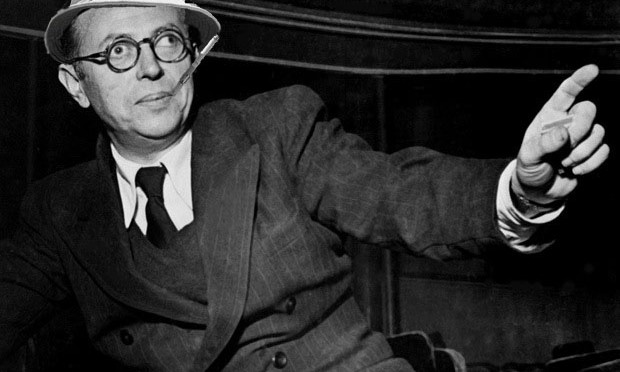
So who deleted the pomo posts?From the web site "Critical Theory": 9 INSANE STORIES FROM THE LIVES OF FAMOUS EXISTENTIALISTS
#1 Jean-Paul Sartre Was Literally Obsessed With Crabs. Also, Mescaline.
#2 Speaking of Mescaline, Sartre Was Essentially the Junkie Equivalent of an Ubermensch
#3 Soren Kierkegaard Employed an Array of Ridiculous Pseudonyms That Might as Well Have Been Pulled from the Pages of Harry Potter
#4 Albert Camus Really Liked the Central Park Zoo and Credits Soccer With Everything He Knew
#5 Franz Kafka Loved Weird Porno and Paying for Sex
#6 Nietzsche Went Crazy, Saved a Horse from Whipping, and Proceeded to Believe He Was Napoleon (who-- the horse or Nietzsche?)
#7 Simone de Beauvoir’s Work is Still Banned in the Vatican for Being Lesbian Propaganda
#8 Camus Essentially Predicted His Own Death
#9 Dostoyevsky Was Once Seconds Away From Being Executed
-
So who deleted the pomo posts?Camus a douche? According to Adam Gopnic of the New Yorker April 4, 2012 Camus was the Don Draper of existentialism.
The French novelist and philosopher Albert Camus was a terrifically good-looking guy whom women fell for helplessly—the Don Draper of existentialism. This may seem a trivial thing to harp on, except that it is almost always the first thing that comes up when people who knew Camus talk about what he was like. When Elizabeth Hawes, whose lovely 2009 book “Camus: A Romance” is essentially the rueful story of her own college-girl crush on his image, asked survivors of the Partisan Review crowd, who met Camus on his one trip to New York, in 1946, what he was like, they said that he reminded them of Bogart. “All I can tell you is that Camus was the most attractive man I have ever met,” William Phillips, the journal’s editor, said, while the thorny Lionel Abel not only compared him to Bogart but kept telling Hawes that Camus’s central trait was his “elegance.” ...
Sounds like quite the hunk. I was thinking that maybe the French picked up that look from the American beatniks, but now I see it was the other way around. -
So who deleted the pomo posts?Suppose someone wrote this:
“I hope you don’t have friends who recommend Ayn Rand to you. The fiction of Ayn Rand is as low as you can get re fiction. I hope you picked it up off the floor of the subway and threw it in the nearest garbage pail. She makes Mickey Spillane look like Dostoevsky.” Flannery O'Connor
Would this be deletable? It is, after all, pretty disrespectful. -
So who deleted the pomo posts?
Should moderators root out posts in which unreasonable statements are made? Well... probably not. They don't have all day to read and reflect on the degree to which unreasonableness is present in each post. I am inclined to think unreasonable statements should be left alone. Perhaps a trigger warning could be posted. Participants in the thread will certainly thrash out how unreasonable unreasonable statements are.
Personal characteristics are part of the total package. I don't know whether "French intellectuals look like "douches"", nor do I know quite what is meant by a "douche". Something more than a shower, presumably. Perhaps an orifice irrigation device is what was meant. Well, that's odd but it isn't exactly a rare term, these days. Would just an ordinary "asshole" have been ok? I didn't read the post that said so-and-so was upset that [french intellectuals of some sort] smoke pipes. Perhaps the author of the comment thought it an unnecessary affectation. Perhaps? Or perhaps so-and-so is a public health fantastic who thinks pipe smoking is a very bad personal practice.
It sounds more flippant than anything else. -
So who deleted the pomo posts?Hanover hadn't made a motion. It was just a point of information. Inform the chair that you wish to make a motion.
-
So who deleted the pomo posts?deliberately humorous — Thorongil
That's the problem, see. People trying to be funny. Didn't you read the guidelines? NO DELIBERATE HUMOR especially at the expense of any schools of thought known to be subject to all sorts of unfortunate and outrageous slings and arrows by privileged, white, male, Americans shites!!!. Who do you think you are, anyway? Why can't you understand the glaringly obvious TRUTH that post-modernism has immense liberatory value to oppressed people attempting to rebalance the power differentials inherent in Euro-technical oppressions exercised upon those afflicted by excessive melanin, estrogen, deficits, and haggis§?
You all can say what you want IF you have cleared it with us pontiffs. Otherwise, just stick to the gayly forward and narrow. And you specifically, just shut TFU about postmodernism already.
§A hideous concoction of low-value meat bits, noxious root vegetables, and horse meal boiled in goat guts. Beloved by the Scots, who else, even if they live in France and have paradis culinaire la porte à côté. (Probably too cheap to eat decent food.) Obviously a product of dour Presbyterian discipline from which they should have long since recovered in this post-modern age. -
My writingBitter Crank,
I failed creative writing because I could not be creative. — curious
I doubt very much that you could not be creative, but "creative writing" isn't the same as "creativity". "Creative writing" is about turning out specific kinds of writing that follow certain forms -- the short story, poetry, drama. The student is expected to turn out writing that conforms to the teacher's expectations. I also took a creative writing class and found that I wasn't very good at it.
With general writing, I get by. I am thinking about just writing with a pen on paper. No editing no critiquing. — curious
Back in the 1980s, somebody (can't remember) wrote a book by the title of (can't remember) in which he argued that writing on a computer screen is quite different than using a typewriter (or using pen on paper) because it "costs nothing" to edit. He wasn't talking about literal cost, rather, psychological cost. When you use a typewriter, or pen on paper, there is no easy way of making mistakes disappear. You can cross them out, but you can still see where the error was. And it takes much more actual labor to make an error on a typewritten or ink-written page disappear. On a computer, selected text disappears effortlessly and completely. The writer is less committed to any particular phrasing on a computer screen, than he would otherwise be.
Spell and grammar checking, and automatic word substitution, wasn't readily available on the personal computers that the author would have been using, and they weren't as good then as they are now. It is still a good idea to think about what you are writing--spelling, grammar, punctuation, word choice, all that.
The editing on this forum is good; it by itself has told me much about writing. I just want to be understood. For a while I wrote by e-mail without grammar of any sort and which I called it rattling. To this day I still rattle which means no editing not critiquing, but the editor is right with my spelling. Curious. — curious
Well, lots of people rattle on.
I haven't read much of your writing, but what I have read so far would suggest that you don't have any problem producing perfectly intelligible texts. Here are some suggestions for practice.
1. Write more, much more. Writing well takes practice. Write a lot. Keep your originals for a while for comparison.
2. Use ordinary words and plain sentence structure (more or less what you are already doing in your posts here).
3. Write about whatever interests you.
4. If you can, find somebody who can give you useful feedback and can spot mechanical errors (we all make mechanical errors -- punctuation, spelling, typos, misplaced words, etc.).
By the way, you might be interested in Jack Kerouac's book, "On The Road"§ which he wrote in 1957. Kerouac was one of the original "beatniks". He wrote the book on a roll of teletype paper (teletypes have pretty much disappeared, but the rolls were about the size of a paper towel roll and were pretty cheap paper. One could put one end in one's typewriter and type for many hours without stopping, which is what he did. He didn't edit himself as he wrote. The publisher edited the text, of course. Kerouac didn't indicate page breaks, used real names (later changed) and such. He just 'rattled on'.
Here's an interesting little film (4 minutes or so) about Kerouac's manuscript.
§
-
Bob Dylan, Nobel Laureate. Really?... why, for instance, Mother Theresa won the prize: nothing she did helped to promote peace, as far as I can tell. — Arkady
Mother Theresa was an extremely insightful choice. The old bag tended to the dying on the streets of Calcutta and founded an order of nuns. Had she instead become a general, given her sandblasting personality, we would have had nothing but war, war, war, war, war. -
SpeciesismSupposedly, the world needs a transcendental outlook to avoid an abundance of [various kinds of problems]. Unless we believe the transcendent, we are doomed.
This is not true. What matters is our actions and our ethics. We could put forward and enact a policy regarding a more harmonious use of resources without mentioning the transcendent at all. — TheWillowOfDarkness
Yes; I agree. All our experience and meaning is housed in this world, and there is no other world, transcendent or merely more of the same. What is, is; what is not, is not, and "transcendent" is not.
Other people are not having transcendent experiences whether they think so, or not. The may have been transported, transformed, transfixed, transplanted, and so on but they did not transcend. I hate to say that because two of my heroes, Flannery O'Connor and Dorothy Day, seemed to have transcendent experiences. But these two Roman Catholic ladies also had very dry, flinty views of the world; their feet were firmly planted in terra firma. Angels would have had to twist both their arms and necks to get them to let go of material reality.
Day's biography (A Harsh and Dreadful Love) is taken from a quote by Dostoyevsky, one of her favorite writers: “Love in action is a harsh and dreadful thing compared to love in dreams.” -
My writingMy writing is general because I only write about things I know. — curious
You could do worse; much worse.
Yes, well... nouns, verbs, and grammar are a problem, true.
Please tell me more about your writing. -
SpeciesismBecause they weren't capable of doing so. But now humans have entered the stage, and I'm arguing that it's time we put down the mirror of narcissism and start acting more productive and responsible.
In any case it is clear that non-human animals have not been taking care of one another. Look at predation, social rejection from disease/disability, and r-selection. — darthbarracuda
We didn't "enter the stage", we have always been on stage -- along with the rest of the evolving species. Around 40 million years ago, the Infraorder of Simiiformes, "Higher" primates (Simians): apes and monkeys started the evolutionary path that eventually produced the modern primates, including homo sapiens.
We, like all the other animals, must pursue our essential nature. We didn't intrude hugely on other species until we mastered tool making and became hunter gatherers. We were doing no more than meeting our basic survival needs, and being what our essential nature made possible. Granted: Once we got ourselves organized, around 12,000 years ago, we did start being a bigger problem to other species.
The worst things any of our species can say about us are only outcomes of our nature -- which we, mind you, were not in charge of forming, any more than geese were in charge of their evolution. Evolution has no long-term plan. It didn't intend us, any more than it intended a goose.
Here we are, victims of blind fate. Now we are a problem not only to ourselves, but the other species as well. Do we really have the wherewithal to see ourselves in context so clearly that we can shift gears from our forward superdrive into ecological neutral? I don't think so. Just about everyone here (a few excepted) recognizes that we have huge problems. That doesn't mean that we insightful ones are also able to climb off our technological bandwagon. This conversation requires the technological bandwagon to be in excellent working order.
We are screwed, the plant species are screwed, and our furry little friends that are not extinct yet are screwed too. Blame it on evolution's lack of foresight. Step by step a bigger brain seemed like such a good idea at the time--and it probably was. Fast forward a few million years, and you have a disaster resulting from overspecialization. -
Are There Hidden Psychological Causes of Political CorrectnessHow do you all feel about whether we have uncovered (any) Hidden Psychological Causes of Political Correctness?
-
Social ConservatismIndividuals and corporations who have the resources to manage their reputations and images generally seek out of court settlements. They may or may not be guilty, they may or may not have been falsely accused. The thing they want most is for the subject and the uproar to go away. Out of court settlements usually do make uproars and subjects go away, because in exchange for the cash, accusers agree to cease and desist--aka, shut up about it.
For similar reasons many accused plea bargain; they get charged with manslaughter instead of murder, and the state saves quite a bit of money on a potentially very expensive trial. Prosecutors are less likely to plea bargain in cases of egregious murder, (like serial murders, especially gruesome first degree murders--trials that the public is willing to pay for).
Example: 27 odd years ago, 11 year old Jacob Wetterling disappeared -- presumably kidnapped -- from his home in St. Joseph, Minnesota. There was a long, intense, and massive search for evidence. There were clues, but nothing certain. This fall, a man confessed, led the police to where the body was buried, and the identity was confirmed. Case closed. There was no trial. The perpetrator, Danny Heinrich 53, was already in federal custody for child pornography charges. Why was the kidnapping and murder charge plea bargained down to lesser charges?
a. The Wetterling family did not want to endure a trial.
b. If Heinrich had been accused, there might not have been sufficient evidence to convict without his cooperation.
c. The bargaining closed the case (good for the family and the community) and was unnecessary: Heinrich will remain in prison for the rest of his life.
People sometimes plead guilty to lesser charges even if they are not guilty because they want to avoid a trial and they want to get out of police custody. If the penalty is small (like for shoplifting) the fine may be viewed as the least worst outcome. -
Social ConservatismBill Clinton. That in itself, getting such a man in the White House again, that is a bigger crime than anything Trump has ever done with regards to sexuality. — Agustino
So, Bill Clinton needs a roof over his head -- the white house is as good a roof as any.
if she wins, the culture of the US will be altered for quite a long time, in a direction that's not going to be good at all. — Agustino
Calm down. Cultures are changing all the time. The course of history is being changed by the minute. Hillary can neither usher in Utopia or usher it out. (This applies to a Trump presidency too.)
Perhaps a Clinton + Clinton administration will change things, and whether this is good or not depends on who you are. A more liberal court, and one that stays liberal for a while, is the worst outcome that Clinton could produce. Unless there is a plague among the conservative justices sitting there now, there isn't anything dramatic she can do. Same for Trump.
What is it that a more liberal court could do that would affect YOU materially? -
Narratives?Clearly not, under your argument — TheWillowOfDarkness
Correct. "More meaningful/less meaningful, all the same" is definitely not my schtick.
Some people know more and have greater insights into the meaning of texts, events, behaviors, music, art, and so on than others do. I think there is a contest of meaning. Some people win it, and some people lose it--ignominiously.
With respect to the text you have written out, there are innumerable meanings, interpretations and intentions, some of which are the authors, others which are not. All are just as meaningful as the other — TheWillowOfDarkness
The text is from “Four Saints in Three Acts”, libretto by Gertrude Stein, score by Virgil Thomson. "The piece was originally presented by The Friends and Enemies of Modern Music in 1934, opening in Hartford, Connecticut, and then moving to Broadway where, surprisingly, it was a big hit, running for sixty performances."
I've read the libretto, heard an early (1940s) recording, and seen the opera on stage. I find it moderately pleasant, but after a while it becomes extremely tedious. Both Gertrude and Virgil both use repetition with a vengeance. I have no idea what pigeons are doing on the grass, alas, alas.
I like James Thurber's approach to pigeons much better. POMO would please Stein, it would not please Thurber.
-
"From where I am sitting now I can look out the window and see a pigeon being a pigeon on the roof of the Harvard Club. No other thing can be less what it is not than a pigeon can, and Miss Stein, of all people, should understand that simple fact. Behind the pigeon I am looking at, a blank wall of tired gray bricks is stolidly trying to sleep off oblivion; underneath the pigeon the cloistered windows of the Harvard Club are staring in horrified bewilderment at something they have seen across the street. The pigeon is just there on the roof being a pigeon, having been, and being, a pigeon and, what is more, always going to be, too. Nothing could be simpler than that. If you read that sentence aloud you will instantly see what I mean. It is a simple description of a pigeon on a roof. It is only with an effort that I am conscious of the pigeon, but I am acutely aware of a great sulky red iron pipe that is creeping up the side of the building intent on sneaking up on a slightly tipsy chimney which is shouting its head off."
James Thurber -
Narratives?The point of contention is entirely to do with the way post-modernism eliminates the single narrative from which we all spring. — TheWillowOfDarkness
How could there even be a single narrative (from which we all spring)?
no discourse is less meaningful than another. — TheWillowOfDarkness
Whether discourses are more meaningful, or less meaningful, than others is a horse a-piece. It's a distinction without a difference.
Meaning is within the text or discourse itself, rather than being granted by the world outside of it. — TheWillowOfDarkness
Right, so...
7. Read the following text and find the meaning within the text, the whole text, and nothing but the text. No outside world may be consulted. Your opinion of what meaning is within the text may not be offered as a meaning. (15 points)
Pigeons on the grass alas.
Pigeons on the grass alas.
Short longer grass short longer longer shorter yellow grass. Pigeons
large pigeons on the shorter longer yellow grass alas pigeons on the
grass.
If they were not pigeons what were they.
If they were not pigeons on the grass alas what were they. He had
heard of a third and he asked about it it was a magpie in the sky.
If a magpie in the sky on the sky can not cry if the pigeon on the
grass alas can alas and to pass the pigeon on the grass alas and the
magpie in the sky on the sky and to try and to try alas on the
grass alas the pigeon on the grass the pigeon on the grass and alas.
They might be very well they might be very well very well they might
be.
Let Lucy Lily Lily Lucy Lucy let Lucy Lucy Lily Lily Lily Lily
Lily let Lily Lucy Lucy let Lily. Let Lucy Lily.
8. Explain why your discourse in answer to Question 7 is less meaningful than another. (10 points)
9. If you successfully explained in question 8 why your discourse in question 7 was less meaningful than another, please explain why you didn't submit a more meaningful narrative. Do you think we're running a degree mill here? (10 points.) -
Narratives?scientism — anonymous66
white privilege — csalisbury
narrativize — Moliere
Oh oh, they are all exhibiting POMO vocabulary and concerns. Call the cops. -
Narratives?...will you be able to resist the urge to find the nearest car, pop open the hood, and start chugging sulfuric liquid — Thorongil
Yes, but hybrid cars don't use that kind of battery. They use lithium ion or nickel oxide hydroxide batteries. What's an environmentally-sensitive POMO-poisoned person to do? Chewing on lithium will just even out my mood. On the other hand, if I sit on a pile of the disastrous Galaxy Note 7 cell phones, they will eventually burst into flames of burning lithium and plastic. -
The rationality and ethics of suicideObviously I'm not expecting an answer to each question, those are just examples to illustrate that people can suffer psychological damage from all sorts of things, — zookeeper
Right.
Whether a deeply beloved partner who is terminally ill dies on April 25 or June 2nd isn't going to make a huge difference in the amount of pain the survivor experiences. If the same partner opts for assisted suicide of one sort or another in late March or early April, it might increase or decrease the pain of the survivor. Not much difference, especially compared to the beloved partner not being sick and dying in the first place. The survivor's suffering begins with the unexpected terminal diagnosis: "3 months, maybe 6--not longer than that."
Chronic mental illness which can go on for decades and never ends in suicide is extremely painful for the partner and family--chronically distressing, more than acutely painful.
Friends moving away to distant cities to pursue their worthy goals can be a cause of considerable pain. Getting fired can be devastating (or a relief, depending). Being part of a company bankruptcy layoff, even if it is nothing personal, can be very hard on people.
Many decisions that people make for their own good, for the good of this group and not that group, to comply with the law, and so on and so forth produce waves of unintended but certain suffering -- and nothing can be done about it -- "that's just life!" as they say.
BC

Start FollowingSend a Message
- Other sites we like
- Social media
- Terms of Service
- Sign In
- Created with PlushForums
- © 2026 The Philosophy Forum