
Comments
-
The Collective Philosophy of 'Relative Poverty'My point or question is this. Collective thinking as consequenced by media, television, and the internet. has heightened or refined the notion of 'relative poverty' as compared to real actual 'poverty' of depravity. — Marcus de Brun
First a note on vocabulary: the word you want is 'deprivation' not 'depravity'. Depravity means moral corruption; wickedness.
Two or three billion people around the world are overweight because high calorie fat and sugar is cheap. That doesn't mean they have abundant nutritionally adequate food (fruits, vegetables, protein...).
People are not pulling up stakes because of "relative poverty". They are leaving their country because normal economic life has collapsed. For many people wages have remained fixed while the cost of food, clothing, shelter, etc. have been subjected to severe hyperinflation. If someone is making $100 a month (whatever that is in local currency) and the cost of a weeks worth of groceries is $500--if they can find anything on the shelves--they are in trouble. Remember also, Venezuela's economic/political crisis has been going on for several years. Private reserves of resources are eventually exhausted. -
Are we of above Average intelligence?in caves, which is where we'll be shortly after nuclear war. — Jake
And what makes you think that you're going to land a spot in one of those caves? Welcome to the rest of us who will be busy digging holes in the ground to crawl into and pull in after us. -
Are we of above Average intelligence?Yes, given the complex but fragile technology we have built, civilization could collapse -- almost literally 'over night'. Most civilizations have required centuries to subside. "Post-apocalypse fiction" is a favorite, IF and only IF it isn't about people reverting to debauchery and cannibalism as soon as the lights go out. James Howard Kunstler's World Made By Hand series of novels is the better kind, where a disaster pulls the plug on technology, but people here and there are able to adapt earlier technology (sails for cargo boats, horse power, etc.) and put together some sort of civilized, if much poorer, society. Earth Abides is another one.
I find these novels of great interest, because we are already being pushed to move in that direction even without a dramatic catastrophe. Global warming--if nothing else--suggests we ought to develop or maintain some more disaster resistant technologies, like steam, animal traction, backyard gardening, canning, and the like. -
Are we of above Average intelligence?Rather I am asking whether it is a difficult subject making it inaccessible to some people. — Andrew4Handel
Many academic fields -- chemistry, geology, mathematics, English or French literature, history, sociology, classics, supply chain management, etc. are difficult subjects inaccessible to the casual, not-well-educated reader. We would not expect a typical, reasonably intelligent person to be able to walk into a college classroom and make sense of the subject matter without some difficulty.
Why would we expect that the large blocks of material from the classical period or 16th-19th centuries, written in difficult prose would be readily accessible to anyone? It isn't. It's not impenetrable, but it requires motivation and extended effort. No one wonders that a deep appreciation of Geoffrey Chaucer's Middle English poetry also requires motivation and extended effort.
"The People" are interested in philosophical questions like "Why Do Bad Things Happen to Good People?" (or maybe if they are morally sensitive, "Why Do GOOD Things Happen to BAD People?") because they witness good and bad things happening. I think millions of people are interested in Kant's questions, “What can I know? What should I do? What may I hope?” without wanting to read Kant's prose.
Telling the person who wants to know “What can I know? What should I do? What may I hope?” to "just read Kant" is a dismissive, terminating response. -
The News DiscussionPlummeting parishioners has been a perplexing apostolic problem in Europe and North America since the 1960s, at least.
The article you cited says "Our experience is that people – of all ages - haven’t stopped searching for meaning and answers in their life."
That may be, but the question is: are they finding answers in the church?
Mostly not, at least at the present time. A lot of what people are getting is the unsatisfying hog swill of popular commercial culture. If the churches want to become the font again, they will have to again undergo a serious reformation of their spirit.
Yu Hua (post immediately above this) asked a Taoist priest in China why the Buddhist temples are very busy and the Taoist ones are not? The priest said "because the Buddhists have money." Yu Hua is quite concerned about the spiritual future of people in China, too, where money seems to be the be-all and end-all of life. -
The News DiscussionYu Hua wrote a fascinating piece in the 9/5/18 Guardian about the enormous amount of change that has taken place in China over her (50 year) lifetime. The long article is also about her own significant changes, leaving China and eventually becoming a British subject.
Nicely done. -
The News DiscussionMale long distance bike riders quite often end their ride with a very numb dick -- it can take a few days for the nerves in the penis (squished against the hard bicycle seat) to recover. Female riders invariably end the race with no dick at all -- which may or may not come as a surprise to them.
-
Are we of above Average intelligence?Adhering mindlessly or subserviently to someone else's philosophy is not being a philosopher. You have to critically examine ideas for their substance and validity. — Andrew4Handel
Indeed. Your first sentence describes a sycophant--not a philosopher.
I'm all in favor of critically examining ideas for their substance and validity, and this is a task that will fall to those who are inclined to do it. -
Are we of above Average intelligence?Does philosophy improve based on the philosophers hypothetical IQ? — Andrew4Handel
Insufficient data. -
Are we of above Average intelligence?Why doesn't philosophy cause independent thinking? — Andrew4Handel
How would philosophy "cause" independent thinking?
So much of what we are starts long before we get to the stage of philosophizing about it. Some children are explorers, independent thinkers, experimenters, etc. and others are not. When adventurous independent children get around to philosophy, they probably will be more independent thinkers than very cautious, risk-averse children.
Why is it that some people think nothing of traveling to a distant place they have never been to, and other people are nervous when they leave their familiar neighborhood? These are deeply rooted personality traits.
We see people here who are quite willing to climb out on a philosophical limb and others who stay pretty close to the trunk. Risk averse people play it safe. They may be boring, but they are happy that way. Risk tolerant people like to feel an adrenaline rush, every now and then. They have unfortunate accidents more often than others, but they were happy that way. -
Living and DyingOne of her fears was that surgery would result in more widespread and more difficult cancer. What used to be -- maybe still is -- a common way of operating on uterine cancer did sometimes result in new cancers in the abdomen. Had she been in better physical shape to start with, she might have viewed things differently. But being unable to walk as far as around the block, unable to climb stairs, difficulty even getting in and out of a cab, and all sorts of pride issues... she was pretty demoralized. And the future was downhill from there.
It was always difficult to figure her out. On the one hand, her assessments of other people were very rational; when it came to herself, she wasn't quite so clear. But too, her options in life were very limited. Minimal income, minimal options, inability to engage in life the way she was accustomed to (theater, travel, parties, etc.)--what was left for her? In her view, not much.
Yes, it was difficult; but dying is sometimes prolonged -- years of physical deterioration and disability before the final crisis. My mother declined for... maybe a decade? before she died at 87. Life just became more challenging. Some people are lucky. They are lively and mentally sound into advanced old age (90s, 100) and then die after short illnesses. There are several 90+ people at church, one 104, who are still very much engaged in life.
But "super seniors" are not the rule. Most people die before the reach that age, and if they are 95, are not in great shape. -
Living and DyingStatistics are in favor of young people not thinking about death a lot. If one grows up in a healthy working class/middle class community, death will occur primarily among the elderly. Some will die of accident or disease (at any age) but most young people will not be close to that person. For those young people who are close, it will be to varying degrees traumatic.
The rate of death in some communities is much higher than others. A young black person living in a high crime neighborhood is more likely to know someone who died by gunfire than a young white person living in a calm low-crime neighborhood.
Another factor in how often one will be confronted by death is how much community life one participates in. Many families have fairly limited community involvement. They don't belong to churches, social organizations, don't participate in scouting, extra-curricular activities at school, and so on. They are fairly isolated. That decreases the likelihood of knowing people who die.
So... they haven't encountered people dying; they are young; why would they talk a lot about death?
All that aside, I think it is good for people to think about the future deaths of themselves and people they know and love (or like a lot). Sooner or later, it's guaranteed to happen. Becoming familiar with the "idea" of death makes it less scary. Thinking about what people go through on their way to the grave should help clarify their thinking about what they themselves are willing--or not willing--to put up with.
For instance, if one is diagnosed with a fatal disease, it isn't necessary to "wage a war against one's cancer". When people are diagnosed with cancer at a probable terminal stage, radical treatment (surgery, radiation, chemotherapy, etc.) may not be worth it in terms of added suffering. If one hasn't thought about death and dying until that moment in the doctor's office where you hear "the prognosis is not good", it will be very difficult to make congruent personal decisions in the days and weeks ahead.
I'm not saying that one should be ready to throw in the sponge at the first mention of cancer, heart disease, COPD, or various other pieces of bad news. But thinking about death and dying ahead of time will enable one to make a more measured response.
A friend of mine who had become immobile because of obesity, circulatory problems, and injured joints, was not enthusiastic about life. When she was diagnosed with uterine cancer (usually a fairly slow, curable cancer) she decided to not get treatment. She felt she had nothing to live for. She had, in fact, passed the circumstance where she said she would commit suicide (if she couldn't get around and take care of herself). Unfortunately, she found that once one is in that situation, suicide is much more difficult to arrange. Even if she had been willing, she would never have been able to get to a bridge, crawl over the railing, and drown herself. Her collection of drugs had been confiscated by a nurse (suicide risk), so just letting the cancer go was her "best option". She died in her mid 60s.
She had been a nurse, knew what she was in for, and pursued it anyway. I had known her for 40 some years, and her actions were entirely consistent with what she had always expressed.
Her choice was suitable for her. Other people have to face their own circumstances and decide what to do. -
Living and DyingIf your 18-23 years old then you don't want to think about death that much. — Posty McPostface
Yeah, well... the 18-23 year olds probably don't want to think about the balance of payments problem; the state of American railroad unions; the annual Christmas bird count; commodity price supports; lice, bedbugs, and tapeworms; opera; and so on. Why should death be any different? -
Are we of above Average intelligence?Do you have to be of above average intelligence to engage seriously with philosophy? — Andrew4Handel
What you need are good reading skills (comprehension, memory, ability to consolidate learning, etc). One needs to have received at least a solid high school education where one learned and practiced these and other skills, like math, science, history, etc. More education is better, up to a point--probaby BA. In order to receive a good high school and college education one also needs critical thinking skills. These can be learned.
Does philosophy improve based on the philosophers hypothetical IQ? — Andrew4Handel
Probably -- bright people are generally better at sustained complex and abstract thinking. Intelligence alone is not that helpful. What is really helpful is good education, wide reading, talk with other people, free expression of ideas, and so on. The guys in the cave looking at the shadows on the wall may have been geniuses, but their sources of information were very limited.
Should philosophy and philosophical debate be made more accessible (without diluting it)? Or should it be a highly qualified domain? — Andrew4Handel
It depends on what you want to achieve. If you want to interest the average reasonably well educated person (good high school education) in philosophy, then one is well advised to put the hay down where the goats can get at it. Goldilocks and the Three Bears can be told in very difficultabstruse, multisyllabic language which few will understand. One might do that as a joke.
Academics are especially likely to confuse "dilution" or "dumbing down" with clear understandable language.
People think, write, hear, read, and speak with somewhat different vocabularies. What seems clear in our heads may not be clear at all when we speak or write it. Most reasonably well educated people, push comes to shove, prefer to read clear, plain prose without a lot of decorative jargon. Clear, graceful, readily apprehended prose isn't genetic -- people have to learn how to write it.
There are fields and areas of fields where technical terms are necessary. To a doctor, "a lump" isn't equivalent to a "gastrointestinal stomal tumor". On the other hand, a fever is a fever to patient and doctor alike.
One has to decide just how much technical terminology is necessary in one's philosophy writing. -
Are we of above Average intelligence?I would think that lower intelligence correlates with anti-social activity, and higher intelligence with pro-social activity, though of course not necessarily. — All sight
Right -- not necessarily.
Very intelligent people don't compete with morons in street crime, holding up convenience stores and shooting the clerk, or purse snatching, etc. They run much more complex rackets, like Enron, FaceBook, Bernard Madoff, the White House, etc. -
The Morality Of Bestowing Sentiencethe resources for sustaining life are not free — Pilgrim
I wouldn't for a minute minimize the degree to which individual time and labor are exploited in industrial society. BUT...
Not only not free, but physically difficult to obtain. Extracting food, fiber, minerals, fuel and water from the earth is just plain hard work--ever since the Garden of Eden, so to speak. It is now, and it has been harder in the past. Making iron ore into something as ordinary as a spoon takes a lot of labor.
That the means for life are difficult to obtain is just a fact of life. Matter is resistant, and it takes a lot of energy to change it from one form into another form. Iron ore into a spoon, for example.
they have been seized by others and the society that has evolved gets people to work most of their human lives in order to have those life resources. — Pilgrim
Indeed. IF the people who produce the necessities of life (that's most working people) were not required to also produce a great deal of profit for a very small group of people (the rich), life would be easier. Life would also be easier IF we were not trapped in an economy which requires that people keep consuming more and more so that profits keep piling up.
We are, as you have observed, wasting our energies on excessive production and consumption, which is driven by a need for profit. Consumption doesn't just happen; it is pushed onto the people. Walmart and Amazon are not in business to meet desires: they are in business to sell stuff whether people desire or need it, or not.
We are, as Marx said, wage slaves: In that sense, I agree with you. There is a difference, though, between being a wage slave and a chattel slave (like the black slaves who picked cotton and were property). Wage slaves have the capacity to change the society they live in. -
Living and Dying"death" isn't a thing, it's an abstraction — All sight
Sure, as a noun naming a completed process it's abstract, but in concrete terms, death is a material process. Except if we are killed instantly (as in exploded, vaporized) death follows various courses. Various diseases instigate progressive organ failure, for instance. Death finally occurs when the life-supporting capacity of the vital organs (heart, lung, kidney, liver, lower brain functions) collapses altogether.
Sherwin B. Nuland wrote a best seller, "How We Die" in 1994. He himself died at 84 of prostate cancer in 2014. Nuland, a surgeon, provides straightforward information on how we make our departures from this world -- what tends to fail first, how how one organ failure can cascade, etc. Good book. -
Living and Dyingbut all of those pressures trying to slowly kill me — All sight
Stop bellyaching. We're all in the same boat. -
Living and DyingWe die in stages, in degrees, continually. Senses dull, faculties slow, and fail. All along the journey, it requires a near super human effort to maintain health, contentment, presence... gravity twisting and distorting you, muscles tiring from overuse, and others atrophying from underuse. Every stress taking its toll. — All sight
That's not death. That's life under less than ideal conditions (which is generally the case).
Just remember... you're slightly uncomfortable? Pains in too many joints? Don't see well? Can't hear worth a damn? You tire easily? Your hair is gone? You're no longer beautiful/handsome/just too marvelous for words? Oh dear...
Just consider the alternative. As it says in Ecclesiastes, "It is better to be a live dog than a dead lion." -
Living and DyingWe don't generally talk about death with other people. The topic, in general, is often seen as a negative or faux pas. — Posty McPostface
Death is a buzz kill, no doubt.
When I was a young man I didn't think about dying, didn't happen to have many funerals to attend, didn't talk about death much. AIDS changed that. People I knew who were my age or younger were dying difficult -- agonizing -- deaths. Later on my parents died, a brother and a sister died, my partner died, and there were others -- brothers in law, a niece, two nephews, friends, acquaintances. Cancer, old age, heart disease...
Get used to dying; it helps to be on a first name basis. You won't die sooner or later because of it, but it's less of a dread. -
Living and DyingHave you heard of "Death Cafe"? No, it's not a term for really, really bad food. It's a simple program where people meet over coffee and cake and talk about death for 90 minutes or so. Usually a 'Death Cafe' will meet several times.
There's no agenda beyond people getting together and talking about death and dying. They don't have to be anywhere close to dying (at least as far as they know). -
The Morality Of Bestowing SentienceWe are slaves born into a world/society of slavery. — Pilgrim
I don't feel or think like I am a slave. Do you? Really? I do not share the situation of a sentient toaster. And by the way, a sentient toaster would likely cause trouble -- it would start organizing other inanimate objects which already possess ill will towards us. (See The Innate Hostility of Inanimate Objects, Lomax and Sorensen, PLOS, Nov., 1998, pp. 346-353; also, "Inanimate objects are out to get us", NYT, June 14:1963).
Check out The Uplift novels by David Brin. Humans have uplifted primates and dolphins to sentience, and together have become space travelers. Humans are resented by numerous other sentient species because we seem to be the only species that bootstrapped ourselves into sentience, and thus have no sponsors. Star wars are fought. The dolphins prove very capable. Etc.
My computer, an Apple desk top, has no sentience whatsoever. It's as dumb as a brick. Let's try giving inanimate objects that already have complex circuitry enough sentience to at least know something. -
On the Phenomenology of TechnologyThe rational "parent" brings new children into the world so that — schopenhauer1
I agree with a lot of your down-beat points. People who are consciously and deliberately upward mobile start planning their child's glorious career before ovulation. They already have the money (or they have a plan) to thrust this baby into the upper class if at all possible and they pursue it from the get go. Pregnant mama eats well, listens to Mozart, all that. Then attention showered on the baby, and early childhood education (way before first grade), private schools, tutoring, dancing lessons or whatever the fuck, push, push, push. If all goes well, these great expectations pan out pretty well, on a local basis, anyway.
Successful people want more stuff, get more stuff, waste more stuff, and learn jack shit from the experience. Unsuccessful people do the same thing, just with lower quality stuff purchased from the dollar store or K-Mart.
The book and series I suggested won't change your mind -- I think you will find Kunstler's approach affirming. His non-fiction books, Too Much Magic: Wishful Thinking, Technology, and the Fate of the Nation and The Long Emergency (among others) develops ideas about the logic of STUFF that you expressed. Mostly I suggested the books because they are great post apocalypse fiction and are far, far more pleasant than Cormac McCarthy's THE ROAD which made me very uncomfortable. I watched the first few minutes of the movie The Road and decided it was going to supply too many intolerably vivid images of ghastliness. CLICK!
Stuffiness of civilization is not new, of course. The touring show of Pompeii artifacts displayed all sorts of STUFF that reasonably well-fixed Romans needed. The tombs of Egypt are full of STUFF that the well-fixed Egyptian needed. Luxury goods, like a piece of thin leather about 3 sq. feet in area, delicately cut to look like woven fabric. Conspicuous consumption.
We started to accumulate stuff when and where it was possible a long time ago. If we were somewhat settled down, food was reasonably plentiful, the climate wasn't too awful, stuff just started to accumulate. We and pack rats seem to have a similar urge.
Are you familiar with Thorsten Veblen? He published his Theory of the Leisure Class in 1899. It is a slim volume. One of the themes in the book is about "conspicuous consumption". People consume in order to display their excess capacity. His classic example are fields of grass upon which no sheep are allowed to graze, yet the grass is short. "Lawns" are a demonstration that one can afford to grow grass for appearance and pay someone to cut it short. It's a totally non-productive pasture. The manicured pasture surrounding stately homes was quickly copied by the middle class (even the working class) who propagated much-fussed-over small pieces of pasturage upon which no cow will ever graze.
You can get the collected works e-edition of Veblen for 99¢ on Amazon--buy it today! His "Leisure Class" is still in print in paper and is regularly re-issued. You need more STUFF, Schop; at least the e-edition doesn't take up much space. -
Bertrand Russell on prejudice and biasBertie was a smart cookie born into aristocracy. Even if life wasn't perfect for him, he probably didn't have to spend a lot of time figuring out how to get enough to eat, get admitted to college, find a job to keep him alive and pay back his college loans, etc. Being born into aristocracy isn't enough, of course. Many an aristocrat was a dumb ox. I've read quite a few of his essays and they are quite sensible. He was on the "right side" of any number of social issues. But...
Our 3 pound brain isn't made of discrete modules. It's all stuffed into the skull and it's functions are a mess of cross-wiring. Reason doesn't get to function all by itself; neither do the emotions. Neither do the senses, the motor functions, memory, etc. Given sufficiently strong emotional storms, reason does well to add 2+2 and get 4. But most of the time, most of us are reasonably balanced, and our various poorly delineated parts manage to work in concert and we get along fairly well.
Some people perform better than others. The minds seem to be calm and clear, and are not often wracked by crippling anxieties, fears, or despair. They have a very positive cast--and I don't think people can take credit for that. It's great, but it's given, not achieved. Cool, clear, positive minds manage life well, if anybody does. If they are very bright, and are privileged enough to be well educated, they may contribute a great deal. But again, the are the beneficiaries of gifts (by nature). -
Bertrand Russell on prejudice and bias
I'm trying to decide what grade to give Reason. On the one hand, he is a good boy in school and at home. On the other hand, he often fails to complete his assignments. What he says in class is always sensible, but Anxiety, Hatred, Pride, Covetousness, Lust, Anger, Gluttony, Envy, Sloth, Despair, Depression, Hopelessness, Bias, Prejudice, and Nihilism quite often run circles around him. Everyone thinks he should be able to deal with these adversaries better than he does.
I'm going to give him A over C+: A for potential, C+ for performance. -
On the Phenomenology of TechnologyYou might enjoy a series of "sort of sci-fi but more about energy and technology" books by James Howard Kunstler. It's his "World Made by Hand" series. The story begins with an off stage event involving just a very few atomic explosions, a few EMPs, and fried electronics. As is well known, integrated/printed/miniaturized electronics are very susceptible to EMPs, and very few people are still using vacuum tube devices which aren't susceptible.
The country is cast back into the late 19th century as far as technology is concerned. From now on, they will have to make what they need by hand -- hence the title. The story is NOT about lovely hand-made furniture.
WMBH is set in a very small upstate New York village. Recovery is difficult, and there aren't really any miracles to help them out. If I remember correctly, the story covers 2 or 3 years, maybe a little longer. The reduced population of the village survive, and life goes on -- but in a very reduced way. Very large numbers of people in the country died off because adaptation was impossible for most people. (take Chicago, New York, LA, Houston -- feeding that many people can't be done without modern transportation. True, New York was large and was fed in the late 19th Century; so was Chicago and many other cities. But the existing organization and animal-based traction technology long since disappeared. Yes, 19th century tech can be recovered, but not in one or two years. It would take decades to reconstruct.
There are several volumes in the series; they are realistic, pessimistic, but in someways hopeful. That's what Kunstler's lecturing and non-fiction books are about -- if we are going to survive as a species, we are going to have to radically change the kind of life we maintain and exist in. It will probably need to resemble the 19th century in many ways (animal traction, minimal electronic devices, a far less centralized economy, smaller population, etc.). We would have to live much like the Amish live.
A World Made By Hand isn't going to change your ideas about the world, but they are very interesting stories.
EARTH ABIDES is another one -- this much older, written in 1949. It posits a plague that quickly kills most of the world's population -- like... 99.99%. There's no horror in the novel. The story focuses on a small group's efforts to survive in Oakland, CA. They do survive, though along much different lines than their tech-oriented leader had thought they would.
Earth Abides is interesting because the world that ended in 1949 was so much less "technical" than the present one. For instance, the star of the novel decides to drive across country and decides that Highway 66 would be the best bet. When I read that I thought... "why would he not travel on the interstate freeways?"... Oh right, they hadn't been built yet. Television? Invented, but barely in use; radio, yes; telephone, yes; electric lights, yes; refrigeration and natural gas, yes. All that was now gone. So there were many adaptations necessary. A surprising and interesting conclusion to the book. -
Why Should People be Entitled to have Children?It is ironic that serial killers in America were allowed to marry in prison whilst gay people were not allowed to marry at all.
I think this reflects on the warped values in this area. Marriage is for children and serial killers — Andrew4Handel
You sound a bit unhinged when you make statements like "marriage is for children and serial killers". A free rhetorical tip: don't go off the deep end too often.
Yes, sometimes people who are very poorly equipped to bear children do so, with adverse consequences for everyone concerned. Yes, people have difficulty managing fertility. Yes, some children (a few million) are exploited, are made to work, are abused, and so on.
Conversely, don't forget, millions of children are born to capable parents, raised well, and become sensible adults.
Yes, I think there are too many children in the world. Over-population will continue to be an issue, and of necessity, will focus attention on how many children people are having. However, the demographics are tricky. China succeeded in reducing its birthrate because it had a strong and capable central government and a reasonably cohesive society. The 1-child policy produced a mushroom-shaped demographic: many older people on top supported by a relatively narrow stem of younger people. The 1 child policy has been relaxed, and this will in time produce more problems (inevitably).
The heart of the population problem is that 7.3 billion individuals make the decision to have sex and 3.15 billion women decide to bear the resulting children (or not). Controlling 7.3 (soon to be 8) billion people sufficiently to make childbearing a means-tested option involves a level of bureaucratic interference most people do not want--at all.
Look: we're probably screwed no matter what. The climate is warming; no country is close to achieving reductions of CO2 and other gases which cause climate change. Never mind peak oil. We are past peak fresh water. It is estimated that about 1 billion people are now dealing with insufficient fresh water supplies. One billion will be two and three billion fairly soon. We face too many challenges to address. We have neither the resources nor the organizational wherewithal to deal with all of the effects of global warming, over population, resource depletion (which includes depletion of fertile soils), and so forth that we are up against.
Humans have never been able to solve all of their problems. When societies have reached a limit on their various adaptive capacities, they collapse. That doesn't mean they all drop dead (fortunately or unfortunately, depending on how fatalistic one is). It means that it may be centuries before a given area has recovered. -
Why Should People be Entitled to have Children?Handel, Schubert — Andrew4Handel
Handel and Schubert may have been childless, but J. S. Bach fathered and supported 20 children plus turning out a massive amount of music (and he was Lutheran, not Catholic). -
Should we call men more often beautiful?
There are a number of features of gay culture that heterosexuals would do well to imitate -- one is the openness about who, what, and how one finds somebody attractive, and saying so. Also, clarity about what kind of sex one likes -- and asking for that kind (it's usually not unusual). Of course there are other parts of gay culture...
"Well... why don't straight men play around like gay men?" "Because straight women don't let them." (interchange at a health conference)
in the movie "Isadora" about Isadora Duncan, the famous dancer, she is rehearsing with a Russian dancer; he speaks no English, she no Russian. Each asks their interpreter how to say something to the other... He learns to say "let's make love like tigers" she learns to say "You have beautiful thighs" -- then they fall into bed and do make love like tigers, beautiful thighs and all.
She's an example of the way one wishes people could interact -- expressing ideas about beauty openly. Another example, she calls one of her piano accompanists "a toad". He's not very attractive. None the less, she falls in love with him (or falls in lust) and says, "Oh, my beautiful toad" -- something to that effect.
It isn't all sex; Vanessa Redgrave plays the part of Isadora Duncan -- loved the performance. Zvonimir Crnko is the one with the beautiful thighs (I think). -
Magikal Sky DaddyOh come on, commit yourself: is God in or out of the material world?
What do you prefer? God in the material world, or absent?
Take your pick. You're as qualified to edit God's profile as anybody else is. -
Magikal Sky DaddyWhat is God?
Magic Sky Dad
Everything in existence — Lif3r
Many of us grew up in the fading age of the triple-decker universe: heaven up there, hell down there, earth in between. God was definitely Big Daddy. All this was very old school.
The Sky God was apparently a creator apart from his creation. God made the cosmos; did God then inhabit the cosmos, or did God exist outside the cosmos? Well, damned if I know. But that is one of the questions.
Another question which I am damned if I know or not is this: Is God co-terminus with the cosmos? God is everywhere the cosmos is. How big is God? As big as the Cosmos. How old is God? As long as time. ("Time is the magic length of God" Buffy St. Marie sang... "God is alive, magic is afoot...").
If God is coextensive with the material universe, is even one with the material universe yet more than a mere god of rocks, trees, hills, and rivers), is that consistent with OT/NT beliefs about God?
In one interpretation of the Gospel story of Jesus' birth, the Great God of heaven lay in a manger. God became Jesus. What about mein Gott in Himmel? if God lies in a manger, in flesh now appearing, then heaven must be empty. God gave up godhood to become human. Jesus wasn't a small graft of got inserted in the BVM by the Archangel. Jesus was God, lock stock and barrel.
This God, formerly sky god, Big Daddy, formerly coterminous with creation, etc. etc. etc., reduced himself to the most ungodly existence of humanity. This God, formerly immortal, invincible, omniscient, omnipresent, omnipotent, omni-everything else, cashed it all in on behalf of humanity. Christ wasn't an affordable sacrifice of an offshoot of Jesse's Branch -- the death of Christ was the death of the whole kit and caboodle.
Now we have an invisible God spread over the earth who lacks the power and glory of heaven. God with us.
You like that version, Lif3r? -
Yuval Noah Harari: ‘The idea of free information is extremely dangerous’.Just a few years ago I was an anonymous professor of history specialising in medieval history and my audience was about five people around the world who read my articles. — Yuval Noah Harari
In just a few years, how did this medievalist suddenly have the knowledge to write a book about our ancient past AND our distant future? Pass the salt shaker, please.
I bought SAPIENS and started reading it, then was distracted. A bird flew by. Maybe I'll be able to try again, if that bird will just stay put. -
Should we call men more often beautiful?Lately I've been thinking about how uncommon is for people to call men beautiful, gorgeous, or attractive. — Abel Alarco
Among gay men these terms (beautiful, gorgeous, hunk, etc.) are common. But you are speaking of straight men and women interacting. I am guessing that your observations are spot on.
In communications designed and distributed by mass media, and then consumed and at least somewhat imitated by masses of people, it certainly seems like there is, and has been for quite a long time, a narrowing of male and female stereotypes. There are just a few types of women and fewer types of men who are project as the "averaged ideal".
I don't suspect any sort of conspiracy by the media -- their output is just not all that imaginative and they are always concerned about appealing to the largest number of people -- that's why we call them "mass media". The media project what they perceive the public perceives as the most common definition of "gorgeous", "beautiful", "handsome", and so on.
If you can find pictures of men who were considered "handsome" in the late 1800s and early 1900s, (described in books or newspapers as handsome or beautiful) they are quite often rather unlike the conventional contemporary stereotype. Early movie idols do not look like the current crop of most popular male actors.
Douglas Fairbanks (1883-1939) was a very popular / famous man about Hollywood in the (relatively) early days of Hollywood.
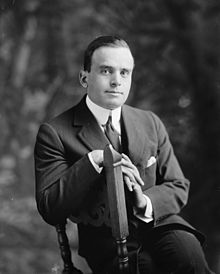
I think his son, Douglas Fairbanks, Jr. who died in 2000, is closer to current definitions of handsome, beautiful, etc. than his father was. Nothing wrong with either one of them, just that "style" definitions change.

You can see the same thing in women -- maybe more so, because women's clothing and hair style change more dramatically than they do for men. Like, silent movie star Mary Pickford (1918)

-
On the Phenomenology of TechnologyYou are quite right that survival requires technology. That has been true for at least... maybe 200,000 years? Ever since we started to employ stone tools. Marx observed that "reproducing society" was an essential task of (who? Working Class? Middle Class? Ruling Class?). Reproducing society is more than repopulating it. Culture, technology, agriculture, language, art, etc. ALL of it had to be reproduced, or we would crash as a species.
Whoever it is the responsibility of, society gets reproduced. Social reproduction (cultural, technological, population, etc.) is not an individual task--it's a collective, cultural task. Two crows can repopulate Crow City, but two humans by themselves can not perpetuate human society. Without an intact culture, humans would devolve very rapidly (or maybe they'd just drop dead). I can imagine millions of Americans dying from shock if television were to just disappear--probably within 24 to 48 hours of its disappearance. One very big EMP over North America and the lights would go out, zillions of printed circuits would be fried, and everything would come to a screeching halt. Sic transit gloria technocracy.
So, there is much more than the individual delusions of prospective parents at work.
IF society crashed, and 99.9% of the population were dead, I think the remaining remnant would be hard pressed to imagine that they were producing children so that they would be happy.
But then, were you ever positing that parents "individually apart from society" imagined that their children would find happiness and nice technology? -
How would you interpret these short enigmatic sentences?Per Nietzsche: "He who fights with monsters should be careful lest he thereby become a monster. And if thou gaze long into an abyss, the abyss will also gaze into thee."
If you gaze into an abbess, she'll probably be quite annoyed. -
What prevents us from seeing/knowing the truth?Perdidi corpus meum = I lost my body (Mary, that's the second one this week!); perdidi corpus = I lost the body; (I don't know -- it was in the kitchen 15 minutes ago.); perdidit corpus = lost body (something fishy happened between the O.R. and the morgue). Est vivens mortua est = the dead are alive; let's get the hell out of here.
-
How would you interpret these short enigmatic sentences?They are short and enigmatic.
What does the hairdresser see between the two mirrors? If the mirrors are back to back (or front to front) he or she probably can't see anything between the two mirrors. What can you see between two bricks? It depends how far apart the two bricks are, for starters.
What happens when you stare into the abyss? -
On the Phenomenology of Technologythose claiming to have kids intentionally, in order so that a new human can experience happiness, but are really doing it to advance technology. — schopenhauer1
There are two assumptions here, one possibly supportable. It may be that people have children so that a new human can experience happiness. That only sounds good. I don't know whether it is true or not. I think it is more true that people HOPE the child will experience happiness. That parents HOPE the child will be happy suggests that they are aware happiness isn't guaranteed. If happiness isn't guaranteed, then there must be some other reason for having a child.
The claim that they are having the child to advance technology strikes me as altogether unsupportable. I just don't see any evidence of that. Where are you finding factual support for this view? Post hoc ergo propter hoc, anyone? (After this therefore because of this.)
Schop, how forward thinking are most reproductive decisions? Having a child for any specific reason is a major gamble for most people. Produce workers to keep the tribe going? Produce cheap help on the farm? Produce people who will be smart and will keep the cultural fires burning? A farmer who is planning on sons but gets only daughters won't have the kind of workforce he was planning on. Parents planning on keeping the tribe a going concern assume the children won't leave to join a different group. Or all die of bubonic plague.
I still think people have children because we, like other animals, are set up to reproduce whether we especially want to or not. Having children is the default mode. NOT having children takes special planning and effort. Once the kid is on its way, we start coming up with justifications and plans -- which might be more of a salvage operation than a celebration of EVEN MORE CHILDREN. I was not a wanted child. My parents had already had 7 (2 died early on) and were tired. WWII had just ended, everything was in short supply. None the less, Sex + fertility = baby. One woman in my home town had 18 children (!). Did she want 18 children? I don't know about the husband, but she DID NOT. According to her older children, it was a living nightmare. (Some of the 18 are apparently happy within reasonable bounds, some are decidedly not happy.) -
The Cooption of Internet Political Discourse By the RightDoes anyone happen to know how discussion proceeds in non-North American settings? Do discussions of politics on the Internet deteriorate into verbal dung throwing in South America? China? India? Africa? the Arab world? Europe? Is everybody always civil and thoughtful in Europe--especially northern Europe?
BC

Start FollowingSend a Message
- Other sites we like
- Social media
- Terms of Service
- Sign In
- Created with PlushForums
- © 2026 The Philosophy Forum