
Comments
-
Expressing masculinityYeah, but there are some things that symbolize being 'masculine'. Being a bodybuilder with high testosterone levels, or owning a large car, yacht, guns. That's all for display; but, then there's a need to express it too, no? — Posty McPostface
Some things symbolize being 'masculine' -- definitely, and some things characterize masculinity. Wearing a tie, white shirt, and a suit with oxfords is symbolic masculine dress. So are hard hats, boots, tool belts, t shirts (in warm weather) and heavy duty trousers. Also symbolic are standing at a urinal, ogling women, or going out alone for a walk at night. Having lots of pockets in one's clothing is a symbolic masculine thing. A lot of women's clothing is pocket free (and women carry purses, symbolically female). Having a hairy body doesn't "symbolize masculinity" it is a characteristic of many men, like having balls and a dick is characteristic of men. Most men. Some men seem to not have any balls, but that's another problem altogether. Testosterone doesn't symbolize masculinity -- it is masculinity (and most men have enough, without it being high).
Men and women body builders can achieve similar results (height, weight, etc. taken into account) but they won't look quite the same when they are done lifting weights. Men more readily develop visible musculature, if the have little body fat.
Athletics are not limited to men, these days, but lots of men like to engage in physical activity in a disciplined, strongly driven way -- whether that is bicycling, weight lifting, swimming, or any number of other sports. Given youth, a healthy diet, and persistence they are going to get good results, and they will not only look healthy and fit, they will be healthy and fit. That's both real and symbolic.
However, the beautiful body with the gorgeous tattoos sometimes comes with a personality that is quite a bit less interesting than chopped liver. I mean, what good are they?
Guns and cars... except that everybody owns a car these days (well, a large percentage do) and guns have various meanings. Hunting is one thing, the machine-gun useful for wiping out concert goers is something else. Yachts? No very many people own yachts. In fact, they say that the two best days for boat owners is the day they bought the boat, and then the day they sell it to somebody else.
Power tools seem like a pretty masculine thing. Most guys like using power tools. We like to build stuff. Guys are supposed to know how to "do stuff" -- fix a car, build a garage, repair plumbing, dig big holes in the ground, pour concrete, forge steel, paint the house, all that good stuff. Most of us don't, but we would like to. -
Expressing masculinityDoes masculinity vary from individual to individual and why, if so? — Posty McPostface
Of course it does. Even if people are pretty much all alike, each of us (male/female) has to work out our way of being in the world, in our case as men. My interpretation and performance of being a gay man was pretty much the same masculinity as my straight peers exhibited, except I was gay and not straight.
The way a lot of men and women behave in their ordinary interactions with other people are largely the same. Hyper masculine men and hyper feminine women are atypical, abnormal types who are sometimes emulated by more ordinary types of people, usually to their own regret.
I grew a beard when I was 24; once it got long enough to call a beard, I recognized that "this is the look that is most me". 47 years later it's white, not brown, but it's still the look that is most me. It's great in the winter.
Men and women both need love and tenderness, caring and respect and they are both capable of giving these things, more or less. I think there are some differences between male and female brains, but we are not dealing with Mars and Venus differences. Men can make bread and women can dig ditches. We all have a fair amount of behavioral flexibility. Some men and women won't display flexibility, and that's just stupid nonsense. -
Will there be any Fromage for Catalonia?Catalonia is part of Spain which is part of the European Union. If it secedes from Spain, it will still be culturally part of Spain and it will be part of the European Union (assuming the EU were to accede to their plans). What have they gained?
Scotland secedes from Great Britain which was to some people's discomfiture, part of the EU, is culturally part of Britain, and could belong to the EU. What does it gain? (I assume both Catalonia and Scotland expect some economic advantages to accrue.)
ironic — Jake Tarragon
Ironic or contradictory.
Regions should be managed for diversity by a World government. — Jake Tarragon
Why does diversity need to be managed by any government, let alone a world government? What could possibly go wrong with that? People will produce diversity, managed or not, and if some people like their homogeneous selves, well, that adds to planetary diversity.
Will the World Government be sending Nigerians to Japan, Brazilians to Norway, and Chinese to Saudi Arabia? Probably Chinese everywhere. "Well Look, Andorra -- you don't have any Chinese here at all. You don't even have a bad chow mein take out shop here. Everyone must have diverse bad menu options. You need about 200 Chinese Communist bureaucrats, none of whom can cook their way out of a bowl of white rice."
"Switzerland? You have no uneducated, southern redneck Americans here. No ghetto gang members either. What's the matter with you? We'll be sending you a selection of 3000 representative examples. What do you mean? Of course they will have criminal records! You need that diverse element here." -
Does the late Hugh Hefner (Playboy) deserve the excoriating editorials in the NYT?My exposure to Playboy Magazine is minimal, so I can't actually judge it. (Gay guys generally weren't / aren't eager Playboy readers.) I didn't aspire to a gay playboy lifestyle either (couldn't begin to afford it).
I was joking about the classist nature of your comment. All publishing caters to class--upper, middle, lower, prole--and so does the porn industry (in which I wouldn't include Playboy). Hefner's
business was up-market nightclub entertainment--at least that's my impression. Playboy was sold in the front of newsstands, not under the counter, in back, or in the brown paper bag format.
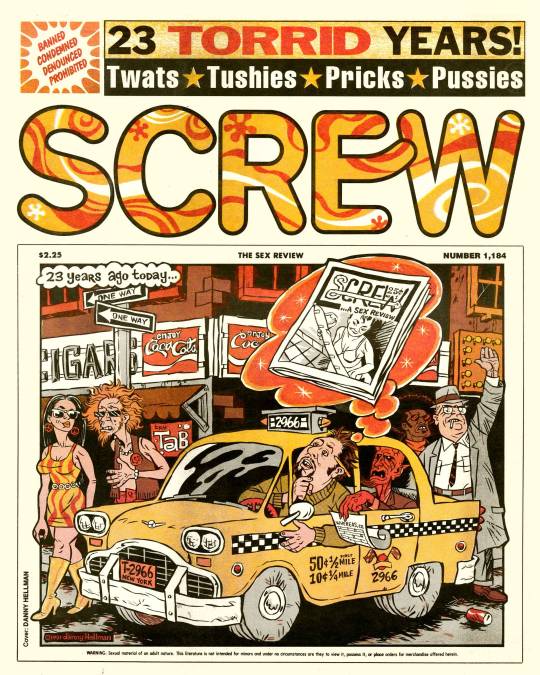
The retail venues where people used to buy books and magazines, from the New Yorker to hardcore porn, have gone the way of much other retail, but there were several grades of refinement available. Playboy, Hustler, Penthouse, and Screw, etc.
I'm not quite sure who Al Goldstein aimed Screw at, but its aesthetic was decidedly downmarket. If there is such a thing as irreverent porn, Screw was it. Everything that Playboy wasn't.
-
Does the late Hugh Hefner (Playboy) deserve the excoriating editorials in the NYT?Classism.
Surely you are not saying that working class men didn't masturbate to Playboy centerfolds? -
Will there be any Fromage for Catalonia?Rubber bullets are not water balloons. The mobilization of police forces from around the country, along with the instructions they received, pretty much guaranteed a government-delegitimizing response. A better policy would (obviously? I think obviously) have been to stop at denouncing the vote as a bad idea, and let it go forward unhindered.
Crashing the polling gates could simply not have a positive effect (for the Madrid government's interests). It was a crude and stupid move. The central government would of course have valid reasons to not recognize the vote, and whether the vote was scheduled for today or not, it was clearly time for a national reappraisal of the situation.
Had the central government held their noses, (and held back intervention) the vote might have been far less commanding than 90% approval. Like I said, it isn't very often that voters approve a ballot measure by such overwhelming majorities. Usually it's smaller. -
Will there be any Fromage for Catalonia?90 +/- in favor -- of those who voted. I don't think its common for 90% of the population to vote for anything.
-
Any Platonists?It is a good animation, and a good presentation of emotion vs. reason non-debate. It's a non-debate because emotion and reason both serve. But one must have an edge, and the edge goes to emotion. Take War. Not abstract war, but a declaration of war by the United States on Canada. Now, as the tanks, planes, and marching troops cross the border and begin liberating Canada from the death grip with which Canadians have heretofore held the northern half of North America, Canadians will not be consulting logic texts or old philosophical tomes about war. They will not be asking themselves why war is unreasonable. They will rise up in anger, rage, wrath, indignation, fury, fear, and (in Quebec) extreme annoyance (but then the French are always being annoyed by someone).
When someone is confronted by a beggar on the street, their first response will be emotional -- either empathy or loathing. No reasoning about poverty, provisions for the poor, and so forth will arise (from that part of our brain that reasons) UNTIL there is a need to justify what one has already decided to do. Whether one is moved to drop a dollar into the outstretched hand, or kick the beggar in the gut, reason will put together a suitable rationale.
There have been endless teach-ins, seminars, committee meetings, editorials, essays, etc. written about the goodness or badness of this or that war. People generally arrive at these events and documents with minds made up. How did they make them up? Mostly emotion, a little reasoning. Go to a large, effectively run demonstration for or against any cause and you will be in danger of being convinced by the smell and roar of the crowd, not by the speeches.
Are we puppets to emotion? No more than we are puppets to reason. We'll attend the kinds of demonstrations we feel good about, and we'll come away (chances are) feeling even better about it. We might pick up the literature, read it, remember it, and quote it but our quoting will move very few people to change their minds, no matter how reasonable the statements. Are they just too stupid and close minded to understand? Not at all.
Why are some people against war? Because they are afraid they will get swept up in it, first and foremost. They are afraid what war will do their lives (not lives in general, T•H•E•I•R lives).
We reason where emotion has nothing to offer. :How can I determine whether "2" or "181" are prime numbers?" Nothing very emotion-provoking about that kind of problem, but one might feel emotion if one can't figure it out, or if one finds a really good solution (like googling prime numbers). -
Will there be any Fromage for Catalonia?t independence votes, they only work to separate, not much to join together. Identity is always separation. — unenlightened
What about the Kurds? 90% are in favor of nationhood.
Identity has ambiguous, maybe paradoxical consequences. But most people like their identities, don't they? Should they not like them?
Catalonia, Catalan politicians say, is subsidizing the rest of Spain. Could be, I suppose. The United States has regions that are net "losers" to the Federal Government and regions that are net "winners" from the Feds. The winners tend to be poorer, and the losers tend to be richer. A downside for Spain would be a smaller GDP, never a good thing.
How far does self-determination need to go? Are Catalans an oppressed minority? Doesn't seem to be the case. Is their language outlawed? Do they have strange and peculiar customs which have been rigorously suppressed? Not that I've heard of, other than their better than average performance as capitalists.
As for the Kurds, I can see why anyone would be happy to not be part of Iraq, which hasn't been a happy place for quite a while. Kurdish problems probably can be traced back to the damned Brits who along with the damned French, occupied the Middle East for quite a while, and redrew the area boundaries of the regions in a Foreign Office broom closet, before the damned Israelis took over with the help of the damned Americans, and then there were the damned Egyptians, damned Saudi Arabians, damned Syrians, damned Russians, damned Persians, damned Romans, damned Greeks, et al. -
Will there be any Fromage for Catalonia?France IS a nuclear power, after all, so I would guess that the territorial integrity of France is secure.
-
Any Platonists?klunky — T Clark
A lot of philosophical writing strikes me as "clunky" or "klunky" and a lot of it segues into "murky" and finally, the kind of writing that one would get from 100 monkeys klacking away on mechanical typewriters for 1 million years. Some of it would be quite good, some of it would be readable, some of it would be opaque, -
Is Democracy viable in a post-space-age civilization?What are your thoughts on how democracy will fair in such a time?
What do you think of my suggestion?
Do you have a suggestion of your own? — Eric Wintjen
Have you read the Dune series by Frank Herbert? It's all emperors and various competing power centers having no similarity whatsoever to democracy.
There is a good chance that earthlings would be the aggressors. We tend to be kind of trigger happy, and unless we evolve better approaches, PDQ, we might not even be around for a fight with aliens.
the larger the population, the less able democracy is to properly address needs and concerns of the people — Eric Wintjen
Not necessarily. Larger populations produce more resources with which to respond to its needs and concerns. Very small groups have far fewer resources. If the islands in the Caribbean have to recover on their own, without any help from outside, then they are probably just totally screwed. With contributions from donor countries, they will recover -- eventually. (But... disasters are disasters and the effects generally can't be totally erased.)
The US experience of effective governance in a large democracy is mixed. On the one hand, we have been able to mount incredibly successful large-scale projects. Mobilization in WWII is one example. Building the nation's nuclear defense system is another (if highly dubious) accomplishment. The interstate highway system, the air-transport system, railroads, etc. are further examples. On the other hand, our water and sewer systems are deteriorating; soil conservation efforts have pretty much stalled out; the American population is less healthy than it could be; the K-12 education infrastructure is in bad shape.
What's the problem? Why is our performance so mixed? Doesn't democracy work? Sure it does, but to use a very, very tired expression, we do not have a level playing field. The field has been tipped in favor of major economic interests for a long time, and the interests of "the people" -- 99% of the population -- has gotten short shrift.
Big projects get done when their is either an existential threat (WWII) or big money to be made. During periods of populist reform (like the Progressive Era in the early 20th century, or during the depression, or during the 60s--about every 30 years, and we're way over due for a reform period) the field is tipped back a bit to favor more democratic projects--think social security, medicare, medicaid, trust busting, better regulation of the financial sector, etc. -
greetingsILP stands for
Industrial Lighting Products?
International Language Programs?
Industrial Liaison Process?
Infant Learning Program?
Independent Living Primer?
Illegal Liver Procurement?
Instant Luggage Provider?
Investment Linked Policy?
Indigenous Lackluster Poultry?
Intermediate Lead Poisoning?
Indebted Lesbian Prognosticator?
What? -
greetingsTell us something. Say something we can disagree or, if you must, agree with. — T Clark
We really would prefer something we can disagree with -- preferably, strongly disagree with. You say, 2+2=4, and all we can say is, true. You say Karl Marx was wrong about everything, and now we have something to talk about. "Gettier's Case II Is Bewitchment". They are up to 984 posts -- beats me what the hell they are talking about; that's a lot of posts. Most topics don't get that far.
"The Transition from non-life to life" is up to 638 posts. "Interpreting the Bible" is 147 posts so far.
Go out on a limb, but be reasonable. Unreasonable positions get dumped on rather heavily. You have to have a strong ego to put up with it.
Welcome, of course. Hope you like it here. -
Interpreting the BibleWe arrive at a question "What, exactly, is the standard by which to measure/establish the value of any interpretation of the Bible? Is there one, or many? Are they universal and necessary, or contingent? — tim wood
I doubt if there was ever ONE standard by which to judge the meaning, value, interpretation, or efficacy of a given biblical passage. I am guessing that as the texts accumulated over the coarse of several hundred years there was considerable divergence.
Internal consistency would be one standard. Is this particular law treated in this passage the same way that it is treated in the other 10 passages where it is mentioned.
Consistency with the cult (in this case, the religion of the Jews). The texts of the OT were probably not the only source of cultic content--just as the NT is not the only source of Christian cultic content. For instance, animal sacrifice conducted by a priestly type of some sort probably existed before the beginning of the Jewish cult. The Eucharist might have been part of the early cult of Christianity and was then (possibly) read into the NT).
For a couple of obvious examples, rabbits and eggs have nothing to do with the resurrection, and pine trees have nothing to do with the birth of Jesus. None the less, they are part of the cult of Christianity -- at least for those parts of the Christian world under the influence of German and English culture -- which is the pagan source of rabbits and decorated pine trees.
Consistency with the believers' understanding of their religion. This standard was critical in sorting out the various scriptures at the time the NT was formalized. There were various 'sub-cults' in early Christianity, like the Gnostics. The committee that put the NT together wasn't especially fond of Gnosticism, Arianism, and a dozen other heresies, so those type of narrative were left out. The book of Revelations was not readily accepted, not for heresy, but because it concerned relatively local administrative matters (and, incidentally, was put into metaphorical form). It's got some great lines, and was eventually accepted, and all those metaphors have come in handy innumerable times -- for better and worse.
Consistency with the surrounding culture which was pagan. A lot of Greek philosophy (neoplatonism) worked its way into the New Testament, because whatever Jews and early Christians might believe, Greek Philosophy was pretty much de regueur for the thinking elite -- and it was the thinking elite who edited the NT. It wasn't a populist document.
Finally, for later Christians (including 21st century Christians) there is the standard of whether the scripture stands the test of time. People ask, "When we read the Bible (if we were to do that) does it speak to us in language and concepts that are meaningful to us?" For many people, the scriptures are not so meaningful that everybody who reads them finds them compelling. For many people the scriptures do not stand the test of time. (Though one must add, for many it does. Christianity is growing in total number of believers, just not in the US and western Europe. The disbelievers, or lapsed Christians, are in the advanced capitalist societies where culture has been pretty heavily secularized, alienated, pummeled by incessant commercial messaging, social deterioration, etc. etc. etc.). -
Interpreting the BibleI think you're being disingenuous if you claim not to know what that is intended to mean and instead offer such a flippant, obviously ridiculous, interpretation. You don't have to feel empathy with the sentiment to know that it is intended, and how it is conveyed by the words. — Janus
No, wasn't being disingenuous, flippant, ridiculous, or anything else. You tell me what you think it means. -
Authenticity and its ConstraintsI was going to say I wasn't being pedantic, but that would've been pedantic.... — Wayfarer
Pedantry comes naturally to me. I am an authentic pedant. -
Authenticity and its ConstraintsTrump is a real phoney, I'll give him that. You could hardly pick someone phonier. — Wayfarer
Can't someone be authentically bad? Even if it is risky judging somebody else's authenticity, I suspect at least that Donald Trump is congruent -- he is being what he wants to be and what he is. That's unfortunate for the United States and the world, but that's why he's such bad news. He's not going to wake up one day and see the light. He has seen the limelight, and he likes it. He proposes a sweeping tax "reform" package, and it turns out he'll be a winner. Is this Fake? No. It's bad, but it's not fake. He never said he would suffer a tax increase so that others may pay less. (We don't know exactly how much tax he pays, because he, unlike his disreputable predecessors in office, has not released a complete financial statement.)
Being authentic doesn't mean someone will be benevolent, beneficial, and benign. It may mean that someone is more like well adjusted, happy and hell on wheels--a fully congruent son of a bitch.
Of course, when me and thee are authentic, it is like a sunrise over the Garden of Eden. -
Authenticity and its ConstraintsThus, I conclude authenticity is a crock of BS. — schopenhauer1
BS is piled up, composted and hauled away, but never in crocks. As containers go, a crock is too small, too heavy, and too fragile to be a good container for BS. One wants a truck or a manure spreader for a load of BS.
I consider authenticity to be "congruence between what I wish to be and what I am actually being". In employment, I have, in several jobs, found both authenticity, and inauthenticity. Contriving and conducting an environmental AIDS prevention program was entirely authentic work. Everything I considered important and all my skills came together in that job. I was authentic when I was conducting an open ended discussion group for gay men that ran for about 75 weeks. I worked in a media library for 7 years, developing media for instruction and assisting students. That was authentic work, too. Most of the clerical jobs, and three of the professional jobs felt inauthentic because "what I was being was incongruent with what I wished to be.
I have felt both authentic and extremely inauthentic in religious activity -- at different times and places. Some clothes (boots, blue jeans, sweatshirt or shirt and leather vest) seemed authentic to me. Other items like a tuxedo (I have never worn) seemed extremely inauthentic to me. Trench coats, traditional mens' hats, suits, umbrellas, and penny loafers have likewise seemed inauthentic. Not bad, just not "me".
Authenticity is individually judged and achieved -- groups don't get to be "authentic". There is no inherently inauthentic lifestyle. The suburban family engaged in all the traditionally disparaged suburban activities and clichés may be as authentic any any family anywhere. People who live a hard scrabble life, who have a lot of problems in their lives, who "sing the blues" may be no more authentic than Donald Trump.
No one can casually or remotely identify authenticity and inauthenticity. What may look like a fake from my perspective may be 100% genuine and authentic for the person being judged. -
Authenticity and its Constraintsthink, actually, there's a link between 'authentic' and 'author'. — Wayfarer
Let's get Pedantic, yeah yeah yeah
Authentic:
late Middle English: via Old French from late Latin authenticus, from Greek authentikos ‘principal, genuine.’
Author:
Middle English (in the sense ‘a person who invents or causes something’): from Old French autor, from Latin auctor, from augere ‘increase, originate, promote.’ The spelling with th arose in the 15th century, and perhaps became established under the influence of authentic.
I would rate Donald Trump as authentic: an authentic ambitious deceptive egotist, and thoroughly contemptible, but the genuine article. -
A Question About World PeaceSome species of creatures basically never fight, and if they do fight, it is not lethal. — dannerz2
That's very true, and good for them. But those creatures are not humans. Diplomacy and negotiation is our best non-lethal means of resolving conflict. It works great until someone decides they are not getting what they want by these methods. Then it's pull out the cannons and blast away.
We are lethal in ways that squirrels and whales aren't lethal in their competition because we are bright, emotionally driven tool users who can amplify our anger with everything from sharp rocks to thermonuclear weapons.
An additional problem is that we have fairly soft bodies. We can't bang our horns together until one of the two head-butters gives up. If we bang our heads together, we end up with chronic traumatic encephalopathy. We don't have thick fur and tough skin that allows us to slash and bite each other without causing fatal wounds. -
Interpreting the BibleDoesn't anyone here recognize a distinction between reading and interpreting? — tim wood
I suspect everyone here knows the difference between reading and interpreting--though sometimes interpretation is concurrent with reading.
One reads the words (word recognition, identify meaning, part of speech, etc -- all pretty much automatic once one is an accomplished reader) then there is interpretation. "Do justice, love mercy, and walk humbly with God." Hosea said. All pretty common words; no accomplished reader will pause over their connotative meaning.
But... What does "Do Justice" mean? Start the revolution? Vote for Donald Trump? What? That's the interpretation part. What does "love mercy" mean? The Jerusalem Bible translates the phrase "Love tenderly". Then the "walk humbly with God". Keep God company? What? I've never been sure exactly what that means. -
Acknowledging Beauty Versus Perceiving BeautyI just have a difficult time conveying my worldview coherently — TranscendedRealms
Sure. A 'worldview' is a big complex thing to capture in a few words, without a lot of practice. My first effort at stating my 'worldview' was a mess. 40 years later I'm not sure it is much clearer.
you need your positive emotions to actually see the good values and you need your negative emotions to actually see the bad values. — TranscendedRealms
A lot of philosophers want to dwell exclusively in the land of the prefrontal cortex and dismiss emotions. Big mistake. You have correctly identified an essential element of perception. To stand a saying on its head, "believing is seeing". Emotions prime other parts of the mind to see or not see. Happy people, people for whom positive emotions are dominant, tend to perceive the world more positively. Unhappy people, for whom negative emotions are dominant, tend to perceive the world more negatively. This isn't absolute, of course. Neither happy nor unhappy people see the world in black and white; we generally see the world in many shades of gray. -
Unequal Distribution of Contingent SufferingStatistical- Some people will simply have less mental/physical problems, are able to cope better than others, etc. There is no way to tell who will deal with less contingent suffering. — schopenhauer1
We are better at predicting what will happen to groups of people, than we are predicting what will happen to individuals, but groups are made up of individuals.
Take Puerto Rico's situation. The island's population is suffering now, and is likely to suffer more in the near future. That Hurricane Maria leveled a good share of their housing and infrastructure is contingent. That their housing and infrastructure was in bad shape was caused by neglect -- not by chance. The current contingent suffering would have been reduced if the infrastructure and housing had been strengthened.
There is also a good deal of contingent suffering in Houston. But allowing people to build housing on low ground (that everyone knows will eventually flood) and in floodplains isn't contingent, it's just irresponsible, and was preventable.
Most people will die of circulatory disease, cancer, or infection. A much smaller share will be murdered, suffer accidents, commit suicide, and so on. We know we definitely will die; we have some choice over what we die from. Heavy smoking and drinking frequently leads to death by cancer. Some of this is avoidable by not smoking and drinking heavily. People who bicycle, motorcycle, or drive recklessly have a greater chance of dying from accident than people who ride and drive carefully.
Some people, as you say, are going to avoid most of the causes of death, will live a long time, may still be active after a century of living, and will die from general organ failure -- they will just wear out. Contingency seems to play a big role for these people.
Not reproducing is one method of reducing suffering -- especially the suffering one can't do anything about. But a lot of suffering is preventable. -
Interpreting the BibleIn my private opinion the bible was written by uneducated, stupid men and women, and there is nothing godly about it. It is a badly written book for guidance and knowledge, and that's about the size of it. — szardosszemagad
Your reputation as an educated intelligent man or woman would have been better served by keeping your private opinion private.
Uneducated? No Harvard degrees, true. They may or may not have written or read script, but they were literate the same way Homer was literate--verbally. They had a solid grasp of their cultural history, and they wrote fine poetry (Psalms, for instance). They were "inspired" -- and by inspired I mean creative in ordinary human terms, not that they were telegraphing dictation from God.
Open the Bible to any page, and there is a good chance that whatever text your eyes land on will not be very compelling. The same thing goes for just about every published work in the history of civilization. You have to read and study any book to give it a fair evaluation. -
Interpreting the BibleI believe Heinz is owned by Kraft, foods. Kraft was part of Phillip Morris for a while, but the smoke folks decided it didn't make sense for them to own a food company, after all.
It's hard to keep track of who owns who, what with all the conglomerates.
Like most good products, Heinz Ketchup is made with high fructose corn syrup. -
Interpreting the Bible''The last bloody thing I would want would to be a god. But I would bet that given his supposed powers I could probably do better. — Sir2u
Good post, as usual.
The Cohens, Kahns, Cahanes, Levites... these Jewish names are connected to the priestly caste of Israel, and there are genetic similarities linking the various families.
Nothing to do with the price of matzo ball soup, but interesting. -
Interpreting the BibleThe last bloody thing I would want would to be a god. But I would bet that given his supposed powers I could probably do better. — Sir2u
Ahh, the chutzpah, the effrontery, the gall, the delusions of grandeur...
literally >:) -
Interpreting the BibleWhen did interpretation ever become part of the Bible? — tim wood
At the very beginning.
How do you think the Bible came into existence? You must think the High Priest of the Temple went into the Holy of Holies one Day of Atonement (Yom Kippur) and found a stack of scrolls on the Mercy Seat with a Post-It Note™ stuck to it saying, "Hot off the press -- the Old Testament. Hope you like it. Love, YHWH ps: working on New Testament now" -
Interpreting the BibleIt's like the Protestants bitching about the Catholics doing away with the Latin Mass. Or the lapsed Catholics complaining that the priests are not doing the folk liturgy in the right way, or yes, atheists worrying about the interpretation of scriptures.
-
Interpreting the BibleBut the question is whether the supposed divinity of a text can even in principle survive the activity of interpretation — tim wood
Your question is valid. The Divine speaks, we hear it, what's to interpret? But your view is that of the outsider. For the insider (the believer in the Divine Being) a second, third, or fourth look at the text is a friendly, cooperating-with-God project. Interpretation isn't an adversarial process. For the believer, there can't be a conclusion of "this doesn't mean anything". Rather, it's an attempt to obtain the full meaning.
This is true of all scripture -- whether it be the speech of the Sybil at Eleusis, Zoroaster, Buddha, Jesus, Jeremiah, Deuteronomy, Mohammed, the Vedas, and so on.
Time always places a requirement on scripture for interpretation because realities change. Some people have said that one of the problems of Islam is that it has not gone through a reformation where the Koran would be reinterpreted -- not rewritten -- for the modern age (now several hundred years old.
Another thing about scripture is that it periodically needs to be lifted out of its tribal setting. Jews in pre-Roman Israel didn't have the same culture as the Jews in medieval Spain, and the Spanish Jews didn't have the same culture as the post-Spanish-expulsion Jews of Poland and Ukraine. Buddhists in Boston have different cultural problems than the Buddhists of Beijing, and so on.
We secular non-believing people don't usually buy into the truth of the various scriptures in the first place, so all that scriptural study seems counterproductive. When we are insiders, the situation is different.
Look how much debate goes into the scripture of the U.S. Constitution. Endless debate about what the authors meant. Did they mean that everybody is entitled to carry a gun around with them everywhere, or did they mean that the citizens of the new country were entitled to form armies with which to defend themselves from foreign threats? -
Interpreting the BibleWhere I'm coming from is the proposition that with most texts meaning is in play. — tim wood
Well, I don't think that proposition is valid. Most of the Bible is quite clear. How can I say that? Well, you can take the liturgical books: The Psalms are not loaded with ambiguity, it's a hymnal. Then there is the prophetic material. The prophets generally do not speak in riddles. There are the law books -- the rules and regs. They are pretty clear. There are the wisdom books - Proverbs, Ecclesiastes. They are not real mysterious either. There are the historical accounts. There's the Apocrypha narratives. Most of this stuff is straight forward.
Of course, one can suppose that there are hidden meanings in any particular verse, just as one can believe that the television is sending you secret messages. Some people have gone that route -- both with the Bible and their TV set.
A lot of the debate is focused in the law (in the Pentateuch -- Gen, Ex, Lev, Num, Deut. -- where interpretation is critical. (Lawyers are always chewing over the law.) There is a lot of debate over law texts because the circumstances of the Jews kept changing, and how to obey the law in Babylon (no temple, for example) was quite different from obeying the law in Jerusalem.
Then in the diaspora, (66 A.D.) the Jews were evicted from Jerusalem, more or less, and the temple was taken over by the Romans for pagan worship of Jupiter--the Abomination of Desolation.
(Before the destruction of the temple even occurred) there were synagogues and rabbis teaching. After the diaspora the synagog and the rabbis didn't "take the place of" the Temple, animal sacrifice, the priestly order, and the worship activities that went on there. Judaism without the cult of the temple required a wholesale reinterpretation. The early Christians, deprived of the physical Jesus, also had a disjuncture which required some deep re-interpretation.
My view of the Bible is that it was written by humans, lock, stock, and barrel, and that God himself is our creation. Of course, the people "in the Bible" never looked at things that way. Whoever the prophets were believed they were speaking for God. They didn't think they were engaged in some sort of pious fraud.
Most religious people don't think they are engaged in some sort of elaborate theatrical scheme without any reality. One either has to "get with the program", just play along (not believing a word of it, but acting as if one does), or one needs to admit one just doesn't believe it. (Actually, quite a few Christians don't really believe the doctrine.) What they do believe in is Jesus, and they like the model he offers. For that approach, you don't have to think of him as a supernatural being from heaven, any more than one has to consider Nelson Mandela, Gandhi, or Angela Merkel as heaven-sent. -
Interpreting the BibleI hadn't heard that Paul invented Jesus, but in certain circles it isn't surprising that somebody would claim such a thing. Could be, I suppose, but I doubt it. Even by the time of Paul there were already Christians (whatever they called themselves at that point). It was a rapidly growing group. I am not going to claim that Jesus had to have been divine, but something very compelling had to have happened to result in quite a few people scattered around the Aegean Sea, Asia Minor, the area around Jerusalem, and Rome thinking Jesus was the a real and important person.
Maybe Plato invented Socrates? Does that sound reasonable? I doubt Plato invented Socrates.
I am inclined to think the Jesus Seminar people have it at least somewhat right: Some things claimed in the Gospels probably didn't happen--like Jesus walking on water. That seems to be fabulistic. Causing someone to think they were healed, sure. Hysterical blindness for example. (Curing leprosy? Leprosy is/was a real disease, but the term used also covered a variety of skin diseases that were not malignant like Hansons Disease is.) Raising Lazarus? Lazarus wasn't merely dead -- he was most sincerely dead, and was well on the way to decomposition when he was allegedly rousted out of his tomb. I doubt any such thing happened.
Paul inventing Jesus and springing a fictional character on the world and in an historically very short period of time having the Roman Empire take up the religion of the fictional Jesus just doesn't seem plausible. (It's as implausible as the ghost of Jesus showing up at the disciples' condo on the Sea of Galilee.) -
Interpreting the Biblecall into dispute its validity and his all-mightiness — Sir2u
I think what they call into question is meaning. If it wasn't the valid word of God, then there wouldn't be any reason to struggle to get it right for 3,000 years. -
Interpreting the Bible"Now it’s a simple question: how does the word of God come to fall under any interpretation at all? — tim wood
One reason is that God has spoken over the course of many years, in disparate circumstances. As the years and the reasons pass out of immediate memory, we have no choice but to ask "What did God mean when He said such and such to Moses (or whoever it was)?"
Another reason is that while God is straight up and down about obedience, we are equivocators par excellence.
A third reason is that people just disagree about what God said, or what God meant. Not only that, just because "what God said" was settled theology this year doesn't mean it will stay settled theology.
A fourth reason is that for various and sundry reasons, people engage in special pleading "Well sure, God said no work on the Sabbath, but what about feeding the oxen? They get hungry and thirsty." "True, God said no lusting after thy neighbor's manservant, but by Jove, he is SUCH A HUNK. How could anybody be expected to not lust after this crown of creation?"
And more besides. -
Interpreting the BibleWhat is one to believe about the Jesus Seminar findings?
One could certainly believe that they don't know, either.
By the time the Gospels were written, three distinct periods had occurred:
1. The active years of Jesus before his death (maybe 4 years, but we don't really know)
2. A partially undocumented growth period following Jesus' death
3. A period of consolidation, contained within a century of Jesus' death.
Jesus was remembered. The individuals who assembled the oral, and perhaps written, accounts of Jesus, circulating among the believers who regularly met to remember Jesus, were not remembered. We know almost nothing about the writers or the material they had at hand. So, if we have faith in God, that Jesus existed, that Jesus did what the Gospels say he did, then we must also have faith that the Gospel authors were divinely inspired. -
Interpreting the BibleYou think there are problems with the Old Testament! Have you heard of the Jesus Seminar? It's a group of people--some of them actual NT scholars--who decided to winnow the wheat from the chaff from a distance of 2000 years. One might wonder why the Gospel writers weren't able to separate the wheat from the chaff say, 40 years distance from the death of Jesus.
These imminent worthies have concluded the following:
- Jesus of Nazareth was born during the reign of Herod the Great.
- His mother's name was Mary, and he had a human father whose name may not have been Joseph.
- Jesus was born in Nazareth, not in Bethlehem.
- Jesus was an itinerant sage who shared meals with social outcasts.
- Jesus practiced faith healing without the use of ancient medicine or magic, relieving afflictions we now consider psychosomatic.
- He did not walk on water, feed the multitude with loaves and fishes, change water into wine or raise Lazarus from the dead.
- Jesus was arrested in Jerusalem and crucified by the Romans.
- He was executed as a public nuisance, not for claiming to be the Son of God.
- The empty tomb is a fiction – Jesus was not raised bodily from the dead.
- Belief in the resurrection is based on the visionary experiences of Paul, Peter and Mary Magdalene.
The seminar's criteria for authenticity was:
- Orality: According to current estimates, the gospels weren't written until decades after Jesus' death. Parables, aphorisms, and stories were passed down orally (30 – 50 CE). The fellows judged whether a saying was a short, catchy pericope that could possibly survive intact from the speaker's death until decades later when it was first written down. If so, it's more likely to be authentic. For example, "turn the other cheek".
- Irony: Based on several important narrative parables (such as the Parable of the Good Samaritan), the fellows decided that irony, reversal, and frustration of expectations were characteristic of Jesus' style. Does a pericope present opposites or impossibilities? If it does, it's more likely to be authentic. For example, "love your enemies".
- Trust in God: A long discourse attested in three gospels has Jesus telling his listeners not to fret but to trust in the Father. Fellows looked for this theme in other sayings they deemed authentic. For example, "Ask – it'll be given to you".
The Seminar's criteria for Inauthenticity were:
The seminar looked for several characteristics that, in their judgment, identified a saying as inauthentic, including self-reference, leadership issues, and apocalyptic themes.[4]
- Self-reference: Does the text have Jesus referring to himself? For example, "I am the way, and I am the truth, and I am life" (John 14:1–14).
- Framing Material: Are the verses used to introduce, explain, or frame other material, which might itself be authentic? For example, in Luke, the "red" parable of the good samaritan is framed by scenes about Jesus telling the parable, and the seminar deemed Jesus' framing words in these scenes to be "black".
- Community Issues: Do the verses refer to the concerns of the early Christian community, such as instructions for missionaries or issues of leadership? For example, Peter as "the rock" on which Jesus builds his church (Matthew 16:17–19).
- Theological Agenda: Do the verses support an opinion or outlook that is unique to the gospel, possibly indicating redactor bias? For example, the prophecy of the sheep and the goats (Matthew 25:31–46) was voted black[clarification needed] because the fellows saw it as representing Matthew's agenda of speaking out against unworthy members of the Christian community.
So, one might ask whether everyone on the Jesus Seminar was actually an authentic New Testament scholar, and the answer to that would be a short fact:
- No.
-
I Need Help On RealityAre you asking me to play pretend? — Reece
Not at all. What I am suggesting is that you make a real commitment to something--a cause, a project, a reading program (whatever you like to read), politics, a job, serving others--anything, really that you can find an interest in, and pursue it.
Why do such a thing? Commitment, involvement, energetic work (even if mental work) is healthy, and it helps "stuff" fall into place--to some degree, anyway.
I have so many questions as to why, what or who put us here. It's scientifically clear we didn't evolve. — Reece
"Who put us here and why" is a pressing question that has bothered people for a long time. There are religious answers to this question; perhaps you would find them satisfying -- billions of people have found them so. Myself -- I think there is evidence we did evolve--that all life evolved--but that doesn't solve the problem of who put us here and why. Many people think that god put us here through the process of evolution, and the 4 billion year story of life on earth is the story of creation told in minute detail.
We are the only species that isn't natural to this planet. — Reece
Whether we were created or evolved, we belong here. We are natural to the planet, and we are natural in ourselves. Now, "humans" tend to be rather hard on the rest of creation -- careless, exploitative, wasteful, etc. -- but that's just us. We are a very mixed bag of good and bad characteristics. Some people are a bit nicer than others, and on the whole we behave reasonably well towards each other, except when we don't.
I adamantly refuse to speculate, assume or believe in insufficient 'knowledge' that doesn't lead anywhere. — Reece
That's fine, but in order to discriminate between knowledge that does, and does not lead anywhere, you yourself have to be extremely knowledgeable. You might want to focus on getting more knowledge.
The only thing I can think of is to try imagine there is 'greater good' at work, because in the end we're all slaves to our own society. — Reece
Sorry, but that's a non-sequitur. If the only thing you can imagine is that there is a greater good at work, then it simply doesn't follow we are slaves to our own society. We aren't slaves, we are participants. Humans are social beings, and we can't exist apart from society. Someone has to feed us and change our diapers when we are infants, and as we grow older we need to be reared to learn how to take care of ourselves and each other.
Focus on the idea of the greater good.
You know it's an issue when the basic necessities for survival come at a cost. — Reece
Of course the basic necessities come at a cost. Birds can not raise their young without a cost to insects and worms. Whales can not exist without a cost to fish. Our existence comes at a cost too. There is a absurdly complex web of costs and benefits that is too complicated for any one person to grasp.
We don't have the freedom of choice. We all have to go to school, we all have to work or contribute in someway. Where's the 'wild' aspect in our 'civilized' way of life? There isn't one. — Reece
If you think going to school limits your free choice, try never going to school, never learning how to read and write, and never learning how to exist as a 'civilized' person if you think you have no freedom of choice. The more resources you can bring to the concerns of the day, the more freedom of choice you have.
I hated some of the jobs I worked at, over the 40-odd years of my work life. I really felt like if I had to do such and such a job for the rest of my life, I'd rather be dead. But... bad jobs or not, having money of your own (even if not a lot) gives you much more freedom than not having any money at all of your own.
And some of the jobs I had were good jobs that I really enjoyed doing, and I got paid to boot. But don't expect fulfillment to come from most of the jobs you might have. It would be nice if that's what happened, but don't hold your breath. But... having an income is a very good thing, and it generally takes having a job to produce an income.
Right, there's not much wildness in one's ordinary life -- but you can resist, if you want to. People do find ways to step out of the more or less controlled aspects of life, to experience some "wildness". -
Evidence of Consciousness Surviving the BodyThe point was that you might find their accounts interesting. You might find them ridiculous or compelling.
-
I Need Help On RealityReece confesses, "I Need Help On Reality".
Well, don't we all.
Everything feels like a gimmick from what we’re ‘allegedly’ told.
I’m not religious as I feel to believe in something is to not ‘know’ sufficient enough information. I would rather start a sentence with “I know...” rather than “I believe...”. Unfortunately nothing can be proven.
24 years old and I feel like I’m living for the sake of it, I feel stripped of any aspiration/motivation and only have unanswered questions. — Reece
You are suffering from late onset Holden Caulfield Syndrome. Everybody is a phony and everything is a gimmick. You get hung up on semantics. Nothing can be proven. You are experiencing ennui, anomie, alienation, depersonalization. Life has become one big headache.
You feel bad. What can be done about it?
My suggestion is that you immediately embark on a program of acting like life is meaningful and entirely worth living and that what you do with you life in the near future matters.
You will probably say, "your advice is just one more gimmick" and you would be partially right. But as gimmicks go, it has some advantages over wallowing in the slough of despond.
William James, an American psychologist (the first Professor of Psychology at Harvard) observed that there is a clear relationship between how we behave, act, feel and think. If the kind of thoughts we have are not helping us, then we need to act. . So, if you want to feel alive and engaged in a meaningful life, then you need to begin living AS IF you were engaged in a meaningful life.
I don't know anything about you, except that you are human (presumably not a bot) and that your psychology is pretty much like everybody else's. So go find yourself something to do that you suspect might be a meaningful, socially useful, and interesting gimmick. Then stick with it. Find several socially useful, interesting, and personally meaningful gimmicks to keep your mind occupied by positive things instead of negative crap. But the important thing is ACT LIKE YOU WANT TO FEEL.
BC

Start FollowingSend a Message
- Other sites we like
- Social media
- Terms of Service
- Sign In
- Created with PlushForums
- © 2026 The Philosophy Forum