
Comments
-
Why is it that nature is perceived as 'true'?Why would Plato need an allegory to say that? — Arcane Sandwich
Because nobody gets it. Symbolic language is being used to convey profound and difficult insights. -
Why is it that nature is perceived as 'true'?It's philosophy 101, right? That section of the Republic is plainly allegorical, with the Sun representing the knowledge of the Good, towards which all should aspire. The 'ascent' from the 'Cave' is 'painful', and should the one who has ascended return to the cave and try and explain to the cave-dwellers the magnificence of the outside world, they'll want to kill him. The mainstream interpretation is that the cave represents the world of sensory experience, the ascent to the Sun represents the insight into the forms or intelligible principles which are only discernable to the 'eye of reason'. It is followed by the 'allegory of the divided line' which describes the levels of knowledge, from (mere) belief or opinion, through mathematical knowledge (dianoia) and then noesis (higher knowledge.)
None of this makes much sense to us moderns, because being committed to materialism and empiricism, we're essentially cave-dwellers ;-) -
Why is it that nature is perceived as 'true'?Hermeneutics, right? Interpretation of ancient texts. The allegory of the cave being on of the foundational texts of Western culture and being about the nature of knowledge and philosophical insight (noesis). Plato’s cave was never about actual cave-dwellers, or actual caves.
-
p and "I think p"I’m happy to have delved into the book, as I’d noticed it before it was brought up here, but had been put off by the reviews and its perceived obtuseness. I wanted to like it, due to the title being about absolute idealism, what with my interest in and advocacy for philosophical idealism. And when I did the hard yards of reading the first three chapters, I started to see the points Rödl was making. But I also had a strong sense of ‘so what’? In plain language, he’s criticising ‘objectivism’ and/or metaphysical realism, the stance that the world is just so, irrespective of your or my or anyone’s judgement of it, something which I’ve never gone along with. In the end I decided that I’m not really the audience for the book, that audience being the academic profession. In fact I’m not much interested in 20th century philosophy, generally. So I’m not going to persist with it, but I’ve learned from the exercise.
-
Ontology of TimeIf there were no life on earth, would time still keep flowing? — Corvus
It would - but by what measure? In the absence of awareness of past-present-future then what is time? We of course can comprehend the world before life existed but we do so against an implicit sense of the meaning of time, derived from our awareness of days and years. But again that is what we bring to it. -
Why is it that nature is perceived as 'true'?Maybe it's talking about the time, before the Paleolithic (before cavemen) when men and women were not human. — Arcane Sandwich
:rofl:
Isn’t it about our lack of insight? The absence of wisdom? Not seeing what is real? That’s how I’ve always interpreted it. I don’t think the ancient Greeks had much grasp of palaeontology. -
Why is it that nature is perceived as 'true'?The word "natural" is not made meaningless because it has more than one meaning. — RussellA
But its meaning is to differentiate the natural from the artificial, as per the examples given above. If you extend the meaning of ‘natural’ to encompass ‘the artificial’ then it looses its meaning.
Besides, what does it mean to say that h.sapiens is ‘part of nature’? Why is that meaningful or important? -
Why is it that nature is perceived as 'true'?In which case ‘natural’ has no meaning, because it doesn’t differentiate anything.
Three examples:
1. Light: Sunlight (natural) vs. LED bulbs (artificial)
2. Intelligence: Human cognition (natural) vs. AI algorithms (artificial)
3. Sweeteners: Honey (natural) vs. Aspartame (artificial) -
The Musk PlutocracyI know, I know. I've promised myself, and everyone here, to 'stop posting about Trump', about a million times. But I can't look away, it's just too awful, and the threat too imminent.
Ain't the the truth. 'Look, here's the future I'm unleashing'. :yikes: -
The Musk PlutocracyHey Pierre-Normand - Wrong thread, I'm afraid. This one is about the imminent demise of American constitutional democracy.
-
Why is it that nature is perceived as 'true'?A monkey is free from the burden of trust and convictions. We are enslaved by these fantasies. — ENOAH
As I’ve said, I see the modern idolisation of nature as a kind of nostalgia, where nature is beautiful and nurturing and pure and innocent. Love of nature is supposed to take us back to that state of innocence or purity. To say we’re ’ultimately nature’ is to try to return to that state of primordial purity. And that’s what is a fantasy. The reality of the human condition is far from that. -
The Musk PlutocracyEarlier in this thread, I paraphrased the old saying ‘when America sneezes the whole world catches a cold.’ America is doing much worse than sneezing, and the world is going to get much more than a cold.
-
Why is it that nature is perceived as 'true'?We are conceited apes. — ENOAH
But then with me the horrid doubt always arises whether the convictions of man's mind, which has been developed from the mind of the lower animals, are of any value or at all trustworthy. Would any one trust in the convictions of a monkey's mind, if there are any convictions in such a mind? — Charles Darwin, private correspondence -
The Musk Plutocracy:up: Bernie Sanders never tires of pointing out that the World’s Richest Man made $150 billion in the two weeks following the election. It’s why I re-named the thread ‘plutocracy’, meaning ‘government by the very wealthy’.
-
The Musk Plutocracy:lol: The commentary said that Trump seemed a sideshow in the Oval Office, seemed distracted by the kid (pet name 'X' :vomit: )
-
Why is it that nature is perceived as 'true'?I think it’s a problematic word, yes. Does supernatural mean anything? Is the supernatural unnatural? — Tom Storm
there's rather a good article on Aeon, just popped up, by Peter Harrison, who's books have been mentioned here from time to time, The Birth of Naturalism. (Not quite finished it myself yet, but a very thorough piece of work.)
As for me, I can perceive a distinction. Again I hark back to the Buddhist term for the Buddhas, 'lokuttara', meaning 'world-transcending'. In Tibetan iconographic representations of the 'wheel of life' - the various worlds, hellish, heavenly and human among them - the Buddhas are depicted as being on the outside of the circle, so to speak (as well as often being inside at the same time, i.e. transcendent yet immanent). But the essential thrust is that the Buddhas are no longer subject to the natural cycle of birth-and-death and are in that sense outside of or beyond it - beyond the world of becoming, hence, 'lokuttara'.
But then you find something similar in Christianity
Every progress in evolution is dearly paid for; miscarried attempts, merciless struggle everywhere. The more detailed our knowledge of nature becomes, the more we see, together with the element of generosity and progression which radiates from being, the law of degradation, the powers of destruction and death, the implacable voracity which are also inherent in the world of matter. And when it comes to man, surrounded and invaded as he is by a host of warping forces, psychology and anthropology are but an account of the fact that, while being essentially superior to them, he is at the same time the most unfortunate of animals. So it is that when its vision of the world is enlightened by science, the intellect which religious faith perfects realises still better that nature, however good in its own order, does not suffice, and that if the deepest hopes of mankind are not destined to turn to mockery, it is because a God-given energy better than nature is at work in us. — Jacques Maritain -
Why is it that nature is perceived as 'true'?Nature made petroleum but we made plastics, many of which nature has not previously dealt with, and which will last and trouble various species for a long time--or forever, perhaps, and maybe it should not be considered "natural". — BC
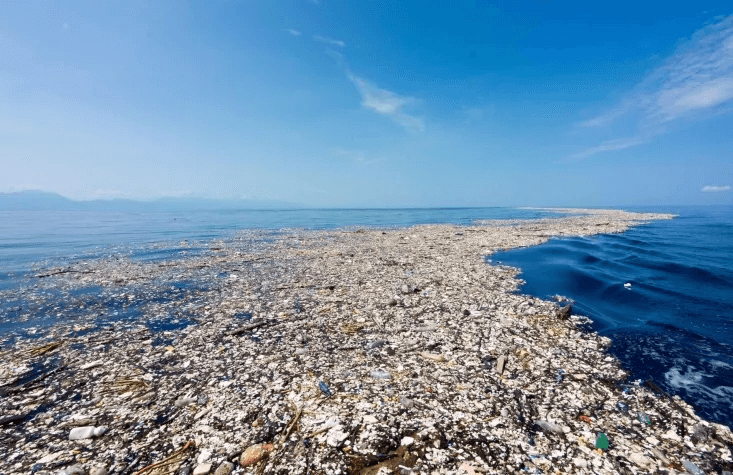
Definitely not! -
The Musk PlutocracyJust making the information available for those interested. You're under no compulsion to read it, you can keep enjoying your 'very nice life'.
-
The Musk PlutocracyOrwellian - says 'we are being transparent', when in actual fact, nobody has the slightest idea where Musk is getting his information from, what his plan of action is, or what his 'authorisation' amounts to.
-
Why is it that nature is perceived as 'true'?So ‘natural’ means ‘anything whatever’. Meaning, it has no definition.
-
The Musk PlutocracyThe Musk appearance in the office was also reported by the NY Times.
Answering questions from the media for the first time since his arrival in Washington to run the so-called Department of Government Efficiency, Mr. Musk stood next to the Resolute Desk and asserted that his work was in the interest of the public and democracy. President Trump sat behind the desk, chiming in with approval as he let the world’s richest man expound for roughly 30 minutes on the rationale for the drastic overhaul of the federal bureaucracy.
The goal is to “restore democracy,” Mr. Musk said. “If the bureaucracy’s in charge, then what meaning does democracy actually have?”
Among Mr. Musk’s claims, which he offered without providing evidence, was that some officials at the now-gutted U.S. Agency for International Development had been taking “kickbacks.” He said that “quite a few people” in the bureaucracy somehow had “managed to accrue tens of millions of dollars in net worth while they are in that position,” without explaining how he had made that assessment. He later claimed that some recipients of Social Security checks were as old as 150.
“We are actually trying to be as transparent as possible,” Mr. Musk said, referring to postings by his team on his social media site, X. “So all of our actions are maximally transparent.”
He continued, “I don’t know of a case where an organization has been more transparent than the DOGE organization.”
In reality, Mr. Musk’s team is operating in deep secrecy: surprising federal employees by descending upon agencies and gaining access to sensitive data systems. Mr. Musk himself is a “special government employee,” which, the White House has said, means his financial disclosure filing will not be made public.
It's basically a hostile takeover of the functions of the Federal Government. It is utterly Orwellian. -
The Musk PlutocracyTrump goes all in on DOGE
“We are going to be signing a very important deal today,” Trump said from the Oval Office. “It’s DOGE.” He said that his administration had found “billions and billions of dollars in waste, fraud and abuse.” — Washington Post
How he's had time to 'find' billions and billions in the three frantic weeks since the inauguration is anyone's guess, although never a problem for someone who just makes stuff up.
The executive order gives billionaire Elon Musk’s DOGE, tasked with finding government inefficiencies, even more power than it has amassed in the first three weeks of the new administration. The order installs a “DOGE Team Lead” at each agency and gives that person oversight over hiring decisions. DOGE stands for Department of Government Efficiency. ...
Trump on Tuesday criticized the judicial rulings, saying that “it seems hard to believe that judges want to try and stop us from looking for corruption.”
He threatened to “look at the judges because that’s very serious,” but later said he would “always abide by the courts” and appeal their findings.
Well, that's something, but actions speak louder than words.
Musk saw fit to bring one of his many infant children to the Oval Office, charmingly named X Æ A-Xii.

-
Why is it that nature is perceived as 'true'?I'm never really sure what counts as nature in these discussions. — Tom Storm
Like I said:
When astronomers scan the cosmos for signs of an advanced civilisation, they're looking for signals that wouldn't appear in nature; they’re looking for the ‘non-natural’. They might either be electromagnetic transmissions (radio etc) or the spectral emissions of non-naturally-occuring substances like our hydrocarbons and industrial solvents. So it's the assumption that the signs of another intelligent species will be found precisely because they're not naturally occuring. — Wayfarer
If nature refers to the ecosystem prior to or outside of human manufacture or artifacts, then I can't see how that is an especially problematic definition. -
Why is it that nature is perceived as 'true'?If 'artefact' means 'something made' then only h.sapiens can really manage that, courtesy of the famous opposable thumbs (although that is common to apes also). That passage I quoted the other day from Norman Fischer about the origin of ownership, tools and language, and with it, the sense of self - surely that's relevant. And stone tools were being manufactured long before homo became sapiens. So it goes back a long way, perhaps even a million years. But the more h.sapiens becomes reliant on tool use, clothing, possessions, and so on, to that extent they're already becoming separated from nature to some degree. And then with the advent of the Industrial Revolution and large-scale manufacturing, this takes on a whole new dimension doesn't it?
In a way, @RussellA's post illustrates what I said in the post above: the tendency of moderns to idolise nature as representing purity or wholeness. Sans God, it is the nearest we can imagine to those qualities. -
Why is it that nature is perceived as 'true'?Mankind is part of nature, not separate to it. — RussellA
I question that, Russell. If you were parachuted into a completely natural environment with no artifacts and minimal clothing, I suggest you would find survival extremely difficult (depending of course on the specific nature of the environment, rainforest probably being easier to survive than tundra or desert.) But our 'separateness' from nature seems perfectly obvious to me - we live in buildings, insulated by clothing, travelling in vehicles, none of which are naturally-occuring. So I think yours is rather a rose-coloured view in this respect :-) -
Ontology of TimeWhat necessitates the "co-arising"? How could subjectivity co-arises with the objectivity? — Corvus
You asked about Buddhism before. The 'co-arising of self and world' is not foreign to Buddhism. In many of the early Buddhist texts (known as the 'Pali Canon') you will encounter the expression 'self-and-world' which designates the nature of lived experience. This is because the normal human state is always characterised by the sense of self and world. Being conscious is being conscious of.
Buddhist philosophical psychology is a subject known as abhidharma. It comprises a psychological theory about how perceptions and conceptions give rise to the various states of being. It is a very detailed and complex set of texts, indicating the depth and complexity of the subject matter:
In summary, the Abhidhamma describes how 28 physical phenomena co-arise with 52 mental factors, manifesting as 89 types of consciousness, which unfold in series of 17 mind moments, governed by 24 types of causal relation. — Source
But the point about abhidharma is, that it experiential in nature - dealing with the causal factors of experience. That is where it is somewhat different from Western metaphysics which always dealt with highly abstract concepts such as 'being' or 'essence' or 'substance'. The keynote of abhidharma is self-awareness (hence the connection with 'mindfulness'). That is the context in which the co-arising of self and other is meaningful. It shows how the mind identifies with or attaches to what it identifies with as 'me and mine'. The idea in Buddhism is to learn to detach from or disidentify with that. Not that we're here to discuss Buddhism in particular, but there has been a recent upsurge of interest in the resonances between Buddhism and modern philosophical schools like phenomenology.
When they co-arisen, are they then one? Or still two? — Corvus
Very interesting question. The meaning of 'advaya' (which is Buddhist non-dualism) is 'not divided' or 'not two' ('a-' meaning 'not', and 'dva' meaning 'divided'). That highlights the sense in which the goal of Buddhist practice is to lessen or overcome that sense of division or 'otherness' to existence or the sense of being 'outside' of existence. You will find expressions in Buddhist philosophy such as realising the 'undivided heart' as the consummation of practice. -
The Musk PlutocracyIt will become clear over the next few days and weeks the extent to which Trump and Musk intend to comply or defy with respect to court decisions. Many of those decisions have been adverse to Trump, but it seems to me that he truly believes he is above the law and that anyone who opposes his will is simply an obstacle to be navigated, with the full backing of the MAGA caucus. Today the news is all Gaza again - 'flooding the zone' - but these lawsuits and the Administrations response to them will be crucial.
-
Ontology of Timetime doesn't exist" doesn't mean it is denying the reality of time or our daily uses and reliance of time. But it is asking rather if time is the objective entity or property of the world, or it is rather internal perception of human mind. — Corvus
As I've said, my belief is that time has an unavoidably subjective aspect, so I agree that it is not solely objective. But then, nothing is is 'solely objective'. I agree with the idealists and phenomenologists who say that the world and the subject are 'co-arising'.
That's about the most of Mellaisoux I've read in a single sitting, but I'm generally hostile to speculative realism. The given characterisations of 'dogmatists', 'correlationists' and 'idealists' have shifting boundaries; it's not possible to define such attitudes in an air-tight kind of way such that comparing them will result in such pristine clarity and demarcation.
There's a critical paper by phenomenologist Dan Zahavi (thank you to @Joshs) 'The end of what? Phenomenology vs. speculative realism' from which:
In After Finitude, for instance, Meillassoux argues that phenomenology because of its commitment to correlationism is unable to accept the literal truth of scientific statements concerning events happening prior to the emergence of consciousness. When faced with a statement like “The accretion of the Earth happened 4.56 billion years ago”, phenomenology is forced to adopt a two-layered approach. It has to insist on the difference between the immediate, realist, meaning of the statement, and a more profound, transcendental, interpretation of it. It can accept the truth of the statement, but only by adding the codicil that it is true “for us”. Meillassoux finds this move unacceptable and claims that it is dangerously close to the position of creationists (Meillassoux 2008, 18, cf. Brassier 2007, 62). He insists that fidelity to science demands that we take scientific statements at face value and that we reject correlationism. No compromise is possible. Either scientific statements have a literal realist sense and only a realist sense or they have no sense at all (Meillassoux 2008: 17).
The way I put it is that this is accomodated in Kantian philosophy by the recognition that empiricism and transcendental idealism are not in conflict. The theory of the formation of the earth is an empirical theory, supported by considerable empirical evidence which I don't think Kant would deny. (Let's not forget that Kant's theory of nebular formation was also an empirical theory, and that this theory, modified by LaPlace, is still considered respectable.) But all empirical evidence is subject to judgement, and meaningful within a context. It may well be literally true - but what is literally true depends on literacy and the ability to interpret evidence and symbolic forms and to synthesise them into coherent concepts. Which leads me to wonder whether the entire assault on 'correlationism' is a straw man argument. But fortunately, not being in the academic trenches, it is a battle I don't have to fight. -
Ontology of TimeNot specifically. Mine is an intuitive understanding but I believe it can be justified philosophically. I’ve never researched the question from the perspective of Buddhism.
-
Ontology of TimeThese are big questions. There have been debates over them forever. I’ve explained, I say that time has an irreducibly subjective aspect. In other words that time exists in the awareness of an observer. But that doesn’t mean it doesn’t exist.
-
Why is it that nature is perceived as 'true'?With man's insatiable need to make nature conform to his needs and even wants, what are your opinions about our current relationship with nature? Is it becoming better or worse? — Shawn
When astronomers scan the cosmos for signs of an advanced civilisation, they're looking for signals that wouldn't appear in nature; they’re looking for the ‘non-natural’. They might either be electromagnetic transmissions (radio etc) or the spectral emissions of non-naturally-occuring substances like our hydrocarbons and industrial solvents. So it's the assumption that the signs of another intelligent species will be found precisely because they're not naturally occuring.
On the other hand, nature is nowadays idolised as representing purity or the unsullied state. This manifests as environmentalism, eco-tourism, and the respect accorded to indigenous cultures. All of which are perfectly respectable impulses. But it omits something which our cultural ancestors would have assumed important, which is that nature herself, aside from being nurturing and creative, is also implacable and destructive. So whereas for the perennial philosophers, nature was something to rise above, we, oddly, believe that being re-united with it is somehow transcendent. Which is odd, because all it really means is that the body will return to the elements (although maybe not for all the teeth fillings, hip replacements, and other non-natural elements that nowadays comprise our bodies.) -
Ontology of TimeImagine a world independent of the mind… — JuanZu
Now there’s an oxymoronic phrase! I’m forming the view that ‘the world independent of mind’ is precisely and exactly what the ‘in itself’ refers to. -
Australian politicsDo you imagine/think that the USA would convert to metric — kazan
The US seems awfully backwards when it comes to metrics. And also their currency system is dreadful, considering how basic the US dollar is. Trump just banned pennies, about the only practical decision he’s capable of making. -
The Musk PlutocracyI generally refrain from posting polemical material but in the circumstances this is highly relevant. It points out that the only justifications Trusk could give for feeding U.D.A.I.D into the woodchipper were lies - lies about a fictitious paid trip to Ukraine (when in reality, Sean Penn paid his own way and travelled very hard) and distributing condoms in Gaza which simply never occurred. It’s preposterous, what has been done to this agency. It needs to be reviled.
-
Australian politicsWell, maybe they're sacred in some way to Australian Agentines — Arcane Sandwich
Yes, but Argentina also has a large beef cattle industry. We have that in common also.
When we visited California, we noticed large swathes of eucalypt, in some parts north of San Francisco, you could swear you were driving on an Australian freeway, were the traffic not going in the opposite direction.
Like you, enjoy Albert's art, no interest in that item of Vincent's art. But, many BIG art prize entries don't interest either. Personal taste needs no justification unless it comes with social status/responsibility. — kazan
Agree. Overall I'm more at home with realist art and impressionism than with modernist and abstract. But visual arts are not a big part of my life. -
Ontology of TimeThanks for the explanation, although I'm hard pressed to understand how he can maintain that position viz a viz physics, and still claim to be a materialist.
I looked at the book abstract, and it says 'Most of the thinkers who espouse a materialist view of mind have obsolete ideas about matter, whereas those who claim that science supports idealism have not explained how the universe could have existed before humans emerged.' I do address that problem in The Mind Created World, although if you would like to discuss it further, that would probably a better thread for it.
I'll use materialism for newtonian philosophies and physicalism for the doctrine that physics is the only ontology... — Banno
I'd sort of agree, although Marxist materialism is a different kettle of fish. -
Ontology of TimeI can sort of see that, but my approach is more intuitive - more 'classical' if you like. What is outside time as ecstatic. Not that this is anything I myself can approach, but there are allusions aplenty in the classical literature.
Physicalism is not the same thing as materialism — Arcane Sandwich
But isn't it a difference only meaningful within academic philosophy? I mean to all intents and purposes, they're synonyms, or rather, physicalism is rather more sophisticated term for materialism. -
Ontology of Timeyes, very good. I often find @sime's posts illuminating, but had missed that particular one, thanks for calling it out.
Wayfarer

Start FollowingSend a Message
- Other sites we like
- Social media
- Terms of Service
- Sign In
- Created with PlushForums
- © 2026 The Philosophy Forum