
-
Political Affiliation (Discussion)It's interesting that there isn't much discussion here of the reasons women have for getting late abortions. In fact there isn't much discussion of the women at all except as temporary vessels (with obligations that trump their own interests).
So here's another angle. Can we all agree, for whatever reasons, that earlier abortions are better than late ones, and that public policy ought to be directed towards reducing the need for late abortions?
Well, there's evidence that restrictions on late abortions are counter-productive:
Most women who seek abortion late do not realise they need to do so earlier. If abortion was made harder to access in later pregnancy than it is currently, the main outcomes would be that women would have abortions later still; would become ‘abortion tourists’ and seek abortion in another country; or would have to continue unwanted pregnancies.
—Late Abortion: A Review of the Evidence [PDF]
I don't think any of those are good outcomes. -
Political Affiliation (Discussion)
Can I ask why it should be illegal, and what the exceptions are or should be?it should be illegal to have an abortion after 28 weeks (except those exceptions) — Sapientia
If the answer to the first question has anything to do with the fetus being a human being or person with its independent interests and rights, I don't see how there could be any exceptions. That is, I don't see how such abortions could ever be justified, unless murder is justified in some cases. -
Political Affiliation (Discussion)I don't treat people morally because they have brains and nervous systems, but because they are people who each have a place as individuals in society. — jamalrob
Here you seem to misunderstand me, and I'm not surprised, because if you don't know what a moral agent is or understand its significance, and you don't know what personhood is, then it's inevitable that you'll fail to see that treating people morally because they are people "who each have a place as individuals in society" and treating people morally "because we're built that way" are the same thing. My "because" does not imply a process of reasoning.We treat people morally - unless we're sociopaths - mostly because we're built that way. If we need a philosophy book for much of our moral behaviour, we're in no better a position than those who feel they need a holy book for it. — Baden -
Political Affiliation (Discussion)
I missed this. Obviously it applies to early-stage embryos too, so it doesn't support the special treatment of late-stage fetuses.under normal circumstances it will develop into a fully grown person — Baden -
Political Affiliation (Discussion)
Are we going to debate whether it's debateable now? I'm debating it, and lots of other people take my position--though unfortunately less people now than a few decades ago, I think.It's only when the latter minor harm becomes a major harm (generally for medical reasons) that the case is even debateable. — Baden
That's as it should be. But of course If you can argue empathy out of yourself on the basis that this or that human being is not (yet) a person, this line will mean nothing to you just as to someone who does empathize with late term fetuses is not going to be swayed by any of your arguments.
Obviously I can say something very similar with respect to the freedom and autonomy of the woman. Aside from that, you're right that we won't convince each other, but I don't care about that, as I'm not trying to convince you. That's not what debates are for. -
Political Affiliation (Discussion)
Where do you want us to get to? I certainly don't want to find a middle ground. I think personhood is precisely what matters.I never claimed the fetus is just a mini-person. I've said time and time again, the "person" debate will get us nowhere. — Baden
There is no agreed definition of "person" to work with. But it doesn't have to be just a mini person to have some rights. Even animals have rights. The fetus is human; under normal circumstances it will develop into a fully grown person; it can feel pain; it has a brain; it has a nervous system; at 8 1/2 months it is fully viable. It's not just a piece of meat. It's one the most sophisticated organisms on the planet at any stage of its development.
The claim that fetuses feel pain is somewhat controversial, because pain is much more than mere nociception:
The neural circuitry for pain in fetuses is immature. More importantly, the developmental processes necessary for the mindful experience of pain are not yet developed. An absence of pain in the fetus does not resolve the question of whether abortion is morally acceptable or should be legal. Nevertheless, proposals to inform women seeking abortions of the potential for pain in fetuses are not supported by evidence. Legal or clinical mandates for interventions to prevent such pain are scientifically unsound and may expose women to inappropriate interventions, risks, and distress. Avoiding a discussion of fetal pain with women requesting abortions is not misguided paternalism but a sound policy based on good evidence that fetuses cannot experience pain.
—Stuart Derbyshire, Can fetuses feel pain?
The notion of viability seems equally troublesome. And I don't think the existence of a brain and nervous system counts in any way against the right of the woman to terminate. The issue is moral and political, and cannot be decided by biology. In my opinion, the evidence you mention functions in the public debate primarily by encouraging a conception of the fetus as being essentially a newborn baby, thus as a sentimental appeal. If this is uncharitable with respect to your own use of the scientific evidence, even so you are using it in the service of a moral and political view, because it does not speak for itself. I don't treat people morally because they have brains and nervous systems, but because they are people who each have a place as individuals in society.
As for rights, I think the notion of animal rights is nonsense, and I can't see any sense in which fetuses or even newborn babies have rights, though in the latter there is a duty of care (as there is with animals).
To say that we can do what we will with it needs more justification than simply the fact that we want to maintain some woolly idea of autonomy based on the very questionable premise that it's part of the woman's body.
I am saying that abortions should be allowed up to birth, that the interests of the woman must take priority over any interests we attribute to the fetus on the basis of biological development. I am not saying that it's ok for people to do what they want with them.
The principle of bodily autonomy is no more woolly than pain and viability. Extending the principle that nobody should be forced to undergo a medical procedure, no woman should be forced to continue with a pregnancy and undergo childbirth. -
Political Affiliation (Discussion)As I say, I don't see any substantial difference between part of and contained within in this context. It all comes back to personhood: they probably do differ importantly if we're talking about one person contained inside another.
-
Political Affiliation (Discussion)The locus of morality is the individual person and in the relations between individuals. I think bodily autonomy is basic to a person and to being a free member of society. I think the very idea that anyone else has a say over what a person does with their own body is a denial of this basic element of personhood and renders the subject of such coercion less free than others, renders them less fully a subject in their own right.
Obversely, the idea that a fetus is just a mini-person is a consequence of a vulgar scientism that completely misses how human society works. -
Political Affiliation (Discussion)I'm not sure. The attitude I have to terminating your own pregancy is a bit like my attitude to doing your own brain surgery---but I don't want women to be penalized for self-termination. I think bodily autonomy would again have to be the priority, but I probably wouldn't be making my argument if I didn't also think it would result in a better system in which the removal of stigma and official interference reduced the number of self-terminations.
-
Political Affiliation (Discussion)It's not relevant to my concerns. Abortion is or should be an ordinary medical procedure carried out by medical professionals. What are you getting at? Are you going to hit me with a gruesome thought experiment here because I really wish you wouldn't.
-
Political Affiliation (Discussion)That seems about right as far as it goes.
EDIT: Though I see no relevant difference between include and contain in this context. -
Political Affiliation (Discussion)Yeah, there's a tricky distinction here, which I think @Hanover brings out quite well in his last post.
-
Political Affiliation (Discussion)Once again, all you're doing is throwing your opinions at me. You haven't offered any criticism of my position that is not simply saying you disagree. And as far as I can understand your thought experiment, my position would not allow any such thing.
-
Political Affiliation (Discussion)
I am not going to spell things out for you. As I said, what you claim follows from my position only does so given a number of other premises, and I refuse to believe you don't have the imagination to see that, even to see what my own assumptions are. What is a body? What do we mean when we talk of a woman's body, and is this like talking about a fetus's body, or somewhat different? When I talk of the woman's body I am talking about the body of a person. Etc.You can call it what you like but it matters if that's the basis of your argument. — Baden -
Political Affiliation (Discussion)From your rather pedantic and obtuse perspective, I can see that.
-
Political Affiliation (Discussion)It's a matter of debate, not of inarguable empirical facts as you keep implying. I do consider the woman's body to include the fetus, and I do not consider that fetus to be a person. Hence I believe the woman's bodily autonomy comes first.
-
Political AffiliationGeneralized label: God knows. How about "Marxian Libertarian Cornucopian"?
Form of government: Democracy, preferably direct. Tyranny can turn out to be the worst, but I think aristocracy, oligarchy, technocracy, managerial politics, the nanny state and paternalism are bad too.
Form of economy: Post-scarcity high-tech socialist or communist economy. We don't know how to get there right now, so: for accelerated yet highly regulated capitalist economic growth. Against neoliberalism and over-financialization.
Abortion: For total decriminalization (it's still technically criminal in the UK, except when the woman meets certain conditions) and for a woman's right to choose what to do with her body, which includes the fetus.
Gay marriage: It seems a bit of a shame that the gay rights movement embraced this eminently bourgeois issue, but I'm not going to stand in anyone's way. I went to a lesbian wedding recently and enjoyed the champagne and vegan burgers, so I can't be against gay marriage without being hypocritical. It also felt like a sign that much of what the gay rights movement fought for has been achieved, so that's good.
Death penalty: I'm uncomfortable with the death penalty but I can't bring myself to stand against it in all cases on principle.
Euthanasia: Despite my atheism and my support of a woman's right to choose in all cases, I also think there's an important concept, of the sanctity of life, that was upheld for a long time by Christianity but which is being lost sight of. I regret this. The pro-dying movement represents a cultural turning away from hope and progress, and I also think relaxation of the laws would result in the deaths of many people who would otherwise be able to get through their problems (I'm not an anti-natalist, so I don't see transient anguish as supporting the argument against life). At the same time, I don't want people to be kept alive to suffer where there can be no hope of recovery.
Campaign finance: I haven't really thought about it. Off the top of my head, I wouldn't like to see publicly funded parties, but I also think the big money in politics makes it very unfair.
Surveillance: State surveillance is currently necessary to combat reactionary religious maniacs, but I'm a libertarian so I want it to be targeted rather than implemented as if everyone were a suspect. I don't believe it's practically necessary or good for culture and politics for us to be watched all the time, and on principle I don't trust the state with as much generalized snooping power as it has in many European countries (let alone the US).
Health care: Socialized. Having said that, a mix of public and private can work well, as in France, which some consider to be the best system in the world.
Immigration: Open and monitored. An "illegal immigrant" is someone who has been criminalized for their movement in search of a better life. I think this is immoral. But like TGW I also favour a "powerful impetus toward cultural assimilation / hostility toward multiculturalism".
Education: Let's get back to the ideal of the liberal education, and away from the dreary idea that education is about getting a job, or preparing people for the workplace. It's about the culture as much as the economy, and it's about elevating people: making people better and making them want to be better.
Environmental policy: Industry and energy can clean up after themselves if properly regulated. Don't base energy policy on short-term profit or political gain. Reduce our contribution to global warming by investing in alternative forms of energy production, but celebrate the human footprint and recognize that people come first. Don't stand in the way of the fossil-fueled industrialization of poorer countries like India. The best way we can deal with climate change is through maximum worldwide industrialization, technological innovation, and bold projects. In general, totally against the reactionary green movement, instead for treating climate change as a practical problem that can be solved without reversing growth and progress.
Gun policy: I don't know about this. I'm sympathetic to both sides. As a libertarian, some-time radical leftist, and occasional gun-user, I should be sympathetic to gun ownership, but I'm not comfortable with the idea of a weapon-saturated, militarized culture like that of the US or pre-war Germany.
Drug policy: I'm basically for decriminalization, but I don't much like the excessive, fashionable celebration of cannabis, a drug that makes people dull and stupid when over-used.
Foreign policy: There are four kinds of foreign policy that I think are pernicious and wrong in our era: (1) Colonialism and other forms of imperialism, (2) post-colonial meddling in foreign revolutions and democratic processes, (3) neoconservatism, i.e., imposing liberal democracy from the outside, and (4) the most recent pattern of Western foreign policy, namely reckless, short-sighted and damaging foreign escapades engaged in with a view to domestic politics and international stature. -
Political Affiliation (Discussion)In the ideal of all ideals, I'd prefer the question of abortion's legality to be settled by women only. But, I'm not sure how you'd implement that. — MoliereThat's another statement that I find particularly disagreeable on sexist grounds. Our ideals are clearly opposed in certain respects. The thought that all of my views on this important topic, of which I'm passionate, and with which I have made an effort to be reasonable and conscientious, which effect the whole of society - not just women - would be discounted solely on the basis of my gender... that is a thought that I find highly objectionable. — Sapientia
Moliere could be saying that only those who get pregnant ought to be empowered to decide whether or not to have an abortion, which seems pretty reasonable to me. To say that women should have the same bodily autonomy as men is precisely anti-sexist.
I think I'm with Moliere on guns too, though I'm undecided. -
Happy Christmas and New Year to allNo, I've been living in France for a couple of years. In all my time in Edinburgh I never went to the Hogmanay street party, despite living around the corner from Princes Street.
Happy New Year! -
Happy Christmas and New Year to allMerry Christmas to all, and thanks everyone for making this new forum a good place to be. I haven't been participating much of late because of work and getting drunk, but I'll be back with a vengeance in the New Year.
-
Right vs Left - Political spectrum, socialism and conservatismIt's interesting you say this. Can you provide some sources which identify with the Left and claim that cultures must respect themselves and allow each other to govern themselves as they see fit, instead of attempt to impose certain values one upon the other? Can you name a Left source which states that "equality for all" isn't a universal value and therefore it doesn't have to be shared by the whole world? — Agustino
I don't have time to look out examples, but they're not all that hard to find. The branding, by sections of the Left, of many critics of Islamism (including Muslims and ex-Muslims) as "Islamophobic" (e.g., in Left-leaning student unions, one of which refused to condemn ISIS because they thought such a condemnation would be Islamophobic), the association of Islamists and the far Left in the UK (e.g., the Respect Party and the Stop the War coalition), and the toleration of Hamas with its reactionary politics among the supporters of the Palestinian movement, are well-known examples. The trajectory of Left-wing politics has been towards identity politics for the past several decades. In identity politics, what is important is the group, or as you say, the "community", and if a person's values and ambitions do not coincide with what are thought to be the collective values and ambitions of their group (race, sex, whatever), then they're stuffed. This is where socialism and your communitarian conservatism come together (even though they're very different political traditions).
Otherwise, I don't have time to address the rest of your post in detail or describe the struggles of liberal campaigners in the Middle East. In a nutshell I think you're saying that democrats and leftists in liberal democracies ought not to try to impose their favoured political and cultural values on countries where those values are rejected by those in power. Well, I'm not a supporter of neoconservatism and generally don't advocate such impositions from the outside. To that extent I think you're right that it is for people within a state to fight for freedom and equality if they want it.
Equally though, neither do I accept the right of religious conservatives, tribal sheikhs, absolute monarchies, and corrupt authoritarians, to impose their interpretation of Islam on millions of people. Why should they represent the true voice of the community, just because they managed to grab the power and have managed to hang on to it, often brutally? You talk as if you think the regimes of the Middle East were established by peaceful consensus by accepted people's representatives, but this is very far from the truth.
You may be aware, but speaking up against the powerful in the Middle East is not an easy thing to do, and I am not comfortable with a complete abandonment of those who are brave enough to fight. Generally I think you have a simplistic view of human society; for example, the divisions within many societies--especially those of the Middle East--are as deep and as explosive as the divisions you think you see between those countries and those of the West. Your us and them narrative just doesn't fit the facts.
What I advocate is to make ideas available, for whoever can make use of them, rather than imposing anything. The ideas of freedom and equality are available to all, and to me they are high points of human culture that still have a lot of potential. You accuse me of presuming, and this is true to a degree: I presume that what human beings share is more important than any supposed racial, ethnic, or cultural differences, which is why I treat the values I believe in necessarily as universal. -
Right vs Left - Political spectrum, socialism and conservatismRecently I have turned more and more right-wing, and I am interested to discuss with members of this forum, many whom I know to be leftist/socialists. The way I see it, the left takes certain values, such as equality for all, freedom against culture/norms, etc. and then imposes these over the rest of the world, and anyone who doesn't respect them becomes a misogynist, racist, sexist, etc. The left claims to be tolerant, but only for things which respect their fundamental values; towards anything else, absolutely intolerant. But there are so many different ways of life under the sun. Who am I to condemn, for example the Islamic way of life and go tell them that their women should have a choice to wear the burkha etc etc? It's their fundamental right to decide what rules are to be obeyed on their lands, and what rules are not. Everyone has their own laws on their lands, in their families, and true toleration means not interfering with these. In fact, the world is beautiful precisely because there is diversity and there are many different customs, religions, and cultures. This diversity should be respected I believe, and we should not aim towards a globalisation of culture, in which we slowly aim for the whole planet to have and share the same values. All that is required, I think, are a set of international values, along the following lines: "My land, my rules. Your land, your rules. I will not interfere with you unless you do something that is threatening or damaging to me" — Agustino
You say you're turning right-wing, and then proceed to espouse a position that these days is very characteristic of the Left, namely identity politics and multiculturalism. The idea that Europeans should not condemn the barbaric and oppressive practices of certain regimes in Islamic countries, because this is an imperialist attack on all Muslims, is now the standard far Left position, sadly. As if the most powerful and most conservative sections of the Islamic world are the legitimate representatives of Muslim people, those that we must respect in the name of diversity. As if we should respect laws that oppress women, as somehow embodying a sacrosanct culture, while those women have no say in changing these laws. "It's their fundamental right to decide", you say, but fail to note that most Muslims, least of all women, have no such right to decide.
But the fact that you see your position as right-wing--which I don't think is a crazy thing to think at all--while it actually has a lot in common with much of the Left, does, I think, demonstrate just what is wrong with the Left today. In any case, the terms "Left" and "Right" have become pretty useless. -
What's Wrong With Brutalism? (It's the dirt and neglect)I've only got a few minutes so I'll keep it kind of short.
There's been a noticeable surge in affection for Brutalism lately. There have been books, documentaries, and blogs dedicated to it. A good site for pictures is the popular Fuck Yeah Brutalism.
One thing I've noticed is that the fans fall into two camps: those for whom it is, or once was, a genuinely viable architecture, and one that is aesthetically beautiful; and then those who, a bit like fans of horror movies, are attracted to what they see as the frightening, ugly, oppressive--and "brutal"--qualities of Brutalism.
I don't want to be too sniffy about this latter group, but I do think Brutalism deserves attention as architecture for people to live and work in, and not simply as photography and computer graphics that serve as backdrops for dystopian video games and sci-fi movies set in crumbling chaotic futures.
As to what's wrong with it, well, many conservative, traditionalist commentators, such as Roger Scruton, have declared that the central problems were thinking you could change the way people live, and thinking you could throw away centuries of architectural tradition and start afresh. Thus Brutalism and the Corbusian tradition of modernism that inspired it were too ambitious, too optimistic, too radical, and too totalitarian.
I think they're wrong about that, mostly. I don't believe that people are innately suited to living in little houses with front and back gardens, built side-by-side along a road, as Prince Charles and the creators of Poundbury imagine. The Brutalist visionaries challenged it, and though they failed, I don't think it was because their ideas were bad (well, not all of them anyway).
On the other hand, some people here may remember my first or second topic on the old PF, called "Anarchist Traffic Engineering", about the Shared Space movement in town planning. In that discussion I was advocating an approach to urban space that was pretty much the complete opposite of the kind of planning associated with post-war modernism, with its segregation of pedestrians and traffic. I'm not sure how to reconcile this.
Anyway, that's all for now. Here's a picture of Habitat 67:

-
Feature requestsI do miss likes, for some reason. But most people don't want member reputation scores, and like I said in the dedicated thread, it's currently impossible to have one without the other.
-
Feature requestsSince the software upgrade the subscription system has changed. Previously you would just manually make one-off payments, but now it sets up a monthly PayPal subscription. Go here to set it up and you shouldn't have to remember again:
http://thephilosophyforum.com/user/upgrade
I'll have to make an announcement about this. -
Feature requestsIt's just the way the software works, and I don't know the reasons for that design decision. I am glad of it though. I can recall a few times on PF when self-deletions caused a mess. People would even sometimes completely destroy a long discussion by removing their half of the posts.
Just PM a moderator if you want a post deleted. -
I'm going back to PF, why not?I don't like the slightly truncated spatial dimensions of this new forum — Thorongil
Have you zoomed your browser? I couldn't use this site if I left it at the default size. Ctrl++ a couple of times. -
Just for kicks: Debate FascismIt was highly progressive and obviously socialist in nature. — Question
I still haven't gotten to reading that book in totality; but, think it's a novel perspective than the usual finger pointing of the Nazi platform being on the far-right, which it was not. — Question
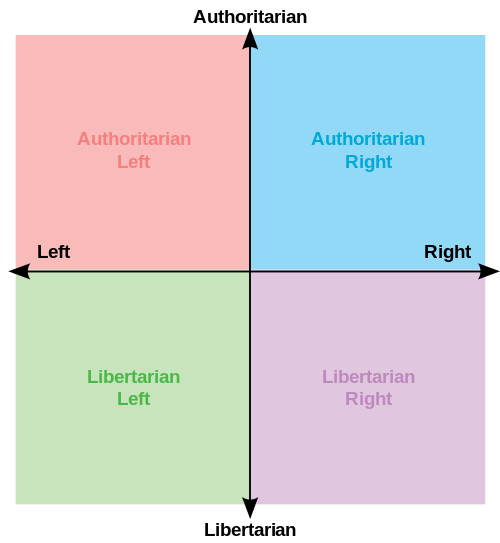
I think of the original Nazi platform as a kind of radical reactionary corporatism. Defined like that, we can avoid the confusions of Left, Right, socialism, liberalism and conservatism.
But the confusions are interesting. We can agree that the Nazis were not conservatives--and yet they were reactionaries, and they got most of their support from traditional conservatives. We can agree that with their social corporatism they were in some way socialist--and yet they were utterly opposed to the workers' movement, to social democracy and to Marxism. We can agree that some liberals and Leftists flirted with fascist ideas and that fascism was influenced by some Left-wing ideas--and yet most of the Left was engaged in fighting against fascism; in Germany the biggest enemies of the Nazis were the Communists and Social Democrats and their trade unions.
It turns out that one can make a case both that the Nazis were on the Left, and that they were on the Right. But the latter case is truer, I think. They were exuberantly reactionary, making them Rightists by almost any definition. They wanted a return to the days of glory and an end to the political and social innovations of the Enlightenment. Goebbels in 1933 said "the year 1789 is hereby abolished". Democracy, liberty and egalitarianism were to the Nazis part of a spreading disease that culminated in social democracy and Marxism. This had to be stopped, beginning with the nullification of the Weimar Republic and everything it stood for, and its replacement with a confident new spirit of strength, unity and racial purity.
Don't allow American politics to make you forget that the Right is as prone to authoritarianism as the Left.
From what I can tell, Goldberg's book might suffer from viewing the past through the lens of American politics--and I'm guessing he's trying to score points against liberals--but it does look interesting. I often hear people on the Left say that fascism had nothing to do with the Left and that National Socialism had nothing to do with socialism. It's a bit like the claim that ISIS has nothing to do with Islam. But the opposite claims are no better: the truth is somewhere in between. -
Just for kicks: Debate FascismAn odd question, and something of a reverse "what have the Romans ever done for us?"
Yeah, apart for the forcible seizure of power, the banning of trade unions and their replacement with direct Nazi control of working class life, the burning of books and the prohibition of non-Nazi art, the revision of textbooks to promote Nazi ideology, the banning of all other political parties, the removal of Jews' citizenship status, the dismissal of all Jews from professional employment, the control of leisure ("Strength Through Joy"), the suppression of dissent and the imprisonment of political prisoners in concentration camps, state terrorism by the SS and Gestapo, the direct political supervision of the whole population by installing a dedicated Nazi official in every block of flats or neighbourhood, the setting up of "People's Courts" and the overriding of the constitutional legal framework, the prohibition of jazz music, the persecution of gay people, the militarization of everyday life, the total Nazification of the media, the dismissal of teachers and professors who were not members of the Nazi party, the abolition of all youth organizations and their replacement with the compulsory indoctrination of children in the Hitler Youth, the reckless plunge into a self-destructive war, the myth of the Aryan race, and like you say, systematic genocide and invading Poland--apart from all that, what, exactly, was wrong with the Nazis?
Is that what you're asking? Or are you trying to make a distinction between the Nazis in power and the purer party platform--or more widely, the fascist platform in general--from which they had deviated? -
Liberté, égalité, fraternité, et la solidarité.As far as I can see the multiculturalist/assimilationist debate is vacuous; the reality is not on the same planet as the rhetoric, and this is the experience that leads folks to a place where they are content to die in the hope of having some effect on the world. — unenlightened
I agree, more or less. I did not mean to suggest that France's way has worked out better, although I do sympathize with the principle. The problem is that immigrants have been treated like second-class citizens despite the assimilationist letter of the law, and that the children of immigrants have been treated like immigrants. -
Missing features, bugs, questions about how to do stuffGotcha! Thank you for information. Also is the (L) option no longer available to show you like a post? — ArguingWAristotleTiff
We had a poll and it looked like people didn't like likes very much so I turned likes off. Ideally I'd like likes for posts but not accruing to members, but that's not an option (not yet anyway). -
Missing features, bugs, questions about how to do stuffYou flag a post to report it to the mods for breaking the rules.
Not that we have any rules right now. But you get the idea. :) -
Liberté, égalité, fraternité, et la solidarité.So factors/conditions for radicalisation we can influence are :
Abstract
1. Western foreign policy (to the extent it is unfair or immoral)
2. Racial inequality / discrimination
3. poverty
Personal/motivational
4. Personal experience (relates to 2 and 3)
5. sense of belonging (relates to 2)
6. Lack of education (not a rule of thumb but sufficiently correlated to take seriously)
7. Above may lead to wanting revenge or status
Ideological
7. violent ideology — Benkei
Evidence casts doubt on some of these purported factors. It turns out that European jihadists are very often well-educated, relatively wealthy, and integrated. Nor does their radicalization seem to stem from rage at Western foreign policy. Sorry for yet another link--and it's yet another piece by Kenan Malik--but this is really the best high-level analysis of radicalization that I've read:
https://kenanmalik.wordpress.com/2015/10/07/radiclization-is-not-so-simple/ -
Liberté, égalité, fraternité, et la solidarité.Well said. Of course, postmodern leftists and liberals would have us believe that Toussaint Louverture was merely aping the mores of his masters, trying to take on values that would inevitably come to nothing in such an alien milieu ("just look at Haiti now!").
That's not as much of an exaggeration as it might appear: I've talked to people who said exactly that, though about India rather than Haiti. -
Language and the AutistOn so many occasions I have written an email to an NT person containing, say, three questions. They answer none of them, and ask me a question instead. This seems like a straightforward communication disability, and it is the norm. Heck, this shit was routine on PF and drove me nuts. You just can't have a proper conversation like that. On the other hand, my email communication with other autistics is crystal clear. I ask three questions, and I get three answers, even if all three answers are 'I don't know' or 'I don't know what you are asking'. This is first class interpersonal communication. — bert1
For you it is.
Here's what this sounds like to me bert. Imagine a community of people called the lefters who have only one arm, the left one, and they walk around wearing capes so that nobody can see their disability. One of them says...
On so many occasions I have met a BT (brachiotypical) person, and most of the time they offer their right hand. This seems like a straightforward social disability, and it is the norm. You just can't shake hands properly like that. On the other hand, my handshakes with other lefters are always perfect. I meet one and they always offer their left hand. This is first class interpersonal etiquette. — A. Lefter
It is not always good communication to answer every question that is asked, and a response that ignores the questions completely may still be a good way of taking the conversation forward, allowing the questioner to see that the questions were misplaced, or trying to tackle things from a different angle. And from the questioner's standpoint, a response that doesn't directly answer their questions but nevertheless shows a deep insight into what they have said can be more satisfying; I often find point-by-point responses pedantic and facile. Granted, this way of responding may not work for everyone, may be difficult for some people to understand, and is sometimes open to abuse, but that doesn't make it "second class".
I'm sorry if this would get me boo'd off the stage at Autscape. -
Feature requestsStrange, I'm not seeing that. Maybe because I'm an admin. (Just noticed you said that yourself)
-
Feature requestsWith "my threads", you would see the threads with the latest action at the top, even if you hadn't personally contributed for a long time. It's a convenient feature only indirectly covered by other features, but I don't think it's a big deal.
Jamal
Start FollowingSend a Message
- Other sites we like
- Social media
- Terms of Service
- Sign In
- Created with PlushForums
- © 2026 The Philosophy Forum