
-
Where we standTHE PHILOSOPHY FORUM appeared on page 10 of a Google search results. — Bitter Crank
For what? I.e., for what search term? That's what matters. After all, we're at the very top of the search results for "thephilosophyforum.com" (with the quotes).
But yes, it's good to see us in the results: 17 Google results pages of thephilosophyforum.com URLs indexed as of today by my reckoning. -
Missing features, bugs, questions about how to do stuffSee the thread for feature requests: thephilosophyforum.com/discussion/30/feature-requests . The OP has a continually updated list.
I've asked support for MathJax, and they want to know if I'll sponsor the required development. -
New article published: The Argument for Indirect RealismThanks Street, I'll read that Lingis article.
-
New article published: The Argument for Indirect RealismFirst I'd like to say--and I don't say this to absolve myself of the responsibility for defending the article--that I wrote this article a couple of years ago and would take a different approach today. But I will defend it, because I still basically agree with most of it, as far as it goes.
Thank you for the detour into linguistics. It's very usfeful. I attempted to bring out the same point in my brief discussion of the word "see". It is, as you say, perfectly intelligible to say you see a face in the clouds (maybe that would have been a better example than a scintillating scotoma). It is this distinction that I am claiming is missed by the indirect realist, who thereby finds that all we ever see is faces in the clouds, where some correspond to real objects and others do not. Because the de re sense is privileged (certainly by realists), faces in clouds, hallucinations, and shrinking tables are thoughtlessly taken to be objects of perception rather than in various ways constituting perceptual experiences (in the same way that the pain constitutes a pain experience rather than being an object of awareness in a perceptual sense).
So I agree with most of this:
This is crucial for the sense datum dispute. To say that one saw a shrinking object is not to commit oneself to saying ‘there is an object such that it was shrinking and I saw it.’ In eagerly trying to reject the latter interpretation, one wrongly rejects the more crucial point made by the indirect realist, which is that ‘I see a shrinking table’ is perfectly intelligible whether or not there actually is a table that is actually shrinking. So on the de dicto reading, one can in fact say, on one reading, ‘I saw something shrinking.’ You just have to make clear which meaning is intended — one way it is true, the other way false. The direct realist is wrong that there is no sense in which it is true.
But I don't think direct realists make that claim. Their point is that the sense in which one sees something shrinking, or sees a face in the clouds, does not permit the indirect realist to say that one always only sees a perceptual intermediary, precisely because, as you say, it does not entail that ‘there is an object such that it was shrinking and I saw it.’
What this means is that although the indirect realist may have a tendency to hypostatize the shrinking table, i.e. to treat it on a de re reading as if there really were a thing that was shrinking, this misstep nevertheless leaves the importance of their philosophical point untouched, which is that even linguistically, we are sensitive to the notion of a visual medium through which things are seen, and we can characterize that medium as distinct from the objects that medium purportedly reveals to us. Direct realists are wrong to the extent that they deny or downplay this (the ‘one step removed’ that you talk about). The visual medium, the experiential field, is something to be spoken about in its own right, and it has properties that vary independent of the object. We cannot just skip over it and pretend the objects are ‘just there’ for us with no more to do. That is not a viable philosophical position, and if a direct realist is forced to claim it is, so much the worse for his position.
I agree that we can speak about the visual experiential field in its own right, and that we can pay attention to it phenomenologically. The point is that this medium, as you call it, is not a barrier between ontologically independent subjects and objects, a screen on to which outer objects are projected, or a channel between mind and world or a priori and a posteriori. It is not a veil, but a reciprocal relation, which is essential to perception even if one sees things that are not there.
Instead of saying that "we are sensitive to the notion of a visual medium through which things are seen", I think it is better to say that we are sensitive to perception as a process of interaction that can go wrong or that we can attend to in its own right. This is a better way of putting it because the notion that we see through a medium is borderline incoherent: it implies an intervening something of which seeing is independent, something like an old window with warped glass. But what could it be to see without such a medium? Of course, there would be no seeing at all, because what you are calling a medium actually constitutes vision.
This means that the indirect realist cannot, after all, justifiably say that we are one step removed. We may be one step removed in those moments when we attend to the geometry of vision, as when you see the person on the other side of the street as a centimetre tall. In the article I call this a snapping out of normal, smooth, successful perception. And there are also times when we haven't been able to snap in to successful perception ("what the hell am I seeing?") But it cannot be drawn from this that we are generally one step removed from the things we perceive, except by assuming a dualism and a head-bound epistemology.
This, then, is the kernel of truth in indirect realism that the direct realist is insensitive to and wrong about. You phrase the debate in terms of direct versus indirect realism, and in so doing imply that other alternatives, in particular idealism and skepticism, are not worth considering; but leaning toward the skeptical view myself, I’m in a somewhat privileged position to speak about the faults of both types of realism without the bias that attends trying to defend one’s own favored position. Indirect realists correctly claim that perception is mediated in a far less trivial way than the direct realist is willing to grant; direct realists correctly claim that there is no sense in which there is a two-step perceptual process that takes one from one immediate object to another mediate one.
But what does "mediated" mean here? It all hinges on how one characterizes the fact that we see faces in clouds or hallucinations or mirages: if perception's being mediated means that it has its own properties that can be studied independently of the properties of whatever is perceived, and is perspectival, partial, subject to error, and relative to the perceiver's specific evolved physiology, his cultural milieu, his motivations and affect, and so on--if this is what "mediated" means then the direct realist can happily agree that perception is mediated. But the "direct" in "direct realism" is not the opposite of this sense of "mediated". The sense of "direct" is: having no object of perception intervening between subject and object.
You partially defend indirect realism but I notice you do not defend the main arguments that I criticize in the article. Maybe you think it is a trivial point, that we do not see intervening objects. I don't think so, and I made some attempt to explain why. Such comments as this, from a neuroscientist, are still very common:
All we’re actually doing is seeing an internal model of the world; we’re not seeing what’s out there, we’re seeing just our internal model of it. And that’s why, when you move your eyes around, all you’re doing is updating that model. — David Eagleman
But after reading what you say about unconscious inference, I suspect that you have more sympathy with this view than I at first thought:
If we take Heidegger at his word, what he says is false. ‘We never…?’ We certainly do. We are met with visual impressions all the time that we aren’t sure what to make of, and so we do not first see them as determinate objects with specific significances, but a mess that we’re not quite sure what to do with (‘What the hell am I looking at?’). One problem here is that philosophers (and this goes for your paper as well, though interestingly not Heidegger’s quote which unusually focuses on sound) are overly accustomed to speaking primarily of visual perception, which is unfair to the full range of our experiences: visual perceptions are unique in that they, far more than those in other sensory modalities, seem (in my opinion, give the illusion) that they simply grasp objects the way they are without any further ado. Of course, even in vision, this is not only not always true, but is in fact never true (see below on this).
But the case is far easier to see with sensory modalities classically considered more ‘subjective,’ such as smell. We so much more rarely smell things and immediately know what sort of specific thing that we are smelling that, if philosophers focused on cases of smell rather than vision, I think none of them would be tempted to say the sorts of wrong things that Heidegger does on this subject. Of course I may encounter an aroma as the smell of jasmine or the sell of chocolate chip cookies; but there are so many manifold smells that confront me just as weird, unidentifiable sensations, ones that I’m not sure how to interpret and will likely never smell again. These confront me not as the smell of particular objects, but rather as olfactory impressions upon me: ones that are painful or pleasant, imbue me with certain sensory affections, and so on, but that I cannot pin down. And when I do, this process can take, not milliseconds as in the case of veridical vision, but often whole seconds, even minutes or hours. These sorts of cases destroy the illusion that I simply ‘smell things as they are;’ there is a laborious process of piecing together, or projecting, what I smell. Here the direct realist is wrong, and the indirect realist correct.
In the case of vision, as I’ve implied above, the situation is actually the same: we never simply see things right away as ‘what they are’ without further ado. There is again a laborious process of interpretation, but one that we are so well attuned to that in many cases it takes only milliseconds, and we are not consciously aware of it happening. We can actually measure how long this takes with modern physiological techniques, and in the lab we can purposely mess up the interpretive process that projects some object out of sensory impressions. If Heidegger were right, there would be no such process to mess up in the first place, since we first see the object, and only then do we abstract to sensation. And yet even outside the lab, our attempts at inferring from some sensation to some projected object go wrong, not only with outright hallucinations, but also e.g. when looking at surfaces when we can’t tell whether they’re flat or cornered (or for that matter, in seeing rainbows — there is a sense in which a rainbow is an object that we see, and a sense in which it is not, and it arises due to a curiosity in our visual mechanisms). It should also be noted that our modern laboratory equipment was not the advent of this realization: Schopenhauer said as much before modern psychology was a real discipline, and he had many examples of such ‘messing up’ of the visual interpretive process that you could perform for yourself purposely on a child’s allowance. The ‘remove’ that the indirect realist speaks of is very real, and you can see it for yourself in the process of its happening and its breaking down. Not only that, but ontogenetically we must learn how to see, and so the direct realist needlessly privileges adult humans with fully functioning visual capacities that have had years of practice at what they do, they who have forgotten how hard it was to unscramble the ‘blooming, buzzing confusion.’ It is almost as if someone literate thought that in seeing words, we just ‘see their meaning for what it is’ as a perceptual matter, and denied that there was really any process involved in constructing their meaning (note that for the literate person, seeing the meaning of a word, too, requires no conscious effort). Visual perception is much like reading. There is in this sense very much an ‘inference,’ though of course it is not always, not even usually, a conscious one or one of ratiocination.
First, I don't think it's true that we are often met with indeterminate impressions. Most often when I say "what the hell am I looking at", I am seeing something meaningful yet unstable or anomalous. An example: back in the summer I was at the top of a hill in the early evening of a sunny day, looking down on a pine forest, and I was amazed to see a patch of luminous glowing yellow birch trees surrounded by the dark pines. It didn't make sense--there are no birch trees around here it wasn't autumn--and it didn't look quite real. But then I suddenly saw the spectacle for what it was. These were not different trees at all; it was just a small area of the fairly uniform pine forest directly illuminated by the sunlight shining through a gap between the hills, the rest of the forest being in shadow.
Are there really times when what we see is inchoate and meaningless? I think this happens rarely. I suspect this goes for smell, touch, and hearing as well (though I take your point that I've fallen into the habit of privileging vision). Smell is not intentional to the extent that vision is, in fact is probably quite rarely so. But it is meaningful all the same. Familiar smells go unnoticed, while new smells stand out against this background; this is a useful evolved adaptation. For a smell to be meaningful there need not be an awareness of what the object is that is giving off the odour. I can be reminded of a time in my past just by a smell that I haven't identified. The olfactory impressions you mention are meaningful precisely in that they are imbued with qualities of newness or familiarity, pleasantness or unpleasantness, etc., in the way you describe.
Your account of the "laborious process of interpretation" and of unconscious inference is supremely Cartesian. I don't believe perception works this way. If we are meant to take "inference" seriously, it is hard to see how it could be unconscious, despite the popularity of the concept among psychologists. And if you are merely gesturing towards what is happening in the brain and the perceptual system as a whole when we perceive things, I think there are good reasons to think that this is not of the nature of internal construction with the building blocks of raw sensation.
From the way you describe perceptual learning, it looks like you really do mean that objects are inferred, that perception is a process of inference, a la Russell:
Induction allows us to infer that this pattern of light, which, we will suppose, looks like a cat, probably proceeds from a region in which the other properties of cats are also present. Up to a point, we can test this hypothesis by experiment: we can touch the cat, and pick it up by the tail to see if it mews. Usually the experiment succeeds; when it does not, its failure is easily accounted for without modifying the laws of physics. (It is in this respect that physics is superior to ignorant common sense.) But all this elaborate work of induction, in so far as it belongs to common sense rather than science, is performed spontaneously by habit, which transforms the mere sensation into a perceptive experience. — Russell, An Inquiry into Meaning and Truth
It is very clear that Russell's primary conception is one of full-blown conscious mental interpretation, only one that eventually becomes "habit", thereby slipping beneath explicit consciousness. I can't make much sense of this. I can see neither how an inference can become habitual and yet remain an inference, nor how one can seriously maintain that perceptual learning, prior to habitual perception, involves conscious inference from sensory premises to perceptual conclusion, when everything we know about perception tells us otherwise.
So I'll return to the possibility that you mean "inference" metaphorically, to describe what the brain is doing in perception. Does this mean that unconscious brain processes can, like inferences, be mistaken? Does the use of "inference" mean you think there is something analogous to inference carried out by cognitive modules in the language of thought, as in computationalist theories?
But without delving too deeply into unconscious inference, I could take you to mean simply whatever the brain or perceptual system has to do to construct a meaningful perceptual field from the impoverished input of the senses. I take issue with this as well. I am much more sympathetic to Gibson's ecological approach to perception, in which all the information required for perception is in the environment rather than being built up in the head, and where the function of vision is not to supply the brain with material for synthesis, but to allow the perceiver to act in its environment. Of course, this environment is an environment for us--what we perceive is its affordances--so this might be thought to weaken the element of realism, but the crucial point is that perception requires no mediation: we are attuned to an environment that contains invariant patterns and structures that constitute all the information we need to perceive.
You suggest that the direct realist ignores the temporality of perception, but a theory of direct perception such as Gibson's is acutely sensitive to this. Perception develops over time as the perceiver explores her environment and seeks to maintain an optimal sensorimotor engagement as conditions change (and as they are changed by her). It is not that everything is just there, straight away, exactly as it really is. The point is a quite different one: that perception is a relation of reciprocity between agent and environment and between sensory detection and action. What makes this direct is that there is nothing intervening, nothing separating the two relata into independent domains.
I'm not familiar with the studies of infant perceptual learning, but I'll note that some psychologists do take the ecological approach. Intuitively, I see no reason to accept that the need to learn how to see entails that perception is essentially inferential. After all, when we become expert at some activity--driving or playing an instrument--what has happened is not that the laborious step-by-step process we had to go through as novices has now got a bit faster and more habituated; rather, we are in an entirely different mode of activity.
You say that the "remove"--the separation of mind and world or subject and object of perception--becomes apparent when perception breaks down. I would say rather that there is only such a remove when perception breaks down (or in "snapping out", etc.).
However I don't want to say that inference has no place in perception. Sometimes I actively and consciously try to work out what I'm seeing, actually inferring by induction from the characteristics of my visual field, thereby also guiding my perception. But this is not what you and the indirect realist mean by inference.
The comment about the indirect realist making perception too passive is also odd: it is usually in my experience the indirect realist who emphasizes the activity of perception, and the direct realist who wants to minimize one’s role in perceiving in order to maximize the role of the object: we simply see things as they are, and thus there is little role for perception other than to just open us up to that way. For the indirect realist, the task of perception is far more laborious: given a stew of impressions upon the senses, one has to cobble together the object, not just receive it as is.
As might now be clear, I didn't mean passive in the Cartesian or Kantian sense, as opposed to the active synthesizing of the manifold by the understanding. I meant it in Gibson's or Merleau-Ponty's sense, as opposed to the constant probing movements of a perceiver in an environment, relative to its affordances for action. Indirect realists imagine a passive sensory receptivity borne by a single static eye, the stimuli from which are only then worked up into perception by an active cognition--because for the indirect realist, the perceiver as bodily subject or situated organism is passive, its only relevant positive activity taking place behind the veil and in the head.
As part of this active, probing bodily subject, our perceptual systems do not just receive, but obtain stimulation.
Looking around and getting around do not fit into the standard idea of what visual perception is. But note that if an animal has eyes at all it swivels its head around and it goes from place to place. The single, frozen field of view provides only impoverished information about the world. The visual system did not evolve for this. — J. J. Gibson
Now, about the duck-rabbit.
Now the kicker is, everything is a duckrabbit. ...
They are the paradigm. The duck-rabbit in one sense exists at the periphery; but in another sense it does so precisely because it shows you in a visceral way what is always going on. That we have perceptual mechanisms that tend to immediately prefer one interpretation does not in any way mean that there is no interpretation, via precisely the medium that the indirect realist speaks of. — The Great Whatever
Aside from my objections to the notion of interpretation, I think this might be right, and I may have to abandon the position I took on this particular issue. I agree, we always or most often see under an aspect, i.e., see as.
I may say more, and I still have to tackle your bit about hallucination. -
Get Creative!I really like square and abstract too. Those are great.
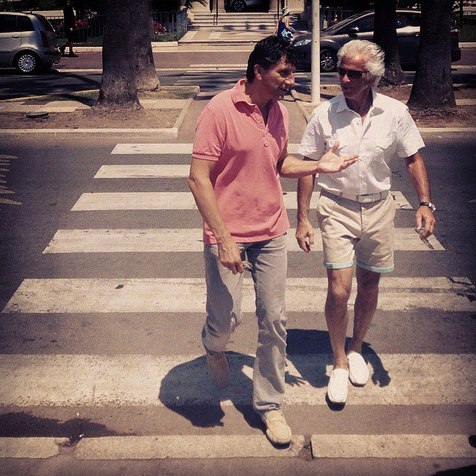
Me, I started taking photos of people this summer, which I've never done before.




-
Popular Dissing of PhilosophersI'm not sure I know of a solution — invizzy
The solution is to overcome your prejudices. -
Feature requestsThis is the proper thread for feature requests so I deleted your second comment.
Thanks for the feedback. I've added it to the list in the OP. -
Submit an article for publicationHi @Agustino
We'll be setting up a thread here on the forum for artistic work, and we don't intend to publish poems or stories on the Articles site, at least to begin with. Our vision is of a philosophical journal tackling issues in academic philosophy, but one that is accessible to educated lay-people and sometimes relevant to topical concerns. If we do decide to publish poetry or stories in the future it will be in the context of a site that has built up a solid archive of substantial philosophical articles.
As for length, between around 2000 and 5000 words is good, but that won't be strict: the first article, published two days ago, is over 6000 words, and I can imagine shorter pieces being sometimes suitable too. -
Missing features, bugs, questions about how to do stuffTwo others have mentioned this as well so I've added it to the feature requests here: http://thephilosophyforum.com/discussion/30/feature-requests/p1
Currently I can change other colours but not the main body background or side menu background. -
New article published: The Argument for Indirect RealismI'm not surprised someone pounced on the weakest sentence in the article, "If I think about my own perceptual experiences, it is obvious that...", which is unclear and inept.
But thanks for reading, TGW. These are penetrating criticisms that deserve to be addressed, so I'll try and respond in the coming days. Generally, I agree with much of what you say and think the article is consistent with it; our fundamental disagreement I think is less about direct/indirect and more about realism/anti-realism, if you see what I mean. -
Wiser Words Have Never Been SpokenIt seems to me that any philosophical position that must claim that eating a cookie is torture has gone wrong somewhere. — The Great Whatever
Who could argue? -
Monthly Readings: SuggestionsIf you want really short there's always Is Justified True Belief Knowledge by Gettier.
Or for something a little longer, What is it like to be a bat? by Nagel. — Michael
By the way, I didn't include these because I thought something longer and meatier would be more suitable. And my guess is most people have read the Nagel and could discuss it in any old thread. -
Monthly Readings: SuggestionsOoh, another one I think I'd like to read, and possibly discuss, at some point. — Sapientia
Personally that's the one that appeals to me least among those mentioned. But once we have a couple more suggestions, including one on ethics, I'll create a poll and if the people want Davidson, I'll read Davidson. -
Reading for October: The Extended MindI'd like to give some anecdotal evidence that for me lends weight to the thesis that the mind is not bound by the skin and skull. As some of you know, I broke my left arm two weeks ago. I'm right-handed so I haven't been as disabled as I could have been, but it's still been difficult, and in interesting ways.
The worst thing has been typing, because not only am I a web developer, but I've also been setting up and trying to participate in this new forum. It's difficult not merely in the physical sense, but in the way it seems to block my entire being-as-developer or being-as-writer. I open up a forum discussion with the intention of contributing, but I find I cannot think about it without my hands at the ready in the normal way. Similarly with my work, I can keep on top of the small everyday tasks that come up, but I cannot bring my self to bear on the meatier problems. I've got bugs to fix and new features to implement, but I can't get in the zone. When I'm in the zone I'm constantly switching between various windows and using special key strokes to manipulate code. My cognition, normally, seamlessly involves my brain, hands, keyboard, and the objects on my computer screen.
I can achieve these things, given time, but the extra effort degrades the quality of the work, I feel like I only have a superficial hold on the problem, and I feel like I'm not in control. More importantly, I most often struggle to get going in the first place.
It is not that I know what to do--have it all planned out "in my head"--and feel frustrated that my body is not in a fit state to cooperate. This is not how it is at all. I actually cannot plan or think well without my familiar powers of movement. When I'm in the zone, I pounce on the computer and throw myself into a problem, and these words are not merely metaphorical--there is a real sense in which I move physically, however slightly, in postures of attack or careful exploration (it's not just my hands).
All of which is not to say that I couldn't retrain myself were I to lose the use of my arm permanently. -
Monthly Readings: SuggestionsI like the look of the first two and the Brassier, and Quine's a good idea too.
-
Monthly Readings: SuggestionsIt might be good to offer some options in ethics and political philosophy too, because they're usually popular. Any ideas?
-
Reading for October: The Extended MindExcellent, very useful.
Andy Clark, one of the authors of the paper under discussion, may have finally caught on to Dewey's pioneering work by the time he came to write his 2010 book, Supersizing the Mind, which begins with a quotation:
Hands and feet, apparatus and appliances of all kinds are as much a part of it [thinking] as changes in the brain. Since these physical operations (including the cerebral events) and equipments are a part of thinking, thinking is mental, not because of a peculiar stuff which enters into it or of peculiar nonnatural activities which constitute it, but because of what physical acts and appliances do: the distinctive purpose for which they are employed and the distinctive results which they accomplish. — John Dewey, Essays in Experimental Logic -
Monthly Readings: SuggestionsI read about three quarters of the last one, and I found it quite boring. That's not so much a criticism as an admission that it just didn't appeal to me. — Sapientia
The Markus Gabriel one? I read some of it too and found it pretty interesting. -
How will this site attract new members?I understand the terminology PB. My use of the word "nonsense" was more expressive and emphatic than precise: I always found the plural usage unintuitive and grating, because for me, the web site was the forum, which happened to be divided into various subject areas. I'm not sure of the history of message boards, but I imagine that subject areas or categories came to be called "sub-forums" only because the original boards were modelled on the hierarchical file directory structure, where the whole forum is the parent node and child nodes are instances of the same kind of object.
Several terms still in use in the world of discussion forums (that is, web sites that host discussions) reflect how things were done in the early days, such as "thread". I'm happy to be moving away from many of the terminological and functional conventions of that software, because I think they can be alienating, distracting or needlessly obscure. That, at least, was my own experience.
This may just be a matter of taste. In any case, I did not mean to malign PF in particular. -
Missing features, bugs, questions about how to do stuffYes, on reflection you guys are probably right.
-
Reading for October: The Extended MindI quite like Kant on consciousness as well as on cognition, not only in the transcendental deduction—where consciousness is at the same time self-consciousness, the I think—but also in the refutation of idealism, where self-consciousness is made to utterly depend on the external world.
-
Wiser Words Have Never Been SpokenWould be interesting if some panpsychist wrote a first person story from the the POV of a rock. — Marchesk
What is it like to be a rock? Hard. -
Missing features, bugs, questions about how to do stuffYes, that option exists too, although it cannot be delayed. Admin approval for new signups combined with email confirmation should work pretty well I think.
-
Missing features, bugs, questions about how to do stuffI've posted a call for submissions in the new article submissions category. Accepted articles will be published at [EDIT: broken link removed], which is a blog.
Also.. If there was a place a person could drop ideas of articles they would like to read... that would be cool. Should I just make a thread: "Articles I'd like to see written."? or "Articles I would read." ? — Mongrel
Good idea. Go ahead and start a thread in the Article submissions category if you want to. -
Reading for October: The Extended MindAh yes, I just remembered I had a go at Experience and Nature a while back. It put me to sleep.
-
Reading for October: The Extended MindI agree Cicero. I'm curious to read Dewey on this sort of thing. Any recommendations?
Jamal
Start FollowingSend a Message
- Other sites we like
- Social media
- Terms of Service
- Sign In
- Created with PlushForums
- © 2026 The Philosophy Forum