
-
Things at the old place have changedI suppose the true test of one's principles would be when one holds to them even more tightly when it is quite obvious they are very much to one's disadvantage. — Mayor of Simpleton
Yes. -
Things at the old place have changedI think that was about me. They took a post of mine too seriously, deleted all trace of it and won't let me post in reply to any criticism of it. It was supposed to be a bit of light banter but I guess they didn't see it that way. Anyhow, I'm focused on here. We don't need any arguments with anyone at the other site. We just need to get on with what we're doing at this one. And of course anyone who wants to go back and forth is more than welcome here.
-
How will this site attract new members?The way we do it here seems more logical to me too. It's a forum with categories. Full stop. But, of course, each to their own and @Postmodern Beatnik's point about the importance of curating present membership is well taken anyhow.
-
Monthly Readings: SuggestionsThe Hacker one (despite the name!) already has my vote. Hopefully this time I'll have time to get involved.
-
Depression, and its philosophical implicationsThis is what I'm trying to get at. There seems to be a tension in your joint claims that the only thing worthwhile is pleasure and that ethics is objectively important. I don't think you've really resolved it with your last comment. But I'll have to think some more on the issue.
-
Depression, and its philosophical implicationsSo ethics is important/worthwhile in itself, right?
-
Depression, and its philosophical implicationsIs the question, why is ethics important? — The Great Whatever
Let's do that one too: Why is ethics important to you? The original question was: Why is talking about your philosophical worldview important to you? -
Policing on a good day.In short, yes. The easy thing to do is shoot. Just like the easy thing to do when someone less physically able than you threatens you is to knock them out. But I don't think we should be knocking off or out those who may very well be suffering from a transitory loss of control. I'd add the caveat that if the man in question was an immediate threat to anyone around him other than police, then that threat would have to be immediately neutralized, even if it meant shooting him. But conservative measures when it comes to the taking of life are surely what we want of our security forces.
-
Missing features, bugs, questions about how to do stuff...for now I reckon we shouldn't put barriers in front of people joining — shmik
Agreed. -
The compatibility between science and spiritualityWhy should science stop us cooing over the beauty of the universe? As far as I'm concerned, spirituality is a term that refers to a state that is as open to anyone of any belief system as awe and wonder are - and is closely related to both. So, it wouldn't matter if scientists came out and shouted from the rooftops "THERE IS NOTHING INNATELY IMPRESSIVE ABOUT THE UNIVERSE OR ANYTHING IN IT". Not to them and not to us. Nor should it. The emotional predisposition towards wonder and the sublime is not a slave to the rational mind or anything in it. (Do I need to put that in caps?)
-
Particularism and Practical reason@shmik I agree there is some tension in the notion of empathy as a ground for morality as empathy tends to dissipate in proportion to the distance of the other from the self, whether that be in physical, social, or cultural terms; and it would seem that any morality based on such arbitrary notions of proximity must fail. So, in that sense empathy or sympathy (the term I usually prefer to use because it more strongly connotes the will to help those in need) could get in the way of morality as much as further it. But I think the picture is more complicated than that. I don't agree, for example, with Bloom that being absent of empathy necessarily puts us in a better position to act morally. As long as we are aware of the distortive effects of empathy, we can override them, but that effort itself must be driven by a will to help, and that will to help tends still to be grounded in empathy or sympathy for others. Remove that and there is nothing but rational calculation, and that leaves morality at the mercy of the normative theory du jour. To mangle Kant (entschuldigung!), moral reasoning without sympathy is empty, sympathy without moral reasoning is blind.
-
Depression, and its philosophical implicationsI think it's important. — The Great Whatever
OK, so it's important why? What's the goal? Catharsis? Intellectual distraction? Or are you engaging in a kind of dark evangelism? Saving our souls by informing us of how worthless they are. I'm genuinely curious as to what motivates you. The depressed people I know aren't too bothered about spreading the bad news. They're more concerned about just being able to function. -
Depression, and its philosophical implications@The Great Whatever You've made 15 posts on this thread in the space of a day or so. This is clearly an issue you care about? Why?
-
Missing features, bugs, questions about how to do stuffYes, at the moment the advantage of relative search engine invisibility is that we hover under the radar of most spammers, trolls and other undesirables. Almost everyone here being an invitee, let us enjoy the exclusivity while it lasts.
-
The Future of the Human Race@Shmik I wonder about this proposed equivalence of fictional characters and future humans. Though I may care in some sense about fictional characters, I would feel no moral responsibility whatsoever in doing something to damage the prospects of a fictional character. For example, suggesting that a writer kill one off. I do on the other hand feel at least some moral responsibility for actions I take that may affect future generations. In that sense such individuals are more real to me. Or to put it another way, suppose someone said to you that you could do something to prevent some terrible outcome, such as a massive famine, afflicting future generations, would you not feel some moral responsibility to act that is distinct from anything you would feel about being asked to convince an author of fiction not to inflict a similar catastrophe on an imaginary population? In fact, isn't it quite normal and acceptable to wish for such disasters in fiction when they enliven the narrative? Whereas to wish for human disaster whether now or in the future seems perverse.
-
China's 13th 5 year planThe government's credibility and hold on power is inextricably linked to GDP growth, and not just the central government's but regional governments' and their leaders' too. If growth drops, heads will role. So, I would expect continuing attempts to transform China into a land of infantile consumers, afraid of any real engagement with life beyond the next episode of the local version of Eastenders, or news on the latest iphone release.
-
Particularism and Practical reasonThere is a sense in which the search for moral certainty through theory is as much an abdication of moral responsibility as an attempt to to fulfil it. So, I share the particularist's discomfort with attempts at universalizing moral principles. In fact, there's good evidence to show that this kind of universalizing is what the least moral among us fall back on to fill the vacuum of their moral character. I've just been listening to an interview with a researcher who questioned prisoners diagnosed with anti-social personality disorder on their moral beliefs, and their answers tended to be very much in line with rule-based systems of morality, i.e. you shouldn't steal, you shouldn't swear, you shouldn't kill etc., but with a striking lack of gradation as if the interviewees were reeling off a shopping list of moral requirements without really engaging with them because their sense of morality was based much more on their understanding of the dictats of authority than any personal sense of sympathy with the victims of the stated transgressions.
And I think sympathy must be at the core of morality, sympathy tempered by reason. You can't rely on reasons for action alone because then you are not really inhabiting morality as @StreetlightX suggested above. On the other hand of course, sympathy alone will not cut it because it may strip you of the moral courage to do the distasteful for greater ends (say in the case of a mother who has to strike her choking baby hard in order to dislodge a piece of food but can't bring herself to do it, or in more extreme cases where you might have to harm or even kill someone to save others).
So yes, I'm generally on board with the idea that morality is empty without recourse to particular contexts, but it's also empty unless grounded in a genuine engagement with the other at an emotional level. -
How will this site attract new members?By my count 64 people have joined the old PF in the last week. — Monitor
We're not in a competition with old PF over how many new members we each attract. That's a competition we can't, as of now, win. They have over 13 years of building up exposure. We've had a week. We are, however, in a competition with them about which of us is the best place to do quality philosophy. And that's a competition we can and will win. -
What is the expected formality on the new forum?@darthbarracuda While it's true that at the moment things may be a little more informal here, we don't want to make things less convenient just to force people to be more thoughtful with their posts. I personally appreciate the fact that I don't have to do all the loading and waiting I had to do at PF. So, the real issue is not the convenience of the forum but how people deal with it, and as it's all new here, I think there has to be some leeway given for posters to adjust to the format and settle in to a slower and more restrained way of negotiating it.
-
Welcome PF members!Got the vintage avatar up too. I remember that one. Welcome. :)
-
Welcome PF members!Hey un, that's bad news for the owners. But as I said before, they don't deserve your help. Your years of work will always stand to you anyway, mate. Everyone here knows the contribution you made.
-
Should fines be levied in proportion to an offenders income?It's already being done in Europe. For example. Anyway, the answer is of course they should. If the only penalty for a particular infraction is a fine, and the fine is not proportional to income then it's no deterrent for those with sufficiently large incomes.
-
Welcome PF members!I think you're reading too much into Benkei's comment. Everyone is welcome here regardless of where else they post. What we care about here is the quality of input. Everything else is irrelevant.
-
How will this site attract new members?I have just now resigned my admin/mod post at old PF and will be concentrating 100% of my efforts on making this site work.
-
How will this site attract new members?It seems to me this new site would do well to keep things small and quality-focused. Why do we need to push for new members if all our favourites are here already? I haven't posted on PF a lot for several years, largely for the reasons Paul mentions. Sure, we might get accused of being elitists, but which philosophers haven't? — coolazice
I think if we grow, it needs to be a slow and sustainable growth. There's no point us paying for space if that's being filled up with low quality posts by low quality posters, which will drive away some of our good posters. On the other hand, we do need new members to keep things fresh. All of us were new members once, right? Anyway, great to see you here coolazice. It was a loss when you left old PF. -
How will this site attract new members?
Nobody who has criticized Porat has done anything wrong @Paul. And I'll say it again here: He is a potential criminal and the warnings about passwords should still be up on PF. That's not libel or slander or even an unjustified appraisal of the situation. It's a recommendation of a common-sense safety measure. I don't think Paul was threatening you though Mongrel. And he is putting pressure on Porat to be more open. Personally, I will never trust the new owner and I think it's a travesty he's in charge of PF. But I think the best thing to do is to move on and forget about him. It's a polarizing issue and there's not much point us arguing about him here anymore. -
Icon for the Site?Anyway, when we do decide on something, I'll be happy to Photoshop it a bit before sticking it up (at least partly because we don't want to get sued for copyright infringement).
-
New Owner Announcement at PFBut he feels he's being slandered. Will have to wait and see if he can be convinced to address his past productively. — Paul
He's not being slandered. He already admitted in the ShoutBox he was the same Eric Porat as the one in the Digital River incident. He then deleted that shout along with several others.
As I said in the mod forum, if he keeps this level of censorship up, he should be consistent and change the guidelines. Although you may be right and he may be smart enough to back off. -
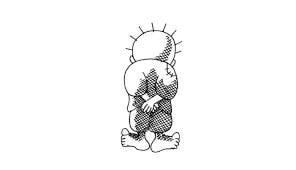
Icon for the Site?

Maybe along these lines. I'd go for something simple and modern anyway. No Greeks.
Baden
Start FollowingSend a Message
- Other sites we like
- Social media
- Terms of Service
- Sign In
- Created with PlushForums
- © 2026 The Philosophy Forum