
-
Free Speech and Twitterdon't know if anyone has been paying attention, but the collusion between government and big tech that Musk has exposed via his takeover of Twitter is hard proof of the complete failure of the entire western governmental structure (which is by and large based on and led by the United States's governmental structure). — Tzeentch
From what I've heard, although the proof is hardly fully assessed, is it is alleged the Democratic National Committee and the Biden campaign were able to have tweets removed critical of Biden. Both these organizations are non-governmental and neither were in power at the time of events.
It seems, if true, the best you can say is that Twitter aligned itself with the Democrats, acted as an anti-government (i.e. anti-Trump) agent, and suppressed negative Biden comments and tried to get Biden elected.
So, if true, we now know that Twitter was not a reliable news source. Shocking. Do you now suggest we mandate journalistic ethical standards upon all media outlets to be sure all reporting be fair and balanced? Do we shut down media outlets that fail to meet our prescribed journalistic standards?
If a "free" press means an unregulated one, then we can't cry foul when it freely chooses to publish nonsense, incorrect information, hate, propganda, or only articles the owner happens to agree with.
That is freedom. You can't complain about a corrupt Twitter if that was what the Twitter owners freely chose. -
Free Speech and TwitterTwitter has banned Ye for incitement to violence, which is the common death knell for free speech. So much for free speech absolutism. — NOS4A2
Yes, but this is a misstatement by Musk, and intentionally so. It is a misuse of rhetoric in order to sustain his unsustainable position he is a free speech absolutist.
Within American jurisprudence we have set an extreme limit on free speech, and it is the incitement to violence standard, so Musk invokes that language to censor under the guise he's different from his predecessor in his brand of limited censorship. He's just a American with fundamental American standards.
But you must wonder then why Kanye hasn't been arrested if his speech is akin to screaming fire when there is no fire. The reason is simple. Musk's standard avoids the critical word within American law of "imminent," meaning only speech which might evoke imminent (i.e. immediate, clear and present and the like) danger is illegal. It's the not subtle distinction between rousing those with pitchforks to here and now assault the Capitol building versus complaining in public about the stolen election.
Under Musk's revised standard, all who hold any view that will offend large market shares can be censored.
That is not free speech. That's the free market speaking. Musk has committed himself to the proposition only that he will publish that which gets him the most customers. He's well aware that catering to racists and anti-Semites isn't the path to that.
Irony of ironies. The rules of basic human decency are being protected by corporate America to protect market share under the pretense that American Constitutional standards demand such.
As perverse as it is, I guess the right result was reached. Ye's drivel has been swept into the dustbin. -
What does "irony" mean?A valuable and erudite addition to our proceedings, ↪Hanover... :brow:
(The emoji is for our American friends). — Banno
I'd categorize this as somewhere between playful and derisive, as you are aware of my lack of seriousness, but you probably do have some level of feeling actual Aussie superiority. Based upon that, I can't call it ironic. If it were ironic, that would indeed be ironic, as we'd have never expected a non-Jew to be ironic to a Jewish person.
Another word beyond irony, sarcastic, sardonic, and derisive we might all consider is "ornery." That's more a general description of the general disposition of old men that comes out in their humor, which often times isn't meant so much to be funny, but it is.
And to add to the never ending pile of terms here, that is what I call self-deprecation, with a misplaced sense of self-awareness, which makes it funny in a different kind of way, like "why would you be ornery if you know you're being ornery"? It's a good question, but it's a thing. I'd call that observational humor maybe, invoking Seinfeld. another member of the tribe. -
What does "irony" mean?So you are of the Alanis Morissette school on this topic. — Banno
I'd have to go back and study the litany of complaints itemized in her song, but I believe mine is different. She describes various things that suck, like winning the lottery and dying soon thereafter. It is not expected that one might live any more or less based upon a lottery win, but it is expected that the fire house is the least likely place to burn to the ground. It is the unexpected event that makes that ironic.
To the extent the concept of irony eludes you, that simply proves @Tom Storm's well researched theory that irony comprehension remains a mystery to the gentiles.
And that comment is sarcastic, and intended to be playful, not meant as an actual cut on Tom's theory, as that would be sardonic, a new concept now for consideration. -
What does "irony" mean?I was taught (falsely perhaps) that in America the only people to understand irony and use it well in humour and art are the Jews. — Tom Storm
What you say is true, which is yet another reason why my presence on this board is critical.
That is sarcasm, not irony by the way. That's something else my people excel at.
Should the fire station burn to the ground, that is ironic.
If one's iron wrinkles one's pants, that is irony about an iron, which is not only ironic, but a pun, and it's even a dad joke.
I'll be here all night. Please tip your waitresses. -
Free Speech and TwitterPeople will receive the information and run with it however they will, and according to their own will and volition. That’s why he who dispenses such information cannot be blamed for how others act upon it. — NOS4A2
You mix an empirical claim with a moral claim. Whether shutting down Trump reduces the influence of Trump is an empirical question, and the data indicates it does: https://www.vox.com/recode/22421396/donald-trump-social-media-ban-facebook-twitter-decrease-drop-impact-youtube.
Whether Trump is morally responsible for the bad choices people make based upon the encouragement they receive from Trump is a different matter. I blame the person for their bad choice. I blame Trump for encouraging bad behavior, but not for the choice the person made based upon that encouragement.
That is, if I encourage you to steal and you do, I'm not a thief, but I'm also not a terribly moral person either. -
Free Speech and TwitterSo it cannot be said that he is fuelling belief in false information by making such claims, at least until he explicitly asks people to believe such false information. — NOS4A2
It can be said he is fueling those with conspiratorial mindsets, just not causing them. -
Free Speech and TwitterNo, it's just self-promotion, which is the driver of all social media. He's trying to show that his new branded version is better than the old, so everyone should come back and see what he's got in store. PT Barnum is waving people in to see the show.
If it is his intent to bring down the barriers that would assure meaningfully reliable tweets, then all I should expect to see is more unreliable information coming from Twitter.
The link between the use of social media and the acceptance of misinformation as valid and a belief in conspiracy theories is fairly well established. https://link.springer.com/article/10.1007/s11109-021-09734-6 What this means is that in his quest to promote free speech for the sake of free speech, he's just fueling belief in false information.
My expectation from all of this is that it will only breed greater polarization from those who demand evidence based information from those who are more willing to accept conspiratorial theories. Not that I ever actually logged into Twitter, nor that I have actually tweeted, but the prospects of that ever occurring have in any event fallen. -
Free Speech and TwitterI assume you live in the United States, so are you unaware of what for example the CIA gets up to? Those things are all publicly available. — Tzeentch
My position is that if there is insufficient evidence to support a theory other than that there might be a motive by some people to commit a certain act, the theory fails for lack of evidence.
That there are instances where there is adequate evidence to support the allegation, then that is not a conspiracy theory. I'm not interested in sorting out particular examples where there is adequate evidence and those where there is not.
My comment was specifically directed at stating that where a conspiracy theory has been alleged and there is not sufficient evidence that the underlying act occurred, it is appropriate to call out the the theory as a conspiracy theory in order to undermine the credibility of the speaker. -
Free Speech and TwitterCritical voices are denounced under the umbrella term "conspiracy theorist" to undermine their credibility and keep them from reaching large crowds, etc. — Tzeentch
Such is a conspiracy theory in itself.
I take a conspiracy theory to be a theory based upon perceived self-serving or malicious motives by the actor without evidentiary support, which I think are properly called out due to their lack of credibility. -
Free Speech and TwitterThe problem is that if I cannot communicate to others in a democracy, that is an absolute. I cannot do it. Propaganda is not an absolute. One person's propaganda is another's truth. So whilst both might be poisons, one is readily identifiable, the other not. There's the problem of censorship. — Isaac
I don't agree with this because that assumes anyone was arguing for complete control of the media by a regulatory body. If you look at the FCC site I cited to in response to T Clark below, you'll see that it is possible to provide limited regulation as opposed to complete regulation. My assumption is that even in China where the state has lesser respect for free speech rights, the general public is still afforded some rights to speech.It's the assignation of power to an institution to determine what is discussed in the public sphere. — Isaac
But we're creating a false history in assuming that free speech ever really existed without institutional regulation. The government/private enterprise distinction is an important one, but it's also an idiosyncratic one in current Western nations. That is, it might not be readily apparent to someone from Mars not steeped in contemporary politics as to why we think it so objectionable when the government regulates what we say as opposed to when corporations control what we say. As noted in the OP, there was a time when there were relatively few mass media outlets, who, by agreement, regulated the press based upon some ethical rules they agreed upon. We were operating at that time under a strict regulatory scheme, but no one sees it that way because we refuse to view it as censorship because it was by private enterprise.
And really that's precisely the only control we have right now to runaway offensive speech. Kanye can't engage in anti-Semitic talk not because the US government can stop him, but because Adidas executives won't allow it. That we're satisfied with Adidas censorship but not Congress censorship is an interesting sociological fact. It's why I'm concerned about Musk. Maybe he'll not be as good a censor as my favorite shoe manufacturer.
As noted below in my cite to German anti-censorship laws, they have taken a different approach, largely because their history demands it. They have lost trust in the populist movement in bringing forth positive change for obvious reasons.Unsurprisingly (given we've been around as civilisations for thousands of years) we've already come up with a reasonable compromise. We have a system of separate arenas of discourse which have objective criteria for entry (as objective as possible, anyway). — Isaac
Sort of because Twitter is new and the cost of entry is very low, as compared to how difficult it was when I was younger to get my letter to the editor published about whatever nonsense bothered me at the time.It has to do with governments and corporations wanting to undermine the one we had because it didn't suit their purposes, and a public backlash against that move. — Isaac
It was Trump who was posting, which means it was the government doing the posting complaining about the non-government regulating him, and also claiming the government lacked the right to regulate the government, if you follow that confusing road.It's the government's attempts to ban those who are 'off message' that's brought about this faux searching around for how to manage 'disinformation'. How to manage 'disinformation' is bloody obvious. If you're qualified to speak in that arena, speak. If not, don't. It's worked reasonably well for hundreds of years. It only stopped working because the government and their corporate sponsors wanted to push a particular message and they didn't want any inconvenient experts disagreeing with them. — Isaac
You make an odd turn at the end of this paragraph. You start by making what I take to be an incorrect statement that the government regulated anti-trans speech (which it did not), but then you equate corporations to the government. If you're going to blur the distinction between private and government, then you're going to impose a duty on private outlets (like Twitter and I guess this site) to publish everything and eliminate moderation.
People also speak without knowing what they're talking about all the time. I assume that's always been the case.Basically, we already had a system in place. We don't need to 'find' one. We need to stop interfering with the existing one for political and corporate gain. — Isaac
The system in place is whatever arbitrary set of rules the owner places upon the outlet, usually designed around maximizing profitability. Are you aware of a different system? -
Free Speech and TwitterLegally (last I checked) if I wanted to I could create a self-hosted private website or blog stating that I dislike "X people" and think they do not deserve to exist. — Outlander
It's difficult to know where to draw lines. We fortunately (right now) have sufficient social controls to regulate openly racist commentary, meaning we eliminate those from the marketplace just from their being so socially unacceptable that few are willing to interact with them
The problem as I see it relates to the misinformation, which (the more I think about it) invokes the conflict between censorship of ideas and control of propaganda. That is, should Trump declare the election invalid, that is a specific government official (the President no less) making a claim about the legitimacy of the current government and his right to otherwise be in control. Do we just accept the fact that propaganda is an evil that can be controlled by open discourse and passively expect it to whither away, or do we have a more affirmative duty to control it?
I'd also add that not all Western countries permit openly racist comments to be made. As in the example of Germany, they have very strict laws related to holocaust denying and hate speech. Obviously they are a nation that almost destroyed itself from such speech, and they have an interest in protecting against it recurring. https://www.pbs.org/wgbh/frontline/article/germanys-laws-antisemitic-hate-speech-nazi-propaganda-holocaust-denial/ -
Free Speech and Twitter. I've heard that there is some talk about treating them as public utilities like the phone, electric power, gas, water, and sewer utilities. — T Clark
The FCC already maintains some regulatory control over the airwaves because it considers them public property, but, even then it is very limited.
"Congress through Section 326 of the Communications Act, 47 U.S.C. § 326, explicitly declared that nothing in the statute
'shall be understood or construed to give the Commission the power of censorship over the [broadcast] communications or signals transmitted by any [broadcast] station, and no regulation or condition shall be promulgated or fixed by the Commission which shall interfere with the right of free speech by means of [over-the-air] broadcast communication.'
The FCC does impose certain restraints and obligations on broadcasters. Speech regulations are confined to specific topics, which usually have been identified by Congress through legislation or adopted by the FCC through full notice-and-comment rulemaking or adjudicatory proceedings. These topics include:
indecency,
obscenity,
sponsorship identification,
conduct of on-air contests,
hoaxes,
commercial content in children's TV programming,
broadcast news distortion,
accessibility to emergency information on television, and
inappropriate use of Emergency Alert System warning tones for entertainment or other non-emergency purposes."
https://www.fcc.gov/consumers/guides/fcc-and-speech
We might assume Congress limited the application of the Act so as to not run afoul of the 1st Amendment, and it's likely Congress didn't want to provide the FCC greater power because generally speaking the public wants expansive free speech rights. -
The ineffableThis ties in with what Hanover pointed out in his thread on freedom of speech. Moses and God fiercely punish Hebrews for exercising religious freedom and freedom of speech. Moses has to control the narrative for the sake of the survival his adopted culture. — frank
Actually, what makes the Hebrew Bible unusual is that argument with God is acceptable and even shown to be effective. Two prime examples are Genesis 18:16 to 33 when Abraham pleas for God to spare the inhabitants of Sodom and Gemmorah (he fails) and Exodus 32:9 to 14 when Moses pleas for God to spare the Hebrews from total destruction from building the golden calf (he succeeds).
And let us not forget Jacob's fight with the angel in Genesis 32:28 to 29. It was there he was renamed "Israel," which literally means to have fought with God and prevailed.
But I do agree, God doesn't permit the worship of idols or having other gods before him, both being violations of the 10 commandments. -
Free Speech and TwitterHe knew a little about it, having lived under a Nazi publication ban. “Censorship doesn’t make anything better. — NOS4A2
The Nazis were better known for Goebbels and the use of the media for propoganda. Why do you prefer the free exercise of propoganda by government actors and supporters over its regulation?
Why is one poison preferable over the other? -
Free Speech and TwitterCan we really evaluate intention so easily as to actually say that with any confidence? Musk would have Twitter open to anyone. He might remove the restrictions, but I don't see how that equates to giving power to anyone in particular, even if the worst oftentimes rises to the surface. It is not so predictable who will be heard over the din, and intent is not always apparent. — ToothyMaw
I suppose we'll wait and see, and maybe he'll censor reasonably. I only know he proclaimed himself a free speech absolutist and reopened previously closed accounts. -
Free Speech and TwitterThe alternative is to put the power to limit free speech in undeserving hands - those of the government. And rights were enshrined into constitutions and human rights declarations exactly because governments could not be trusted with protecting them — Tzeentch
Government censorship is an evil to be sure, but so is government propoganda. Should Trump or Biden or their minions post false information, is that not propoganda? -
Free Speech and TwitterAnd he would be right. So who else would be given that power? Which ever way you wish to go about limiting free speech, the cure is worse than the disease. — Tzeentch
I'd prefer the now antiquated concept of self regulation, where news outlets adhere to journalistic standards. That used to be a thing. -
Free Speech and Twittersay this because only through censorship can you eliminate the kinds of speech you do not like, and enforce the ones you do. — NOS4A2
There is always censorship do to lack of resources, meaning those who publish do so only after securing the means to publish from those owning the means of publication. Musk is the censor, and should he allow greater exposure to those based upon the interest they garner, then his standard of censorship is based upon popularity. As I would suggest, since resources are limited, publication should be based upon standards aimed at presenting truth, as opposed to the arbitrary standard of who can yell loudest. Those standards were itemized in my post.
The idea that my voice is heard at the level of Trump's is false, which has nothing to do with free speech. It has to do with supply and demand. If speech ought be free on the basis of it being a market commodity I can offer as I choose, that is a far different basis than what Mill suggested for why speech ought be unregulated. That has nothing to do with elevating intellectual discourse, but has to do with a libertarian market view. -
Some Moral Claims Could be CorrectIf people I care about are hurt, what difference does it make whether it was something evil or just unfortunate? — T Clark
So a car slides off the road and injures the passenger, the cause being low tire tread, a truly unfortunate event.
A mile away a speeding drunk driver injures another passenger to the same extent.
Do you not see how the first instance will not be reduced from societal anger and outrage but the second will? -
The ineffableI'm going to midrash traffic signs. For real. — frank
Hopefully oncoming traffic will interpret the same way you do. -
Some Moral Claims Could be CorrectI don't have any criticism of people who judge and condemn those who have harmed them. I just don't think it does anything productive beyond helping them deal with the situation emotionally. — T Clark
You jettison emotion as if it were not a critical component here. Emotion is is that which moves and motivates, the word itself referencing motion. That is to say, if you don't care, you won't do anything about it. It's not about offering a therapeutic remedy to the traumatized. It's about expressing outrage at the outrageous in order to bring about change.
If we are speaking of therapeutic responses to victimization, I'd suggest forgiveness over bitterness and anger. -
The ineffableI hadn't heard of midrash. Can you midrash anything? Or does it have to be scripture? — frank
It relates to scripture, but you can use the term sarcastically when someone is going to great lengths to make sense of something that doesn't make a whole lot of sense, especially when they've begun with the assumption that what they're interpreting must be really important and impregnated with all sorts of hidden meaning when really maybe it's just fragmented slop.
That's at least how I just used it. -
The ineffableI think that's your own personal Wittgenstein. — frank
Like much of Wittgenstein, it's ineffable, understandable only through midrash. -
Some Moral Claims Could be CorrectFor me, the purpose of social control; including enforcement of rules, laws, customs, and etiquette; is to prevent people from causing avoidable and undeserved harm and seeing to it they face the consequences of their actions. If you want to call social control "morality," that's fine, but making moral judgements about people isn't an effective way to protect others. That's the important point for me - moral judgement leads to ineffective social control. Is righteousness and retribution more important to you than a peaceful, safe society? Not for me. — T Clark
Moral condemnation versus punishments aimed a deterring future antisocial behavior are not mutually exclusive. That is, it is possible that the condemnation will result in deterrence and it is also possible that we can both morally condemn and additionally offer pragmatic solutions to deter the behavior.
If we do believe certain acts are immoral (and you indicate you do, in particular those that do not lead to a safe peaceful society), I don't see why it would be inappropriate to call it immoral, condemn it, and declare it bad if it in fact is. From there, I would agree, we now need to decide how to resolve the issue, but I don't see why identifying it and calling it what it is is a incorrect first step. -
Some Moral Claims Could be CorrectJonathan Haidt argues that our moral values are the product of inborn evolutionary adaptations. He lists the following 5 innate moral foundations:
Care/harm
Fairness/cheating
Loyalty/betrayal
Authority/subversion
Sanctity/degradation — Joshs
I'd have to go back and re-read it, but I didn't consider the significance of Haidt's book to be so much as providing evidence of the source of our moral value systems, but more in trying to understand why there was such a divide between the political right and the political left. He identified drivers for each side in what they considered important in determining right from wrong, and hypothesized the foundational basis of those disagreements. That is, the right holds certain things to be more important than the left (and vice versa), and therefore the disagreement.
It would seem to be a truism to argue that any human trait arose from evolution, given the theory of evolution posits all traits arose from evolution. -
Some Moral Claims Could be CorrectWe have no choice but to be pragmatic - for me humans create morality to facilitate social cooperation in order to achieve our preferred forms of order. — Tom Storm
If the subjugation of a minority resulted in a preferred form of order, would you declare it moral?
If, on the other hand, you under-analyzed this question, and the achievement of a "preferred order" is not the ultimate objective, but it is instead X (whatever that might be), is not X the holy law of morality which you seem to deny existing?
That is, we seem to have 2 options here: (1) admit to no true morality, but to just a code of etiquette unique to our fleeting time and place, or (2) proclaim there is a true morality, elusive to our exact detection as it might be, that applies always and to all.
#1 denies us the right to condemn the seemingly atrocious, but demands we just recognize that some play by different rules than us. Where we draw our boundaries creates further ambiguity in that it's hard to know who I have the right to claim must play by my rules and who gets the pass to do as he chooses.
#2 invokes a transcendent good, which is a difficult leap for those mired in naturalistic and scientific worldviews.
I prefer to say that rape in wrong, regardless of whether it advances or falls to advance some social objective. I also unapologetically judge the rapist, and find those who fail to offer their condemning judgment immoral themselves. The sort of immorality that arises from those who refuse to judge from a sense of misplaced empathy or tortured intellectual nuance is some of the least admiral behavior we endure. There are perhaps some so unsophisticated and limited that they might be excused for not recognizing evil among us, but there is no excuse for those who have actively suppressed their intellectual and moral abilities to allow that which shouldn't be allowed. -
Do Antinatalists Celebrate Thanksgiving? If So, How?So what's the point of your comment? Comedic effect? — schopenhauer1
That antinatalism doesn't entail pessimism or thanklessness. -
Do Antinatalists Celebrate Thanksgiving? If So, How?If procreation is impermissible, as it appears to be according to antinatalism, why should those impermissibly procreated celebrate, or give thanks for, that which occurs to them and others impermissibly procreated? — Ciceronianus
Perhaps they celebrate their gains should they see more people converting to their cause. They are not necessarily atheist, so perhaps they thank their heavenly father for each person who swears off procreation.
It would not be the stupidest religion out there, and it might just provide our sullen antinatalists with feelings of awe and inspiration. -
The 2020 PhilPapers Survey
-
The philosophy of anarchyIf any of you subscribe to the belief that copying data is a holy act, you might want to consider joining the Kopimist Church. As far as religions go, it's not the stupidest one.
https://en.wikipedia.org/wiki/Missionary_Church_of_Kopimism -
US Midterms
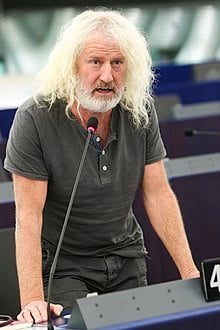
I know nothing of him, but he's said to be a bit nuts, so I'd vote for him assuming he can run with a football. -
US Midterms, in the video Herp-a-durp stepped on another dude's head and that counts `as a score, I get it. As for the connection to politics, is this how you decide which laws get passed in 'Murica? Party members step on each other's heads and those with the least brain damage get to make the laws? ...Plausible — Baden
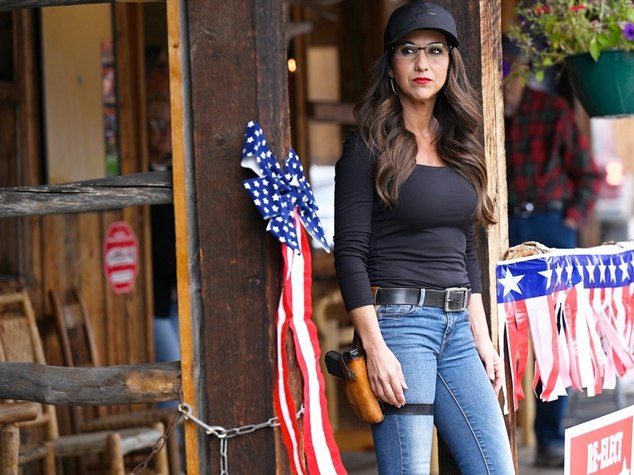
Now you've put me on a mission to find a crazy Irish politician so I can retaliate and divert. Let me get to Googling and I'll be back in a few. -
The ineffableYou and Banno appear to advocate that some knowledge/information is missing unless one undergoes the experience for themselves. As I see it, that is not a rejection of the ineffable, but an endorsement. — Luke
Exactly.
As I noted in a prior comment, the concession that the experience is not wholly conveyable in language concedes (1) that experiences are divisible into qualia, where some portions of the experience are conveyable and some not, and (2) that language is an interpretative act, offering a generalized glimpse into the experience, but not equivalent to it.
As to #1, I think it actually goes beyond that because if we can't accurately convey parts A, B, and C of an experience, I see no reason why we should think we could accurately convey D, E, or F, meaning the entire experience and all experiences are ineffable. If there are portions of the experience that are capable of being perfectly conveyed, I'd like to know what those portions are and why. It sounds like we're about to go down a Lockeian sort of division of the mental world, where there are primary qualities of mental events that can reduced perfectly to language and secondary sorts of ones that cannot. Sounds like a failed enterprise of trying to draw false distinctions. Where we'll end up is that all is ineffable or all is fully describable. It's equivalent to the direct realism versus indirect realism debate. Either we see all the world just as it is or none of it.
As to #2, if we start claiming distinctions between what we experience and what we talk about, we're in the murky world of metaphysics that I thought Wittgenstein was trying to avoid. That is, we're back to dealing with what there is versus what we can speak of, and if it appears that all experiences are ineffable (per #1), then we must remain silent about everything (a pleasant thought). -
US MidtermsWalker is from my alma mater — jgill
A long line of Hanovers went to UGA. One's now in Colorado. Son, is that you? -
US MidtermsLeaving that aside, the guy seems to be a scumbag from just about every angle. If you do vote for him, for the love of Yahweh at least have the decency to lie about it afterwards. — Baden
Herschel was a hell of a running back, which usually translates into an equally amazing upper legislative chamber member.
BTW them Dawgs is #1 right now, probably will win the national title. Coinkidink? I think not. -
US MidtermsI read your post by skimming down the middle of it, so if I say something that doesn't really respond to it, it has to do with my reading style.
I think the win for Trump here is that with a Republican majority in the House, the investigative committee against him will be disbanded and then they can go about the important business of investigating Hunter Biden's computer or some such shit.
Trump rules from fear, which he uses only against his own party to keep them from challenging him, leaving a bunch of battered opponents waiting for the chance to destroy him once he's been weakened, which seems to be about now.
I need to go vote in a few days. It's between Warnock and Walker. It's a difficult choice. I sort of like the idea of a pro-life candidate who has paid for a few of his girlfriends' abortions. Something just rings true about that.
Hanover
Start FollowingSend a Message
- Other sites we like
- Social media
- Terms of Service
- Sign In
- Created with PlushForums
- © 2026 The Philosophy Forum