
-
Iraq war (2003)
One thug doesn't simply make a bomb.The real threat of Saddam getting a nuclear weapon was his living existence. — Hippyhead
Just look at Ghaddafi: his nuclear ambitions went nowhere, where a laughable joke. And after 1998 so was with Saddam Hussein. His only ability and the thing that invested 100% of his dedication was to stay in power. He couldn't rebuild his army, so he surely could not rebuild a nuclear bomb. This is a very, very unrealistic argument, which history can easily show not to be true.
Look,And then everyone in the region would want their own nukes. A nuclear war in the Middle East could erase the entire region off the map in literally just a few minutes, and could quite credibly suck all the major powers in to a Biblical scale end times scenario. — Hippyhead
The reason why these countries wanted a nuclear was only to have deterrence against the Israeli nuclear deterrence. The simple fact is that when one side has the nuke and the other side hasn't, then the nuclear armed power can do whatever it wants. Your simply not reasoning the facts here.
And how would they suck all powers to a Biblical end times scenario? You think the Chinese or the Russians will say: "Oh, there having a nuclear exchange in the Middle East, we have to launch our own nuclear deterrence on...somebody?" No. Likely they would demand an immediate halt to the battle just like every other country in the World (except perhaps the US, because the White House has to think about all those Evangelicals and how they will vote in the next elections, because those loonies would be absolutely thrilled about the end times finally coming). -
The Global Economy: What Next?
I get your point. But society doesn't work that way, literally. That accounting you talk about is far more important than you think. Work is important for many people. Starting from things like self respect and mental health.People got to eat. Most people these days are totally unproductive. They cut hair and play football. So if all those people stop work, hair gets longer and grass gets longer. And that's it. All the rest is just accounting for the food that they are going to eat in either case; there is no real difference. — unenlightened
We do value work, be it a "productive" or "unproductive", which by your definition is quite a loose definition. And is it wrong to value work. -
Iraq war (2003)
Sorry, but there simply is no fucking 911 to call for a police in this World when it comes to sovereign states. It's anarchy out their.If Saddam moved in next door to you and you started to hear screams coming from the house, would you call the police or not? It's a yes or no question, because you would either pick up the phone and dial 911, or you would sit there listening to the screams. One, or the other. No amount of sophisticated fancy talk liberates us from the yes/no nature of that choice. — Hippyhead
Starts a war that in the end helps Iran.Bush invades Iraq, improving the situation. — Hippyhead
Does not intervene in an ongoing civil war.Obama does nothing in Syria, opening the door to chaos. — Hippyhead
Spot any difference? -
Iraq war (2003)
Actually, we know now that Operation Desert Fox in 1998 destroyed the last remnants of Saddam Hussein's WMD projects. The real threat of Hussein getting a nuclear weapon was before the invasion of Kuwait and Desert Storm. Then in 1998 it was just a sham that Hussein himself kept up for appearances. Afterwards, totally nonexistent. And actually the UN observers noted this already before the 2003, but who would listen to them. Nope, it was "yellow cake from Niger".The entire Middle East would probably now be engaged in a frantic nuclear arms race.
The hyper sloppy logic of the war's critics is that they never compare the invasion to what the reality would have been without the invasion. — Hippyhead
Likely the Arab Spring would have hit hard a Saddam's Iraq and likely it would have gone the way of Syria/Libya.
Yet what you are forgetting that the US would be in a total different light in the Arab world. We simply would have had the media concentrating on the war in Afghanistan. Even if it was Gore that had become President, the US surely would have gone there and got it's next Vietnam. -
Iraq war (2003)
Just think about why that projection is difficult:If Australia had a cruel dictator, I think 99% of Australians would be against him too. I projected Australia onto Iraq. — Paul Edwards
- British conquered the area of Iraq in WW1 from the Ottoman Empire and it's the British who set up present Iraq, which had divisions to Shias and Sunnis and also ethnic division including Arabs, Kurds, Turkmen, Assyrians, Yazidis, Shabakis, Armenians, Mandaeans, Circassians, Sabians and Kawliya put together in a totally arbitrary way. Iraq had it's first elections in 1925, but free elections (that we take as granted in a genuine democracy) basically happened in January 2005.
- The Australian continent was colonized solely by the British first by penal colonies bringing with them British institutions (jurisdiction, politics, etc.) and European style government since 1788. Hence Australia has a long history of democracy. Universal male suffrage Australia has had since 1850's and womens suffrage in 1903.
Just stop and think of the totality of the difference between the two countries and in the history of law and democracy. You are simply totally disregarding how much difference there is and this has an enormous effect on how politics is managed in these two countries.
And ask yourself, why is that?Note that I saw an Iraqi opinion poll where Saddam was only viewed favorably by 5% of the population. That shows that 5% with automatic weapons are able to suppress 95%. I believed, and still believe, that with automatic weapons and a properly organized security force, it is possible to subjugate 99% of the population. — Paul Edwards
It really would very naive to think that it's just threat of violence. It simply isn't. Yes, Saddam Hussein built his system based on fear and intimidation, just like Stalin, BUT there is a huge issue you totally forget. Just how did his terror apparatus stay intact? With Stalin he was a firm believer in communism and so were those NKVD troops that did the purges. In Hussein's case, as he was a genuine thug, it is the totally broken character of Iraq itself that truly gave him the power. Iraq was simply ungovernable before. The (British made) monarchy couldn't handle it. The Kurdish uprising against Iraq had flare up in 1918 right continued ALL THE TIME during Iraq being independent. And Husseins worst atrocities happened in the Al Anfal campaign against the Kurds. The basic fact is that this artificial British creation called Iraq has been so ungovernable, that the outcome has been that a brutal dictator kept it from falling apart.
Dictatorship don't happen from out the blue. There is a reason why the political process falls into the level of organized crime. Those reasons are found in the society and it's history.
Then just to waltz in, take control of a country through a military occupation and demand a highly function democracy where there hasn't been any, when the various population groups have suffered genocide done by the others and want their own country and independence, is simply condescending Western hubris that basically is totally indifferent to the reality in the country. It is simply just smug self posturing likely to hide other objectives. Or hubris. Democracy is not an app you can start using: there are demands that a society needs to have starting from social cohesion and national unity. -
The Global Economy: What Next?
Uhhh...you STILL do have all the expenses, don't forget them. All the unemployment benefits, all the bailouts and funding have to be covered. TRILLIONS of dollars pushed just into the US economy after Covid-19 hit. Yes, spending trillions with a t in one year does have an effect.See I don't believe this. Lockdown demonstrates that we can live without most of the services and with 50% unemployment. If we can live without them, we can afford to live without them. — unenlightened

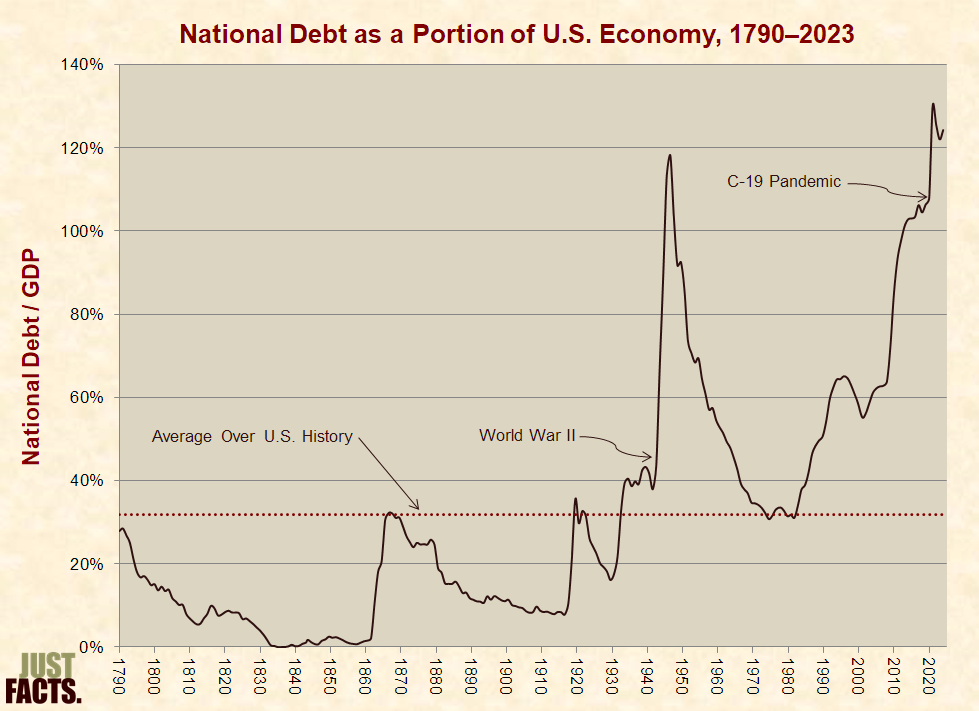
In fact, so why pay taxes at all? Why just take care of all government expenses by covering it all in new debt that the central bank then buys. At least, oh, until the pandemic goes away. If you think it will cause inflation, think again! Learn the marvels of modern monetary theory (MMT), which leave me a bit puzzled.
I think it would be important to debate MMT in this forum. I'm surprised as that there are many who supported Bernie here and not much is said about MMT. -
Iraq war (2003)Am I missing something? — Paul Edwards
Yes.
How can you think that 99% of the Iraqi people thought that Saddam Hussein as abhorrent and be surprised that only 50%(which percentage I think would be likely more) saw him as that?
If he REALLY would be despised by 99% of the population, then he surely would have fallen instantly, because the Iraqi Army and the security apparatus (and their families) were far more than 1% of the population. Every dictator has his support. Once there isn't any, then everybody in the regime will run for the doors, likely the dictators in the front.
You genuinely have to inform yourself of the situation in a country. Listing the massacres, the violence etc. is typically made for a moral justification to denounce the dictator. Yet it doesn't ask what complex issues are behind this. Far too easily we just divide people to "the Warlords", to the "henchmen of the dictator" and to the "poor innocent people" of country X. We (hopefully) don't make such naive divisions of our own fellow citizens, so why then would we think that foreigners are different from us? -
Iraq war (2003)
Of course not. But there are norms and customs, "way of the land". And things what is tolerated in politics and what is not. These either soft or hard institutions that define how people behave. So when I say that there is a collective understanding I mean this. Not that the elite can agree on certain issues and speak with one voice.Are you saying that this nebulous group of "power elite" in Iraq speak with one voice? — Paul Edwards
If in a prosperous stable country a general proposes a military coup to his peers, the generals likely would think about how they can break the news to the wife that her husband has lost his marbles. In a country rife with povetry and social and political problems and instability, the purposal wouldn't be so outrageous. So when you think about democracy, just think how easy or possible would it be of armed people just walking into an Legislative institution and demand power. Would it be outrageous behavior or things that just happen? It has happened more closer than you at first think.
Spanish Coup attempt in 1981:
And how can the UN by force of arms install social cohesion and ease the racial tensions in your country?We need a formula for installing democracy by force of arms so that we can get on with the job now that we've had feedback from Afghanistan and Iraq. — Paul Edwards
Seriously, if a person points a gun at your head, you will be focused on the situation that a person is pointing a gun at your head, not as much on what the person is saying. He might say that he is just wanting to improve your situation, yet that is secondary and the feeling is quite different if the conversation would be had in a normal situation.
Anyway, if you want policy advice, I would say the best option is simply "To lead by own example and help those who voluntarily want your help." And if there are those who behave wrong, build a large alliance. You can get strange bedfellows working together, so try that first.
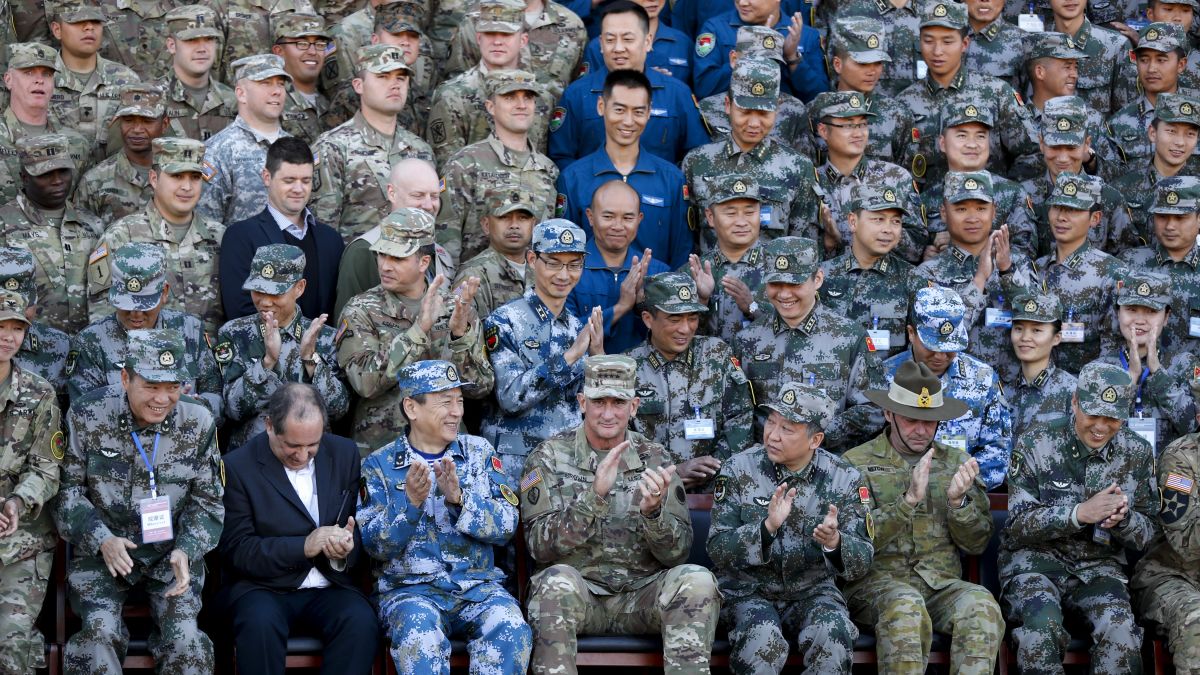
US and Chinese military personnel in a rare joint exercize:
-
Iraq war (2003)We didn't want to do anything to spook the USSR. — Paul Edwards
In my view this was the biggest reason why US foreign policy during the Cold War was quite understandable and logical. But now, it's "We can do anything!" -
Iraq war (2003)
Every society or nation has a power elite. The top administrators, the top politicians, the very rich people, the cultural elite and those in the media. This isn't at all a fixed group of people and is very difficult to define just who actually is in this group.That is an interesting take. I'm not sure how you measure "domestic elite" and why you ascribe such importance to them. — Paul Edwards
What they do and how they settle the competition for power is crucial for how the society works. If they as a collective believe that democracy is good and obtainable in their country, then democracy can cherish.
If you ask any person, do they want democracy and peace in their country, hardly anybody will say no. Yet just as I made the joke about the UN occupying the US to bring social cohesion to the society, things aren't so simple to do in real life.But for starters, the Iraqi people do not speak with one voice. When you say it has to "come from the society itself", many Iraqis are already with the program. About 50% of them considered the US invasion to be a liberation. Isn't that a good enough stance? — Paul Edwards -
Iraq war (2003)
Actually no. The Germans, the Austrians and the Japanese were OK with the Allied occupation.This is actually a good sign, not a train wreck. The Iraqi politicians know they are free to say whatever they want about the US. And the Iraqi people are free to say whatever they want too. — Paul Edwards
And yes, it really is a train wreck. Just think of the long term policy of the US: First the US had The Baghdad pact, then it had Twin Pillars as the Iraqi monarchy fell. Then it had Dual Containment after the Iranian revolution. Still, at it's height of it's power in the Middle East, the US created against Saddam Hussein a huge alliance including Gulf States, Egypt, Syria, Morocco, and so on. And why didn't they march back then in 1991 to Baghdad and free the Iraqi people then?
Let's listen to a man called Dick Cheney in 1994 giving the reasons just why invading Iraq is a terrible idea. Please listen to it, Paul:
But then Cheney didn't listen to Cheney and the US attacked and occupied Iraq. First time in long time the US started a war: last time it was against Spain, I guess. So the end result: Iranian backed Hezbollah fighters (considered terrorist by the US) are now armed with American Abrams tanks. Great job!

And now the American withdrawal from the Middle East looks like this:
Now I don't want to bash Americans, because they have done a lot good and especially in Europe are very welcome. But the US Middle East policy is just utter insanity of a otherwise totally sound minded nation, which can form alliances that work. -
Iraq war (2003)
Because democracy has to come from the society itself. The own domestic elite of a country have to be for democracy. The struggle for power has to happen at the election booth and the result has to be accepted by all. Foreign military might won't do it.What's illogical about that? — Paul Edwards
Iraq was a far cry of this. Once Obama pulled the troops back, what was the consequence? A despotic Shia Prime Minister that fired all the Sunnis in the government and in the end the already destroyed Al Qaeda came back after morphing into the Islamic State.
Iraq is a perfect example how nuts it is to assume that outsiders can just waltz in a turn things around in an region which has large inherent problems. (Especially Iraq being this idea of Westerners in the first place).
A country formed because Colombia wasn't going to sign the deal with the US due to the terms the Americans were giving them for the Panama Canal, so more convenient was to have some Panamians stage a revolt for 100 000$. Nicely agreed in an American hotel, even if Panamians celebrate their independence from Spain on November 28, 1821 now days.It was done with great success in Panama. — Paul Edwards
Simply because Australian know and cherish democracy and the Australian elite is totally willing to go with democracy. Every defeated country that bounced back after a lost war and occupation, be it Germany or Japan, had ample amount of social cohesion, belief and love in their country and honesty to understand that the previous totalitarian path lead to ruin and things should be changed.If Australia had a military coup and the US came to Australia to dislodge the dictator, Australia would be a great success story too. — Paul Edwards -
Parmenides' Positive-Negative Dichotomy?
Let's remember that we don't have actual writings of the Eleatic School (such as Zeno's book), but only the narrative from an opposing school. And as Wayfarer far more eloquently wrote, the focus for Parmenides and his followers thought truth is in universal unity, not division. And how much are Zeno's paradoxes principally about division? All of them, I'd say.I've even considered that it could have been insinuated in one of Zeno's paradoxes, but that path proved fruitless as well. — Adam's Den -
The Global Economy: What Next?
I'm not so sure about that. If unemployment isn't a great threat, you aren't facing living in the streets, then simply being unemployed is a valid option.If unemployment was no great threat, work conditions would have to be made pleasant and workers treated with respect. — unenlightened
We do have here a welfare state that does take you from the cradle to the grave. You don't need to work, you do have perpetual unemployment (basically similar to UBI), the welfare state pays your rent up to 600 euros, meaning you can get a decent small flat in the suburbs. If the choice is to go and work at McDonalds, you really have to think of the equation, because you aren't going to be so much better of with the job at McDonalds. And before I continue, I have to say I totally choose the problems of a nanny state than have homeless and dirt poor people around. The dismal situation in the US is something similar to the Third World and that a welfare state where you don't need to work can leads to social exclusion becoming a problem. But that problem is quite minor compared to homelessness.
Here's the long term stats for my country on unemployment. Notice that on good times (2015) the unemployment was at the level that it is roughly now in the US. But do notice the pattern: after every severe economic recession where unemployment has exploded upwards, it has come down, but to a higher level even at good times.
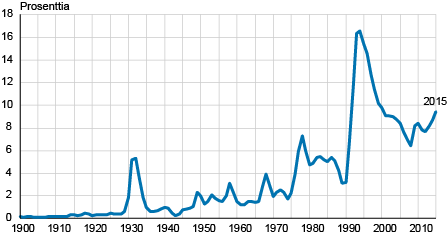
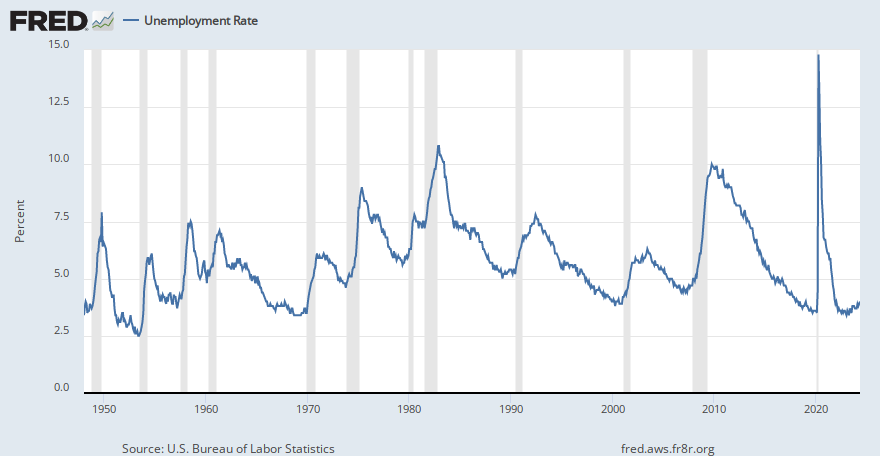
Now compare this to US unemployment. What you can see is that similar uptick after a recession cannot be seen as the US unemployment has continued to go down under 5% after a recession, even if there can be differences in the ways the statistics are done:
Of the Nordic countries Norway can easily afford the system, but we cannot. The government is still in far better situation than some South European countries, but we can fall there too. -
The Global Economy: What Next?
Is it strange to understand that there is a huge difference of taking care of those necessities or just giving a sum of money to a person and hoping that the person will use it wisely?Bill and Jeff have to eat too. So we give them the necessities as of right, and get them to pay some tax on their "earnings" like the rest of us. Is it a strange notion to you that the government serves everyone? — unenlightened
Of course the question of universal basic income is far more complex. My country btw. did have an experiment on universal basic income.
Tells something that they didn't continue it. So I'm not so sure it's this great solution. -
The Global Economy: What Next?Nice story, Benkei.
Yes, that's the way to get rich: invest with debt in something that pays more than what you have to repay. And for a bank to be a bank.
Of course the idea is that these companies are so awesome that they will grow. It's silly, yes.Would you put your money into something that would take 1,000 years to pay that amount back? Doesn't really seem like a sensible investment to me. — Benkei
But let's remember that 40% of the value of the SP500, five hundred handpicked companies, is from just six companies or so. Take them out, the net companies that have their best possible upturn during a pandemic, and the rest are in a bad shape. Hence if just six companies would take a 25% drop, the whole index would be -10% down even without every other stock not changing it's price.
Well, if an society can pay to professional athletes, artists and nail salon personnel, that just shows that the society is prosperous. The more poor the society, the more people working in jobs that are basic necessities.Demonstrably, most people don't need to work most of the time, because we can afford to have to pay people for playing football, and painting each other's nails, etc. But they still need to eat. — unenlightened
But coming back to universal handouts: unemployment benefits do that thing too (feed people). Or more generally speaking, a welfare state system does it. Why the necessity to give Jeff Bezos or Bill Gates the handout?
Besides, haven't Americans already been give by Trump this during the pandemic? I remember a Finn who said his American wife got money all the way from Trumpland to spend here in Finland. What's the cure all in this? -
Iraq war (2003)
Two modern examples come to mind:I am sure there are examples where removing dictators worked for the good but I cannot think of one. Can you? — tim wood
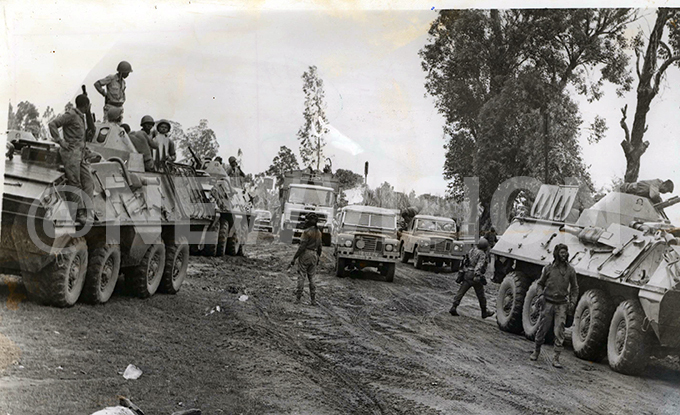
Vietnamese invasion and ouster of the Khmer rouge in Cambodia. Even if it took time before the Red Khmers gave up (and Pol Pot died). The Vietnamese did leave Cambodia after ten years.

Then there's Tanzania, which got enough when Idi Amin's Uganda had the fabulous idea of attacking it. Not only Tanzania repelled the Ugandan attack, but fully mobilized it's forces and launched an assault which made Amin and his army flee from Uganda even with air support from Ghaddafi. Of course Uganda has been restless afterwards, but not as many have died as during Amin. And it surely has not the fault of Tanzania.

-
The Global Economy: What Next?
Done by comparison.I'm having a big problem making sense of all this What is the value standard by which every asset category is measured? — unenlightened
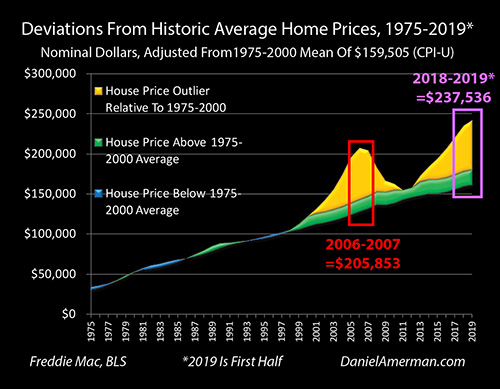
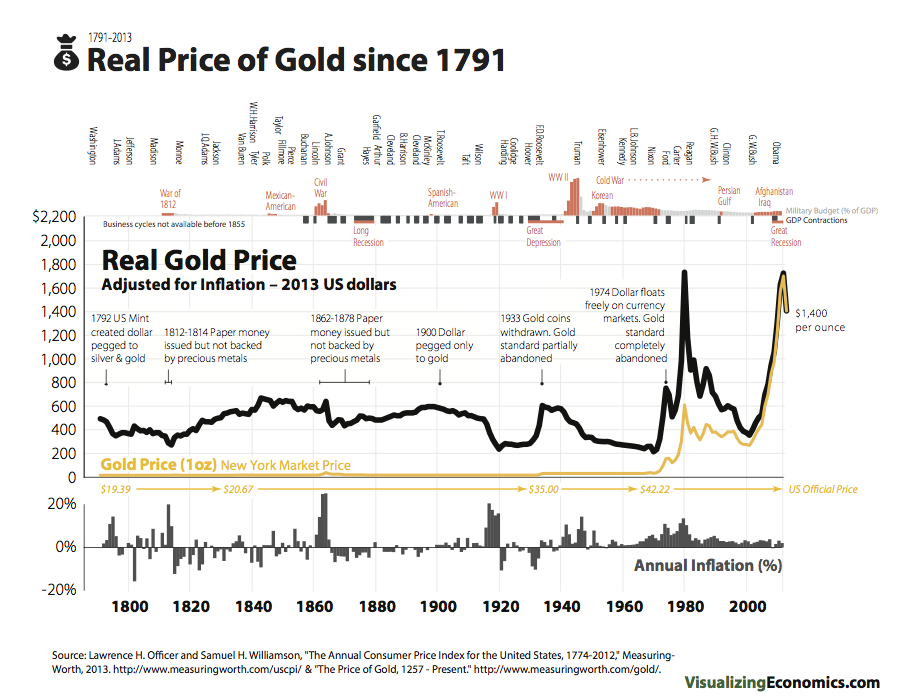
Most simple way is to look at real prices, meaning inflation adjusted prices. And let's say a modernized apartment in Manhattan in the 1990's is roughly as valuable as a modernized apartment in 2020. However, if you take into account how much the inflation rat has eaten off the value of the dollar and still the price is way higher in 2020 than in 1990, then it's likely you are looking at an asset bubble.
Here's housing prices:
Here's a study of the inflation adjusted price of gold:
Why do you think an universal basic handout is the obvious solution?I would have thought that a universal basic income was the obvious solution to such a crisis as we face, linked to food and housing costs. — unenlightened -
Iraq war (2003)No, my policy for Iraq (and other countries) at this stage in world history is to install democracy — Paul Edwards
Our politics. And to do so by killing as many people as it takes. — Kenosha Kid
Even philosophically this is illogical: Let's have foreigners come to your country and install democracy. Sounds like an application that you can have someone come and install for you.
(Perhaps we should gather a huge UN force and send it into the US to install social cohesion into the US. Seems to be in need of installing.) -
Iraq war (2003)
This is flatly false.Once a decision had been made that Saddam needed to be removed for other reasons, the US did indeed take the exact action of merely liberating the Iraqi people, and not even forcing a bus timetable on them. — Paul Edwards
Iraq in reality became this sandbox for politically appointed and usually inept Republicans (chosen because of political ties and not experience) with Paul Bremer micromanaging everything in Iraq at the crucial stage. The "de-baathification" of Iraqi legal system went to quite extreme lengths by Americans rewriting traffic laws etc. You have to look at what the CPA actually did.
Would it have been somebody else than Paul Bremer and with a clear focus using the lessons learned from the Balkans, it might have been better. Had there been the troops that, again based on learned experience from the Balkans (or anywhere else for that matter), were needed at start it might have been better. But of course not it wasn't! Rumsfeld had these hallucinations of a cheap, quick war and the commanding US general coming out with realistic troop levels (levels which were met only years after) was sacked. And while the intervention into Yugoslavia and the following rebuilding was done by a Democrat administration and Republicans didn't do nation building... it was obvious that the Republicans ended up with their non-nation building nation building with Bremer and Coalition Provisional Authority. -
Iraq war (2003)I don't think the topic would be as controversial if everyone thought that the US was invading Iraq on behalf of the Iraqi people, for the purpose of their liberation. The major reason given was the WMDs which weren't actually there, that objective was flawed from the start. If the war reason given was "Hussein you're evil and we are going to depose you for the good of the Iraqi people" then I think the war would be viewed differently. — Judaka
Yes. Likely there wouldn't have been ANY invasion. The US simply would not had gone into war. And note that then the US President was hinting Saddam having ties with Al Qaeda, which many, many people then deliriously believed in.
As US bases being attacked by Iran with artillery missiles in an retaliatory strike and the Iraqi Parliament having already made a resolution calling for the withdrawal of US forces, I would say this train wreck of a disaster is nowhere being over.The other issue is that even though it's been years since the Iraq war, Iraq is still a mess and with that knowledge, it's difficult to call the war a success from the standpoint of helping the Iraqi people. If Iraq was now a peaceful, solid democracy that the people supported then more people would support the invasion. — Judaka -
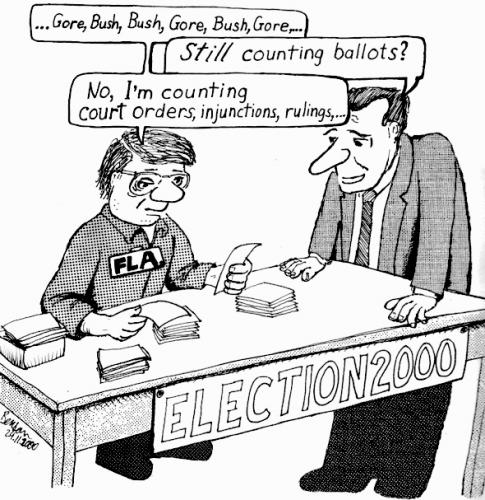
Donald Trump (All General Trump Conversations Here)I think many Americans aren't extremely enthusiastic of voting for either of the two, even if they know who they will vote.
And let's see how well the US goes with the elections. Hope it isn't going to go like the 89th Oscars. Besides, Americans have had experiences of similar situations. I'm not sure how well people will take similar things now?
(Remember the good old times?)
-
Foxhunt: American exceptionalism and political realism
Rumors of this have been circulating since the 1990's. It may be so.She said China uses convict labor, but advertises it as regular employment on billboards. — frank
But this might also be an urban myth, because likely a country like the US would have openly accused China of this to worsen the ties of China to African countries. And I did find one article and this study: "Chasing Ghosts: Rumours and Representations of the Export of Chinese Convict Labour to Developing Countries" saying that this isn't the case, which of course, can be Chinese propaganda.
Yet to tell the truth, it does fit very comfortably into a xenophobic discourse. What is obviously true is that China uses Chinese labor and doesn't have any incentive to train local people to do higher task jobs and creates compounds for it's own workforce. This of course breeds anger in the local populace, so the idea of them being convicts, not just cheap labour, is a tempting urban legend.
Of course I can be wrong and your friend is correct, as I've not been to Kenya. -
The Global Economy: What Next?
This is the way it has gone. Perhaps the only asset class that was let at least partially to come down was indeed the real estate sector, because the millions of homeowners were not simply connected as Wall Street is. Here "socialism for the rich" comes to play. But you are right that now the bubble is nearly in every (if not every) asset class.Of course, they've rebounded since on the "solution" offered by central banks to bail-out the banks that would've otherwise gone bankrupt for fear of an imploding financial sector. This time every asset category is just overvalued; We had negative yield on 30-year bonds for a while because of the flight to safety in NL and DE. Stocks are overvalued and property is through the roof again. — Benkei
And then we got a pandemic. This is the "may you live in interesting times"-addition to the equation.
Once a massive economic downturn is forced upon on the Global economy (and rightly so, because the lives of our fellow citizens are worth more than a dent in our economic prosperity), it does have consequences. Everybody understood that this was truly an exogenous shock and was implemented by the lock downs, yet that doesn't change the underlying facts that this, again, has been a huge economic shock to the economy.
And there's no V-shaped recovery ...if we don't count the V-shaped recovery for asset inflation.

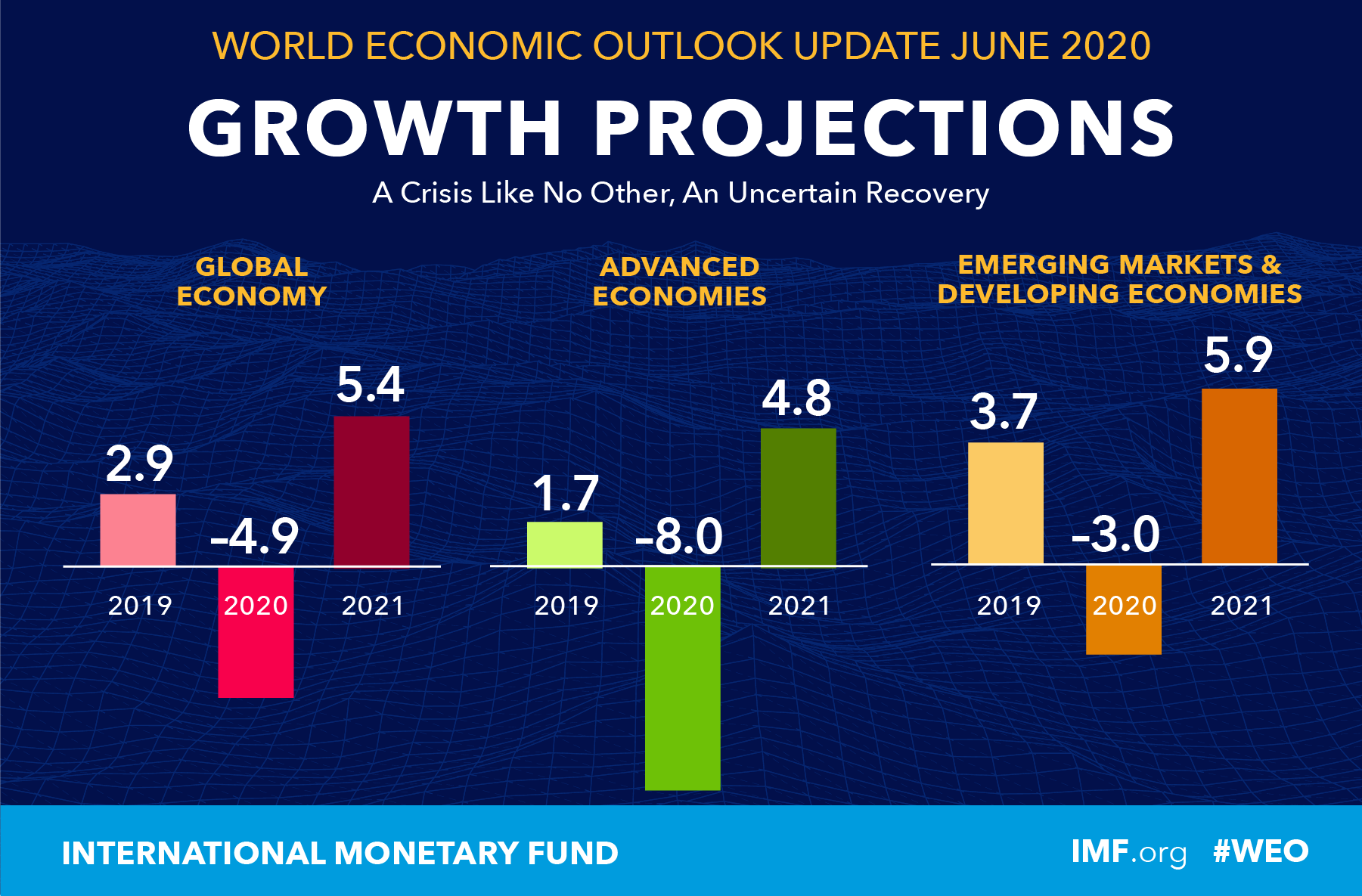
A rebound will happen, but likely we are going to be still on a lower level especially with the advanced economies. And that's the point here:
Yet the effect on unemployment will have the severe effect on the global economy going forward. That huge change in unemployment will have real consequences. And it's still not over.
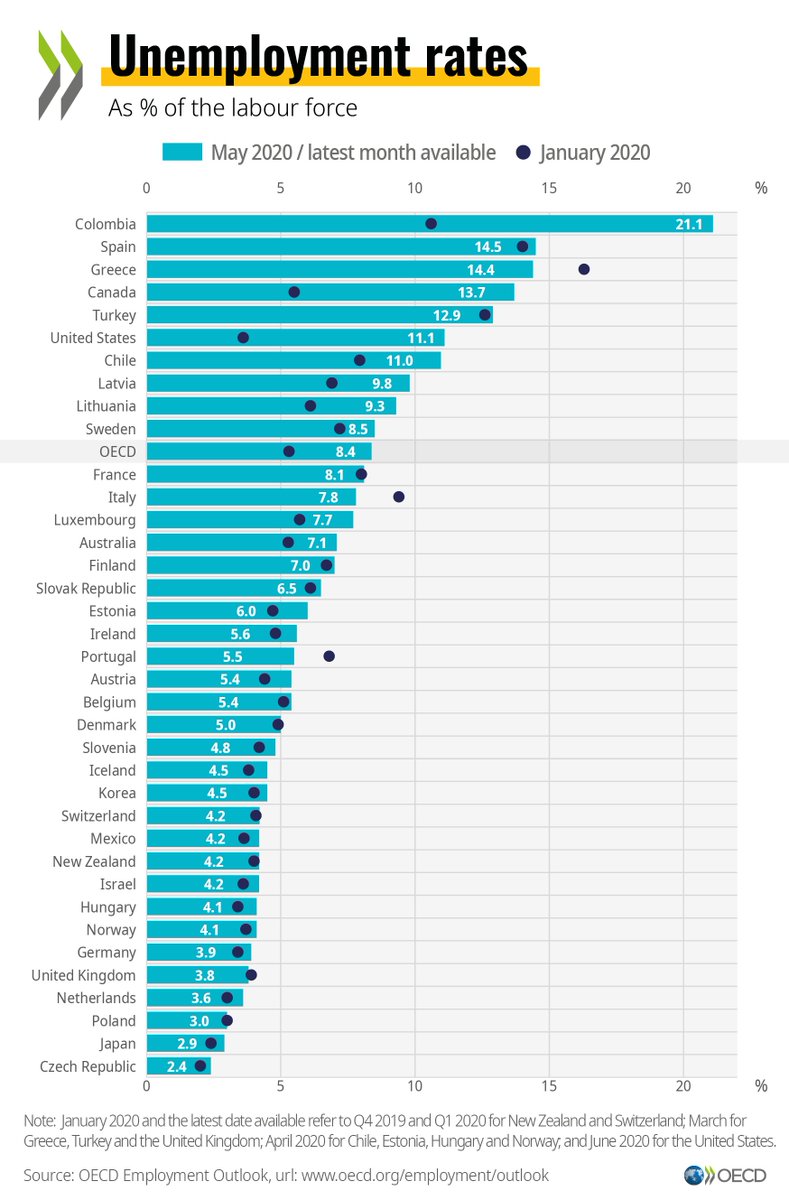
-
Foxhunt: American exceptionalism and political realism
If they are smart, they understand that being a Superpower is a burden that will get you in the end. Far better to be a regional power and not stretch to far. And with China, it may be so.
Just take example the present situation of foreign military bases in Africa. Yes, China is there. With one base in Djibouti. Compare this to others:

-
Donald Trump (All General Trump Conversations Here)Something like that. And people will wonder how utterly crazy people were in the 2010's and 2020's.
Yes, I'm an optimist.
What I really would want to see (if I live so long) is to see the movies made about this time 20 or 30 years from now. People always have this condescending view of looking at the past, which is painted as a caricature. -
Foxhunt: American exceptionalism and political realism
I would say that China is a Great Power, but not a Superpower.The US has global influence, so it stands out as a great power. China isn't yet a great power, but is headed in that direction. — frank
You see, if you say China isn't a great power, then there aren't many great powers other than the US. And historically we have used the term to define a group of countries.
(Things are better now for China...)
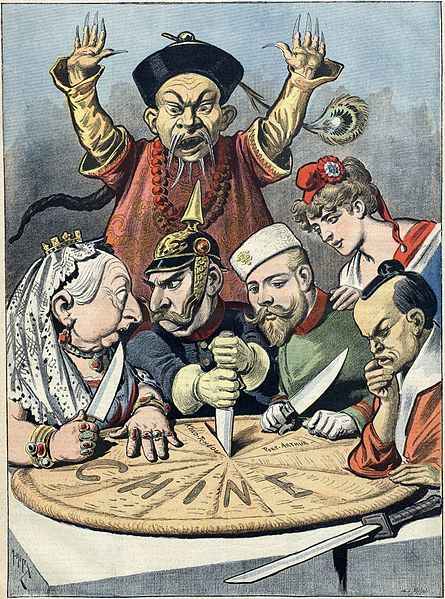
-
Donald Trump (All General Trump Conversations Here)
Nope. Read what I wrote.
It will take years.
Likely after Donald has passed away and everybody has forgotten about Ivanka. -
Donald Trump (All General Trump Conversations Here)Accusations of pedophilia and incest linger — NOS4A2
Might be few years before Ivanka comes out with her tell all book. Yet there can be a time when she needs the money and the victimhood points.
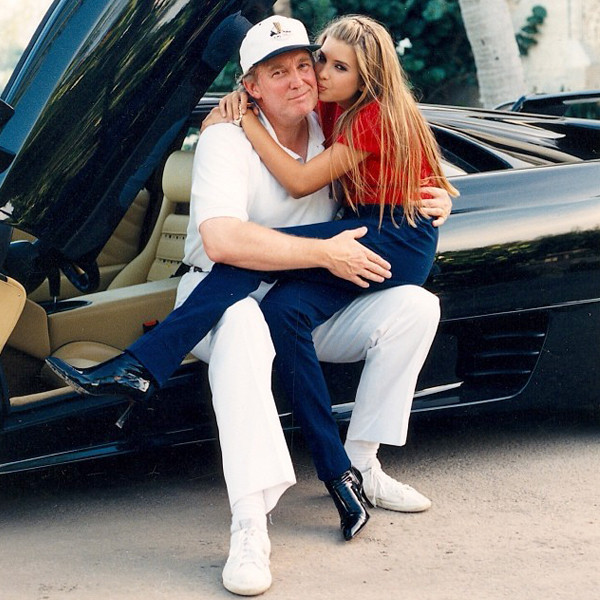
-
The Global Economy: What Next?
Well sorry if economics is a bit weird, or if in economics and in economic literature they have been called "speculative bubbles" at least since the 1970's (like here and then later here or here...). Yet this shouldn't be your counterargument to what I'm saying...or the thing we debate about.calling them speculative bubbles becomes a bit weird. — Benkei
The simple fact is that (asset bubbles/debt bubbles/speculative bubbles) aren't in the kind of econ 1.0 terms that have been generally accepted with a theoretic model as the issue is still quite disputed (just as is with any question that is current in an academic field of study).
What make's it "the last" one? It didn't burst, I think we are living now in that bubble economy still... and the pandemic might be perhaps the final straw that truly will burst it.I think this was true of the last bubble. With wrong incentives and no skin in the game for a lot of people. — Benkei
Or then we can start to believe in MMT.
(Which I find quite puzzling.)
Or simply let's have that deflation and start of with totally new financial sector.What we need, in my view, is smaller financial institutions that aren't too big to fail and quicker and more robust bankruptcy and resolution mechanism when they do fail. — Benkei -
The Global Economy: What Next?
What does agnosticism have to do with this?If you look at it from my perspective, this is not a speculator because he's not agnostic about future values; he's invested in prices always going up. — Benkei
If someone thinks that prices are ALWAYS going up, meaning real prices (not that the currency is losing value), that simply is by any means quite a risky, speculative approach to investing.
Ok, now we really have to look at the definition to speculation to get this point:
Merriam-Websterassumption of unusual business risk in hopes of obtaining commensurate gain
InvestopediaIn the world of finance, speculation, or speculative trading, refers to the act of conducting a financial transaction that has substantial risk of losing value but also holds the expectation of a significant gain or other major value. With speculation, the risk of loss is more than offset by the possibility of a substantial gain or other recompense.
Market Business NewsSpeculation is an investment approach in which the investor aims to buy or sell stocks, currencies or other assets solely to make a quick profit. In such cases, the investor is known as a speculator.
Anyway, Then call it a debt bubble or simply an asset bubble. It's the same important phenomenon that earlier was even dismissed to ever happen in the modern financial markets (and still there are those who don't believe in bubbles anyway). I myself have seen enough crashes and market hype in my own lifetime to believe that this phenomenon does truly exist. And a crash can happen ...and then people start bitching about risk management being wrong. -
The Global Economy: What Next?
Sorry, but in economics this term is used.What you describe isn't a speculative bubble in my view of how the word "speculation" should be used. — Benkei
It's erroneous to assume that speculative bubbles happen because of some market participants just somehow start acting irrationally and start speculating / gambling. Perhaps better would be to talk about debt bubbles, but that then takes focus away from the market behavior happening with a bubble in some new industry. Simply put it, the phenomenon is complex.
OK. NINJA-loans (no-income, no job / assets) is actually a perfect example of speculation, if you just think about it.The real estate bubble was caused due to systemic risks. NINJA-loans, incentives for brokers to originate loans that were terrible, CDOs that were opaque and too much money in the system. — Benkei
The speculator is just the lender. The banker assumes that the real estate prices will go up. If he is sure of that, NINJA-loans are totally logical. If the NINJA-loan taker cannot pay his monthly interest, no problem, the bank just takes the home and either the value has stayed the same or perhaps even risen. So "no" risks! And a huge amount of new potential customers. You see, the systematic risk you are talking about is actually the speculative bubble bursting. Then, what has not been seen in any statistics (which just have shown low risk and minimal amount of credit losses) suddenly change to something totally else. And similar thing with CDOs: just take your share and sell the risks to someone else, so no reason to think if the people can pay or cannot. After all, real estate prices go up! Have done that forever.
Why it looked like a non-risky thing. Assume extrapolating the percentage of mortgage delinquencies from loans from the stats from 1979 to Q4 of 2006. Think your extrapolation would predict correctly the future 2007-2008?
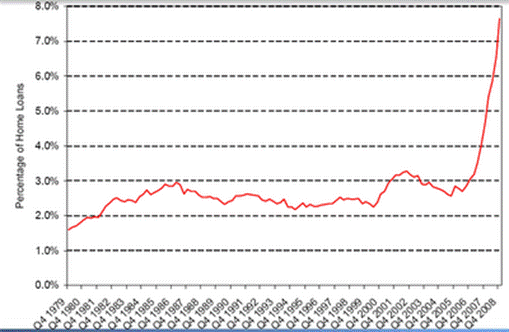
Then there's the way the banking sector operates. You see, If you sell cars, there's a multitude of things you can do with your product to make it different from other cars and hence make a niche of people to love your cars (and others hate them). With a bank loan there's nothing like that. You can basically choose a) what's the interest rate and b) to whom you give loans to. Nothing else, basically. And the more debt you issue, the more profit you make. And if you are a smaller bank or a failing bank, one option is to be more "aggressive", meaning you start giving debt to people that other banks don't give money, or face losing the game.
All this shows how intrinsic role the financial sector has in creating speculative bubbles. These bubbles can also happen when a heavily controlled financial sector is suddenly opened to free competition and banks start to in earnest compete about market shares. -
The Global Economy: What Next?So you said:
Asset inflation is caused by the pursuit of price stability and other monetary policies. — Benkei
This I find still find confusing.
Yet they look at inflation as it is now measured. That price stability is about consumer prices, prices of tomatoes, not the price of a Netflix share!Central Banks have a limited range of measures at their disposal because they're constrained by their purpose of maintaining price stability. — Benkei
Central banks fight inflation, but they don't fight asset inflation.
(or with zero real interest rates as today, they would hope to see mild inflation) -
The Global Economy: What Next?
OK, I'll just answer one part here as otherwise the answer would be too long.. I think the distinction between an economic bubble and a speculative bubble is useful; a speculative bubble can exist in a specific asset class but speculators as distinct from investors are a much smaller group that don't have the influence to cause economic bubbles. — Benkei
Yet economic bubbles are also speculative bubbles. Here's why.
Let's think about this with two examples, because the divide is simply about contagion and the effect of the bubble to the real economy. Bubbles can also move into other asset classes.
Bubble 1: Speculative bubble that doesn't affect the economy
Some hip new innovation that has genuine promise sends people investing in something be it cryptocurrencies, rare earth minerals or whatever is the new fad. That there is hype driving the bubble can be seen perhaps from uh, a philosophy forum we all know starting to talk about the new innovation and some there investing in it. These kinds of things won't have large economic consequences as a) few will invest more than a tiny amount of their wealth and b) there's not much impact on jobs, or consumer consumption in the real economy. The burst of the bubble won't have huge consequences. If some people lose money, they'll likely curse to death the whole stock market and finance sector as bunch of swindlers and con men. And continue with their lives with just hating capitalism. But the vast majority of people who didn't notice the fad will not be affected.
Bubble 2: Speculative bubble that does affect the economy
A real estate bubble. As houses cannot be built by robots in China, real estate bubbles have a huge impact on employment and in the domestic economy. Second, people don't choose to speculate: families need a roof over their head and people looking for a home have to participate in the market however crazy it is. And people who own real estate will notice the wealth effect of their homes increasing in value, hence it's not just the few who invest or those who willingly take risks. For the majority of people buying an own home is the largest investment they will ever do. Hence it's not only the rent seekers and speculators that are players in this bubble. That building houses is labor intensive means that the bubble truly lifts up the economy. And for the financial sector? Mortrages and financing construction is the most ordinary thing they do.
And when this kind of speculative bubble collapses, there went the wealth of many, which has causes on their consumption. At the worst case people find having more debt than then is the price of the property. Once you cannot service that debt, then you are in real trouble. Also, the slowing down of the construction business will have an effect on the economic cycle. And most importantly, when the financial sector is hit, it will close it's lending an sit on it's money like Scrooge McDuck and this will have an effect on other unrelated sectors of the economy. Hence a real estate market bursting will cause a severe recession.
Or a pandemic which shuts down the economy which already has speculative bubbles inside it... -
The Global Economy: What Next?
Yes. Without the access to debt, there are only very few that can invest. Debt leverage is quite essential.By "access to debt" do you mean, primarily, traders and investors using leverage? — BitconnectCarlos
Thanks Baden! -
The Global Economy: What Next?
Gambling is a natural human activity also, but a speculative bubble is separate from your ordinary market actions or the "Animal Spirits" Keynes talked about. Hyman Minsky explains quite well how speculative bubbles are endogenous to financial markets. Even the Tulip Mania did involve the banking sector, so the access to debt is intrinsic to a speculative bubble to form.I'm inclined to see financial speculation as just a natural human activity, and unless the government takes serious, serious steps to squash it I think it's going to happen in a number of different financial environments. — BitconnectCarlos -
The Global Economy: What Next?
? ? ?This is fundamentally flawed because speculation goes both ways. Speculation doesn't cause bubbles across all financial instruments. — Benkei
How is it fundamentally flawed?
You think that speculative bubbles happen in times when interest rates are high and banks don't lend or what? Tell me an example of a speculative bubble happening in that kind of environment.
And tell me of a speculative bubble that didn't have speculation??
Pursuit of price stability? I don't understand where this is coming from. Please explain.Asset inflation is caused by the pursuit of price stability and other monetary policies. — Benkei -
Foxhunt: American exceptionalism and political realism
Yet thanks to the let's say the last functioning remnants of the Republic and it's liberties, the excesses do come to light in the US and are at least publicly debated, unlike in China.The US is guided by international norms when it feels like it, but does exactly what China is doing whenever it becomes convenient. — frank
I'm not sure this is the point of political realism. Yes, political realism sees the political system is anarchic because there is no authority above sovereign states and they all have their own agendas, which happily sometimes coincide. (If that was your point, OK.) Your definition would sound more like simple stagnant conservatism, where change is seen as anarchy.Political realism is a view of political entities that places all events against a backdrop of anarchy. — frank
China or Xi Jingping? I'm not familiar of this and Xi Jingpings crackdown on "tigers and flies", so I'm open to thoughts here.We would also look at Operation Foxhunt against that same anarchic background. This operation is a clear indication that China is stepping up as a source of law in itself. — frank
You see, the problem with anti-corruption is at which level the purge is stopped and when does it come to be a tool of political power? I think the grotesque "anti-corruption operation" in Saudi Arabia performed by MBS in 2017-2019 is a bona fide example of a clear power grab portrayed as something dealing with anti corruption. How much the anti-corruption campaign under Xi Jingping is a political tool for him, I don't know. Besides, it's likely quite popular among the ordinary Chinese.
Corruption and bribes ought not to be common and everyday practice. There's also this point that if crimes happen, they do have to be solve and the perpetrators gotten. Crime doesn't go away by turning a blind eye to it. That side shouldn't be forgotten.The good news is that political realism foresees political stability in this. — frank -
The Global Economy: What Next?
It's more of a symptom than a cause, even if with index investing there is this mechanism to put more investment in the stock that have risen the most and are the largest. Yet I think the reason is and in history has been the financial sector, which has with excessive financing promoted speculation and in the end created the bubble. Once the sound business enterprises are invested, then there's left the unsound ones and then pure speculation about the future values, usually of real estate. Since the Tulip Mania or the South Sea Bubble of 1720, all bubbles have behind them a very lax financial sector lending people to speculate.Exactly. Such mismatches between equity and dividend value are precisely what in my estimation cause stock bubbles. — Aryamoy Mitra
It's a simple fact when you think of it. And it explains simply why prices of real estate etc. can vary on a wide range yet real estate while rents do not go up and down in a similar way. Every rent is priced monthly while the vast majority of real estate are not bought and sold annually. This is multiplied in the stock market where it is genuinely a bunch of casino players are selling and buying a small proportion of the stock all the time. Hence we have gotten such absurdities as negative oil prices: a reaction when the casino players faced the actual possibility of ending up with the physical stuff they trade with.That's a really interesting analogy. It brings to light precisely how cyclical and sensitive today's economies really are with regards to demand and prices. — Aryamoy Mitra
Not perhaps commodities. Prices hikes of commodities have happened and have resulted in poor countries in food riots, but far more typical issue would be real estate and the price of homes. This is where even ordinary people are touched by asset inflation. They have took a loan for a home in a economically booming area, once they have paid that loan they have made usually a quite a profit (if they move then somewhere cheaper).Asset inflations result in commodities becoming unaffordable for those who don't possess them at the status quo, and subsequently detract demand from sellers — Aryamoy Mitra
Here California is the best example I can think of. The lack of affordable housing programs has lead to sky high prices in homes and Third World style inequality with the most richest people living there with people on tents, and especially during this pandemic an outflow of people from the state or into less expensive areas. The pandemic has not only shut many small business down, but also put people to work from home. If people can work from home sometimes even their employer urging them to do that, why pay a huge price for a crappy small place in Silicon Valley, if you could have that estate in Colorado?
I think this pandemic is an engine to a far longer economic downturn than we anticipate. -
Is Science A Death Trap?
Or simply the advances just slows down and in the end state the technology doesn't change.All that said, you're right that exponential growth is not limitless in nature. Sooner or later it hits the wall and crashes. Just like I started this post to explain. — Hippyhead
A wide variety of technology has simply found an efficient state that there isn't much need to change. Just take one of the most loved technical gadgets Americans love and nearly worship: hand held firearms. Handguns have the same mechanism as in start of the 20th Century and even military rifles are in general the same as after the 1950' or 1960's. Even older technology are books. They surely have not changed in technology for a very long time and still are being used even if phone books and dictionaries aren't popular anymore (for obvious reasons).
Many things we have now might be in use in the distant future. Likely a computer (of some sort) can read .doc -files even a hundred years from now. Hence technology doesn't crash, it just keeps the same. Sometimes for Centuries.

ssu

Start FollowingSend a Message
- Other sites we like
- Social media
- Terms of Service
- Sign In
- Created with PlushForums
- © 2026 The Philosophy Forum