
-
Putting the Mutually Assured Destruction doctrine to rest.
I will have to try to make this point clear.
a) All these wars the US is fighting, it is fighting with the Continental US in peace. Using nukes would be a PR disaster and a political suicide.
There is no martial law NOW in the US. There is no similar mobilization of resources as during WW2. In truth the American people are living and have lived in total peacetime and they don't care much (or are blissfully ignorant) about US troops fighting in Syria or Afghanistan or in the Sahel region in Africa. Or anywhere else. Hence there is absolutely no reason why to give them a rude awakening, to create a global condemnation with using nukes just to make sure some usually empty storage somewhere under a mountain is destroyed. It doesn't make any sense. You simply have to have the American population scared shitless and in total panic before you can use nuclear weapons (for them to accept it...and be even in a bigger panic).
b) Only in the 1940's and 1950's nuclear weapons were assumed to be ordinary weapons
You can see this from the contingency plans. As ICBM's became reality and their numbers increased, the whole idea towards using nuclear weapons casually deceased. And this is really a fact:
When planning for Desert Storm and the liberation of Kuwait, the US military leadership truly had to contemplate that the Iraqis would use WMD's against them and there was no assurance of Saddam Hussein not having nuclear weapons. Hence they really had to ponder what their retaliation would be if US troops or their allies (or Israel) would be attacked by a nuclear weapon nobody saw coming. They opted NOT to use nuclear weapons, but simply destroy the dams of the Tigris and Euphrates river and make a flood that would have devastating effects on Baghdad.

But who cares about a goddam flood killing perhaps 100 000 Iraqis orthe than the Iraqis themselves? Floods kill people all the time. But OMG if it was a nuke!!!
Hence this idea of using nuclear tipped bombs is just machismo from those who want them or simply or...
C) Nuclear weapons are used when already WMD's are in use.
If North Korea would hit a US City with a missile, perhaps then to respond to the bloodthirsty revenge mentality that would be the immediate response of some Americans (as we saw in 9/11) using those nuclear tipped bunker busters would actually be a more humane thing to do, actually. You see you could say that you are nuking the hell out of North Korea, yet you wouldn't be creating mass civilian casualties as with ordinary nukes. As I have said, the common idiot has absolutely no idea how different is let's say a nuclear tipped torpedoe, a Davy Crocket recoilles rifle warhead and a 1 Mt nuclear warhead are from each other. It's all just nuclear, which is horrible.
You really seem to underestimate just how much people fear and despise nuclear weapons. -
Turing Test and Free WillWell, I believe that determinism and free will don't actually exclude each other because we are simply talking about two totally different issues. Free will doesn't exclude determinism and determinism doesn't exclude free will.
There is free will in the form that you are aware of yourself and can change your decisions what you make. There is also determinism in that if we define the future to be what truly happens, then it is deterministic: the future will happen. The only thing is that you cannot know everything even if everything is determined. Why so?
It's simply that we are part of the Universe hence that we cannot extrapolate everything from the present to the future because we are ourselves actors ourselves. Simple logic excludes this option from us.
What is utterly false and totally illogical is this idea of Laplacian determinism. Laplace made the argument in the following way:
We may regard the present state of the universe as the effect of its past and the cause of its future. An intellect which at a certain moment would know all forces that set nature in motion, and all positions of all items of which nature is composed, if this intellect were also vast enough to submit these data to analysis, it would embrace in a single formula the movements of the greatest bodies of the universe and those of the tiniest atom; for such an intellect nothing would be uncertain and the future just like the past would be present before its eyes.
This is simply wrong. This is because the entity is part of this World and we can put this entity (depicted as Laplace's Demon) to a situation where the correct forecast of the future would entirely be depended the opposite of the forecast it makes. No amount of objective knowledge can help you when you are being put to be the subjective decider. Hence whatever it does (or doesn't do), will effect the outcome in a way it cannot forecast the correct future.
Actually this is use of the Cantor's diagonalization method, negative self-reference which is at the heart of not only the paradoxes, but also the incompleteness results. It would be similar to say to you that "Please give an response you will never in your life give". Obviously there are such responses as your and my time here is limited. And obviously we cannot give those, because any response we give is outside of that set of responses. -
Why is Ayn Rand not Accepted Academically?
But at least you have given the credible impression that you have still actually read her work. :halo:But I am a jerk to people who think Rand has anything useful to say. — Benkei -
What is logic? How is it that it is so useful?
I think that there isn't any flaw in logic. Logic is perfect, we just are not.I think Russell's Paradox and Godel's Incompletness is one example of the flaw in the logic itself. There may be broader criticisms that this approach is erroneous to begin with. Math may not be subsumed in a broader logic. — schopenhauer1
The most likely flaw that we have is that we presume natural numbers to be the basis of all math (because from that practical use the field has generated) and also think that we have all the fundamentals of math already at hand. This is our fatal "flaw" here: illogical premises that we are ignorant of.
So we erase the paradox away typically by the axioms of ZF, which however then does contain the axiom of infinity. Then we simply say that what Gödel's imcompleteness theorem refers to has not much if any value. Yet all the incompleteness results do seem to point towards the realm of the uncountable / unprovable yet logical existing. The problem is that people think about this as some kind of attack against math or progress. As one writer called Russell finding the paradox as "a skeleton rattling in the closet far louder than ever before".
We have made such false assumptions before like with the Greeks assuming that all numbers are/have to be rational and were dissappointed to notice that it isn't so. -
What is logic? How is it that it is so useful?
Here's a question that I would genuinely want to get the views from people on PF. Hopefully people understand my question.
Let's assume that there would be an explanation to why we have Russell's paradox and the incompleteness results of Gödel, Turing etc. Hence there would be a central axiom in mathematics, axiom X, that without it we have get into paradoxes and incompleteness results, because we don't take into consideration axiom X, so our logic "breaks down" and we have to settle with ZF-logic or other kinds of logic.
Would there be any other problems with Frege's ideas (naive set theory) and the idea that mathematics is comes out of logic? Is the set-of-all-sets the only problem? -
Decolonizing Science?
This is one of the pitfalls were modern science veer into, just like it to be seen just as a tool of political power. And that demarcation could be useful.Even from the purely academic perspective, research is now rarely funded unless it has a practical application. Maybe practicality is a better demarcation than methodology. — ernestm
If the role of science is to give us just practical applications, it isn't anymore about understanding the reality around us better. When that isn't anymore the objective, the applications also are limited to the present scientific paradigm. Like if we wouldn't have relativity, but just Newtonian physics, perhaps we could have still a GPS system guiding us, but it simply wouldn't be so accurate. -
Turing Test and Free Will
That would be just what the present computer programs have done for ages. Ever heard of cybernetic systems? Something invented during WW2 was hailed to be the solution to everything... until it faded from the popular jargon. Yet this doesn't overcome this issue at all: the computer is exactly following the algorithm and hence is quite predictable in just what it will "learn".But what if the programmer programmed the computer to change its programming? — Harry Hindu
Do they? Anyway, the problem is that you have to somehow morph inductive and abductive reasoning into the deductive way as, again, Turing Machines just compute, follow algorithms.Dont those types of reasoning require the information provided by the senses? — Harry Hindu
Here's the thing. That there is natural selection doesn't mean a thing when the question is how will Harry Hindy reply this or that question. And one obvious way would be to say that even if we can seem to be choosing ourselves just what we do, there would be a metaprogram that we follow the we can't change or understand. Yet this argument makes it even worse: for the computer it is really a program, not a metaprogram, that the programmer has to tinker with.I'll add that humans have a programmer - natural selection. — Harry Hindu -
Putting the Mutually Assured Destruction doctrine to rest.
The Russians ALWAYS say the US did it first and meticulously make their point of them just reacting to US aggression whereas the US only sometimes make this point. Yet the Russian answer, attacking and annexing parts of Georgia, attacking and annexing parts of Ukraine, are on a different category to the actually fumbling US foreign policy that typically just makes a mess and doesn't solve anything.Well the Russians say the USA did it first, then the USA says its the Russians fault, so I will be staying out of that catfight. — ernestm
Besides, they can always retreat to the fact that the West has attacked them twice, first by Napoleon, then by Hitler and sure goddammit they won't let them be surprised for the third time. And Putin has to have a reason just why he has to be in power and have such tight control. He needs the US as the bogeyman. (Just as some would say the US foreign policy blob needs bogeymen too)
No.If they had been available when Syria was reported to be using sarin gas, Trump would have used tactical nuclear devices in his largely unimpressive massive strike of conventional weapons on a Syrian airbase. — ernestm
Why on Earth would he have done that? Or why on Earth would have the military lead by Mattis a) purposed using nuclear weapons and b) accepted their use? There's no reason for this assumption. Besides, Trump just loved it that he could say to the Chinese leader over eating cake that he just ordered a strike on Syria.
Again no.But I think Korea is in real trouble. As soon as the USA has nuclear bunker busters, If N Korea does another nuclear test, even one, a nuclear bunker buster response would be immediate. — ernestm
The losses of well over 100 000 people in South Korea and the possibility, the mere possibility of a nuclear attack on an American city will halt any pre-emptive attack. Clinton really contemplated a strike on North Korea and decided not to because of the high estimates of casualties. Bush didn't strike either, even if he called North Korea the axis-of-evil. One might argue that there is this closing "window of opportunity" in the same way as in 1962 when the nuclear superiority was such a huge advantage that the US joint chiefs of staff did want to go to war. Yet it's extremely unlikely to happen.
No, the real ugly truth never uttered is that the US will let North Korea develop it's nuclear arsenal so that a partial MAD will emerge. Like now is with US and China. China has far inferior number of nuclear weapons compared to the US, but enought that the US cannot be certain to have the ability to destroy them all at once without some being launched and hitting mainland US.
That is the future between North Korea and the US, which basically still are at war.
Reasons why North Korea won't be attacked:

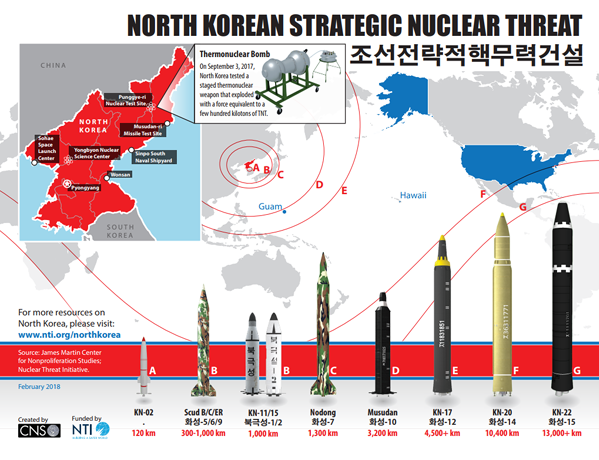
-
Why is Ayn Rand not Accepted Academically?
The minimal role of the government is the way a lot of right-wing libertarians especially in the US think. Not to be confused with the Libertarians-in-name-only type who talk about libertarian values and are for something else. Yet it's wrong to think that libertarians are fascists. Fascists believe in a strong centralized power, in big strong government. It's a typical charge that libertarians are against democracy. Yet what I've noticed this to be is just a critique about how well democracy actually functions.Ayn Rand's ideal reification of her Objectivist philosophy would effectively suspend representative democracy, given that the government would be relegated down to a regalian function of maintaining property rights and a military for defense and security (primarily for upholding property rights). — Maw
Libertarianism has an inherent structure that makes it most difficult if not even impossible for totalitarianism to emerge and that is because it's central focus on freedom of the individual. And with individual rights and hence democracy there is always the opening for other views and typically socialism or some socialist thought will be popular. In a way, a true libertarian society that gives prosperity to it's people would be a huge disappointment for libertarians as people wouldn't necessary be libertarians at all. Closest country to libertarianism would be Switzerland (not Somalia, as the leftist trope goes) and it has a multitude of left-wing policies in place and a quite virile left.
A lot of things sound fairly fascist to you. Especially much seems to be adjacent to fascism. Yet what yougave as example would be a plutocracy, which inherently isn't fascist.Sound fairly adjacent to fascism to me. — Maw -
Why is Ayn Rand not Accepted Academically?
You give people respect by making a well thought, informative response to their questions.What would you say to such people?
If you read my first comment on this thread, would you say something similar to someone impressed by any of the above, or is it not a good approach? — boethius
I think your first answer is the way one should answer any discussion thread started from either a new or old member. The kind of condescending type of answer where the underlying answer is "Christ, not one of these again..." is not only hugely arrogant, but simply unhelpful counterproductive. It just pushes us to think that those on the opposite side are simply jerks.
And typically if someone starts a discussion either to troll people or they have an agenda to promote, they aren't going to actually listen to other views. Then the discussion is quite useless and you can simply wait for the thread to slowly retreat to the back pages. -
Why is Ayn Rand not Accepted Academically?
Really? You think Ron Paul is a fascist? How bizarre.So someone an American describes as a "right-wing libertarian conservative" is pretty much a fascist, when seen from here. — Pattern-chaser
First ever??? What happened to Clement Attlee?If things go right, we here in the UK may soon see our first-ever socialist leader! — Pattern-chaser

-
Why is Ayn Rand not Accepted Academically?
She was neither. I would say she was a writer that more of right-wing libertarian conservative who invented her own philosophy of objectivism, which typically is just a resell of older classical philosophy done in a light-weight manner. And when her actual work are works of literature, so her philosophy is quite weak.I have only a glancing acquaintance with Ayn Rand, but my understanding thus far is that she tends toward fascism, not socialism. — Pattern-chaser
But as typical, everything on the right is fascism according to many people...
But people should ask about it from Benkei. Benkei struggled through her works and can exactly say what he doesn't like about Rand. Not many have read Rand so much.
Yeah.The mods seem to get annoyed that Rand is asked about so frequently--I know other Rand threads have been deleted, too. Partially because it's the same thing over and over again. — Terrapin Station
I can imagine the poor person who first picks up some of Rand's book, or listens to libertarians talking about Rand and then goes to this kind of Forum and asks quite innocently: "So, what do you guys think about Ayn Rand? Doesn't she have some good thoughts?" -
Putting the Mutually Assured Destruction doctrine to rest.
That is an interesting topic, the idea of "bunker buster" nuclear weapons.
Well, you had the tactical nuclear recoilless rifle Davy Crockett in service, which was a stupid idea, but some politicians loved it. The US doesn't have them anymore. Shouldn't be a wonder to anyone why.
Actually, Mattis in the clip makes the least stupid argument about it: so if someone else uses a tiny nuclear device and the US has nothing as tiny to respond, using ordinary nukes is an escalation. Well uhh... :roll:
Yet after Chernobyl, Fukushima and the typical panics that anything nuclear makes, imagine the public outcry after someone used even small tactical nuclear weapons. Do you think that the size matters? Or do you think that the media would sit idly around and print it on the third page that "Today the US made a pre-emptive (love that word pre-emptive) strike on Iran. Among the munitions used were earth-penetrating weapons, some with unconventional warheads."?
No way.
The media response would be "N U C L E A R W A R !" or "TRUMP ORDERS A NUCLEAR STRIKE ON IRAN". Because how many people would stop and buy a newspaper that has the headline NUCLEAR WAR? And just for a while image the Columns and Editorials after that. That finally third World War has arrived would be the topic in the social media. And the response from all other political leaders in the world. And the Pope. Wonder what they would be saying. Just think what people would be here in this forum saying.
So no, it's a really stupid idea. Bunker busting with nukes that is.
Yet the absolute panic that any use of anything nuclear will do is real. And that what's makes Russia's new de-escalatory use of nuclear weapons so troubling. Because Putin understands that war is a continuation of politics and he is a master in understanding how the West works.
In 1999, at a time when renewed war in Chechnya seemed imminent, Moscow watched with great concern as NATO waged a high-precision military campaign in Yugoslavia. The conventional capabilities that the United States and its allies demonstrated seemed far beyond Russia’s own capacities. And because the issues underlying the Kosovo conflict seemed almost identical to those underlying the Chechen conflict, Moscow became deeply worried that the United States would interfere within its borders.
By the next year, Russia had issued a new military doctrine whose main innovation was the concept of “de-escalation”—the idea that, if Russia were faced with a large-scale conventional attack that exceeded its capacity for defense, it might respond with a limited nuclear strike. To date, Russia has never publicly invoked the possibility of de-escalation in relation to any specific conflict. But Russia’s policy probably limited the West’s options for responding to the 2008 war in Georgia. And it is probably in the back of Western leaders’ minds today, dictating restraint as they formulate their responses to events in Ukraine.
Now that is really stupid and basically dangerous. But likely that the Russians have a concept of de-escalation through a limited nuclear strike is making the US also to think the same way with the low-yield weapons (which is actually the reasoning there). -
Decolonizing Science?Teaching and education isn't actually the same thing as science.
Those that want to make their own beliefs and ideologies more credible by resorting to proclaiming their beliefs being backed up by science or worse, argue that their beliefs being not beliefs but simply scientific facts are a minority. The vast majority do see the difference beliefs and empirical results of some objective scientific test. The vast majority of scientific research simply has no political or ideological agenda.Those who hold conflicting beliefs that they cherish and that define them do not want to change them because it is not necessary, rather they want to come up with scientific theories that have a similar predictive power but that are formulated in a way that doesn't conflict with their beliefs. — leo
The error people typically do here is that they focus on the practical applications, usually a commercial ones, that have been made (possible) thanks to something done in scientific research. The difference between science and technology doesn't matter to them either. And the horror if it's a military application, then it becomes that the scientist who had something to do with the app was deliberately making 'the science' just the app in mind and hence is a wretched person right from the start! And when Science is what scientists do, not a method to be used, then you get the reasoning that science kills. Because....nuclear physics gave us nuclear weapons.
Leo, that simply isn't science. What you are talking about is Physicalism.Modern science is imbued for instance with the belief of materialism, that deep down all we are is matter, that consciousness is a byproduct that doesn't cause anything, that we are like machines subjected to unchanging laws. — leo
First of all, for many scientists or academic researchers using the scientific method, physicalism simply is totally irrelevant to the issues they are studying. If you are studying sociology or politics, you surely can use the scientific method yet care less about materialism, because the whole topic of what you are studying simply isn't an physical object or matter. Or how about the mathematician? Does he or she care about matter? -
Putting the Mutually Assured Destruction doctrine to rest.
No. Nuclear weapons are for last resort. Hence every nuclear armed country also has a conventional army.You are bing absurd, — Sculptor
The UK actually didn't even need to spend on a better new navy, It simply should have spent to retain it's flat top aircraft carrier Ark Royal that had F-4 FG.1 Phantoms. The Sparrow-armed Phantoms likely would have posed enough of a deterrent to Argentinian aircraft that had just short-range IR missiles. And of course, the "Jump Jet" hadn't been proved in combat. So thanks to the policy of making the Royal Navy to only fight Soviet subs, we had the Falklands war. Now btw the British have understood this and have new flat top aircraft carriers.Had the British government spent the same money on a better navy, Argentina would not have invaded. — Sculptor
First, the Soviet response was more about the "Bay of Pigs" and saving their new ally.This crisis was caused by the USA installing nukes in Turkey. We were never "on the brink". As soon as the US agreed to move them Khrushchev, pulled his nukes out of Cuba. — Sculptor
Secondly about "not being on the brink". The US was in DEFCON 2 and had the plans to start the airstrikes and invasion on the third week of the crisis. Operational Plan 312/62 was to start on Monday the 27th and OPLAN 316/62, the invasion of Cuba, a week later. The plans were OK'd by the President and just by luck did we get an agreement. And then there was the Russian submarine B59, which had it's commander order the use of nuclear tipped torpedoes after been attacked by depth charges and was only to be talked down by two other officers. And as I already said, the US was blissfully ignorant about the tactical nukes in Cuba. They were simply not in the plans at all and would have been an nightmarish surprise.
Above all, and this is important to understand, there was no MAD. The US enjoyed total superiority in nuclear weapons especially in ICBM's, which Soviet Union had then deployed only a few. Hence the idea of the chiefs was more like "let's have this over then". The commanders had seen WW2, so a few cities being nuked wouldn't end the US. If you read the actual orders from the time, in a top secret document now published, the Joint Chiefs of Staff say that on the 'disadvantages' of invading Cuba and attacking the missile sites the following:
See actual document hereThere is remote possibility that some local Soviet commander in Cuba may order firing a missile
The ugly truth why the US would have dared to invade Cuban in 1962:
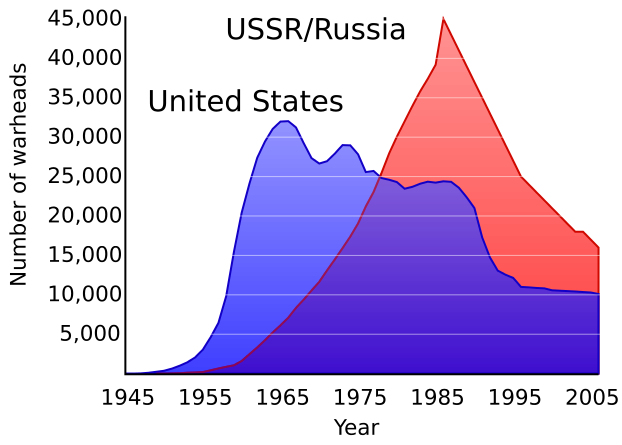
So I disagree with your idea that we were "never on the brink" is simply wrong. We were on the brink. -
Turing Test and Free Will
But it is a physical machine that does run a program if it works. It doesn't abruptly change it's software and decide to do something other that the programmer programmed it to do. If a computer would do that, then we could perhaps assume it was 'aware' (and likely pissed off about it's programmer).My question is more about what is a computer really like "out there" - separate from our experience of it being a "physical" piece of hardware running software (which is basically hardware states). — Harry Hindu
We don't know these issues yet so well and that is a fact. Hence we can mean a lot of different things by AI, for example. This is the problem. As I said, we know our computers and how they work far more better.I would say that awareness and consciousness are the same thing. "Consciousness" is a loaded term. — Harry Hindu
Do you always use deduction? How about inductive reasoning? Never tried that? How about abductive reasoning?Algorithms are closely related to logical thinking. They are like an applied version of deductive reasoning. — Harry Hindu
Not all use of intelligence is problem solving. Of course one might argue everything to be a "problem" that we have to solve.If you aren't trying to solve a problem, then are you using your intelligence? The Turing Test is a test for intelligence, not consciousness. Can you have one without the other? — Harry Hindu -
Putting the Mutually Assured Destruction doctrine to rest.
No.When Argentina invaded the Falkland Islands; when the US failed in Vietnam; when Russia rolled into the Crimea; the concept of MADestruction was show to fail.
When you have weapons you cannot use, they can be no deterrent. — Sculptor
In fact those wars show quite the opposite what you say. Nuclear weapons indeed are weapons of last resort.
What these moments shows is that decision to escalate to nuclear weapons isn't taken lightly. The Falklands war is especially a good example, because the Argentinian junta could totally count on the British NOT nuking Buenos Aires or even using nuclear weapons on their ships. That (nuking Buenos Aires) would have been simply insane and a deathknell to Thatcher and the conservative party. The woke people around the World would likely be still be boycotting the UK and the British would have their own guilt-complex like the Germans do. So Argentinians invaded an island basically with just sheep around and few people and the British then would have made Buenos Aires sound as scary as Hiroshima. Doesn't go that way with nukes.
Also that the idea of a small clash somehow could just spiral out of control to all out nuclear war is also an unreal idea, which usually used to create panic among people.
US and Soviet aircraft fought each other many times during the Cold War and US or allied planes were shot down (Gary Powers wasn't the only instant). It was evident that the US was fighting Soviet Air Force jets in the Korean War, but it was also very evident that this was kept secret from the US population.
(Earlier during the Cold War these kind of aviation history books weren't around: )


The last time we were truly on the verge of a nuclear war was during the Cuban Missile Crisis, when unknown to the US, the Soviets had deployed also tactical nukes into Cuba. Those would have been used, especially Fidel Castro's insisted they would be used, to counter the Marines landing in Cuba. But that wasn't the only time. For example Able Archer '83 was again a hair raising incident which few even noticed (among others like it). Even now during Trump debacle the US has attacked and killed Russian troops, politely named to be 'mercenaries' to save face, yet no threat of nuclear weapons coming into play. -
Small children in opposite sex bathrooms
Yes, it's widely known that 6 or 7 year old children sexually harass adults of the other gender in restrooms, so I guess StreetlightX has the only viable answer to this. :nerd:These all involve someone in the wrong restroom but the first two examples would be a violation of privacy while the second two are not. — Mness -
Putting the Mutually Assured Destruction doctrine to rest.
You see, there is the issue of HOW you use a weapon and from what is the weapons platform. These are extremely important issues here. It's not comparing an electric motor to a gasoline motor.I find it hard to believe that laser systems are in some way inferior to conventional chemical-based munitions. It's like comparing an electric car to a gasoline on — Wallows
Above all, there's one huge disadvantage that laser weapons have to missiles: they immediately show the location of weapon system and the weapon system has to have a visual contact with the target. Weapon systems that acquire a target one way, hopefully passively in order not to set of any alarms, and then attack by a missile or a smart weapon (fired from another place) simply are far better as they far more survivable in the modern battlefield. And the laser weapons they are extremely costly. And big and cumbersome. Even after decades of work into them.
You can see from the above thread (from me and ernestm) see just HOW BIG these laser weapon systems are. Yes, you can have one in a cruiser (planned) or airborne with a Boeing 747, a program which was cancelled. Then Robert Gates made this comment in a hearing about it:
I don't know anybody at the Department of Defense, Mr. Tiahrt, who thinks that this program should, or would, ever be operationally deployed. The reality is that you would need a laser something like 20 to 30 times more powerful than the chemical laser in the plane right now to be able to get any distance from the launch site to fire ... So, right now the ABL would have to orbit inside the borders of Iran in order to be able to try and use its laser to shoot down that missile in the boost phase. And if you were to operationalize this you would be looking at 10 to 20 747s, at a billion and a half dollars apiece, and $100 million a year to operate. And there's nobody in uniform that I know who believes that this is a workable concept.
So, with that in mind, lets start designing A SATELLITE that does the same thing from even further away. And when you observe that the technology is with its present test-beds so large it has to be put into a huge aircraft (that still lacks the power) and planned to be employed with ships. But nope, let's put it into a rocket and send it up to space. It didn't happen in the 1980's and isn't happening today. But technology will solve it because.... we have Elon Musk. So hopefully, after nearly 30 years from the initation of SDI, people can observe how ludicrous the idea then was...as it still is now.
Yet if you really are going to prevent launches of ground based ballistic missiles, why on Earth waste your money on a plane that costs billion and a half piece, is one of the most expensive aircraft to operate and is a sitting duck for enemy SAM's or aircraft, when you simply can have ordinary ground attack aircraft or cheaper drones patrolling the area and attacking anything that looks like a mobile launcher? The whole US war fighting strategy depends on air superiority right from the start. And are you going to have these airborne lasers patrolling all the Worlds oceans?
Nope, sorry, the actual solutions and weapon systems that various armed forces (US, Russia, Israel) have developed and are in operation tell just what the technological limits there are.
Besides, the whole thing about shooting down missiles is far more a political issue than a military one. Apart from nukes, ballistic missiles are simply a nuisance which typically just gets politicians upset if their civilian population is put into peril in an otherwise totally one sided conflict. Let's not forget that V-2 rockets killed actually far more Jews and prisoners of war working on them than British civilians. And ballistic missiles are still very costly. Still, any opponent facing the wrath of the US military it would be a good strategy just to have a few mobile launchers around, which would fire one to two missiles as they they would put the US Air Force on a wild goose chase to find them. And this actually happened during the Gulf War.
(But the paintings are so fine about laser weapons!)

-
The "thing" about Political CorrectnessI remember one person that actually started this thread saying in the opening paragraph:
(but please, let's not make this about him) — Izat So
Nope, you couldn't resist being yourself! :grin:
Oh that evil evil evil evil evil evil evil evil evil Jordan Peterson!!! -
Putting the Mutually Assured Destruction doctrine to rest.
I think the Israelis favour more their own Iron Dome system than a missile that actually was developed in the 1950s. But then again, the to be intercepted targets are basically Katyusha-rockets. And basically Patriot is great to shoot down aircraft, not so actually at ballistic missiles (as we saw during the Gulf War).Further investment in laser-based attack systems has, as far as I know, been totally discontinued for quite a long time, in favor of the "MM104 Patriot" Surface-to-Air (SAM) Anti-Ballistic Missile (ABM), since their spectacular success in Isreal, in 2014. — ernestm
Nope. It would be absolute heresy for the US navy to use a missile system from another branch!The US navy missile destroyers, such as the USS John McCain, probably carry Patriot missiles to protect aircraft carriers, but I don't know the details. — ernestm
And carriers usually aren't attacked by ballistic missiles (even if they can be, especially the Chinese have these kinds of plans). Something like a torpedo works better.
The Navy uses basic Standard-missiles, just with a version converted to the anti-ballistic missile defence role. The idea is to shoot the enemy missiles in mid-term flight before the terminal phase with typically the Navy ship deployed in the route of the potential missile launching site and United States. (Again a simple example how crazy the idea of the putting these weapon systems in a platform in space by trying to cram it into a satellite that has severe limitations in weight and scale.)
They will have a problem with the nuclear arsenal, because now it's very old. The US hasn't renewed it's nuclear arsenal, unlike Russia has been doing all the time. Just renewing it will be very costly, as we know how costly these things are made to be. A new budgetary fiasco in the making I guess.For nuclear bombs, the 2019 defense budget included $13.9 billion. — ernestm -
Putting the Mutually Assured Destruction doctrine to rest.
A telecom satellite is a bit different than a satellite that has to somehow destroy a man size object flying something like 20 000 km/h. As I said, the real issue is cost effectiveness. Hence we have firearms that function as the one's from WW2 or earlier, not ray guns.In regards to #1. Elon Musk is deploying satellites in LEO that can provide internet to the world. Can't the same logic apply to defensive warfare satellites? — Wallows
Why need a laser?Also, have you heard of the new 150+kW lasers to be equipped soon on F-35's and F-22's? Hypothetically four of them operating in unison *could* eliminate the threat of ICBM's? — Wallows
The obvious thing is to destroy anything remote close to being a ICBM launcher before it has shot it's missile away. The issue really comes down to why use a laser, when even a Mk 82 High explosive bomb would do the same thing? Besides, lasers are far better used as counter measures or attack stationary targets than the most fastest objects around.
Just think about the idea of the ABM. A bullet hitting a bullet. In the 1980's a note from the archives of Vitalii Leonidovich Kataev states that the A-35M system was capable of intercepting "a single ballistic missile from some directions and up to 6 Pershing II-type missiles from West-Germany". That system had 100 launchers and featured a nuclear-tipped exoatmospheric interceptor missile (so exactly hitting the warhead wasn't so important). -
Putting the Mutually Assured Destruction doctrine to rest.Can you explain your reasoning as to why practically impossible? My limited understanding on the matter is the miniturization and power needs to make the idea viable from space to counter threats like ICBM's. — Wallows
Sure, just to bring up few issues:
1) In order to stay in orbit at LEO, a satellite has to go something like over 27 000 km/h. Hence it's not in one spot for long to have the ability shoot at the target. Just look at the night sky and find an overflying satellite. It doesn't take long for it race across the sky. Just think of how many satellites you need for one satellite being over you 24 hours. And this ought to be the weapons platform for something that engages a nuclear warhead in mid-flight?
2) Nuclear warheads flying in space are small. There can be many of them (why the term MIRV) and the can change in mid-flight their course a little bit making them hard to hit. And they are going roughly the same speed as satellite.
3) Target acquisition, communication and command of the whole system is very complicated. Add there the fact that the enemy can target your communications facilities or try to shoot down satellites itself. And usually would fire a salvo of missiles.
4) Effective lasers today need basically a huge jet to carry them. And even if the would be able to engage just launched missiles that still are slow, the huge contraptions would be sitting ducks for enemy air defence. Lasers can be used in various ways in the modern battlefield, but this isn't simply the way to do it. Far more better to have a cheaper fighter or drone patrolling the area and try to attack the firing position before the rocket is prepared with your off-the-shelf bombs. And then there is the issue about submarine launched missiles.
Imagine, all of this you should put into a satellite:

Hence nearly all of the systems are ground based and basically follow the Russian style ABM systems. Nope, to put everything into a satellite simply isn't cost effective, even if it would be possible. The Russians have actually had an anti-ballistic missile system around Moscow operating I guess from the early 1970's the A-35 Anti-ballistic missile system:
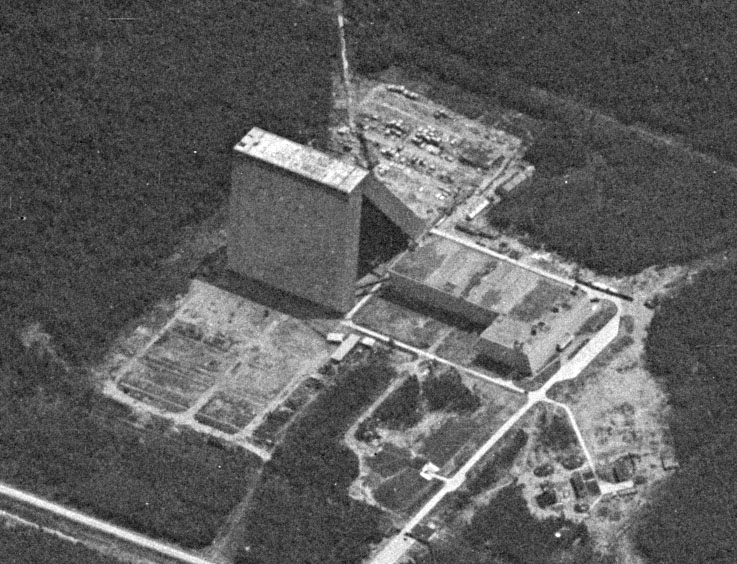

And they have installed it only around Moscow (with a new upgraded system now in use), so that tells something about the cost-effectiveness of even these land based systems. -
Decolonizing Science?
Really?This is essentially an ad hom. — Coben
Just observe what the discussion of decolonizing the education system has been in let's say in South Africa. It really has been a discussion of the background of those who get the academic positions. Now I would argue that it is a matter of employment policy, not science itself. Yet this is how the academia works: once some subfield gets a lot traction, there is the desire to separate it from the traditional field of inquiry. The down-to-Earth objective: get new jobs, create a new field with it's own jargon (to keep out others). Once you have those positions, then you can start writing articles in your own academic journal and refer to your friends.
And just where have I said that it's not diverse? It's the critics who actually don't understand the whole point of what just science is that make the claims of Science being some kind of a unified system.If you look at actual practices and the history of science in the West it is actually more diverse than these debates would lead one to think. — Coben
Those arguing for some kind of specific science, be it indigenous science, islamic science or whatever creationist humbug are politicizing themselves science. And they believe it's totally normal because they start from the idea that science is a tool of political power. -
Putting the Mutually Assured Destruction doctrine to rest.
This is the, should I say "politically incorrect" and taboo-like, argument that when publicly said will get more flak than the US bombers over Germany.If we did denuclearize, we would have to fight a bunch of areal-drone and boots-on-ground wars to re-establish hard territorial control. Imagine a hot war between the U.S and Russia (which would almost certainly have occurred if not for M.A.D). — VagabondSpectre
Saying anything good has come from nuclear weapons, like that the MAD prevented the US and Russia escalating their proxy wars into a full blown conflict, angers a lot of people. And it's the age-old problem in history of trying to argue that some issue prevented a war. -
Putting the Mutually Assured Destruction doctrine to rest.
Actually it's extremely difficult if not practically impossible even now.It's my understanding that Reagan's concept at the time was infeasible due to not being quite there yet technologically and economically. But, things have changed considerably since then. Rocket launch costs have drastically decreased due to the efforts of Elon Musk along with every country pursuing laser technology to defend against hypersonic missiles and such arising threats, which can be mounted on land, sea, and air-based systems. — Wallows
What exists are only the clumsy video graphics of laser interceptors in space we saw during the Reagan years, nothing else. Let's not forget a thing called physics here: a satellite has fly quite fast not to fall back and a satellite in geostationary orbit is useless as it's so far away with over 35 000km (for comparison the ISS is in orbit 340km above the Earth). Not only does this mean the issue is very difficult, but also there has to be a ton of those satellites orbiting in space. Add to this the large size of Russia and China and think just how many satellites should be there. And then there is of course the fact that Russia uses MIRVs and shooting down intercontinental ballistic missiles is totally different from shooting down basically WW2 technology rockets like Scuds (modified V-2s) or Katyusha-rockets fired at ranges similar of ordinary artillery fire.
Look at it the other way around: possessing an actual nuclear deterrence is the most obvious and practical way to deter US aggression if your country is already in the "axis-of-evil" sphere in the minds of the American neocons. Libya very stupidly stopped it's nuclear and chemical weapons programs, but on the other hand the totalitarian state run by a crazy loon had meager chances in them being highly successful. Syria's nuclear weapons program was on the other hand destroyed by Israel (just like Iraq's).The situation is almost a catch-22. As it stands there is no country in the world that presents a danger to us. After all, the Cold War is over and we won, with the collapse of the Soviet Union. But, the appeal of the Star Wars concept first introduced by Ronald Reagan is appealing due to in an absolute manner eliminating the viability of the Mutually Assured Destruction doctrine. — Wallows
If your country isn't in the "axis-of-evil" category, then the international backlash of having a nuclear program can be too costly and that's why several countries have stopped their nuclear weapon programs: Sweden, Brazil, Argentina and South Africa have all abandoned their nuclear weapons programs. Which is just sound thinking from their position. -
Decolonizing Science?
Helpful advice: don't get angered about the most heated debate or the most ignorant or ludicrous comments (especially from students that don't know much if anything).I'm triggered, man, this is just blind hatred. There's no philosophy in it. — whollyrolling
The points that the actual academic people talking about decolonization make are far more subtle and interesting and are open for a serious debate. -
Ethics of Interstellar Travel
Of course! Send a droid.Is there some way to do such an enterprise in a fully ethical manner? — Unseen
(Yeah, I know, this is a debate about ethics, but I couldn't resist to give the obvious answer.) -
Decolonizing Science?
Wonder what you don't think to be a tool of oppression...Science is used as a tool for oppression in the same way that organized religion has been used as a tool for oppression, in that their followers force their beliefs onto others, because they are convinced they are right and everyone else is wrong. Followers of organized religion are convinced they spread the word or wish of God, followers of Science are convinced they spread Truth. — leo
And with that happy note we can end this discussion. :smile:Both religion and science have been and can be used for good or for bad, when it becomes dangerous is when their followers stop seeing that their beliefs are beliefs, and not some greater thing that has to be forced onto everyone else. — leo -
Turing Test and Free Will
Because we live in our currently "most advanced state" of human knowledge. And the algorithm churning Turing Machines are at the present the thing we have. And before it was mechanical clock-work devices. People made similar comparisons then that everything was like mechanical clocks. Just very advanced ones. And we had idea of the Clockwork Universe. Sound familiar to the ideas today that the Universe is just one supercomputer?Why do you think that computers have provided us our "best prospects yet for machines that emulate reasoning, decision-making, problem solving, perception, linguistic comprehension, and other characteristic mental processes"? — Harry Hindu
Yet note that humans have nearly always lived on this edge of the best knowledge ever (the exception is the time we had this huge crisis in Globalization called Antiquity turning into the Dark Ages). Voltaire ridiculed quite aptly Leibniz with doctor Pangloss in Candide. Yes, the early 18th Century was indeed "the best of all Worlds" as we know so well now. -
Turing Test and Free Will
Because we simply know how in the end a very mechanical device called a computer works. That's the answer. We surely can make that leap.Exactly, so how can you make the leap to say that a robot with a computer brain isnt conscious? — Harry Hindu
What does that mean that 'you are aware' and how is it philosophically different from the problem of consciousness?I am aware. — Harry Hindu
Complexity of an algorithm doesn't change the definition of an algorithm. Sorry, but this is mathematics. Definitions do matter. Look it up: algorithms have a quite clear definition.Algorithms can vary in complexity, and the mind could be using a very complex algorithm that we haven't been able to crack yet. — Harry Hindu
It's like saying that every number is a rational number and we haven't just found the correct rational number to everything. Hence you wouldn't call an irrational number a rational number, but perhaps you could call it a 'complex' rational number? Well, if we make an agreement that irrational numbers are 'complex' rational numbers, perhaps we can then assume that all numbers are 'rational numbers'. But then of course, we would be saying that numbers are just numbers.
In the same way when you just assume that complexity can solve these issues, it is a similar argument if you have to change the definition of an algorithm. My opinion is that we're still not there yet, even if we can get there. Not everything from the fundamental parts of mathematics and philosophy simply isn't known yet. -
Decolonizing Science?
Traditions like belief in there existing witches and black magic. How noble traditions have been destroyed by science. The ugly (ghasp!) Eurocentric / Western colonialist science!!!Science has also been a strong force in destroying other cultures and traditions. — leo
We can't define what science is? Not even a bit? Is it ridiculous even to try?So if we can't even characterize precisely what is science and what isn't science, it is presumptuous to claim that science is better than other practices or traditions, — leo
Ah!!!! Science is a tool for oppression!!! :death:. They can't pinpoint what makes that fact "scientific" in a coherent way, if they attempt to apply a criterion to demarcate science and non-science then that criterion will include facts that they deem to be non-scientific, and yet they will keep on disregarding or ridiculing claims that they deem to be non-scientific. In that sense science becomes a tool for oppression. — leo
Simply the actual method it is?You say I conflate scientists with science, but what is science if not what scientists do? — leo
Nope? So it's a sinister tool of oppression used by the White patriarchy to enrich the gains of the Capitalists?
Sorry, but you do conflate scientists with science. Especially everything else they can do or think that isn't science. Because they are scientists, they seem to be the new caste of priests in service of power to you, I presume. -
What will Mueller discover?
It's sad, but this can be a likely outcome. Hyper-polarization, apt word to describe the situation.Excuse the delayed (and brief) reply. Anyhow, I'm less optimisitc. I guess about a third will take the view you outlined, about a third will consider it a witch-hunt, and about a third will shrug their shoulders. Hyper-polarisation in effect. — Baden
It's only the historians later that will rip to Trump to pieces. But who reads history, anyway? -
The "thing" about Political Correctness
Nice. So what's your problem with that?This is such a Steven Pinker-esque argument. — Maw
So why then the ferocious attempt to link terrorism and political correctness? What's the link?The discussion is around the increase in right wing terrorism, and the charts provided clearly show this to be the case. — Maw
Let's rewind Izat So's basic argument:
It seems to me that those concerned with the potential negative effects of Political Correctness to the extreme, such as Jordan Peterson and various pundits, are responding to the effects of something, not the causes. That area of their concern doesn't really extend too far beyond academia. These pundits ought to be far, far more concerned with a rise in rightwing extremism, and their unwitting contributions toward it in the broader public. — Izat So
I do think people should talk about PC issues because I think that there are some problems with PC extremism. What I don't get is why pundits seem so much more concerned about the relatively piddling cases of political correctness gone bad than the rise of the right with its potentially deadly xenophobia and misogyny. — Izat So
So the basic argument is that the topic is somehow wrong, because ...there's right-wing terrorism.
Well, it's like make the argument that why people are talking about terrorism because global warming, climate change is a far more important topic effecting absolutely everyone. -
Decolonizing Science?
What they see is that when you "Science is not western, it is a method used to collect data." is that you don't even see the dominance of Western science, but simply assume it's the 'natural' way of things.I don’t think people questioning what is perceived as a biased institute would necessarily see my words as ‘arrogant’ — I like sushi
Yet is it then good for the field of inquiry, the academia or science in general? It isn't any kind of threat to actual threat to science like lousy primary education is, but still.Of course some just want to preach nonsense. Let them. — I like sushi -
Turing Test and Free Will
Harry, how does your mind work? How do you prove rigorously that you are conscious? What is consciousness? It's evident from philosophical debate that we don't exactly know these issues. Yet we make these astounding leaps of faith that we indeed are conscious.Computers do recognize patterns of on and off logical gates. What I see you doing is making a lot of claims about what humans can and what computers can't do, but no explanation as to why that is the case. How and why do you recognize patterns? How and why does your mind work? — Harry Hindu
However...
What we know is how Turing Machines work: they have an exact definition of themselves and how they work. They follow algorithms. We know exactly what an algorithm is also. This is clear too from Turing and Church. And there are strict limitations on just what a mathematical algorithm can be. First of all, an algorithm has to be a well defined step-by-step procedure. Well defined means that there the instructions (the algorithm) tells always what to do. The algorithm cannot say "do something else" for a computer. That simply isn't well defined! There has to exact step-by-step procedures to "do something else" for a computer, which really isn't what we mean by "do something else", something that is quite open ended. Ambiguity is simply not allowed in an algorithm.
The pattern that Turing Machines can solve is a pattern that is computable. Yet unlike computers, we can even make sense of various things that are quite patternless. Something that doesn't have a pattern, we use narrative. History itself is the perfect example: nowhere else is randomness so obvious. Many even don't consider history a science, which tells exactly how random with unique phenomena history is. The narrative nature of history should be obvious to everybody, just read a history book. Not many functions there explaining historical events!
Also we can be creative and come up with something new or handle ambiguous issues or instructions. Hence we are able to deal with things that are non-algorithmic, but for a computer this is cannot be. Everything that is non-algorithmic has to be in the end transformed to the computer to be algorithmic. -
Decolonizing Science?
The problem with those crying about "Western" science being colonial, oppressive, against minorities and other cultures and obviously dominated by the white patriarchy (and so on), is that in their fury about science being a tool of political power, they really do believe it to be as a tool of political power and that it ought to be used as such. The agenda is that it has to be used...this time by them.Or, for example, the teaching of the scientific method in the specific academia includes patterns that are similar to colonial patterns, where not scientifically arrived at conclusions are use do dismiss the products and ways of thinking of other cultures. IOW it is not just a tool of political power, but that it can be used as one also. — Coben
Where others would see the abuse of the term science or referring to science when the issue doesn't have anything to do with science just as a minor issue, just like Thomas Kuhn was annoyed when George Bush Sr used Kuhn's term "a new paradigm" to portray GOP tax policies, the people worried about science being "Western" see it differently. Those who genuinely believe in "Western" science having to be decolonized believe it's not about just the misuse of the scientific method, they believe science is inherently a political tool of power and not much else.
Let's bring it down to what this is all about: getting new academic positions and openings. In the end "decolonizing science" will really apply to those who get the new 'decolonized' positions. Where others usually would treat job enrollment and equal opportunity as a separate issue from the actual science, that is not the case here. If you will have a "decolonized" science program, you think it will be run by your typical white males that you find in science programs today?
Furthermore, lets look at where the discussion of decolonization of science has taken place. Has it taken place in China? Because China would be the obvious place for this discussion to be taking place as it has a very long tradition of non-Western science. It isn't, at least that I'm aware of, because everybody there is, well, basically Chinese. And Japan we can dismiss by saying it hasn't been a colony (even if it was occupied after WW2). Even if Japanese surely aren't European and do have an own non-Western culture, they haven't at all been insisting that the science they do would be Japanese, not Western.
This is meaningless to say because those believing in the necessity of decolonization of science don't think about this as you do. What they would see in your answer is just the arrogant and condescending way how those who uphold Western science make their case. And they surely wouldn't care that 1+2=3 is a non-Western number system, because debating science or the history of science isn't their issue here at all.Also, 1+2=3 ... again, not a cultural item. Science is not “western” it is a method used to collect data. It has nothing to say about anything. — I like sushi -
The "thing" about Political Correctness
That really isn't how any academic field works, sorry.We aren't talking about Marxism, but aspects of social studies which Peterson labels "neo-marxist." I don't know what you take Marxism to be here, but the problem isn't Peterson's suggestion wouldn't follow a narrative we taold about society, it's that it will would mean gutting the studies in question of their description of material social states and relations. — TheWillowOfDarkness
Schools of thought have their natural lives and if they fall out of favour, typically with the last tenured proponent of the school dying of old age, it doesn't gut anything away. Only a totalitarian state like Stalin's Soviet Union can really make a political decision that Lysenkoism is now the correct way and hell with genetics.
You are giving a lot of influence to one Canadian professor. -
The "thing" about Political Correctness
Your views about him were obvious even from the OP.IMHO, JP is a loon. — Izat So
Look who's talking about sensationalism.If that's not sensationalist! There is just no doubt he would like to shut down women's studies and ethnic studies. He expresses his distain every chance he gets. It's very reasonable to think that given the mess of his ideas he is popular because his take on politics vindicates the regressive views of a lot of people. — Izat So
No. Actually there is a lot of doubt. Just as he is unlikely to want to shut down English literature or anthropology.
So please help me, Karl Marx, you are my only hope???The default that is not going to help us, however, is the position that treats society as some kind of covenant between independently self-socialized brains in boxes rationally maximizing their self-interest. — Izat So
ssu

Start FollowingSend a Message
- Other sites we like
- Social media
- Terms of Service
- Sign In
- Created with PlushForums
- © 2026 The Philosophy Forum