
-
The animal that can dislike every momentLook, if I didn't know better I might've said that the game is rigged. We're intelligent for sure, we can learn, gain knowledge and skills, and use that to change the world - make alterations in it to suit our needs or, in a moral sense, we have the ability to, if committed enough, to transform Earth into the Garden of Eden. Surely, this ability to transform our world needs to go hand in hand with the ability to imagine a different world - the ability to create an Eden is pointless if we can't imagine one, right? The downside is if we can imagine Eden, we're going to be deeply disappointed by Earth despite all its wonders. — TheMadFool
You make it seem like everyone's daily life is one of transforming earth into a possible paradise. No. Collective achievements are not daily life. Naming off things like indoor plumbing and air conditioning do not make life thus utopia. Pointing to some future time of things being utopia due to technological innovations would also miss the point of necessary suffering involved in the human animal. Contingent sufferings, as things that I've listed, are not going to end any time soon either. -
The animal that can dislike every moment
But what I think is funny is, because our situation arises out of a sort of interaction of our linguistic minds and the environment, the very human situatedness of our daily lives and its relation to suffering is downplayed, because of its virtual nature. It is not a straightforward instinctual interaction with the world. This leads people to believe that the type of suffering I am discussing (necessary suffering.. that is to say, that of being constantly dissatisfied in regards to our survival, comfort, and entertainment situations) is to also be downplayed. We are always dealing with. And somehow this awareness is also its greatest asset. A rock's greatest asset is it doesn't deal with. -
The animal that can dislike every momentPut simply, human brain power is a double-edged sword, a knife that cuts both ways - it gives us an edge over non-humans but the downside is we suffer more. — TheMadFool
We know our situation, the context for which this situation is situated in the broader picture. Other animals do not. We know that things can be better or different, or we can at least imagine so, yet know the reality of the situation is different than what can be. We know there is no utopia, yet we are born in non-ideal worlds.
Yet presented with this, people simply downplay it. They don't want to discuss it. Keep ignoring, sublimating, etc.
This is interesting. If will provides impetus, then what provides impetus to will? — Pop
The Will is the ground in Schop's theory. Is is what it is.
Knowledge is a double-edged sword. Are the advantages worth the drawbacks? — Bird-Up
People only want you to think of the advantages, but much of the it is experienced through the negative of dealing with. Dealing with the complexities of survival, comfort, entertainment, and all the contingent suffering suffused throughout. -
The animal that can dislike every momentFor example, if someone is born with one leg, they aren't stressed out by the difficulty of the situation; until they learn that most humans have two legs. Now they have something to be pissed about.
Knowledge is a double-edged sword. Are the advantages worth the drawbacks? — Bird-Up
We are the animal that resents. Other animals might fear, maybe sad in some vague way. We can resent, and know exactly why. Every moment, there could have been something better. We know this. -
The animal that can dislike every momentPerhaps Schopenhauer would have benefited from an understanding of mindfulness? :smile: — Pop
He thought that asceticism was the highest form of repose against Will's ceaseless impetus.
All kidding aside , it is an interesting topic in that total awareness of the moment excludes awareness, of other moments, and it is pleasant unless you are already in physical pain.
I imagine many animals would exist something like this. — Pop
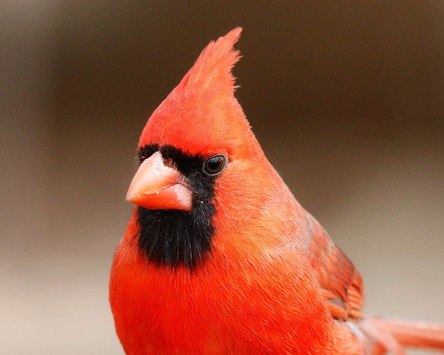
Yes, as a cardinal, I'd say so. But, we humans need to deal with... always dealing with. One thing, then the next, then the next. Repose things like mindfulness is just something to schedule in with the rest. -
The animal that can dislike every momentAbility to recognize, albeit primitively, base cause and effect, idea of time (past, present, and future), and how outside influences can and will affect oneself? — Outlander
Yeah, I guess I can agree here, but it's not the same as I am talking about. If a dog can think "I resent this moment", and not just have fear, maybe we can talk. Even if we were to keep debating it, the implication of the second paragraph is where I'd like this discussion to go, not comparative animal cognition.
"Living in the moment" doesn't have to automatically exclude any and all notion of planning, preparation, and long term goals. Does it? For many I suppose. Why do you have long term goals and aspirations anyway? So either you or another can more freely live in the moment. Is this not correct? — Outlander
Schopenhauer had a saying about not being able to just be, and if so, very temporary. That is part of his idea of suffering (what I call necessary suffering). What I don't get is, do you deny what I am explaining, or do you just point to very specific things to try to make the small large, and the large small? -
The animal that can dislike every momentWow that is quite a list - brilliant! — Pop
Thanks :smile:.
I try to take the eastern approach and live in the moment as much as possible.
The moment, with no regrets of the past and no worries of the future, is always pleasant.
It seems that the moments that are not pleasant are the ones not lived in the moment.
Have you thought about this? — Pop
I don't think living in the moment applies when doing many things in life. Quite the opposite. -
The animal that can dislike every momentYes we are just engaged in glorified survival, but we have vastly more control over the terms of that survival and its opportunities for pleasure than any other animals do, by far. — Pro Hominem
And that negates the other things? Pollyannaism.. screening out what one doesn't want to see when evaluating. -
The animal that can dislike every momentWow that's a pretty big list. Animals are prone to at least half those things.. of course they are but they do not know why. Is that much different to a person a few hundred years ago who got sick but didn't know why? — Outlander
Not why they are sick, but the know they are sick and can resent it (contra animals who get sick, feel it, but that's it.. anthropomorphism and odd anecdotes aside).
Some animals show a sense of self-consciousness at least. Example, I read if you have a dozen dogs in a cage and one by one they are taken out and killed in front of the others, the other dogs will "figure it out" and start to panic. — Outlander
Not sure that kind of association is really the same as what I'm talking about. -
The animal that can dislike every momentDon't forget contingent suffering. You got you sore throats, headaches, nausea, fever, body aches, mental illnesses, migraines, indecision, poor planning, poor decision-making, cancer, AIDS, Ebola, genetic diseases, accidents, wrong place, wrong time, diabetes, autoimmune disease, trauma, natural disaster, broken bones, sprains, sun burns, vitamin deficiency diseases, back problems, diarrhea, food poisoning, bad drivers, traffic, noisy neighbors, autism, phobias, nervous disorders, anxiety, depression, psoriasis, gout, heart attacks, strokes, animal attacks, stinging or biting insects, muscle strain, eye problems, hearing problems,ear aches, loneliness, isolation, tediousness, suffocating crowds, people you cant get away from easily, deception, unkindness, burglary, larceny, stealing, muggings, embezzlement, driveby shootings, assaults, hit and runs, car issues, property issues, slumlords, injustice, hypothermia, heat stroke, shortness of breath, floods, droughts, wildfires, work stress, home stress, homelessness, red tape, loss of memory, Alzheimer, dementia, stubbed toes, hangnails, envy, deceit, rage, road rage, road obstruction, getting lost, addiction, water borne diseases, slips, falls, embarrassment, insomnia, sleep apnea, cuts, bruises, sexual dysfunctions, malaria, sleeping sickness, plague, leprosy, falling objects, cultural pressures, lung diseases, heart diseases, hypoglycemia, malnutrition, OCD, MRSA, MERS, SARS, cysts, hemorrhoids, head injuries, lacerations, abuse, toxic chemical inhalation or ingestion, radiation poisoning, carbon monoxide poisoning, poison, poisonous plants and mushrooms, warfare, gunshot wounds, stabbings, too cold, too hot, electrocution, coronavirus, and much much more. See here
https://www.cdc.gov/diseasesconditions/az/a.html
We are all painfully aware of all this. -
The animal that can dislike every momentThe mother tiger offers zebra to the young. It is quite yummy. — Outlander
Haha.. it does.. but does not know why. It is yummy and I am doing this because it is yummy are two different things. -
When purpose is just use
Yet your own language seems to put the little man further back in the picture. -
When purpose is just use
I just showed you where your language has the homuncular observer weasel words. -
When purpose is just useNo. You brought it up. I’m asking what you mean. An explanation ought to be easy if you have a thought out position here and not just hand wavy “suspicions”. — apokrisis
I just gave you a critique as you requested. If you don't want to address them, fine. -
When purpose is just useWhat is this “observer” exactly. You appear to presupposed something here that I do not. — apokrisis
We can cover that later. I think I gave you something to think about for the Cartesian Theater issues with what I saw, as you asked. -
When purpose is just useYou didn’t make any counter argument so far. — apokrisis
Ok, how in this case does it avoid needing an observer when all other phenomena does? The observer is presupposed. There are weasel words to look out for like "integration", "arise", "emerge", etc. These are not explanations. I'd have to see where they lie in these group of theories by looking at the language. Hmm lets see some candidates:
this selfhood arises as part of the world modelling — apokrisis
consciousness only arises through interaction with the world — apokrisis
We feel like a self in a world because the whole of our neurology is set up to represent this state of division. — apokrisis
So the output generates its input. We are in a constant state of acting on the world and so continually discovering ourselves to be in that world. — apokrisis
These look to me, to presuppose the very problem its trying to solve. -
When purpose is just useAttempts to act reveal a “self” and a “world” as this crisply divided state of affairs. — apokrisis
I take a slightly different approach. I start with the idea that everything else needs an observer. Look at a computer- we observe inputs creating outputs. Whence the observer for humans?
Thus I still see Cartesian Theater errors. We are assuming the observer.
I suspect all theories, even "embodied" ones suffer from this. -
When purpose is just use
I agree with you that computational, and representational theories of mind have switched to systems approaches in many areas of consciousness studies but can systems theories also fall into the Cartesian Theater trap? -
Coronavirus
Wish that could be said about exposing people to things like viruses and replace "pages" with "years". -
Coronavirus
It already was. The clearness of the connection of a pandemic and not exposing people to it is too easy. And c'mon, this is an obvious point. -
CoronavirusOh sorry, forgot to mention that another major reason for antinatalism is coronavirus. Bring people into the world expose them to pandemics. Great job people. But right, who would have expected a pandemic? I mean epidemics are unprecedented in human history :roll:. Yeah, what's a little contagion right? Not that bad..
Just keep downplaying all the negatives people. Keep Pollyannaising life. It's all worth it to create suffering, harm, negative, pain on behalf of another person. It's not that bad.. Everything works out.. I mean parents have to do their duty for themselves, their legacy, the country, humanity. Overlook, downplay, shrug your shoulders at the costs.. Play with other people's lives because you want to play a role. -
When purpose is just use
Yes, I think I can pick that up from him.
The Cartesian Theater I see is linked directly with the Hard Problem. It keeps people honest with the question at hand..dont try to pull a rabit out of a hat and call it a solution. Im still getting into the part about "absential" phenomenon. Thats his original contribution I think. Whats your thoughts on that? -
When purpose is just use
Are there any differences to his approach and yours? I do like that he acknowledges the Cartesian Theater problem right off the bat. Are you familiar with that problem? -
"Would you rather be sleeping?" Morality
This was not meant to be anything too rigorous. It was just more like...
"Wow, if I think about it, a lot of the day I'd rather not be conscious than go through this". If this were aggregated. they would only be awake for a much smaller amount of time for the non-sleep activities. That was it really. Then it leads to whether it's worth it for those small amounts of experience.
The reason it is not rigorous is its not a priori (I guess you might call more "Platonic"). It inevitably leads to people saying "Gee Whiz, schopenhauer1, I prefer almost ALL the time being awake through all the neutral and negative things!" or "I almost never have negative or neutral experiences!This is what @Michael did. I just don't feel like psychologizing over their own preferences, biases, what they state vs. what is actually the case, so I said "Cool" to him and moved on.
However, I suspect the percentage of preferred awake time might be lower than people think with a bit of reflecting. I just don't want to go down that rabbit hole of psychologizing and biases like Pollyannaism though, so I'll let people say "No way, schopenhauer1, you are wrong bout me and us other humans! Don't speculate about me Mister!" etc etc
But I think there are indeed a lot of de facto things about living that people would rather not be conscious for and in fact, in retrospect, would have perfectly been fine replacing that activity with sleeping. -
"Would you rather be sleeping?" MoralityYes. Better for the people who experience the world absent of the negative situation, nit just 'better' in general. There's no general sense of 'better'. Something's being 'good' is belief within a human mind. Without human minds the concept has no meaning. — Isaac
Actually I think it can be both.
Even if there was no person to know they were not around to be the beneficiary of the good, it is good. But yes, good is only recognized when there is someone around who can recognize it.
And.. if a tree falls in the woods.. -
"Would you rather be sleeping?" MoralityI don't see how. How can anyone meaningfully say they would prefer not to have existed when not existing negates any ability to experience a state of preference?
We don't talk this way about any other contingent states. We don't say, for example, that a painting would be more/less vibrant had it never been painted. The vibrancy is a property of the painting and so had it never been painted there'd be not entity to possess this property. — Isaac
We talk about situations which never happening being better, no? A state of affairs where one does not exist where X, Y, Z does not happen (rather be sleeping). A state of affairs where one does exist X, Y, Z does happen. It is just "good" that the negative did not happen. I don't even have to exist for this better situation to be true. If negative could have happened, but it did not, that is good.
You can retrospectively understanding that a better state of affairs could have taken place. -
"Would you rather be sleeping?" MoralityNo, this is the hypothetical situation where I replacing the things I don't like doing (e.g. working) with sleeping. There are still plenty of things in my life that I prefer doing to sleeping. And the few hours doing them is preferable to never having been born. — Michael
Cool -
"Would you rather be sleeping?" MoralityNo, a few hours of consciousness is preferable to none. — Michael
I think you mean a few waking hours doing only things you'd rather be doing than sleeping. Sure, but you can't have that. -
"Would you rather be sleeping?" Morality
Actually, the point is that by the mere fact that you "rather be sleeping" much of the time, this speaks louder than your stated preferences. — schopenhauer1
You can retrospectively and meaningfully talk about preference in its relation to never existing. You just can't actually never exist. -
"Would you rather be sleeping?" MoralityWho would be around to dovthe preferring? Something cant be preferable without a person to prefer it. Preferring something is a state of a concious human mind. — Isaac
Hence edit 3. -
"Would you rather be sleeping?" MoralityIf I was conscious before birth (somehow) and had to choose to either be born or to stop being conscious then I'd choose to be born, because the concept of eternal unconsciousness terrifies me. — Michael
Yet wanting to sleep much of the time is is not being conscious either. And this whole "terrifies" thing is why I made edit 3 cause I knew you were going to go with a suicide slant with it soo..
Actually, the point is that by the mere fact that you "rather be sleeping" much of the time, this speaks louder than your stated preferences.
I don't know what you mean by this. That work sucks? I know. — Michael
Or whatever else you don't want to do, and thus.. never existing might have been preferable to the waking hours you enjoyexisting more generally. -
"Would you rather be sleeping?" MoralityBecause the concept of eternal unconsciousness terrifies me. — Michael
Yes, see Edit 2 and 3. -
"Would you rather be sleeping?" MoralityThis is quite ambiguous. Although a large percentage of my day is spent doing things I'd rather be sleeping than doing (e.g. working), in terms of all the things I could be doing (e.g. parting, watching TV, playing games, etc.), sleeping certainly isn't preferable to the majority. — Michael
Yet you don't do them.. And hence in my OP:
I just think that the de facto options of a normal human life may actually skew towards preferable to be sleeping.
If all you want to say is that a life of mostly sleeping is more desirable than a life of mostly working, then fine. But don't go further than that, because a life of mostly partying, watching TV, and playing games is more desirable than a life of mostly sleeping. — Michael
Ok, so this amounts to a world that doesn't exist for many realistically.
And of course, even if a life of mostly sleeping is better than a life of mostly working, I'd also say that a life of mostly working is better than a life of always sleeping. — Michael
You say the exact opposite thing in the second part then you did the first part. You prefer sleeping to work, you prefer work to sleeping. Which is it?
Edit: Oh I see you said "always" sleeping versus mostly. So, you those minority of moments you prefer more than sleep make it worth it. Why?
Edit 2: Actually, I don't care why. This is an argument for birth not suicide. If you knew that your life would be mostly "rather be sleeping" would you want that? Oh Nietzsche you asshole. Eternal return.. worst idea ever.
Edit 3: Actually, the point is that by the mere fact that you "rather be sleeping" much of the time, this speaks louder than your stated preferences. -
"Would you rather be sleeping?" Morality
Let me clarify.. If sleeping (being not awake) is preferable to most activities in waking life.. Of course no one is disputing that there are some things one rather do than sleep. But the percentage might be more interesting than one would first suspect. -
"Would you rather be sleeping?" MoralityMost people will already agree that a lot of the things we do we only do because we have to, and that we'd prefer to do anything else instead (e.g. sleeping) were that an option, so I'm not really sure the overall purpose of your argument. — Michael
I think you stated it. -
"Would you rather be sleeping?" MoralityI'd certainly rather be sleeping than working, but I'd also rather be partying or watching TV or playing a game than sleeping. — Michael
Sure, but sleeping is sort of a neutral state..one where you are not conscious. Its a stand in for "not existing". Would you rather not exist much of the day or exist and bear through the activity? Its purposely meant to make you think about the motions of most everyday tasks and their worth. -
"Would you rather be sleeping?" MoralityBut asking for every moment separately "Sleep instead?" and asking for the sum seems to lead to different results. This is strange. — Heiko
Can you clarify? -
When purpose is just use
Just curious, are you famililar with Terrence Deacon and if so do you mainly agree with his theories like absential phenomena? He talks about how teleology can come about from systems.
schopenhauer1
Start FollowingSend a Message
- Other sites we like
- Social media
- Terms of Service
- Sign In
- Created with PlushForums
- © 2026 The Philosophy Forum