
-
Donald Trump (All General Trump Conversations Here)Imagine taking project Veritas seriously :rofl:
No wonder this fucker is how he is. -
Amy Coney Barrett's nominationThat is to say, you seem results oriented, less concerned about the legal analysis than in whether your political ideology is advanced. Is that how nominees are to be judged, as to whether their rulings help those you wish to help, instead of whether they are legally accurate? — Hanover
Er, yes. Quite literally fuck the law and all involved in upholding it if it leads to bad outcomes. -
A Nice Derangement of EpitaphsHow could a once-used convention serve as a justification? — Banno
Justification? For what? (I think I missed a convo somewhere).
Might have a look for it. Something about following a rule once being the same as not following a rule... — Banno
Ah, but in Witty, it's quite the opposite: we can find a rule for any use we want to... Quss and all. What is necessary is 'agreement in judgements'... -
Is it weird being afraid of humanity?Our growth has never been in our hands. At best we have been negotiators in it; perhaps it's possible to say that we are getting worse at doing so.
-
A Nice Derangement of EpitaphsSo I suppose I am committed to not bending "convention". — Banno
That's unfortunate. I still think that this line is among the most consequential in the paper:
"These remarks do not depend on supposing Mrs Malaprop will always make this ‘mistake’; once is enough to summon up a passing theory assigning a new role to ‘epitaph’."
A single use is enough to 'summon up a passing theory' - I think this speaks a great deal to how convention can be single-use. -
Does Analytic Philosophy Have a Negative Social Value?It's been reported to me that @JerseyFlight has been harassing other posters with PMs. If you've been on the receiving end of one of these, kindly let me know.
-
Does Analytic Philosophy Have a Negative Social Value?One has to wonder about the complicity of this middle-management demand for 'value'. You should not play this vapid game @Banno.
Via Ray Brassier: "Philosophy should be more than a sop to the pathetic twinge of human self-esteem. ... Thinking has interests that do not coincide with those of living; indeed, they can and have been pitted against the latter". -
Amy Coney Barrett's nominationhttps://jacobinmag.com/2020/09/supreme-court-pick-trump-amy-coney-barrett-gig-economy-workers
"Just weeks before President Donald Trump reportedly selected her to fill the new Supreme Court vacancy, Judge Amy Coney Barrett delivered a ruling that could help corporations evade long-standing laws requiring them to provide overtime pay to their workers.
That ruling was one of a number of cases in which Barrett helped corporate interests prevail over workers. Her highest-profile business-focused actions on the federal bench have limited the enforcement of age-discrimination laws, restricted federal agencies’ power to punish companies that mislead consumers, and reduced consumers’ rights against predatory debt collectors, according to a recent report from the Alliance for Justice."
A corporate rat. -
Does Analytic Philosophy Have a Negative Social Value?this presumption bears the burden of its own proof, — JerseyFlight
:lol:
Ah, my mistake, I thought you were even half-serious. My mistake, carry on. -
Donald Trump (All General Trump Conversations Here)Yet hard to understand why this urge to divide people, to make an event that had widespread condemnation at first into a polarized issue. — ssu
Fuck off you rat, you're the lunatic whose first reponse to having mentioned the riddling of an autistic boy with police bullets was BuT hE wAsNt BlaCk! Don't pretend to be above this shit when you perpetuate it. -
Does Analytic Philosophy Have a Negative Social Value?My claim is that this is not a subjective consideration. — JerseyFlight
Says the dude whose only 'evidence' has been some second hand quotes and word garble that no one can make sense of. -
Does Analytic Philosophy Have a Negative Social Value?One thing to mention: all these silly labels that people like to use - 'analytic' or 'continental' or whathaveyou - these are nothing more than ecologies of conversation. They are bounded by nothing other than their proximity among themselves, which they use to develop and complexify along all sorts of divergent paths, not unlike rich old rainforests. To the degree that there is anything like an analytic or continental or XYZial camp of philosophy, at best we are simply talking about one, two, three or other various biomes of ideas and motivations. The idea that any of these ecologies are defined by certain essences or uniform techniques or whathaveyou is just stupid: the kind of thing you tell an idiot child to get them to shut up while the adults are working.
-
Donald Trump (All General Trump Conversations Here)Disengaging from a moron is hardly self-destruction.
-
Donald Trump (All General Trump Conversations Here)It's OK, don't worry your pretty little head about it, I don't want you to hurt yourself.
-
Donald Trump (All General Trump Conversations Here)Concentrating on the systemic racism part veers the focus away from the fact that excessive violence happens without regard to one's race. — ssu
So your answer is "yes" then. Good to know. -
Donald Trump (All General Trump Conversations Here)You realize an institution can both be systematically racist and excessively violent right? Or is this too big a thought for you?
-
Does Analytic Philosophy Have a Negative Social Value?That makes four shitty, meaningless salad dishes. Presumably you have a point besides enumeration?
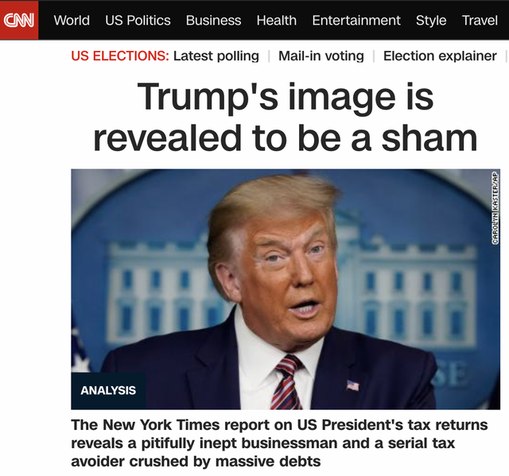
Is this the Trump method of truth telling? Say and cite it enough and it becomes so? -
Does Analytic Philosophy Have a Negative Social Value?Analytical philosophy conducts conceptual investigations, specifically into linguistic, idealistic logical structures. — JerseyFlight
Word salad pretending to be meaningful speech. -
Does Analytic Philosophy Have a Negative Social Value?I wouldn't, because there is no singular 'analytical style'. As if something as ephemeral as 'style' determined anything at all in the first place.
-
Does Analytic Philosophy Have a Negative Social Value?I responded with an argument and evidence demarcating the Analytical Form — JerseyFlight
A fallacious appeal to authority is not 'evidence'. It's laziness and shitty pseudo-scholarship three times over. -
Does Analytic Philosophy Have a Negative Social Value?Yes, this kind of 60,000ft view is made for outsiders and neophytes to satisfy a misplaced craving for generality. It takes the ignorant or the impudent to think anything substantive can be said on the basis of it.
-
Does Analytic Philosophy Have a Negative Social Value?It has a multitude of styles and approaches. Davidson being as different from Sellars as different from Anscombe as different from Nussbaum as different from Cracy as different from the Chruchlands. And each different among themselves, no less.
-
Does Analytic Philosophy Have a Negative Social Value?No, I consider these 'invalid' because 'the analytical form' corresponds to nothing but an incoherent fantasy that exists nowhere but in your head. Ironically, not unlike the present king of France.
-
Does Analytic Philosophy Have a Negative Social Value?There is nothing to deal with. You're speaking at a level of generality so broad as to be useless. There's no there there.
-
Does Analytic Philosophy Have a Negative Social Value?I'm about as much a proponent of 'the analytical form' as I am a coconut. What I am against however, is the peddling of ignorance by the ignorant and arrogant.
-
A Nice Derangement of EpitaphsThe present article seeks to show that theories based on convention are doomed to be incomplete, because they will necessarily be unable to deal with novel and eccentric uses. I take it that you think convention can be saved, but it's not clear to me how this might be done. — Banno
Perhaps one way is to rethink the notion of convention. Here's a question: can a singular, novel use, establish a convention? Can a singular, novel use, be called conventional? Can we, without bending grammar out of shape say something like: "that was a one-time convention"? -
Does Analytic Philosophy Have a Negative Social Value?Ah yes, the same Michael Huemer who also said that "Many people interested in Continental philosophy are perfectly nice people. That said, analytic philosophy is obviously better... The other thing to point out is that the substantive doctrines most commonly associated with continental philosophers are false".
The correct conclusion, of course, is that Michael Huemer is a wanker whose blog posts on these topics are embarrassing, second only to anyone who takes them seriously.
Of course it says alot that the zealot for 'reason' here is indulging in a couple of totally fallacious appeals to authority while offering about as much substantive critique as an empty juice box. -
Donald Trump (All General Trump Conversations Here)Why don't we ask Streetlight what he is politically and from there I'll determine if "comrade" is appropriate? — BitconnectCarlos
Gonna go with 'not a fuckstick'. Otherwise imma sit here and watch you hash our your identity politics which you so enjoy. -
Donald Trump (All General Trump Conversations Here)Oh gee, TwoBit selectively quoting to shore up his shitty efforts to muddy the waters? Who would have thought?
-
Does systemic racism exist in the US?t's a terrible tragedy, but that doesn't mean a crime was committed. — Hanover
Falling off a bike and getting hit by a car is a 'terrible tragedy'. Sending allegedly trained officers with lethal weapons to barge into a wrongly targeted house and executing an innocent person is not. -
Donald Trump (All General Trump Conversations Here)
-
Donald Trump (All General Trump Conversations Here)As for the names of right-wing terrorist groups: Proud Boys, Atomwaffen Division, Patriot Prayer, Boogaloo, Rise Above Movement and quite literally hundreds more. Of course, not names that TwoBit has been fed by Fox, hence the pathetic retreat into 'lone wolf' attacks. Fuck off with your apologetics.
And this to speak nothing of stochastic terrorism, stoked by racist cumstains like Trump. -
Donald Trump (All General Trump Conversations Here)many of these "right wing" attacks are lone wolf attacks where the attackers were radicalized over the internet — BitconnectCarlos
Yes, they're radicalized by ignorant dipshits who buy into and sprout the propaganda you transmit like the good little pawn you are.
And it's not "right wing" in scare quotes - it's quite simply right wing violence perpetrated by adherents to a dogshit ideology which murders people on the regular. -
Donald Trump (All General Trump Conversations Here)but you've got to admit today the far left tends to be more visible today. — BitconnectCarlos
Read: "I'm a dupe for propaganda and recite the views fed to me by it, regardless of the facts". -
A Nice Derangement of EpitaphsWithout commenting directly on this debate - which is largely trite - it does seem to me to issue forth from an interesting oscillation: is meaning a verb, or is it a substantive? A substantive that verbs? A verb treated as a substantive?
The grammar of meaning: we say "I mean" or "To mean"; but also "the meaning" or "a meaning". This debate seems to be a confusion of surface grammar with depth grammar. -
A Nice Derangement of EpitaphsTo riff a bit more on thoughts inspired by the paper: I think the distinction between 'passing theory' and 'prior theory' is really interesting, and they are even more so when thought together with some other super interesting issues regarding langauge. Two, related issues, in particular: that of the status of examples, as well as the issue of learning. In both cases of language-use (which are usually brought up in tandem, i.e. we use examples in order to teach) what's at stake is a kind of spontaneous generation of a "passing theory". A passing theory, moreover, that can be generalized to become a 'prior theory' (i.e. when you're teaching someone, you say 'you do it like *this*', and the student is expected to figure out how to do the same for other cases of *this* - c.f. Witty's comments on 'learning how to go on', PI§151).
In some sense, the 'prior theory' is misnamed: 'prior' theories are not 'prior'; they are, instead, after the fact. They are ratiocinations of what are instead generated in situ and then projected backward in time: effects mistaken for causes. So-called 'prior' theories function, at best then, as sets of heuristics, resources to look to in some cases of trying to figure out novelty, but not at all as distributing the grammatical shape of words or phrases.
Anyway, examples are so interesting because they effect a kind of convergence between 'passing' and 'prior' theories: they enact a passing theory whose status is to be taken for a 'prior' theory ("this is how things ought to be done"). Or to put it otherwise, they effect a kind of short-circuit between saying and showing: examples show how one is to do something as much as what one is to do. Examples show what they say. (to quote Girogio Agamben: "Neither particular nor universal, the example is a singular object that presents itself as such, that shows its singularity. Hence the pregnancy of the Greek term, for example: para-deigma, that which is shown alongside". (The Coming Community)).
And this in turn sheds light on the notion of 'use', and helps to show why 'use' does not in any way mean 'use among a community'. There's a great remark in Davidson: "Someone who grasps the fact that Mrs Malaprop means ‘epithet’ when she says ‘epitaph’ must give ‘epithet’ all the powers ‘epitaph’ has for many other people... These remarks do not depend on supposing Mrs Malaprop will always make this ‘mistake’; once is enough to summon up a passing theory assigning a new role to ‘epitaph’" - a single instance is all that is needed generate a use: it might even be a 'one-off. Malapropisms function very similarly: they are 'one-offs' that generate their own passing theory that can be recognized as such. And I can't think of any off the top of my head, but I'm pretty sure that there are malapropisms that have become, through common use, accepted as terms of their own.

Streetlight
Start FollowingSend a Message
- Other sites we like
- Social media
- Terms of Service
- Sign In
- Created with PlushForums
- © 2026 The Philosophy Forum