
-
Je suis neoliberal?I think Agares-Tretiak (above) is right when he describes paleoconservatives as being broadly anti-government, even including defense spending which isn't directly related to national defense. Sorting out who is neo-liberal, neo-conservative, and paleo-conservative and beyond is kind of a messy job -- like sorting out a bucket of chicken guts. Reducing government in as many ways as they can imagine (except where it affects their own and their clients' fortunes) is something most conservatives, these days, seem to agree on. The last liberal republican died sometime in the 1990s from advanced old age.
-
Je suis neoliberal?The Quora definition is more precise. It does seem to me that the 'flavor of neoliberalism' is tart-to-bitter, if one isn't a neoliberal, and sweet as honey if one is.
Is the alleged opposition to neoliberalism which James Kielkopf of Quora defines, against neoliberalism because in their libertarian stance they are against social welfare? Surely they are not against free trade? I think some severe conservative cases are just plain anti-government, period. Any governmental activity is suspect.
Agares-Tretiak on Quora says 'paleoconservatives' as opposed to neo-conservatives, are opposed to government activism in general, including limiting military responses to national threats. (Not that they want to hamstring the armed forces in immediate defense of the nation, but they want them under fairly tight financial control.) He also says (with or without justification--not sure about this) that paleoconservatives tend not to be evangelical. He says they tend to have broader, but conservative, religious views. Like... Episcopalians, maybe, or Starched Presbyterians and Baptists.
Not that their religious views stay their hand when it comes to whack off social safety net programs. -
The Yeehawist National FrontThe "militiamen", ranchers, rural hicks, private-property fetishists, whatever the hell they are, represent a strong strand of American ideology that has been present North America from 1600 foreword. That strand is strongly individualistic, has a streak of anti-social thinking, tends to view the world as "The Individual vs. The State", has a limited view of community, and so on. This strand of thinking has always been strongest in the south and later the western parts of the territories. It's opposite, represented by the Puritans, was much more collective/community oriented. The Puritans viewed the government as part of the City on the Hill, which they intended to build. This strand of thinking has been strongest in the northeast, New England, and upper-midwest.
Over the years these two strands have been further colored and changed. In general, though, one could say that the Puritan strand represents the strongly liberal, social interventionist, local-federal partnership approach. The other approach is strongly conservative, anti-federal-local partnership, and takes a non-interventionist approach.
These is a crude summary, and of course there are contradictions. Conservatives don't mind federal subsidies for business and agriculture, or having the state build roads which improve commerce. But in general, there is a bi-pole relationship to the government. Liberals seem to be attracted to central government; conservatives are repulsed. And for good reason. Liberals prefer active regulation of commerce, conservatives generally prefer a more unregulated marketplace. -
Has Another Economic Crash Arrived?I cannot say that this crisis has been more than a small bump for my life. — Mayor of Simpleton
If one is employed, recessions--even depressions--are not catastrophic. 75% of the workforce was employed during the great depression of the 1930s, and for them the depression wasn't horrible. "A recession is when your next door neighbor is unemployed. A depression is when you are unemployed."
Another factor: Most European Community countries have intact safety-nets. The USA has been busy getting rid of generous protections. The "social contract" in Europe is more protective. In the United States it is more oriented toward keeping labor relatively poor. -
The Logical Content of ExperienceDoes what we say about our experiences correspond to those experiences? Surely it must or else we cannot be speaking about anything. — John
It may, or it may not. Depends on the experience, and depends on what one says about it.
You have perhaps heard someone describe their experience and thought, "That can't be what they experienced. What they say doesn't make sense." I think this happens... somewhat? often. Not very often. I know that I have misrepresented experiences. I don't mean that I was deliberately deceiving anyone; just that, on reflection, what I said about an experience was off the mark.
I have had only a few experiences where I couldn't account for an experience logically--as it was happening or later. (It involved way-finding. I was on my way home, walking on very familiar streets, and reached a corner where it seemed like the avenues and streets had been turned 90 degrees.) I actually had this experience twice in the same vicinity. It was not at all "logical". I wasn't day-dreaming, I wasn't on drugs, wasn't hallucinating, etc. It was just that -- "This doesn't make sense." It seemed spooky, but I don't believe in spooky goings on, but I can't account for it, either.
I've had experiences like this under the influence of alcohol or drugs, but that is logical: drink and drugs in combo can lead to totally illogical perceptions of what is happening.
The world makes sense almost all of the time. It is predictable, reliable, constant, knowable (up to a point), and all animals seem to be able to exist and interact in this world. At least, that seems to be our perception. Flowers bloom, bees pollinate them. Birds lay eggs, the eggs hatch, the birds sing, then they fly away. We wake up, the world is not one vast buzzing confusion, and we get on with our day.
It's possible that we are victims of a monstrous hoax perpetrated by superior but devious beings, and actually the world IS one vast buzzing confusion. If so, the hoax works very well. -
This forumSo, the point of this post just was to express my worry that increasing the popularity of this site might bring the level of the discussion down. — Pierre-Normand
the quality of posts may go down somewhat — Baden
In a pinch, I could probably lower the average quality of posts all by myself. Then the dreaded drop in quality would be over. -
Has Another Economic Crash Arrived?Well, no - it means that the rich have put their money somewhere else. It's not like they care about the US economy or the glories of the stock market. — Landru Guide Us
The United States isn't a 'fake economy'. Economic activity is as real here as it is anywhere else. We produce, manufacture, buy, sell, consume. Real goods. Real services. The GDP represents real activity. The Uber Wealthy in the United States have a real stake in the prosperity and stability of the United States: Not all of their wealth, but a good share of it, is anchored in US properties. Secondly, there are not many other places in the world that provide all the stuff that the USA provides, and which they control. France is a nice place, but the American Rich don't own France the way they own the USA. China may be a dynamo of profits, but most rich Americans do not seem to want to actually live in China.
It is true -- usually when the stock market goes down, the rich will be the first ones out. Why? Because they can afford the best advice, and can arrange a fast exit if need be. Of course, they can get caught too. If the collapse happens very rapidly, they will be stuck with losses (which of course will not reduce them to eating discounted canned baked beans). Secondly, the rich can afford to have vastly diversified holdings, even within the continental USA. Land, rental properties, railroads, mines, warehouses, shipping firms, and so on and so forth, in addition to stock. The oldest, and richest of New York families , for instance, own land under skyscrapers and have long term (like, 99 year) leases. Unless the Empire State Building or Met Life Building (the old Pan Am Building) were to mysteriously disappear some afternoon, their rent on that land is about as secure as anything can be. Most cities are owned in the same way. The first families bought a lot of land, the city was built on it, but the original owners retained title to the ground.
Another factor about the rich: Their activity sways the market. Several rich families could start a very bad day on the market by suddenly dumping a lot of stock. Other investors would notice, and decide that they should get rid of their stock too. Before long, the market would be a lot cheaper. Later that day or the next day, the rich folk could buy up the now-much-cheaper-stock with just the profits they made from the sell off the day before.
The market being a casino reminds me of a WC Fields joke. Fields is dealing the cards. A sucker asks, "Is this a game of chance?" Field answers, "No, not the way I play it." The market is, to some extent, like W. C. Field's card game. -
Double Standards and PoliticsThe liberal left (LL) tends to be more permissive about sex, drugs, and rock and roll. The conservative right (CR) is much more restrictive about sex, drugs, and rock and role. (that doesn't mean the left will be using them more than anyone else.) The LL is far less enthusiastic than the CR about the death penalty. The CR is much more tolerant of openly displayed guns than the LL. (But the CR may be reluctant to open or concealed carry a gun. The LL considers government and community to be co-extensive. The CR considers government to be either an adversary of community or irrelevant to community. LL and CR both tend to be serious ethicists; individuals in both groups are likely to obey traffic laws, separate their recycling according to the rules, avoid murder, and so forth.
LL and CR may both live in racially segregated communities, but the LL will feel (and theorize) that this is an unhealthy thing. CR will feel just fine about it. LL and CR are both going to have moments of optimism and pessimism, but the instances may or may not arise from the same circumstances. For instance, LL and CR may both feel pessimistic about their city's future if there are frequent riots, just because riots are destructive.
Both LL and CR are in favor of good education for their children, but they may not identify the same schools as ideal. A CR is more likely than a LL to place their children in a private school. A LL is more likely to place their children in a public school -- but a very, very good public school that is available. For instance, upward mobile LL parents in Bostonmight put their children in Boston Latin [public school], rather than the ratty Dorchester neighborhood school.
One can make a long list of general differences. People on the LL and CR differ on many topics. On the other hand, LL and CR people are likely to be more or less indistinguishable if you look at their non-political behavior. -
This forumThere are about 100 members. We are about 3 months old. Rather than a syndrome, we're still in the pro dromo stage. We are past the beginning; we have gotten under way. We're doing fine - for a new group.
Can we stay this size and be a healthy internet group? Hmmm, probably not. We need to add new members as old members slink off into the shadows. And we need to add more members so that there are more, and more active, discussions.
Keep thinking about ways of making ourselves noticeable. (I have been thinking about it, but nothing has happened so far.) -
Crimes and MisdemeanorsI haven't seen this Allen movie, though I probably should. It looks pretty good. I've like most of his movies.
When reading or viewing fiction, it can be quite interesting to hear about murder; or amusing, pleasant, shocking, horrible -- various possibilities. We can enjoy these sorts of things in fiction. We can even enjoy these things when they are real, reported clearly, but reported from quite some distance--both in kilometers and in emotional relevance.
Both the British and American House of Cards involved murder, and it was successful, career-benefiting, very convenient cold blooded murder. Did murder most foul lessen our interest in Tony Soprano? Breaking bad? Not really. As long as there is not too much gore. It's ok to dissolve the murder victim in acid, as long as we don't have to view any incomplete results.
As far as I know, I haven't met anybody who has personally gotten away with murder, benefitted handsomely from it, and had few, if any, regrets. Lesser crimes, maybe. Murder, no.
We have had a number of scandals where presumably decent people carried out various violations of the law -- and what is considered proper whether it is illegal or not -- and got away with it. J. Edgar Hoover and COINTELPRO comes to mind; Hoover strikes me as the prototypical presumptive good gone very bad. Richard Nixon would be another one -- not just for Watergate. He was considered a sneaky, crooked politician before Kennedy was elected President.
The real world quite frequently fails to conform to my expectations. The guilty should confess or be found and prosecuted. If not prosecuted, they should suffer in some consequential way, both for the crime and for not confessing. Most often and most likely this won't happen. Crime pays, most criminals are not caught, (though how likely one is to get away with actual murder depends on one's city of resident, race, economic status, and so on. Mayor Betsy Hodges of Minneapolis would probably fail miserably as a murderer-beneficiary. On the other hand, in a city with phlegmatic law enforcement in the ghetto, some drug dealer could be bumped off without too much concern by the police (provided he was black and ghetto).
We can entertain more than one viewpoint at a time: Pleasure in seeing the fictional character get away with it, and honest indignation when the local police chief is found to be running a car theft racket (or murder for hire scheme, whatever you want). We can be appalled and not surprised at the same time. I am usually appalled, and usually not too surprised when people do bad things. I assume people will do bad things, but I am always shocked - SHOCKED! - when they do.
Naturally, I keep a double standard available for my own difficult situations. I might do something wrong, even egregiously wrong, but if I don't have to deal with consequences, I might not get around to being shocked and appalled for a long time. Maybe never. It depends. I'm probably not unusual. -
Double Standards and PoliticsAll human beings have a tendency to being hypocrites, liars, thieves, knaves, scoundrels, and politicians holding double standards. It just goes with the territory.
Whether or not one can smoke pot or use hallucination-producing fungi is not an equivalent issue of whether people should be killed for committing capital crimes. The two are just not equivalent issues.
There is no solution to the problem of "right policy" in Popper's negative utilitarianism. It just moves the debate to "how are we going to define suffering and who is going to pay for it" and the left and right will not agree. ObamaCare was designed to reduce suffering and a lot of people are absolutely torqued out about it.
The left and the right are permissive about different things. They have a different set of priorities, but it quickly becomes complicated. Sometimes the left's and right's priorities result in overlap. For instance, both the left and the right support the proposition of individual freedom. However, people who think we should be free to smoke pot are usually not the same people who think we should be free to carry around loaded guns in holsters, like cowboys in westerns.
Both the left and the right are in favor of reducing suffering, in principle. (Nobody has so far come out with a platform plank to increase suffering by, oh, 17% by the end of 2017.) However, that doesn't get us very far. I want to reduce the suffering of poor people. Some people want to reduce the suffering of ranchers in SE Oregon who might have to pay rent to graze their cattle on Federal land. Who has priority here? Ranchers or poor people? I'm willing to bet that if leftists ran Congress the ranchers would be shit out of luck.
As for the poor people, how do we reduce their suffering?
I think it would be a good idea to teach black children how to use standard English. For that matter, I think it would be an equally good idea to teach white children how to use standard English. As adults they would have better job prospects and would be able to earn more money and suffer less. I think every child, White or Black, Asian. Arab, or Aboriginal, should receive the best possible mathematics and literature instruction. Some children are going to find one or both quite painful and "sufferous". So, do they have to study Math and Literature, or not? Speak proper English or not?
"But I don't want to learn Math and proper English. It oppresses me!" sob, snivel. As Principal Teacher, I'd say, "Yes, you do. So stop sniveling and get back in class, or I'll give you something to cry about." SNAP! goes the whip.
See, now this is a perfectly reasonable position which most of my fellow leftists will reject and most of the rightists whom I loathe will agree with. What's a man gonna do? -
Has Another Economic Crash Arrived?which is why most people's income has been stagnant or declined for the past 8 years — Landru Guide Us
If only it was for only the last 8 years.
Purchasing power, wages, benefits, and assets (cash, cars, homes -- personal property) of the working class (the vast majority of people) has been on a steady decline since 1973! The Arab Oil Boycott was the most memorable economic event that year, but what happened is that the post WWII boom ended. Booms always end. They can't go on forever. This boom didn't go bust, like the boom of the 20s did in 1929. It just sputtered out. Prices on ordinary consumer goods started a markéd rise that year. Wages did not increase accordingly. The long wage-price squeeze that has been gradually impoverishing the working class was underway.
The decline for the working class parallels stock market declines. Over two years, 1973-1974, the NYSE lost 45% of it's value. There was a decline from 7.2% real GDP growth to −2.1% contraction, while inflation (by CPI) jumped from 3.4% in 1972 to 12.3% in 1974. Pre-1974 conditions in the USA didn't return until August 1993—over twenty years after the 1973–74 crash began. (There were some additional crashes, like the 1987 crash.)
There was another crash in 1999 - the "Dot Com Bubble", then another in 2007, which we all remember. So crashes occur rather regularly. Bull Markets shift to Bear Markets. And throughout the last 40 some years, there have been real economic changes that have been impoverishing the working class. By the 1960s, a lot of manufacturing had moved out of New England to the SE states, where unions were non-existent and wages/benefits were all significantly lower. The next moves in manufacturing were from the USA to the Caribbean. Then to Mexico. Japan had always been a large exporter to the US, and in the 1980s auto imports from Japan expanded, along with other categories. China became a major source of less or lower-skill high intensity manufacturing, displacing Japan in that category. India, Pakistan, Bangladesh, Indonesia, Vietnam, Taiwan, and several other countries became the source of clothing, electronic and automotive parts, and all sorts of household goods. All of the imported goods represented a loss in manufacturing in the United States.
The loss of manufacturing jobs--like job losses in any category--has multiplier effect: unemployed people buy less goods and services, which reduces the income for goods and service companies--cafes, dry cleaners, auto shops, groceries, etc. A closed plant can dry out a community economically, and in many cases, there has been no recovery in 30 years or longer.
Job loss, wage reduction, benefit restrictions, price increases, high credit costs, education costs -- there are a myriad ways that over 100 million working class people have had their share of wealth reduced.
Working people who preceded the post war baby boom (and many of who are now dead), and the older members of that bulge, had a better chance to reach retirement economically intact than younger members of the very large group who have spent more decades in a reduced economic situation. -
Has Another Economic Crash Arrived?Stock is a strange substance. If you buy stock in my new company, Dante's Dildo Delights (stock market abbreviation DDD) you have invested in the company. Let's say you bought 5,000 shares @ $100 a share: $500,000 worth. 5 years later, the selling price for DDD's stock is around $1,000 a share. Your stock is now worth 5,000,000. This is really great. You sell your stock and make a bundle. DDD doesn't get any of that cash.
Why did the stock rise 10 times in value? Because DDD absolutely dominated the dildo market and profits were high? Apparently. it's an indirect relationship. If your initial stock of $500,000 had decreased by 10 times, to $10 a share, DDD wouldn't be out anything, but you would. The stock would probably have fallen because DDD's dildos just didn't do it for its consumers. They wouldn't buy more than 1. The value of the stock might be related to the dividends it didn't pay.
The utility of good sales figures, cash flow, profits, and dividends is that when DDD decides to diversify into lawn mowers, it's 'numbers' and the high value of stock will probably mean that it will be easy for DDD to borrow the money to buy Toro Manufacturing Company (maker of lawn mowers). (The company's new slogan is "Fuck Your Lawn With A Toro.") If all goes well, profits will keep going up, and along with it, the value of your stock. After all, you were at the Stock Holders Annual Meeting and you voted for the acquisition.
Alas, it didn't work. The fickle consumer decided that dildos and grass cutting was not a good match and sales plunged. DDD declared bankruptcy. No more profits, no more dividends. Kaput. And what about your million dollars worth of stock that Jack bought on the stock market at a high press? Well, Jack is shit out of luck, because even though the stock has no immediate connection to the company--DDD doesn't own it, after all--it's now worthless. (Jack is screwed--but that was what DDD was in business to do -- that and grass cutting.)
DDD's stock is worthless because nobody wants it. When people did want it, it's value was high. AND there is that "some sort of" connection to the company's profitability.
But then, look at Amazon. Amazon has been in business for... what, 15 to 20 years? and it hasn't been making a lot of profit. It has cash flow and lots of internal re-investment. Yet, it's stock sells at a great price--something like $600 a share. Why? Because Amazon stockholders expect that when the company get's done building this huge merchandizing infrastructure (tangible and intangible assets) it will be in a position to strangle the competition. Walmart and Target, and every other retailer, beware.
Amazon already sells just about everything, and even if it isn't the cheapest place to buy DDD's Fine Dildos, nobody else is building out the ability to deliver your flying fuck (by way of a drone flying boxcar). Should Target, Walmart, Kmart, Petsmart, Bloomingdales, Walgreens, Ace Hardware, California Porn Shoppes, Exxon, Sony, VW, Gazprom, Jolly Time Popcorn, Alibaba, American Airlines, the Mayo Clinic and the Defense Department all merge into one new giant Multinational Combine, they might be able to head off Amazon.
Otherwise... -
Has Another Economic Crash Arrived?The WSJ agitprop likes to talk about how 50% of Americans own stock as if that means the working folk's financial well-being is tied up in the market (they myth the rich want to propagate). — Landru Guide Us
LANDRU: I'M WARNING YOU... WARNING: We are on the same side here.
Your inequality link doesn't contradict what I was saying. Working class people CAN have a personally significant stake in the stock market EVEN IF the working class's collective assets add up to a scant fraction of all the assets there are to be had. The reason they can is that their holdings are small. Some working class people who were lucky enough to have some cash to put into a retirement investment account (say... in the 1980s) and left it there, will have a substantial chunk of money now -- EVEN IF ONLY in proportion to their past annual incomes. It won't be enough to retire on by any stretch of the imagination, but it will definitely help.
401Ks for many working people don't amount to easy street. Perhaps a worker has $100,000 in a 401K when they retire. (He or she would be a fairly lucky working person.) It isn't as if one could retire on that amount alone. It would merely provides a small but helpful monthly supplement to Social Security. A sudden reduction in that supplement will hurt -- because this person's finances are too close to the bone. Even $100,000 + a typical working class Social Security benefit adds up to little financial security. It wouldn't take much of an uninsured illness, injury, or accident to wipe out $100,000.
It may not be a myth that 50% of the people have a stake in the stock market. The myth is that the average stake a working class person has means they are "well off". They are not well off. Being well off would mean having like, one million dollars to retire on, as a minimum. Being well off means having assets that can be sold off without reducing one's quality of life. A second home one almost never uses is such an asset. (Not talking about a small run down cabin on a lake.) A collection of antique cars is such an asset. That "old gold and jewelry one doesn't want any more" is such an asset.
For a working class person, selling stuff for cash without consequences is not in the cards. -
Has Another Economic Crash Arrived?No. I don't think we are having an economic crash right now. Separate out the next economic crisis from fluctuations in the stock market There is no earthly reason for stock markets to not fall--and fall precipitously, spike, and go up and down. Yes, it is stomach turning. But markets go up and down. That's what they do.
Sell when the market is high, buy when the market is low. Buy low, sell high. It's a formula that works. Just don't bet the farm on it working conveniently. It may go down when you need it to go up, and you may not have time to wait for a recovery. It took several decades for the economy and stock market to fully recover from the 1929 crash.
The Chinese decided that after a one-day drop of 7%, their market should close (the circuit breaker). The New York Stock Exchange also has a circuit breaker -- it kicks in after a 20% fall. One commentator noted that a 7% brake is too quick -- it cements in the losses for the day. Better to let it fall farther and then recover. Actually, declines in the price of shares is a factor that enables people with less money to buy into the market at all.
According to the Gallop Organization, about 55% of Americans claim to own stock. That doesn't mean that 55% of adults are individually buying and selling stock. About half of Americans have some amount of money (as Lundru noted, not very much) saved for retirement. It is quite often in some sort of tax deferral package like an IRA. Having an IRA isn't that difficult to arrange, and you definitely don't need all that much money. But once you have one, the IRA is usually invested in stock.
A stock market crash (like a 20% drop) causes real economic pain, but in itself it isn't an economic crisis. Some of the causes (and/or symptoms) of economic crises are
- a loss of liquidity in the banking system (banks won't loan anybody any money--especially big businesses and other banks)
- a loss of confidence in the banking system (depositors fear they won't get my money back, "Give me my money right now!"--the classic run on the bank)
- a collapse in the credit markets (I can't get a loan, they want to be paid back right now, they're taking the farm away, my house is gone...)
- a wave of business failures (no markets, no credit, debts come crashing down, businesses go bankrupt, workers are unemployed, can't get another job...
- production falls
- deflation sets in (debts incurred with cheap money have to be paid back by increasingly expensive money);
2007 was an economic crises, not just a slump in the market.
Whether we have an economic crises or not, most Americans are facing major economic risks naked because they have been in a long-term wage-price squeeze that is the result of policy rather than accident. -
Is my happiness more important than your happiness? (egoism)After carefully reviewing everyone's statements, and after extensive research and reflection, I have arrived at an answer to the question Is my happiness more important than your happiness?
Yes. -
The Yeehawist National FrontAt least we know how many holes it takes to fill the Albert Hall.
-
The Yeehawist National FrontI'm no expert on the history of Oregon, but know it to be relatively new as a state. — Ciceronianus the White
February 14th, 1859 is relatively new? They were #33. -
The Yeehawist National FrontDidn't you mean " my asshole from a hole in the ground"? — John
The idiom calls for "ass" not asshole. Two holes in one sentence is ineffective. You might like "don't know my ass from my elbow" better. -
The Yeehawist National FrontCripes, what kind of gay man are you? I suppose I shouldn't stereotype, but I always thought you folks were supposed to be snappy dressers. I know you live in the Midwest, so perhaps you still set the bar rather high compared to some of your neighbors... — Arkady
It usually comes as a harsh and dreadful shock to many heterosexuals, but not all gay men are clothes horses, accomplished interior decorators, neatniks, crafty mixologists, Broadway Musical fans who know all the lyrics, and Episcopalians. Some are -- that is true. Quite a few are. But many of us found our metier in the 1970s butch clone look: blue jeans, plaid shirts, leather vests, chaps (maybe), mustaches or beards. The look owed something to hippies. Why did we like that look so much? It hearkened back to our oppressed pre-sixites youth when we got to enjoy the stiff masculine rasp of new (unwashed) Levis blue jeans from Sears which, in rural schools of the 1950s and early 60s, was kind of a uniform.
Plus, they could be shrunk to fit, and if they were nice and tight they showed off such assets as one had. Polyester pants from Montgomery Wards (or anywhere else) wouldn't do that. In fact, if one showed up in plaid polyester pants at a gay bar one might not get past the persnickety bouncers. If one did get past the bouncers, one might be dragged out the back door by bikers and be forced to provide blow jobs for the entire biker gang. Quelle Horreurs! (How many in your party?)
Later on, I found that the blue jeans costume fit well in working class anarchist / socialist circles too -- well, maybe not the chaps without blue jeans underneath. There are limits. Then I aged into the gay bear phase -- gray hair, white beard, balding, various degrees of over weight, blue jeans, plaid shirts, leather jackets, the whole deja vu thing all over again.
So here we are. Plain blue jeans are cheaper than fancy ones, hold up well, and if gay boys are anything, we are smart shoppers (much of the time).
If you need more detailed information, please call your local Gay / Lesbian / Bisexual / Transgender / Fag / Queer / Lesbian Separatist / Log Cabin Republican and Just-Plain-Stupid Community Center hot line and ask them. -
Is my happiness more important than your happiness? (egoism)You know, Landru, "elitism" is kind of a slur around here. It's one of several weasel words we bounce around.

-
Is my happiness more important than your happiness? (egoism)Some bases for the claim that the unexamined life is worth living…
1. Theological
God created man, and in the act of creation something ‘in his own image’ consecrated his life as worth living and invested it with meaning. (At least to some extent, this would apply to all creation, since god created the cosmos and as I understand the concept, would not make something of no value or no meaning.) All lives are, by design, worth living.
The secular version of this involves sort of “a creation” by nature, sort of. God is replaced by the mechanisms of physics, chemistry, biology, geology, climate, evolution, and all that. dIn the end we arrive on the stage, but without a blessing, without grace. We are just one more species (granted, an exceptional creature.
2. Economic
Wealth is distributed unevenly, and some individuals have a plethora, and some have a dearth of resources. Those with little must devote themselves to acquiring the minimum means of life, which is likely to require most of or all their energy and time. Time is as much a good as materiel. Free time is a luxury. In a hard scrabble life, education is a luxury as well.
A wealthy person can afford Spode china, rare Swiss watches, art by masters, mansions, and all sorts of good things. A poor person can not afford these goods. We would not judge a life as inferior if it lacked material luxuries (or would we?) and we should not judge a life as inferior if it lacks the temporal luxury of free leisure and education which also requires time away from survival activities (or would we?).
Social
Trough literacy, education, and leisure, some people have the opportunity to both examine their lives and to develop standards by which to conduct an examination. Should we expect the school drop outs who are barely literate, extremely stressed by their life circumstances, possibly drugged or drunk, screwed too often and in too many ways, to have the wherewithal to examine their lives? And if not, should that life be considered not worth living? Being handed a horrible life from infancy foreword is a misfortune, not a failure.
Psychological
Resources and leisure are needed to develop luxury skills. Those who are required to perform maximum effort to survive will not have left-over resources and leisure to engage in the luxury of leisurely self-examination. Where does a person without resources obtain the idea and the standards for a self examination that would, supposedly, make their life worthwhile?
“The unexamined life is not worth living” is not programmed into our genes, ready to be expressed at any moment and instigate an auto-inventory. We acquire the concept and the standards through study. No study, no acquisition.
Practical
Billions of people use all of their energy, time, and talents to raise their families and to give their children whatever advantages they can. Sending children to school in countries where education is not free requires still more labor and time. In case of drought, floods, frost, plant disease, crop failure, unemployment, epidemics, etc. the difficult task of support and furthering one’s children’s lives become still more difficult and demanding. Even if the parent is capable of self examination by acquired standards, they may decide that they simply can not pause for the extravagance of thinking about life’s worth.
Neither the examined life nor the unexamined life is elitist. Rather, people do what they are able to do. Some have time, some don’t. Some have resources, some don’t. Some have a social circle in which self-examination may be fruitfully discussed, some don’t. The majority of people on earth, will probably not live an examined life.
Examine your life if you want, if you can, if you have the time, if you have some idea of “how” to examine your existence, and what to do about it if you are not satisfied. Otherwise, don’t. Just carry on the best you can, and maybe the opportunnity will present itself later on. -
The Yeehawist National FrontHanover,
Far away from being ‘le snob” I am definitely ‘le slob’ when it comes to my wardrobe. Daily wear is low fashion Lee denim jeans, sweatshirts, and underwear from Marshalls discount store. (Hey Hanover, you can get high end underwear from Marshalls at steeply discounted prices. Such a deal! When you get strip searched at the court house, Security will be mighty impressed that your dierriere is clothed in Tommy Hilfiger undies and not mere Hanes.)
What do I think about Wages, Price, and Value?
In the long run, it is a race to the bottom to keep prices low (by shipping jobs overseas to countries with abysmal wages) so that the American unemployed, underemployed, non-employed, and working poor can afford at least shoddy goods.
The motivation behind job exports and low domestic wages is not abundant cheap goods, it’s high profitability for the business owners. The Chinese, Nicaraguan, or Turkish business owners are doing well; their workers are not. Service industry and low value manufacturing firms in the US are doing well, their workers are not. Domestic high end manufacturers are doing well, and so are their workers. High-end service companies and their workers are doing well.
Around 250 million Americans (give or take 10 million) can not afford high-end goods or services. They are forced by low income to shop at Walmart for cheap goods.
By tax-draining a substantial portion of the wealth out of the richest 5% of Americans, by a smarter domestic manufacturing policy, the kinds of subsidies that it takes to enable people to rise socioeconomically (provide more housing in better socio-economic areas, better health care—including mental health — and better education — through trade or collegiate schooling) can be made. Wages and prices will rise. Higher prices and higher wages are as mutually supportive as low prices and lower wages. The difference — with subsidies - is that 250 million Americans can actually live a better life.
What will happen to the richest 5%? They stay the richest 5%. The richest 5% can lose a lot of their wealth and remain plutocrats. They are that wealthy. They will just be less plutocratic than they were. This will allow some room for the country to be a bit more democratic. If the process continues, it is possible that the plutocrats would have to be downgraded to merely very wealthy. Very wealthy people are likely to spend less than plutocrats. The fourth and fifth home may have to go—maybe the ones in Belize and Singapore. The fleet of cars might need to be reduced. The and and foot service staff is still quite affordable. The swimming pool and pool house can still be enlarged for fancier parties. The rare art budget will probably have to be trimmed up a bit. Fortunately, high end fashion (very high end, actually) is using faux fur so a new wardrobe will still be possible — only ever 10 months instead of every 7 months. Maybe fox hunting can be cut out — it’s becoming de trop, so it’s probably time for it to go anyway. Private schools for the children — day care through post doctoral studies) is still essential — no corners will be cut there. After all, they need to hold down at least several elite positions to keep the family status high.
One thing is for sure: The rich won’t be reduced to canned beans or stopping at White Castle for a snack. -
Is a Life Worth Living Dependent on the Knowledge Thereof?No, I brought up the examined life, not the vapid notion that we can have "feelings" about our life without examining it. Seems blatantly false to me. And really a sort of anti-intellectualism, as if caring about one's life is elitist. — Landru Guide Us
Cue the schmaltziest crooner on earth singing "Feelings, wo-o-o feelings, Wo-o-o, feelings again in my arms"... snivel, snivel, sob, sob. Fetch the Kleenex.
- The idea that a life CAN be worth living without examination rests on several possible pillars.
- One pillar is theological. God gives life, and god-given life does not require any kind of self-justification.
- Another pillar is entirely secular (and a bit bleak): Life exists; it struggles, lives, and dies. There is no need for it to meet any standard of justification. Your life, my life, a rat's life, a bird's life, a worm's life.
- There is a sort of 'economic' pillar: "examined lives" may be luxury goods. Not everyone can afford them. We would not blame or discount a life which didn't include Spode china, Prada, Vermeer, custom-made shoes, a big yacht, etc.
- For the peasant / industrial worker / resident of a hair-raising social sink-grade slum, etc. the "examined life" may be out of reach.
- There is the "evangelistic" pillar: The Gospel of the Examined Life being more worth living than the unexamined life" has not reached all quarters. It isn't self-evident that one should meditate on such things
- There is a competence pillar: How does the uneducated, harassed, occasionally drunk, drugged up, overly fucked, beaten, busy scamming-the-system-to-make-ends-meet high school dropout lumpen prole go about evaluating their life? Where does the standard come from by which the worth of one's life is measured? For that matter, how does the suburban success story who has worked his and her way into a 'decent life' with lots of stuff in the house and machinery in the driveway go about this task? Where do these people get the sensitive scale to measure their lives?
- Other reasons...
The position that the unexamined life is worth while isn't anti-intellectual. All intellectuals should, can, ought, and must examine their lives -- if for no other reason that they possess the tools to do the examination, and they likely have a position in society which could be said to obligate them to at least some reflectivity. (The University of Minnesota used to have a center for reflective leadership. The Regents apparently decided there wasn't that much to be gained from training "reflecting leaders".)
Examining one's life isn't "elitist" either. "Elitist", like "anti-intellectual" is kind of a slur in a discussion like this, and maybe not all that appropriate, hmmmm? Is "the elite" especially prone to self-examination? My guess is that many of the elite would fail the examination, and if they were "authentic" (another weasel word among our kind) they would flee and become, in the desert, voices of lament.

I am all for people examining their lives. One would hope that in the examination they will find some satisfaction, and some motivation to deepen, broaden, enhance, and enrich the quality of their lives. The examined life is likely to be a process. Once examined earnestly, a life probably won't go long with out a further assay of its condition. -
The Yeehawist National FrontI don't own any shares in this group out west, but why do call them "welfare ranchers"? Most farmers receive some kind of government benefit, either for not raising something, for not raising anything (soil bank or set asides), for price stabilization, and so on. Granted, big farmers (of which there aren't all that many, since they are very big) get a lot more largesse from the government than people farming 200 to 1,000 acres, milk a small herd (100 cows), mix crops and animals together, and make an OK living in good years.
Quite right -- the ranchers do not "get" that government lands are public lands, and actually the ranchers mostly do get to use the grass that grows on the people's land to raise their cattle. One news story pointed out that most local governments would not want to be the receivers of all this land (in many western states "the public' owns around 50% of the land) because its income is nowhere close to what it costs to manage the land and its resources (like, protect from fire and other hazards). -
Is a Life Worth Living Dependent on the Knowledge Thereof?I think it is usually the rich and powerful who live unexamined lives; most people have to examine their lives because they are so precarious. — Landru Guide Us
Quite possibly the rich and powerful live unexamined lives. I actually don't know any of these people. Maybe they hire somebody to examine their lives for them.
"Most people" do live precarious lives, true enough, which does not lend itself to examination either. Strategizing about survival isn't the same as examining one's life.
"The unexamined life is not worth living" does not have to be true. It could be not true. It could be that unexamined lives are worth living, and the examination itself doesn't make the examined life worth living. -
The Yeehawist National FrontThere is a difference between protesting in favor of greater workers rights and physically blocking people from going to work. The first is legal, the second not. — Hanover
There is a difference between engaging in the (just barely) feasible and legal right to strike for better wages, job security or other desired ends and having the state and the corporation conspire to destroy the ability of unionized workers to withhold their labor as leverage to pry out a better share of reward for their work.
What the state got for it's interference was the loss of about 1200 jobs held by local citizens that paid quite well (and drove the local economy) in exchange for 1200 immigrant laborers (legal and otherwise) who worked for significantly less, repatriated a significant share of their wages south of the border, and to boot had to work in less safe, unhealthier conditions. (How unhealthy? the rate of injuries were high -- well over 100%--meaning all workers could expect at least 1 significant (usually) knife-related injury every year, plus injuries from slipping, lifting, standing, repetitive motion and so on.
The worse injuries were neurological -- from the "pig brain blaster" that was used to extract brains from pig skulls for use in Korean stir fry. Workers in the vicinity of this operation developed grave, immune/neurological problems from inhalable particles of pig brain.
Hormel was profitable before the strike (some years ago) and it is still profitable. The margin on turning a hog into Spam and pork chops is pretty generous. It isn't like the union was bringing the company to its knees. What was important to the Established Order was suppressing workers rights. -
The Yeehawist National FrontRather, all people deserve to be treated as if they are human, with the needs and rights that entails. — Moliere

-
The Yeehawist National FrontContext, context, context.
A 3 hour Tea Party Rally, as subversive as that might actually be, is less threatening to public order than a 3-week or 3 month 24/7 sit in for goodness and light. Political activities by gray-haired people with slightly wrinkly skin is less disturbing to public order than more energetic political activities by people with youthful skin and brown/blond naturally wavy hair.
A demonstration in an urban setting is more 'disturbing' than the same thing in a rural setting. 100 farmers demonstrating at the local feed mill about unfair prices isn't the same thing as 100 black folks throwing rocks at the police in the city.
Poor people getting together in large numbers, or colored folk, or undocumented aliens, or all sorts of marginal people leaving the margin and heading toward the middle of the page (so to speak) is a major unsettling challenge to the Established Order.
White working class unionized men and women going on strike against Hormel Meat (in a rural county) was worth calling out the MN National Guard to prevent them at gunpoint from blocking scabs going into the plant -- and that in a liberal state which is mostly white working class people.
Surprise!!! The Established Order protects itself, and can tell the difference between friend and foe.
We don't have to like the crap the Established Order offers, but it is a waste of outrage to complain that a bunch of white guys out in the woods weren't greeted by a SWAT team. -
Is my happiness more important than your happiness? (egoism)↪Bitter Crank This all sounds like the examined life to me, simply characterized after the fact as not examined. — Landru Guide Us
Yes. MY life has been examined. Yes, there are lives that are worth living which have not been examined, either by 'feeling' ok about it or by taking the Minnesota Multiphasic Life Examination Inventory.
Look, it's perfectly alright if lives worth living have not been examined. We don't HAVE to prove some long-dead Greek correct. -
The Yeehawist National FrontPoint of information: How does the Yeehawist National Front differ from the Yahooist National Front (think Gulliver's Travels, not has-been internet company)? They both seem to be operating in the USA (the Yahoos, of course, were developed in Britain--another European import).
-
Is a Life Worth Living Dependent on the Knowledge Thereof?If the person whose life-worth is under discussion (whoever that person is) does not know that their life is worth living, doesn't feel their life is worth living, hasn't thought about whether their life is worth living, or has forgotten that they once thought about it -- and so on, it seems like the conclusion (for me) would be that the worth of a life lived is an a priori assumption.
There's a life. There's 7.3 billion lives. We could assert that all these lives are worth living and stop there, or we could assert they are all worth living until they are examined and found to be worthless (if that is possible). If a life is worth living because it is inherently of value (at least to the person who is living it), then how would somebody's life be found to be not worth living?
How bad would their life have to be? One's personal suffering, in most cases, wouldn't lead the sufferer to conclude that because they have pain, their life isn't or wasn't worth living. A person might have extremely deficient intelligence. Perhaps they can't think about the worth of a life. (But even very retarded people can be more or less happy.)
How much harm would one have to be doing to be deemed "living a life which isn't worth living"? How about Adolf Hitler, Pol Pot, Joseph Stalin, Idi Amin, any number of psychopathic serial killers and rapists who are all profoundly disordered and loathsome people? (I'm not talking about capital punishment here. That's another issue. I'm asking on what grounds could we determine that someone's life was so worthless that their death would be insignificant.) I don't have an answer to that question.
I suspect rather few, if any, people would fall into the category of living lives devoid of value because they were morally bad. People who have no mental life (severe traumatic brain injury, severe microcephaly, advanced brain disease, etc.) and can not have a mental life (of any quality) can not live a life worth living. They can hardly be said to be living life at all. A person in a deep coma without enough intact brain structure to have consciousness may not technically be dead; disconnecting them from a respirator may technically mean "death" but it isn't a morally significant death. Allowing a baby to die who has been born with too many defects to be viable is likewise not a morally significant act (but personally painful, almost certainly). That life, worthwhile or not, can not be taken up by the grossly malformed body.
But terminating someone like... Idi Amin -- a bad somebody who is, I believe, still alive and available for termination, would be far more morally significant, for better or worse. -
Is my happiness more important than your happiness? (egoism)For a person to live a life worth living, it has to be worth living for that person, not for some third-party observer (who does not and cannot live that life), and that requires self-examination. — Landru Guide Us
I agree - a life does not require examination to be worth living.
First, one may hold that a life, as a unique existence, is inherently worth existing whether the person is capable (yet, or ever) of a deliberate self-examination or not.
Second, a life may be spent in many ways that do not allow for much time (or any time) for examination. For instance, the peasant couple tilling their land, tilling their lord's land, raising their children, fulfilling their unchosen and chosen obligations--living their lives as well as they could--were the foundation of the medieval (and later) society. I would not think that these two people who had no leisure until they were worn out and near death that "Unexamined, your lives were not worth living."
Many die too soon. This was true in the past, and it is still true today. People do die early. 19, say. They had not lived their life yet as adult agents. Are their lives to be dismissed as "not worth living"?
Claiming that "the unexamined life is not worth living" is easy to do, and it's easy to assume that the results will be favorable to one's reputation. Presumably, the examination process one should do is systematic and thorough. It's a bit elitist--and wasn't the source of this axiom the philosophical elite we like to mark as the anchor of the western intellectual tradition? The overworked, harried, tired, suffering person, pausing briefly to wonder how they can keep going on, and concluding that they just have to keep going on, because others' lives are dependent on their continued labor, may have done all the self-examination they have time to do.
I have, over the years, spent quite a bit of time examining my life. I had the necessary leisure, the inclination, the preparation, and the motivation (like, trying to figure out what I wanted to do, to be; why I wasn't happy; whether what I wanted was worth wanting, and so on). It wasn't a waste of time, certainly. But introspection and "the inward life" is just my game. Some people are so disposed and a lot of people are not. Those who are not, and don't spend a lot of time in self-examination, are not perforce living inferior lives. -
Happy Christmas and New Year to allOh dear... I do object to being called "flap eared" -- did they have beagles back then? Some of the insults are a bit obscure, and then they pile up such as in "three-suited, hundred-pound, filthy, worsted-stocking knave". I get what I am being called with "mongrel bitch" or "whoreson". Not very mysterious. But worsted stocking? What was it about worsted stockings? Was this fellow over-dressed for the occasion? Did his socks not match his pumpkin pants?
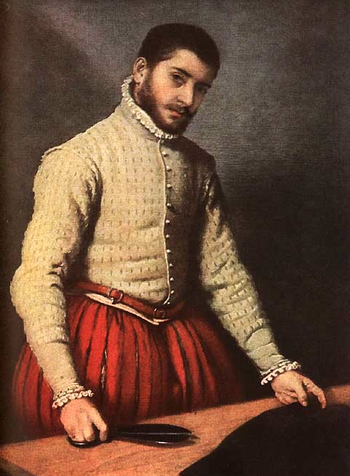
-
Happy Christmas and New Year to all
Like... You peasant swain! You whoreson malt-horse drudge!
or... No man's pie is freed From his ambitious finger.
or... A knave; a rascal; an eater of broken meats; base, proud, shallow, beggarly, three-suited, hundred-pound, filthy, worsted-stocking knave; a lily-livered, action-taking knave, a whoreson, glass-gazing, super-serviceable finical rogue; one-trunk-inheriting slave; one that wouldst be a bawd, in way of good service, and art nothing but the composition of a knave, beggar, coward, pandar, and the son and heir of a mongrel bitch: one whom I will beat into clamorous whining, if thou deniest the least syllable of thy addition.
or... Thou shit! -
The Emotional argument for AtheismLint is a great mystery. — Reformed Nihilist
You know that the notion of god didn't come from nowhere, right? — Reformed Nihilist
Indeed. God came from the fecund ground of the human imagination. God is ours. If you find deficiencies in god, look to the creators. God, of course, is whatever people need and want god to be. Comforter, protector, creator, king, ally, enforcer, wrathful judge, weak or omnipotent, eternal, guide, miracle maker, and so on. Of necessity, given the many preferences of his creators, the gods are immensely contradictory.
Is god real? Like lint? No. Is god real like Apollo? Sure. Individual and collective cultural productions are responsible for the gods--all of them: Jehovah, Wotan, Buddha, Zeus, Minerva and many more. Was the creation of the gods a cynical manipulation of the gullible? Sometimes, possibly. And is belief in the gods an entirely empty experience? No, of course not. The prophets and the believers are almost certainly genuine in their testimony, but that doesn't make god real, like lint.
Should believers in possession of a "hollow faith" be dismissed as fools? No. Faith is real. But in the matter of the gods and their natures, they need not be taken as reliable sources of information about gods. They will claim to know ("God wants us to...") but they can't. No one can know about the gods, so we need not argue about it. (Within some systems of belief there are stated reasons for not claiming to have knowledge about god. In some traditions God excluded man from knowing him.)
You might find this intellectually lazy and slovenly too. so be it. I try to take religion and the gods as a serious cultural achievement of our species rather than a ridiculous hoax. i don't think god revealed himself to us, and then many believed. Man made god and then many believed. I used to believe in god, quite ardently. Getting from believer to dis-believer required a lot of effort--lots of long-standing beliefs had to be pitched overboard. -
The Emotional argument for AtheismBelieved in or not, God is a great mystery and difficult to explain. But then, so are homo sapiens difficult to explain and mysterious. People are maybe less 'mysterious' than just plain devious.
Is the testimony of believers actually reliable in providing information about God? Why do non-believers assume that believers actually know something about God? Do you (nonbelievers) think that believers have a pipeline to the truth which you can not have?
Believers have no more knowledge about God than non-believers. They think they do, because they have been on hand to hear all sorts of preaching. But, you know, it wasn't God who was doing the preaching. It was just one more devious homo sapiens who was doing the talking.
You don't like some, many, most, or all of the features which you have heard ascribed to God. Fine. What makes you think any of that is true? Jews, Christians, and Moslems know no more about God than you atheists do.
You are quite free to imagine God as you like. -
Is my happiness more important than your happiness? (egoism)Quite the contrary. — Agustino
Quite. I think we have brought clarity to the fact that we don't think alike about morality. On the other hand, my guess is that we are more or less equally moral, civilized, and decent people. Neither of us are likely to sell our sisters into slavery, and neither of us are likely to hold up the corner convenience store and kill the hapless clerk--even if we were destitute.
It is a bit difficult to determine the relationship between "religion", "formal ethical teaching", and "social pressure".
Religion doesn't have to emphasize morality. If the religion involves animal sacrifices to the gods as a way of appeasing the gods, the morality of the worshippers need not be a major focus. Temple prostitution was part of the fertility cult of the Baal worshippers , so often denounced by the Prophets of Israel. The prostitutes weren't "hookers" -- they were more like priests. (There were male prostitutes as well.) Rites and rituals don't have to model ethical behavior.
I hope people get ethical instruction somewhere along the line--as a sideline of church activity, through reading books about ethics, paying attention to professional standard of conduct, or in Philosophy classes. Not sure what The People are actually getting in the way of ethical instruction.
Our behavior is certainly guided by social (and peer) pressure. There is an unwritten consensus about what flies ethically, and what does not. At a rather low level, we enforce the principle of 'first come first serve' by berating people who break into line or jump ahead several places. "Codes of Silence" contribute significantly to the way police behave. Killing young black men suspected of... something... does not lead to abrupt ostracism, being reported, criticized, or identified as a wrong-doer--most of the time, at least. The police community has established an ethic of mutual protection.
Social and peer pressure can have an odd relationship to the morality and ethics most of the members of a group might have been taught. "Mutual protection" is normally a good thing, but we don't necessarily like it when it is a gang practicing mutual protection, and enforcing a "no-snitching" policy. What the police are doing in some cities isn't much different than following a gang's "no snitch" rule.
When children play games, they tend to enforce some sort of concept of fairness -- one not derived from Biblical stories. Maybe they get the rules from the Cub Scout Handbook.
However we obtain guidance, most of us do seem to behave in a more or less similar and acceptable manner. The demonstrations against police killings in Ferguson, MO and Baltimore, MD, et al, and the various reactions to the demonstrations reveal that there are significant discontinuities in the common morality / ethic / peer group assumptions about proper behavior. The actions of terrorists reveal extreme differences in moral understanding -- greater differences than that revealed by most criminal behavior.
BC

Start FollowingSend a Message
- Other sites we like
- Social media
- Terms of Service
- Sign In
- Created with PlushForums
- © 2026 The Philosophy Forum