
-
Can the universe be infinite towards the past?I don't think there are any purely deductive proofs either way.
We could start with an anecdote attributed to Wittgenstein:
Wittgenstein overhears someone saying "5, 1, 4, 1, 3. Done."
He asks what that was about, and they respond that they just finished reciting π backward.
"But, how old are you?"
"Infinitely old. I never started, but have been at it forever and finally finished."
Seems to violate our intuition and the principle of sufficient reason. Fair intuitive argument.
OK then, a definite earliest moment it is, a t=0 if you will.
The Big Bang stuff gives an age of about 14 billion years of the known/observable universe.
If we were to humor the cosmological argument (of religious apologetics), we're led to believe there was an "outside", "atemporal" cause of it all.
Yet, then the question is why 14 billion years, and not some other age, any other age actually?
Seems to violate sufficient reason again.
Everywhere, counterintuitive implications everywhere? Should we just make stuff up? Drop sufficient reason (in this case at least)? Are we back to square one? A non-infinite "edge-free" universe? -
CoronavirusThe origin of SARS-CoV-2, revisited
David Gorski
Science-Based Medicine
May 2021
Bit long, but, anyway ... -
In praise of science.I remember back to my first experiences of consciousness and free will and see his I've seen science make things. — GregoryWhat? — Banno
I gave up as well.
(Wasn't that English is my 2nd language after all.)
@Gregory, you're not really saying much here.
If you raise doubt about substantially well-established models, then you'll need something substantial, a "what if dragons" ain't that.
If you promote substantial belief, then you'll need relevant and proportional justification. -
Israel killing civilians in Gaza and the West BankEver heard the term “Sheikh Jarrah?” That’s the name of the neighborhood at the center of the recent Israel-Palestine flare up. It is a neighborhood in East Jerusalem inhabited by mostly Palestinians who became refugees when they were expelled from a West Jerusalem neighborhood (Talbiya) after Israel captured West Jerusalem following the 1948 Arab-Israeli war. Conversely, Jewish families were also expelled from their homes in Sheikh Jarrah and resettled in West Jerusalem neighborhood of Talbiya. Most Palestinian families in Sheikh Jarrah have lived there since the 1948 war (nearly 70 years), and likewise for Jewish families in Talbiya.
After the 1967 6-day war, Israel expanded their occupation to East Jerusalem. Following the occupation of East Jerusalem, court battles have ensued over the Sheikh Jarrah properties, by groups of Jewish people claiming to have owned the property before 1948. Using right of return laws, attempts are being made to expel the current Palestinian residents and replace them with Jewish residents. The problem is, the same right of return is not being extended to these Palestinian families regarding the homes they were evicted from in West Jerusalem in 1948. In fact, right of return laws *only* apply to Jewish people in Israel, so Palestinians who have been expelled and displaced for various reasons over the years have no right to reclaim their previously owned property.
Courts have thus far ruled in favor of the Jewish families claim to the land in Sheikh Jarrah, ordering that they are allowed to charge rent to the current Palestinian families living there. Obviously, the Palestinian families do not believe they should have to pay said rent and have tried to fight it. They're losing that fight, and barring the Israeli Supreme Court stepping in, it's likely that many Palestinian families will be expelled from their homes by the Israeli government in the near future.
Ever wondered why the conflict flared up recently? It wasn't random acts of terrorism, rather, it was in response to these court battles. It was in response to demonstrable ethnic oppression.
This is one example among many of why it is being argued that Israel is an apartheid state. Obviously, it was wrong for both Jews and Palestinians to be expelled from their homes in West and East Jerusalem, respectively, in 1948. But both groups were compensated with comparable homes in their respective new areas in Jerusalem. Fast forward to today, and Jewish families are using ethnically discriminatory right of return laws to expel Palestinians from their homes. And what’s worse, this is taking place in East Jerusalem, an area where Jewish right of return should not apply and Israeli courts should have no jurisdiction anyway!
Folks call this a “dispute” and say it’s complex, but, imo, that’s far too charitable. This is a land grab. It’s part of the ongoing settlement expansion that enflames tensions in the region. If you’ve managed to make it this far, thanks for reading. This is why I'm so outspoken about how this conflict is far different than the caricatures you’ll find among many biased, ignorant Israel supporters. A fair and objective look at this circumstance shows this is yet another case of war crimes, apartheid, and ethnic cleansing by the Israeli government. — JW
Sheikh Jarrah property dispute (Wikipedia) -
In praise of science., is conservation of momentum causation? Maybe, maybe not? Maybe if you stretch your notion of causation enough.
Add gravity into it all, and we're getting more into causation.
And with those two, you've taken a small step towards modeling the Solar system.
Given such (overwhelmingly) established characterizations of (celestial) mechanics, you'd have to get into some heavy-duty skepticism to deny the scientific consensus (heck, you might be converging on solipsism).
As an aside, I've noticed a few people out there going down this sort of denial, only to turn around and declare that a Jewish carpenter supernaturally walked on water a couple thousand years ago in the Middle East. Weird. -
In praise of science.Exemplifying science-denial ...
'Injecting doubt': How hard-core COVID vaccine deniers could impact the 'moveable middle' (Sharon Kirkey, Edmonton Examiner, May 2021)
In a way, the doubling down, entrenchment, aggression seems to be a form of backfire effect. -
Science and Religion. Pros and cons?Pros of science: iPhone
Cons of science: A-bomb
Pros of religion: Grace
Cons of religion: Jihad — praxis
(y)
Science pro: all-but doing away with tuberculosis and related suffering
Science con: self-guided long-range mass-destruction missiles (with triggers in a human hand)
Religion pro: virtual leash on (would-be) crazies
Religion con: doubtful (and mutually incompatible) grandiose truth claims -
In praise of science.
(y)It is something to celebrate. — Banno
Also some of the tracking, using old methods (back to the 1800s?) and new tech.
Learning more about spreading, now including some focus on aerosols.
• https://www.theglobeandmail.com/opinion/article-embracing-the-science-on-airborne-transmission-is-key-to-preventing/
• https://www.sciencedaily.com/releases/2021/05/210511123622.htm -
Do Atheists hope there is no God?Tu quoque, ? :roll:
You didn't catch on.
You yourself mentioned that LoVe feeling.
As if that is somehow external to the lover. -
Do Atheists hope there is no God?I suppose 'my atheism' is derived in part from fear of theists who take their bullshit literally and thickly spread it wherever they go. — 180 Proof
Yep (y) Somehow they just don't trust their deities to speak for themselves
(then they pretend to speak on behalf of their imaginary friends, then they pretend to be telepaths knowing that others fear their imaginary friends, ..., weird)
Because one you don't feel that yourself,so its disingenuous to tell me. Two,I can disagree with someone if I feel their feelings are mistaken. Some people claim they haven't felt love. Is that a proof it doesn't exist? — Zenny
Why would anyone care what you feel? (I don't mean in a cynical sense)
It's the moment you preach that your understanding of your feeling is equally applicable to everyone else, universally even, that we'll need a bit more than your words about your feelings (and not charged rambling and raving).
• https://thephilosophyforum.com/discussion/comment/520013
• https://en.wikipedia.org/wiki/Oceanic_feeling
• https://en.wikipedia.org/wiki/Introspection_illusion -
In praise of science.I'd say that science is descriptive of what is, whereas ethics is proscriptive, about what we want.
So, science just informs, which happens to be good, because it can inform ethics. (y)
The two play different roles, yes?
Out at the edges of stabilized models, it's clearer that scientific results are tentative/provisional in principle.
And so it takes more science for us to smarten up more (assuming we can), as long as we don't mentally replace reality with the models.
What we do with it, is another matter, though doing away with ignorance and errors seems good enough, after all, what we don't know can still harm or help us. (y)
Science being informative sure has transformed societies/lives over time.
(n) science deniers.
Incidentally, in my adventures, I've found that "scientism" more often than not is the (misused) go-to buzzword when people wish to shun objections to poorly justified assertions, or someone whining when their dear-held belief has been found wanting. (n) -
Do Atheists hope there is no God?Actually, that's an interesting statement. I tend to believe that fear can work in both directions. Some people believe in God as a result of fear while others may deny God's existence out of fear that he might actually exist. — Apollodorus
Maybe some such disbelievers can be found? An odd kind of wishful thinking?
Doesn't seem all that likely, though, or at least uncommon.
Plenty reasons to disregard the Vedic Shiva, the Avestan Ahura Mazda, the Bhagavad Gitan Vishnu, the Biblical Yahweh, the Quranic Allah, Eru/Ilúvatar of The Silmarillion, ... -
Anthropic Principle meets consciousness
the "view from nowhere"— Gnomon
... is better (e.g. relativity).a "view from wherever" — Gnomon
Anyway, biased or not, we can still say things about the world we're in.
The anthropic principle has anthropo-bias inherently. Or by design. ;)
- Error, fallibility, revision, correction: We're sometimes wrong about things. What, then, made us wrong, but whatever is indeed the case?
- Agreement, confirmation, coherence: We agree on numerous things; when to be at work in the morning; where the local grocery store is; how a pawn moves in chess; this is English; ... The fly and the chameleon are in agreement about the colors of the environment when the chameleon sneaks up on the fly and catches it. As a spectator, I can understand this little drama; I also agree with the fly and the chameleon about the colors.
-
Do Atheists hope there is no God?I thought it was Christians and Muslims and such that feared their deities. Odd.
If he is infinitely good, what reason should we have to fear him?
If he is infinitely wise, why should we have doubts concerning our future?
If he knows all, why warn him of our needs and fatigue him with our prayers?
If he is everywhere, why erect temples to him?
If he is just, why fear that he will punish the creatures that he has filled with weaknesses?
If grace does everything for them, what reason would he have for recompensing them?
If he is all-powerful, how offend him, how resist him?
If he is reasonable, how can he be angry at the blind, to whom he has given the liberty of being unreasonable?
If he is immovable, by what right do we pretend to make him change his decrees?
If he is inconceivable, why occupy ourselves with him?
If he has spoken, why is the universe not convinced?
If the knowledge of a God is the most necessary, why is it not the most evident and the clearest? — Percy Bysshe Shelley (1811) -
Anthropic Principle meets consciousnessHowever, had not the Big Bang resulted in precisely the balance of atomic forces that eventuated then there would be no matter, therefore no universe. — Wayfarer
The universe is fine-tuned to what it is? That doesn't really say much.
By the way, evaluating all possible universes with a sample size of one isn't the easiest task. (Heck, some claim that Heaven and Hell are possible.) How would we go about that?
Which is a judgement. — Wayfarer
I'd say observation.
I actually bought the Barrow and Tipler book The Anthropic Cosmological Principle — Wayfarer
Is that "Omega Point" Tipler? *cough* Don't recall the title, but two guys authored a book not long ago, arguing opposite points. One of them at least an accredited physicist (maybe both). I can try to look it up. Might be better.
Edit: one of the two authors was Luke Barnes. -
Want and canLet me just try a rephrase:
The supposition: Martinez' suffering and death was good (the unknown greater good response).
The will and sentiments of the hospital staff (and cancer researchers) are directly contrary.
Contrary good is bad, or contra a greater good is something worse.
(Incidentally also unlike following Yahweh's example (by supposition), creating/allowing cancer, no relief.)
If Yahweh is good and capable, then it takes creative story-telling to deny that Martinez' suffering and death was good.
By the way, I'm sure it's possible to find some out there that wouldn't doing anything, "God's will" or "pray" or something, ... Suffering/death follows, including in cases where we can do something. (Radita)
The personnel at StJude's are willing but (mostly) incapable of doing something (per se anyway).
The supposed instigator/warrantor, God, would presumably be capable, and doesn't do something about it, so apparently unwilling?
The examples:
• Martinez
• StJude
• Radita
-
Anthropic Principle meets consciousnessFine-tuned universe, intelligent design, ...? Some evidence and such to take into consideration:
- life that we know of came about maybe 10 billion or so years after the Big Bang (the known/observable universe)
- by far most species that have lived on Earth are extinct
- we (homo sapiens) have been around for an insignificant amount of time thus far
- by and large, the universe is inhospitable to life as we know it, by far actually, sterile
- life will be long gone before the universe heads into heat death, which will continue on for an unfathomable amount of time
- children suffer and die from cancer, and maladies due to our makeups, and the occasional background radiation, etc
- lifeforms (and viruses which are border-life/non-life) cause all kinds of suffering to, and deaths of, each other
- we (humans) try to "fix" what we consider nature's "shortcomings" (e.g. the plague, eyesight)
- considering ourselves the apex of life, or the raison d'être for it all, is unwarranted self-elevation, incredulity, anthropo-bias
- apart from ourselves, the world seems rather indifferent to us and our concerns
- there are antinatalists and pessimists ;)
- Argument from poor design (Religions Wiki)
- Argument from poor design (Wikipedia)
-
Who’s to Blame?
Two wrongs make a right? Nah. Still need to address systemic discrimination.lot of bad police behavior in the US — fishfry
Either way, we still need to address the social/cultural problem, systemic discrimination.Marxist organization — fishfry
I wouldn't say it is. Except perhaps in reaction to "black lives matter"?If saying that "All lives matter" is racist — fishfry
, the comment was kind of memerific, often seen out there, as a reaction, which seemed to be what you were doing. No need to diverge off to semantics.
1. Observer/activist: "black lives matter"
2. Responder: "all lives matter" ← doesn't really say much (except perhaps to ignore 1)
If the commies are taking advantage of the situation, then that still doesn't mean there isn't a problem.
Wasn't it Obama that once said something about cultural DNA, heritage, legacy, something like that, a lingering problem that needs addressing...? -
Who’s to Blame?All lives matter. — Apollodorus
Sure, I guess.
And "black lives matter" is a part of "all lives matter".
There's some focus on that sub-set because some systemic discrimination has been seen in particular.
By refusing to say "black lives matter" and instead just keep saying "all lives matter" you haven't really said much, except to deny or ignore something that needs addressing.
Red herring? Ignoratio elenchi? -
Want and canRight, .
So, with the cancer example, if we suppose it's for an unknown greater good, then the right thing would be not doing anything about it.
There seem to be weird absurdities along this line of inquiry, which makes me think it started out wrong. -
Want and canThe thread took a turn. :)
Since 4 is false or so we believe, there is suffering/evil, — TheMadFool
If we cannot say that relief from cancer is good, then we have nothing. (Martinez, StJude)
In case there's some unknown greater good at play, somehow justifying the suffering, instigated/warranted by God/gods, then such relief isn't actually good.
This would then stop efforts(StJude) dead in their tracks, or at least their warrant/justification.
"Everyone stop what you're doing!" :cheer: -
Want and canI can stop my crack habit — unenlightened
(y) Maybe there's a "can" ambiguity?
Modal can: it's possible to quit the nasty habit
"Free will" can: you don't will it so
one can want things that conflict — unenlightened
Yeah, neurotic apes, unreliable we are, unlike...
God — unenlightened
Might be moving more towards homo sapiens psychology. -
Want and canHey, it's not really about me, just what the syllogistically styled argument looks like to you folk.
I guess it could be written as: if 1 ∧ 2 ∧ 3 then 4.
Might be outlandish, might be right, might be something in between (which is where I'm leaning, but my personal leanings aren't relevant, just the argument).
Suppose x doesn't happen, then maybe Q didn't want it after all, or maybe couldn't make it happen, or forgot, which may or may not fall under 1/2/3, or whatever, ... Or, there could be something ambiguous about "want" that could be elucidated, ...
Doesn't take more than a counter-example, yes? -
Proving A Negative/Burden Of ProofDepends on the context, doesn't it? Whether or not it's indefinite.
Via John Watkins, where the domain of inquiry is indefinite:
(∀) empirical universal statements are falsifiable but not verifiable
(∃) existential statements are verifiable but not falsifiable
If you make a ∀ statement, then falsification is applicable. If you make an ∃ statement, then verification is applicable.
Claim (example): all swans are while
Burden (general): sufficient/relevant evidence is tentative/provisional/proportional falsifiable justification (unless the contrary is impossible)
Claim (example): there are evil-doers that cast magic spells on others
Claim (example): the Biblical Yahweh is real and intervenes
Burden (general): verify (unless the contrary is impossible)
I guess that also reiterates where the onus probandi is placed. Theists have to provide verification (when they wish to convince others), and when they fail (and have kept failing for centuries on end), others, including nonresistant nonbelievers, are equally justified in disregarding their extraordinary existential claims.
If the domain is local, like 180 Proof's elephant example, then it's a different matter. -
What is the Problem with Individualism?Surely it's not such an exclusive either/or thing?
Individuals go about their business in societies all the time.
So, there are some thresholds in whatever direction, where things go extreme or unacceptable.
We surrender some freedoms (don't murder), worry less about others taking your freedoms (don't get assaulted), do yours (contribute), utilize commons (infrastructures, hospitals), act responsibly, employ some to carry responsibilities (military, schools, politicians), ... (long list I guess)
We then discuss where reasonable thresholds are, find examples of overstepping or insufficient responses or whatever, so as to continuously improve, yes?
There are all kinds of inter-dependencies in societies; it's not like we'd get as far without some cooperation. -
What is the Problem with Individualism?immigration — NOS4A2
No need for that nonsense. Just make your own way there.
No one will care. Unless you travel by (Iowa-class) battleship? -
What is the Problem with Individualism?Moving to Greenland and occupying land there is a problem because I’d have to contend with the Danish state’s monopolization of it all. I wager that had the Danes left the Inuit alone there wouldn’t be this problem. But they meddled and claimed the land as their own. — NOS4A2
No one would know. (Hence the location.)
Greenland has been autonomous for half a century or so (from unreliable memory). -
What is the Problem with Individualism?Not bad. But I fear it will be prime real estate once you’ve had your way with the rest of the world. — NOS4A2
In your lifetime? Doubtful. You'll be meddle-free. -
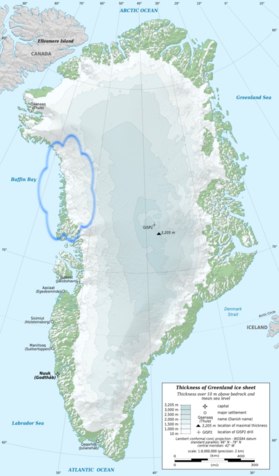
What is the Problem with Individualism?, I hear Baffin Bay, Greenland, is good.
The Sirius Patrol doesn't cover the area.
You could run into the occasional polar bear and Inuit hunter/fisher (the former might be more likely to "meddle"), but otherwise good.
No one's gonna' bother you, it'll be you and freedom. (y)
-
Donald Trump (All General Trump Conversations Here)What's up over in Trump-land?
It appears that he thinks that Cyber Ninjas will find many thousands of votes for him in Arizona. Then they will move on to Pennsylvania, Georgia, Michigan and Wisconsin where they will also find many thousands of votes for him. Enough votes to overturn the election in his favor. — Trump Thinks That He Will Be Reinstated In The White House (Caren White, May 2021)
What’s really scary about this is not just that Trump is obsessed with this recount but that he thinks that it will lead to Biden being thrown out of the White House and Trump becoming president instead. — Trump Thinks That He Will Be Reinstated In The White House (Caren White, May 2021)
This is why I am convinced that Trump will run for president in 2024. In his reality, it makes sense to run for a second term and believe that he can win. — Trump Thinks That He Will Be Reinstated In The White House (Caren White, May 2021)
Is White exaggerating? -
Water = H20?Water comes out of my faucet and H2O is our model of a wee bit of that.
I guess the word "water" and H2O shares reference.
Does that work? -
Death Penalty DilemmaWith the "innocent until proven guilty" rule we favor the risk of not punishing an offender over punishing an innocent. (y)
With the death penalty, we add a finality into the mix.
Doesn't seem quite right, for a legal system having to deal equally with everyone.
At least, I wouldn't vote the death penalty in, unless I was prepared to face the music myself — killing of an innocent by a death penalty that's on me, thus rendering me guilty with finality.
Maybe I'm just culturally biased. -
Definitions of Moral Good and Moral BadWhat good is a definition of good, when, in some given situation, you still have to figure out if following it is the right thing to do?
Sure, we can come up with things like the golden rule, yet, from there to have them be universal and unconditional doesn't seem right.
It's easier to come up with examples than definitions. -
A response to the argument that scepticism is self-refuting/selfcontradictoryin that case which parts of scepticism do you think are right? — Amalac
I guess that's where the harder work lies.
I don't see any particular reason to doubt we're chatting in English here, for example.
Some trivialities demand less doubt than other (perhaps more sweeping or less clear or evident) claims.
The problem is, we need justification in order to avoid having to randomly guess which beliefs are true and which beliefs are false (and which are neither true nor false). — Amalac
Right, so justification is typically where the work is.
Why doubt and why uphold? Both could take justification.
Anyway, the usual philosophical drive/search for unqualified principles has just failed in this case it seems.
There's more to the story of skepticism, some sort of demarcation? -
A response to the argument that scepticism is self-refuting/selfcontradictoryIf all skepticism is wrong, then anything goes.
Since that's not the case, some skepticism is right.
You might doubt anything, but not everything.
If all skepticism is right, then doubt about skepticism is also right.
Hence, unjustified belief can be right.
Seems the problem is the universal (or unqualified) statements. -
Atheist Epistemology(y)
(T), you make an existential claim to others ...
- if you're referring to something extra-self, then show us something
(existentially mind-independent, objective, applicable to both of us) - if you're referring to something you have on your mind, then tell us about it
(typically existentially mind-dependent, subjective)
What do you have, (T)? - if you're referring to something extra-self, then show us something
-
Do human beings possess free will?A mind is a thing. An object. — Bartricks
Don't think that can be right.
Objects tend to be breakable (under conservation), whereas things associated with mind are interruptible (experiences, thinking, etc).
So, processes, occurrences, though maybe memory is an exception.
The quote looks like a category mistake, and that's going by evidence mind you. -
What is the wind *made* from?I can't find any information about air particles :chin: at least online. — The Opposite
How about Nitrogen, Oxygen, water, and pollution?
Atmosphere of Earth
Wind is moving air. :D So, I guess it's "made from" air and motion?
jorndoe

Start FollowingSend a Message
- Other sites we like
- Social media
- Terms of Service
- Sign In
- Created with PlushForums
- © 2026 The Philosophy Forum