
-
Mind matters.
I'm not an Egyptologist, but my impression is that they didn't have a concept of abstract "Mind", in the modern sense, as associated with the brain. Their Ib (heart) was the seat of visceral Emotions & Feelings, but not of Reason. Ba (personality) was the generator of characteristic behaviors. Sheut (shadow) was a sort of impersonal essence or identity. And Ka (life force) was the living soul that departs upon death. But none of them were directly related to Reasoning. I suppose the Greek philosophers pioneered the notion of abstract logical reasoning, as a way of thinking not motivated by knee-jerk impulses. Modern psychology (Rational Emotive Therapy) only recently began to focus the rational mind inwardly in order to gain control of unruly emotions, just as rational Science learned to control unruly Nature. :smile:If you think of the 'Soul Ideology' as referring to the mind then I guess you have an early iteration of psychology. — Brock Harding -
Mind matters.
The ancient Egyptians, who taught the Greeks a lot about spirituality and magic, associated the Soul with the human Heart, not the brain. They had no idea what the function of brain was (e.g. abstract reasoning), but the heart was clearly associated with Life and physical Emotions. Despite the "primitive" state of their physical science, they developed a sophisticated epistemology of the metaphysical Soul. Ironically, their ideology placed little value on the brain. So, when their Pharaohs were mummified, the brain was removed through the nose, perhaps because, like the guts, it quickly rotted after death. :smile:If you do some cursory google searches on Ancient Greek views of the soul and spirit you will quickly realise that early ideologies on the soul and spirit were merely an attempt to classify the mind which would have seemed an ethereal form in those days without informed science regarding brain function. — Brock Harding
Heart & Soul :
The ancient Egyptians believed that a soul (kꜣ/bꜣ; Egypt. pron. ka/ba) was made up of many parts. In addition to these components of the soul, there was the human body (called the ḥꜥ, occasionally a plural ḥꜥw, meaning approximately "sum of bodily parts").
https://en.wikipedia.org/wiki/Ancient_Egyptian_conception_of_the_soul
Soul Ideology :
The ancient Egyptians believed the soul was divided into five parts Ren, Ba, Ka, Sheut, and Ib.
https://simple.wikipedia.org/wiki/Ancient_Egyptian_concept_of_the_soul -
Mind matters.
The notion of "having" a mind, reminded me of Peter Pan, who "had" a shadow. Unfortunately, like some Souls, it kept wandering away from his body. So Peter, in order to control his unruly possession, tried to sew it onto his feet.As you have a mind you have a soul or spirit. By regarding the mind itself as a soul/spirit you can now revisit current theologies with a fresh perspective and the certainty that your soul/spirit is undeniably real and has always existed within you whatever your beliefs or doubts. — Brock Harding
A lot of the confusion about Minds & Souls is due to the mistake of treating them as real physical objects that can be possessed (reification). Yet, Minds are not "undeniably real", but imaginatively Ideal. However, the metaphors we use to describe Minds & Souls are analogies to physical things. Which some people take literally. So, I prefer to think of the Mind as the metaphysical Function of the Brain. When the brain is processing information, it is Minding, or Thinking. Conceptual Functions and dynamic Processes are like fluids, and shadows, when you try to grasp them, they slip through your fingers. :joke:
Reification : to consider or represent (something abstract) as a material or concrete thing : to give definite content and form to (a concept or idea).

-
The agnostic position is the most rational!?
It's difficult for humans to approach any momentous question "neutrally". Instead, most of us -- myself included -- rely on Motivated Reasoning in order to justify our prior beliefs. That's why Faith Systems are so hard to successfully argue against. But "rational" philosophers are supposed to be able to argue against their own (owned) beliefs, in order to weed-out the chaff. Unfortunately, formal belief systems -- like the Catholic Church -- have professional philosophers (Theologians) whose primary goal is to "defend the faith". And my own less-formal Protestant indoctrination relied on mostly un-trained Preachers to justify our peculiar set of beliefs, by "preaching to the choir". Ironically, long past the "age of reason", I realized that most of their sermons were based on Motivated Reasoning.And if both parties to the discussion were to have them, the initially neutral observer and listener would have to remain neutral, i.e. agnostic, at theend of the discussion as well. — spirit-salamander
After my loss of faith, I called myself an Agnostic for many years. Since I had no better theory to explain the existence of this world -- the Multiverse hypothesis is a circular reason for being -- I couldn't reject the general creator-god-hypothesis out-of-hand. Yet, I also couldn't ignore the scientific evidence for a self-organizing universe, with no need for miraculous adjustments (outside intervention) to its course. Now, late in life, I do have a detailed personal theory of how (if not why) the world began in an act of creation, and how it self-organizes itself, in order to progress toward some unknown destination. So, the label "agnostic" no longer applies to me. But that doesn't make me a Theist or an Atheist. Instead my current appellation is "deist", and more specifically "PanEnDeist". Therefore, I rely on TPF posters to be neutral (or antagonistic) toward my worldview, in order to test my "faith". So far, they haven't converted me from the "error of my ways". But the "discussion" is not yet at an end, so there's still hope for enlightenment. :smile:
Motivated reasoning :
Motivated reasoning is a phenomenon studied in cognitive science and social psychology that uses emotionally biased reasoning to produce justifications . . .
https://en.wikipedia.org/wiki/Motivated_reasoning -
Purpose of Philosophy
For me, the purpose of Philosophy (quest for wisdom) is to figure out what's wrong-with-the-world, in order to do something about it. Mis-using Nature is one of those "wrongs". And "self-immiserating" is another. Also, frustrated Desires is just one more of the many ways that our natural & cultural world fails to be a perfect home for thinking & feeling creatures. Unfortunately, most creatures don't have the means (Reason + hands) to actually change the world, and the self, for the better. Science (applied philosophy) is how we learn to make the natural world better. And Philosophy (introspection) is how we learn to make the Self better. :smile:Do you know what the purpose of philosophy is? — Daniel Banyai -
Philosophical justification for reincarnation
My personal experience with "accounts" of life-after-death was the Christian doctrine of Resurrection. It had the same general effect as Reincarnation -- a second chance for Justice and Happiness -- but in a one-shot deal. No need to try over & over to get it right. And no need for "philosophical justification", because it was based on faith in "reliable accounts", by witnesses to Jesus' revival after a gruesome death. Eventually though, I concluded that the testimony of those obviously biased witnesses was not "reliable". That's because they had an ideology (belief-system) to sell, and "the advertisement spoke well of it".For example, there are some reliable accounts of telepathy, clairvoyant dreams, etc. that a strictly materialist view of the mind is unable to explain.This doesn't prove reincarnation but it suggests that our mind or consciousness is not necessarily limited to the physical body. — Apollodorus
Nevertheless, if I had to chose, the straight-to-heaven Resurrection sounds much better than the unpredictable results of rebirth, and the possibility to Reincarnate as an insect. The bottom line is that I don't put much stock in second-hand "accounts" and hear-say anecdotes about events that I have never observed in my own experience. So, I'm not living in anticipation of Reincarnation or Resurrection. If I wake-up after death in a new body, or a naked Soul, I'll just think "what a nice surprise". :cool:
Resurrection vs Reincarnation :
There is a great deal of “fuzziness of thinking” regarding death that many Christians hold besides reincarnation, Barstad added, such as believing that after death one dies and goes to heaven and stays there forever, rather than joining with their resurrected body at the end of time. . . .
“The vague notion that something called a soul or a spirit or a shade lingers after death in some kind of place or condition where it can be more or less happy is not Christian,” Barstad said. “A human soul without a body is a tragedy. . . .
Reincarnation is “irreconcilable with the Christian belief that a human person is a distinct being, who lives one life, for which he or she is fully responsible: this understanding of the person puts into question both responsibility and freedom,”
https://www.catholicnewsagency.com/news/39710/why-christians-believe-in-resurrection-not-reincarnation -
Philosophical justification for reincarnation
You are probably correct that the historical origin of the Reincarnation hypothesis arose in some of the older civilizations. The Egyptians, and later the Babylonians, were considered the world-class experts on Magic & Mysticism -- the subjective "science" of their day. So, the mythical worldview that incorporated Reincarnation followed a chain of authority from "higher" cultures to "lower" societies. That may explain the "how" of cultural transmission of memes.Pythagoras or some other Greek philosopher went to Egypt in search of higher knowledge. — Apollodorus
However, my psychological theory was focused on "why" such ideas emerged. Most likely, the theory of Reincarnation was not based on objective-empirical evidence, but on hypothetical reasoning from general theories -- gods & spirits & souls -- to more specific mechanisms for how those imaginary systems might work in their mystical realms, and how such otherworldly functions might impact humans in the real world.
Since Reincarnation is just one of many ancient spiritual-mystical theories of how the invisible world works, and the details of the soul-hopping process differ from one culture to another -- Egyptian, Hinduism, Buddhism -- those conjectures about the unseen realms seem to reflect the traditional meme-plexes (belief systems) of each culture, rather than any "higher knowledge" drawn from esoteric experiences in the spirit world. In other words, these stories (cultural myths) are fictional, not verifiable. But, of course, that's just my opinion, based on my lack of experience with spirits, or knowledge of arcane "secrets". :smile: -
The mind as a physical field?
I doubt that the conscious Mind is literally an electro-magnetic field. If it was, we could easily learn how to read minds, just as we tune our radios to E-M frequencies. Energy fields can only be detected by their effects on matter; the field itself is invisible and intangible.So much more exists in the brain than neuron synapsing. The analogy to a computer's electrical wiring is hugely inadequate. Investigating chemistry in the soma and glia will lead to a revolution in our model of brain structure. It will be key to comprehend the molecules involved in hallucinatory states, and define exactly how the additiveness of electromagnetic fields and further kinds of coherence fields with nanoscale, quantum entangled molecular complexes works. — Enrique
A "field" just a familiar physical concept that we can use as a metaphor for an immaterial function. For me the mind-field consists only of Information, imagined as a kind of energy. Energy is also not a material object, but an invisible matrix or pattern of mathematical relationships and ratios. So it's not necessarily the physical neurons or glia or cells or molecules that generate the mind-field, but more likely contributions from the whole body to the complex pattern of relationships, that can only be seen by the mind's eye. So far, scientists have found no way to detect mind-fields, if they indeed exist. The physical E-M analogy is a handy way to think about meta-physical minds. But it can be misleading if taken literally.
As far as we know, unlike Energy, individual minds have only local effects on the thinking subject, and no effect on material objects (psychokinesis). So, in order to communicate with other minds, we have to translate incorporeal thoughts into physical material objects that serve as symbols or proxies for immaterial ideas. But that real-world limitation doesn't stop people from trying to bend spoons with their minds, and imagining all kinds of mental powers, such as Chi -- which martial artists in video games use like laser beams to vanquish their simulated enemies. :cool: -
Philosophical justification for reincarnation
I'm not well read on the topic of Reincarnation, but I do have a general hypothesis for why the theory of body-hopping souls arose among philosophers & sages concerned with Ethics. Almost all cultures on Earth have devised some explanation for the inequalities and injustices of the world : The Problem of Evil. For example, ancient Greek cultures were feudal societies. "As above, so below" : they typically assumed that humans were like slaves or servants to their feudal Lords in heaven. In that case, humans were subject to the mercurial whims of their whip-wielding slave-owners, and free-will was a pathetic illusion of the downtrodden. So, the Greeks, both slaves & lords, tended to be fatalistic, and/or pessimistic, about their long-term future prospects, and held no hope for any afterlife beyond the grave. Thus, they saw no reason to expect personal justice in this life or any other. Those "typical" Greeks also tended to be materialistic & deterministic about the mechanics of the world, in which humans were mere grinding cogs.I think there was a discussion on reincarnation some time ago. However, supposing we accept reincarnation either as fact or as theoretical possibility, how would we convincinglyjustify it in philosophical terms? — Apollodorus
However, atypical idealistic philosophers -- most of whom were independent-minded upper-class slave-owners themselves --could hold a more optimistic worldview, in which personal freewill could alter the course of Fate to some degree. Also, their god-models were more abstract -- more like general principles than specific persons. As leaders of society themselves, this allowed them to have more individual influence on the course of events. Plus, they believed that humans had individual personalized Souls, instead of the generic animating force of ancient Animism. Therefore, it made sense that, since even these leaders of men were subject to fatal forces beyond their control, their world was still characterized by injustice. Which contradicts the Platonic notion of God as the eternal epitome of Goodness. Yet, even if the gods were not powerful enough to fight Fate, they could conceivably give their human subjects a second chance in an afterlife.
So, my theory is that Plato's principle of Reincarnation was an attempt to justify the goodness and justice of the gods, despite all the evidence against it in the real world. If at first you don't have a life of peace & justice, just try-try again in a series of after-lives. Originally, the Hebrews also seemed to believe in arbitrary Fatalism, and the finality of the grave. But that didn't fit their image of Yahweh as a loving father. Consequently, like the Greek philosophers, Jewish thinkers gradually came to believe that the cruelties of reality were not the intention of God for his beloved creation. But his best intentions were countered by his old nemesis : Satan. So, as a compromise, God made arrangements for postmortem Justice, not in a series of reincarnations, but in one triumphant victory over the evil god of fickle Fate.
Unfortunately, both of these solutions to the Problem of Evil depend on Faith in future Justice, instead of the blessed experience of Justice in the Here & Now. For those of little faith though, "justice delayed is justice denied". :sad:
Gods subject to Fate :
Whereas the Hebrews blamed humanity for bringing disorder to God's harmoniously ordered universe, the Greeks conceived their gods as an expression of the disorder of the world and its uncontrollable forces. To the Greeks, morality is a human invention; and though Zeus is the most powerful of their gods, even he can be resisted by his fellow Olympians and must bow to the mysterious power of fate.
https://www.auburn.wednet.edu/cms/lib03/WA01001938/Centricity/Domain/2205/Fate%20reading.pdf
In the opening of Paradise Lost, Milton invokes his Muse, the Holy Spirit, to grant him “Eternal Providence” that he may achieve his goal for the epic: to “justify the ways of God to men”
"Job also had an unquenchable thirst for God in the midst of his sufferings. His friends were troublesome enemies and his tears were his food day and night. He longed for God's justice in his suffering. He realized he needed more than a therapeutic God and gospel. He longed for deliverance from his pain, as well as assurance of his reconciliation with God. This is what sets the stage for Job's lamentations, a yearning for God's mercy and justice."
https://www.blueletterbible.org/Comm/smith_don/job/whirlwind08.cfm
Justice delayed is justice denied. ___William E. Gladstone -
The mind as a physical field?
I suspect that scientist's "hostility" to the notion of a Mind Field, that might extend beyond the brain or body, is due to its similarity to New Age notions of Consciousness as something like a radio signal that the brain tunes-in to. But, McFadden himself noted that the neuron fields he studies have a very short range from the emitter. So his theory may not provide much support for those who believe in Mind-Reading and remote Mind Control. Elon Musk's Neuralink technology is still quite primitive and clunky, compared to Mr. Spock's Mind Meld. :smile:Thanks for the tips. Most here seem somewhat "hostile" to the idea that consciousness or the mental might be related to a physical field in perhaps only a remote sense. To me, the connection of the two is forward-looking and promising. — spirit-salamander
Mind Field :
In a circa-2002 publication of The Journal of Consciousness Studies, the electromagnetic theory of consciousness faced an uphill battle for acceptance among cognitive scientists. Scientific study of consciousness has only recently begun to gain acceptance as a legitimate scientific discipline, and some think field theories like McFadden's are unscientific beliefs that threaten their hard-won legitimacy.
https://en.wikipedia.org/wiki/Electromagnetic_theories_of_consciousness
Neuralink :
https://www.youtube.com/watch?v=E1nDo8KYozU -
Philosophy and Metaphysics
Apparently you missed the point of my post. I said Tim Wood's Physical worldview was "neat & tidy". So the implication was that your Metaphysical view is just the opposite : complex & messy. Most scientists, including Einstein & Heisenberg, were at first appalled at the strange worldview presented by Quantum "Mechanics". Because it's actually not very mechanical at all.Ahhh, could not be further from the truth! Much like time itself, metaphysics is not so neet and tidy. ☺ You may want to review the video... — 3017amen
Nevertheless, some of then learned to accommodate "quantum queerness" by viewing it from the metaphysical perspective of Eastern philosophies. Unfortunately, many New Agers preferred the traditional religious physical practices (Yoga Tai Chi, candles, incense), over the metaphysical philosophical insights. Apparently most people prefer neat & tidy physical routines over the complexities & ambiguities of Metaphysics --- and of Quantum uncertainties & weirdness. :joke: -
Philosophy and Metaphysics
Like a breath of fresh air, after the stifling atmosphere of circular philosophical argumentation, I enjoy the clear-eyed views of Tim Wood's terse, and often acerbic, contributions to this forum. His adamant Atheism (Scientism?) simplifies the world into "what matters" (Materialism) and "what doesn't matter" (Metaphysics). That neat & tidy Black & White worldview allows him to make concise & emphatic comments on the ambiguous & equivocal concepts that frivolous philosophers concern themselves with.Hello Mr. Wood:
Thank you for your input. Let's parse one at a time. If my experiences are made of nothing (as you seem to be implying), are you suggesting some sort of metaphysical reality instead? — 3017amen
But in the early 20th century, such Classical scientific clarity was muddied by Quantum queerness. That's why the no-nonsense physicist Richard Feynman expressed his negative attitude toward wishy-washy Philosophy in a curt statement of frustration : "shut-up and calculate". But other quantum pioneers, such as Heisenberg, accepted the challenge of their baffling "facts", and attempted to reconcile their ambiguous quantum calculations with the mysticism of Eastern Philosophy. In doing so, they inadvertently crossed the line between "serious" science and "trivial" philosophy. And that line in the sand becomes fainter after every wave of speculation into metaphysics. God help us! :cool:
Quantum mysticism :
https://en.wikipedia.org/wiki/Quantum_mysticism
PS__As an amateur philosopher, I don't claim to be doing hard science, but merely playfully exploring the remaining mysteries that have not yet succumbed to the sharp-edged scalpel of reductionism. So, please continue asking your questions about "nothing". :joke: -
The mind as a physical field?
My own personal philosophical worldview, Enformationism, is intended to be naturalistic, except that it requires a conscious First Cause, which existed prior to the Big Bang beginning of our world -- hence super-natural, or meta-natural, or preter-natural. It's merely a layman's thesis, proposing an evolutionary process to explain how Life & Mind could emerge from the physical interactions of fundamental particles or substances. In that theory, the fundamental substance of reality is Information (EnFormAction), which occurs in both tangible physical (matter) & intangible meta-physical (energy) forms.If one wants to hold on to a naturalistic world view, one must assign consciousness either to matter or to a field. — spirit-salamander
Recently I came across a novel theory postulated by Johnjoe McFadden, professor of Quantum Biology & Molecular Genetics. He calls it Conscious Electromagnetic Information (cemi), and it seems to fit neatly into my hypothesis of the origin of Consciousness via natural processes. I'm pretty sure this CEMI theory is also currently in the hypothetical stage, but it should allow for some empirical verification. And it also appears to be be compatible with Tononi's Integrated Information Theory (I.I.T.). So, it looks like these professional conjectures are on the same track with your notion of the "mind as a physical field". However, I suspect that the "Mind Field" would have some different properties & effects from the various "energy fields" of Physics, including the well-known Magnetic & Electromagnetic Fields. :smile:
Electromagnetic theories of consciousness :
McFadden has proposed that the brain's electromagnetic field creates a representation of the information in the neurons.
https://en.wikipedia.org/wiki/Electromagnetic_theories_of_consciousness
The EnFormAction Hypothesis :
http://bothandblog3.enformationism.info/page23.html -
(Without Ockham's razor) The chances that this is reality is the same as it being an illusion?
I suspect that the reviews you referred to were negative, due to the slightly New-Agey tone of his book. New Age guru, Deepak Chopra, was much more positive : “A masterpiece of logic, rationality, science, and mathematics. Read this book carefully and you will forever change your understanding of reality, both that of the universe and your own self.”I was thinking of getting Hoffman's book a while back, but the reviews were terrible. — Down The Rabbit Hole
Personally, I am wary of some New Age notions that cross the line into Magic & Mysticism. But, what I most appreciate in Hoffman's book is the useful and meaningful metaphor of our subjective worldview as an "Interface", which represents ultimate reality via symbolic icons. I wouldn't call that an "illusion", but a pragmatic necessity due to the limited capacity of the human brain, which is still a work-in-progress. Anyway, I have no problem at all with combining Realism and Idealism into a single comprehensive belief system. :smile:
True Reality : Both Real & Ideal :
For empirical scientific purposes, those ideal aspects of the world can be safely ignored. But for theoretical personal reasons we have no other choice but to deal with the unreal.
http://bothandblog.enformationism.info/page30.html -
(Without Ockham's razor) The chances that this is reality is the same as it being an illusion?
That equation of Real and Illusory may be true in one sense, but it seems to be based on a loose use of terminology. I prefer to make a comparison between Real and Ideal. That's because everything you "know" is a mental construct, a Subjective Idea, not a direct perception of Objective Reality. Kant's Transcendental Idealism used the terms Phenomenon and Noumenon to describe what we perceive (appearances) and what we imagine (noumena) to be really out there in the world.The proposition is, without Ockham's razor, the chances that this is reality is the same as it being an illusion. — Down The Rabbit Hole
A more recent formulation of the same notion is cognitive psychologist Donald Hoffman's theory, expressed in The Case Against Reality, that Evolution, in the interest of fitness, filtered-out the messy complexities of "Reality" from human observers -- like the smoke & mirrors of a stage magician -- by reducing our incoming sensory information to simple symbolic Icons (mental imagery = Ideality). In that case, the subjective illusion (phenomenon) is all we ever know about the objective ding an sich (noumenon). His "Fitness Beats Truth theorem is a modern version of the ancient notion of Maya, the veil of illusion".
Fortunately, the human mind has developed a method to get closer to the underlying truth : the Scientific Method (including Okham's Razor). It's still not direct access to Reality, but it allows us to peek behind the curtain to see the mechanical dials and levers that produce the iconic mental images that we naively accept as True Reality. :cool:
Kant: Experience and Reality :
Phenomena are the appearances, which constitute the our experience; noumena are the (presumed) things themselves, which constitute reality. ... Since the thing in itself (Ding an sich) would by definition be entirely independent of our experience of it, we are utterly ignorant of the noumenal realm.
http://www.philosophypages.com/hy/5g.htm
Reality is not what you see :
In his doctrine of Transcendental Idealism, 18th century philosopher, Immanuel Kant argued that our perception of reality is limited to constructs created in our own minds to represent the invisible and intangible ultimate reality that he mysteriously labeled “ding an sich” [things-in-essence, as opposed to things-as-we-know-them]. In other words, what we think we see, is not absolute reality but our own ideas about reality.
http://bothandblog6.enformationism.info/page21.html
Is Reality a Cosmic Simulation? :
“Musk is just one of the people in Silicon Valley to take a keen interest in the “simulation hypothesis”, which argues that what we experience as reality is actually a giant computer simulation created by a more sophisticated intelligence. If it sounds a lot like The Matrix, that’s because it is.”
http://bothandblog4.enformationism.info/page23.html
Reality is a Theory :
“Let us remember that our knowledge of the world begins not with matter but with perceptions. I know that my pain exists, my “green” exists, and my “sweet” exists. I do not need any proof of their existence, because these events are a part of me; everything else is a theory.” ___Andre Linde, theoretical physicist
http://bothandblog5.enformationism.info/page15.html
Reality is Ideality :
Physics is ultimately Meta-Physics
http://bothandblog5.enformationism.info/page17.html -
Should we focus less on the term “god” and more on the term “energy”?
My characterization of Entropy as Energy's weak point, was not concerned with Time. Instead, it was based on their opposite "reciprocal" roles in Evolution. Basically, Energy is construed as Constructive while Entropy is Destructive. Figuratively, Entropy tears-down what Energy builds-up.I find this interesting that you understand entropy to be energies Achilles heal. I actually believe it’s energies greatest feat. . . ,
“Entropy” in this case is the “rate at which energy is converted into time” - it’s reciprocal.. . .
It is the form of energy that comes together (negative entropy) as time dilates. — Benj96
You are correct though, that Entropy is a measure of Time's Arrow. It's the rate at which our world is "going to hell in a handbasket", to borrow a phrase. Evolution began with maximum Energy & Order in the Singularity. But the original order was essentially crystaline, with no room for change, except as an explosion of Cosmic power --- which could have positive or negative results, depending on the degree of control : Atomic Bomb vs Atomic Energy. However, as evolution proceeded, that pent-up energy loosened-up enough to create organization : not just Matter, but also Life & Mind. Ironically, we may now be near the peak of evolution's creativity ; so from here on out, it's all downhill toward the frozen Hell of Heat Death --- which is maximum disorder and disorganization and dissolution.
That's why I referred to destructive Entropy as constructive Energy's Achillies Heel. But it's just a metaphor, because Energy is only constructive when circumstances (and natural laws) allow it : what I call Enformy. And Entropy can be a positive function of Change, as it removes the detritus of the past to make room for novelty in the future. That ecological notion may be the more positive "reciprocal" role for Entropy that you were referring to. :smile:
Entropy and disorder :
Entropy is sometimes referred to as a measure of the amount of "disorder" in a system. Lots of disorder = high entropy, while order = low entropy. And again, the more orderly states are the states with the lower entropy. ...
https://webs.morningside.edu/slaven/Physics/entropy/entropy7.html
Entropy (arrow of time) :
Entropy is one of the few quantities in the physical sciences that require a particular direction for time, sometimes called an arrow of time.
https://en.wikipedia.org/wiki/Entropy_(arrow_of_time)
Heat death of the universe :
The heat death of the universe (also known as the Big Chill or Big Freeze) is a theory on the ultimate fate of the universe, which suggests the universe would evolve to a state of no thermodynamic free energy and would therefore be unable to sustain processes that increase entropy.
https://en.wikipedia.org/wiki/Heat_death_of_the_universe
Enformy :
In the Enformationism theory, Enformy is a hypothetical, holistic, metaphysical, natural trend or force, that counteracts Entropy & Randomness to produce complexity & progress.
http://blog-glossary.enformationism.info/page8.html -
Should we focus less on the term “god” and more on the term “energy”?
Yes. Although I am not religious, I would hope that scientists could come-up with something better than the Multiverse theory --- which doesn't attempt to answer the First Cause question, but simply assumes that "Energy & Laws" have always existed : a Forever Cause. That sounds like a generic description of the worldwide God-concept : the creative force and organizing principle of our world. So, I long-ago, gave-up trying to avoid the most common vernacular term for the philosophical "First Cause". In my personal thesis, I attempt to re-formulate traditional god-concepts (Logos ; Tao ; Brahma ; etc) in a way that could be useful as the philosophical foundation for a scientific Theory of Everything. :smile:Our best cosmologists can only come up with absurdities to avoid believing "God did it." Yet "God did it" is useless as a scientific theory or an explanation of anything. — fishfry -
Should we focus less on the term “god” and more on the term “energy”?It is aware of itself. It observes. It is power, it is information and even the void is thermal - the seemingly nothingness of empty space has a certain level of energy intrinsic to it. . . . seems to be the ultimate agent. — Benj96
In my personal philosophical worldview, Enformationism, I do focus on the ubiquitous role of Energy as the active agency that is constantly enforming the world, as it evolves from a pin-point of Potential (Singularity) to the mind-boggling universe that human agents have discovered out there beyond our local habitat. I refer to that teleological Energy as EnFormAction. And, I do sometimes use the label "G*D" when referring to the logically necessary First Cause (the ultimate agent) of the evolutionary process. But I also use a variety of other descriptive terms in different contexts. For example, when discussing the information processing of our world, I refer to the presumed "Programmer", who encoded the natural laws that guide & moderate the explosive burst of Energy that brought our universe into existence. When discussing how order can arise, despite Energy's Achilles Heel of Entropy, I use the term "Enformy". In my blog, I attempt to answer many of the questions your raised in the OP. :nerd:
The EnFormAction Hypothesis : That neologism is an analysis and re-synthesis of the common word for the latent power of mental contents : “Information”. “En” stands for energy, the physical power to cause change; “Form” refers to Platonic Ideals that become real; “Action” is the meta-physical power of transformation, as exemplified in the amazing metamorphoses of physics, whereby one kind of thing becomes a new kind of thing, with novel properties. In the Enformationism worldview, EnFormAction is eternal creative potential in action : it's how creation-via-evolution works.
http://bothandblog3.enformationism.info/page23.html -
The Mind-No Mind Equivalency Paradox
If I understand what you are implying, I must whole-heartedly agree. In my own theory of Creation via Evolution, our world has grown from a tiny fetus (Singularity) to the most complex system in the known universe, by implementing a simple algorithm : Chance + Choice = Progress. Random variations provide novelty from which the most adaptive forms are Naturally Selected to pass on into the next generation. That is indeed the "strategy" of the Genetic Algorithm.Notice the word, "strategy" above vis-à-vis evolution. If anything, it implies that were there a being as intelligent as us behind the "creation" of life, that being (some call it god/creator) would do exactly what evolution does right now. — TheMadFool
The very fact that the natural world is currently & automatically implementing such a concise algorithm implies the necessary existence of a Strategic Mind to invent the procedure (logical plan of action) and a set of rules (natural laws) that will progress toward a pre-defined ultimate goal (teleology). In light of modern Science, this kind of creation makes a lot more sense than the "let-there-be-light" method of Old Testament Creation. That wishing-makes-it-so method fits the ancient notion of God as a super-human Wizard wielding weird powers. But, the concept of G*D as a Programmer fits our modern understanding of how things get done in the real world.
Lacking a direct divine revelation though, I must admit that I don't know what the implicit ultimate goal of ongoing creation is. But I can recognize the clear pattern of Cause - Effect Intention in the workings of Nature. And it seems to require ever-increasing Complexity & Consciousness. Several years ago, based such observations and inferences, I wrote a little essay to briefly introduce a thesis that I called Intelligent Evolution, to serve as an alternative to the then popular notion of Intelligent Design. The primary difference is that my notion of creation is an on-going billion year process, instead of an instant fait accompli (a done deal). So, I must agree that an intelligent designer wouldn't create a world as imperfect as ours, but might possibly create a world that could mature toward a more perfect state in the future. :cool:
Strategic : relating to the identification of long-term or overall aims and interests and the means of achieving them.
Algorithm : An algorithm is a set of instructions designed to perform a specific task.
Genetic Algorithm :
A genetic algorithm is a search heuristic that is inspired by Charles Darwin's theory of natural evolution. This algorithm reflects the process of natural selection where the fittest individuals are selected for reproduction in order to produce offspring of the next generation.
https://towardsdatascience.com/introduction-to-genetic-algorithms-including-example-code-e396e98d8bf3
Evolutionary Programming :
Special computer algorithms inspired by biological Natural Selection. It is similar to Genetic Programming in that it relies on internal competition between random alternative solutions to weed-out inferior results, and to pass-on superior answers to the next generation of algorithms. By means of such optimizing feedback loops, evolution is able to make progress toward the best possible solution – limited only by local restraints – to the original programmer’s goal or purpose. In Enformationism theory the Prime Programmer is portrayed as a creative deity, who uses bottom-up mechanisms, rather than top-down miracles, to produce a world with both freedom & determinism, order & meaning. ---https://en.wikipedia.org/wiki/Evolutionary_programming---
http://blog-glossary.enformationism.info/page13.html
Evolutionary (Genetic) Programming :
The program does not specify the final outcome. But it does define a “fitness function”, which sets the criteria for acceptable solutions. With-out those limits, the process could go on indefinitely.
We can see that natural evolution is circling around some future state, like a moth to a light. The ultimate-fitness-point functions like a Strange Attractor to “pull” the present toward that future state.
http://blog-glossary.enformationism.info/page13.html
Intelligent Evolution : A 21st Century Creation Myth
http://gnomon.enformationism.info/Essays/Intelligent%20Evolution%20Essay_Prego_120106.pdf -
A brain within a brain
Hmmm. Interesting concept. But, it sounds like the "self-simulation problem" raised by computer science. Obviously, a computer or brain can create a model of a small portion of reality. But, since the human brain has been called "the most complex entity in the world", it would be quite a feat to model even a sub-system of the brain. However, in theory, we can create a simplified model of just about anything. It's the practical implementation that runs into self-feedback loops, which tend to result in the "halting problem".she has a perfect working model of the brain — Benj96
Nevertheless, I suspect that some science-fiction writer has already built a story around such a remote possibility, in which the mind-model takes control of its own brain, and chaos ensues. :joke:
Can a computer simulate itself as part of a simulated world? : "No, a computer cannot perfectly simulate itself in addition to something else without violating basic information theory: there exist strings which are not compressible."
https://cstheory.stackexchange.com/questions/2894/can-a-computer-simulate-itself-as-part-of-a-simulated-world
Halting problem :
https://en.wikipedia.org/wiki/Halting_problem
Simplified model of brain function :

-
Pantheism
My philosophical worldview PanEnDeism, is historically related to PanTheism. However, due to its secular mindset, mine is not a traditional religious perspective, in that it does not require sycophantic worship or arbitrary rituals & practices. Instead, it is intended to be more like an empirical scientific worldview, in that it takes a Pragmatic approach to understanding the real world, and our relationship to it. There is no authoritative or formal definition of PED, but my general concept is similar to Spinoza's notion that the "universal substance" of our world is not physical Matter, but meta-physical Mind *1. Meaning that our reality is essentially an idea in the Mind of G*D. That may not sound scientific, but for me, that general concept of Reality was derived from the counter-intuitive weirdness of Quantum Theory, and the all-encompassing reach of Information Theory. It's not a mystical or magical belief system, but a practical mundane worldview, based on the the scientific conclusion that Information = Energy = Matter *2.Pantheism is "a doctrine which identifies God with the universe, or regards the universe as a manifestation of God". But what exactly does this mean when taken literally? — Michael McMahon
In this post, I won't attempt to explain the conceptually-simple-but-technically-complex reasoning process by which I arrived at that strange worldview *3. So, I'll just get to the bottom line : Taken literally, "PanTheism" means that our apparent Reality is actually an interpretation of ultimate Ideality *4. What this means, when taken literally, is that particular Reality (Pan ; All) exists within (En) holistic Ideality (Deity ; First Cause ; Enformer). In other words, G*D's mental substance (Information, Meta-Physics) is what we know via our senses as material reality (Physics). From that simple equation of Ideal Stuff (substance) with Real Stuff (matter), we can derive all we need to know about the world, and our place in it. Of course the human mind is free to posit conjectures about the logically necessary First Cause. But the current fragmented state of world religions, indicates that such fictions can wreak havoc among competing belief systems. Which may be why the ancient faith-based religious notion of Pantheism, eventually evolved into theoretical philosophical PanDeism, and finally into evidence-based PanEnDeism. :cool:
*1 Spinoza's Substance Monism : Substance monism asserts that a variety of existing things can be explained in terms of a single reality or substance. Substance monism posits that only one kind of stuff exists, although many things may be made up of this stuff, e.g., matter or mind.
https://en.wikipedia.org/wiki/Monism
*2 The mass-energy-information equivalence principle : Here we formulate a new principle of mass-energy-information equivalence proposing that a bit of information is not just physical, as already demonstrated, but it has a finite and quantifiable mass while it stores information.
https://aip.scitation.org/doi/10.1063/1.5123794
*3 I have already provided a variety of explanations for my rationale in several of my blog posts, and in many posts on this forum.
*4 Empirical Idealism :
Scientific Materialism is the assumption that particle Physics is the foundation of reality, and that our ideas are simply products of material processes. Empirical Idealism doesn't deny the existence of a real world, but reasons that all we can ever know about that hypothetical reality is the mental interpretations of sensory percepts. Platonic Idealism (Myth of the Cave) calls those interpretations illusions, and asserts that true Reality is equivalent to an idea in the mind of God. Enformationism is compatible with both views, depending on your perspective.
http://blog-glossary.enformationism.info/page11.html
PS__I expect challenges to labeling PED as "empirical". So, I'll simply say that it's just as empirical as Inflation Theory, Multiverse Theory, and String Theory, which all postulate entities that are literally out-of-this-world. -
Is Spinoza's metaphysics panpsychism?
OK. I bow to your authority on Spinoza's written beliefs. But, for the purpose of my own "quixotic metaphysics", I'll still consider him to be an honorary PanEnDeist (it's a small club), Yet, I doubt that he was familiar with that term, which seems to be of recent origin. The ancient notion of PanDeism --- now extended beyond the scope of our local, contingent world --- may be a development out of modern Big Bang physics, as applied to metaphysics. It portrays the logically necessary First Cause of our universe, as "Deist" (creating but non-intervening) + "Pan" -- substance of all the actual (knowable) world + "En" --- not limited to this finite world, but encompassing all possible worlds (if any). So, Spinoza would have to join the club retroactively, ex post facto. :joke:I stand by my own close textual analysis and previous post though. — 180 Proof
Pandendeism is a fairly recently coined term to describe a sort of ``open'' pandeism
https://webhome.phy.duke.edu/~rgb/Philosophy/god_theorem/god_theorem/node28.html -
Is Spinoza's metaphysics panpsychism?
As I said in my previous reply, I'm not really familiar with Schopenhauer's philosophy. But I just read an article that mentioned his concept of The Will. FWIW, here's what Peter Kassan, Artificial Intelligence journalist, says about Schop's Will, in the context of Free Will :What do you think of Being as opposed to Schopenhauer's Will and of Whithead's process philosophy's "occasions of experience" and such? — schopenhauer1
"Perhaps more than any other classical philosopher, Arthur Schopenhauer fetishized the will above all else, elevating it to a universal principle pervading the universe, thereby reducing it to to the equally empty idea of energy (not in the scientific sense, but the mystical)."
I assume he might also denigrate my own notion of Enformy. But, Although it is in a sense "the Will of God", it's not intended to mean a magical or mystical force, but merely a positive version of the scientific term "Entropy". Something like this may have been Schopenhauer's intent, although he may not have been aware of the 20th century concept of Entropy. Enformy is not an obsession for me, but I think it is a more meaningful term than the current alternative : "Negentropy". :nerd:
Enformy-- the power to enform :
In the Enformationism theory, Enformy is a hypothetical, holistic, metaphysical, natural trend or force, that counteracts Entropy & Randomness to produce complexity & progress. [ see post 63 for graph ]
1. I'm not aware of any "supernatural force" in the world. But my Enformationism theory postulates that there is a meta-physical force behind Time's Arrow and the positive progress of evolution. Just as Entropy is sometimes referred to as a "force" causing energy to dissipate (negative effect), Enformy is the antithesis, which causes energy to agglomerate (additive effect).
2. Of course, neither of those phenomena is a physical Force, or a direct Cause, in the usual sense. But the term "force" is applied to such holistic causes as a metaphor drawn from our experience with physics.
3. "Entropy" and "Enformy" are scientific/technical terms that are equivalent to the religious/moralistic terms "Evil" and "Good". So, while those forces are completely natural, the ultimate source of the power behind them may be super-natural (or meta-natural), in the sense that the "First Cause" (of all natural effects) logically existed before the Big Bang.
http://blog-glossary.enformationism.info/page8.html
Don Watson's Enformy : http://www.vxm.com/2.CompTheory.html
Note : he does sometimes stray into Mystical territory, but otherwise, his notion of "Enformy" is similar to mine.
PS__ Energy is indeed "empty" in the sense that scientists know what-it-does, but not what-it-is essentially. So, in my thesis, I try to fill-in the blanks with a comprehensive theory of what-everything-is, ultimately --- without adding to the mystery with spooky allusions. -
Is Spinoza's metaphysics panpsychism?
I agree, that if the "substance" of our world was infinite & eternal, it would be God per se, as in Pantheism. However, since we have discovered, long since Spinoza's theory, that the physical universe is not eternal, as he supposed, and that its material "substance" is temporary (subject to Entropy), I conclude that our finite world is merely a small part of the Enfernal (eternal + infinite) realm of the hypothetical Creator. Since there was a creation event (Big Bang), we must conclude that the Mother "substance" (eternal essence; necessity) existed prior to the birth of our child "substance" (finite material ; contingent) .Since for Spinoza substance is infinite, or has no exterior, and eternal, or is not the effect of an external cause, and nothing ontologically transcends it, therefore substance is not "within" another substance. For this, and other reasons in Spinoza's oeuvre, "Panentheism" does not obtain. (Re: Ip5-p8, p13-p15) — 180 Proof
Therefore, I conclude that our space-time Reality could be merely one of many offspring of the Enfernal Ideality. Hence, PanEnDeism, a part within the whole. A scientific-materialistic alternative to this eternal vs temporal existence is the Multiverse Theory, in which our world is merely one of an infinite regression of bubble-like Mini-verses. But I don't waste time speculating on such "out of this world" possibilities. That's because we are quibbling about unproveable conjectures, not known facts. So, your guess is as good as mine. :cool:
Ideality :
In Plato’s theory of Forms, he argues that non-physical forms (or ideas) represent the most accurate or perfect reality. Those Forms are not physical things, but merely definitions or recipes of possible things. What we call Reality consists of a few actualized potentials drawn from a realm of infinite possibilities.
1. Materialists deny the existence of such immaterial ideals, but recent developments in Quantum theory have forced them to accept the concept of “virtual” particles in a mathematical “field”, that are not real, but only potential, until their unreal state is collapsed into reality by a measurement or observation. To measure is to extract meaning into a mind. [Measure, from L. Mensura, to know; from mens-, mind]
2. Some modern idealists find that scenario to be intriguingly similar to Plato’s notion that ideal Forms can be realized, i.e. meaning extracted, by knowing minds. For the purposes of this blog, “Ideality” refers to an infinite pool of potential (equivalent to a quantum field), of which physical Reality is a small part. A formal name for that fertile field is G*D.
http://blog-glossary.enformationism.info/page11.html
A Multiverse of bubble-verses
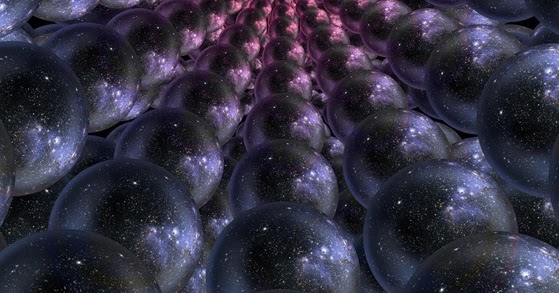
-
Is Spinoza's metaphysics panpsychism?
I have no formal philosophical training, and I've never read any of Schopenhauer's works. But my guess is that his notion of "Cosmic Will" is more like my concept of creative "Intention", than of static "BEING" (the eternal Potential to Exist). Although, since our evolving world is a product of that generic power-to-be, BEING must also include the creative power-to-become. Which could be interpreted as Will-Power.What do you think of Being as opposed to Schopenhauer's Will and of Whithead's process philosophy's "occasions of experience" and such? — schopenhauer1
In my personal thesis of Enformationism, the "energy" or "impetus", that propels our world to evolve from a Big Bang embryo to a maturing universe with conscious wilful organisms, is the Intention ("Will of God") of the hypothetical Creator/Designer/Programmer. For example, a computer programmer has a design intent (goal or quest) that is implemented in the program, and which "propels" the system toward that ultimate end-state : the output. Unfortunately, I can only speculate as to what that "Omega Point" might be.
I've scanned Whitehead's Process and Reality. And, although it seems to be very similar to my own view of Reality as a process of becoming what the Creator intended, I'm not sure I understand all of his technical terminology. So, it would be best for me not to pontificate on the meaning of "occasions of experience". :cool:
"Whitehead uses the term 'actual occasion' to refer only to purely temporal actual entities, those other than God".
https://en.wikipedia.org/wiki/Process_and_Reality -
Is Spinoza's metaphysics panpsychism?
See my reply to above.I think it is pantheism, — Eugen -
Is Spinoza's metaphysics panpsychism?
I had never heard of Acosmism before. It seems that almost every philosopher, who tries to pigeonhole Spinoza's novel belief system, comes up with a new label that is close to the interpreter's own view. That's because his god-concept contained elements that were both traditional (Stoicism, Judaism, etc) and highly original (Enlightenment Science ; God and/or Nature). Consequently, his complex god-model loosely fits several philosophical god-models, such as PanTheism, PanPsychism, and PanDeism. But, as far as I know, he never specifically presented a Hindu version of our Cosmos (Nature) as Maya (illusion). Apparently, it was Hegel, who interpreted Spinoza's view in those terms.Sub specie aeternitatis Spinoza's "worldview" is most consistent with acosmism (vide Maimon, Hegel ... Deleuze); otherwise, sub specie durationis, his "worldview" seems to me quite consistent with (as mentioned) pandeism. — 180 Proof
The main reason why I chose to label his philosophy with PanEnDeism, is because he describes God as "infinite". At the time he wrote, most scientists & philosophers assumed that our universe was both Infinite and Eternal. And they had no clear concept of a Big-Bang-beginning or Evolution. But, 20th century science discovered plausible evidence to indicate that our world, along with its characteristic Space-Time dimensions, had a (birth-like) beginning, and will eventually go out of existence (heat death) : hence neither Infinite nor Eternal. Therefore, our Cosmos exists contingently & finitely within the infinite BEING of God. So, the label that best fits the notion of an Infinite & non-intervening Creator, within which our natural world exists, is PanEnDeism : all-in-god. :cool:
Acosmism : "Acosmism, in contrast to pantheism, denies the reality of the universe, seeing it as ultimately illusory"
https://en.wikipedia.org/wiki/Acosmism
"Furthermore, because Spinoza’s cosmos is part of God, it is not what it seems to be. He is acosmistic insofar as “noncosmic” seems to deny the cosmos—a position, however, very alien to Spinoza’s thought."
https://www.britannica.com/topic/acosmism
Spinoza's God :
“By God I understand a being absolutely infinite,
https://plato.stanford.edu/entries/spinoza/
Substance of God :
“Whatever is, is in God, and nothing can be or be conceived without God”
https://en.wikipedia.org/wiki/Philosophy_of_Baruch_Spinoza
"One verse from the famous opening invocation to Zeus became even more famous because it was quoted in the New Testament (Acts 17:28): “For 'in him we live and move and have our being'; as even some of your own poets have said, 'For we too are his offspring." ___Aratus; Greek poet
https://www.britannica.com/biography/Aratus-Greek-poet -
Is Spinoza's metaphysics panpsychism?
Spinoza's worldview is often equated to PanPsychism, but I think PanTheism or PanDeism or even PanEnDeism (PED) are more accurate labels. PanPsychism tends to view the "universal substance" as a multipurpose form of mechanical Energy (Chi), and is equivalent to the early human beliefs of Animism. Yet, although Baruch was an outcast Jew, he described that essence of all things as "God". However, he was not referring to the traditional tribal god-models of Judaism or Christianity, but to the abstract philosophical notion that has come to be labelled as the "god of philosophers". My own concept of a PED universal substance is "BEING". Obviously, the "power to exist" is essential to all things in reality. But it doesn't just "animate" dead matter, it also produces all other properties, including Mind, that characterize living beings. :cool:Spinoza said every object is, to some degree, animated. Isn't this panpsychism? — Eugen
Animism :
1. the attribution of a soul to plants, inanimate objects, and natural phenomena.
2. the belief in a supernatural power that organizes and animates the material universe.
PanEnDeism :
Panentheism, from the Greek πᾶν pân, "all", ἐν en, "in" and Θεός Theós, "God" is the belief that the divine pervades and interpenetrates every part of the universe and also extends beyond space and time.
___Wiki
Note : The substitution of "Deism" instead of "Theism", merely removes the various positive & negative anthro-morphic (i.e. physical & emotional) attributes, such as "wrathful, Joy, sadness, anger, hatred, despair" from traditional & scriptural descriptions of deity.
BEING : In my own theorizing there is one universal principle that subsumes all others, including Consciousness : essential Existence. Among those philosophical musings, I refer to the "unit of existence" with the absolute singular term "BEING" as contrasted with the plurality of contingent "beings" and things and properties. By BEING I mean the ultimate “ground of being”, which is simply the power to exist, and the power to create beings.
http://blog-glossary.enformationism.info/page10.html -
What is the nature of a photon and could it record
That sounds OK intuitively. But it's not how a physicist would describe it. What we experience as a pulling or squishing Force, according to Einstein, is merely acceleration in space. It's the relative motion that we subjectively feel as gravity "squishing" us. Objectively, an object that is not moving relative to the weighing device has no measurable "heaviness" (weight), but it may still have theoretical Mass. It all depends on your frame of reference.I'm thinking that the heaviness of objects causes a squish on spacetime and that actions that seem like a "force" are really radiations of energy. So we would have weight and energy that would account for what appears to be Newtonian force. Is that explanation sound in your mind? — Gregory
I haven't yet fully integrated gravity into my Enformationism thesis. But then, physicists haven't been able to reconcile Gravity with Quantum mechanics. Besides, ancient Greeks metaphorically equated Gravity with Love, as an attractive "force"..
Gravity is physically experienced (felt) as an attractive "pulling" force, but technically, it's an abstract spatial relationship. But then, energy is also a physical relationship (a ratio), that somehow causes things to move and to change. Sometimes, gravity is called a "pseudo-force", but that may be even more confusing.
I'm not so sure that even physicists really understand what gravity and energy are in essence. They define Gravity & Energy in specialized terms, such as Fields", that allow them to measure & calculate quantities of stuff, that is not really quantifiable in an ordinary sense. How many Gravitons to the pound? Here's a few Google-search quotes about Gravity and Energy that seem to be contradictory :
"Gravity is not a form of energy but gravity creates potential energy."
"Anyhow, the object responsible for the gravitational force is a tensor field called the metric, and when we quantise gravity we are quantising the metric not the force."
"Einstein argued that gravity isn't a force at all. He described it as a curvature of time and space caused by mass and energy." ..
"Gravity is a force of attraction that exists between any two masses, any two bodies, any two particles"
So now, what were you trying to say about Gravity? :grin: -
What is the nature of a photon and could it record
Gravity is a strange property of "curved" space. Perhaps gravitational waves are merely regular short "curves" propagating through space. Unfortunately, the notion of curved emptiness is counter-intuitive. Go ask Einstein -- it's all his fault. :smile:If gravity is not a force how can there be gravitational waves? — Gregory -
What is the nature of a photon and could it record
When light impacts matter it usually transfers some of its energy to the impactee. But a reflective surface, like a mirror, seems to act like rubber to bounce the light away without absorbing much of its energy. I don't know the physics behind mirrors, but I suspect it has something to do with smooth continuous surfaces and short wavelengths. A mirrored surface seems to work like the opposite of a black body, which absorbs almost all energy. :chin:Digression: does a photon lose anything for having reflected? — James Riley
Does reflected light lose energy? :
Often it does not lose much energy on being reflected. It loses energy on being absorbed. Each reflected photon has the same energy as before. ... Light may lose or gain energy on being reflected from a moving mirror because of the Doppler shift.
https://physics.stackexchange.com/questions/373577/loss-in-energy-by-light-after-reflections -
What is the nature of a photon and could it record
The concept of recording historical information in waves of Photons, sounds similar to the notion of information "imprinted" upon gravitational waves of Gravitons. But since gravitons are still hypothetical, the question is moot. :chin:Could a photon, now or sometime in the future be found to have any data imprinted upon it recording all that which it has "hit" or ricocheted off of? — James Riley
Gravitational wave :
Gravitational waves transport energy as gravitational radiation, a form of radiant energy similar to electromagnetic radiation.
https://en.wikipedia.org/wiki/Gravitational_wave
Many years ago, I read a sci-fi novel that was based upon the fictional-but-seemingly-plausible notion of an alien machine "The Macroscope", which could read the entire history of the universe from enformed "gravitational" waves. However, the enformed particles were dubbed "macrons". That wild conjecture opened the entire universe to exploration, and allowed the author to weave a complex story that traversed all of space & time. :nerd:
The Macroscope
___Piers Anthony
https://en.wikipedia.org/wiki/Macroscope_(novel) -
What is the nature of a photon and could it record
Like any other quantum particles, Photons can become entangled. But I don't know if that coupled state can be used to record arbitrary information, beyond the historical fact of entanglement. Maybe you can dig deeper into the DARPA report. :smile:What does entanglement have to do with light. I know light can be turned into heat but I am not aware of it having spin — Gregory
Quantum entanglement :
One of the most commonly used methods is spontaneous parametric down-conversion to generate a pair of photons entangled in polarisation.
https://en.wikipedia.org/wiki/Quantum_entanglement -
What is the nature of a photon and could it record
You may be led astray by some interpretations of PanPsychism, in which every particle in the world has "experiences". But, I'm afraid that a lonely photon would experience a poverty of meaning. What does a photon remember of the "experience" of bouncing off of a proton? "Watch where you're going idiot!" :joke:I knew it was a "reach" but whenever I think of something as a particle, I can't help but wonder what might be gleaned from it, based upon it's experiences. — James Riley -
What is the nature of a photon and could it record
Actually, photons are the universal "carriers of information" in a manner similar to Shannon's "bits" & "bytes". Yet a single photon (bit) is too simple & generic (all identical) to carry much info. But, if you cram a bunch of photons together (bytes), they begin to look like the EverGreen EverGiven ship in the Suez canal. :nerd:Could a photon, now or sometime in the future be found to have any data imprinted upon it recording all that which it has "hit" or ricocheted off of? — James Riley
The photon is a fundamental carrier of information, possessing numerous information carrying degrees of freedom including frequency, phase, arrival time, polarization, orbital angular momentum, linear momentum, entanglement, etc.
https://www.darpa.mil/program/information-in-a-photon
A bulk information carrier :
-
Economic slow down due to Covid-19 good?
"Militant Moderate". Perhaps I should have used a smilie icon after that remark, to indicate that I was kidding. :joke:In layman's terms, are you saying you're an extremist? — 3017amen
Another way to put is that, philosophically, I'm an "extreme anti-extremist". Or maybe, I'm "militantly against militancy". As bruised & battered Rodney King plaintively pleaded : "why can't we all just get along".
Actually, I am mostly apathetic about polarized politics. That's because, in most cases, "I don't have a horse in that race". So, I don't have emotional attachments to the "things of this world". Ironically, my fundamentalist religious upbringing inadvertently gave me one philosophical meme useful for dealing with the chaos of the crazy world : "I am in the world, but not of the world". The image that suggests to me is of "hovering above the fray".
My position on most topics is vaguely somewhere in the middle of the range. I am OK with some Conservative positions and with some Liberal positions, but not with their polarized extreme end-states. Unfortunately, when the shooting starts, I get caught in the crossfire. :cool:
It's a long hard climb to get above the frayed fabric of human relations :

-
Economic slow down due to Covid-19 good?
I just noticed that, in The Moral Equivalent of War speech, William James came to the same conclusion, to explain why major wars are becoming fewer & farther between, that Steven Pinker discovered in his historical research, a century later. Human nature hasn't changed so much, but human culture has made war & conquest a less attractive way to obtain resources, than peaceful trade. :smile:Perhaps James was right, concerning the human condition, — 3017amen
"Modern war is so expensive that we feel trade to be a better avenue to plunder;"
___W. James, 1906
http://www.uky.edu/~eushe2/Pajares/moral.html
"so the arrival of the infrastructure of trade and commerce reduces some of the sheer exploitative incentives of conquest."
___S. Pinker, 2012
https://www.vox.com/2015/6/4/8725775/pinker-capitalism -
Pornification: how bad is it?The book I was referring to was The Naked Ape, published in the mid-60's, and one of my main sources of sex education when I was about 12. It points out that h. sapiens is the sexiest beast on the planet (something I instinctively knew, somehow). Most other mammals' sexual behaviors are regulated around cycles, but humans are up for it any time. There are also major consequences from being upright bipeds. It had lots of titillating detalls and was the first place I learned about fellatio. — Wayfarer
Did you read The Human Sexes, by DM? Lots of nudity. :yikes: -
Economic slow down due to Covid-19 good?
Yes. That's why I am a Militant Moderate.One obvious takeaway was the lessons in extremism (both sides). With few exceptions, we need more moderate's in both our political and religious institutions. I think Aristotle was right — 3017amen
Ironically, immoderate Trump faced-down "little rocket man", and didn't get into a shooting war with North Korea. That may be because Kim Jong Un was afraid that he was just crazy enough to push the red button. :joke: -
Pornification: how bad is it?
Morris may have meant that dogs actually copulate (inseminate) only when in heat. But both male & female dogs will playfully simulate sexual intercourse almost anytime. Much like human petting and pornography. :cool:Actually, dogs, unlike humans, only copulate when the female is in heat. Without those pheremones, dogs are not the least interested. Humans are unique in that respect. (I learned that from Desmond Morris, aged about 12.)
Other than that, I have not the least idea what you're talking about. — Wayfarer
Regarding my rambling remarks about Denial of Service Attacks : please Disregard. Apparently I didn't know what I was talking about. The stuff about CyberBunker was correct, but as it turned out, didn't have anything to do with my inability to connect to some of my regular websites. Various unhelpful diagnostics & troubleshooters led me in a spiraling circle, right back to my own erratic router. After a reboot, I'm again able to copulate, er connect, with all my favorite webpages, such as TPF, which was one of the few that worked during the 2-day downtime. :yikes:
Do Male Dogs Mate With Females Not in Heat? :
Of course a female dog in heat will attract suitors, but male dogs -- neutered or intact -- may attempt to mate with a female who's not in heat. And female dogs aren't the only potential targets of an interested dog. People, other animals and inanimate objects such as toys, pillows and stuffed animals may be on the receiving end a dog's mounting behavior. Mounting isn't just boys being boys; female dogs engage in mounting behavior as well.
https://www.cuteness.com/blog/content/do-male-dogs-mate-with-females-not-in-heat
Gnomon

Start FollowingSend a Message
- Other sites we like
- Social media
- Terms of Service
- Sign In
- Created with PlushForums
- © 2026 The Philosophy Forum