
-
Ontology of TimeYou recognise it as a result of having been taught what a right angle is. Right angles area part of your culture as well as a part of the world.
What's problematic is supposed that they are either in the world or they are only in the mind. -
Ontology of TimeYep. You see a right angle. Read the rest of the sentence... "...a way of talking about and treating the stuff in the word".
The right angle is there becasue we put it there as much as that it is there in some transcendent fashion. Perception does not only proceed from world to mind, but also from mind to world.
Duckrabbits. -
God changesGod changing is at odds with divine simplicity. So if you are going to say god changes, you will need to re-define god in a fairly extreme way. Perhaps you can do so. For my part, i remain unconvinced that the notion of god can be made coherent.
-
Ontology of TimePerhaps right angles are not a thing in the world, but a way of talking about and treating the stuff in the word.
"And I say the nature of time is analogous to that".
Point being that both time and right angles "exist" becasue we treat stuff as if it includes right angles and time. And we cannot not do so. -
Ontology of TimeI'd be happy to look into this in another thread. A bit too far off topic here.
A topic that might be more pertinent is notions of time in other cultures - cyclic time, for example. -
Disagreeing with Davidson about Conceptual Schemes
To my eye this thread went awry in considering the intentionality of animals.
Having said that, there was some interesting stuff in New Scientist last week about statistical analysis of whale song, showing that the sounds matched human language in intriguing ways.
https://www.newscientist.com/article/2467170-humpback-whale-songs-have-patterns-that-resemble-human-language/
One of Davidson's core conclusions is that if we are to say that some phenomena is a language, we have to be able to translate that language into our own - that we cannot recognise it as a language unless we understand what is being said. These empirical results challenge that.
So far the researchers baulk at calling whale song a language...
However, the researchers emphasise that this statistical pattern doesn’t lead to the conclusion that whale song is a language that conveys meaning as we would understand it. They suggest that a possible reason for the commonality is that both whale song and human language are learned culturally.
So the topic is... topical. -
What are 'tautologies'?
Good point. Logical truths are true in every interpretation, so they are supposedly safe from Quine's criticism. One consequence of that is the rejection of de re modality.Quine's issue about synonymy doesn't apply to logical truths. — J
It might be worth taking a close look at Reference and Modality post Naming and Necessity. There is a tension here, to be sure, and Quine was correct that folk will try to smuggle Aristotelian-style essences in on Kripke's back. I'm pretty sure we can have our cake and eat it, since rigid designation and referential opacity occur in different contexts. It's a worthy topic. -
Australian politicsDid anyone catch the Quarterly Essay Minority Report?
An extract at https://www.quarterlyessay.com.au/essay/2024/11/minority-report/extract
A podcast interview at https://www.abc.net.au/listen/programs/bigideas/quarterly-essay-george-megalogenis-australian-federal-politics/104880452
The thesis is that the electoral backlash in Australia is unique in that it rejects both major parties at once. That the Liberals have moved too far to the crazy right, while the Labor party is too afeared to do anything. Well argued and data-based.
It will be an interesting election. -
Ontology of Time
-
Ontology of Time
We have made use of the notion of time in this thread. Therefore there is such a notion. There is time. -
Ontology of TimeI'm sorry, I find that risible...
There must be something that makes a table what it is, and this we will call tableness, and we will generalise this to other stuff, and say that what makes something what it is, is its essence.
Contrast that with the idea that it is useful to call some things tables, yet that there need be nothing they all have in common. What counts is that the word "table" is used. -
Ontology of TimeTableness. The essence of a table is its tableness. — Arcane Sandwich
That's just calling the essence by another name. You've said that the essence of table is that it is a table. Wow. -
Ontology of TimeNot quite. We might choose to use "table" only for things that have four legs at right angles to a flat top. Then the things I pictured do not count as tables. While that is not how we actually use the word "table", it seems to be what @Relativist had in mind.
If you think tables have an essence, tell us what it is.
I seem to have been asking that a lot lately. No one wants to say what an essence is. Puts me in mind of the suit belonging to a certain emperor.
Any what? Tables? Time? Essences?So why would you even say that there aren't any? — Arcane Sandwich -
Ontology of TimeGo on.
(Added: It's pretty much Kripke's point, rather than mine. But if you think he is mistaken, go ahead and explain why. ) -
Ontology of TimeIt's pretty unclear why you think it dumb to claim time exists. Not at all sure what your point is.
-
Ontology of Time
You're living in the past.Today is Sunday (in Argentina). — Arcane Sandwich
Fine. You can tell me why, later. :razz:Nonsense — Arcane Sandwich
You don't see anything incompatible between your comments here and time not existing? -
Ontology of TimeI quite like this one.

And I own one of these:
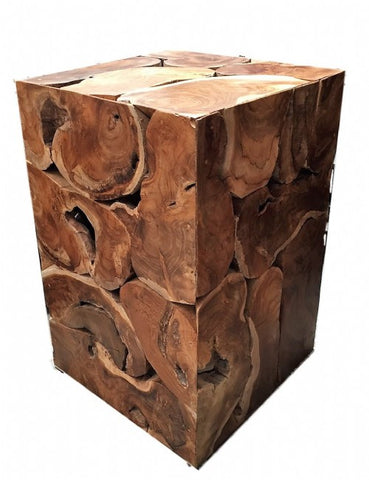
What are the necessary and sufficient conditions for table-ness? I say there aren't any. Unless you would stipulate some. -
Ontology of Time
Only on Sunday.Spinozist — Arcane Sandwich
what the blimey this got to do with a Thread called "Ontology of Time". — Arcane Sandwich
This follows on from my first post, in which I pointed out that the OP was then 19 hrs old.
The line of thought is that there is something amiss with an argument that claims to show that time, which is pretty foundational, does not exist. It misuses "time", or "exits", or both. -
Ontology of TimeThen it seems to me you did not follow the discussion above. That pile of chip is the table. It is not a table.
Here the logic used is Kripke's, seen in Identity and Necessity. -
Ontology of TimeThat's verging on word salad.
When the table is chipped into sawdust and scattered, the functional structure is gone. So, in one sense, it’s no longer "a table" (a functional object), but in another sense, it’s still "this table" (the individual thing that once was a table).So Identity doesn’t depend purely on form. If it did, then the table would cease to exist the moment it stopped being functional as a table. Instead, identity seems to track something deeper—perhaps continuity of language, history, and the way we rigidly designate things. -
Ontology of TimeCool. The "form" seems to be a misunderstanding of what happens when we decide to count the newly bonded timber as a table - an hypostatisation of a bit of language use.
-
Ontology of Time
Yep. Again, there is a difference between the type, "table" and the individual, "This table".Start with a dinner table, then disassemble it. All there parts are still there, but you no longer have a table. — Relativist
An object is more than the set of parts that compose it. It's the composed parts + the way they are arranged that makes it something more. — Relativist
So you would include some sort of form - we don't only take the parts and arrange them in a table-like fashion, we need to add, in addition, tableness?
I won't be agreeing with that. -
Ontology of TimeThere remains a difference between this table, which is a rigid designated individual, and a table, which is one of a type. What is it that is ground up and distributed across several countries? This table. Sur, it's no longer one of the things that we might count as a table, as of that type.
And yep, we can talk of have fox-trouts if we want. -
Ontology of Time
I don't agree that it is counter-intuitive. If the owner came along and asked where their table is, we might well point to the wood chips.
Well, obviously.if you say that the pile of wood chips is identical to the table, then your ontology can't explain artefact destruction (or artefact creation). — Arcane Sandwich
There's a play on what it is to be an individual here, that harks back to my initial point, that the table and the atoms are the same. When the collection of atoms existed as a living tree, it wasn't a table, yet it was the table, just as the wood chips are the table.
The table is an individual, and as such may be rigidly designated regardless of the properties attributed to it. It can be parts of a tree, or a pile of wood chip, and yet remains the table. But as the parts of a tree, or as wood chip, it is not a table.
If our aim were to explain the composition of the table, it would be better to start with a different set of individuals, perhaps the cellulose fibres. These can be arranged into a table, a tree or a pile of wood chips.
Which is were we started. The table is the collection of cellulose fibres. It's not as if one arranges the cellulose fibres and then adds something else, the table. -
Ontology of TimeBeing able to persist while going through the woodchipper is a property that the collections of atoms has, and the table does not have this property. — Arcane Sandwich
The obvious reply is, that pile of wood chips is the table. -
Ontology of TimeNice.
Yep. Different properties may be attributed to the same individual under different descriptions....the table and the atoms that compose it have different properties. — Arcane Sandwich
Leibniz's Law says that two things that have the same properties are the same thing. It does not say that if something has different properties it is a different thing. You are using the inverse of Leibniz's Law, wanting to argue that if something has different properties, it is a different thing.
In one description the table is brown and solid, in the other it is cellulose and space. These two different descriptions are both true of the table. They are compatible. In order to show that there are two different things, one would need to show that the very same object could not be brown and solid and cellulose and mostly space. But of course you can't do that becasue the table is wn and solid and cellulose and mostly space.
Yeah, it is. It is the same table if I gouge out my initials in the woodwork. Removing a few atoms will not make it cease to be that table. We use such terms in suitable vague ways quite successfully.2nd reason: if a table is identical to the atoms that compose it, then if you remove a single atom, you're no longer dealing with the same table — Arcane Sandwich
Both examples attempt to be overly precise. -
Ontology of Time
The table is the exact same object as the atoms that compose it.1) If tables exist, then a table is one more object in addition to the atoms that compose it. — Arcane Sandwich -
Ontology of TimeCan you turn this into an argument? What is it that you want to conclude here?
-
Ontology of TimeThe table here is made up of molecules of cellulose with a few impurities.
Some folk conclude that what is real is the atoms and molecules of the cellulose, that the table is an illusion.
Some folk note that those atoms are mostly space. and again sups the table to be an illusion.
Neither of these is a sound conclusion. It remains that there is a table, consisting of cellulose and space.
The argument for time being an illusion is similarly unsound. It remains that the OP was written three days ago.
The problem here is not with time and space, but with the misuse of the words "illusion" and "real". -
What are 'tautologies'?This:
Hence, Phosphorus could be the sun? What would Hesperus be? Under this clarification is "Phosphorus is Hesperus." still a tautology? Or is it downright false? — Corvus -
What are 'tautologies'?
Sure.The fiction of dragons includes "breathing fire". But fictions still can't engage in the real world activity. — Relativist
You can't say of something that does not exist, that it breaths fire. Just showing you one way to make sense of that.Do you understand my objection to the original statement:
Whether they exist or not, dragons breathe fire. — Relativist -
What are 'tautologies'?
And yet it is true that dragons breath fire.Breathing is a real world activity by real world creatures. A fiction can't do this. — Relativist
Ergo, fictional creatures can breath.
Take a closer look at what is going on. We can set "exists' as a quantifier, ∃(x)f(x), which just says that something has the property f. Then we can happily talk about dragons breathing and still say that they are fictional.IMO there's one ontology. Dragons are either real-world creatures, or they are concepts residing in minds. — Relativist
Fictional creatures are found in fiction, in the real world. Sure, you will not meet one in the street.
On this account dragons can breath fire. On your account, it is false that dragons breath fire. -
What are 'tautologies'?
Why would you think fictional creatures do not breath? Or are you now saying that there are two levels of ontology, stuff that exists and stuff that is actual?Then the sentence "dragons breathe fire" is false, because fictional creatures don't actually breathe at all. — Relativist
∃(x)(x is a dragon & x is fictional & x breaths fire)
Looks fine to me.

Banno

Start FollowingSend a Message
- Other sites we like
- Social media
- Terms of Service
- Sign In
- Created with PlushForums
- © 2026 The Philosophy Forum