
-
Infinite Regress & the perennial first causewhat does he mean by "fundamental logical notion" — TonesInDeepFreeze
Well, were diamonds and boxes used back then? Given that there was not at that stage even a standard notation for predicate calculus, I doubt there was much by way of agreement on how to parse modal operators.
What we tend to lose from our "post-formal" perspective is an understanding of the accomodations that have to take place in order to follow a particular formal approach to parsing sentences — although we get a reminder when dealing with initiates into logic, where even otherwise clever folk have difficulty in parsing simple sentences. That is, the development of a logical notation includes, usually implicitly, injunctions to only represent certain things in certain ways, and to reject other representations; these are injunctions to think about the sentences in a particular way, rejecting other options that are less amenable to the logical notation.
So developing a logical notation involves seeing sentences in a certain way, amenable to those logical notations. To be sure, I take this as a good thing, the removal of inept and inaccurate parsings.
And keep in mind that Russell was 76 in 1948. -
Infinite Regress & the perennial first causeI think Russell is saying that you don't put modal operators in front of terms, only in front of formulas. — TonesInDeepFreeze
I thought the same thing, but could not quite see how to fit it together. Jan Dejnožka has argued that Russell had a quite sophisticated modal logic, and given that Russell was the authority on Leibniz this seems inevitable. Leibniz is after all the originator of possible worlds. Further, Russell's admonition of Leibniz is modal, that Leibniz did not follow the logic of modality to the (for Russell) inevitable conclusion of the world being necessarily as it is, even as Spinoza did. Speaking roughly, Russell held that necessity begets only necessity, and contingency begets only contingency, and hence if there are contingencies in the world then the world is contingent, and if god is necessary then all his creations are by that fact also necessary. But the academic discussion on the issue is bulky and indecisive.
A large part of the issue here is that the language of modality was understood less formally then - up to a hundred and twenty years ago - than now. This is I think the core of Russell's argument in Necessity and Possibility in whch he writes:
Earlier he makes it clear thatI conclude that, so far as appears, there is no one fundamental logical notion of necessity, nor consequently of possibility. If this conclusion is valid, the subject of modality ought to be banished from logic, since propositions are simply true or false, and there is no such comparative and superlative of truth as is implied by the notions of contingency and necessity.
Russell puts much of the blame for the confusion down to Kant. In this, at least, he seems to be in agreement with Kripke.Necessity and possibility, to begin with, must be primarily predicates of propositions. When we say (for example) "God is a necessary Being", we must be regarded as meaning "That God is is necessary". We must distinguish between a necessary proposition and a proposition which predicates necessity. -
Infinite Regress & the perennial first causePerhaps in reference to his interpretation of Leibniz Cosmological argument - see The Philosophy of Leibniz section 109, around p. 206. "But as the premiss is contingent, the conclusion also must be contingent."
It's hard to see how the arguments there could be parsed in terms of boxes and diamonds in such a way as to overcome some considerable ambiguity, especially if we were to add Russell's explication of individual identify in terms of definite descriptions. Beyond my pay grade. We might write ∃x[(Kx & ∀y(Ky → y=x)) & Bx], but where to put the diamond that indicates the thing that is K only exists contingently? -
Do People Value the Truth?To maintain that there is no truth is self-contradictory, for if our contention were itself true, there would be truth. — Russell, The Philosophy of Leibniz, §110.
-
Infinite Regress & the perennial first cause
-
Infinite Regress & the perennial first causeInsufficient to save this thread, it seems.
-
The Iron Law of Oligarchywe’d see some solid examples proving otherwise — NOS4A2
Trouble is, as is explained in the article cited, the notion of "oligarchy" is so loose that it might be applied to any form of specialisation or leadership. It's not a thesis that can be empirically tested. -
Philosophy is for questioning religionAren't they two different facets of the same thing? — Wayfarer
Well, no, not prima facie; do you want to argue the case?
And still, that it happens does not imply that it ought happen. -
Philosophy is for questioning religionAll well and good, but so what - the silence, I can see a point to; but what part in your story was played by an esoteric inner circle?
Are you sure esotericism is the word you want? Perhaps you want ineffable. -
Philosophy is for questioning religionAgain, that esotericism is done is a long way from that it ought be done.
-
Philosophy is for questioning religionI go further and argue that it is central to rationality. Rationality is a community enterprise, public and shared. Openness goes hand in hand with critique.
That this coincides with liberal values is a result of those values having been developed as rationality was being explicated, in the light of the flowering of scientific methods.
I notice you have not presented any argument as to the benefits of esotericism... -
Philosophy is for questioning religion
"Philosophy proper" - the sort of philosophy done by true Scotsmen?Esotericism is essential to philosophy proper... — Wayfarer
That it was practiced does not mean that it was good practice.
The secrets hidden by the inner circle of the Pythagoreans allegedly included the existence of irrational numbers, hidden for fear of undermining the theoretical basis of the Pythagorean world view, hidden to avoid critique.
The rejection of esotericism is not mere prejudice. Openness, exotericism, is central to a rational attitude. -
Philosophy is for questioning religionthere's no reliable way. — Tom Storm
Well, to be sure, there is, by following the teachings and becoming enlightened—or not. That is, that the Guru fucks children does not in itself mean that their teaching is wrong - just that they themselves are immoral. And that's indicative of the whole shonky logic of the enterprise. Technically, they are closed off from criticism by statements that are neither verifiable nor falsifiable and hence immune to critique, but on top of that there is the additional layer of concealment inherent in there being an "inner circle" - you don't know what you are getting in to.
It's dishonest all the way down. -
Philosophy is for questioning religionWell, there are the obvious problems of esotericism, which we perhaps need not list. It's pretty much anathema to the Western Tradition.
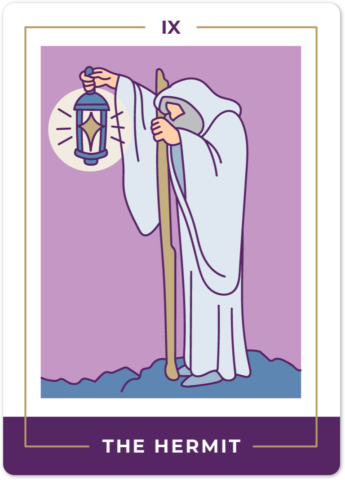
But who wouldn't be the Hermit, leaving mundane concerns behind to seek illumination; then perchance to be Zarathustra, edifying the masses...
But that's not how things work. It so often is more about buying that hundredth Rolls-Royce and fucking the underaged. -
Do People Value the Truth?Pragmatism would again have us throw out the baby of truth along with the bath water of scepticism.
Trouble is, folk expect too much from truth. Saying what is true is just what we usually do with statements. Denying this quickly leads to the sort of absurdities already mentioned here by several posters, but which the pragmatists, in their enthusiasm, failed to notice.
It's actually quite an amusing read. -
Infinite Regress & the perennial first causeWhat we have learned here is that will not accept correction. When he is shown to be wrong he will instead double down. It's not a good look.
By way of possibly dragging this thread back to the topic - causation...
The grain of coherence within Invicta's ridiculous OP might have been the old idea that while each element of an infinite causal chain has a cause, it is stil open to ask what caused the chain as a whole. From memory, it's found in the famous debate between Russell and Coplestone, where Russell points out that it makes sense to ask, of any particular human, who the mother is, but it does not make sense to ask who the mother of the human race as a whole is. As I alluded earlier, I share some of Russell's scepticism towards the notion of causation, so I'm reasonably happy with that argument.
If Invicta had had the wherewithal to put together an argument, they may have applied Coplestone's point to a circular causal sequence, by asking what it is that causes the circle as a totality. Invicta says, "asking where the circle came from is a valid question". To my eye that carries the visual analogue too far, since if we did have a circular causal chain every element of the chain would have a cause, and so no further explanation is needed.
Those who uncritically accept the notion of causation could have a field day with such an argument. It might garner some wider attention for this abortive thread. For my own part, I've already expressed scepticism towards causation. I don't think that a sufficiently coherent account of causes can be provided, nor is it necessary. Instead we may use something broader, the sort of thing we might call a model or a schema or a narrative.
Edit: Russell—Coplestone debate. -
Infinite Regress & the perennial first causeSometimes all you can do is laugh and walk away. — Aristotle
-
Philosophy is for questioning religionSo this is a thread about criticising religion. A ways back I started a thread on what religion was. I ended up with the notion that included ritual, transcendence and hope as central to the notion of religion.
Either that, or nothin'.
So given that, what is it that philosophy is supposed to be questioning?
One way of flipping things around is to notice that the heuristics of philosophy, the cutlery, might be considered as ritual. That seems the thrust of @Jamal's critique: that in invoking tools one is reducing philosophy to a religion.
@Wayfarer would put transcendence in the prime position. The trouble there is saying anything truthful. Such arguments are in danger of becoming either mere ritual again, or nonsense.
And Hope - I suppose that's what Pinker, and Timothy, is on about. -
Philosophy is for questioning religionTerminology. I, and I think this is the standard view in biology, would differentiate between "selective breeding' and "natural selection", reserving the latter term for genetic change within a natural environment.
But I'm still not seeing a connection with the OP or the sideline on ratiocination. -
Philosophy is for questioning religion
It's important to remind ourselves that strange attractors can be either a description, or a metaphor. SO, to take on your example, the market is not a strange attractor. Some of it's behaviour may be described using the mathematics of strange attractors; and the looping behaviour of a strange attractor may be a neat metaphor that helps us picture market behaviour. But the market is the market.
I was not able to follow your discussion of natural selection. Dog breeding is not an example of natural selection - quite the opposite. We are able to use selection to our own ends. But what was the point fo raising the topic? -
The Iron Law of OligarchyDid you have a read of the article? The critique of step four struck me as pivotal, since it is structural. the critique of step five highlights the pessimism inherent in Michels’ view.
Prefixing "iron" helps hide that it is not a law. Oligarchy is not inevitable.But, again, the question is not whether or not this can happen (surely it can) but whether it is unavoidable. — p.12 -
A Summary of the "Tractatus Logico-Philosophicus"Horror of horrors.
I mean to get back to a close analysis of Danièle Moyal-Sharrock's book.
What I think it of the utmost import to note is that On Certainty is a work in progress. I think therefore that any exegesis which supposes itself to present a definitive conclusion is jumping the gun, since it is not clear, indeed it is doubtful, that Wittgenstein himself had reached such a conclusion.
Hence your cautious approach is appropriate. -
The Iron Law of OligarchyFolks, have a read of this:Why Michels’ ‘iron law of oligarchy’ is not an iron law – and how democratic organisations can stay ‘oligarchy-free’
The danger of oligarchy is always there – but, luckily, it does not always materialise. I therefore think that it is more appropriate to call Michels’ theory not the iron law but the iron threat of oligarchy.
Being such an individualist, may have trouble understanding that folk can work together in order to avoid the outcome he sees as inevitable. -
Philosophy is for questioning religionThere's studies as show that those who examine Choice magazine reviews in detail tend to be less satisfied with their purchases.
-
Philosophy is for questioning religionYour posts here have been thought provoking.
This last takes me back to some work I did on organisational decision making many years back; work that applies as well to individuals as to organisation. You use the metaphor of someone perusing a gallery at leisure, making calm, considered decisions. Trouble is, this is rarely what happens. Nor is is even ideally what happens. Organisations and individuals are embedded in a world in flux, were circumstances change spasmodically as often as smoothly, but also where the decision made changes the way things are.
One is tempted by the analogue with a strange attractor, after , but even a strange attractor is rhythmic and predictable compared to the path of even a simple institution, or with the unpredictable events of a lifetime.
Take any pivotal life decision, be it moving to a distant city or committing to a partner or accepting a job offer. Everything changes, unpredictably, as a result of the decision. Because of this, while there may be a pretence of rationality, ultimately the decision is irrational. Not in the sense of going against reason, but in the sense of not being rationally justified. It is perhaps an act of hope, or desperation, or sometimes just whim.
And this not only applies to big choices, but to myriad small choices. Whether you have the cheese or the ham sandwich had best not be the subject of prolonged ratiocination.
Most of our choices are not rationally determined; and this is usually a good thing, lest we all become Hamlet.
Then there are heuristics. is somewhat dismissive of cutlery, but it does make eating easier, not to mention smoothing the social aspects of the table. It's usually not possible to see the bigger picture, to understand the furthest consequences of one's choices, and even when one does, as perhaps was the case with the beginning of the arms race, the problem can be intractable, or at the least appear so. Sometimes the best one can hope for is to be able to sort stuff out in the long run. So we rely on heuristics.
pointed to the tension between wanting ethics to be taught while being suspicious of the impact of self reflection. Part of the trouble is, despite the pretence, we can not, do not, and ought not make all our decisions only after due ratiocination. -
Philosophy is for questioning religionEach is as much a better way of saying something differently as of saying something new.
-
Philosophy is for questioning religion
We could easily find examples of the use of those heuristics hereabouts. It was their misapplication that was more widely discussed, see for example How (And When) To Think Like A Philosopher. it's short, you might be able to stay awake.Fell asleep. — Jamal
In part. Thinking in terms of Bernard Gert's "I'm a philosopher, so I don't know anything you don't know", a good rule of thumb might be that notions that are peculiar to philosophies must be treated as dubious. If doing philosophy is like plumbing, then it probably should avoid any pretensions of making discoveries.“coining of concepts” — Jamal -
Philosophy is for questioning religionThe idea that philosophy is an independent ever-expanding toolbox, — Jamal
Did you notice The Philosophical Toolkit? There was a bit of discussion around it. Several tools are listed.
I suspect that the (self-conscious?) use of such heuristics is more common amongst the failed mathematicians than amongst the failed writers. That might just be my bias, which is towards critique rather than making shit up. -
Philosophy is for questioning religion
Yes, a study for a curmudgeon...but it’s ranty, dated, and often shallow — Jamal
Yeah, that's the misanthropic aspect of critical thinking. It might easily become a source of alienation, hence not for children.I'm worse than that. If I see people queuing for something, I'm immediately suspicious of it. — Tom Storm -
Philosophy is for questioning religion
Well, for a start, philosophy is pretty antisocial.
For example my immediate response to your "I often wonder is there a point where useful self-reflection becomes philosophy?" was that you have accepted the almost ubiquitous presumption that philosophical enquiry consists in self-reflection. I think that presumption mistaken.
When such stuff is pointed out, folk tend to get the shits rather than enter into a discussion. It's the philosophers' inept response to "everyone likes a good book" - when you read that, do you immediately look for counter instances? That's what philosophical training does to you. :wink: -
Philosophy is for questioning religion
Damn you for adding to my reading list. The prose looks... interesting.The Eclipse of Reason — Wayfarer -
Philosophy is for questioning religionIf you have a choice, best do something else.
Serious.
It's not good for you, and probably ought be discouraged in children. Certainly philosophy is not something for adolescent minds.
If you have a choice. -
Philosophy is for questioning religion:grin:
Being a failed mathematician, I'll get all analytic and point out that the arguments and strategies philosophy provides to us have a more general application than just the critique of religion, and cite the threads on Trump, Covid and the invasion of Ukraine as evidence.
I'd also like to point out that the reason I withdrew from Maths was to satisfy a desire to do more philosophy. Philosophy feels more important than mere maths. Of course, that's an illusion.
Some good general advice would be not to do philosophy if you can avoid it.
(edit: Damn, last post on a page. No one ever reads the last post on a page. The failed mathematician bit will fall flat - but I suspect it's at least partly right. I think I'd be better at philosophy if I had done more maths. Provokative. ) -
Infinite Regress & the perennial first causeAgain, here is the problem with the OP:
An infinite causal chain does not imply a causal loop. Not even metaphorically.I find his dissatisfaction with infinite regression unsatisfactory for if infinite causes are the chain of sequences ad infinitum does such a chain not imply a closed loop, like that primordial snake ouroboros eating it’s own tail. — invicta -
Analyticity and Chomskyan LinguisticsYep. So we must drop the idea that a sentence can be true in virtue of the meaning of it's terms alone.
-
Analyticity and Chomskyan LinguisticsWhich is to say, true by use, and to drop the notion of something being true by meaning.
-
Do People Value the Truth?Because we don’t attend to the obvious unless there is a reason to. — I like sushi
Just so. We bring things in to doubt when we have reason to do so.
And in doing so we hold other things as indubitable. So even , venturing tentatively onto a previously unexplored floor for fear of falling through, holds gravity indubitable.
The pop culture has it that we ought doubt everything, put it to the test. A bit of thinking shows this pop notion to be problematic.
Banno

Start FollowingSend a Message
- Other sites we like
- Social media
- Terms of Service
- Sign In
- Created with PlushForums
- © 2026 The Philosophy Forum