
-
Americans afraid of their own government, why?
It was Chomskybot, I think. I confess I miss Chomskybot.I was speaking comparatively, to the old PF, where we even had a bot (think it was called ModBot), made by Paul, that would quote Chomsky whenever his name was mentioned or something like that. — Posty McPostface -
Americans afraid of their own government, why?I'm not sure what you mean by "around here" but when I searched for "Chomsky" I came up with 253 mentions, which I would think isn't bad as far as mentions go.
As to what he says as quoted above, I'm not sure if he's addressing (1) why Americans are afraid of their government; or (2) "fear of the United States"; or why Americans fear (or hate) others, using Indians and slaves as examples. I think it's a confusing response, as I think these are different issues. I, personally, don't know what to say about zombies. I don't understand why people find them interesting. As for visions of the apocalypse, I'd be more inclined to point to the fact that the end of the world seems to be the peculiar fascination of many American Christians, who've been eagerly awaiting it for quite a long time and apparently believe it will be spectacular. It may even involve zombies of a sort.
Speaking only for myself, I think our government is largely corrupt, as it is so entirely dependent on money and so influenced primarily by those who have it and are willing to spend it in assuring politicians will do their bidding. So, I don't admire or trust our government. I don't particularly fear it at this time. -
Americans afraid of their own government, why?God's teeth. Does Noam Chomsky know everything? Whether he does or not, must we so persistently learn what he thinks and alert others when we do so? He's become a kind of modern, but prolix, version of the Oracle of Delphi.
-
A president cannot be found guilty of obstruction of justiceIt seems you're quite right. Thank you.
-
A president cannot be found guilty of obstruction of justiceI do too. Trump's a troll. You let yourself get trolled. A pardon's not relevant until he's convicted of a crime. That hasn't happened. Why not save your outrage for things that are actually happening? That's my question. You can't stay outraged all the time. Can you? — fishfry
I see. You have a point. But the "cannot obstruct" argument is being made by his lawyers in what I think is a very real effort taking place now. -
A president cannot be found guilty of obstruction of justiceAs far as I know, a presidential pardon, if one can be made in this instance, doesn't expire when a president leaves office. So I think we're talking about two different issues.
-
A president cannot be found guilty of obstruction of justiceHe hasn't been indicted or convicted of anything. If and when that day comes, the question of whether a president can pardon himself will be relevant. — fishfry
I wonder why, then, the president and his lawyers are making these claims now. They appear to believe them relevant. Shouldn't your complaint be directed to them? Or is it that you're disturbed only by the fact others are responding to the claims they made publically, clearly believing them to be relevantly made? Are the claims made relevant, but not responses to them? Or perhaps the claims are irrelevant and responding to them is therefore doubly irrelevant, as it were?
It seems a bit harsh to maintain that people shouldn't respond to claims made by others. -
A president cannot be found guilty of obstruction of justiceDoes anyone really believe that the president cannot meet that criterion? — creativesoul
The argument being made, as I understand it, is that the president is the chief representative of the law in the nation. The president is the law, in effect, to the extent any human being can be. Therefore, he cannot obstruct the law as that would be to obstruct himself; something he cannot do. Q.E.D. -
A president cannot be found guilty of obstruction of justiceI've been a lawyer for quite a while. Oddly, I find that though I have less and less respect for most of my fellow lawyers (including judges--and in particular those lawyers representing the president at this time), I have greater respect for the rule of law now than I did when I first began practicing.
Even kings have been subject to the rule of law in Anglo-American jurisprudence since what took place at Runnymede in 1215 (though some claim there are exceptions in extraordinary circumstances such as times of war--Inter arma enim silent leges as Cicero said). The claim that a president is above the law and may pardon himself of any crime is intolerable; even contemptible. -
Is philosophy in crisis after Nietzsche?
Dewey thought that the traditional philosophical questions were misguided and misleading. So, as far as I know, he never addressed a question like "What is the meaning of life?" or "What is the purpose of life?" As a result, it's not easy to say what his answer to those questions might be, nor is it easy to summarize his positionWhy should growth and education give meaning and purpose? The idea seems silly to me. Did Dewey attempt to defend such a proposition in any of his works? — Ron Cram
But I think it's fair to say that he felt it evident that life necessarily involves change, and that as we live we grapple with circumstances and consequently learn from our encounters with others and the rest of the world. We attempt to resolve problems and conditions that disturb us. In the course of doing so, we become more knowledgeable about life and living. Life is education, according to Dewey, and education is growth. As we learn, we become more than we were. Dewey emphasized the method of achieving desirable ends and didn't insist that certain ends are now and always good or desirable. He thought means and ends a continuum.
I think he came to the conclusion that growth and education was necessarily social and not merely individual, involved an appreciation of art and science, and that ideally life should be lived to in such a manner as to promote the growth of all in knowledge and sympathy by instilling creative and intelligent methods of interacting with the rest of the world and assuring all people have the opportunity to learn and use their abilities. Well, that's a stab at it, I suppose. One must read him.
I was browsing the Internet about Dewey, Nietzsche and nihilism and came across this, regarding the author's journey from Nietzsche to Dewey, which you might find interesting :http://www.johndeweysociety.org/dewey-studies/files/2018/02/4_DS_1.2.pdf -
Is philosophy in crisis after Nietzsche?I haven't read anything of Dewey's which specifically addresses Nietzsche or nihilism, which isn't to say he never did so. He was probably accused of nihilism by those who equate it with the failure to accept an anthropomorphic version of God and fixed ideals, and the acceptance of naturalism and humanism. He thought life had meaning and purpose, that being tour growth and education, broadly defined
-
Is philosophy in crisis after Nietzsche?Though Spinoza came before Nietzsche, I think Nietzsche's 'death of God' doesnt apply to Spinoza's God, because Nietzsche's attack on God is a attack on a transcedent God, while Spinoza's God is immanent. So an argument could be made that Spinoza argues for a objective morality based on an immanent God, which survives Nietzsche's critique. — Nop
I feel it's a good argument. Spinoza isn't alone, of course. The Stoics thought that God was immanent and that moral conduct could be determined "objectively" thousands of years before Frantic Freddie began to write the seemingly endless series of rhetorical questions and exclamations which make up such a large part of his work. John Dewey thought it possible to make moral judgments on what I think would be called an "objective" basis without bringing God into play. I find it hard to believe that any "crisis" exists, myself, though I don't doubt some do. -
Your Favourite Philosophical BooksIn no particular order:
Sense and Sensibilia, J.L. Austin
The Concept of Mind, Gilbert Ryle
Reconstruction in Philosophy, John Dewey
The Winds of Doctrine, George Santayana (not entirely philosophical, I know, but a good read) -
Thoughts on love versus being "in love"
Perhaps I was too exposed to Wittgenstein and "ordinary language philosophers" like J.L. Austin in my younger days, or am myself merely ordinary, but I'm inclined to define "love" as I think we typically do, as we use the word in context; as a noun or a verb, depending on the circumstances. So, I'm inclined to say that when I love someone I have a profound affection for them, for example, or a romantic attachment to them. I may have both for the same person, or I may not. I don't see these uses of the word as artificial, but rather think that uses of the word which substantially differ from them are misuses of the word and language, which may as lovely, lovely Ludwig W used to say, lead to the bewitchment of our intelligence.
That's not to say you're bewitched, though. Only that I what you describe isn't what I would call "love" though it may involve love, or relate to it. -
The American Gun Control DebatePeople must have guns and use them to stop people who have guns and use them on people who have no guns and therefore cannot use them. When more people have guns, there will be less people who don't have guns that people who have guns and use them can kill, and more people who have guns and can use them on people who have guns and use them. Fewer doors means that fewer people with guns can use those doors and use their guns on people who don't have guns, and also means that people who have guns can more easily use them to stop the fewer people who have guns who use the fewer doors. More guns, fewer doors. It's all so clear.
-
Thoughts on love versus being "in love"It is therefore your state of mind and your responses that you need to question; for instance, love is not something you give only to one other person while remaining indifferent to everyone else. It is an expression that you give to all people and that requires a type of feeling or comradeship with all people — TimeLine
I don't think love is something we can give to all people, unless you equate it with "comradeship" or something similar. And I think it's quite possible to love someone and remain indifferent to everyone else. I think we do that all the time. We don't know anything about most other people, in fact.
I can say I love my children, but couldn't with a straight face say I love all people or can love them if by "love" I mean what I feel towards my children. That's why I think that it is, in a word, foolish to claim that we should all love one another. It will never happen. If one feels the need to establish rules of conduct for all of humanity, I think it would be far more realistic to contend we should all respect one another, for example. There's no need that I love someone in order to respect them, or consider them a friend, or be kind to them. I'm certainly not indifferent to someone I consider a friend, but don't love them. -
Thoughts on love versus being "in love"Well, we've been engaged in defining "love" for quite some time, haven't we? Plato nearly beat it into the ground in his Symposium. Aristotle, that relentless categorizer, added his thoughts. Other philosophers, poets, writers, have had their say. Eros, agape, Platonic or Christian, we've constructed various kinds of love. It's not clear to me that this has done much for us, or for love for that matter.
As wonderful as it is to feel in love, as wonderful as it would be for all to love one another, I think that love is something we experience infrequently in our lives and have for very few of those we encounter in our lives. I don't think it's something we can cultivate as we would a crop or extend it to more than a few. It has a very limited application; it's impact on our lives can be profound, but is narrow. It's very personal. Enjoy it if you're fortunate enough to love or be loved, and be content with that enjoyment. -
Achieving Stable Peace of Mind
For my part, the Roman Stoics. Epictetus, Seneca, Marcus Aurelius. Musonius Rufus if you can find his work. CBT has its basis in Stoicism.Are there any readings you would recommend on the subject of cultivating a relatively stable peace of mind? — CasKev
"Happiness and freedom begin with a clear understanding of one principle: Some things are within our control, and some things are not. It is only after you have faced up to this fundamental rule and learned to distinguish between what you can and can't control that inner tranquility and outer effectiveness become possible."--Epictetus -
Sketches of SenseWilly Sutton's answer doesn't just shift the sense of the priest's question from one domain to the other, or from taking one kind of answer rather than another. He does also answer the question as asked, because his answer carries the implicature that he wanted money — Srap Tasmaner
Just so. The priest, in asking Willy Sutton why he robs banks, was asking him to explain why he did so. So he told him why, though not directly, although the implication is obvious enough. He gave a "funny" answer to the question but explained his conduct. He explained his conduct by noting why it makes sense for him to rob banks.
In this example, it makes sense to do X because doing X will effectively achieve a desired outcome. -
Cat PersonThis dyad exposes the vulnerability or lack of esteem in men and to call it a "weakness" or to say it is "self-imposed" is another mechanism that reinforces something "masculine" and does not productively explore the phenomenon leading men to conform — TimeLine
I'm a cynic (in the common sense) trying to be a Stoic (in the uncommon sense). So, I have what may be a peculiar view on this issue. I think this lack of esteem is merited, as I think we're all too readily pathetic (although I think we try to use even this to our advantage; we're calculating, as I said). But, I also think that it results from a needless and harmful concern with things not in our control.
This isn't necessarily to say we're weak. We're thoughtless, however, and in a very literal sense. We just don't think, being intent on satisfaction of a compelling need. We're selfish in so complete a manner that even Ayn Rand would find it hard to believe it virtuous. -
Cat PersonGoethe was almost biblical and this dichotomy between the harlot and the holy illustrates the subjective conflict between instinctual desires or the "bad" and moral responsibility or the "good" that seems to be projected and translated in women. We tempt and inspire the same struggle and thus men create these artificial constructs that they project into an ideal woman and women play the part in order to make themselves attractive. — TimeLine
There's a certain danger in being desired or thought desirable by men, it seems.
The "bad" women to such as Goethe would probably be those who arouse the brute needs of the male (I've always wanted to use this silly phrase and couldn't resist using it when the opportunity arose) and the "good" women would be those who inspire our loftier ideals and so lead us onward and upward. It's likely a part of the old distinction we've liked to make between the merely physical and the mental or spiritual, the latter always being superior to the former, but the former always being paramount regardless of what we say, especially when it comes to sex where we (men I mean) are so motivated by what is visual.
I believe men do deserve sympathy because a deeper vulnerability pressures them to silence articulating their own identity. The pressure of masculinity. — TimeLine
The incendiary and divisive Camille Paglia claims that we men must define our identifies against our mothers or we'll be swallowed up by them. An image at once disturbing and suggestive. She can be such fun, sometimes.
But don't be too kind to us. Pity may be more appropriate than sympathy when it comes to these things. And caution. The pressure you speak of is largely self-imposed.
I appreciate your responses. I think better of the story and the author because of them, and may even understand them somewhat. -
Cat Person
It seems to me that throughout our sad history, we males when taken together have for various reasons characterized women as either impossibly bad or impossibly good, as it suits us and our circumstances. We're either gross or (grossly) sentimental about them, generally. I'm not sure what Goethe was thinking when he wrote that line, but it sure seems he had the impossibly good woman in mind.
I wonder now and then whether we can be any more sensible. I think we can be in certain cases, but not as a rule, because I suspect when it comes to women we desire we stop thinking in any significant sense. I want to be clear about this, and don't want even to imply that we lose responsibility for what we do or are deserving of sympathy because we driven by impulses beyond our control. But I think that we can become exceedingly stupid and sentimental, though calculating. At worst, we become...well, repulsive. And that may inform the socially constructed ideals you refer to.
I may be wrong, of course. I prefer Pelagius to Augustine, and so think if I have a soul it was pure as pure can be, untouched by sin, at my birth and since then am responsible for my woeful life and will be no matter how many times I ate his body and drank his blood. I stopped doing so long ago, though. My soul and my problem, as you say. -
Cat Person
God's teeth! How did I miss this savagery?Do you think, Bitette, that you probably lack an understanding of what the story means given you've enjoyed penis for supper for these long years? — TimeLine
The old Elizabethan (I think) exclamation appears pretentious, I know, but strikes me as appropriate since you apparently associate the penis with "what's for dinner." Not that God would, of course, though that may be debatable if you accept the doctrine of transubstantiation.
It seems rather severe given the quality of the story in question, but I'm sure your comment, though stern, was well-intentioned and, like the story itself, meant to enlighten. "The Eternal Woman (or Feminine) draws us upward" (sorry, since we have Google we may as well use the original German--Das ewig Weibliche zieht uns hinan). -
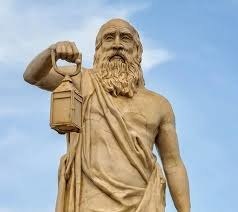
Smoking puzzleSo, had Plato known of tobacco, he would have defined man as "a featherless biped capable of smoking." In which case Diogenes would have appeared brandishing a plucked chicken fresh from a fire declaiming "Behold Plato's man!"
-
Wakanda forever? NeverWell, I win in terms of my inability to respond to the OP. While you didn't see the movie, I didn't even fully read the OP. I can say though that the word utopia, which seems to be what vibranium might acheive, is also a made up word for literary purposes, but Greek roots were used, not Roman, and I prefer gyros to spaghetti. — Hanover
I like both, and as the Empire was both Roman (Latin) and Greek, respect ancient Greek though I know far less about it than I do of Latin--and my knowledge of Latin is haphazard. -
Cat PersonI like Julian best, maybe because I'm a Roman history fan, and am especially interested in the transition from pagan to Christian civilization. But also because I enjoy how he used correspondence between the two philosophers who knew the Emperor, Libanius and Priscus, to tell the story. He was a very clever, perceptive man who wrote very well, and did his research (at least for his historical fiction) but could be fiercely malicious in argument and criticism. That evokes a certain admiration in a lawyer (this one, at least). In fact, judging from his writings he knew lawyers quite well.
-
Cat PersonVidal could be unduly waspish. I just remembered he made the comment, and thought I'd note he had. I've haven't read Oates' novels or stories. I read some of her poetry. I hope her prose is better.
I think Vidal wrote quite a few good things. I especially like his essays. But I don't know how one identifies the elite. -
Cat PersonThen read "Where Are You Going, Where Have You Been" by Joyce Carol Oates. — Baden
According to Gore Vidal, the three saddest words in the English language are "Joyce Carol Oates." -
Cat PersonNever judge a person by his/her texts, I suppose. We're less likely to be disappointed with others when our encounters with them aren't physical; when they aren't physical, in fact. Perhaps the inconvenience and burden of the real will be eliminated someday, replaced by some technological form of interaction between adaptable versions of each other we can manipulate in comfort from afar.
I was hoping there'd be cats, you know. -
Wakanda forever? NeverI confess I've never seen the movie, and probably won't until it appears before me on my television as I sit in my comfy chair, if then. I'm not much interested in superhero movies; certainly not enough to see one in a theater.
But I find the use of the word "Vibranium" interesting, because "ium" is a suffix used in nouns borrowed from Latin. It seems the Romans influenced even the imaginary land of Wakanda.
But perhaps those making the movie were no more interested in depicting an admirable nation than we've been interested in creating one. -
I am, therefore I thinkI'll note that Cicero wrote: "To live is to think" (Latin: "Vivere est cogitare") I'm no fan of Heidegger and will leave what he may have meant unexplored. Thinking is something we do, though, while we live, but I'd say we don't reflect, or think analytically or critically, all that often. Dewey said we only think when confronted with a problem. We do a great deal by "habit", without reflection. I don't know what "unknown" is supposed to mean, here.
-
Mental illness, physical illness, self-control
That might depend on the severity of the OCD. I think "reason" can help, but being as aspiring Stoic I suppose that's to be expected. The Stoic maxim that we shouldn't let things beyond our control disturb us is, I think, useful in these cases if practiced. CBT seems heavily influenced by Stoicism, and may be helpful. Medication can help as well, I would think. I think reason can help, but may not be able to eliminate OCD in itself.Could patient X be right about that? — MetaphysicsNow -
Do we control our minds and personalities?I don't think I can distinguish myself from my mind, or my personality. Am I in control of myself? I can be, for all practical purposes, if I concern myself only with things in my control and exercise discipline and intelligent judgment.
We're required to make choices in life, and it's possible to consider which choice is better than others by evaluating consequences, circumstances, means and ends, and make a rational decision. Therein lies our freedom, such as it is. -
Why is love so important?Love is important because, without it, the popular music industry would collapse.
That said, love is granted an importance it cannot and should not have when it's used as the basis on which we should treat others, as it is too often used. It can be a wonderful thing to love someone, but we do so rarely and only with respect to certain people. We'll never "love everyone." The injunction/recommendation that we do so is so impossible of achievement that it renders "love everyone" virtually meaningless. We'll far more easily respect everyone than love everyone, which isn't to say we will ever grant respect to all. -
Metanarratives/ Identity/ Self-consciousnessI'm suspicious of our tendency to hypostatize. I'm concerned that referring to "metanarratives" or "identity" or "worldview" inclines us to fabricate characteristics in the nature of definable, separable "things" we're supposed to possess which distinguish us from others. It's unclear to me whether it's useful to categorize people in this fashion, except perhaps in pursuit of a purpose which wouldn't necessarily be benign.
-
Why I Left Academic PhilosophyI'm not an academic, but wonder if the complaints made regarding academic philosophy would also apply to other academic disciplines/studies. I suspect they would. I also wonder whether some of the problems complained of should have been expected by a person getting into graduate studies in philosophy (e.g., low pay, publish or perish, abstract issues of little practical significance).
I've found the ignorance of academic philosophers regarding sexual harassment and its legal consequences, in the instances I've read of, pretty remarkable, however. So I can understand if someone in the system found that shocking and disturbing. -
Israel and PalestineAll I've done is suggested, modestly as always, that the claim made in the Declaration of the Jewish State in Eretz-Israel to be known as the State of Israel, that it is established based on "natural and historic right," is questionable. Does that establish a bias? I suppose it might to some at least. But a claim of bias on that basis poses a danger to those making the claim.
I question whether there are any rights which are not rights recognized in law, and maintain that any claim that there are rights which are not, in fact, legal rights is simply a claim that there are certain things which are not legal rights which nevertheless should be treated as if they were legal rights. So when I question the existence of a right which isn't a legal right, I show no particular bias against those claiming such a right exists.
The claim that any group of people have a "natural and historic right" to a nation in a certain location, separate and distinct from a legal right, is necessarily biased, however, as it favors a particular group of people over other groups. In other words, it's a claim that a particular group of people, and no other group of people, are entitled to a nation at a certain place. So, I think reference to rights in these cases is best avoided. Israel simply exists. -
Israel and PalestineIsrael's Declaration of Independence draws attention to Eretz-Israel, and speaks of the "natural and historic right" of the Jewish Community and the Zionist Movement in connection with the establishment of a Jewish State to be known as the State of Israel.
For my part, I think Israel exists, and is a nation. I think it futile to maintain otherwise. However, I wonder to what extent it can reasonably be maintained that Palestine as a geographic area can be said to be the location in which a Jewish State should exist, or that a "natural and historic right" to the establishment of a state in that area exists. There are problems with taking such a position, and in basing a claim of entitlement to land on such vagaries as natural or historic rights, particularly when they're used in connection with establishing a nation. Bear with me as I indulge in a simple review of history, or pass on--I won't mind.
As I'm not inclined to think of God as a conveyor of real estate, or think that there is a natural right to certain property at a certain location, I think that if any such right can even be conceived it would have to be defended by reference to history. History, though, indicates that Palestine hasn't served as a home to "the Jewish people" or certainly to a Jewish State in an even nominal sense, since at the latest Hadrian was Roman Emperor and the Bar Kochba Revolt was crushed in 135 C.E. Before that, the Second Temple and most of Jerusalem was destroyed by the legions under Titus in 70 C.E. (you can still see the legions carrying the spoils of the Temple in a relief on the Arch of Titus on the Via Sacra in the Roman Forum).
Exiles from Palestine were associated with both those events. Earlier, the Jews were exiled in the 8th century B.C.E. by the Assyrians, and during the Babylonian Captivity in the 6th century B.C.E. Most Jews stayed in Babylon for centuries, though some returned from exile, to be subjected to the rule of Cyrus and other Persians and then one or another of Alexander's successors, for most of the time, until becoming a protectorate of Rome in the 1st century B.C.E.
History seems to indicate that most of the Jewish people lived outside of Palestine, and that no Jewish State existed in Palestine, for the last 2800 years or so.
Ciceronianus
Start FollowingSend a Message
- Other sites we like
- Social media
- Terms of Service
- Sign In
- Created with PlushForums
- © 2026 The Philosophy Forum