
-
Is it wrong to have children?
I hadn't been participating in this discussion. I generally avoid anti-natalist threads. But it was a slow day and decided to take a look. I think anti-natalists like to project their own misery onto the rest of us without any sign of self-awareness. I find it hard to take them seriously.
Your post is really clear and counters the anti-natalist argument well in a very down-to-earth way. -
The Metaphysics of PoetryNo marks for physics.
It turns me off... — Amity
Physics and "The Tao Te Ching" tell me everything about reality I need to know. -
The Metaphysics of PoetryDid you understand it ?
What did it mean?
I didn't have a clue.
Too dense.
No marks. — Amity
I sort of understood it. Not enough to want to finish reading the whole poem. -
The Metaphysics of PoetryMaxwell was OK, (7 out of ten) with good rhythm and rhyme, but some of the others stunk as poems and as also from being too technical. — PoeticUniverse
I liked the Maxwell one best because it was technical. That's what I want from a physicist - poetic physics. But all of them stunk/stank as poems. -
Are there things we can’t describe with the English language?More broadly, I've wondered in the past if there are actual aspects of fundamental reality that are only grasped by speakers of specific languages through words and expressions in their respective languages... — Noble Dust
Something I learned many moons ago in my psychology of language class. From Wikipedia:
The hypothesis of linguistic relativity, also known as the Sapir–Whorf hypothesis, the Whorf hypothesis, or Whorfianism, is a principle suggesting that the structure of a language affects its speakers' worldview or cognition, and thus people's perceptions are relative to their spoken language.
I, and I think psychologists in general, were skeptical of this even back when I took the class, but I think there is something there. My children were all involved in a French Immersion program from the time they were in kindergarten. Watching them, it has always seemed to me that having two languages gives you two different minds.
I love German. I think being able to speak it a little opens me up to concepts and ways of thinking. On the other hand, I think that's the weak version of the Whorf hypothesis, i.e. some ideas are easier to express and come more naturally in one language vs. another, but it's possible to translate. Or, you can just steal the word. -
Are there things we can’t describe with the English language?@Cidat
Dunno. The OP seems to have been sufficient to create a viable thread. — Banno
From Site Guidelines:
Don't start a new discussion unless you are:
a) Genuinely interested in the topic you've begun and are willing to engage those who engage you.
b) Able to write a thoughtful OP of reasonable length that illustrates this interest, and to provide arguments for any position you intend to advocate.
I think these are reasonable rules. If you're not willing to put a minimal level of your own work into a discussion, you shouldn't start one. Also - it pisses me off. -
Are there things we can’t describe with the English language?Yes! You are right. We create words to make them international. Inside plane or journeys vocabulary is more common. For example: Check in when you have to register or just notice that you are already on the airport. Here in Spain we just say check in, we do not translate it to Spanish. — javi2541997
[joke]If all you feriners would just learn English like God intended, we'd have no more problems.[/joke] -
Are there things we can’t describe with the English language?I think the barrier could be vocabulary. There are some words that cannot be translated at all because probably in English speaker country the word doesn't not exist at all. — javi2541997
This is true, but when it's needed, languages evolve. New words. Modifications of old words. Words stolen from other languages. Whole new ways of looking at things.
Quarks, protons, digital, transgender, Hostess Twinkie, television, internet, Covid 19, HIV, Slim Jim, cell phone, penicillin, GPS, Watergate, infotainment....None of these existed 100 years ago. I checked, Hostess Twinkies were first made 91 years ago. -
Are there things we can’t describe with the English language?Are there things we can’t describe with the English language? — Cidat
I think we can probably talk about anything we can be aware of. There are many things we aren't aware of and maybe many more we can't be.
If you're going to start a thread, you should provide more of your own thoughts in your opening post. It's just courtesy. -
Censorship and Forced hypothesis fallacy?Her hypothesis is however censored and erased by the admin who is Adams friend. — AndreasJ
Did the admin admit that he deleted the post because he was Adam's friend? If not, how do we know this? You indicated that the accusation was an "hypothesis." My first assumption would be that the post was removed because it was not supported with enough evidence and because of possible liability reasons.
The stone being blown by the wind is a pretty silly explanation. It would make more sense to say that the window was broken by a mysterious one-armed man.
A free drink to the first one who can identify the TV/movie reference. -
The Metaphysics of PoetryOur disagreement arises from the moment you assert that even in existence, which is a minor and more limiting field than that of metaphysics, concepts can still exist without the perception of "absoluteness", which is what makes up reality. — Gus Lamarch
The concept itself, without "idealization", cannot become "real"; you needed to capture it - idealization - so that you could project it to the "real" world. — Gus Lamarch
You think about art and the philosophy of art really differently that I do. I don't think that means either of us is wrong. My understanding of aesthetics goes along with the rest of my understanding of how the world works. I sometimes call that pragmatic. Yours seems more idealistic. But those are just labels. We are what we are; we see what we see, we feel what we feel.
I've enjoyed this discussion. You started a good thread. -
Suicide is wrong, no matter the circumstancesIf God now gave you the opportunity to never have been born in the first place, what would you choose? — I love Chom-choms
Regret is cheating. It's a way of not taking responsibility for your life and the things you've done and not done. That being said, I've sometimes thought that things would have been better if I died when I was 12. Problem with that - my children would never have been born. The universe is better with them in it. -
The Metaphysics of PoetryWe differ on the point where you take any and all "art" to be merely the "experiential moment" of such art - be it Poetry, Music, Images, etc... - which I - and many other philosophers and artists - disagree, because an existential process needs a metaphysical starting point - in terms of something artistic, "any real process, initially needs to be ideal" - which, if it does not exist, cannot be projected by nature. — Gus Lamarch
You're right. We do disagree. I'm thinking now about whether the disagreement you and I are having is a metaphysical one. My understanding of metaphysical statements is that they are neither true nor false. If that's right, we don't have to resolve our differences, we just pick the meaning that works the best for each of us. I'll just say, to the extent I am an artist, my way of seeing things is consistent with my artistic process and experience
Isma'il lived, and died, and his features lived and died with him; what we have as a record - in the case of his portrait above - is an "idealization" of something that was once real, and which, through the reception to the painter's consciousness - Tiziano's -, goes through the process of being projected again to existence as something real, but totally different from its previous conception - what was once something real - a human being - became an idea, that then became real again - as a portrait - -. — Gus Lamarch
I guess I don't see the need to put an extra step, idealization. In my experience with writing poems, which is limited, they usually start out with a feeling, an unspoken experience. Often the poem comes to me as a visual image. It's a neat feeling. Once, after a period of anxiety, a sense of peace came over me and the image of a horse came into my mind. Then this poem wrote itself out onto the page:
Peace, like a yoke on my neck
I feel the weight pulling me down,
The harness pulling me back
I feel my feet straining against the earth
Like a plow horse
Waiting to feel his master snap the reins.
I have no idea where that came from. From the sky I guess. I don't hang around horses or have any strong feelings about them. There was no in between step. Right from the unspoken feeling, to the image, to the page. Whether or not that's a good poem, I love it. It was magical. -
To be here or not to be here, honest question.Come on. You know the answer to your question already. Do you belong here? Come in and see. I don't know about your education, but you write well. I have almost no education in philosophy. I'm an engineer. Just look at how wonderful my posts are. Not to be down on anybody, but although there's a lot of good stuff here, there's also a lot of crap. As for lots of quotes, I have about 10 that I use over and over. Here's one that's relevant. Ralph Waldo Emerson, "Self-Reliance."
To believe our own thought, to believe that what is true for you in your private heart is true for all men, -- that is genius. Speak your latent conviction, and it shall be the universal sense; for the inmost in due time becomes the outmost,--and our first thought, is rendered back to us by the trumpets of the Last Judgment.
And if you just want to jump around and shout and act like an ass, the Shoutbox, at the top of the first page, is the place for you. -
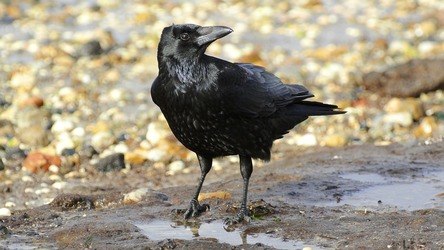
The Metaphysics of PoetryAs I’ve said in several recent posts, I think that poetry doesn’t mean anything beyond the experience of reading it or listening to it. As an illustration, I’ll provide a description of my experience of a poem I really like. “Dust of Snow,” as always, Robert Frost.
The way a crow
Shook down on me
The dust of snow
From a hemlock tree
Has given my heart
A change of mood
And saved some part
Of a day I had rued.
I really like this poem. First off - it’s really short. It was easy to memorize and when I quote it, people think I’m erudite. I tried to memorize “Two Tramps in Mud Time” once - nine stanzas, 72 lines. That didn’t turn out well. Also, it’s funny and Frost uses one of my favorite animals, no surprise, a crow. Not everyone sees the humor in the poem and I get that. I don’t know how idiosyncratic my reading is.
First stanza. Light, amusing. Very visual. I can see the man walking through the woods after a snow. That’s something that happens regularly in Frost poems. The snow is deep. He’s wearing boots. I can see the tree with the crow sitting at the top. Hemlocks are dark green with short needles ranked on many short branchlets. If that's a word. I’ve seen crows in the tops of trees plenty of times. Sometimes one, sometimes five, sometimes more. They’re usually noisy. Rambunctious. Very social. They’re really smart. It was clear to me the first time I read this poem that the crow shook the snow down on the man on purpose. That image always makes me smile. Having snow fall down on me from a tree branch has happened to me plenty of times. I can feel it going down my neck. Annoying.
Second stanza - More serious. Darker. It also makes me look back at the first stanza and think more about it. It seems like something has happened that the man regrets. So, he feels unhappy, sad, maybe guilty. It’s later in the day. Maybe he’s walking home afterwards or maybe he’s walking in the woods to think things over, brood, head down, not paying attention to where he’s going. And then the crow. He looks up. He sees the crow. He can see the crow looking down at him. He smiles. Maybe he laughs a little.
Why does this change his mood. I can think of a couple of reasons. First, it makes him break out of his introspection and look around at the day, the woods. That’s happened to me plenty of times. You just shake your head and get on with things. There’s another way to think about it that I really like. I like to think that at the moment the crow and the man are looking at each other, there’s a recognition. The crow made a joke. They both know it’s funny. Maybe the crow would cackle a little. I guess not. Frost would have mentioned that. The crow should have cackled. It’s hard to brood when your dignity has been tweaked. When someone has seen you for what you are.
As I said, this is not what the poem means. It is how it makes me feel. What it makes me see, think, feel. I don't expect anyone else to get the same things as I did or see it the same way. -
Adultery vs Drugs, Prostitution, Assisted Suicide and Child PornographyThe producer and distributor of that content is the primary party responsible for the abuse and the audience of the porn only contributes in a minuscule way unless you add them all up as a collective. — TheHedoMinimalist
If someone doesn’t play a causal role in the creation of the video and the video would have existed even if that person was never interested in child porn then I don’t understand how it would make sense to say that this person is responsible for abusing a child that would have been abused regardlessly. — TheHedoMinimalist
I'm sorry to be harsh. I think your position is morally repugnant. Hurting children is the worst thing anyone can do. To participate in any way is loathsome. I'm not going to comment any more. -
Adultery vs Drugs, Prostitution, Assisted Suicide and Child PornographyWell, one could scam or hack someone that has child porn. But, most porn is free on the Internet right now because it is funded by scam advertising. I don’t know if that’s a thing for child porn as well but if it is then I don’t think that a person who downloads child porn and doesn’t fall for scam advertisement would be doing anything to help the creators of child porn profit. — TheHedoMinimalist
I'm embarrassed to even have to make this argument. Web pages usually get paid by advertisers based on how many people click on their web pages. If you go to a porn website, you are contributing financially to the site's owner. You are helping to make it financially worthwhile for people to sexually abuse children.
Another non-financial way that someone might get child porn is if it is free distributed by a pedophile that wants to help other pedophiles out. — TheHedoMinimalist
So, someone sexually abuses a child and makes a film of it. Then he says "Hey, THM, would you like a copy of the video?" You say "sure" and download and watch it. Is it your position that you do not share any responsibility for the abuse of that child? -
Adultery vs Drugs, Prostitution, Assisted Suicide and Child PornographyPeople that possess or watch child porn of any kind do not necessarily play a causal role in the creation of that content though. It is only if they produce it or distribute it or pay for it then I think one can argue that they have actually seriously contributed to the abuse of children. Otherwise, I think that content would exist even if one particular person who watches child porn didn’t watch child porn. — TheHedoMinimalist
If no one had child pornography on their computers, child pornography would come to an end for practical purposes. Any transaction with a financial component contributes to the production of the pornography and, therefore, the abuse of children. How would someone get the pornography if there were not a financial transaction of some sort? -
Adultery vs Drugs, Prostitution, Assisted Suicide and Child Pornographyhaving child porn on your computer is usually still illegal in most countries. — TheHedoMinimalist
Visual child pornography - videos or photographs - requires that children engage in sex acts. It is not likely that any child would do that unless coerced. In most places, children do not have the ability to give consent. Even if there is no legal restriction, it's just plain wrong. Children are among the most vulnerable of us. They deserve to be protected. Child pornography cannot be made without abusing and exploiting children.
It is my understanding that written or drawn child pornography is not illegal in most places. That would make sense given the rationale described above. -
Can nonexistence exist? A curious new angle for which to argue for God's existence?The vacuum is prior to spacetime – an expanding fluctuation – and not merely coterminous with it. — 180 Proof
I won't get into an argument about this with you. I'm already walking at the edge of my understanding. On the other hand, when I looked it up, the web says that vacuum energy is semi-sort of the same thing as the cosmological constant, which is associated with spacetime. -
Can nonexistence exist? A curious new angle for which to argue for God's existence?But will a "quantum vacuum" hold that state perpetually for all time? Or is it a transient state? Can an infinite quantum vacuum exist on the outskirts of the universe for all time and if so, what does that say about nonexistence existing? — Derrick Huesits
I brought it up because @180 Proof and I discussed it earlier as the answer that always derailed the subject of whether or not there can ever be nothing. To oversimplify - space is permeated by a field of vacuum energy. If you've got space, you've got something, i.e. you don't have nothing. -
Can nonexistence exist? A curious new angle for which to argue for God's existence?e.g. A donut hole, space within and between every atom of baryonic matter in the observable universe, subsistent objects (Meinong), etc ... — 180 Proof
As I noted before, the answer to all of those is "quantum vacuum." Whether or not that is a good answer is open for discussion. -
patriarchy versus matriarchyhe homemaker does so much more than change diapers and feed children. — Athena
My son's life and career were disrupted by the pandemic, so he is going back to school to study for a new career. His girlfriend, on the other hand, is a very high-paid professional who works 70 hours a week. Since my son's schedule is much more flexible and open, he has taken over the "homemaker" job - cooking, cleaning, shopping, getting cars worked on and refrigerators repaired... She is so happy to have him in her life. He's made her life easier and better by making a home for her, for them. And that's without children. It doesn't hurt that he's a great cook. -
patriarchy versus matriarchySeems as you are having trouble following this. What it has to do with the Taliban is quite beyond my keen.
Again, your comments are frenetic. — Banno
You're just being you usual gadfly self, nipping and biting without adding much. Whether or not I agree with him, what @Apollodorus is saying is pretty clear. -
The Metaphysics of PoetryThrone of my lonely niche, my wealth, my love, my moonlight.
My most sincere friend, my confidant, my very existence, my Sultan, my one and only love.
The most beautiful among the beautiful ... — Gus Lamarch
While I was reading this, I thought of this:

Which you posted in the "Beautiful Things" thread a few months ago. I think I see a connection between the two. Am I wrong about that? -
The Metaphysics of PoetryAnd can "emotions" be understood and explained? In fact, if we are debating "instinctive and/or biological emotions", they can be objectively detailed so that in a basic research, all their causes and effects can have a rational and logical conclusion. — Gus Lamarch
The sonics and harmonics of a piano, the anatomy and physiology of the ear, and the neurology and cognitive processing of the nervous system can be explained. Is that the same as the experience of music?
However, if we are discussing a philosophical concept of "emotion", which, as it is already a "concept in itself", includes metaphysics in itself, something that can be "experienced and expressed" being pre-mediated by an idealizing conception must necessarily be plausible in terms of understanding and comprehension, whether this understandness is subjective or not. — Gus Lamarch
I don't see any reason to believe that emotion is or must be "pre-mediated by an idealizing conception," or that it "must necessarily be plausible in terms of understanding and comprehension." That certainly is not the way I experience it. -
The utility of an ideaHow might the utility of an idea be measured? — Josh Alfred
In engineering, the utility of a particular action or actions to meet a particular goal is often determined in a feasibility study (FS). The steps in the process include the following:
- Describe existing conditions.
- Identify the problem/goal.
- Identify, describe, and specify several actions or groups of actions that may be able to achieve the goal.
- Evaluate the relative performance of the identified actions on the basis of standardized criteria.
A typical set of evaluation criteria might include the following:
- Difficulty of implementation
- Effectiveness in meeting goals
- Consistency with laws, regulations, and required permits
- Safety
- Cost
Not sure if that's the kind of thing you are talking about. -
patriarchy versus matriarchyIn that case, I'm assuming that the remainder are women. 34% of Federal District Court judges is not negligible. How many are there under the Taliban? — Apollodorus
I didn't say it was negligible, and saying we're better than the Taliban is damnation by very, very faint praise. -
The Metaphysics of PoetryMetaphysical ideas are to be played with, and inspired by, not to be clung to as Absolute Truths. — Janus
I agree. -
patriarchy versus matriarchyThere are female police chiefs, judges, civil servants, and politicians (including presidents or vice-presidents, prime ministers, and chancellors). — Apollodorus
According to the web, 87% of police officers are men. As of 2017, 66% of US Federal District Court judges were men... -
The Peter Principle in the Supernal Realms - A Novel Explanation for the Problem of EvilWhat is it about the world being an instantiation of the forms which must exist of necessity? — Ennui Elucidator
Although I think the Peter Principle may be a plausible explanation for the behaviors and performance of some people in hierarchical institutions, I don't think it is self-evident, or as you call it, "an instantiation of forms." It is a generalization from observations. -
patriarchy versus matriarchyI don't think having to leave children in a daycare center and working like men to support the family is liberating women. — Athena
As I said in my previous post, I can only go based on the attitudes of the women I worked with and my female wife, neighbors, and friends. -
patriarchy versus matriarchyYou might notice how much the function of government has changed since women have filled the seats of government. — Athena
I'm not sure that the increase in women's role in politics has had the effect you're describing. I'm not even sure your description is accurate.
I am absolutely blown away that we are now talking about how women can not work unless someone cares for their children so the government needs to provide child care. — Athena
I'm sixty-nine years old. When I was a kid, my mother stayed home and my father worked as an engineer. My wife was a nurse and I was an engineer. With me working full time and her working half-time, we had just about the same way of life as my mother and father did. I'm not complaining, I feel very fortunate, but today, you need two people working just to maintain the standard of living that our parents had.
"liberating women" to work in the industries just like the communist did long before the US "liberated" women. — Athena
I've worked with and for a lot of women in my engineering career. It is such a drag to just work with men. That's not an insult to them. A mixed work place is so much more human. The women I worked with were mostly professionals - engineers and scientists. Very few of them would have liked to be full-time homemakers. At the same time, most of them, and many of the men, would have liked more flexibility to fit their work in with their home life. That's true, even though I worked for companies that were supportive and flexible with their workers. -
patriarchy versus matriarchywomen are subordinate to men, is that the reality is we all take orders from the police, courts, civil service, politicians, etc., and are subordinate to some authority or another. — Apollodorus
I think a feminist might say, with some justification, that the police, courts, civil service, politicians, etc. are all institutions controlled by men.
In any case, you don't often see men in Western society with an army of women under their command, or going out of their way to "exploit" and "suppress" women. — Apollodorus
Most discrimination against women is not men "going out of their way." The problem is that the institutions are set up to do it as a standard way of doing business. -
patriarchy versus matriarchyMost children throughout history have spent their formative years under the tutelage of their mothers. The rapid cognitive, physical, emotional, and social development of children occurs in their cauldron. All systems are, in this sense, matriarchal. — NOS4A2
Good, important, point. -
The Peter Principle in the Supernal Realms - A Novel Explanation for the Problem of Evilhe Peter Principle, though often thought of as a mere hypothesis, rests not on empirical observation (whether such is employed to support the hypothesis or not), but simple self evident truths combined with the rules of thought as articulated from Aristotle to the present. — Ennui Elucidator
A quibble - This is not true. The Peter Principle was developed by Dr. Laurence Peter based on his empirical research. -
Uniting CEMI and Coherence Field Theories of Consciousness
I'll just provide my usual commentary on your theories about consciousness and then leave you alone. CEMI is an unsupported, far-fetched theory of the origins of consciousness. As far as I can tell "coherence field theory" is just another name for your attempts to use the so-called "weirdness" of quantum mechanics to explain consciousness with no scientific basis. This is not science, it's pseudo-science. -
patriarchy versus matriarchyWhat are the benefits and the problems with patriarchy and with matriarchy? — Athena
I'll just speak about patriarchy. It's a word that has a particular political meaning in our society. From the web:
Patriarchy - A system of society or government in which men hold the power and women are largely excluded from it.
This is a quote from a paper I found on the web:
Patriarchy is the prime obstacle to women’s advancement and development. Despite differences in levels of domination the broad principles remain the same, i.e. men are in control.
This is my understanding of an oversimplified example of what "patriarchy" means in feminism. Here's my translation in to T Clark-speak - Women are not responsible for the society in which they live. Or more strongly, men are to blame. My problem with such statements is not so much they're wrong, although they are, it's that they are deeply disrespectful to women. And men too, for that matter, but that's not the issue I'm trying to deal with. -
The Metaphysics of Poetry
As I promised, here is my more complete response to your post.
As I noted before, I really enjoyed this post. It gave me a challenge to get off my butt and try to articulate my feelings about what poetry, and by extension, other art means. My position - poetry doesn’t mean anything beyond the experience of reading it or listening to it. It doesn’t point to anything else, which is my understanding of what meaning means. It is only about itself.
In the end, the only thing I can tell you about a poem is what it made me think, feel, see, hear, remember…Much analysis, explication, criticism of literature describes definitively what the written work means. If you read more than one analysis, you often find that it definitively means different things to different people, which defeats the purpose of the analysis.
That’s not quite right. I’ve read discussions of a poem that I found really helpful, including a particular one for lines in Frost’s “Wild Grapes.” To begin with:
Grapes, I knew grapes from having seen them last year.
One bunch of them, and there began to be
Bunches all round me growing in white birches,
The way they grew round Leif the Lucky's German;
Every time I read the poem, I wondered who Leif the Lucky’s German was. I knew that Leif the Lucky was Leif Erickson, who is supposed to have been the first European to discover the new world, which he called Vineland because of all the grapes. I searched the web and found an analysis that indicates the German refers to was Erickson’s foster father. I still am not sure what his foster father’s role was in the discovery. The analysis also includes explanations of several allusions to Greek mythology that were helpful. This information didn’t change how I experienced the poem dramatically, but the additional context added color, dimension, and satisfaction.
That analysis didn’t tell me what the poem meant. It wasn’t an explication. Here is an excerpt from one of my favorite “interpretations” - It’s a god-awful analysis of Frost’s “A Dust of Snow.”
There is one word that Frost uses that pervades a certain meaning throughout the rest of the poem: hemlock. We associate hemlock poison with death, specifically the Socrates’s proverbial willful death. In the Phaedo, Socrates claims philosophy (the pursuit of wisdom) is ultimately a preparation for death. It is this recognition of death that inspires the narrator to have a change of heart: once he realizes he is condemned to death, his day takes on a whole new meaning.
The connection between hemlock and death in this poem is one I’ve come across in several analyses. The problem, of course, is that the hemlock that killed Socrates is a completely different plant than the hemlock tree, which is a relative of the pine tree common in New England. I have one in my yard.
As for the analysis of “Assasi” you included in your post… I didn’t read it all, but some of it I liked. In particular the upfront questions were useful. They could help a reader pay attention more carefully to aspects of the poem the reviewer found important. Not to tell the reader how to experience the poem, but to guide her through it in a way that the reviewer found helpful personally. That’s what a good critic, or disk jockey, does - guides you through their experience of a piece. Gives you a taste of their taste, if you will. That can help a reader explore the poem. It gives some structure to the experience without telling them what it really means.
For example, from the analysis you linked to:
The opening stanza begins by introducing the first character, describing him in some detail: “The dwarf with his hands on backwards sat, slumped like a half-filled sack on tiny twisted legs from which sawdust might run,” That first phrase, “The dwarf” immediately makes the man seem less than human. We know that dwarfism is a medical condition that causes disability, but the word “dwarf” has many other, perhaps more immediate, associations. It might make us think of characters from Harry Potter, or Lord of the Rings. These are fictional, mythical characters, which makes the disabled beggar seem not fully human.
This is not what came to mind when I read that stanza at all. When I read it, I got an effective visual image of the dwarf, but all that baloney about Harry Potter left me really cold. If the writer had just noted that this was what came to his mind when he read it, that would be fine, but that’s not generally how it’s done, as I think the “hemlock” example shows.
I’ll end there. I don’t think I’ve made my point as clearly as I would have liked, but at least it’s a start.
T_Clark
Start FollowingSend a Message
- Other sites we like
- Social media
- Terms of Service
- Sign In
- Created with PlushForums
- © 2026 The Philosophy Forum