
-
The Meaning of "Woman"Feminine does not mean female… — I like sushi
It means possessing characteristics associated with women, like the qualities mentioned earlier, but are not exclusive to women, and that is the point, that we can make a natural distinction between gender/sex. -
Is the Idea of God's Existence a Question of Science or the Arts?
God is dead. God remains dead. And we have killed him. How shall we comfort ourselves, the murderers of all murderers? What was holiest and mightiest of all that the world has yet owned has bled to death under our knives: who will wipe this blood off us? What water is there for us to clean ourselves? What festivals of atonement, what sacred games shall we have to invent? Is not the greatness of this deed too great for us? Must we ourselves not become gods simply to appear worthy of it? — Nietzsche
Gotta love the Nietch. -
Is the Idea of God's Existence a Question of Science or the Arts?You have no idea what people mean by spirit? — Jackson
Consulting my trusty dictionary again, I see that spirit is defined as: the nonphysical part of a person which is the seat of emotions and character; the soul.
Now we're getting somewhere!
God is soul without a body, like a dead person. -
Is the Idea of God's Existence a Question of Science or the Arts?So, "spirit" to you means physical? — Jackson
I'm afraid that I am also ignorant about the nature of spirits as well. Please enlighten me. -
Is the Idea of God's Existence a Question of Science or the Arts?Where did those definitions say God is a physical entity? — Jackson
Nowhere. It also does not define God as a non-physical entity. -
Is the Idea of God's Existence a Question of Science or the Arts?
God
- (in Christianity and other monotheistic religions) the creator and ruler of the universe and source of all moral authority; the supreme being.
- (in certain other religions) a superhuman being or spirit worshiped as having power over nature or human fortunes; a deity.
"a moon god"
Nope. What dictionary did you use? - (in Christianity and other monotheistic religions) the creator and ruler of the universe and source of all moral authority; the supreme being.
-
Is the Idea of God's Existence a Question of Science or the Arts?You don't believe God is a physical entity. — Jackson
I'm asking how anyone (myself included) could know whether or not God is a physical entity. I honestly don't know. If I did know, or were somehow persuaded to think one way or the other, I would not ask. -
Is the Idea of God's Existence a Question of Science or the Arts?What definition of God makes it a physical entity? — Jackson
I haven't asserted that God is a physical entity. I asked how anyone could determine that God is not a physical entity. -
Is the Idea of God's Existence a Question of Science or the Arts?Science can only address the world as physicality. Since God is not asserted to be a physical entity, science would have nothing to say about it. — Jackson
How did the asserter’s determine that God is not a physical entity? Did they perform scientific tests? -
The Meaning of "Woman"When an white person tries to act like a black person they are ostracized for culture appropriation. How is it not sexual appropriation when a man acts like a woman? — Harry Hindu
When it’s not an act, obviously.
The point that I was trying to make is how we naturally distinguish gender/sex, contrary to what NOS seemed to be suggesting. -
The Meaning of "Woman"Indipendent? It makes you wonder who comes up with these. — NOS4A2
That's how they spell it in Kersplakistan, goofy Europeans. :smirk:
Anyone can alter his mannerisms, behavior, and dress to appear feminine, but acting can only go so far. — NOS4A2
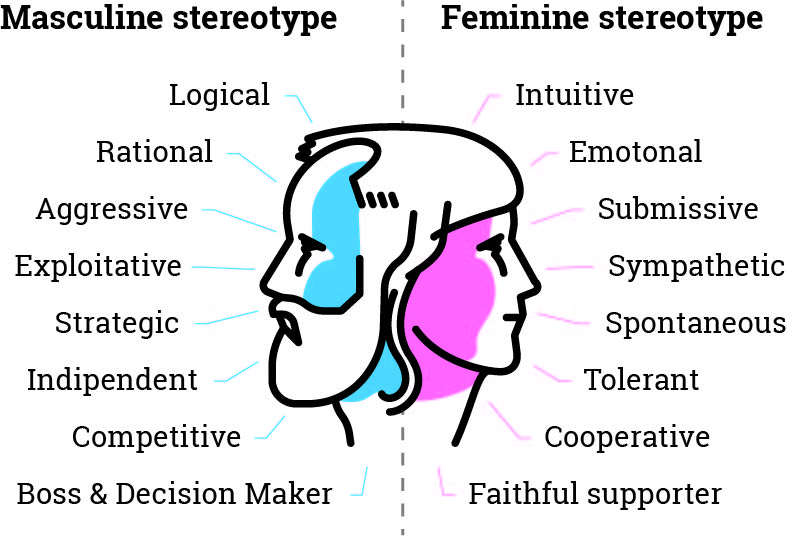
I'm talking about characteristics like being aggressive or submissive, competitive or cooperative, etc -
The Meaning of "Woman"I would tend to think of them as acting feminine rather than being feminine. — NOS4A2
So for instance a woman can only pretend to be more rational than emotional and they can't actually be more rational than emotional, going by common stereotypes?
-
What it takes to be a man (my interpretation)
I tried to explain that it doesn't make much sense to compare the nations without taking into account differences in geography, politics, culture, economy, etc. Without looking into the details of it, it seems reasonable to assume that out of all other nations, Sweden is most comparable to Norway, Findland, and Denmark, but I don't know how true that is. -
What it takes to be a man (my interpretation)Hello?
Deaths per capita shown on the map:
Sweeden - 182
Denmark - 102
Finland - 60
Norway - 51
If my math is right, it looks like Sweeden fared worse.
I assume the reasoning behind comparing Sweeden to its nearest neighbors is that it would be the most 'apples to apples' comparison, that they would be most alike geographically, politically, culturally, and economically. I don't know how similar they are but these factors obviously need to be taken into account when comparing covid responses and death rates by nation.
Peru is a standout example. Strick covid response yet double the death rate of a nation like the US with similar strictness. Conversely, the map also shows very low death rates in some central African nations despite a light covid response. Why would Sweeden's death rate be so much higher than those nations? -
The Meaning of "Woman"One can read the distinction between gender and sex until the cows come home, but one cannot really see it outside of that domain of rhetoric, is my point. — NOS4A2
The funny thing is, if a man behaved like a women, for instance, wouldn't you tend to think of them as being feminine rather than masculine, despite what you see on the outside? -
The Meaning of "Woman"don't confuse fear with disguast — stoicHoneyBadger
Like a hysterical school girl you expressed your fear that trans activists will “screw over the whole society.” The movement does use propaganda and may have some less than desirable consequences, but it won’t unravel the fabric of society as you’ve been lead to believe. Aren’t Überdouche‘s supposed to be leaders and not mindless followers??? -
The Meaning of "Woman"let's screw over the whole society, so that some hypothetical transvestite doesn't feel excluded — stoicHoneyBadger
A great Überdouche afraid of some trans activists? say it isn’t so. -
The Meaning of "Woman"I’ve recently read Material Girls by Kathleen Stock. Hadn’t previously realized that there could be such a large and complex rift between feminists and trans activists
-
Demarcating theology, or, what not to post to Philosophy of Religion
No, I only attempted to point out that religious folk make claims that are objectively falsifiable. Does God exist? I don’t know. Did God make the world in seven days? Doesn’t look like it, unless he intentionally made it look like it took a bit longer for some reason. He does work in mysterious ways, so they say. -
Demarcating theology, or, what not to post to Philosophy of ReligionWhat anyone finds fallacious especially in God and religion issues is absolutely subjective. — dimosthenis9
Dinosaur bones are only subjectivity real? -
The Meaning of "Woman"So if you want somehow useful philosophy, try reading anything from Stoics to Nietzsche. Postmodernists are just a bunch of nutjobs. — stoicHoneyBadger
Nietzsche is generally considered the precursor of postmodern philosophy, the basis of which are: Antichrist (rejection of all attachment to God) and a call for a re-evaluation of all values, a negation of conventional metaphysics, an insistence on perspectivism, a rejection of Enlightenment rationality and the advocation of will to power.
Perhaps you’re more postmodern than you think, or not. :lol: -
What it takes to be a man (my interpretation)moronicHoneyBadger can’t even read a simple map correctly?
-
What it takes to be a man (my interpretation)I did the best observations and interpretations I could and came to a conclusion that this 'climate scare', putting it mildly, does not have any real scientific backing ( i.e. the scientific method was not used here ), rather sort of a religion, cult or pseudoscience. — stoicHoneyBadger
You haven't shown any reasonable interpretations in this topic. The '70s ice age scare' is hardly a good reason to dismiss evidence for climate change, for instance.
Take the covid lockdowns, for example. Equal amount of people died in countries with lockdowns and without. Only the first messed up their economy in addition. — stoicHoneyBadger
You mean like Sweden? Sweden fared worse than its nearest neighbors (Denmark, Norway, Finland), in both health and economically. -
What it takes to be a man (my interpretation)
Why do we believe that too high a blood glucose level is bad? Because it negatively affects our health.
Rather than deny warming or claiming that it’s not bad, it would be honest if you would simply admit that you don’t care because it is unlikely to affect you personally. Can you do that? -
What it takes to be a man (my interpretation)
That’s your argument against climate change?
There is a strong scientific consensus that the Earth is warming and that this warming is mainly caused by human activities. Nearly all actively publishing climate scientists (97–100%) say humans are causing climate change.
In the 70s, the scientific papers which considered climate trends of the 21st century, less than 10% were inclined towards future cooling, while most papers predicted future warming.

Time to reevaluate your axioms, dude. -
Adam Eve and the unjust punishmentThe Tree of knowledge (of good and evil)! — Agent Smith
The paradox is that if A&E possessed the knowledge of good and evil, they would have known not to eat from the tree knowledge of good and evil, but they didn't know so they ate from it. It was a set-up from the start and there was no other possible outcome. -
What it takes to be a man (my interpretation)How does the doctor know a healthy fasting pgl? from the scientific method, i.e. lots healthy & not healthy people were tested. can you say the same about climate? ;) — stoicHoneyBadger
Why do you assume 280ppm is optimal? why not 1280, for example? — stoicHoneyBadger
Just looking at co2 levels and the human body and ignoring all other global consequences, levels above 1000 ppm are known to be unhealthy. Like a doctor informing you of an unhealthy high glucose level you can choose to ignore the warning and continue your unhealthy lifestyle, and that’s what most people probably do.
when you start asking those questions, you pretty quickly understand that all this is pseudoscience - they came up with a theory that would help "rearrange" the energy market, scare gullible voters, etc. and they shoe-horn random data to support it. — stoicHoneyBadger
So this is your reasoned analysis? “They” came up with a theory to rearrange the energy market? Who is they? And why would they want to rearrange the energy market? What does “shoe-horn random data” even mean? I get the gist of it but it just sounds like a stupid insult that is impossible to substantiate in any reasonable way. -
Demarcating theology, or, what not to post to Philosophy of Religion
If you want to show religious bigotry just show how someone is obstinately or unreasonably attached to a belief, opinion, or faction, that is prejudiced against or antagonistic towards theists or religious folk. -
What it takes to be a man (my interpretation)No, you would start by asking - what should this parameter be. what is the normal range. — stoicHoneyBadger
Me: What is a healthy fasting plasma glucose level?
Doctor: Below 99 mg/dl.
Me: What evidence do you have to support your claim that I'm pre-diabetic?
Doctor: The fasting plasma glucose test that you took yesterday showing 105 mg/dl.
Me: Poppycock! You clearly want to "rearrange" the health market by scaring patients and shoe-horning random data.
Doctor: Have you ever taken antipsychotic drugs?
Me: Why do you ask?
Doctor: No reason. -
What it takes to be a man (my interpretation)
Me: So I’m pre-diabetic now?
Doctor: Yes
Me: Do I need to change my eating habits in order to avoid diabetes and die?
Doctor: Yes
Me: For how long?
Doctor: The rest of your life. -
What it takes to be a man (my interpretation)Looking at those issue critically, they do seem imaginary. — stoicHoneyBadger
So climate change.
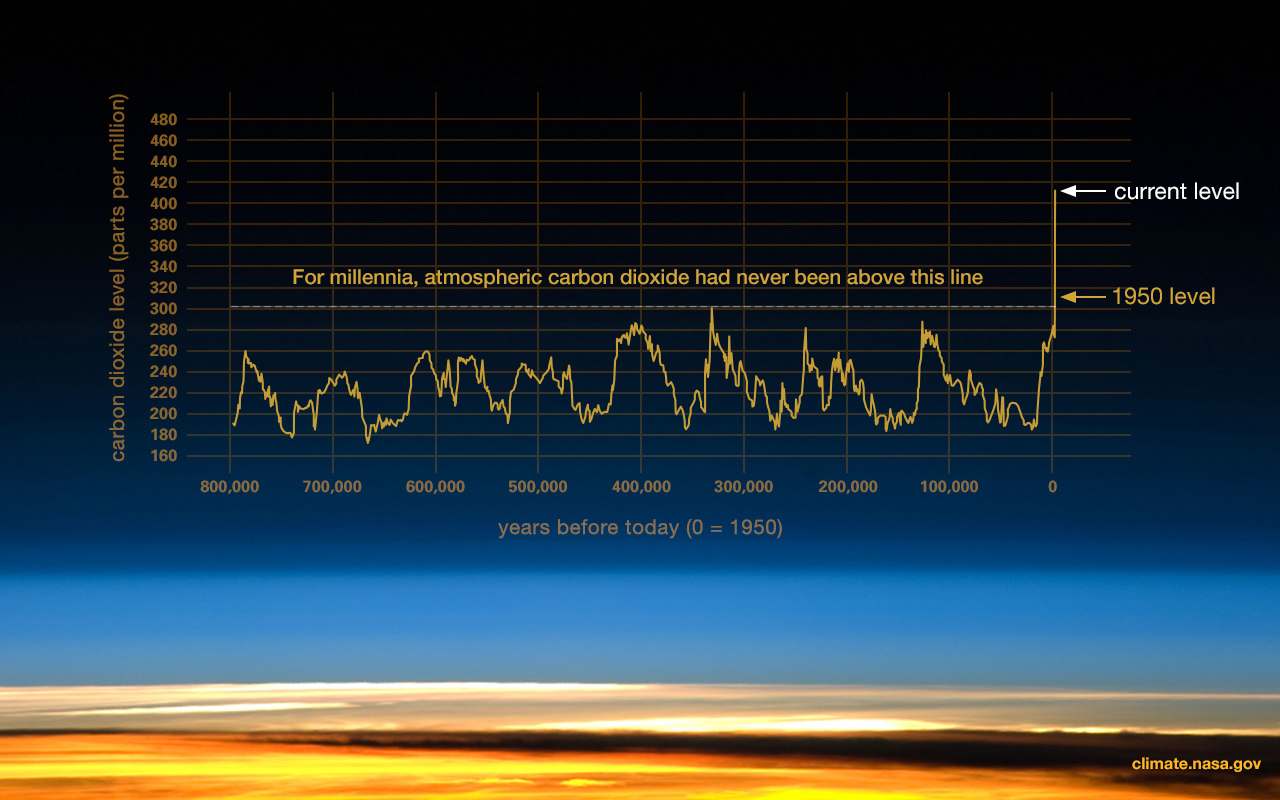
- The planet's average surface temperature has risen about 2 degrees Fahrenheit (1 degrees Celsius) since the late 19th century, a change driven largely by increased carbon dioxide emissions into the atmosphere and other human activities. Most of the warming occurred in the past 40 years, with the seven most recent years being the warmest. The years 2016 and 2020 are tied for the warmest year on record.
- The ocean has absorbed much of this increased heat, with the top 100 meters (about 328 feet) of ocean showing warming of more than 0.6 degrees Fahrenheit (0.33 degrees Celsius) since 1969. Earth stores 90% of the extra energy in the ocean.
- The Greenland and Antarctic ice sheets have decreased in mass. Data from NASA's Gravity Recovery and Climate Experiment show Greenland lost an average of 279 billion tons of ice per year between 1993 and 2019, while Antarctica lost about 148 billion tons of ice per year.
- Glaciers are retreating almost everywhere around the world — including in the Alps, Himalayas, Andes, Rockies, Alaska, and Africa.
- Satellite observations reveal that the amount of spring snow cover in the Northern Hemisphere has decreased over the past five decades and the snow is melting earlier.
- Global sea level rose about 8 inches (20 centimeters) in the last century. The rate in the last two decades, however, is nearly double that of the last century and accelerating slightly every year.
- Both the extent and thickness of Arctic sea ice has declined rapidly over the last several decades.
- The number of record high temperature events in the United States has been increasing, while the number of record low temperature events has been decreasing, since 1950. The U.S. has also witnessed increasing numbers of intense rainfall events.
- Since the beginning of the Industrial Revolution, the acidity of surface ocean waters has increased by about 30%. This increase is the result of humans emitting more carbon dioxide into the atmosphere and hence more being absorbed into the ocean. The ocean has absorbed between 20% and 30% of total anthropogenic carbon dioxide emissions in recent decades (7.2 to 10.8 billion metric tons per year).
What’s your critical analysis of this evidence? - The planet's average surface temperature has risen about 2 degrees Fahrenheit (1 degrees Celsius) since the late 19th century, a change driven largely by increased carbon dioxide emissions into the atmosphere and other human activities. Most of the warming occurred in the past 40 years, with the seven most recent years being the warmest. The years 2016 and 2020 are tied for the warmest year on record.
-
The Origin of HumourThe second joke ever told was a knock knock joke.
One day after the fall God went to see Adam & Eve in paradise but couldn’t find them so, hoping to draw their attention, he knocked twice on a tree.
Feeling embarrassed, Adam timidity responded, “Uh, who’s there?”
“Betta”
“Betta who?”
God boomed, “Betta pack your bags cuz it’s eviction day in Eden!” -
Demarcating theology, or, what not to post to Philosophy of ReligionOn in particular got my hackles up - "The eternal soul (Vitalism): was Darwin wrong?" It is not primarily a religious thread and I found it really useful. — T Clark
Love your objection to the claim of Darwin’s alleged thrill-seeking nature, noting how the frivolous swashbuckler spent forty years studying worms in his backyard. :lol: -
Demarcating theology, or, what not to post to Philosophy of ReligionThe psyche gravitates toward the acceptable vent for hatred and frustration and disappointment. — frank
Would you care to elaborate on this, Dr. Freud?
praxis

Start FollowingSend a Message
- Other sites we like
- Social media
- Terms of Service
- Sign In
- Created with PlushForums
- © 2026 The Philosophy Forum