
-
#MeTooFranken was photographed grabbing a sleeping soldier's boobs too. — Akanthinos
Leeann Tweeden wasn't a soldier. She was named the top Hooters girl of all time though, not to 'slut shame' but to point out that she's probably experienced far worse than having her chest touched while wearing a flak jacket. She should know the difference between obnoxious joke and sexual assault. -
Against All Nihilism and AntinatalismI went to a Motorhead concert once. My ears are still ringing.
-
#MeTooEvery woman who criticizes the movement is condemned for "interiorized misogyny". — jamalrob
The tweet takes it a ridiculous distance further by claiming the Deneuve gang have been permanently cowed into mindless submission. Disturbing in that it’s so devoid of critical thought and only serves to promote divisiveness. Maybe that’s why the twitter platform is such a handy tool for the President and his populist crap.
I watched the Opra acceptance speech at the Golden Globe Awards on YouTube and teared up, but in the back of my mind I couldn’t help thinking that the awards show was themed and kinda tribalistic, complete with black identifying color, and that the theme and identity would quickly fade from memory once it ran its course. -
#MeTooFrom todays New York Times:
Just one day after Hollywood offered a show of support for the #MeToo movement on the Golden Globes red carpet and stage, a famous actress [Catherine Deneuve] on the other side of the Atlantic lent her name to a public letter denouncing the movement, as well as its French counterpart, #Balancetonporc, or “Expose Your Pig.” ...

... “The philosopher Ruwen Ogien defended the freedom to offend as essential to artistic creation. In the same way, we defend a freedom to bother, indispensable to sexual freedom.” Though the writers do not draw clear lines between what constitutes sexual misconduct and what does not, they say that they are “sufficiently farseeing not to confuse a clumsy come-on and sexual assault.”
The freedom to bother is essential to sexual freedom, they claim.
I can agree that the USA is somewhat repressed sexually. Given that's the case, this would suggest that Americans are genrally not sufficiently mature sexually to not confuse clumsy come-ons and sexual assault. I tend to think this is the case. That's not a reason to denounce the movement however. To me it suggests a path to reform by pointing out what's lacking (sexual maturity).
A less favorable reception of the denouncment by Asia Argento, a woman who accused Weinstein of raping her, via tweet:
Catherine Deneuve and other French women tell the world how their interiorized misogyny has lobotomized them to the point of no return. -
What do you live for everyday?Futile? — Bitter Crank
An object in motion tends to stay in motion.
My mother-in-law, who currently lives with us, has never made an effort to develop her mind and the consequence of that, it appears, is that she's like a lost and helpless child. -
Against All Nihilism and AntinatalismYes, beautiful and meaningful have nothing to do with right and wrong or true and false, I'm not sure why you seem to think you're still disagreeing with me. — gurugeorge
What is meaningful has nothing to do with right and wrong?
What does it mean to say that the world is the way science describes it? I'll point out the fact that science is not able to describe it all. It's not even a simple question of how much it's able to describe. -
What do you live for everyday?Think of how irritating it would be if you were forced to declare what you were living for each morning.
-
Is Sunyata (Emptiness) = Reductionism?
From the link:
Self-concept or just self-recognition?
Of course this study simplifies a mass of psychological complexity. Psychologists have raised all sorts of questions about what the mirror test reveals. It could be, for example, that infants just don’t understand faces particularly well until they are around two years old. Perhaps, then, they develop a self-concept at a much earlier stage.
Alternatively it could be that at around two years old infants develop a solid physical or visual self-concept, but still have little mental self-concept. In this case all the test is showing is that we know what we look like; perhaps we don’t develop our self-concept until much later in life. -
Is Sunyata (Emptiness) = Reductionism?I think defining exactly what constitutes “a complete sense of self” may prove to be a little elusive, especially at the age of 2. Concepts grow, particularly in early development.
-
Against All Nihilism and AntinatalismYou are more informed than I am about art, clearly. It just seems to me that the velocity of change in the last third of 19th century was so much higher than in previous centuries, and the velocity has stayed fast. But then, the velocity of change across the board sped up in the 19th century, and has continued. So, what shall we attribute this to? Science, technology, industrialism, capitalism (its ability to mobilize and deploy resources very rapidly), population growth, two world wars (which also led to a fast mobilization and deployment of resources), empires (like the B.E.) which concentrate resources, and so on? All those things are disruptors of equanimity and settled belief. — Bitter Crank
@Wayfarer recently opened my eyes to the compelling ideas of Max Weber and his work in understanding the processes of rationalisation, secularisation, and "disenchantment" that he associated with the rise of capitalism and modernity. It may help to explain how the shift in values came about. -
Is Sunyata (Emptiness) = Reductionism?Have you seen the new season of Black Mirror? It's interesting to see technological versions of Heaven and Hell. They aren't called that in the show, but it's the same idea. — dog
I watched, pretty disturbing.
No less disturbing was the Metalhead episode. How much of a leap is it to go from the SpotMini:
to this:
There's currently an AI arms race going on.
Back to the topic! -
Against All Nihilism and AntinatalismYes, as I said, the aesthetic way of looking at the world isn't one in which right or wrong enter into the picture, it's not an alternative way of parsing right and wrong, true and false, etc. — gurugeorge
Right and wrong are based on values, and so is aesthetics.
For instance, we can buy a work of art as an investment (rational) or we can buy a piece of art because we find it beautiful or meaningful (aesthetic). A communities resources could be pooled to design and build an aesthetically beautiful bridge, or one could be built from a pre-existing template and built cheaply and efficiently. In the former case, some people in the community may say it's a crime to waste their money on aesthetics. In the latter, some may say it's a crime to use their money to build such a stark bridge that is devoid of any meaning beyond its utility. -
Against All Nihilism and AntinatalismIf you went to an art exhibit in 1817, 1917, and 2017, you would have seen huge changes in artistic production between 1817 and 1917; between 1917 and 2017, it's quite possible (depending on the selections, that you would think things hadn't changed very much at all in the previous century. — Bitter Crank
Clearly there's a huge difference between the art world of 1917 and the art world today. Judging by your disclaimer of "depending on the selections," I'm inclined to think you wouldn't hesitate to agree.
Besides, is constant change inherent to art? Is there something wrong with art if doesn't change faster than women's wear fashion? What makes art change rapidly? It could be that it is driven, or pulled along, by a very strong demand by art buyers for novelty. Should we hand out awards to cultures that maintain a style for a long time, or only reward cultures that are always changing?
Personally, Praxis, I'd probably find Egyptian stability stultifying, but there is something to say for less hectic change. — Bitter Crank
Interesting points but it's all beside the point I was attempting to make, which is simply that in a rapidly changing society a source of meaning (religion, ideology, movement, or maybe even a brand) will not last for long because conditions and values change. I'm not suggesting that rapid (as compared to ancient Egypt, for example) change is good or bad. I'm suggesting that rapid change may make a society more prone to nihilism, or rather that what allows this rapid change can lead to nihilism.
So yes, there is indeed something to say for less hectic change, and I believe conservatives are generally saying it. -
Against All Nihilism and AntinatalismIn a rapidly changing world no one static source of meaning will last for long.
— praxis
That depends on what you mean by "rapidly" human nature and the nature of the world change over time, sure, but rapidly? That's an attempt at persuasive redefinition. Rapidly relative to the timescale of stars and the formation of galaxies, glacially relative to the life of a human being, a family or the formation and dissolution of human cultures. — gurugeorge
Rapidly in relation to the enlightenment, naturally.
Prior to the enlightenment cultures like ancient Egypt were, by our standard, almost inconceivably stagnant. Of course it wasn't perceived as stagnant to them. Imagine visiting a modern art gallery, and then going back to the same gallery a century later and seeing the same style of art on the walls, and it is still considered a modern art gallery. Practically inconceivable to me.
Is the aesthetic way of looking at the world a way of "examining" the world? — gurugeorge
Of course it is. I imagine you did not do well in art class.
And is it a "method"? It's a way of looking at the world, but it's not a way of looking at the world in which true and false enter into the discussion, it's not an alternative way of being right or wrong about things. — gurugeorge
Of course it is, something can be 'wrong' but beautiful (good). We can choose beauty, spontaneity, and meaningfulness, over efficiency, predictability, and fucking profit. -
Beautiful ThingsNon-subscribers don't see the paperclip for attachments, I believe. Need to upload images to photo hosts like Flickr, copy a link to the image, and then paste the link here.
From the archive.
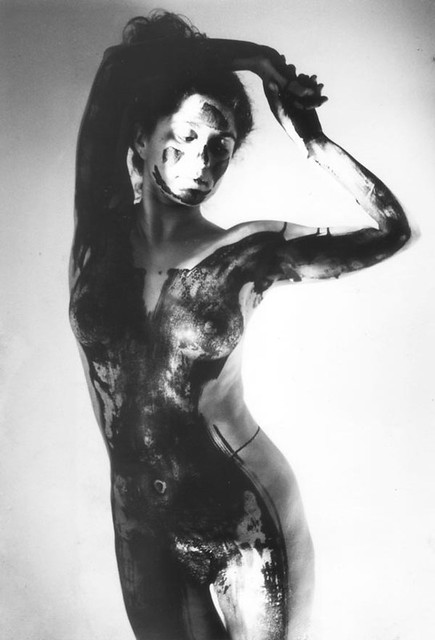
Art project debacle. -
Beautiful ThingsA few aesthetic selections from my phone. Prepare to be blown away.

Our new pup Redi. Adorable, right? and so conscientious about his food.

Weird bird I saw at the beach the other day. Check out that pecker.

I’m guessing this guy’s a plumber. Not classically beautiful, I grant you.

California wildfire smoke last month.

Wildfire smoke as seen from county line (near Malibu). -
Is Sunyata (Emptiness) = Reductionism?Sunyata = reductionism because reductionism is materialistic in nature. — TheMadFool
Your reasoning isn’t clear to me here but this reminds me of a frequently referenced portion of the Heart Sutra which claims that form = emptiness. It doesn’t stop there however, it goes on to claim that emptiness = form. You might say the latter is redundant, unless you appreciate what it attempts to signify, which is essentially non-duality. That’s why the concept of emptiness is difficult to grasp.
Can non-duality be reductionist? -
Wouldn't we be better off without most of the labels we apply to ourselves?
If you’re unconvinced about our implicit associations take one of the tests at:
https://implicit.harvard.edu/implicit/
And see for yourself. -
Wouldn't we be better off without most of the labels we apply to ourselves?The only time I think about it is when people ask me things like: "Are you a believer?" I don't know how to answer the question. — WISDOMfromPO-MO
You could simply tell the truth and say that you haven't put much thought into it. Of course you'll then be labeled something like a 'non-thinker'.
Our minds unconsciouly categorize in this way wether we like it or not. -
#MeToo
I was tempted to ask the same of you but I suspected it would be pointless.
Your use of quotation marks surrounding my "Point" suggest it's not a point, or rather that it's an invalid point, and that we are somehow to infer this from the fact that I didn't use my own experiences in making the point.
Now do you see the point? -
#MeToo
Council advises that I not discuss the cases publicly until after litigation. -
#MeToo
Basically giving someone space to cool-off, sure, that's the right thing to do in some situations. This is beside the point however because we're talking about a situation where support is being requested and there is denial long after the incident, according to the story.
Even if drunk, Tiff's brother's friend exhibited creepy behavior. It's no bother to acknowledge that so something else must be at play. -
#MeTooQuestion: How should I have responded to the following scenario that just happened to me. — ArguingWAristotleTiff
You wrote earlier that you learned how to handle such situations. Also, you claimed that the "lower head" was MUCH easier to deal with. Upon reflection, perhaps you'd like to soften this claim. -
Against All Nihilism and Antinatalismpeople regularly work through it.
— praxis
No, they evade it [nihilism]. — gurugeorge
Sure, and similarly we evade hunger. That doesn’t mean there’s no food to eat, only that our desire is naturally incessant. In a rapidly changing world no one static source of meaning will last for long.
There are other methods and perspectives.
— praxis
Are you sure? — gurugeorge
Aesthetic, to name one.
Of course there is, the ONLY difference is that we are free, or freer, to find/construct our own narratives because there is no longer a reliance on an external authority.
— praxis
There's a certain amount of freedom yes, but it's analogous to a tether - the goat has a fair amount of room to move around, but there are limits. Similarly, the biological base forms a "tether" for the cultural superstructure; there's some leeway, but there's no untrammeled freedom to explore all possible cultural space (for example, at one type of extreme, the social rule "kill everyone you meet" would obviously be unworkable). — gurugeorge
We are entirely free to develop an overarching narrative that includes the practice of killing everyone we meet. But by its very nature it’s unlikely to catch on. Memes require living hosts.
there is a way of discovering meaning in the universe that we just haven't been smart enough to figure out yet, that will eventually raise our spirits and give us a foundation for morality that enables us to sustain it through time, going forward. — gurugeorge
Couple of things about this. For one, you appear to be implying that no religion to date has met your criteria, yet you seem to promote religion as the only possible solution. Secondly, as I meantioned, in an ever changing world there cannot be one static form of meaning. Conditions and values change. Fringe elements in society take advantage of the cooperative body for selfish gain. Corruption leads to reform, and the evolution goes on.
There is no one solution to figure out. -
#MeTooHmmm, I stand corrected.

Some attempted groping at a party give this guy PTSD?
In this particular case, we should take into account the deep pockets and pending lawsuits, I think. -
#MeToo
Unwelcome sexual advances have never been a problem for you? I can’t really say it’s been an issue for me, unfortunately. -
Against All Nihilism and AntinatalismI don't understand how you can say it's a phase, there's no escape from it if the world is as science describes it. — gurugeorge
How could it not be a phase, people regularly work through it. Why should it be any different on a societal level? In any case, I don't know if it's a necessary phase or just something that a particular route of development requires.
Science, by the way, is just one method of examining the world. There are other methods and perspectives. I don't know what you mean when you suggest that 'the world could be as science describes it'.
We are (most of us) "designed" to believe in a religion ... — gurugeorge
Assuming you're referring to cultural conditioning rather than intelligent design or something, I would hesitate to claim 'design' as that implies conscious intent. I'm sure it is conscious intent on the part of some individuals, but most are followers who don't question tradition and cultural norms.
... once any reason to believe is knocked away, there's no possible over-arching narrative that makes any sense of a material universe, ... — gurugeorge
Of course there is, the ONLY difference is that we are free, or freer, to find/construct our own narratives because there is no longer a reliance on an external authority. And to be clear, any such narratives don't need to be based on a "material universe."
... all we can do is clutch at twigs as we swirl down the rushing torrent to oblivion (how's that for drama :) ). — gurugeorge
Part of a silly narrative, sounds like. -
Against All Nihilism and AntinatalismBut there doesn't seem to be any solution. It's impossible for a sceptical, materialist-minded person to go back to a religious point of view, and yet it's also psychologically impossible to face nihilism naked and unadorned. — gurugeorge
Nihilism is just a phase of development, don't be so dramatic.
Meaning comes in many forms. It doesn't necessarily need to come in a tidy religious package and from an authority figure.
Rationalisation is a problem with no solution in sight, as far as I know, but that doesn't mean no solution is possible.
praxis

Start FollowingSend a Message
- Other sites we like
- Social media
- Terms of Service
- Sign In
- Created with PlushForums
- © 2026 The Philosophy Forum