
-
 Angelo Cannata
377I'd like to check your opinions about these thoughts of mine about subjectivity conceived as contradiction, subjectivity existing just thanks to it being a contradiction, otherwise it wouldn't exist. Here below is my thought in more detail.
Angelo Cannata
377I'd like to check your opinions about these thoughts of mine about subjectivity conceived as contradiction, subjectivity existing just thanks to it being a contradiction, otherwise it wouldn't exist. Here below is my thought in more detail.
In the conflict between subjectivity and objectivity, the logical outcome for subjectivity is to succumb, because success itself, any kind of success, is by its very nature metaphysical, belonging to the realm of objectivity. Subjectivity exists as internal contradiction of objectivity. Objectivity is contradictory because it is also unique. Objectivity continuously resolves its contradiction by killing subjectivity and subjectivities. The concept of a peaceful dialogue with objectivity belongs to the logic of subjectivity and therefore cannot be accepted, nor understood, by objectivity. Even this reflection itself cannot be interpreted as an understanding that exorcises the tragedy, because understanding and exorcising belong to objectivity. The authentic approach to this reflection lies only in our living witnessing the particularity of subjectivity. Its intellectual understanding, which as such belongs to objectivity, can only touch subjectivity as a contradiction of objectivity, which, as I said above, is the reason why subjectivity exists.
This can explain my unique sense of feeling I, my intuition that other Is must exist, and my perception of objectivity: the very concept of explanation belongs to objectivity, therefore the explanation of my own and others’ subjectivity is possible only as an internal contradiction of objectivity. I am a product of objectivity’s internal contradiction; I am contradiction of objectivity, with the consequent reactions of objectivity mentioned above. Any other attempt to understand subjectivity in non-contradictory ways is just another product of objectivity, that continuously tries to resolve its internal contradiction by killing the manifestations of subjectivity. Trying to understand subjectivity means trying to kill it, unless it is an understanding of it as a contradiction.
After that, in the detail of each single existence, each person tries to manage themselves in their own specific daily contradictions, until death. As a consequence, in the lived experience of spirituality, contradiction must first be accepted, welcomed, as a natural constitution of our condition, and then managed, until death.
Communication of subjectivity between subjects is done within contradiction, because on one hand it would be impossible, on the other hand it occurs due to the uniqueness of this world.
That’s why all attempts to explain consciousness, or the self, or the I, have failed so far: because they think inside an academic mental frame that tries to avoid and eliminate contradictions. This way they prevent themselves, at the very start, from being able to understand consciousness, the self, the I. -
 ssu
9.8k
ssu
9.8k
Something that we really cannot put into a similar logical structure as objectivity and then use it as we do, doesn't mean at all that there's a conflict. Subjectivity is quite real. What we basically have is real ignorance in our understanding just how subjectivity fits into the logical system of ours. I think the main reason is that we simply don't accept there being any limitations to objectivity or that being true necessitates everything to be modeled objectively. Objective science, the scientific method, has been so successful that saying that there are limitations to this sounds as heretical, or anti-science.In the conflict between subjectivity and objectivity, the logical outcome for subjectivity is to succumb, because success itself, any kind of success, is by its very nature metaphysical, belonging to the realm of objectivity. — Angelo Cannata
Yet naturally subjectivity is apparent for us all every moment of our lives once we have as babies just where we end and where the reality outside us starts.
I wouldn't see it so. Let's take an example. Let's take the example of there existing "a beautiful painting". Now here we immediately understand that beauty is in the eye of the beholder, thus some will see some paintings as beautiful while other's won't. There simply isn't the painting that humanity finds "the most beautiful". Many people would find it difficult even to say that one painting they like is "more beautiful" then another. Simply we I would dare to say that the "objective" explanation would be that "What humans see as a beautiful painting is subjective". That means that there isn't this ability to do measurements as is usually possible with objectivity. And counterarguments like price people are willing to pay for a painting or holding a beauty contest for paintings is extremely silly and naive as it doesn't grasp the profound logical problem at issue.the very concept of explanation belongs to objectivity, therefore the explanation of my own and others’ subjectivity is possible only as an internal contradiction of objectivity. — Angelo Cannata
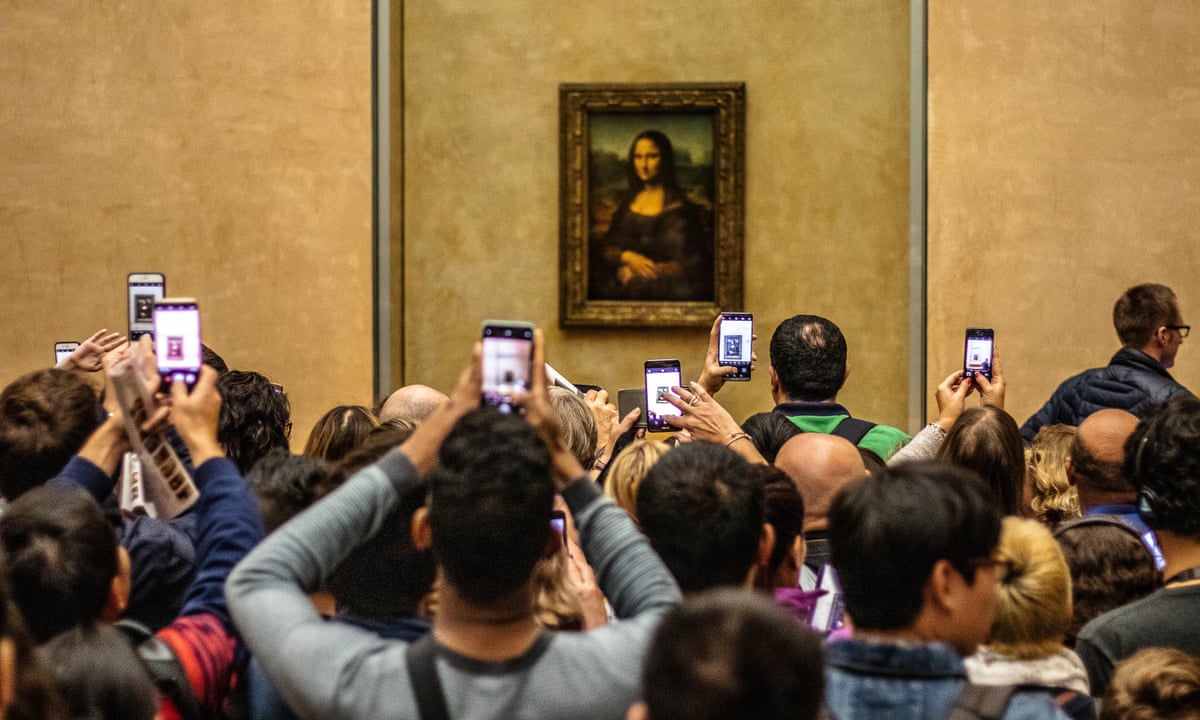
I would argue that this "contradiction" isn't a contradiction, it's only that we attempt to think that subjectivity can be dealt with the totally similar logic as objectivity. It cannot be. With subjectivity you have inherent uniqueness, which you don't have with objectivity. Let me try to explain what I mean: even if a sociologist, a psychologist or a computer AI can argue that when asking the most beautiful painting there is from people, very many will say "Mona Lisa", this doesn't say anything about how all these people feel about the beauty of the painting. More like as they don't much about paintings, they'll say the one that is most well known, and don't think so much about the question than to just to give some answer. And here (please don't ban me!) I used my own thought, but when you give to the Google AI the question (what is the most beautiful painting in the world), it really does give the answer I anticipated:Communication of subjectivity between subjects is done within contradiction, because on one hand it would be impossible, on the other hand it occurs due to the uniqueness of this world. — Angelo Cannata
There's no single "most beautiful" painting, as beauty is subjective, but Leonardo da Vinci's Mona Lisa is universally considered the most famous and iconic, while other contenders for beauty include...
Please do not think that I'm trying to shoot your argument down here, actually I'm not doing that. I think that your view that subjectivity and objectivity create a contradiction actually does show just how little we understand of these kinds of basic questions. They obviously cannot go hand in hand with the present knowledge of these issues. Yet this contradiction doesn't mean that subjectivity, or subjectivity along with objectivity, are illogical, false. This isn't the case at all. It's more like we see a paradox, because we don't have the correct way to understand how subjectivity creates uniqueness and creates true limits to objectivity. But with help from you, I think we can solve the puzzle on this forum, right? :wink:
-
Angelo Cannata
377doesn't mean at all that there's a conflict — ssu
I am aware that there are so many topics involved in the discussion I have opened. I am going to better explain my personal idea about the reason why the relation between subjectivity and objectivity is conflictual.
Subjectivity introduces ways of thinking based on instinct, emotions, spontaneity, feelings, art. This works as a provocative challenge against minds based on precision, numbers, conclusions, schemes. I think this is connected with mechanisms of society. Society is essentially based on objectivity because it is based on communication. Communication means language made of shared meanings. Shared meanings means objective meanings. If I have a feeling inside me and I can’t find words to share this feeling, I cannot communicate it to society, it remains entirely enclosed inside my subjectivity.
In the history of societies we find frequently individuals who propose concepts that are beyond the shared meanings that circulate in their society. It is easy that concepts that society feels incomprehensible are felt also as dangerous. As a consequence, it has happened several times that an individual has been opposed or even killed by their society because they were introducing concepts hard to share through the traditional concepts that circulated in that society.
I interpret this as objectivity killing subjectivity.
I would interpret this way even the oppression that historically has been suffered by women all over the world. In the perspective of this scheme, women come out as having a way of thinking more open to emotions, feelings, connection to our body, affection, while men have developed systems of thinking (including philosophy as we traditionally know it) based on rigid schemes to allow control, power, understanding, grasping. In this perspective men have seen women as a challenge to the traditional male way of thinking and have reacted with the same stupid violence that ignorant societies have used against some geniuses that were born inside them. Obviously history and facts are always much more complex, they can never be reduced to such a simple scheme. I just find this scheme of objectivity, that has a structural tendency to kill subjectivity, as revelatory of certain mechanisms working in history.
In this context objectivity is, by its nature, always closed minded compared to subjectivity, the same way certain people can’t understand most recent art, music, literature: it happens because subjectivity uses art to introduce new perspectives, which society by definition cannot understand properly, because society is based, as I said, on communication, which is based on objectivity.
The photo you attached to your answer looks very symoblic to me: those people, who are taking photos of the Mona Lisa, in that very moment they are killing the work of art, because they are trying to pull out violently that image from its subjectivity, which is uniqueness, the uniqueness of the original painting, that you cannot take home, and tranfer it into the world of power and control, the world of smartphones, that is a world of objectivity.
This shows also that we cannot do without objectivity: we need to take photographs to make some study possible, to share something about works of art. This means that somehow we, as members of societies, are condemned to kill, to some degree, subjectivity. This doesn’t mean that I justify killing and violence. We need to try to redeem ourselves from this bad mechanism, but, until we do nothing to improve the situation, we are exposed to be killers, even unintentionally and unwittingly. -
 Paine
3.2k
Paine
3.2k
As a matter of philosophical tradition, the problem of comparing the subjective to the objective is not being able to stand outside the circumstances in order to provide comparisons.
That you have freely given yourself this power is no reflection upon those who did not. -
Angelo Cannata
377
I am aware that all I have said comes from inside my subjectivity. I have shared my thoughts not as truth, but as a perspective. -
Paine
3.2k
My comment was not to challenge your argument but to put it into the context of many others. -
 L'éléphant
1.7k
L'éléphant
1.7k
Good meditation on the subject.The authentic approach to this reflection lies only in our living witnessing the particularity of subjectivity. Its intellectual understanding, which as such belongs to objectivity, can only touch subjectivity as a contradiction of objectivity, — Angelo Cannata
But I disagree with the use of the word contradiction when considering both the objectivity and subjectivity. The objective analysis is a critical thinking used to describe a whole bunch of philosophical questions including the problem of subjectivity. You may notice the elevated status of objectivity here. It is an analytical tool in philosophy to understand the ways of thinking. -
Angelo Cannata
377
I agree, but I think this happens because the moment we discuss subjectivity, since we automatically put it into words, into the frame of language, this means that we put it into the system of objectivity. This way we objectify subjectivity. This means that, when we talk about subjectivity, the way how the word “subjectivity” works inside our objectified model does not reflect how subjectivity works in reality. In a language system, words work as repeatable objects and concepts. That’s why we can understand and share them. In the system of reality each subjectivity is unique: there is not another Angelo in the world. That’s why I will never be able to communicate how it feels being Angelo, in a similar way how, according to Nagel, we can’t understand how it feels being a bat.
This means that actually, even now in this message, the moment I have used the word “subjectivity” I have automatically objectified it as well. In this context I just shouldn’t even try to talk about it, because “whereof one cannot speak, thereof one must be silent”, as Wittgenstein said.
But I think that, about this question, another contradiction happens.
It is true that in language we make use of shared and repeatable words and concepts. But let’s compare this situation with the idea that the world and every component of it is actually a unique event. We know that, when we have two identical objects, actually they are not 100% identical, because this would imply them being not two, but just one object. The same happens to physical phenomenons. We are able to find scientific laws because we observe repeated phenomenons, but actually each phenomenon is unique. This means that, every time we communicate through language, we use repeatable words, but actually, every time a word is used, that is a unique event. This means that, when you receive a word of mine, you are not receiving just a repeatable word, you are also receving the unique presence of me in that moment. This means that my true uniqueness is still carried in that repeatable word. I think Wittgenstein missed this fact.
As a consequence, when subjectivity gets objectified into the objective system of language, actually this objectification is not total, is not the whole of what happens. As an objectified item into the system of language, subjectivity is free from contradictions, but, since each event of language is also unique, uniqueness means impossibility to totally reduce it to equivalent events.
This means that each word we say in a language is, on one side, understood because it is repeatable, shared, belongs to the system of language. But, on the other side, since each word, the moment it is used, becomes also a unique event, this makes it impossible to totally understand, because uniqueness means that we have nothing to compare it with.
Impossible to understand does not mean impossible to receive. I cannot understand your uniqueness, but still, in the event of communication, it flows to me and I receive it, beyond my understanding.
This is, I think, one way how the general contradiction between objectivity and subjectivity happens. -
 T Clark
16.1kIn the conflict between subjectivity and objectivity, the logical outcome for subjectivity is to succumb, because success itself, any kind of success, is by its very nature metaphysical, belonging to the realm of objectivity. — Angelo Cannata
T Clark
16.1kIn the conflict between subjectivity and objectivity, the logical outcome for subjectivity is to succumb, because success itself, any kind of success, is by its very nature metaphysical, belonging to the realm of objectivity. — Angelo Cannata
I will grant the existence of an objective reality for the purposes of this discussion. The only way we can know that reality is through our own perceptual and mental processes, our subjectivity. What that means to me is that everything you said about objectivity is actually true about subjectivity. You have it exactly backwards.
Now, in reality, neither what you say nor what I say is right. Objectivity and subjectivity are complementary. Neither exists without the other. The world is half human. There is no contradiction. -
Angelo Cannata
377
I think that contradiction exists from the point of view of subjectivity, which in my case is my personal point of view. Objectivity eliminates every contradiction as soon as it incorporates it inside the bigger frame of objectivity. When you say that there is no contradiction, to me it means that, to write that sentence, you have adopted the point of view of objectivity, and I agree with that. But my subjectivity sees a contradiction, even more than a contradiction, a conflict and even a tragedy. -
 Pantagruel
3.6kNow, in reality, neither what you say nor what I say is right. Objectivity and subjectivity are complementary. Neither exists without the other. The world is half human. There is no contradiction — T Clark
Pantagruel
3.6kNow, in reality, neither what you say nor what I say is right. Objectivity and subjectivity are complementary. Neither exists without the other. The world is half human. There is no contradiction — T Clark
It is possible for objectivity and subjectivity to be both complementary and mutually contradictory. I don't think either is internally contradictory. -
Angelo Cannata
377
I think it is good to clarify that the main perspective of what I wanted to express, since I opened this thread, is a subejctive one. This means that, even when I use such words like “objectivity”, “contradiction”, “subjectivity”, the meaning I give them is from my subjective perspective. This way, “objectivity” means “objectivity as seen, as percepived, from a subjective perspective”, “contradiction” means “contradiction as it is perceived from a subjective point of view” (which in my case is my one), “subjectivity” is “subjectivity as I perceive it from my own experience of subjectivity”. Otherwise we will end up looking for exact definitions of what contradiction means, what objectivity exactly means and so on.
I have no intention to establish if the contradiction I have talked about really exists ultimately. My intention is to check how you perceive what I said from your subjective point of view, from your instinctive, emotional, spontaneous feelings.
Obviously this is at high risk of not knowing what we are talking about. Well, what I want to talk about is ourselves. What I have said is an expression of my feelings, expressed through a philosophical hypothesis about how things seems working to me. I don’t want to know if they really work this way. I want to know if what I have said has some resonance in what you feel.
Think of what I said as a pair of coloured glasses which I am suggesting you to put on and try. I know perfectly that coloured glasses give us a distorted picture of things, making us seeing reality like having colors different from what we can see under pure sun light. But sometimes distorting glasses can reveal certain elements that are not so evident if you look without distorting glasses. It’s like colouring substances that sometimes are used in medicine, by introducing them in our body, or in physics, so that we can see certain things that otherwise are invisible. -
L'éléphant
1.7kThis means that each word we say in a language is, on one side, understood because it is repeatable, shared, belongs to the system of language. But, on the other side, since each word, the moment it is used, becomes also a unique event, this makes it impossible to totally understand, because uniqueness means that we have nothing to compare it with.
Impossible to understand does not mean impossible to receive. I cannot understand your uniqueness, but still, in the event of communication, it flows to me and I receive it, beyond my understanding. — Angelo Cannata
I understand what you're saying about the uniqueness of person's subjective view. Yes, I will not completely understand being you because I cannot be you. Self-reporting is what receive from you and this is the limitation of my understanding about your being.
But as we all are in this situation, this is a philosophical question that has no solution. Similarly, since we all cannot step outside of our perception, then that question will remain unanswered.
But philosophy does not require that we have an answer for everything. It requires that we examine reality. So, we may just come up with findings to list, but not an answer to a question. Such is the status of subjectivity. We know what it is and we know that each person is limited by their subjective perception and opinions, but we are not required to get into the mind of that person. -
T Clark
16.1kObjectivity eliminates every contradiction as soon as it incorporates it inside the bigger frame of objectivity. When you say that there is no contradiction, to me it means that, to write that sentence, you have adopted the point of view of objectivity, — Angelo Cannata
As I noted in my previous post, I think it’s just the other way around. All my concepts, thoughts, feelings, understandings, perceptions, and all those other ways of addressing reality are subjective. It’s not wrong to say that so-called objective reality only exists because of those. -
T Clark
16.1kIt is possible for objectivity and subjectivity to be both complementary and mutually contradictory. — Pantagruel
If you mean it’s possible for me to experience something as true when it isn’t really, of course you’re right. It’s also possible for me to choose which point of view I take. But then again that choice is based on my subjective understanding. -
ssu
9.8kI am aware that there are so many topics involved in the discussion I have opened. I am going to better explain my personal idea about the reason why the relation between subjectivity and objectivity is conflictual. — Angelo Cannata
When looking at your answers to others also, it's obvious that you aren't looking at the issue from a viewpoint of logic and subjectivity/objectivity being part of a logical system that we use to model reality.
I think you have gone over the principal level and relate subjectivity and objectivity to the effects of subjectivity and objectivity.Subjectivity introduces ways of thinking based on instinct, emotions, spontaneity, feelings, art. This works as a provocative challenge against minds based on precision, numbers, conclusions, schemes. I think this is connected with mechanisms of society. Society is essentially based on objectivity because it is based on communication. — Angelo Cannata
In this way, wouldn't then it be more apt to talk about the conflict between the individual and the collective and individualism/collectivism? Works far better, when you refer to the society. -
Angelo Cannata
377
I agree, but this would reduce the topic just into a sociological frame. I (like to) think that what I am talking about has a wider and a more radical importance. I would even say that this is the fundamental nature of being. Heidegger said that being is being towards death, Parmenides said that being is, non being is not, as a principle of non-contradiction. I would say that being is a continuous event of contradiction between subjectivity and objectivity. It acts at all levels of existence and reality. I agree that my attention is very taken by some final effects of what I say, but my interest is not just to understand things that happen in our relations. To me is like a topic to meditate on, about what my existence is, how it articulates in this world, with other people, and so on. -
ssu
9.8k
I'm sorry to look at this from the viewpoint of logic, but in logic if you have a contradiction means something is simply false, not true. And I guess many here that say there's no contradiction think about it in a similar way.I would say that being is a continuous event of contradiction between subjectivity and objectivity. It acts at all levels of existence and reality. — Angelo Cannata
I gather that in your view the relationship is more like opposites, ying and yang, something complementary, opposites, yet interconnected. Am I right?
Logic just wants to model these relations in a way that there is no contradiction, the statement is true, even if things are opposites etc. -
Angelo Cannata
377
You are right, but I think that philosophy can deal with topics beyond the limits of logic. For example, are suffering, injustice just logical things? Is it just logical that this world exists? Should philosophy discuss about art just as a logical phenomenon? Is philosophy itself free from contradictions? How can we know it with certainty since, whatever answer we find, it is conditioned by ourselves? How can we know the meaning of contradiction and non-contradiction, since anything we do to know it is already conditioned by them?
I have made these questions not to discuss them, but just to show that in my opinion philosophy needs to deal with topics more widely than just caring to keep itself in a strictly logical frame.
From the point of view of my initial topic, your message could even be interpreted as just another attempt of objectivity to reduce subjectivity into the realm of objectivity, another attempt to neutralise the dangerously rebellious character of subjectivity. -
ssu
9.8k
Moral philosophy is important, I'm not denying that. So is also aesthetics or epistemology as a branch of philosophy. They obviously aren't covered by logic.For example, are suffering, injustice just logical things? Is it just logical that this world exists? — Angelo Cannata
Sure. My point was that already in logic there are these huge open questions in the role of subjectivity and how it relates to objectivity. And why do I make such emphasis on this? Well, even if our viewpoint is ethics/moral philosophy or aesthetics or a mixture of all the branches of philosophy, what we say has still to be consistent. If it's inconsistent, then anything goes.in my opinion philosophy needs to deal with topics more widely than just caring to keep itself in a strictly logical frame. — Angelo Cannata -
Angelo Cannata
377
I agree.
In this context I think that what I have said is consistent, because I have not said "there is a contradiction and there is not a contradiction", I have just said "there is a contradiction".
About the specific contradiction I am talking about, I can further explain it the following way.
Let′s consider that objectivity has no contradictions inside itself. I consider myself as an object as well, a part of the bigger general objectivity. As such, I think I am able to communicate everything about me. What I find in me is shareable, not unique, I am just like a number and that's why I can communicate myself. It′s like a mathematical system, where any number has nothing exclusive, there are no secrets and everything can be communicated and shared.
At a certain point I discover that there is something in me that I cannot communicate, is not shareable, I feel it as unique and is not objective. It is my subjectivity. In theory it is just another thing, which, being another object, should be understandable and shareable, but actually I cannot describe it even to myself. I feel it, definitely, but I am unable to say anything about it. I would describe this phenomenon as objectivity that looks at itself and discovers inside itself something stranger, something that is not objective, that is absolutely unique and, as such, cannot be described; it is even impossible to find any evidence of its existence. That′s the contradiction: non-objectivity gets discovered inside objectivity, as a strange product of objectivity.
It is as if inside the objective system of maths I see that I am number 5 and I feel myself not just as an objective number, but also a unique perspective from where I can reinterpret everything else, a perspective that, as such, has a perspective even towards itself, which is a kind of self consciousness, that is impossible to explain or to see in objective terms.
This is in my view the contradiction between subjectivity and objectivity.
It seems to me a process similar to Fichte′s I that posits the non-I, while in this case objectivity discovers non-objectivity, which is subjectivity, inside itself, as a part of itself. -
 Philosophim
3.5kI think to have a serious conversation about what you're saying, you need to clearly and carefully define what subjectivity and objectivity are to you.
Philosophim
3.5kI think to have a serious conversation about what you're saying, you need to clearly and carefully define what subjectivity and objectivity are to you. -
Angelo Cannata
377
I’m going to try it, although this very attempt is like a bizarre contradiction against what I have wrote in this thread. However, I will try all the same, otherwise we should just be silent.
A very simple idea of subjectivity and objectivity is when we talk about temperature. If I say that I feel cold, this is subjective, because other people might feel hot instead. If we say that temperature is 37°C, this is objective: it is not cold nor hot, it is just a precise temperature.
However, this is just science. Philosophy goes further and we can consider that, even when we measure temperature with scientific instruments, a human interpretation is involved. We can try to include human interpretation among the elements that introduce precise and measurable interferences, the same way as 37°C may have a different meaning in different universes, but this would just widen a cage that is anyway a closed cage. The moment we try to master and control the interference of human interpretation, this operation is itself already under the interference of human interpretation. As a consequence, we are forced to admit that we can talk about objectivity only inside some limited fields, such as science. We cannot talk about objectivity in an absolute way, because it is impossible to us to think of anything without making this thought instantly, automatically distorted by our human way of thinking.
However, at this point the discussion is not ended. If we consider, from a “relatively objective” point of view, that in this world there are many people, which means many perspectives, many points of view, this takes us to the problem of not being able to share each unique perspective, because, the moment we try to do it, through some kind of language, we automatically filter and select those aspects of subjectivity that can be shared, communicated by language. This way, what is exclusive in each perspective gets always automatically excluded from communication, exactly because it is beyond the shared field of language.
This make me deduce that true subjectivity is that part that is impossible to express, that part that remains in each personal experience, that everybody can feel inside themselves, but cannot be communicated because, since it is unique, we should create a dedicated specific word for each unique experience that otherwise is inexpressible. In opposition to this inexpressible part of subjectivity, every other aspect of subjectivity that we are able to express is just an objectification of subjectivity, which means a false concept of subjectivity, that gives us the illusion that we are talking about subjectivity, but actually we aren’t, we are just talking about some shareable aspects of subjectivity, cutting out what actually is the essence, the true experience of subjectivity.
Now you can understand why your question seems to me rather impossible to solve. Wanting “to clearly and carefully define what subjectivity and objectivity are” means cutting out from our discussion exactly the essence of subjectivity. What kills everything is when we say “clearly and carefully define”. Each of these three words sends us to the world of precision, accuracy, control, which is the world of objectivity. But the world of objectivity is completely unable to make a concept about each person’s unique inner experience of their subjectivity. It’s like asking Da Vinci or Picasso to clearly and carefully define what they wanted to express with the Mona Lisa, or Guernica, in order to have a serious conversation about their works. Does it mean that the Mona Lisa or Guernica are not so serious works? -
 Tom Storm
10.8kThis make me deduce that true subjectivity is that part that is impossible to express, that part that remains in each personal experience, that everybody can feel inside themselves, but cannot be communicated because, since it is unique, we should create a dedicated specific word for each unique experience that otherwise is inexpressible. — Angelo Cannata
Tom Storm
10.8kThis make me deduce that true subjectivity is that part that is impossible to express, that part that remains in each personal experience, that everybody can feel inside themselves, but cannot be communicated because, since it is unique, we should create a dedicated specific word for each unique experience that otherwise is inexpressible. — Angelo Cannata
Isn’t the opposite also true, objectivity is an artifact of human constructivism, culture, language and values? Objectivity perhaps being a shared subjectivity. Perhaps we could even say objectivity is a contradiction inside subjectivity?
Do we have access to anything that isn’t spun, woven and contextualised by our cognitive processes and principles we have created?
A salient question for me, and apologies if I have missed this since I dip in and out, are to what extent are any patterns we observe “in the world” or are they a co-created outcome of human interactions? -
Angelo Cannata
377Isn’t the opposite also true, objectivity is an artifact of human constructivism, culture, language and values? Objectivity perhaps being a shared subjectivity. Perhaps we could even say objectivity is a contradiction inside subjectivity? — Tom Storm
Yes, definitely. I wouldn’t say that objectivity is a contradiction inside subjectivity, because subjectivity has not contradictions, not because it is perfectly consistent, but because it is not based on consistency. It would be like talking about contradictions in art. Art doesn’t care about contradictions.
to what extent are any patterns we observe “in the world” or are they a co-created outcome of human interactions? — Tom Storm
It depends on what we mean when we say “co-created”. It seems to me that this concept has been inappropriately exploited by someones, reinterpreted in a metaphysical way, so as to reply that we do not create reality, we do not create mountains, we haven’t created the sun or the planet earth. If we clarify that this creation that subjectivity operates is not a metaphysically realistic creation, but an interpretation of our experience, then yes, I think that everything in this world can be considered as created by us.
However, in this experience of things that we create, we also experience some hardness, that is things, that sadly impose themselves in our experience as if they existed in a strongly, irresistible realistic, objective and metaphysical way. We can think of our human experience of death and suffering as an example. -
Tom Storm
10.8k. It would be like talking about contradictions in art. Art doesn’t care about contradictions. — Angelo Cannata
Hmm, well, I’m not entirely convinced by this. Academics and critics do identify when art is incoherent or when it fails to follow its own internal logic. It isn’t the case that any art is ipso facto beyond critical understanding or even judgement, as if art were off-limits to rational or evaluative standards. But I do kind of understand what you’re saying.
If we clarify that this creation that subjectivity operates is not a metaphysically realistic creation, but an interpretation of our experience, then yes, I think that everything in this world can be considered as created by us. — Angelo Cannata
We invent the names, the measurements, and the descriptive frameworks; the coherence is largely ours, and the regularities may well be a product of how we conceptualise the world rather than features of the world itself, though I’m not entirely sure. Hence, objectivity could be understood as shared subjectivity.


Welcome to The Philosophy Forum!
Get involved in philosophical discussions about knowledge, truth, language, consciousness, science, politics, religion, logic and mathematics, art, history, and lots more. No ads, no clutter, and very little agreement — just fascinating conversations.
Categories
- Guest category
- Phil. Writing Challenge - June 2025
- The Lounge
- General Philosophy
- Metaphysics & Epistemology
- Philosophy of Mind
- Ethics
- Political Philosophy
- Philosophy of Art
- Logic & Philosophy of Mathematics
- Philosophy of Religion
- Philosophy of Science
- Philosophy of Language
- Interesting Stuff
- Politics and Current Affairs
- Humanities and Social Sciences
- Science and Technology
- Non-English Discussion
- German Discussion
- Spanish Discussion
- Learning Centre
- Resources
- Books and Papers
- Reading groups
- Questions
- Guest Speakers
- David Pearce
- Massimo Pigliucci
- Debates
- Debate Proposals
- Debate Discussion
- Feedback
- Article submissions
- About TPF
- Help
More Discussions
- Other sites we like
- Social media
- Terms of Service
- Sign In
- Created with PlushForums
- © 2026 The Philosophy Forum