
-
 creativesoul
12.2k
creativesoul
12.2k -
 Tom Storm
10.8kThe audience isn't supposed to see it as objective truth, the point is precisely that it is ridiculous, as this gets it into the mainstream media which in turn makes it real in a way, because once something is in mass media then people need to take a side based on their identity allegiances. It's trolling, which is at the heart of the Alt-Right. — Count Timothy von Icarus
Tom Storm
10.8kThe audience isn't supposed to see it as objective truth, the point is precisely that it is ridiculous, as this gets it into the mainstream media which in turn makes it real in a way, because once something is in mass media then people need to take a side based on their identity allegiances. It's trolling, which is at the heart of the Alt-Right. — Count Timothy von Icarus
Interesting. Although I suspect that like religion this may in practice operate at two levels - there are the literalists who believe the conspiracies (they have a simple faith) and there are those who consider them allegorical. -
 Joshs
6.7k
Joshs
6.7k
The whole point of the "9/11 didn't happen," meme popular on places like 4chan isn't that people actually think that the government falsified the construction of the Twin Towers in some objective sense, and then faked an attack on non-existent buildings. That would be too ridiculous even for those circles. The point is that history is whatever people in power say it is (and that Alt-Right activists possess this same power to change history). Objective history is inaccessible, a myth. The history we live with is malleable. It's a joke, but a joke aimed at an in-crowd who has come to see the past as socially constructed.. The subtext behind declaring every mass shooting a "hoax" is that "you can never be sure what is happening in current events." — Count Timothy von Icarus
Can you give me some quotes that demonstrate the belief you’re attributing to the alt right that objective history is a myth? My understanding is that the far right is so astonished and incredulous in the face of what they see as completely unfounded liberal interpretations of the facts that they have completely lost faith in the accuracy of anything a liberal says. That's not being anti-realist, that’s abandoning the expectation that the other side will be faithful to what is real, true and objective. You seem to be randomly mixing pomo and conservative memes together while providing no evidence to justify this.
Another main route for anti-realism to enter the far-right has been through esoterica, particularly Julius Evola and Rene Guenon. On places like 4chan it is not rare to have people talking about tulpas, creating realities through concentrated thought — thinking something is true makes it so — although this generally partially ironic (like everything in the Alt-Right). Hence, their God who was created from memetic energy or whatever. Everything is ironic and unreal, a sort of trolling of the "real" to show its total groundlessness — Count Timothy von Icarus
Evola and Fuenon are considered traditionalists. This has nothing to do with anti-realism as I understand its meaning in philosophy. As Joseph Rouse describes them:
Anti-realists endorse the possibility of understanding what scientific claims purport to say about the world, while denying the kind of access to what the world is "really" like needed to determine whether those claims are "literally" true. We can supposedly only discern whether claims are empirically adequate, instrumentally reliable, paradigmatically fruitful, rationally warranted, theoretically coherent, or the like.
Again, your depiction of anti-realism inappropriately mixes mysticism, irrationalism, supernaturalism and other traditional metaphysics with pomo post-realism, which is not related to any of those perspectives.
Daniel Friberg doesn't urge "rebutting" or "debunking" leftist "lies" but "deconstructing their narratives" in "metapolitical warfare." — Count Timothy von Icarus
Friberg couldn’t accurate define what Derrida’s notion of deconstruction means if his life depended on it. Pomo memes like these have entered the public vocabulary and have now become ubiquitous, but it will be decades before the general public has a clue about their original philosophical meaning. As proof of this, he certainly seems to have you fooled. -
 jgill
4kI decided to determine if I had been a postmodernist mathematician, so I found an article on researchgate : The Proceedings of the 12th International Congress on Mathematical Education.
jgill
4kI decided to determine if I had been a postmodernist mathematician, so I found an article on researchgate : The Proceedings of the 12th International Congress on Mathematical Education.
Math research is like a giant tree, with a more or less solid core, but with branches upon branches proliferating endlessly. There are so many of these no human can understand more than a fraction of the mathematics represented. So, in a sense, "mathematics" is ill-defined. Postmodernism pushes beyond this surmisal to the point of melting away the rigor of elementary mathematics, allowing the student to play with a subject they know little about, setting aside established principles and rote practices.
So any notion that math is a single connected body of knowledge is muted and an effort is made to disorganize what has barely been organized. Then there are DEI considerations, which may lead to practices that raise one's eyebrows if not their hackles, like ending the practice of grading and testing or manipulating advanced placement policies.
I retired from college teaching twenty four years ago having never been involved in these approaches, beyond being advised to be especially nice to minorities - which I had always practiced. So, it appears to me that PM mathematics is mostly a factor in mathematics education. I have never known or even met a research mathematician who considered themselves post modern. Guess I'm not either. -
 L'éléphant
1.7k
L'éléphant
1.7k
I will consider this a joke until further notice.It's Critical Theory... not 'Critical Race Theory'. You should read it. — creativesoul
Both exist and one is derived from the other. — Lionino -
Tom Storm
10.8kSo, it appears to me that PM mathematics is mostly a factor in mathematics education. I have never known or even met a research mathematician who considered themselves post modern. Guess I'm not either. — jgill
I'd expect that. My original quesion was intended to understand how that rather lose category of ideas called postmodernism might understand maths. Maths interested me because it is an approach which appears to be universal and consistent across cultures. This, I have assumed, is anathema to many postmodern projects. I also thought it would also be an interesting way to see how pomo might deal with the age old quesion - is maths discovered or invented? -
Joshs
6.7kI'm tempted to say this supports my notion that science and philosophy are distinct.
But I'm uncertain. If I missed something I'd appreciate a clue. — Moliere
For Heidegger the way that science and philosophy are distinct is that science ‘doesn’t think’. What he means by that is that a given science works within the bounds of a regional ontology produced by philosophy, but can’t escape those bounds without the help of philosophy. Philosophy contributes
a productive logic, in the sense that it leaps ahead, so to speak, into a particular region of being, discloses it for the first time in the constitution of its being, and makes the
structures it arrives at available to the positive sciences as guidelines for their inquiry.
To put it in Kuhnian terms, normal science is the way the vast majority of scientists think, whereas revolutionary science requires philosophy. He believes today’s sciences (in the very way they define themselves as objective) are still stuck within the metaphysics laid out by Descartes and modified by Kant Hegel and Nietzsche. -
 ssu
9.8k
ssu
9.8k
Where? An WSJ article? So someone really has the problem with actual arithmetic? If you provide "plain proof", the just give the reference...even if this is just five pages, it's hard to find.I don't understand what you are getting at. I provided plain proof that there are indeed people who deny mathematics for political (leftist) reasons. — Lionino
Remember to give the actual quotes, not someone referring to something.Maybe she (whoever) didn't, but many did. — Lionino
This is an important point here. It's just like talking about leftist thought in general where words that have specific definitions are used as vague adjectives and called "marxist", "maoist" or "woke". Well, in this forum there are a lot of leftist members and usually their views and comments have nothing to do with what is portrayed by Shapiro and JBP (Jordan Peterson?).Actors such as JBP and Shapiro are doing a disservice to their own cause when they bring up Derrida and Foucault, all the while the people they want to fight are seldom named — some might say they are poisoning the swamp, but realistically they are just ignorant. — Lionino
In fact, the ignorance of for example Jordan Peterson is clearly when he had a debate with Slavoj Zizek. And naturally that in the discourse of 'leftism' that social democracy isn't discussed shows how shallow this right-wing rhetoric is. As shallow as, well, leftists analyzing the right-wing.
Hence back to the subject of mathematics. The first question is, is it really about the formulas of mathematics or is it about the teaching of mathematics? -
 Johnnie
33You could make an argument from some basic results of model theory that mathematical formalism in most cases can`t be specific about the objects it`s supposed to speak about. When a set of axioms "uniquely" (up to the isomorphism) specifies a model we say that the theory is categorical. Hilbert and earlier Peano achieved a categorical axiomatization of Euclid`s geometry, Tarski proved this version of "Euclidean" geometry is consistent, complete and decidable. The "unique" model of it is the Cartesian plane. Beside Godel incompleteness features (undecidability and either consistency or completeness) any set theory pretending to be an axiomatization of mathematics can't hope to be categorical. There are weaker notions of the classes of models but I don't think it's possible to define a class of models zfc does specify. Isn't isomorphism weak enough to say a theory doesn't specify a mathematical object? Well an ignorant mathematical nominalist could make such an argument. There's nuance to it, you could step back and not even pretend that what mathematicians study are classes of models.
Johnnie
33You could make an argument from some basic results of model theory that mathematical formalism in most cases can`t be specific about the objects it`s supposed to speak about. When a set of axioms "uniquely" (up to the isomorphism) specifies a model we say that the theory is categorical. Hilbert and earlier Peano achieved a categorical axiomatization of Euclid`s geometry, Tarski proved this version of "Euclidean" geometry is consistent, complete and decidable. The "unique" model of it is the Cartesian plane. Beside Godel incompleteness features (undecidability and either consistency or completeness) any set theory pretending to be an axiomatization of mathematics can't hope to be categorical. There are weaker notions of the classes of models but I don't think it's possible to define a class of models zfc does specify. Isn't isomorphism weak enough to say a theory doesn't specify a mathematical object? Well an ignorant mathematical nominalist could make such an argument. There's nuance to it, you could step back and not even pretend that what mathematicians study are classes of models. -
 GrahamJ
71I find the following laughable, so I must be misunderstanding it:
GrahamJ
71I find the following laughable, so I must be misunderstanding it:
Mathematics is not more exact than historiographical, but only narrower with regard to the scope of the existential foundations relevant to it.
This seems to be saying that maths is only about maths; the "existential foundations" of maths are applicable in applied maths, or physics, or engineering.
Maths has a far, far greater reach and explanatory power than 'historiography'. — Banno
Well, I think I can understand what Heidegger means. His stance is that mathematics is a collection of ideas developed over human history, so it is part of the history of ideas, so part of history.
This may help too.
Within the stance of 'science is social relations', only historians can speak; mere natural scientists with their commitment to reality are reduced to objects of historical study,... — Hilary Rose (a feminist sociologist of science), in Love, power and knowledge
On Joshs's style
I might be wrong. I find your style quite obtuse. To be candid, it seems intended to be clever rather than clear. — Banno
I can see in a general way that if you are using language to deconstruct language, you are in danger of sawing off the branch you're standing on, which might make your language weird. Do postmodernists understand one another? I do not know.
Perhaps what is required is some kind of neutral, formal, metalanguage so that natural languages can be deconstructed more precisely. Instead of postmodernising mathematics, we should mathematise postmodernism. :smile: -
Joshs
6.7k
Perhaps what is required is some kind of neutral, formal, metalanguage so that natural languages can be deconstructed more precisely. Instead of postmodernising mathematics, we should mathematise postmodernism. :smile: — GrahamJ
Don’t know about that. We don’t want a repeat of the Principia Mathematica fiasco. As for an Esperanto for postmodernists, that kind of flies in the face of the point they’re trying to make about the relation between language and the world. -
Joshs
6.7k
Lots of noxious examples of woke authoritarianism here, but would you agree with me that Laurie Rubel’s comment about math and data being non-objective was likely not referring to the logic of calculating in itself but the contested subject matter it is attached to? That many facts in the social sphere are contestable doesn’t in itself seem to be an unreasonable assumption. What many do find unreasonable are the sweeping guilt by association tactics (white privilege, implicit bias, etc) used by some on the left. -
 Moliere
6.5kOK so it's more specific than anything I've laid out.
Moliere
6.5kOK so it's more specific than anything I've laid out.
I accept a distinction now, but I don't think I'd follow Heidegger in saying normal science is not-thinking, and revolutionary science requires philosophical thinking -- or something along those lines. "What is the difference between these crafts?" is hard to answer.
Sometimes philosophy and science works in concert, but sometimes they're orthogonal to one another such that a change in philosophical belief will not result in a change in scientific belief, or vice-versa. So not so much at odds as simply different in what they do. -
Moliere
6.5kFound an interesting paper that, according to the Izmirli definitions, would count as a Modernist philosophy of mathematics that is simultaneously social constructionist:
SOCIAL CONSTRUCTIVISM AS A PHILOSOPHY OF MATHEMATICS:RADICAL CONSTRUCTIVISM REHABILITATED?Paul ErnestUniversity of Exeter -
ssu
9.8k
AND THIS IS MY POINT!It says in the article "a proposed mathematics curriculum framework, which would guide K-12 instruction in the Golden State’s public schools". Another manual says that addressing students’ mistakes forthrightly is a form of white supremacy. — Lionino
It's about K-12 education.
It's not about mathematics itself, or math being racist or about 2+2=5.
It's about minority students not being so as majority students, and that the current is educative methods aren't good when it comes to them. Or something like that. That is a totally different discussion. And you can make a great argument against this if you want to engage in the actual statements. Not the strawman argument of Oh No! The pomo wokesters want 2+2=5.
Because arguing here the 2+2=5 simply is a strawman argument, lazy and misses the point. There's ample reasons to say just why when teaching math to kids in school, you have do it the way it's been done, but that is an educational debate. One can start from the fact that it isn't a form of "white supremacy"... starting from how mathematics is taught in Asia, for example. In China they haven't been subject to "white supremacy". And you can oppose these views on educational reasons too. That kids who aren't so interested in math, arithmetic is actually good to be taught by doing and doing it again until you don't have to think that 2+2=4. You don't have to start to teach it with first teaching set theory (which was in the 70's taught to me at first grade) or the present woke arguments.
Even if written in Chinese, some of us could do the math:
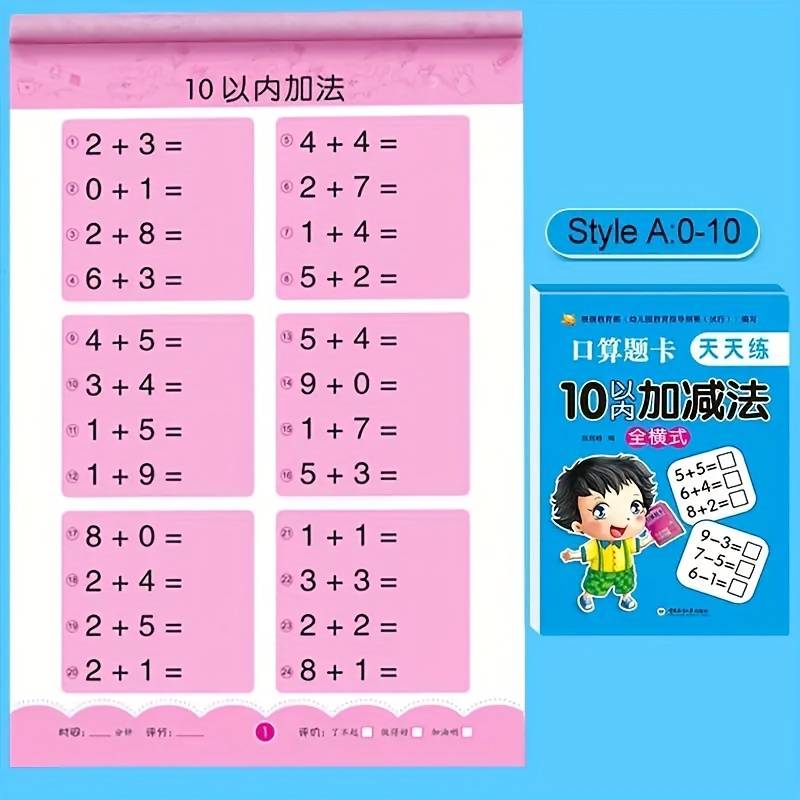
And when it's not actually confronting the real issue at hand, this kind of argument (2+2=5) can easily be dismissed. You aren't making any point here with 2+2=5 if the argument is about the ways to educate people. -
ssu
9.8k
And it simply doesn't mean that mathematics is culturally relative. It's about education of mathematics, not about math itself.No, that is wrong and you either did not read the rest of the post or ignored it, that much I expected many posts ago. — Lionino
Why is this so difficult for you to understand? -
 Gary Venter
17The axioms of mathematics do have a subjective element. Math now all derives from set theory, so those are the axioms of math in general. When Paul Cohen published the final step of the proof of the undecidability of the continuum hypothesis, there was a lot of discussion about the need for new axioms. The general feeling was that you couldn't just add a yes or no axiom - any new axioms need to provide a more general picture of the set-theoretical universe, like what rules can be used to define new objects. Several promising axioms have been proposed, and over the last 50+ years a few of them have been found to be mathematically equivalent. Together they do give an expansive and exciting vision of this universe. However one other axiom has been proposed recently that gives different answers to some key questions. It is too new to know whether or not it will lead to an alternative but still expansive vision of the scope of the set-theoretical universe. If after enough time it does not, then the other axiom(s) will be widely taken as the right one(s). A lot of mathematicians involved feel that these will be true statements about the real sets. But clearly that is a subjective choice based on values about what axioms should do, and there is a cultural aspect to that.
Gary Venter
17The axioms of mathematics do have a subjective element. Math now all derives from set theory, so those are the axioms of math in general. When Paul Cohen published the final step of the proof of the undecidability of the continuum hypothesis, there was a lot of discussion about the need for new axioms. The general feeling was that you couldn't just add a yes or no axiom - any new axioms need to provide a more general picture of the set-theoretical universe, like what rules can be used to define new objects. Several promising axioms have been proposed, and over the last 50+ years a few of them have been found to be mathematically equivalent. Together they do give an expansive and exciting vision of this universe. However one other axiom has been proposed recently that gives different answers to some key questions. It is too new to know whether or not it will lead to an alternative but still expansive vision of the scope of the set-theoretical universe. If after enough time it does not, then the other axiom(s) will be widely taken as the right one(s). A lot of mathematicians involved feel that these will be true statements about the real sets. But clearly that is a subjective choice based on values about what axioms should do, and there is a cultural aspect to that. -
 TonesInDeepFreeze
3.8k
TonesInDeepFreeze
3.8k -
Tom Storm
10.8kInteresting information about axioms.
A lot of mathematicians involved feel that these will be true statements about the real sets. But clearly that is a subjective choice based on values about what axioms should do, and there is a cultural aspect to that. — Gary Venter
I don't have enough maths knowledge to drill down into this, but no doubt axioms or presuppositions (and their justifications) lie the core of postmodern investigation. -
TonesInDeepFreeze
3.8kYou could make an argument from some basic results of model theory that mathematical formalism in most cases can`t be specific about the objects it`s supposed to speak about. When a set of axioms "uniquely" (up to the isomorphism) specifies a model we say that the theory is categorical. Hilbert and earlier Peano achieved a categorical axiomatization of Euclid`s geometry, Tarski proved this version of "Euclidean" geometry is consistent, complete and decidable. The "unique" model of it is the Cartesian plane. Beside Godel incompleteness features (undecidability and either consistency or completeness) any set theory pretending to be an axiomatization of mathematics can't hope to be categorical. There are weaker notions of the classes of models but I don't think it's possible to define a class of models zfc does specify. Isn't isomorphism weak enough to say a theory doesn't specify a mathematical object? Well an ignorant mathematical nominalist could make such an argument. There's nuance to it, you could step back and not even pretend that what mathematicians study are classes of models. — Johnnie
Agree on these points:
(1) A theory is categorical if and only if all its models are isomorphic with one another.
(2) First order Euclidean geometry is categorical.
But some points I would put differently:
(3) The incompleteness theorem implies that there is no recursively axiomatized, consistent, sufficiently arithmetical theory that is categorical. But that is endemic not just to set theory but even first order PA, Robinson arithmetic or many other theories for even just basic arithmetic. Roughly speaking, pretty much when you have successor, addition and multiplication, you don't have a categorical theory. But even more basic to the incompleteness theorem, from Lowenheim-Skolem we know that a theory with an infinite model has models of all infinite cardinalities, thus not categorical.
(4) We presume that ZFC is consistent, so there is the proper class of all and only the models of ZFC.
(5) It's not clear what is meant by [my paraphrase] "a theory specifying or not specifying an object". There are two notions of definition:
(a) In a theory, given an existence and uniqueness theorem, we may define a constant symbol. With a model for the language of the theory, that constant maps to a member of the universe, and if the model is a model of the theory, then that member of the universe is the one that satisfies the definition.
(b) Given a model, a member of the universe is definable in the language if and only if there is a formula with exactly one free variable such the formula is satisfied only by an assignment of the variables that assigns that free variable to said member of the universe. (This can be extended to relations too.)
But the class of all and only the models of a given theory is a proper class, so it cannot be a member of a universe. (I think the following is right:) On the other hand, in class theory, we can define the proper class {x | x is a model of ZFC}. Or in ZFC we can define a 1-place relation symbol M by: Mx <-> x is a model of ZFC. But in ZFC we can't prove that that is not the empty relation.
/
In any case, yes, usual formal theories for mathematics are such that each one has non-isomorphic interpretations. That is a mathematical fact. But I don't know that that blocks a realist from reasonably regarding mathematics to be referring to certain objects. -
TonesInDeepFreeze
3.8k


Welcome to The Philosophy Forum!
Get involved in philosophical discussions about knowledge, truth, language, consciousness, science, politics, religion, logic and mathematics, art, history, and lots more. No ads, no clutter, and very little agreement — just fascinating conversations.
Categories
- Guest category
- Phil. Writing Challenge - June 2025
- The Lounge
- General Philosophy
- Metaphysics & Epistemology
- Philosophy of Mind
- Ethics
- Political Philosophy
- Philosophy of Art
- Logic & Philosophy of Mathematics
- Philosophy of Religion
- Philosophy of Science
- Philosophy of Language
- Interesting Stuff
- Politics and Current Affairs
- Humanities and Social Sciences
- Science and Technology
- Non-English Discussion
- German Discussion
- Spanish Discussion
- Learning Centre
- Resources
- Books and Papers
- Reading groups
- Questions
- Guest Speakers
- David Pearce
- Massimo Pigliucci
- Debates
- Debate Proposals
- Debate Discussion
- Feedback
- Article submissions
- About TPF
- Help
More Discussions
- Other sites we like
- Social media
- Terms of Service
- Sign In
- Created with PlushForums
- © 2026 The Philosophy Forum