
Comments
-
Climate change denialI am pointing out that even supercomputers have their limitations — Agree-to-Disagree
It's true. But quantum computers are God! -
Donald Trump (All General Trump Conversations Here)
I'm sure all of that is part of the picture. Embracing rule of law takes a lot of trust in society and government. Where that trust has eroded, it's natural that alternatives become attractive. -
Could anyone have made a different choice in the past than the ones they made?is that what your first reply did? It didn't look like it was looking at ANY possible answers — flannel jesus
I guess I was looking for clarification about where the OP wanted to go with the question. That's why I asked him what his thoughts were.
What are your thoughts? -
Donald Trump (All General Trump Conversations Here)Not necessarily. 60-70% of Republicans believe the 2020 election was stolen, and therefore Trump was justified in trying to remedy that situation. — Relativist
That would mean 30-40% of Republicans plus a mass of independent voters don't care about rule of law. I think it's actually higher than that. -
Donald Trump (All General Trump Conversations Here)
But since he was re-elected after what he pulled in Jan 6, it appears that large swaths of Americans don't care about rule of law either. -
Climate change denialA lot of it may be fixable, but in what time frame? — Agree-to-Disagree
In a year or two probably. One of the main manufacturers of EV's runs the US government. -
Could anyone have made a different choice in the past than the ones they made?
Well, I'm saying the person who didn't become a criminal, couldn't have become a criminal. It's more than a tautology, although I'll grant, not much more. -
Could anyone have made a different choice in the past than the ones they made?Then who became the criminal? "I" is a rigid designation, picking you out in every possible world, including those in which your nefarious self comes to the fore. — Banno
:grin: Yes, I'm aware that I'm giving voice to the problem that rigid designation was supposed to solve.
Your identity is your history. If you'd had a different history, you'd be a different person. It's true. Rigid designation only makes sense of certain turns of phrase, it doesn't cover all that we believe about identity. -
Could anyone have made a different choice in the past than the ones they made?Pretty much. So ↪180 Proof presumes the universe is determinate, then concludes that we cannot make choices:
Unless the universe (of determinant forces and constraints on one) changes too, I don't think so. — Banno
He's right. If you look at the universe as a monolith where everything is interrelated, determinism is the outcome. -
Could anyone have made a different choice in the past than the ones they made?I picked "I don't know" because I don't know the answer. If I knew the answer, I would not have asked the question on this forum. — Truth Seeker
Oh! From one point of view, if I had become a criminal, the resulting person wouldn't be me. My identity is made up of bits of my history. If I'd had a different history, I'd be a different person, maybe closely kin to me, like a cousin. Therefore I can't have a different history.
Or we could just look at it via modal logic. That's just looking at alternatives, nothing metaphysical. -
Could anyone have made a different choice in the past than the ones they made?We can think about how things might have been different. That's what "could" does in "Could anyone have made a different choice in the past than the ones they made?" — Banno
You're saying free will and determinism both come down to the way we think rather than metaphysics? I agree. -
Could anyone have made a different choice in the past than the ones they made?Well, I'm pretty sure if someone asks you a question, they just want to know how YOU look at it, not all the other ways it could be looked at lol. — flannel jesus
Why not look at all the possible answers? -
Could anyone have made a different choice in the past than the ones they made?l
Yes. I think it's part of having Asperger's that I notice all the ways a question can be looked at. -
Could anyone have made a different choice in the past than the ones they made?that's how questions work, that's right — flannel jesus
Yea. -
Could anyone have made a different choice in the past than the ones they made?Simple application of modality. Time perceptions and quantum multiple universes are irrelevant. — Banno
I don't think modal logic has any metaphysical import though. It's just about the way we think. -
Could anyone have made a different choice in the past than the ones they made?That can be answered with yes or no, depending on how you look at it.
What's your answer? -
Donald Trump (All General Trump Conversations Here)From what little I've seen not much of the "aid" part has been cut from the program, — NOS4A2
Oh. I thought they stopped almost all foreign aid. They didn't? -
Donald Trump (All General Trump Conversations Here)Hidden beneath the facade of humanitarian benevolence is routine imperialism — NOS4A2
That's true. But Americans are still giant do-gooders, so the flow of private aid will continue. -
What does Quine mean by Inscrutability of Reference
I disagree with this. We're all adults here. Let's learn to roll with the punches. -
Donald Trump (All General Trump Conversations Here)
I've been thinking lately about how Stalin took over. He started by quietly making lists of people to target.
But where the comparison ends (for now) is that Trump and Musk haven't done anything that hasn't been wildly popular with voters, and frankly, I like it.
I think they should have left the tariffs on Mexico to discourage American industries from having their manufacturing done right across the border, for instance in Juarez. -
The Musk PlutocracyThe agencies and bureaus are established through law whereas DOGE has sprung directly from Trump's forehead. — Paine
However it was established, the CIA was part of the executive branch and under the authority of the president.
I guess if there's something unconstitutional about DOGE, somebody will bring a case to the SCOTUS and sort it out.
And again: I said absolutely nothing about efficiency. Look up the difference between efficiency and effectiveness. -
The Musk PlutocracyWould you grant that your example of willful unaccountability of an agency, which is supposed be overseen by Congress, is different than the motives behind the formation of DOGE? — Paine
Different in what way?
How does your question relate to my assertion that monarchy will not provide the efficiency you suggest it could provide? — Paine
I didn't say anything about efficiency. It's the effectiveness of monarchy that caused every ancient democracy to transition into monarchy. -
The Musk PlutocracyIn this case, Hamilton is addressing decisions that the Executive makes and does not want to own. — Paine
Ok. Eisenhower told the CIA to fight communism and don't tell him anything about their actions. People associated with the issue warned Eisenhower that the CIA was getting out of control. And they were. This sort of thing happens, right? -
The Musk PlutocracyYea. Sometimes leaders openly take responsibility for the disasters caused by their subordinates, but it always sounds like some sort of formality to me. Everyone knows the cause of the pain has been fired.
-
The Musk Plutocracy
You may be right. I think Musk is working under Trump's authority, so there isn't any official plurality. -
The Musk PlutocracyHamilton was a monarchist.
— frank
On what basis do you say that? — Paine
An attempt to create an elective monarchy in the United States failed. Alexander Hamilton argued in a long speech before the Constitutional Convention of 1787 that the President of the United States should be an elective monarch, ruling for "good behavior" (i.e., for life, unless impeached) and with extensive powers. Hamilton believed that elective monarchs had sufficient power domestically to resist foreign corruption, yet there was enough domestic control over their behavior to prevent tyranny at home.[44] His proposal was resoundingly voted down in favor of a four-year term with the possibility of reelection. — Wikipedia
The American democracy exists because of this fascinating guy: Thomas Jefferson:

Read the Federalist Papers I linked to. Hamilton constantly contrasts the character of the Executive against the nature of the English monarch. — Paine
They were breaking away from England, but many of the founders thought they should try to reproduce the British government as closely as possible. It made sense. They basically wanted to be England, so why not make their government English?
The opposing view was more daring and precarious. It meant creating something that had never existed: a giant Athens with no slaves, while in the middle of nowhere without a clue as to how they would fend off future attacks from the French. And they were all keenly aware that the British aristocracy had proclaimed that democracy was impossible, especially if conducted by a bunch of riff raff.
What followed is expressed by the title of a book by this awesome historian. It's a great book and the introduction is some amazing insights about the work of a historian:
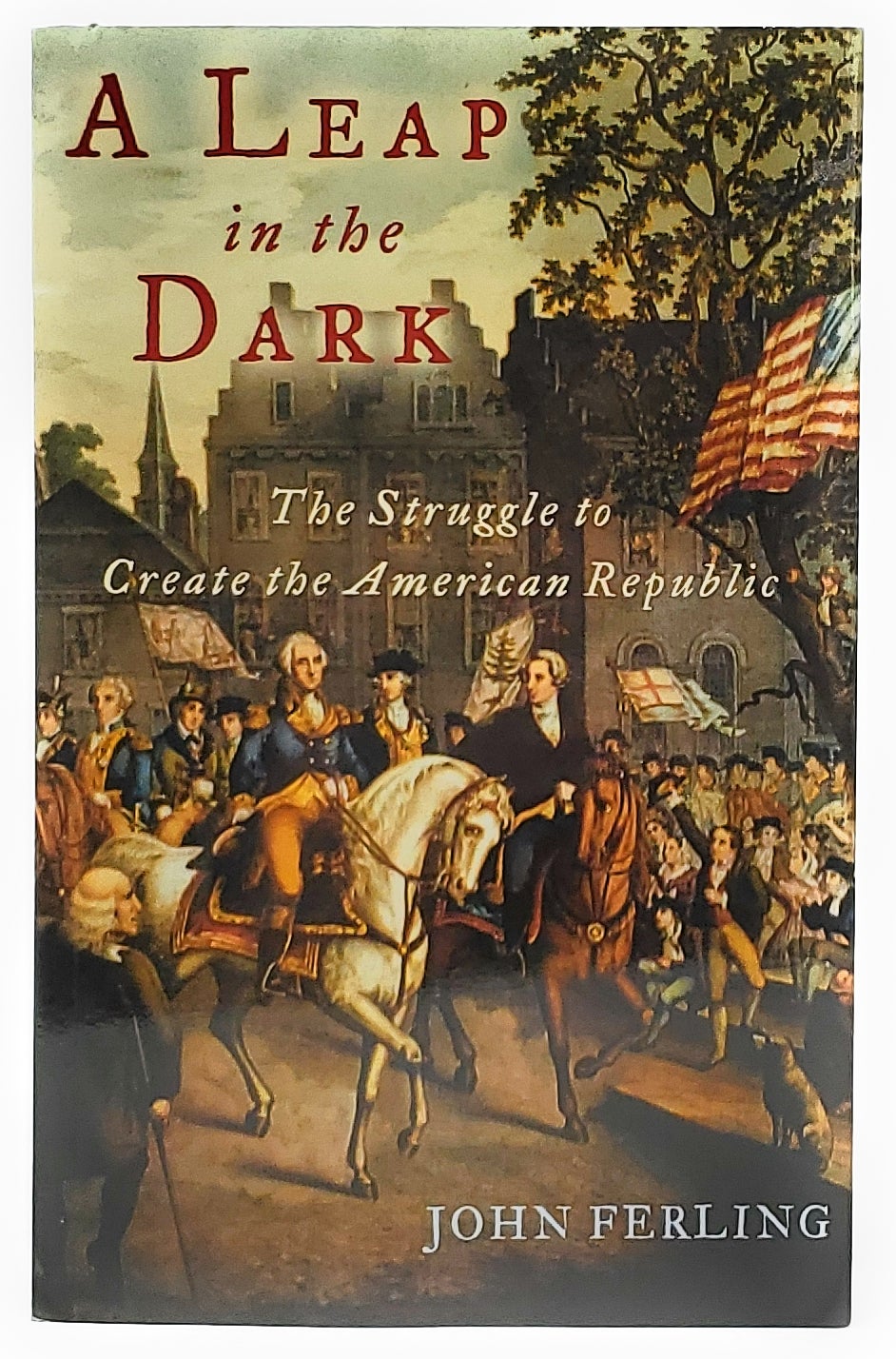
The context of #70 is that a number of groups were arguing that the office of President should be a plurality of some kind. The Constitution was written only recognizing a single occupant. Hamilton's comparison with the British Monarchy is to note that the Monarch does not have the checks on his power that the President has so the role of councils should not be seen in the same light. — Paine
Ok. Musk is working under Trump's authority, so there is no plurality. -
The Musk Plutocracy
Hamilton was a monarchist. I think the quote you posted is an argument for monarchy. I'm not quite getting your point. -
What does Quine mean by Inscrutability of Reference
Anytime I bang on a wall in my house my dogs go crazy. They take it as a sign that someone is at my front door. Maybe this is how communication works. My speech is an event. You take it as a sign, not just my words, but the whole scene involving me and my noises. You make inferences. There are no magic cords connecting my words to the world. As you say, reference matters to the extent that you get your dinner. -
The Musk PlutocracyIt was a lot of things, a real witches brew. The derivatives were a major issue, but it was the entire structure of the US housing and lending market that led to the explosion of derivatives in the first place. You can add in the rating agencies too. But part of the reason that the ratings agencies, pension funds, etc. didn't worry as much as they should have is the idea of the implicit state backing for loans made by the parastatals. — Count Timothy von Icarus
That makes sense. I didn't think about that. I had read that there had never been a significant downturn in housing prices, so people just didn't factor in the possibility of a crash.
There's a scene in the Bible where the people of Israel are asking their judge to name a king. Samuel tells them that in the day they have a king, they will all have become slaves. They insist though, and the Kingdom of Israel is born. They supposedly wanted a king for the sake of warfare.I am surprised by the number here who support monarchy. — Paine
In this is a recognition that monarchy has a dark side, but the desire for it is coming from the people. King-making is a deep seated drive and this has played out in American history and the presidency has evolved from a minor federal figurehead to something like a king in the sense that the whole political tone changes due to presidential agenda. This is not the result of a nefarious plot. It's because over and over, we found that an integrated, centralized authority can solve problems that the competing states simply can't.
Since the US government is widely considered by Americans to be dysfunctional, it shouldn't be too surprising that monarchy is on some people's minds. -
The Musk Plutocracy
Ah. I don't think Fannie and Freddie caused the 2008 crisis, though. It was derivatives, right? -
The Musk PlutocracyBut at least part of the 2008 financial crisis was due to the perverse incentives faced by massive government run banks, — Count Timothy von Icarus
What massive government run banks? The only government run bank is the Fed. -
Donald Trump (All General Trump Conversations Here)Let’s see what comes of it. — NOS4A2
They could build a golf course through the graveyards where 70% of the dead are women and children. -
Donald Trump (All General Trump Conversations Here)Out of all his pie-in-the-skies this is Trump’s worst idea ever, sure to set the region on fire and send all involved into a spiral of evil. The only way he can redeem himself is if this turns out to be some negotiating tactic. — NOS4A2
That is the craziest shit I have ever heard. Let's do it!! -
The Musk PlutocracyWhen you're cost cutting, that's also a good time to eliminate entities that may have harassed you in the past, and those who might one day. They have a list of good guys to put in slots. Just sayin.
-
The Musk PlutocracyCanada is a fine place, and may it continue as a sovereign nation forever. Even so, I don't quite see Canada as the escape hatch for anyone's existential threat. Even less so Greenland. Besides, Trump and his allies will be dead long before much more ice melts off of Greenland's chilly shores. — BC
What's your theory on why he wants Canada and Greenland? I just assumed somebody told him that both those areas will be prime real estate in the future.
frank

Start FollowingSend a Message
- Other sites we like
- Social media
- Terms of Service
- Sign In
- Created with PlushForums
- © 2026 The Philosophy Forum