
Comments
-
Please allow upvoting and downvotingAnd of course TimeLine would sheepishly upvote everything by Hanover, despite denying it all. — Akanthinos
Don't you dare talk about TimeLine that way. She would never lie. -
The TreeThat's so insightful. Love, beyond good and evil.
The really boring way to understand your statement is All is fair in love and war. I mean moral considerations are demoted to a lesser concern where love is involved. — TheMadFool
Although TL is insightful as well, that statement belongs to Nietzsche. -
The TreeIn BoR and the Proverbs, this life is referred to as a woman who produces righteous fruit; she is a tree of life to those who lay hold of her; those who hold her fast are called happy. — TimeLine
What other support do you have other than Proverb 3:18 that the tree is a woman? In reading that proverb, the pronoun "she" references wisdom and then refers to wisdom as a tree. Wisdom (חָכְמָה) referred to in 3:13 (http://www.mechon-mamre.org/p/pt/pt2803.htm) is a feminine noun, which might explain the feminine pronoun, due simply to the lack of the neuter in Hebrew. Where does it explicitely say the tree is a woman? At most, it says it's female.
EDIT: It's also significant that the author credited with writing Proverbs was Solomon, so it's not clear that Proverbs can be used for determining the meaning of Genesis, a much older text, and one that is attributed by some to have been written by God herself.
There is no inherent meaning in good and evil except for what we create, but is there righteousness — TimeLine
This is no longer textual interpretation, but instead your relativistic view. Good, evil, and righteousness have specific meanings in the biblical context.
That which is done out of love always takes place beyond good and evil. — TimeLine
I thought we were trying to determine why God planted the tree, which would require a textual analysis, as opposed to asserting the views of a philosopher not terribly receptive to the divine command theory of the bible. -
Belief (not just religious belief) ought to be abolished!Your relevance objection is noted, now please answer the question.
-
Belief (not just religious belief) ought to be abolished!Whether or not anybody believes science is to be relied upon, is irrelevant; for science is demonstrably thus far mankind's best tool, regardless of what anybody believes. — ProgrammingGodJordan
Define "knowledge." How can you know what you say is true without believing it? -
Belief (not just religious belief) ought to be abolished!Is English your first language? — ProgrammingGodJordan
Here's what you said: "Anyway, scienticism does not underline belief's generally science opposing nature, contrary to "non beliefism"."
Explain how scientism underlines and how belief takes the possessive. As best I can decipher, you believe science ought be relied upon and not faith. Your view might be different but your writing is poor. -
Belief (not just religious belief) ought to be abolished!#1 - that it tires you is unresponsive and irrelevant. #2- is an incoherent comment. It offers nothing and means nothing.
-
What's soupBut is this a chair?

Suppose I told you it is a dollhouse chair, incapable of functioning as something you sit on? -
Belief (not just religious belief) ought to be abolished!Summarize this for me. As far as I can tell, "belief" is being used to mean "faith," which is being used to mean "reliance upon something other than empirical evidence." And as a result of conflating belief with faith, 12 pages have been spent trying to explain how you can't have an epistemilogical system without belief.
Did I get it right? Is the OP just a butchered form of scientism, both unaware of its existence and of its limitations? I ask because I didn't find the text of the OP or the explanations of PGJ at all helpful. -
#MeTooI'm referring to the sort of situation where a woman hugs you and you think it's OK to have a feel of her breasts. — Michael
Yeah, but that's hardly ever the case, and I can't imagine a "hey, now that we've hugged, can I grab your breasts?" would be in order. I suppose it's better than just reaching out and seeing what happens, but the question itself is fairly rude and inappropriate in itself. And from there I'd go on to say that if you are of the 99% of the population that understands when a sexual advance has become appropriate, you don't need all this instruction and you don't need rules imposed upon you that were motivated by the behavior of the socially retarded or criminally inclined.
The truth is that all this asking "can I kiss you" or "can I touch you now" is in itself socially inappropriate behavior from a romantic perspective, and it tends not to show respect as much as it does inexperience, uncertainty, insecurity, and awkwardness. It's also a standard I seriously doubt you ever adhered to, probably considering yourself sophisticated enough not to be burdened with it, which is sort of the reaction you're getting from others when you say that standard ought be standardized.
What you're describing is a very prescriptive language system where communication is dictated by political considerations without allowing the communication to occur naturally, as would be the case if you allowed gestures, behaviors, and non-verbal cues to determine meaning. Although I like the idea of giving more work to lawyers, I can't accompany people on dates to make certain proper legal consent has been obtained, although I could be swayed given the right compensation. -
#MeTooI think if your risky "advance" is some sort of sexual touching then you're doing it wrong. Is it so hard to ask/wait for verbal confirmation? — Michael
As in "can we now has sex?" as If that's how it ever happens. When did verbal communication become more reliable than any other form? A robotic "yes, have sex with me" response is less convincing than her physical expressions may be. I'd find it more troubling if she signed a consent form than if she didn't. -
#MeTooWoman versus man physical aggression is less threatening than the opposite because the man wins that fight 99% of the time. The other 1% ends in a tie that must be decided by lot.
-
#MeTooI heard my name, so I'll respond. This girl at work wrote an anonymous post-it note to me and stuck it on my desk. I determined it was her by comparing it to her handwriting after everyone left. It said, "I want to suck your dick til your cum is all over my tongue."
The request was truly unwanted, but I did enjoy the attention, but I'm disappointed it wasn't Baden, and you're jelly.
No go back to enforcing your decency standards in your humorless cubicle where no one sexually expresses themselves in entirely inappropriate ways that ought to lead to immediate termination, but instead ended in me laughing because I have a sense of humor, although it was very fucked up even by my "standards." Know your audience I guess. -
The case for a right to State-assisted suicideWell that's how hypotheticals work. You limit the variables; otherwise everyone just chooses utopia.
If we live in a world that unjustly oppresses to the point where death is better than life, then death is better than life. That's just the way it is. I agree that we ought to fix that screwed up society, but in the meantime, allow the relief valve. -
The case for a right to State-assisted suicideSO the state ought not suport euthanasia as an answer to social issues that have other solutions. — Banno
But this exacts a consequence on the state for the state's bad conduct, yet it's the innocent citizen who's actually punished.
Society A: You are shot dead.
Society B: You are tortured and beaten and forced to watch your loved ones tortured and beaten for the rest of your natural life.
Society C: It offers you the choice of Society A or B.
There is no other society. I'd think C is the most fair. That all Societies are bad is obvious. That all should end all oppression is obvious. To claim, however, that Society C should be forced to eliminate immediate death as an option to teach it the lesson that state assisted suicide ought not be given does nothing for the suffering citizen and it does nothing to correct Society C's behavior. -
The case for a right to State-assisted suicideAssuming informed consent, perhaps yes to all your questions. A state that enforces slavery and further forces the slaves to live in their oppression without the right to die isn't more progressive than one that doesn't. Bizarre hypotheticals no doubt, ignoring the obvious fact that it is the slavery which is the real evil, but it doesn't follow that suicide ought only be permitted when the pain isn't the result of injustice. Pain is pain, whether justly created, the result of prejuduce, or just divine created bad luck, and it's always subjective.
-
The case for a right to State-assisted suicideIn summary:
The repugnant argument is that state assisted suicide should be permitted for the disabled because life with disabilty is not worth living.
The reasonable argument is that state assisted suicide ought be permitted for those who have reasonably determined life isn't worth living.
The implicit argument is that people ought be reasonably informed of what life with disability is before making a decision about suicide (i.e. informed consent).
Fair? -
Post Censorship IssuesYou're saying I've been hiding? — Wosret
I get you're mad, but I'm pretty sure had I been around in 1930s Germany my fate would have been different than you're suggesting. But, why be literal, which is what this whole debate is over? My understanding from our very lengthy discussions, where I was certainly not hiding from you or hiding behind my lofty status, was that you felt that your writing style was being rejected because it was outside the analytical norm, specifically that it injected personalized experience into the posts without which would make your posts hollow and lacking true meaning. You also questioned the literal/metaphorical distinction, claiming, I believe, all were varying forms of symbolism.I was told that the whole topic was questionable as philosophy because it was about the soul, and that's fucking ridiculous, you guys have the views of every average high schooler in western culture, if this were 1930s Germany, you'd all be fucking Nazis. You're just echoes for populism and fads, with no substantial knowledge of the history of philosophy. — Wosret
I admit that I might be wrongly or poorly summarizing your position, and, when we talked, I suggested many times that you make this debate not something between a few mods, but that you discuss it publically, considering it's an issue of philosophical value, and who knows, it might be correct. It's also quite possible that your posts are in fact ramblings devoid of value. I do believe, that whatever your posts are, their deletion was based upon an honest evaluation of incoherence and being off-point. I do believe that's a reasonable evaluation a reasonable person could hold, and perhaps a reasonable person could hold otherwise. There has been no malice towards you. I am and we all are truly disappointed that you're saying you want to leave. -
Consequentialism vs TaoismHowever, my issue is not with what you and Hanover said. I'm talking about the moral ambiguity of the consequences of our actions. As the story clearly demonstrates. Any action can be good AND bad in so many different permutations that it's impossible to use it as a principle to guide our actions. Again, you did say that we're only responsible to the extent that an effect is foreseeable. I agree but my point is that the moral consequences of an action are just not foreseeable and so we should, by that reason, give up on consequentialism. — TheMadFool
The "story" cannot be used to demonstrate anything. It's not empirical evidence. It's a made up story. As I said, if the story were an accurate portrayal of the typical course of reality, then we could consider it as evidence of the futility of making any plans for the future due to the absolute unpredictability of it. Fortunately, the story describes an extreme, but not something we should typically expect. -
Consequentialism vs TaoismThe point of the Taoist story seems to be that there can be no workable moral theory based on consequences no matter how we may try to find one. Consequences are simply beyond our control. — TheMadFool
I didn't read the story as having anything to do with morality or moral theory. I also don't think it's a rejection of science generally, which would follow your same logic since science depends entirely upon reproducible results.
If the fable were an actual representation of a typical course of events, then we'd have really big problems navigating our world, sure. It's not though. It's just a fable. It's not even an actual counter example of an predictable world. It's a made up story.
If you told a rocket scientist he shouldn't expect his rocket to make it to the moon because according to the "maybe" story a gale force wind might divert it, I think he might point out that he makes his predictions on actual prior results and not ancient fables. -
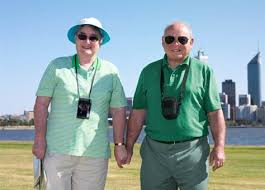
Majoring in PhilosophyI majored in philosophy long ago and then much later I started debating philosophical topics online. One thing that I've noticed about me in contrast to other posters in this thread is that I've found that for each day I've participated in these forums, I've grown stupider. I think that what's happening is that over time everyone moves toward the average, sort of like how long time spouses begin to look like one another over time, and since I was an outlier of intellectual superhero proportions, it was inevitable that I undergo stupidification by remaining present.
-
Political Issues in AustraliaThere is also little evidence that clinical psychology is at all effective compared to talking with friends, or talking to someone who is pretending to be a psychologist (but does not have a degree). — RepThatMerch22
Do you have a cite for the study you're referencing? -
Soul cannot be createdObviously "soul" carries religious meaning, but the Cartesian mind seems distinct from the body, even if we concede it is composed of the same substance. There does seem something meaningfully distinct in critical ways between rocks and perceptions of rocks.
-
Transubstantiation
Jews do not believe Jesus was the son of God. I think most would agree that Jesus' position as the son of God is an essential element of Christianity. If one insists upon dividing the world into accidental and essential properties, I don't know many who would consider Jesus's role as savior and son of God as a non-essential part of Christianity. So, yes, if Judaism is right, Christianity is wrong in an essential, non-trivial ort of way. Do you not agree with this?That is much like saying "if Einstein is right, then Newton is wrong". It gives entirely the wrong impression since Newton is absolutely not wrong in-so-far as we're concerned with motion on Earth, or in any given portion of spacetime that can be treated as flat. — Agustino
Well, you have to remember that missionaries don't have just a spiritual mission, but also a political and social one. So by converting you to their church they achieve political and social goals much more than spiritual ones in this case. — Agustino
That might explain someone in a leadership position who actually worries about overall numbers, but the kid in the tie on his bicycle is at my door because he thinks he has the key to truth and heaven that is lacking in whatever religion I subscribe to.
The reason we can't decipher the accidental from essential property of a chair, for example, is because the distinction isn't real. A chair that cannot be sat on can still be a chair. A four legged chair with a missing leg is still a chair, even though it sits broken on the floor. A chair in a dollhouse is still a chair, even though it serves no function of being a chair. There are a set of properties that make something a chair and it's possible that two chairs be chairs yet not share a single property. In your case of transubstantiation, you even suggested that the essential property not even be empirically knowable, indicating that essence is a transcendent property, like the soul of something, imbuing it with chairness. Like I said, I reject essentialism, which might be why I consider your suggestion that all religions share an essence unsupportable.Well, I think that it's clear that some properties are essential to an object, while others are not. For example, a three-sided figure is still a triangle regardless of the proportions of the sides, or the color of the lines, etc. So three-sidedness is an essential property of a triangle - if an object lacks those, it cannot be called a triangle, unless of course you re-define what a triangle is. — Agustino
As I indicated, Mormonism is polytheistic. http://www.mormonhandbook.com/home/polytheism.html This is directly from a Mormon website. Are you now declaring Mormons non-Christian? There are plenty of other religions that are polytheistic. Are you still claiming that they are essentially the same as Christianity?With regards to Monotheism, there is still one God in Christianity, much like one triangle is one triangle even though it has three sides. — Agustino
If you want to really rest your argument on the accidental/essential distinction, then you are going to be required to itemize the properties you find essential to Christianity and then to the various competing religions. We will then need to see what the common essence is of all religions. That's your thesis, right? And then once we find that essence, you're going to have to be committed to the idea that any belief system with that very basic essence is just as valid as any other.
You're now rejecting essentialism and arguing Wittgensteinian family resemblance. https://en.wikipedia.org/wiki/Family_resemblance . If that's where you're falling on this, we're in agreement, but I think what's really happened is that you're simply recognizing the unsupportability of essentialism and you're trying to adapt to the objections being raised.No, they're clearly not the same in their accidental features, of course not (and religions are also not all the same in the symbols they use, in their socio-cultural practices, and in their politics, etc.). But there must be something they have in common in virtue of which we see a resemblance amongst all rocks, and thus call them all rocks, thus grouping them together. — Agustino
For what it's worth, I did learn that what we consider Aristotilian essentialism (i.e. "the doctrine that some of the attributes of a thing (quite independently of the language in which the thing is referred to, if at all) may be essential to the thing and others accidental. E.g. a man, or talking animal, or featherless biped (for they are all the same things), is essentially rational and accidentally two-legged and talkative not merely qua man, but qua itself.") is based upon a paper by Quine and he never confirms that view was actually attributable to Aristotle. http://rationalwiki.org/wiki/Essentialism
I point this out because I never found the conversation about Aristotilian metaphysics philosophically significant. It's value is historical because apparently the Catholic Church adopted his views long ago when arriving at an explanation for transubstantiation. I suppose if some academic or theologian really wanted to figure out the underlying basis for the Church's position, they could go back and read the original texts. It's sort of like if I wanted to know why the American founding fathers referenced inalienable rights, I might want to go back and re-read Locke's view on natural rights since that's it's origin, but that hardly means I need to accept Locke's views. I'd just be trying to figure out where those views came from. And that is important too, if not just to point out the obvious fact that these views on transubstantiation are historically rooted as opposed to being rooted in the inerrant word of God.
And, since I mentioned Locke, he did mention primary and secondary qualities of objects, which seems another futile attempt at distinguishing properties out of objects (in his case, subjective properties versus objective properties as opposed to Aristotle's essential versus accidental). https://en.wikipedia.org/wiki/Primary/secondary_quality_distinction -
TransubstantiationIt is almost a given that when you're looking for the essence of something you will discard accidentals. The fact that such a universal unifying core exists is proof enough that religions have been grappling with what is essentially the same hierophanic phenomenon. So when atheists bring up the point that religions are all different and therefore they can't all be right, they fail to understand the significant portion in which religions are actually not different. — Agustino
I don't subscribe to the idea that essences exist. There are only particular traits that once fully subtracted leave the object at nothing. I understand the need to invoke accidental and essential properties when discussing the doctrine of transubstantiation because the Church relied upon those concepts when forming the doctrine, but I don't find it useful or persuasive as a metaphysical theory.
It is not a fact that a unifying core exists. If Christianity is right, Judaism is wrong. The fact that missionaries knock on my door is evidence someone doubts the ultimate legitimacy of my beliefs.
So it's quite possible that Judaism either has not perceived that experience in which the truth of the Trinity is grounded, or they have, but they don't express it through the doctrine of the Trinity - instead, expressing its inner meaning through a different doctrine. — Agustino
And it is not only possible, but probable, that they find the triunity an incoherent attempt to save Christianity from polytheism. And the Mormons accept the trinity as three different entities, rejecting the triunity and embracing a form of polytheism.
And what is more essential to Judaism than the first commandment and monotheism, yet I am supposed to believe polytheistic religions that worship idols are essentially all the same?
Sure, of course not. But they're both attempts at grappling with the relationship between man and his divine ground and do bear significant common ground with each other. — Agustino
Which is only to point out that the word "religion" means something and there must be something similar for us to catagorize them in the same bucket. Are all rocks the same because they're all rocks? -
TransubstantiationThat is why all discourse remains at the level of conflicting organized religions and fails to grasp the process through which these organized religions came to be in the first place. As such, it is very likely that where there was initially unity, through the process of solidification and ossification of dogmatic structures meant to preserve the teachings (a process that translates an experience into language), there arose irreconcileable differences. — Agustino
Your thesis that all organized religions are essentially the same, whatever religious essence might be, is anything but obvious, and very doubtful. There are far too many religions to suggest it's possible to distill a few unifying truths and to also not require discarding critical distinguishing elements. That is, Judaism is not in essence Christianity. -
Intrinsic ValueA diverse group will inevitably arrive at diverse solutions, and all will insist theirs is the most efficient.
-
Intrinsic ValueSimilar goals does not dictate similar political views. We both may want cheap and high quality medical care (who wouldn't?), but we may still debate the best way to acheive that (e.g. higher taxes versus free enterprise solutions).
-
Intrinsic ValueFor me, doing philosophy also has intrinsic value--because it is so much fun!! — Mitchell
Would it not if it weren't fun? I'd think its value exceeds that of a good massage, even should the good massage be more fun. -
Intrinsic ValueWhich was the impetus of my prior post. We can look at what we value, but we can't determine what has actual value from that because we seem to inherently know value even when we don't value it. I can throw my entire life into meaningless hedonism, valuing only the next fix of pleasure, but I would think that upon reflection (assuming I haven't destroyed my ability for reflection), I'd realize I am seeking those things that ought not be sought.
The road to recovery is often paved with reevaluating how one is living one's life and steering themselves in the direction of valuing the truly valuable. And I use "recovery" here to mean from anything meaningless, even if it's just from living a previously unexamined life. -
Intrinsic ValuePerhaps what we need to do is to tie intrinsic value to needs not wants. — Mitchell
If it's tied to needs (or wants), I'd argue it's not intrinsic, but dependent. That is, if my needs are better fulfilled by cheating, does justice now lack intrinsic worth?


Hanover
Start FollowingSend a Message
- Other sites we like
- Social media
- Terms of Service
- Sign In
- Created with PlushForums
- © 2026 The Philosophy Forum