
Comments
-
Joe Biden (+General Biden/Harris Administration)Let's see how it goes now with McCarthy out.
And we really haven't even started in earnest the "silly season" of the US elections... -
Who owns the land?My proposal to North Ireland would be the following:
1) UK grants North Ireland independence
2) Ireland recognizes the independence of North Ireland.
Result: Guess how betrayed the tiny faction of North Irelanders who are the warmongering and violence promoting type, who support the violence, be they those of the really-real IRA or those Loyalists marching with silly hats, when their own country has let them down! All this fighting for nothing! When Dublin and London jointly gives them the "We don't fucking care"-middle finger, at least they would share something in common.
But seriously, would Ireland really want North Ireland? All those loyalist paramilitaries that would be a pain in the ass if Northern Ireland became part of Ireland. And if the UK would brush aside North Ireland, then no worries about "The time of Troubles" coming ever back. The UK would be a far happier place.
-
Who owns the land?
Until Brexit happened! And a border is needed in a place people wouldn't want there to be a border.That said, there are a few rays of optimism floating around - the conflict on Northern Ireland - while not resolved - seems to have settled down into an uneasy accommodation. — EricH -
Why are We Back-Peddling on Racial Color-Blindness?
Just to point out:There are eight black CEO's in the Fortune 500. That's about 1.5%. Yet blacks make up 12% of the population. Their representation is off by almost an order of magnitude. — RogueAI
There's 53 women CEO's running Fortune 500 companies. That's 10,6%. Women make up 50% of the population. -
Ukraine CrisisThe separation of Catalunya (or Scotland from the UK) are different: it would be if Tatarstan would now want independence from Russia.
And actually we do have already an example of this: Chechnya. Nobody (except muslim extremists) lifted a finger for Chechnya as Chechnya tried to gain independence. Nobody recognized Chechnyan independence either. Not one country dared to cross lines with Russia in this matter. The last time when Barcelona tried to get away from Spain, I don't remember any European country coming forward to recognize them and giving them military assistance.
Hence it really matters the fact that Ukraine is a sovereign country that Russia has recognized. It's really the issue why all the countries have helped Ukraine and not sent the message that they hope that a peaceful solution can be found. Or simply kept silent about the matter. It is really the magic line that has been crossed by Russia now. -
How do we know that communism if not socialism doesn't work?Oligopolies aren't state monopolies. You have to notice the subject talked about. :wink:
-
Ukraine CrisisAnd there you have it. Perhaps you would defend Ceuta and Melilla, if Morocco tried to use force, but otherwise I guess any effort to "take back Cuba" would sound absolutely crazy for the Spanish.
Yet for Putin, Ukraine (and actually other countries like Kazakhstan) are artificial. And when a neighboring country thinks your country is "artificial", all alarms should go off.
:100: :up:And the claim that Crimea has 'always' been part of Russia is wildly incorrect. 174 years is not 'always', is it? It was much longer under the Khanate and the Ottoman Empire than under Russia. And whether you like it or not, Khrushchev gave it to Ukraine 1957, so formally it has been with Ukraine since that time. — Jabberwock
We actually should treat Russia as we have treated Western imperial powers: all the territory they gained that hadn't already had the same language or culture (hence we can separate unification of Germany and Italy from their colonial aspirations) especially in the 19th Century ought to be seen as imperialism, and if these territories have gotten independence afterwards, we should talk about decolonization.
But in Russia's case, somehow this decolonization is totally unacceptable. And lands that it has taken as late as the 19th Century are part of the "eternal" Russia!!! -
How do we know that communism if not socialism doesn't work?
They are decentralized. Only some of them go bankrupt or out of business, but not all.Let's decentralize companies too then! — Benkei
And if you have modern markets, an oligopoly of the large company and a multitude of smaller niche companies prevail.
But when the central planners have the infinite wisdom of what to produce and what not... -
Ukraine Crisis
I would disagree with this. Spanish identity isn't imperial anymore. You don't think the Netherlands is essential of your country. Or Mexico or Cuba. Spanish imperialism is quite well in the past. Last time I think it was the Rif war...As well as the British, Spanish, American, French, or even German identity. That's how the world and countries - as we know nowadays - were built in the past. — javi2541997
And the Brits? Lol. They have to protect the statue of Winston Churchill when something happens in the US. British imperialism is something that Monty Python mocked pretty well. -
Ukraine CrisisThe basic problem simply is that there are no natural boundaries where Russia starts or ends as you have this huge steppe starting from Europe and ending in Asia. The problem starts from geography. This is the first problem anybody neighboring Russia has.
The next thing is that Russia's identity is imperial, there is actually nothing else. Soviet Union was a continuation of the Empire and Russia itself couldn't find another identity for itself, especially after it's present leader see the collapse of the Soviet Union as an "unfortunate tragedy", which assumes it was simply a mistake. The fact is it wasn't simply a mistake. Once countries get idependence that's it, to assume the independence is a "mistake".
The third issue that Russia hasn't understood that it has lost the empire. Permanently. The point of humiliation for the UK and France was the Suez crisis (and for France in Africa perhaps the present). Yet for Russia it might only be this war with Ukraine. Or something else in the future. -
Ukraine Crisis
Do notice the difference!It seems to me we might say that imperialists, like the Russians at the moment, want to go into someone else's house, take it over, and tell them what to do and how to do it. The West, on the other hand, mostly just says, if you want to play with us, there are rules.... — tim wood
As did my country also belong to Russia. Until it didn't, when we gained independence. Just like Ukraine got it's independence and Russia did recognize the independence of Ukraine and it's borders. Until it didn't anymore. And that's the whole issue here with Russia. The nah... these countries around me are "artificial"!Ukraine is not some one's else house. They don't even claim all their vast territory but three important provinces: Crimea, Donetsk and Lugansk. These three 'municipal dumas' have always belonged to Russia, and they have been managed by Russian authorities since the Russian empire. — javi2541997
It's basically like having a divorce where the husband accepts the divorce but then years after suddenly appears at the front door of his ex-wife, declares that they have made a vow in front of God and thus will be married until death departs them and then attempts to violently rape his ex, because it's his wife.
And then some will say: "Oh but we have to understand the man's side in this case! Didn't the wife also say "until death aparts us", so he has a point, right?" -
Ukraine Crisis
At least I like Russian cuisine very much. It's there with the French cuisine as the hallmark of Western food culture (and I think is even better than Italian cuisine, actually). :yum:One of the main things which pisses me off the most, is the way the Western world is cancelling Russia on literally everything: from economics to the arts. — javi2541997
And luckily my favorite Russian restaurant remains open, even if it does show the Ukrainian flag on it's front door and doesn't anymore serve Russian vodka (as vodka is a State monopoly for Putin), but has changed to Ukrainian vodka. (If you are ever in Helsinki, I urge to go and taste the above food Sword of Ivan in Restaurant Saslik!)

-
How do we know that communism if not socialism doesn't work?
The peril of centralization just there. Economies perhaps have to be de-centralized in order not everybody makes the same mistakes.Capitalism is no less plagued by bad management, but has a better chance of effectively dealing with failing companies. — BC -
How do we know that communism if not socialism doesn't work?
CCP is quite alive and kicking.Does this speak to communism being fiscally workable, or does their failures speak to it being fiscally unworkable? — Down The Rabbit Hole
Yet in the Chinese example one has to remember what they have experienced: The "Great Leap Forward", which ended in mass famine, and the Cultural Revolution were huge disasters. The textbook Marxism that we call Maoism had come to an end when ideologically and physically as chairman Mao died and Deng Xiaoping took over. Boluan Fanzheng campaign was launched to "correct the mistakes of the Cultural Revolution" and get rid of the craziest excesses of Maoism of the Cultural Revolution. And this is what some typically Western communists totally disregard as some still cling as nearly an religious artifact to the purity of the words and ideas of Karl Marx himself and make the delusional argument that Marxism has simply not been attempted anywhere in earnest. The Chinese have had their share of ideological dogmas and I would dare to say have learnt their lesson from them.
Still in China, the official policy of Socialism with Chinese characteristics has been successful, has brought one billion people out of poverty and is de facto responsible of the historical Chinese economic growth as it is quite clear that it is the CCP that is in charge of China. Xi Jingping has himself said that Chinese socialism isn't and will not keep fixated in Marxist dogmas, but still is Marxism.
I think it has been arrogance and simply ignorance of the West not to see and understand that China won't somehow turn into a liberal western capitalist state once they open up their economy for global trade and that the "Chinese Socialism" is at least what the CCP genuinely believes in. After all, they do have achievements that they can show to their people. And the CCP has been all along what it stands for, they haven't changed. -
How do we know that communism if not socialism doesn't work?The Chinese Communist Party does believe it is really doing Marxism.
Xi Jingping has said: "We should review the fresh experience gained by the people under the leadership of the Party, constantly adapt Marxism to Chinese conditions and make contemporary Marxism shine brighter in China."
Of course, "Western" Marxists see little Marxism in the "constantly adapting" Marxism of the CCP. :wink: -
Ukraine CrisisSorry that I respond quite late, have had much work.
And what kind of peace do you think Russia will opt for?I've explicitly stated multiple times that one of my purposes in the thread is to explain Russia's perspective as mutual understanding is required to negotiate peace. — boethius
Are we told that, actually by the Ukrainians? Compared to Ukrainians, how much stories of young Russians living abroad going back to Russia to fight the war? I think it's obvious that for Russians this more like an experience of Vietnam, even if the occasional explosion happens in Russian territory.We are told by the Ukrainian perspective that the Russians are all low morale and not motivated etc. — boethius
Yeah, to be registered is not the same as to be drafted into the army. I assume the Ukrainians do anticipate this war going possibly for many years still.Seems the confusion was caused by above statement, by referring to them as conscripts it would seem to mean they are conscripted, but I have not found explanation of why the age of registration was lowered. — boethius
NATO has nuclear weapons, hence any kind of confrontation with another nuclear armed foe (like Russia) makes the war extremely dangerous. But actually we do have a precedent: Last time Pakistan and India clashed in their border regions, you had both sides having a nuclear deterrence. What was obvious was that both side treated every escalation of the conflict with huge attention.In other words you agree that NATO was not and is not prepared for the kind of war Ukraine is fighting and so unable to supply Ukraine to fight said war it's not prepared for. — boethius
And do notice that the West can change. Were there rolling blackouts in Germany last winter because of an energy crisis? No, but remember how Russian propaganda was excited how bad Germany will have it during the winter 2022-2023... Hence NATO countries can get their act together and can alter their military-industrial base. As I've stated, the rearmament program that Poland has gone for is quite huge. -
The US Labor Movement (General Topic)
There's the technological innovation and then there's the innovation to use the technology in various ways.Packaging research and innovation that is publicly funded into a pretty package for consumers isn’t that valuable in my view. The claim was that innovation comes from entrepreneurs. That’s not the case with the internet. — Mikie
If the net would be a) just a military application, none of us would use it and if b) it would be just by universities and public organizations, the vast majority would not use it. Not at our spare time, likely. You see, without the entrepreneurs these technologies would be just like computers were in the 1970's and 1960's: used by companies and organizations by specific "computing"-branches, which dealt with using computers. -
Ukraine Crisis
You mean NATO assistance has to traverse 1000 km to supply the front in Ukraine or what? Well, it's their country so that isn't a big problem.The clear arguments were that Ukraine has less man power, far less material in what you are now calling a material war, barely any airforce, needing to traverse 1000 km to supply the front whereas the front is next door to Russia pre-invasion. — boethius
Otherwise yes, but note that with an inferior armed forces, with less equipment and not much of an air force has put Russia to entrench itself behind WW1 lines and isn't taking much anywhere the initiave.
Well, this is the kind of war Finland was preparing for. Not going for the brainfart of an idea of New-NATO new threats was in hindsight a very good choice. And seems like Poland is now preparing for something similar. Yes, NATO depends on air power and that is totally rational. However what has changed is the idea that a) conventional war in Europe is extremely unlikely so you don't prepare for one and b) wars aren't short and hence you do have to have those materiel and ammo stocks.The additional clear arguments is that NATO does not wage and is not prepared for the kind of war Ukraine is fighting, relying on a strategy that assumes gaining air supremacy (which makes sense if you are the US projecting power around the globe, but does not make sense if you are Ukraine defending against a lot of artillery without said NATO airforce). — boethius
Really? What's your reference to conscripting 16 years of age? I haven't heard this.Ukraine has suffered massive casualties, needs to conscript down to 16 years of age, and has not achieved anything militarily. — boethius
And isn't it an military achievement that Kyiv wasn't encircled, Kharkiv wasn't lost, territory has been taken back from Russia and a lot of Russian equipment has been destroyed too
And Ukrainians have been repairing that grid also at will:The Russians have been disabling the Ukrainian grid at will. — boethius
(June 22nd 2023, Reuters)"The most extensive repair campaign in the history of energy facilities is currently under way in Ukraine," Energy Minister German Galushchenko was quoted as saying by his ministry on the Telegram messenger. "Power generation and distribution facilities are being restored, and work is under way to strengthen the power system's resilience to military challenges."
Ukraine has nearly doubled electricity tariffs for consumers since June 1 to find funds to prepare for winter, when energy consumption is typically at its highest. About 43% of Ukraine's energy infrastructure has been damaged in air strikes, state-owned power distributor Ukrenergo estimates. Some 70% of its substations have been attacked at least twice, it says.
You said it. :wink:I'm pretty sure I didn't even say this — boethius
See . Other's are too quotes. I do sense a bias towards the Russians in your comments. -
Apolitical without personal values
A government official can be also apolitical meaning that he or she simply tries to avoid any politics and simply goes with what the current elected political leadership wants. Or as "Sir Humphrey" in the old UK Television series "Yes, minister" put it:To me all apolitical means is someone who is not interested in politics. — Tom Storm
How apolitical can government officials be is another matter. But the idea is there. -
Ukraine Crisis
Hello Boethius, back on the job? Ah, the Great almighty Russian armed forces!And not just for months, since the very beginning clear arguments have been presented of why it's simply unfeasible for Ukraine to attempt to remove Russia from its former territory by military means. — boethius
Well, what I remember was that the "clear arguments" were for the Ukrainian Nazis just to roll over and die. Because Ukrainians were Nazis, right? And that the whole war wasn't of Russia's choosing, but actually the fault of the US, we've heard that. Several cherished (and cherish) this view. And Before the attack it was that the US is making whimsical accusations that Russia will attack Ukraine, but that was I think before you (I don't remember).
But let's just look at the past comment just why and how unfeasible it has been to attempt to remove Russia from its "former territory" (Hint, Soviet or Imperial territory) by military means.
Some old quotes:
the Russian army and reserves are far larger and now on the defensive and have all the benefits Ukrainians had defending Kiev, and the Russian army can disable. the entire Ukrainian grid at will
as from many Russian's perspective, once the 4 Oblasts are officially part of Russia then they will be defending their country against a hostile invader.
Additionally, Russia has demonstrated it has highly motivated soldiers able to win in urban environments, so, as I already mentioned, the reservists can have a large impact simply supporting the professional forces.
Ukraine has sent fresh conscripts with little to no training into front line combat, but there's no reason to believe Russia will do the same.
Let winter pass and by the spring everyone will be so fed up with energy prices that peace with Russia will just be the normal, competent, level headed thing to do by politicians wanting to be reelected.
Russia has only committed 10% of it's standing army to Ukraine, and so can also rotate units in and out of the war as well as reinforce if it needs.
And for the last, the best from last year...
This narrative that the Russians have "stalled" makes zero sense. Had Russia failed to siege Kiev (the biggest single strategic objective), ok, then clearly a big stall, but it didn't fail. Reporters are essentially reporting Kiev is now under siege. It may not be completely surrounded, but if it can cover the Southern gap with artillery fire then it becomes significantly harder to resupply Kiev
If Ukrainian forces dig in to the front of a salient, Russian forces can just flank and pincer around it, and in flat open territory like this I do not see how Ukrainians could build and defend a line hundred or two hundred kilometres against armor maneuvers.
:blush:Obviously, Russia can eventually simply complete the encirclement of Ukraine by coming up from the south, but that will take time and preventing encirclement of Kiev meanwhile is their main strategy.
Once Kiev is encircled the military, social and political dynamic will completely change. -
Ukraine Crisis
Oh, well that is then quite fascinating! Then you understand how stupid the whole idea of Ukraine somehow making a breakthrough to Melitopol or even to the Sea of Azov is. Without air superiority that isn't going to happen.Unfortunately for you I even hold an academic degree in military studies. — Tzeentch
Genuinely curious, what did you study in your military studies? -
Ukraine Crisis
It's not a buzzword. I gather you have no military training and little knowledge of warfare, tactics or military history in general.Ah, the next buzzword is introduced, since 'counteroffensive' obviously didn't work out so well — Tzeentch
All I'm saying that this war can very well continue for a long time.If what you're trying to do is convince me that people standing on the sideline fueled by media propaganda can produce an endless supply of hopium, don't bother. I am already aware. — Tzeentch -
Ukraine Crisis
It's a materiel battle, Tzeentch.The amount of preparation, manpower and materiel that goes into an offensive means that it must make some form of strategic impact. If it cannot do that, it's a waste. And Ukraine being in the position it is in cannot afford to waste anything. — Tzeentch
And the forces that are put into not such huge, actually. Keeping the initiative is crucial. If you think that giving the initiative to the Russians would be helpful to the Ukrainians, you are wrong.
No. There are far more ways to defeat an enemy. You seem to have no idea how a materiel battle works.. To go on the offensive, you must first break through the enemy's defenses. This must be done as quickly and decisively as possible. — Tzeentch
To breach the Surovikin line Ukrainians should have a) air superiority and b) enough resources to go through fortified and mined defensive lines in depth. The US could do that in Kuwait after pummeling the Iraqi troops with air power on a desert which offered minimal cover, then basically on single file columns go through the minefields. The Ukrainians cannot do that. Not without air superiority.People were suggesting this offensive would go all the way to Melitopol. Now it's clear they won't be able to take Tokmak - the first village of some significance on the way there. Hardly anything new, of course. People have warned that this would be the predictable outcome long before the offensive even started. It's just tragic. — Tzeentch
(US Forces going through the minefields in the Kuwaiti desert: An ideal target if enemy artillery would be around.)

What disaster? The only disaster are those who think that Ukraine has to achieve a quick victory over a superior enemy, or then it's meaningless to support them. Do these people get bored or what? Does the war become somehow an irritant to them? Luckily the commitment is better than the media portrays it to be.The pressing question is, why did the West push Ukraine into this disaster? — Tzeentch -
Ukraine Crisis
Why do you assume Ukrainian operations to be "ill-advised"? If you don't have air superiority and Russia still has a lot of artillery, large scale attacks on the Surovikin line would be foolish. Something like what was witnessed last year cannot happen because of the Surovikin lin. If you haven't noticed, it's basically small scale attacks and advances are small.Define what 'Ukraine winning' looks like, and then explain how wasting thousands of lives on ill-advised offensives brings us closer to that end state. — Tzeentch -
Ukraine Crisis
Seems you are eager to jump to conclusions, especially to the failure of Ukrainian actions. Yet I don't think the will of the Ukrainians to continue the fight has eroded. This war will continue on.So can we conclude Ukraine taking back Crimea is a pipedream? — Tzeentch
How about Russia? Putin doesn't want to make another mobilization of reservists. And if Wagner PMC itself said that it had lost over 20 000 killed in Bakhmut, the death toll is high on the Russian side too. Hence I wouldn't jump into conclusions yet how this war will end.or if people in the West will keep puffing copium until there's not a single Ukrainian man left to fulfill their fantasies. — Tzeentch
What can be concluded is that with the West continuing backing Ukraine, Russia cannot win. And without Western backing, Ukraine cannot win.
Interesting. Can you give references?One additional note: right now Poland supplies new armaments produced in Poland (mostly ammo), those supplies are still ongoing and will not be stopped. — Jabberwock -
Ukraine CrisisPoland will stop giving arms to Ukraine as the two countries have a disagreement over grain. Polish farmers fear what cheap Ukrainian grain will do to their livelyhood and there's elections coming, so the two countries are now bickering at each other. Poland I think is the 4th largest contributor of arms to Ukraine and has to it's size made the biggest contribution to Ukraine. They have given a lot of T-72 tanks to Ukraine, for example.
Poland will stop providing weapons to Ukraine as dispute over grain imports deepens -
Ukraine Crisis
The Russian offensive? Well, that was only the small advances that Wagner made. Nothing else. :wink:Whatever happened to that offensive, though? — Tzeentch
And the Ukrainian counter-offensive? Going as anything would go without an air arm / air superiority. The whole "offensive" is more of Western media expectations (as last year Ukraine could gain a lot of ground). Now Ukrainians are facing deep entrenched lines from the Black Sea up to the northern border between Ukraine and Russia. And Russia still enjoys an advantage in artillery, even if the amount of munitions they use has gone down dramatically. That means that Ukrainians would be crazy if they made a head on assault on the defensive line with concentrated large forces. Hence it's a war of attrition. -
The US Labor Movement (General Topic)
But military doesn't make it a product for the civilian market. And this is crucial: as I stated, Xerox research center made basically all the real leaps in computer tech... and Xerox isn't dominating the market. This is even more clear when you have military sponsored investment. The classic obstacle is that the technology is simply declared secret. Well, not much will come out of that!Came out of defense department research. Government funded— As were most computer technologies. — Mikie
The only example of the Soviet Union where the army made something that was later extremely useful was for the Air Defence of Moscow Stalin started to build ring-roads around the capital. As then Moscow grow, there were these ring roads around it already making it later easy for the city to grow. But otherwise, how much for example technology done to make the ballistic missiles and the Soviet Space program gave to the Soviet ordinary citizen? Not much.
They actually are one important factor when you consider why unions are so rare in the US. Not everything is about politics.Less need for unions at a mom and pop store. But no one is talking about small businesses. They’re not the issue. — Mikie
In the overall picture of the economy small businesses have a large role to play. Small businesses (those smaller than 500 people in the US) account for the majority of new job creation (62,5%) in the US since 1995. Small businesses employ 45% of the private sector workforce, businesses with less that 20 employees employ 16% of the workforce, hence basically every sixth US worker is employed in a company with less than 20 people. If (and when) you have a lot of entrepreneurship, these people won't be for trade unions. -
The US Labor Movement (General Topic)And when have you had totally new industries? They are quite rare.
For example, what's the origin of the internet? A common Transfer Control Protocol/Internetwork Protocol (TCP/IP) for different computers. With the personal computer it's even more obvious: a computer just made for consumers. A totally new field truly starts with innovations and innovators and no prior market.
And it isn't that already existing huge corporations really can imagine totally new industries. The whole large structure of a large company makes it difficult. And if a company has been "visionary", it's really rare they also dominate the field later. Best example is Xerox with it's research center in Palo Alto: it was an outside guy called Steve Jobs that went with the graphical interface and wysiwyg text editors that the Xerox research team had made and even that guy didn't notice the aspect of how the computers in Palo Alto formed a net (ethernet). And Xerox? The company didn't see any potential for commercial sales. When there doesn't (yet) exist a market, it's only visionaries who see a possible market.
But back to the subject: trade unions can use their power more easily if the industry has few large corporations. With a sector that isn't dominated by large companies you find less unions. The service sector has a lot of small businesses accomodation and food services (with about 8 million workers). The largest trade union is NEA and the most unionized sectors are education, steelworkers, public service workers and autoworkers. Sectors you don't see so much small companies and entrepreneurs. -
The US Labor Movement (General Topic)
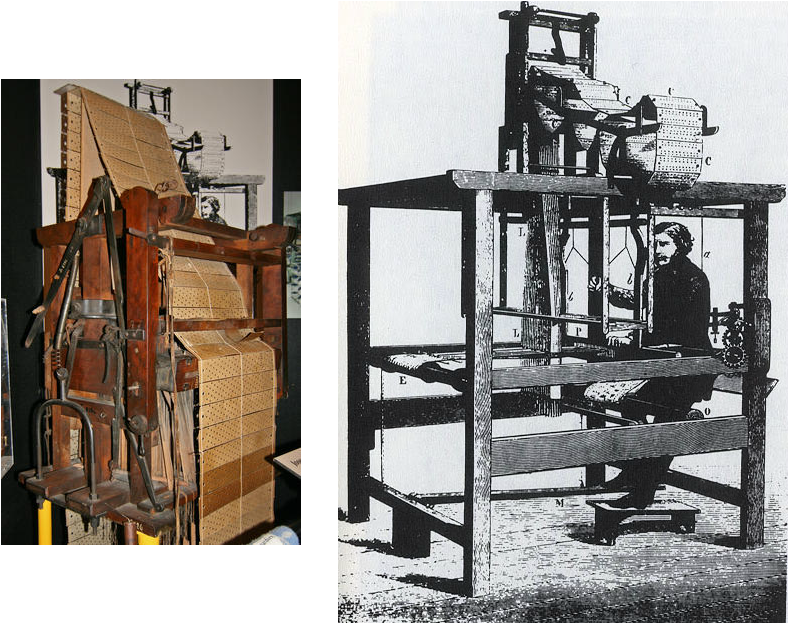
Do people still read economic history? Nonsense!!!Do people still believe this nonsense? — Mikie
How about the...
a) Aviation industry?


b) The automobile industry?
c) The computer industry?
-
The US Labor Movement (General Topic)Let's put aside for a moment the whining that government and corporations are against trade unions (which in the US they are) and look at more fundamental problems that trade unions have:
1) Entrepreneurs and entrepreneurship. The people who are basically both an employer and the employee. (Here I mean the real self-employed persons and not Uber drivers, who in my view are "entrepreneurs" just for the company to avoid taxes.) The United States has the highest percentage of entrepreneurs, those that are self employed, and can be considered the most entrepreneurial country in the World. Over every tenth in the American workforce is an entrepreneur. Then there are the companies which are run by a family: again here the relation that the "employer" and the "employee" have is far more than just a work related matter. Small family enterprises don't fit the typical view of the greedy employer who steels from the employee.
2) Trade unions have been bureaucratic and slow to spread when totally new industries appear. The reason is quite logical: a new industry is created by inventors and entrepreneurs in garages or similar tiny enterprises. Extremely seldom can huge corporations invent something totally new and thus create totally new fields of industry or service. At start there usually are no huge corporations... it only through time comes to that through competition. And the fact is that trade unions are concentrated in sectors where there are large companies or a single entity like the government. Again for this there is a rational reason: in a company of less than ten people, it's far more easier for the individual worker to approach the "employer" than in a corporation of 20 000 or more. For a trade union to bargain few with big companies is easier than to approach thousands of smaller companies. -
The Atomists
Answering the OP, the fundamental issue from Ancient philosophy is exactly to read Parmenides by Plato. I think you would have to refer to that one. As it states in Parmenides, we don't have the book from Zeno anymore and Plato himself opposed the Eleatic School. Hence our understanding of the Eleatic School is very thin. That @180 Proof calls it sophistry is the mainstream view, although looking at the history of mathematics after the Greeks, the Eleatic schools counterargument was indeed valid. How much you can built a philosophical view upon it is another question.At best, antiquated Parmenidean sophistry. — 180 Proof
Mathematics overcame this basically only with limits and the modern interpretation of infinitesimals. That happened far later. And these findings would have surprised the Ancient Greeks, just like they were surprised to find irrational numbers themselves (as they first thought that math had to be so perfect that every number had to be rational). -
Nobody's talking about the Aliens
And then, of course, you have the actual witnesses, the pilots. But what do they know about encounters in the air. :snicker:If that was what it was, wouldn't NASA have figured that out? — RogueAI
The pilots btw. said that the biggest obstacle was simply to report the fact in fear that they would be laughed upon or at worst grounded. -
Nobody's talking about the AliensI think now it's politically correct for authorities to remind that we don't know. Like not jumping to conclusions or so.
-
Nobody's talking about the AliensDo notice that there has already been a discussion on the PF in the thread UFO's by @Michael after the Senate inquiry into the subject just two months ago.
I think that the Mexican government saw this and wanted also to discuss such interestingly exotic subjects. So now you have TWO parliamentary institutions that have discussed UFO's and alien life. That's very, very interesting. That's how it would go...
Anyway, I think there's been extensive discussion about the sightings especially after the US armed forces did release footage and the fighter pilots were interviewed (and weren't kicked out of their jobs and downplayed). Mr David Grusch just put it a little bit more to tinfoil hat territory, but then was the also the Mexican Congress also.
First it's laugh, then it's simply silence, then it's already old news as things were revealed / discovered years ago...
(I think the threads should be joined...) -
Ukraine CrisisBasically there hasn't been any response to Finland and Sweden (when the time comes) joining NATO. And yes, it's been quite empty on the other side of the border, even if naturally Russia has stated it will increase it's forces on the Finnish border. Hence now, luckily for us Finns, it's been a No Action Talk Only -response from Putin.
Finnish military analysts have estimated that basically Russia needs a decade to recover from the war. There is absolutely no denying that Russia has lost huge amounts of equipment and manpower. Of course putting all the resources to serve the military-industrial complex and increase arms production is totally possible for Russia as it's a political choice, yet that has a huge effect on the welfare of Russian people. And we shouldn't forget that when Putin came into power, the Russian armed forces were a catastrophe, basically a shell of the Soviet Armed forces where basically only the strategic rocket forces ad been taken care of. It took 20 years and a higher oil price for Putin do something about it. And now he is in a war, hence shouldn't underestimate the Russians:
(Business Insider, Sep 14th 2023) Before the country invaded Ukraine, a senior Western defense official told The Times that Russia could make 100 tanks a year; now they're averaging 200.
Western officials told the outlet that Russia is on track to manufacture two million artillery shells a year, which is twice as many as Western intelligence originally estimated it could make before the war.
Can Russia economically do it? Here we should remember that actually a nation going on a war footing (without it's infrastructure and cities being bombed to rubble) makes economic indicators go haywire. For example during WW2, during a time when rationing was introduced to Americans, manufacturing of private cars was stopped etc, the economy just skyrocketed (with the debt also).
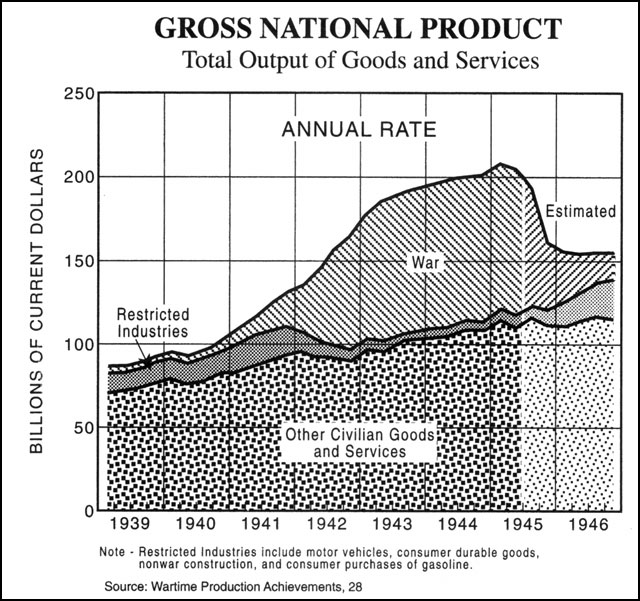
Even if GNP is not a common indicator, that the total output of goods and services OVER DOUBLED in six years (and then came off a cliff) tells just why economists usually start from 1946 and never produce longer statistics that include wartime to peacetime.
Of course Western defense spending has gone up. I think in Finland the defense spending has grown about 45% and reservists are training such size and intensity never seen before, actually. And I don't think Finland isn't the biggest here, Poland has a massive weapons procurement plan underway. -
India, that is, Bharat
Well, one can always be an optimist and look at what is good and what really bad things have not happened. And the easiest way is to put our present problems into a historical context where our problems will look small and not so dangerous.A possibility nobody can rationally deny. Nonetheless, I do feel that it will not be long enough to tire out the truth completely. — Existential Hope
When it comes to India (Bhurat), you haven't had a nuclear war with Pakistan and seems that the two countries have learnt to play their version of a nuclear standoff. And then your country has managed to delicately stay in your policy of being nonaligned and has continued to be in terms with both the West and Russia and China (even if with the last one you do have a little trouble in the Himalayas).
We in the West aren't hearing about the Indian economy collapsing or it soon collapsing, anything about the Naxalite-Maoist insurgency or mass killings. The last large famine India endured was in 1943 and the last small famine happened in 1966-1967 in Bihar. If bickering politicians is the only thing, then the future looks very bright. Poverty has decreased, population growth isn't a problem. Even if there is poverty and corruption, those aren't something new in India. No news is good news. -
India, that is, Bharat
And what does it tell when the name of your capital has been changed six times?The thing that I dislike about name-change campaigns is that they are
a) campaigns conducted for some ulterior motive
b) usually in the interest of a small but strongly motivated group
c) often leveraged with shame and guilt whether deserved or not — BC
The city that now is Kazakhstan's capital has been named Akmolinsk, Tselinograd, Akmola, Nur-Sultan and now is called Astana. It became the capital only in 1997 and since then has gone through the last three names. A lot of honoring has been done in that country, I guess.
Especially when the city / country isn't conquered, but continues as earlier, changing names gives the impression that the name hasn't been important and people don't have much attachment to it. (Just try to get the people of Rome to change the name of their city) It then can be changed either because political correctness or giving someone (something) this grandiose honour of having a city or a place called after them.
It's a similar story like when have the urge to take away statues.
Unfortunately I feel there's still a long road on this same path before that better tomorrow.You're quite right about the unavoidable nature of those afflictions. May we see a better tomorrow. — Existential Hope -
India, that is, Bharat
India is part of the global community and thus totally open to the influences of polarization and populism just like Finland, UK or the USA are.Even if the opposition chose the name (and the hyper-nationalism of the ruling government that tends to portray opponents as anti-nationals may have played a role in this decision), one would have expected a mature response from people who claim to cherish the nation's rich heritage. Instead, we had to weal with words like these: — Existential Hope
Populism sells and political parties see polarization as a way to get votes. Maturity doesn't sell. Lame! It's something not just happening there. -
Donald Trump (All General Trump Conversations Here)
The US can experience political mass shootings as uh, it's now experiencing mass shootings. Likely they will be downplayed, because nobody likes that the going is something like in a Third World country. And never underestimate what kind of a police state the US already is and can be.I don't think there will be civil war, but this is not to say there will not be violence and bullets. Two reasons I think things will not escalate to war is that the trumpster "patriots" are not significant enough in numbers or bullets. — Fooloso4
The most stupid thing the Democrats likely will do is to portray them as people who start a civil war. That just is condescending nonsense and outright propaganda and won't do them any good.
Besides, the Trumpster won't lead his followers into a civil war, because he's not a leader, just a great populist, yet in the end just a whiner. He genuinely had a chance to make an autocoup and would have the crowd there to make seem like a revolution and what happened? The Secret Service simply drove him off to the White House, even if he demanded otherwise. Then he just stared at the TV at his followers invading Capitol Hill and did nothing. Finally he tweeted for them to calm down.
Yeah, that is NOT a leader in a civil war. Those kind of leaders have to have firm belief in their cause and the will to kill a lot of people.
But semiautomatic rifles in a crowded area can kill a lot of people.
ssu

Start FollowingSend a Message
- Other sites we like
- Social media
- Terms of Service
- Sign In
- Created with PlushForums
- © 2026 The Philosophy Forum