
Comments
-
Ultimatum GameAnother example, which shows what I'm talking about is the following game (which I learnt in economics class in the university), which we could even try to play here:
Participants pick any number they want between 1 and 10, then the average is calculated from the answers and divided by two. Who gets closest this number wins.
Does any want to play? I will answer if at least two play this (so we get what could be called an average) or the time when I read this again.
So @Banno, @Agent Smith and others, try your luck and give a number! -
Ultimatum Game
This is a classic example of a simple game when done with people has far more to it that simple math would apply. The obvous place where it went wrong is here:What this shows is that ubiquitously, folk do not make decisions on the basis of rationally maximising their self-interest. Some other factor intervenes. What that is, is open to further research. — Banno
. To keep the money, I must divide it with you. I could give you a dollar and keep nine, and we would both be better off - you get a dollar that you would otherwise not receive, I get nine dollars. — Banno
As already said on the first page, there's more to a game when you divide money among people. There simply ought to be a reason why you would get somehow more than others: you found or organized the event, somehow you have more claim to the money. In fact, it could be that the other person thinks it's right for you to get the nine dollars, if he or she thinks it's just.
Hence the economists would say that people maximize utility, not cash. When dividing money among people, in that utility there is also how others view you: do you seem to be fair and respectable or are you a greedy bastard.
How much is what people think of you worth?
Eight dollars? -
Ukraine Crisisre you seriously suggesting that your preferred yhriry — Isaac
what is yhiry?
What a dictator of Russia says and does isn't an opinion. -
Ukraine Crisis
I think that "opinion" is quite well shown from the actions and the reasons given to those actions by the leaders of Russia. Putin's article Article by Vladimir Putin ”On the Historical Unity of Russians and Ukrainians“ shows perfectly what he thought of the Ukrainian state. Among the multitude of other obvious examples.What Russia wanted is not a fact of history, it's an opinion. — Isaac
Hence when the attacker annexes parts of a country, calls it artificial and says it has been all along Russian, it's not just an opinion. What Vladimir Putin has done, has said, has implemented as policy, is far more than just "opinion". But accepting what Putin has done and said breaks with your agenda of saying that everything is the fault of the US. (And note, you don't say US administration)
Now for your strawman that we cannot talk about countries and obviously mean their leadership. But somehow you talk about the US having an agenda.Not s single historian in the world would claim that a nation's intentions are facts of history. — Isaac
People disagree about the World being round shaped. Some say it's flat.People are disagreeing. — Isaac -
Ukraine Crisis
You are either forgetting or simply denying (which is likely) that these "vital interests" meant also obtaining territories from Ukraine and Ukraine to be tightly under Russian control... not just being neutral.Russian vital interests were protected with a neutral Ukraine. — Tzeentch
But admitting these facts somehow go against the NATO enlargement argument, so you keep denying them.
Seems that you don't know much about post-soviet era history of Russo-Ukrainian relations. Russia wanted to have Ukraine under it's influence, even if it was actually neutral, as actually the country was in the 1990's and the 2000's, before the current war. (Wanting to join NATO, by one Ukrainian president, and getting vague promises of something in the future doesn't make the country a NATO member.)There'd be little to gain and much to lose for them to change that status quo, so incorporating it into their sphere of influence would not have been desirable at all. — Tzeentch -
Brexit
We here don't have that problem with our politicians, they aren't corrupt, people feel they are simply just incompetent (in what democracy people wouldn't feel so?). Ordinary folks think that our politicians are far too naive and the "South-European countries" simply fuck us when it comes to financing the EU budgets, especially the Greeks with all the assistance they have gotten.But it is better being in the club than outside. We accept that thanks to EU, Spain experienced a big development and I am thankful, even I wish EU organisms control us rigorously because our politicians tend to be corrupt, inefficient and incompetent (at least, more than the rest) — javi2541997
But it should be totally evident to all that European countries are so different mentally and economically that the idea of a real federation, just like with the US, isn't going to happen. Yet as a confederation of independent states, which it actually is, it works quite well... starting with the fact Europeans usually have been fighting each other. -
BrexitJoining was an attempt to create a new European Empire, and when the French and Germans refused to be subserviently grateful for our presence, they became an oppressive bureaucracy responsible for holding us back. It's the same thinking that considers our independence from Europe is a great boon and natural right, but Scotland's independence from England is insulting and unthinkable. It's all sentimentality, and that's why it has the consistency of porridge - thick, but easily stirred. — unenlightened
I think you shouldn't overestimate this. First of all, even if they were the eurosceptics right from the start in the Conservative Party (starting with Thatcher), the Conservative Party (and the Labor Party) have actually been for the EU and EU membership until Brexit happened. It's this unfortunate miscalculation that the Conservative leadership made that the Brexit vote wouldn't go the way they planned and give the opportunity for the populists and for the people to give a finger to the elite.
Besides, I don't think that there was so much hubris among the British politicians when joining an organization like the EU that they could walz in and take control: The UK had been in the UN and other organizations, so the idea of the UK taking the control of EU was a silly, idiotic idea.
This isn't imperialism, this is basically the English attitude of seeing them apart from the "Continental Europe". You have to be filthy rich like Norway or the Swiss to tag along yet not be a member. And apart from I guess France and the Benelux countries, every goddam EU memberstate feels being apart from the EU core. Germany has it's own problems in the closet, for Spain and Portugal Brussel's is far away, so is this for the other Southern European countries, the East European countries and the Nordic members of EU. Us versus Brussells is an universal attitude, not something just in the English mind.
And actually the British Brexit example has shown many European countries how stupid the "independence" is from the EU, how much workforce integration there already is and how the positive aspects of EU membership still do outweigh the negative aspects. -
Brexit
How is joining (and then exiting) the European Union the last gasp of Colonial sentimentality I don't understand. But you are right that during Elizabeth II's reign the last traces of the British Empire, and the aspirations for that empire came to an end. The reign of Charles III is really the post-imperial UK, even I would put the final nail was put into the coffin of the Empire in the Suez crisis.Brexit is the thus the last gasp of Colonial sentimentality and the final end of British dominance in the world, orchestrated by the same buccaneering (rapaciously exploiting) spirit that built the Empire in the first place, turned full force on the populace and accumulated wealth of the mother country. — unenlightened
You put so much on the shoulders of ex-vikings, the Normans? The invasions for Ireland started only in the 12th Century and I don't know just how English were the Norman and the Plantagenet kings were.The buccaneering started in 1066. A thousand years of empire. — Punshhh
And I'm not so sure if English rulers would have been less bellicose if Harold Godwinson would have won the battle of Hastings. But the English surely have fought nearly everybody anywhere, yet drinking that cup of tea and all the polite English manners makes them not seem so bellicose as they actually have been in history. (For some reason it's the German who get the bad reputation.) -
Ukraine Crisis
But the reasons, arguments and agenda of the politicians and the military are.The internal motives and beliefs of the entire population of Sweden and Finland is neither empirically demonstrable, nor agreed upon by all experts in the field. — Isaac
And simply sidelining them here is simply wrong. It's you who is counting 1+1=1, when you argue that everything evolves around the US and the security issues of European countries don't matter in the equation when they have applied to NATO. -
Ukraine Crisis
As obviously things are kept out of public, it naturally begs the question who did it? Hence the US is totally one candidate in this.Of course, no evidence yet doesn't mean there isn't any but I think, once again, we really don't know who's done it and we need to wait it out. I do think the hypothesis the US did it needs to be considered and investigated. If they didn't do it and give full cooperation then disculpatory evidence should be relatively easy to find. — Benkei
Wouldn't actually be anything new for the US. During the Cold War Sweden got humiliated after a Russian sub moving on the surface got stuck on a rock on Swedish waters very close to their main naval base. Afterwards the Swedes were eagerly hunting for submarines (and mini-submarines) on their waters. Later it seems that at least some of these incidents were done by NATO submarines and if so, as the incidents were blamed on the Soviet Union, it was quite a successful covert operation. See here.
(A humiliating incident for both Sweden and the Soviet Union during the Cold War:)
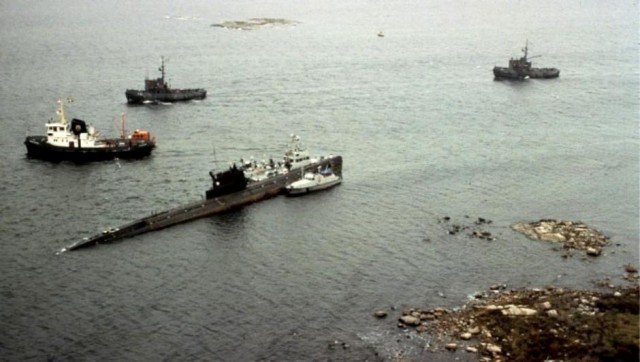
The reason why would Russia blow up it's own gas pipeline is beyond me. Hence I think that the US behind this is totally possible. Luckily the US is system is so prone to leaks at least in the historical perspective, decades from now as people write their memoirs, is that we'll know this in future history books. -
Ukraine Crisis
Yes, it was Trump that was against this.So can you explain for us why the US pushed to the point of diplomatic crisis against Nordstream2, if they had so little to gain? — Isaac
Of course in your logic you forget what and why that changed, just like why Sweden left it's foreign policy stance that had been the same since Napoleons times.
With no February 24th, Nordstream lines would be open and Sweden and Finland not trying to join NATO. -
Ukraine Crisis
Yeah sure, you know better what Finns and Swedes think. :roll:forgetting disagreeing totally [about] the motivation and agenda of the European countries themselves.
— ssu
Fixed that for you. — Isaac -
Ukraine CrisisWell, it has changed. Eu statistics from 2020:
In 2020, almost three quarters of the extra-EU crude oil imports came from Russia (29 %), the United States (9 %), Norway (8 %), Saudi Arabia and the United Kingdom (both 7 %) as well as Kazakhstan and Nigeria (both 6 %). A similar analysis shows that over three quarters of the EU's imports of natural gas came from Russia (43 %), Norway (21 %), Algeria (8 %) and Qatar (5 %), while more than half of solid fossil fuel (mostly coal) imports originated from Russia (54 %), followed by the United States (16 %) and Australia (14 %).
So finally they've gotten those terminals built. -
Top Ten Favorite Films
I agree with what you say. The actions of Disney come to mind as a perfect example. A company that had the valuable "Marvel-universe" and an American icon, the Star Wars films, to make money. And now they are in trouble.
Even if there are, especially with Pixar, still great animated films (if computer-made movies can be said to be animated). But usually the corporate system just makes disasters and lousy reurgitated stuff. In fact George Lucas in a prior interview when he hadn't yet sold Lucasfilm yet to Disney pointed out that Disney wanted to make a rehash Episode IV... which in the end years after they surely did with Episode VII and the complete shitshow of the others.
I think it isn't anymore about the wokeness after the traumatic scandals of Harvey Weinstein and me too -era. It's basically that the corporate system doesn't take anymore chances and are totally happy with mediocre films.
It's statistical reasoning, which makes films so bad.
First of all, they aren't made for the movie-lovers, but the occasional movie goer who goes to a film only once or twice a year. And to get this infrequent moviegoer to get up and go to the cinema, you have to have a huge media blitz that makes the film nearly a phenomenon which "everybody is talking about", such like Avatar etc. Hence the media campaign takes a huge chunk of the budget and when the budgets are colossal, no reason to make something that isn't untried.
And because films aren't made for those who like films, who know the stories and previous films and can be critical, we get the trash we have. Hollywood assumes that these people just to tag along and go to see it even if it's crap... or that the film gets free publicity from "toxic fans" having something against it. -
Ukraine Crisis
I think for the East European countries and the Baltic States wanting to join NATO had the membership everything to do with the threat of Russia. Which now also Sweden and Finland have seen, thanks to February 24th 2022.Exactly. NATO enlargement had nothing to do with a threat from Russia, but the United States jealously guarding its position at the top. — Tzeentch
Typical for those obsessed about the US: forgetting totally the motivation and agenda of the European countries themselves. -
Ukraine Crisis
It's basically Gulf States like Qatar and a myriad of providers have replaced Russia.Minor? Weaning Europe of Russian gas in favour of North American gas is not minor in my book. It's tens of billions of dollars in value per year. — Benkei
The problem with US gas (and oil) is that the production hasn't the infrastructure yet to be exported to Europe. Also they have had regulatory obstacles. So a country like Qatar is the real winner of embargoes. -
BrexitSure.
For such complex event as Brexit giving single reason is simply stupid. Remote/proximate or major/minor reasons is the way to go. And of course, it's the questions one asks that define what you answer. -
Top Ten Favorite FilmsI think you may be right in putting the decline starting in the 2010's.
Or the scary issue is when people read less. You see, with reading you really have to use your imagination: you are confronted only with words in a book, you have to create the image yourself of what is happening. But especially now, when listening to a book isn't difficult (all that mess with cassette tapes etc.) it's far more easy to listen to a book and do something else when you are listening.Note: I am sorry for being a millennial and I assume part of the responsibility of my weak generation. For example: I don't know anyone of my age who watched Yojimbo or had read Yukio Mishima, for example. — javi2541997
Total book reading is declining significantly, although not at the rate of literary reading.
■ The percentage of the U.S. adult population reading any books has declined by -7 percent over the past decade.
Reading the social web and it's messaging isn't like reading a book. I think the reason is that just watching films doesn't create your imagination. So you won't have totally new ideas, I guess. And you don't have the knowledge about the classic literature, where you find the great stories. -
Brexit
Someone who has a time of age named after them surely has a legacy.Does Queen Victoria not have a legacy? — Agent Smith
But how much of that is of her political decisions is a different thing. I assume that later Elizabeth II's reign will be talked about the Elizabethan era too. Especially if Britain in the time of the current and future monarchs is very different. -
Ukraine Crisis
Neocons were actually a tiny cabal, that just got power during younger Bush. You have more longer schools of foreign policy than that, starting from Wilsonianism, the Jeffersonian school, the on-and-off "isolationism" of the US.The neoconservative lobby, aka "the Blob" is probably the most powerful entity in US politics. — Tzeentch -
BrexitYou then should convince us just why Queen Victoria's policies have still effect today, and having more effect than for example the decision of the conservative party of the present holding a referendum on the issue thinking it won't get the reply from the people that it did.
Simple as that.
And I would think the prime ministers and the leaders (political and economic) and their policies and decisions would be more important as Queen Victoria wasn't an autocrat. -
Donald Trump (All General Trump Conversations Here)
And a great example of where US politics has gone.This thread has turned out to be a nice little compendium of the presumption of guilt and its propaganda. 6 years of hoax, fake news, and nothingburgers. — NOS4A2
A populist politician doesn't and actually shouldn't be a true statesman as those who support populism don't actually want wise capable statesmen, but just an image of one. -
Brexit
This is a Philosophy forum, so you know that causation isn't structurally related (or confined) to time, especially a time limit.Shouldn't there be some time limit to causation? I haven't heard of cases where a man hit on the head 50 years ago pressing charges against the assailant for a brain hemorrhage now. — Agent Smith
But politicians use extensively (or abuse) the short memory of the public. Hence policies that didn't work the last time can be used again in the same fashion, when it's just old people or historians noticing that the present won't work because it's already tried.
(A very important thing when you have stagflation and negative real interest rates, btw.) -
Top Ten Favorite FilmsAnd a question for everyone.
Have I just become old and cranky, but are especially Hollywood films become worse? What do you think about current films compared to 20th Century films? Especially the last few years have seem to me as a quite downer when it comes to great films.
When we have now six pages of lists of great movies, there's not so many movies from the last ten years (or this milennia), even if that starts to be quite a long time already. Seems that some are from the first decade of this Century, but not much else. Or is the reason that we haven't gotten fond of the new ones? -
Donald Trump (All General Trump Conversations Here)First contender to Trump.
Or perhaps later the vice-presidential nominee?

-
Ukraine Crisis
Do notice that all armed forces combined Russia the size is very large. But the forces are deliberately cut into different services as one singular entity wouldn't pose a threat to Putin. Hence the National Guard (the old MVD) is roughly the same size as the Russian Ground forces. Add to this the Wagner group, which has no legal base in Russia (hence Putin can do away with it, if he would want to do that) and can do basically whatever (for example hire foreigners and prison inmates and shoot them, if they try to escape the war).For a gigantic country like Russia that is very tiny. With it they struggled conquering and occupying only a few regions of Ukraine. It didn't come close to being a threat to NATO. They could double that, and it still wouldn't be. — Tzeentch
A powerful centralized Russian Army would be very beneficial in fighting a war, but would be a potential threat to Putin. Domestic politics comes always first. -
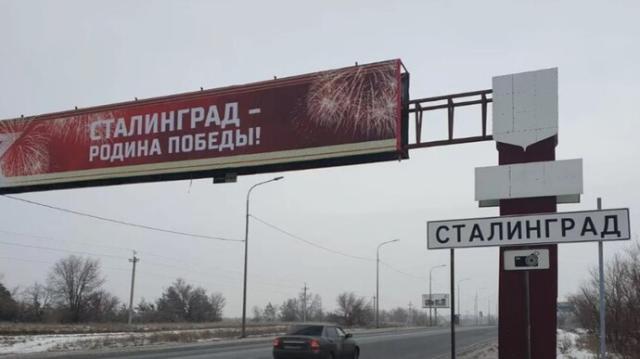
Ukraine CrisisThe country is going back to it's old ways rapidly. In celebration of the 1943 victory in Stalingrad, Volgograd was named again Stalingrad, at least for the festivities, and brand new busts of Stalin are made. Quite in line with banning human rights watch groups, that were accepted by the Soviet Union.
-
The Economic Pie
This wouldn't be a problem assuming the focus would be in the long run, but of course the classic corporate raider tactics shows that this can be quite harmful (basically when the raider first gets a huge debt to buy the company, thus making a usually low debt company drowning in debt and then starts selling parts of the company away to bolster the dividends/winnings and pay the debt ruining the corporation in the long run.Don't forget the perverted incentive for directors, who are appointed by shareholders, to keep shareholders happy. In a very real sense the more dividend they pay out, the higher their salary will be. — Benkei -
Ukraine Crisis
Except that "Rogue states", those that are deemed to be one by the West, that do have actual nuclear weapons aren't attacked by the US and it's allies. Not at least in the way that would call for a retaliatory nuclear strike. (For example Iran has attacked US bases with conventional artillery missiles under the Trump administration.) Hence nuclear deterrence works.As we can see whomsoever it was that, long time ago, claimed nuclear weapons are pointless, is right on the money. Nobody can use it. It's just there for show - a weapon that can't be used is useless, oui? — Agent Smith
I think if Russia wouldn't have nuclear weapons, NATO would have intervened with a no-fly-zone. At least in Western Ukraine out of the range of Russian SAM systems located in Russia.
Nuclear weapons actually work perfectly well in their role of deterrence... even if the threat of "pre-emptive attacks" because of faulty alarms given by machines have sometimes put as to the brink of nuclear disaster and nobody has noticed.
And notice how people will adapt: once they are used again, then that's the reality we live in. Period. -
Ukraine Crisis
Again nonsense from you. I think there was an evident and obvious desire to make changes from the Soviet system. Even if you think it was so much better.Nothing in that establishes that those countries made those changes because of western influence, or were accepted into the western sphere because of an internal desire to make those changes. — Isaac
Hence these countries left Marxism-Leninism and Soviet socialism. Except those who stayed in the Russian sphere of influence (Belarus, Transnistria etc...), where usually the reforms, if any, brought into power oligarchs close to the leader into power.
In fact Ukraine was more prosperous per capita than Poland, which now is far richer than either Ukraine or Belarus. So it's no wonder that it has been Ukraine that has had the uprisings against how politics has gone in the country and that Ukrainians do want to join the West and the EU:
The simply undeniable fact is that those countries who have joined EU and the West have prospered and those who have been "independent" but de facto under the Russia sphere of influence have had it quite bad. -
Ukraine Crisis
Both for joining EU and NATO having problems with human rights is an issue. And the emphasis in is joining, because then you do have (and did have) very much focus on the situation and members countries could use (and actually did use) those indicators as reasons why not to give membership. In EU membership talks human rights has been the obvious unsolved problem with Turkey's membership, but also in NATO membership in the environment after the collapse of the Soviet Union created.Secondly, also those post-Soviet republics which didn’t join EU/NATO experienced a boost according to those charts in the earliest years but then they didn’t keep the trend or degraded sharply. One might need to investigate domestic and foreign factors accounting for those trends (as I pointed out many times). Yet we have plausible reasons to suppose EU/NATO offered enough benefits to keep that trend relatively stable, even if we can not see that from those charts. — neomac
As the The Commission on Security and Cooperation in Europe notes about NATO:
The NATO Participation Act of 1994 (PL 103-447) provided a reasonable framework for addressing concerns about NATO enlargement, consistent with U.S. interests in ensuring stability in Europe. The law lists a variety of criteria, such as respect for democratic principles and human rights enshrined in the Helsinki Final Act, against which to evaluate the suitability of prospective candidates for NATO membership. The Act stipulates that participants in the PfP should be invited to become full NATO members if they... remain committed to protecting the rights of all their citizens.... Under section 203, a program of assistance was established to provide designated emerging democracies with the tools necessary to facilitate their transition to full NATO membership.
The NATO Enlargement Facilitation Act of 1996 (PL 104-208) included an unqualified statement that the protection and promotion of fundamental freedoms and human rights are integral aspects of genuine security. The law also makes clear that the human rights records of emerging democracies in Central and Eastern Europe interested in joining NATO should be evaluated in light of the obligations and commitments of these countries under the U.N. Charter, the Universal Declaration of Human Rights, and the Helsinki Final Act.
But after gaining membership, you can have populists coming into power who don't give a damn to human rights or see them just a way for the West to control their country's sovereignty. Hence you have the problems like the EU is having with Hungary and Orban. And of course Turkey under Erdogan has become a somewhat problematic member of NATO. -
Ukraine Crisis
Wrong.No one here has argued that the provocation argument is true "because John Mersheimer said so and he's an expert". Not a single comment has been to that effect. — Isaac
You yourself have admitted it. Just twelve days ago.
You champion Mearsheimer's theory of International Relations as the best explanation of the events unfolding in Ukraine. You discount previous behavior by Russia as indicative of anything happening in this conflict.
— Paine
Yes. What's that got to do with the argument here? — Isaac
:smile: -
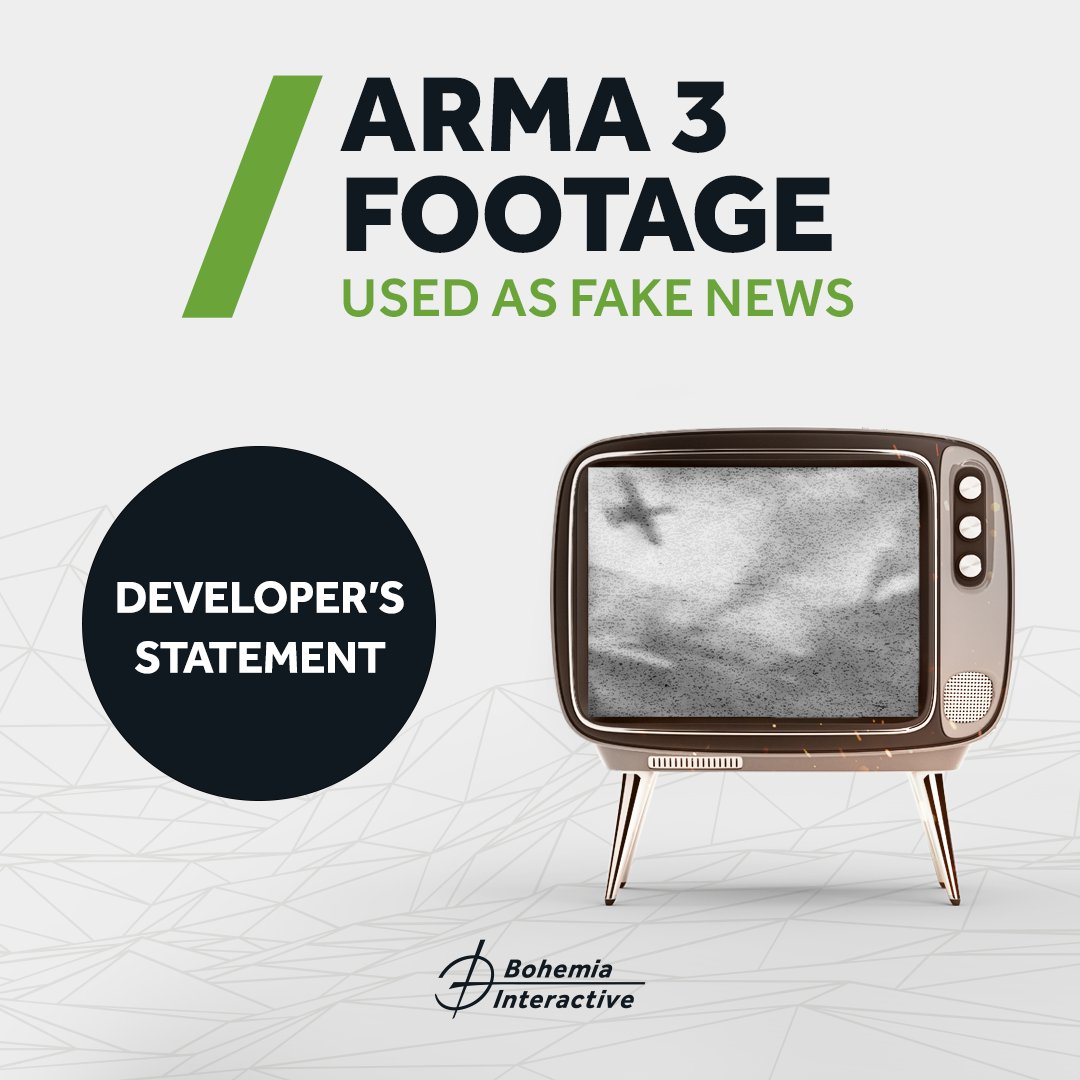
Ukraine CrisisWhat they have used quite a lot is Armed Assault -series (Arma 3). Typically been pro-Russian stuff. Even if IR-camera footage is blurry, anyone who has played the game can immediately notice the obvious signs of it.
Prague, 28th November 2022 – Developers from the independent Czech game development studio Bohemia Interactive would like to address the recent circulation of videos which were originally taken from their game Arma 3, and falsely used as footage from real-life conflicts, mainly from the current war in Ukraine. These user-made videos have the potential to go viral, and are massively shared by social media users; sometimes even by various mainstream media or official government institutions worldwide. The Arma 3 dev team would like to take this opportunity to point out how the general public can distinguish such in-game videos from real-world footage.
How to distinguish in-game videos from real-world footage (tips from the developers):
Very low resolution
Even dated smartphones have the ability to provide videos in HD quality. Fake videos are usually of much lower quality, and are intentionally pixelated and blurry to hide the fact that they’re taken from a video game.
Shaky camera
To add dramatic effect, these videos are often not captured in-game. Authors film a computer screen with the game running in low quality and with an exaggerated camera shake.
Often takes place in the dark / at night
The footage is often dark in order to hide the video game scene’s insufficient level of detail.
Mostly without sound
In-game sound effects are often distinguishable from reality.
Doesn't feature people in motion
While the game can simulate the movement of military vehicles relatively realistically, capturing natural looking humans in motion is still very difficult, even for the most modern of games.
Heads Up Display (HUD) elements visible
Sometimes the game’s user interfaces, such as weapon selection, ammunition counters, vehicle status, in-game messages, etc. are visible. These commonly appear at the edges or in the corners of the footage.
Unnatural particle effects
Even the most modern games have a problem with naturally depicting explosions, smoke, fire, and dust, as well as how they’re affected by environmental conditions. Look for oddly separated cloudlets in particular.
Unrealistic vehicles, uniforms, equipment
People with advanced military equipment knowledge can recognize the use of unrealistic military assets for a given conflict. For instance, in one widely spread fake video, the US air defense system C-RAM shoots down a US A-10 ground attack plane. Units can also display non-authentic insignias, camouflage, etc.
Lastly, we would like to ask the players and content creators of Arma 3 to use their game footage responsibly.
-
Ukraine CrisisLol, How? And I've shown that a lot of experts don't agree with him on this issue.
Why not try to engaging on the actual issues and not "this is true, because John Mersheimer said so and he's an expert". -
Ukraine CrisisIf you would actually follow what people like I write, you would have noticed that on some issues I agree with Mearsheimer, Sachs and even with Chomsky. And in some issue I hold a different view. But these change by the issue at hand and the differences between them and others are many times very subtle.
But perhaps you are the type who either puts someone on a pedestal and agrees everything what they say and damns them others the lowest hell and avoids everything they say as the plague. At least that I'm getting from you... -
Ukraine Crisis
And what you just said means that it wasn't a US staged coup. And the post-coup government lasted for few months until the elections in the same year where the extreme-right lost."All I have" are US state officials confessing to funneling billions of USD to Ukraine, and being deeply involved in the construction of the post-coup government. — Tzeentch
Let's remember that the Revolution of Dignity started from a foreign trade policy issue, which inherently made the EU part of this.In what world would you ask "Is that all?" when this happens in a supposedly democratic country? — Tzeentch
And your view is largely irrelevant, as people understand that this war started from the annexation of Crimea and the separatism in the Donbas area in 2014.Whether you accept that the United States played a role in the coup is largely irrelevant, because this is more than enough proof of American meddling in Ukraine, which as many have argued is what sparked this conflict. — Tzeentch -
The Economic Pie
I think there are several reasons just why the corporate manager level transformed from high paid employees to a class of their own in the US. First is that because of institutional investors (mutual funds, pension funds, etc) in ownership, hence corporations owning each other, and the emergence of an trained leadership which aren't entrepreneur-owners, but have started their career through an academic training in business managerial skills. Hence there has become this class of executives that have the real power in the corporation. In the 19th Century and still in young industries you the Bill Gates / Elon Musk types, individuals that have started their own companies and created them to be giants. These are typically replace professional career managers, who usually haven't been entrepreneurs or done their own startups.I’m trying to find more information on the history of CEO compensation and changes in performance metrics. I think the shift started around 1990 or so. — Mikie
The second reason is that the labour movement in the US simply seems to have been crushed. It hasn't helped that labour unions were related to organized crime and their political power has been related only to work with one political party, but not much with the dominating party.
That the laws have been made to favor the corporate elites is a consequence of getting power, but that has happened thanks to the above reasons. -
Ukraine Crisis
Facts aren't propaganda.Russia is opposed to the US. It's going to promote any story that reflects negatively on the US.
If you're going to repress all Russian propaganda you're effectively denying all opposition to the US, since all negative actions of the US will undoubtedly figure in Russian propaganda. — Isaac
I think that Putin has mentioned himself for example PNAC, but you don't have to refer Putin on it, you can easily refer to this perfect example of US imperialism by the actual documents of the think tank and all the historical research done on it and the actions of it's members. Or just listen to the famous interviews that Wesley Clarke gave on the neocon adventurism (which he after dems got into power absolutely hates to be reminded of). -
Ukraine Crisis
Don't put words in my mouth. What I'm against is the reurgitation of Russian propaganda and to say that the US staged the Revolution of Dignity, not that it (the US) tried to influence Ukrainian actors (and those actors trying to get help from the US)when the protests were already under way, but that the US literally staged a coup.↪ssu scarcely acknowledged the possibility of US involvement. — Tzeentch
I think we a had already this discussion 11 months ago. And then (and now) nothing else is given, but the Nuland tapes and articles from that time as "proof" of this conspiracy theory of a "US coup". -
The Economic Pie
It's an example of the obsessive short term view of focusing on the next quarter.Buybacks should be banned immediately.
More evidence of capitalism gone off the rails. Thanks, Reagan. — Mikie
Buybacks are a stupid way to use money: all it takes is a recession or a big market scare and all that is lost when the stock value plummets along with every other stock when investors have to sell when they get margin calls.
Basically a company or corporation shouldn't have to worry about stock prices. It's the IPO's and share offerings that they basically get the money. But when you give stock options to compensate corporate leaders, there's a huge personal interest for these people to jack up the price of the stock whatever it takes. And to do that, stock buybacks are a perfect way.

ssu

Start FollowingSend a Message
- Other sites we like
- Social media
- Terms of Service
- Sign In
- Created with PlushForums
- © 2026 The Philosophy Forum