
Comments
-
BrexitNice article, explaining simply the inevitable result of our Tory Brexit. — Punshhh
In a way Brexit has just showed the consequences of a globalized economy then made to de-globalize. The effects are easy to see...in hindsight. The root cause is that nobody defends globalism, hence either right-wing populism or left-wing populism (that can happen too, take the case of Venezuela as the example) takes over and simply creates a far bigger mess than was to be solved in the first place.
With Brexit it's partly the same as with COVID-19. Suddenly implemented huge restrictions basically cause these complex delivery systems to falter, which are the true foundations that globalization depends on. The basic problem is that the business environment made to focus on the next quarter just looks at what is profitable in the next quarter, again an idea for a globalized world. Hence with travel restrictions for example whole fleets of new passenger aircraft with long service life ahead were sold to scrap. To simply have the planes sitting on the ground and to move them a bit that the tires won't become flat was deemed far too costly. As if to rent or simply make make a concrete/asphalt parking area would be too costly for planes that is basically costs 100 million dollars to replace per item. Better to scrap the planes, get the recycling money and have no worries about the basically planned frenzy for new planes...and higher flight fares of today and tomorrow.

Perhaps a better example of this insanity can be seen in the markets when oil price went negative: people were literally giving money to people take physical oil, because naturally they weren't actually thinking of having the physical stuff, but just playing in the casino with the resource.
Brexit was this kind of experiment with populist democracy that simply made underlying problems apparent: that the UK had relied on a large foreign workforce. Brexit, In my view, was the dear child of the UKIP where then opportunist tories jumped on the populism train.
Wasn't Brexit about this? (Perhaps on the background there ought to have been a mass of truck drivers...)

Perhaps to defend the EU or any economic integration, we should simply shut all trade between countries for a month or two in the winter and then put the populist nationalists to solve the problems by purely domestic solutions. Because...globalization and free trade are so bad. The multi-national corporations are so evil. So when poorer people literally start seeing hunger and rationing food is implemented when in other places the problem is how to get rid of the produce before it becomes a safety hazard, we can all rejoice how good it is to be self reliant and buy only local produce. And how bad globalization and economic integration is. -
To What Extent Does Philosophy Replace Religion For Explanations and Meaning?Origins do have an important role, even if people are unconscious about them. I would agree that for example there isn't the societal role for the church in Western countries as before. Yet if the focus aren't the religious organizations, for example the various churches of Christianity, but the basic ideas that religions promote, religions still have a major influence compared to let's say various schools of philosophy. Perhaps the religious aspects often blend in to what commonly is viewed as "culture" or "cultural aspects" as we don't want to admit the religious undertones in them.
-
To What Extent Does Philosophy Replace Religion For Explanations and Meaning?
For many people who aren't basically religious, the foundations of what is right and wrong have come from religion, christianity, islam etc. Not from reading or learning moral philosophers, but basically what their parents have taught them. Surprisingly much of that still is based on religion, even if people aren't devote worshippers anymore and religion has lost ground.Certainly that is the case in theocracies. In the West it is generally the legal system, no? Which is often at odds with the fading fanaticisms of religious views. — Tom Storm -
To What Extent Does Philosophy Replace Religion For Explanations and Meaning?... magic trumps its logic. — 180 Proof
And that's why we talk about is as an issue of faith. If it would all be logical and provable, it wouldn't be a religion, an issue of faith. We would be talking about facts, or scientific theories.
Science (and logic) has obviously increased our ability to make sense of the World around us, yet religion will still have it's role on saying what is right and wrong, just as moral philosophy has. And in those issue there is no reason why religion would lose as it has in explaining objective reality around us (as with genesis stories etc.) -
Simulation realityWhat if our experience in life were a simulation and not reality directly, but reality is 100% identical to the simulation. When we interact with the simulation it has the same effects on reality, and when reality gives feedback it is through the simulation. Is the simulation as real as reality even as an in-between with reality, or must it be fake? — TiredThinker
The simulation is surely part of reality, just are the glasses that people wear. We surely can understand when looking at the world through glasses or not, that the perception can differ. The simulator simply cannot exist in non-reality. The link here is "it has the same effects on reality, and when reality gives feedback it is through the simulation". We wouldn't even call it a simulator, but basically remote control.
This means that we have an effect on reality through the remote control (or we have a simulator). It's easy to think about this with the example of flying a drone through a computer. As the information given back to you from the drone is quite limited (drone camera might be lousy etc), it's easy to make a computer simulator that perfectly depicts you flying by computer link a drone 20 000 ft above the sea 500 km away from you or you truly flying a drone that is flying 20 000 ft over the sea that is 500 km away by a computer. One is just an accurate flight simulator, the other one the real deal. No way for you easily to verify which thing you are doing.
Note that both examples do happen in reality. What differ are the consequences. Let's say you notice a ship below your drone, then decide to crash the drone into the ship. If you are successful in this, then you surely will notice later the difference between the simulator flying and real drone flying afterwards as likely hitting a ship with a real drone will have some consequences more than just losing a physical drone.
Consensus indeed. -
Donald Trump (All General Trump Conversations Here)I observed some time ago that if Trump were to run and actually win in 2024, then America will get the president it deserves. And then he and the monsters he attracts will eat those who voted for him. But he won't. He got by on fool-us-once, but not on twice. And he'll be too old. I await the news that he's collapsed from a stroke or died outright. As well, there are all of his crimes. Bad joss if he gets away with them. — tim wood
The real issue is that the poison of aggressive populism has taken over one major party with the extremists in control. That actually isn't going to go away. And the other side is viewing this as an threat to the existence of the Republic. Neither the hatred of each other, described with the term "polarization", or "tribalism" and the vitriolic stances will go away. Polarization is the way forward, because moderation or consensus will be balked or seen as "surrender". You see, this isn't about Trump anymore (even if this thread is about the old man): it's the way how dysfunctional US politics has become. It's hostile, paranoid and full of hate and fear. That's the way forward. Democracy doesn't function in this kind of environment. It didn't function in the Weimar Republic either.
Few seem to remember how it was with the Clinton administration. That administration went from scandal to scandal and the GOP understood that they could dominate the political scene with attacking ferociously the Clintons and going with the scandals. We then had an impeachment, which worked as a rallying cry. And somehow when wife Clinton was nominated to be the presidential candidate, the Democrats had somehow forgotten what kind of red cloth she was for the Republicans. Now the Democrats have found the similar vein with Trump. We have had many impeachments. As people know, I do think Trump was a disaster, but the way the media paints Trump as an existential threat does remind very well how the GOP playbook went with the Clintons.
And it won't get better before it gets a lot worse. Elections are going to be the dumpster fires we have witnessed already. That's the real ugly truth. -
Joe Biden (+General Biden/Harris Administration)Follow the money. — James Riley
How about following the stupidity?
The US can in it's foreign and security policy follow illogical, contradictory and unrealistic policies and create it's own alternate reality from the reality on the ground.... because a) it has an armed forces of a Superpower, b) the means to finance the large military operations with perpetual debt financing, c) a system where the foreign policy in these matters is left to the whims of a sitting president, who basically is interested on what will make him look in the next domestic elections, d) a large uninformed public who doesn't care much if the body count of servicemen is low and the most obvious reason d) the US has no counterbalance on the World stage, which would make them think twice.
Because of all the above, the US can find itself in a place like it was with Afghanistan.
The "war is a racket" argument goes just so far, because the military is also a deterrent, hence one can argue also that "peace is a racket" as arms buildup can happen without any actual conflicts. And usually those military arms races are far more lucrative for the military industrial complex. Just look at the starting arms race with China.

-
What should the EU do when Trump wins the next election?Trump made the mess even worse, yes, but the problem for the US is larger than just Trump. The political system in the US is making things worse and the polarization (basically tribalization) isn't just happening because of Trump, even if he is the main actor now on the stage.
I think Andrew Yang explains in this next interview quite well just what is wrong in the US system and why. It's a great assessment that doesn't fall into a partisan side view (even if Yang had been a democrat). A political system that gives power to radicals, a divided media and a social media that alienates people into different camps. Yang goes to detail why it is so.
Europeans should note that this turmoil in US domestic politics isn't going away any time soon. On the contrary, one arbitrary spark could flame it again. And thanks to the dominant position of the American media, we will hear it immediately also. -
Joe Biden (+General Biden/Harris Administration)
What else could the allies do when the US decides on behalf of them? They could only scramble some troops to assist the US with the debacle. Even my puny country sent some soldiers to assist with the evacuation.What you don’t mention is how it was backed by NATO and the UN Security Council, our allies. — NOS4A2
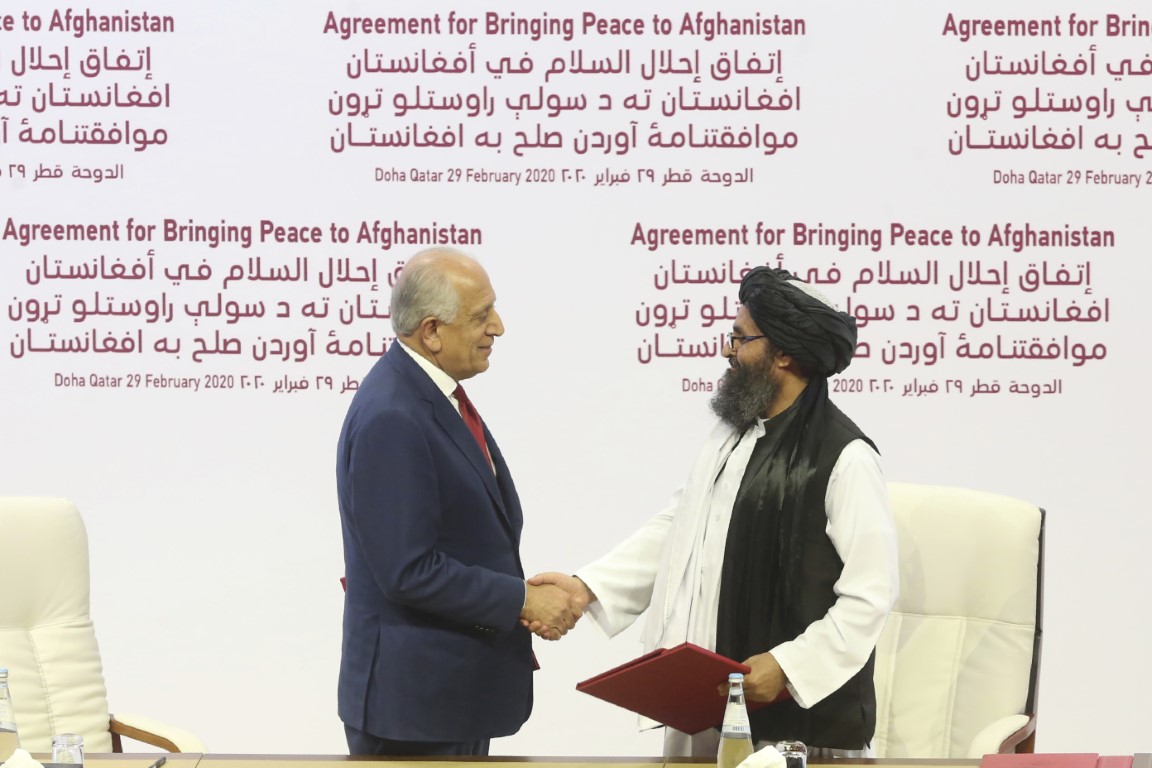
Just as Trump failed to enforce before him as there was nearly one year of Trump presidency still after the peace deal. And just what is this failure? Remember, it's just to hold talks. Nothing, absolutely nothing else. In fact, the Taliban kept their part of the deal: they did hold talks with the Afghan government. As late as July 18th this year Aljazeera could report:You don’t mention the intra-Afghan talks, anything about the process, and Biden’s failure to live up to and enforce the agreements. — NOS4A2
(see here)Delegations from the Afghan government and the Taliban said in a joint statement on Sunday that they will meet again and plan to expedite peace negotiations after two days of inconclusive talks in Doha, Al Jazeera has learned.
The negotiators from the rival sides, who have been in Doha since Saturday, said “the two sides committed to continue negotiations at a high level until a settlement is reached”.
Committed to talk....and the other side was also comitted to gain a military victory. But they surely didn't attack US troops! Just the Afghan military and others. So where actually Biden was wrong as he dutifully followed Trump's agreement?
And really, don't you think that if you would sign a peace deal, that would have to mean the cessation of hostilities? Trump, the brilliant deal maker, didn't think so. He was so desperate to get the deal.
-
What should the EU do when Trump wins the next election?
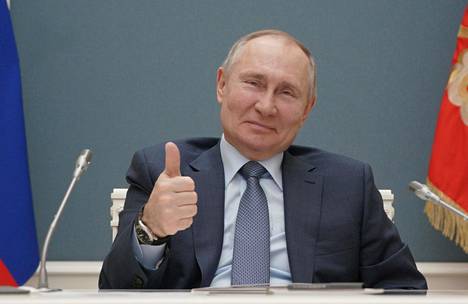
Exactly. Yet the Russian have a specific agenda: the objective is to increase the distrust Americans have on their government. And have NATO go the way of SEATO and CENTO: to the dustbin of history. Naturally Americans can do this by themselves, but why not help your enemy with this?Putin, not so much. — James Riley
-
What should the EU do when Trump wins the next election?Well we accept Orban too but we're not silent about it. — Benkei
One thing for media to criticize foreign governments, another thing for governments of other countries to weigh in. There is a reason that we do have diplomats, because otherwise nation states would ferocious wolves to each other. Nothing would be more easy to spread hostility and discontent between two countries.
Basically the US is like an arguing couple (with Mr & Mrs DNC/GOP) that you have to be with in the same table. The last thing a third party sitting with Mr & Mrs America would want would be to take sides in this heated marriage quarrel. And even if one does want to be outside of the couples fierce fights, the couple will actively draw into their quarrels those who sit close to them (as happened with Ukraine). Honestly, nobody wants to participate in that shit show.
Hence governments will be somewhat calm, but in truth a Trump-Biden-Trump presidency would be really a toxic mix that would put down and out the "Last Superpower". Talk about nonexistent or negative leadership.
As the name states, it's a Union and unlike the Federation that the US is, it's an union of independent states. No matter what bullshit people in Brussels want to fantasize it being.So what I'm gathering is that you didn't know the EU is just a partial government. It's not a fully functional government like the USA. — frank
The precise term would be a Confederacy, but that term (thanks to US history) has a bad rhyme to it. -
What should the EU do when Trump wins the next election?
If Trump really wins the elections fair and square, then nothing.So, barring illness Trump will be the next president of the USA, simply by virtue of him not being in a position to fuck things up whereas Biden will. How should other countries react to the fascist douche being elected? — Benkei
Take him as the President of the United States and simply try to deal with him like with any US President.
You should remember that the US Administration is far more than the POTUS. In the end it's the job of the Americans to select their President, not ours.
Just like we will accept what the Dutch choose as their leader. -
Joe Biden (+General Biden/Harris Administration)
Sorry, actually it was. Trump abandoned the Afghan allies by making a peace deal with the Taliban without any thought given to the Afghan government. Fuck them! That was the message from Trump.It’s not surprising, ssu, that you would attempt to shift blame back to Trump. I would expect nothing else. But it wasn’t Trump who abandoned Americans and Afghan allies while sneaking away in the night. — NOS4A2
Of course, you haven't the slightest interest at informing yourself how lousy the Doha peace deal was really like. No, if Trump is criticized, you turn automatically to defense mode. I would not expect nothing else from you.
The Doha peace-deal. What the hell of a "peace" is that? It's nothing else than surrender or simply encouragement for the Taliban to push harder, it's all for their taking. Likely with the Pakistani ISI helped them make their brilliant summer offensive.
Imagine if during the Korean War the armstice would have been done with US and North Korea (and China), but not with South Korea. So, just if North Koreans wouldn't attack Americans they still would be free to attack South Koreans and take ground from the south. Oh yes, they would have to have talks while at the same time be totally free hands to fight them. Imagine what wonders that agreement would have done for the fledgling South Korean army? Hence if it would have collapsed, I guess the people would say "See, they couldn't handle it, they didn't fight!"
(Back then, armstice meant cessation of hostilities. Not same with Trump's "peace-deal")

Nope, both of the two tired old men, Trump and Biden, simply wanted not to hear anymore about Afghanistan, as it was a nuisance. They didn't care shit about it. Hence it was peace at any cost! Both wanted the brownie points for ending the "forever war". Hell with your former allies, just fuck them, they had gotten enough. So I do blame both Trump and Biden. -
Preventing starvation in Afghanistan involves a moral dilemma?
In my view there is no dilemma.Questions remain, however, as to why not go all the way and simply prevent Afghans from starving to death if possible, regardless of the actions or inaction of the Taliban. Surely this is a moral and philosophical issue: for example, why not release the assets held by the Central Bank of Afghanistan?
I would think that all moral philosophies support the idea of protecting innocent lives at all costs, unless of course, there are things more important than human lives. — FreeEmotion
The US made a peace deal with the Taliban. The Taliban held their side of the agreement (not to attack US forces...but of course attack the Afghan government, because there was nothing against that in the agreement!).
Why should the US after signing a peace deal still be hostile? The fact is that the US in it's hypocrisy doesn't want to admit that they threw in the towel and the fight is already over. -
When Alan Turing and Ludwig Wittgenstein Discussed the Liar ParadoxComment to the OP.
I think someone wrote that Wittgenstein didn't understand basically Turing's example (the Turing Machine) and Turing failed to describe it for him. The anticipated meeting of the two didn't create great advances. But it's telling that even for Gödel to understand that Turing's findings were actually similar to his did take a long time, so it's no wonder if Turing and Wittgenstein didn't understand each other.
I'm not sure when reading Murphy's article he understands this either. Using negative self-reference as Turing or Gödel did isn't similar to Liar paradox. Close, but they don't result in a paradox. That perhaps is the crucial point to understand. -
Joe Biden (+General Biden/Harris Administration)
And why would they be? The US was fighting a fucking war in Afghanistan. Collateral damage happens when the only things you have is remote footage from a drone. Try yourself to interpret what is put into a car from an aerial footage.No one was fired or resigned or court-martialed for the murder, gross stupidity, and lies to the public. — NOS4A2
Besides, knowing you, you wouldn't raise any questions if it would have been the Trump administration in charge. The political party in charge decides what is murder and gross stupidity and what is collateral damage and unfortunate events for you. (And it should be noted, for many American political commentators)
Just as those servicemen that got killed before, that was something that in the chaos was not preventable.
No NOS, this fiasco is genuinely made both by the Trump administration (that agreed to withdraw from Afghanistan without a cessation of hostilities) and by the Biden adminstration. It started right at the moment Bush declared going after the Taliban. And then past adminstrations declaring that they will go home as soon as possible. With that message well drummed up for everybody, no surprise that the Pakistanis then thought "OK, the Yanks are going home, so in that case let's support our guys then again".
And what do you know? The Taliban re-emerged. -
Critical Race Theory, Whiteness, and Liberalism
Now this is true. Perhaps Critical race theory should be defined to three separate categories:I see this kind of thing from some but certainly not all in what I've read. - As with a lot of topics in the mainstream it can be hard to dig past the noise and find the actual original ideas and thoughts behind them. — I like sushi
a) CRT of a specific author
b) Programs or authors close to CRT, using parts of the theory or in general have ideas close to CRT.
c) What those who are the detractors of CRT see as CRT.
And as the issue has become part of the politicized "Culture War", it's extremely confusing to follow the debate. I think the general rule is to just look at what the people actually have said themselves and never quote or follow what a third person has described them saying. -
Critical Race Theory, Whiteness, and Liberalism
Well, people don't know the term jingoism and the term chauvinism has another definition today also. But I guess any word meaning that people would have some positive thoughts about their nation will be something very negative to some.The contrast between patriotism (good) and nationalism (bad) is illustrative. I don't know how one could be a patriot and not be a nationalist as well. Nationalism has been given a quite negative slant in the last 40 or 50 years. I suppose that is because some of our worst enemies have been nationalists, so therefore we should not be. — Bitter Crank
In the US patriotism is still accepted, but I think in Europe many are viewing it as something negative. Nation states are bad! -
Critical Race Theory, Whiteness, and Liberalism
I think so too. Critical race theory starts from the idea that racism is inherent (to white people?) and includes far more things than the ordinary definition of racism; that there are people who hold racist ideas. Blurring the line just what is racism seems to be also the case. Furthermore, it seems to totally accept and endorse the division between people by race.Am I vaguely in the correct ballpark in saying that 'Critical Race Theory' is not about eradicating 'racism' per se (as the view is that is cannot be annihilated), but more or less about how to counteract inequalities that exist due to 'racism'? — I like sushi
What I find odd in the US and UK are that many applications ask about the race or ethnicity of the applicant. Perhaps the structural issues start from things like that. -
Coronavirus
Compared to the Maoists, yes.Oh, and the West is heaven on earth, right. — baker
List the famines that have happened because of "the West's" capitalist policies...compared to the 15 to 55 million dead in the famines caused by the "The Great Leap Forward" or the 1 to 20 million killed by the "Cultural Revolution". Capitalism may suck, but socialism kills. A lot of people.
Marxist Leninism and Maoism have killed far more millions than you could sum up in the wars the US and it's allies have fought. And still, I truly like that there exists a South Korea than there is a "North Korea" allover the Korean Peninsula, which has seen widespread famines during our lifetime. Yet, if it wasn't for the US, nobody would have cared about the Koreans. Americans did. -
Critical Race Theory, Whiteness, and Liberalism
Well, just look at a dictionary definition of an ideology:Isn't any ideology a social construct--not just eugenics? — Xanatos
a system of ideas and ideals, especially one which forms the basis of economic or political theory and policy.
or
a: a manner or the content of thinking characteristic of an individual, group, or culture
b: the integrated assertions, theories and aims that constitute a sociopolitical program
c: a systematic body of concepts especially about human life or culture
Quite easy to argue that ideologies are of the doing of humans and thus are "a result of human interaction" and "exist because humans agree that they exists". Again that animals of a same species do have different genotypes and phenotypes is something different. -
Critical Race Theory, Whiteness, and Liberalism
But just what are you measuring? Genetical research tells something about your ancestry, but far better does traditional historical geneology about your ancestors.But isn't the genetic distance between different humans--both on an individual level and on a group level (however one actually defines these human groups, whether in terms of families or in terms of something else)--something that can be both easily and objectively measured? I'm practically certain, for instance, that Ukrainians and Belarusians are much more similar to each other than either of these two groups are to, say, Sentinel Islanders. — Xanatos
First of all, do note how genetics (or population genetics) actually notes these differences. It has nothing to do with political boundaries like Ukraine or Belarus. After all, just short time ago you would be talking about people of the Polish-Lithuanian commonwealth. And as the Sentinel Islands belong to India, then the Sentinels are de facto Indian citizens, at least legally. And the time frame in which population genetics is interested is far more longer.
Even very broad divisions of the human population into races is a bit problematic. One traditional one is to separate by continents, which still is problematic. For example, what's the purpose of pooling such different people together as "Asian"?
If separate racial or ethnic groups actually existed, we would expect to find “trademark” alleles and other genetic features that are characteristic of a single group but not present in any others. However, the 2002 Stanford study found that only 7.4% of over 4000 alleles were specific to one geographical region. Furthermore, even when region-specific alleles did appear, they only occurred in about 1% of the people from that region—hardly enough to be any kind of trademark. Thus, there is no evidence that the groups we commonly call “races” have distinct, unifying genetic identities. In fact, there is ample variation within races.
And basically the classic "race theories" involve culture, language, religion, history and social status to the definition, which obviously cannot be biological / genetical. -
Why Black-on-Black Crime isn't a Racist Deflection.
I wouldn't say it's a cultural issue, but more of a wealth and prosperity issue.I also, of course, do not believe that people of color are inherently more criminal. I think that it is largely a matter of culture, and that many of these cultural influences can be blamed almost solely on historical inequalities and institutional and personal racism. — ToothyMaw
I would add the lack of social cohesion and alienation, the feeling that the society is not made for you and never was intended for you, will make things more ugly very quickly.Under sufficient duress, any community will turn on itself and folks will prey on their own due to proximity and familiarity. Sociology / Criminology 101. In fact, most wars are civil wars just like most crimes consist of (petty) neighborhood crimes & domestic violence. — 180 Proof -
Does Capitalism Still Function with Pleasure as Object?
Actually, you don't make things better for yourself. If everybody's wages are lowered, everybody is worse, the capitalists too. Do remember that there is the important aspect of aggregate demand too (which Marxists seem to forget).Because I can make more out of what I have if I exploit the environment around me doing things such as lowering wages, benefits, and adopting certain labour-saving technologies, etc. — kudos
Imagine you have an island and basically you have all the people as prisoners and force them to produce some basic widget or raw material for export and basically feed them and keep them alive. That would be the extreme of this idea of "lowering wages and benefits". The problem is that there isn't anything else for you as basically the island is just a prison camp. And your labor forces is hardly invested in the enterprise, why would they be? Likely some would try to flee. But let's say you pay the prisoners more than just their food and living costs, that they basically will get something to spend. Even that would change the picture, but what could they do with the money they have? So why not give them a sound salary that they don't need to be prisoners (so you can do away with the prisoner guards). The islanders can voluntarily work for you or move somewhere else. And of course then your island could interest those looking for a job when the salaries are competitive.
The obvious difference to a prison camp would be that there would be a demand for other services, barbers, shops, a pub etc. and a true business opportunity for those as the islanders would have income to spend on. Possible immigration and prospects for people to start a family on your island. With those businesses a thing like land prices would rise as before the island was just one prison camp, the land had no price. Now you can rent or sell land to willing buyers.
Simply put it, a more advanced economy creates more wealth and more prosperity, which is really, genuinely, created. Not carved out from someone's back as a parasite: if you keep the people as prisoners and poor like in North Korea, they aren't going to create the wealth in the first place as in South Korea.
Fitting to the real World example of North and South Korea is that the North was actually the more industrialized part in the Korean peninsula before the division to North and South. -
Critical Race Theory, Whiteness, and Liberalism
Which is rather silly. Basically you hear this reasoning when someone is argued into a corner or something.And this is where I see some making the leap that you CANNOT imagine because you're human, so if there were no humans they'd be no science nor any 'Periodic Table' (trust me I've seen this kind of argument used). — I like sushi
Genetics is another thing, really. Racial theories and eugenics have been right from the start political and a "social construct".There are some telling genetic differences between certain groups. Some medicines are tailor made to help such groups. Sadly the historical scientific beliefs/ideas surrounding 'race' and the advent of Darwin led to a whole lot of uninformed speculation that was considered 'objective' at the time. — I like sushi -
Donald Trump (All General Trump Conversations Here)Some people simply have such power. — baker
Well, one person like that was Napoleon. But Trump isn't actually a Napoleon. -
Donald Trump (All General Trump Conversations Here)All depends actually of what the reasons are for his visit. If the idea is that he could walk into the Oval Office and resume office of the President, the physical act of trying to enter the White House would be extremely funny. Many would question if he now had gone of his rocker.
Yeah, I bet the present administration would then humiliate him by not letting him in. But he sure would create a media frenzy with that stunt. If he would get them their. -
Donald Trump (All General Trump Conversations Here)
Yeah, they obviously cannot think of simply locking the door in the White House.Sure, some people would probably be outraged. But would anyone actually, physically stop him from doing any of those things? — baker
Locked doors do stop people, you know. -
Critical Race Theory, Whiteness, and Liberalism
For a "social construct"?I guess you don't care to offer up any definition? — I like sushi
I have no trouble with the definition:
A social construct is something that exists not in objective reality, but as a result of human interaction. It exists because humans agree that it exists.
I would simply state that the differences between the chemical elements are part of objective reality, not a result of human interaction. That we describe the differences between the elements by using the atomic model and have a periodic table doesn't change their existence. Sorry, but I can imagine that even without humans around, the chemical elements what we call "hydrogen" or "gold" will exist and have their peculiar characters. The elements had them when we weren't around and will continue to have them when we are extinct.
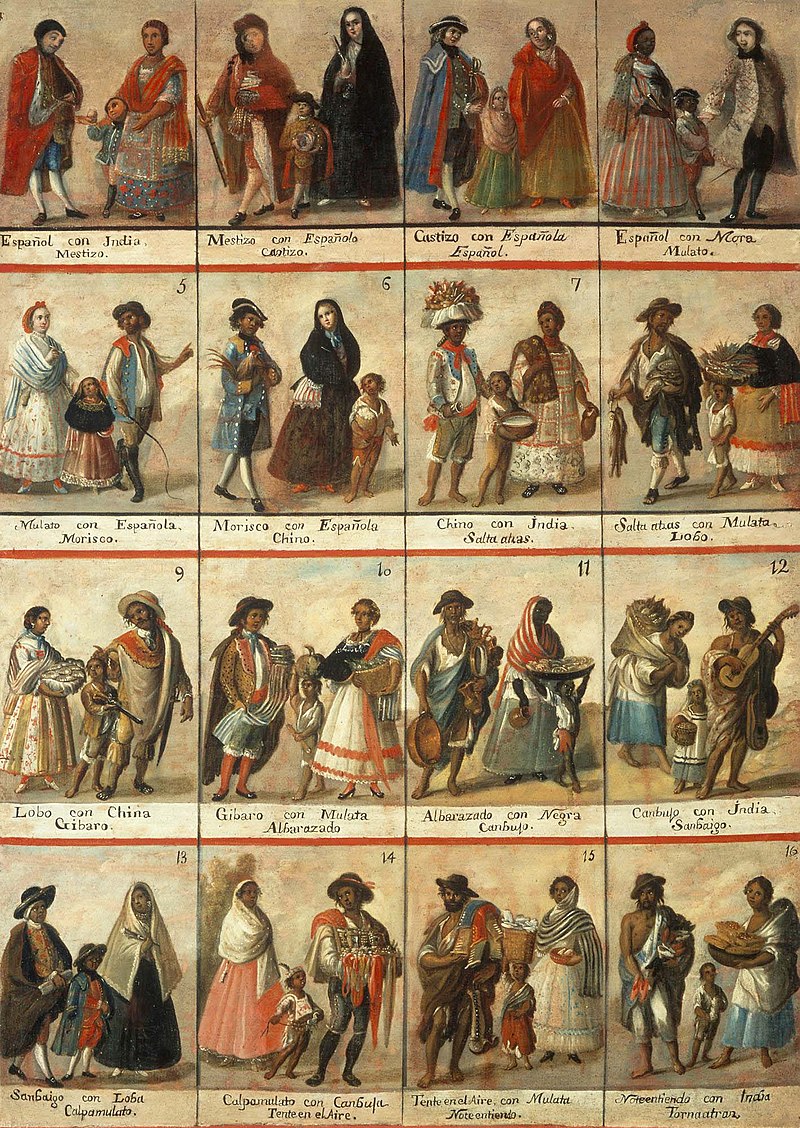
While on the other hand, let's look at the "science" behind racial theories. I'll give an example of my own people, the Finns, and how they were looked at by racial experts:
Because of their Finno-Ugric language, the Finns were initially classified by Nazi racial experts as a people unrelated to the other Nordic countries, in spite of a long history of political unity with Sweden. As a result, the Swedish-speaking minority of Finland was favored at first over Finnish speakers for recruitment into the Finnish Volunteer Battalion of the Waffen-SS because they were categorically considered part of the "Nordic race".
Owing to Finland's substantial military contribution on the northern flank of the Eastern Front of World War II, Hitler decreed in November 1942 that "from now on Finland and the Finnish people be treated and designated as a Nordic state and a Nordic people", which he considered one of the highest compliments that the Nazi government could bestow upon another country.
From this example you can see how obvious "social construct" nazi racial theories were as it fits perfectly to the definition given above for a social construct. And this goes with other similar racial theories too. -
Critical Race Theory, Whiteness, and Liberalism
The amount of electron shells and the number of protons in an chemical element can be stated as an obvious difference as the elements do differ from each other in this way. I guess calling this scientific observation an 'social construct' simply means that absolutely everything that humans have thought of scientifically is a 'social construct'. Of course with that definition the word is utterly useless.Should we also reject the periodic table because it is a social construct? — Xanatos
But compare the periodic table to the way how "Hutus" and "Tutsis" or the "Aryan Race" and "The Nordic Race" are defined and separated from each other. Seems more of a "social construct" than the number of electron shells or protons in chemical elements.
-
Donald Trump (All General Trump Conversations Here)
This is actually what is happening and has happened in many countries. The pandemic has put the ruling administrations in a tough spot and if the emergency laws aren't up to it (as usual), it causes this kind of friction where governments have to back down because of legal reasons. Has happened here too. But I guess it still far from a threat of there happening a self coup or the polarization of politics in the US.The constitutional court temporarily held back the enforcement of the decree, we're still waiting for its decision. — baker
The police or the military don't go on strike as other government workers can do. They do understand their important unique role. Yet don't think that they as government employees wouldn't share the features similar with other government employees. They naturally have an idea of how to do their job. It's always one thing for a political leadership to make up policies, totally another thing if the goverment bodies implement them.I am very much surprised by this, given that it always seemed like the military and the police are on the side of the current government — baker -
Donald Trump (All General Trump Conversations Here)
Democracy is a necessary safety valve. But basically if the economy goes bust and people are really unhappy about the situation, then ugly things and talk can emerge. And then it isn't just the administration in charge that people are angry about, usually people get fed up with the mainstream political parties and some start looking at what earlier was "the fringe". And this is how radicals can seize the moment and the loonies get into the center stage while people start to hate "the moderates".This isn't just in the US, it's a global trend. Polarization (and simplificationism) appear to be the logical consequences of democracy.
Democracy wasn't born out of some deep mutual respect people would have for eachother, but is merely one of the options for what to do when there is no hereditary monarchy (or its equivalent) in place.
Don't forget that the original motto of the French Revolution was Liberté, égalité, fraternité ou la mort. — baker
I usually didn't (and don't) participate in the philosophy of religion forum. Well, the talk was still quite heated when the war on Iraq happened, that I remember. People came to the old forum "to defend" the actions of the Bush administration in invading Iraq. So the present isn't so new.You don't think there's a fundamental difference between how information was searched for and reached us before Google and Facebook and now? We've got record numbers of people believing the worst things without any ability to even listen to opposing views.
I've been on this and the old forum since 2003. Discourse has significantly changed here too. Before, it was only philosophy of religion that was shit. Nowadays it's politics too. — Benkei
But notice one thing: Both you and your countrymen as I and other Finns share this similar media environment with the Americans. Yet Dutch politics or Finnish politics aren't as polarized as US politics with houses of government being occupied (at least that I know, I could be wrong about Dutch politics, but do know how it's here).I really invite you to read more about the information apocalypse, how deception unmoors us from reality and how it becomes increasingly difficult to tell reality from fake news How targeted distribution of information leads to information going "viral" in ways it didn't and couldn't before. — Benkei
I would say one decisive difference is that both in Finland and the Netherlands and unlike in the US, there has to be coalition governments, which means that the parties simply have to get along somehow. In the US 'winner wins everything'-system there isn't any need to be diplomatic with the other party. It's the other way around: the two parties who actually share a lot of policies have differentiate from the other and activate people to vote for them by depicted how bad the other party is. And this has gone totally out of control in the US.
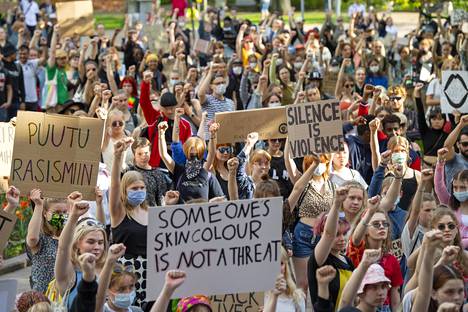
So basically my point is that the "information apocalypse" doesn't polarize politics itself, but once if polarization is sought, it really amplifies it a lot. Yet there has to be larger reasons for the polarization itself. Otherwise I guess Finns and Dutch people would be storming their Parliaments and talk about a new civil war....for, I don't know, for some reason.
Enjoying the global media issues in the Netherlands...

...and in Finland, try to spot the persons of colour in the crowd.
-
Donald Trump (All General Trump Conversations Here)
Have you followed the debate about the Chairman of the Joint Chiefs of Staff Mark Milley?why didn't Trump get the armed forces involved after having lost the election! — baker
The US armed forces are not exactly a pushover institute. Since the George Floyd riots, there had been friction between the military and the Trump team.
First, basically Trump would have had to basically fire all the heads of the military and replace them with yes-men. Possible, even if difficult, but this would have needed a plan and decisive leadership to be carried through. Trump lacked both. Trump pinned his hopes on Pence and when that didn't work, had nothing left than just to watch his followers have a blast at occupying Capitol Hill. Just as nearly everything Trump did and does, is decided on the moment and fired from the hip.
In fact Milley has been quite consistent on his view that the armed forces won't get into politics. And if you think that he or the US armed forces will do anything and have a "yess suh, whatever you say suh!" attitude toward Presidents, please listen to the following clip that Milley gave in a speech during the chaotic last November 2020. The speech is pretty much intended as a communication to the Trump people and where the military stands on the election, because it's not your ordinary speech you give in a museum:
Armed forces typically don't have to acknowledge election results. That happened in the US in the last elections.That Milley was worried about the possibility of Trump launching a strike at the Chinese (or somebody) and questioning Trump's abilities just shows how much distrust there was between Trump and his military. -
Donald Trump (All General Trump Conversations Here)
Then you don't want to look or simply refuse to look. There has been a few, one African president that refused to go after losing elections... and after a bit of insistence went out.but in comparing him to other leaders worldwide, I don’t see it. It’s as simple as that. — NOS4A2
Giving the finger to the Constitution and wanting to stay in power by whatever means isn't a way to kill a country. Have some trust in your country.Who tried to kill the United States of America. — tim wood
I think the really ominous sign was people like general Flynn who insisted that Trump should get the armed forces involved. Luckily Trump is just a bully and wouldn't really go through (or in his ineptness incapable of doing so.)
Flynn, who has worked in special forces and has lead the Defense Intelligence Agency, are the kind of guys that you really have to look out for. They wouldn't fuck around (while Trump is all about fucking around). If given the power people like Flynn wouldn't just watch on TV how the events are happening after getting the people to march to the Capitol Hill as Trump did.Former Trump national security adviser Michael Flynn on Thursday said that President Trump could deploy the military to “rerun” the 2020 election.
During an appearance on Newsmax’s “Greg Kelly Reports,” Flynn was asked about the actions the president could take to undo the results of the election.
After Flynn suggested that the president could seize every voting machine across the country, he then suggested deploying the military in swing states that the president lost to President-elect Joe Biden.
“He could order, within the swing states if he wanted to, he could take military capabilities and basically rerun an election each in those states,” Flynn said.
Yet that 9/11 moment of total strategic surprise has gone past and an autocoup, a form of coup d'état in which the leader of the state that has come to power through legal means, dissolves or renders powerless the national legislature and unlawfully assumes extraordinary powers, isn't going to be so easy anymore in the US. -
Donald Trump (All General Trump Conversations Here)
NOS, he was just an inept leader. Simple as that. A great commentator and could engage with his supporters yes, but the position wasn't for the Tweeter in Chief. That's not leadership. In that role, tweeting and engaging the public discourse he was great, at least Twitter was happy.All of it in the context of unjust political investigations and impeachment inquiries, not to mention the fevered media treatment unlike the world has ever seen, peering into every facet of his life. — NOS4A2 -
Donald Trump (All General Trump Conversations Here)
Information spreads in various ways. It has spread since history and likely much of it has been incorrect. Yet the cause of people getting angry about the present, the rise of populism isn't just how people get information.The polarisation these politicians thrive one can only exist in a society that supports it. The most important factor in that is how people get information. — Benkei
It simply doesn't go like that. The simple fact is that if people are fine with their life, economically have no worries, the public sector works, they simply don't get angry just because of algorithms. -
Donald Trump (All General Trump Conversations Here)
Yep. As Trump didn't have any leadership skills, he couldn't do what he wanted to do. Hence the strange admiration of Putin and other authoritarian leaders.The specter of Trump’s fascism was already proven to be a canard — NOS4A2 -
Donald Trump (All General Trump Conversations Here)It's not about the conspiracy theory per se. It's that if I look at a video of Mario Brothers, the next video suggested will be about Mario Brothers II and Mario Kart. Or if I look at a cute cat, I get another cat or perhaps a dog. etc. etc. It's the "targeted offering of information based on a persons behaviour" that I want to prohibit. So if I look at a cat the next video offered could be a documentary of war crimes in Vietnam in the 1960s instead another cat. — Benkei
Well, if I put "Conspiracy Theory" into Youtube, I'll get "Finland doesn't exist (Conspiracy Theory)". Yet basically this is basically how the internet works.
On most occasions that targeted offering is basically OK. And you can get the personalized searches off. And you can choose your friends and what they link to you. Yet I think that there's an internet that is full of garbage is the reason for this.
That the political environment is so toxic is far more to do with politicians and the political parties themselves. No need to make coalition governments means that you can be as mean and aggressive as possible towards other parties and it's a well known way to get people to vote your party. When actually there isn't much options for the voter to choose on. -
Donald Trump (All General Trump Conversations Here)
Define conspiracy theory video...to the goddam algorithms already present in our searches. Don't think that you could micromanage the issue far better.How is this censorship? I'm just prohibiting Google from offering you another conspiracy theory video — Benkei
ssu

Start FollowingSend a Message
- Other sites we like
- Social media
- Terms of Service
- Sign In
- Created with PlushForums
- © 2026 The Philosophy Forum