
Comments
-
Climate change denial
Hardly. Price fixing simply doesn't work. What else is central planning that replaces the market mechanism?This is completely irrelevant. It's also anecdotal. — Xtrix
If you assume that having rules and legislation is "inteference", then I guess your idea that governments interfere all the time on every level is true.So I'll repeat: government interferes all the time, on every level. There's no denying this. Whether this interference works out well or not is another question. — Xtrix
Yet how typically people understand government interference, there is a huge difference between classic socialist countries and modern mixed economies.
Communism hasn't simply not worked. Marxism-Leninism didn't work. Maoism didn't work. Juche-ideology still doesn't work.But I see where this is going with you: whatever happens that's good is capitalism, whatever happens that's negative is communism. — Xtrix
Besides, when you disregard the most successful and most popular branch of leftist thought (which is SO typical nowdays), then this is quite irrefutable. -
On Defining Anarchism
Just to make the surprising note that not all anarchism is leftist. And basically they are against nations, just like anarchists are.Not by any stretch of my imagination, but, if they want to fund us, we might consider letting them build some of micro-nations or whatever. — thewonder -
Coronavirus
One doctor who I know said something that I agree with, unfortunately.I knew we would need boosters as it evolves but I truly expected to be sending kids to school without mandatory masks but that is not the case. — ArguingWAristotleTiff
"Likely we will start getting annual vaccinations for COVID as we get annual vaccinations for the flu. Some will take them, some will not (just as with flu vaccines)."
Masks will asked to be used for a while... until people don't wear them anymore. Some likely will and some places limitations and regulations will continue. Likely in few more years we are back in the ordinary. The scare of dying to Covid will last for just so long until it's the new normal.
(Influenza regulations back during the Spanish Flu)

-
On Defining Anarchism
Would anarcho-capitalism be included in that definition?Anarchism is a political philosophy and it can more or less be simply defined as "libertarian socialism". — thewonder -
Why the ECP isn’t a good critique of socialism
Actually, the issue goes far further than just the Rockefellers.The Rockefelllers also profited from Arabs and Iranians depositing their oil dollars in Rockefeller banks. By 1978, Iranian deposits with Chase alone exceeded $1 billion. — Apollodorus
That Saudi-Arabia sells it's oil in US dollars and uses American companies is one important issue for the whole status of the US dollar as the reserve currency. This was especially crucial for the US when it went off the gold standard. If you can buy oil with the money your central bank can create, that is one reason that the US has had the ability to be such a Superpower and fight all the wars it has fought.
Naturally Iran is out of this picture now after their famous revolution. -
Climate change denialThe big IPCC report— pretty sobering. — Xtrix
Living basically as north as Alaska is, the collapse of the Gulf stream would have an effect here. "Nicest" outcome would be just hotter summers and colder winters. Oh well, Anchorage isn't so bad.
The ocean current responsible for western Europe’s temperate climate could be at risk of collapse due to global warming, according to new research.
Scientists at Germany’s Potsdam Institute for Climate Impact Research found the Atlantic Meridional Overturning Circulation, or AMOC, could have reached a point of “almost complete loss of stability” over the last century. The AMOC is a system of ocean currents that acts like a conveyor belt carrying warm surface water from the tropics to the North Atlantic where it cools and sinks to the lower depths of the ocean. This colder water gradually moves southward several kilometers deep, before warmer ocean temperatures eventually pull it to the surface and the process begins again.
The Gulf Stream, the current of warm water flowing from the tip of Florida across the Atlantic toward Europe, is part of the AMOC and makes western Europe significantly warmer than it would otherwise be. Research has found the AMOC has “two distinct modes of operation” — strong and weak — and if it were to flip from its current strong mode to weak, it could have huge ramifications for the climate.
Lead author Dr. Niklas Boers said it could trigger “a cascade of further transitions” in other key components of the global climate system, such as the Antarctic ice sheets, tropical monsoon systems and the Amazon rainforest. -
Climate change denial
There is a perfect example of this from my own country. The government brought in price controls in the 1970's which basically crushed the rental market and basically made a structural over demand for rental homes. My great aunt remembered being as a land-lord that people were so desperate that they even sent the first monthly payment through mail. In the 1990's if you put an announcement in the paper, you would start getting phone calls right from the morning with 40 to 100 calls daily. The demand was far more than the demand and public housing was only for the most poor or unemployed and basically didn't do anything to counter the demand.Take your housing example. The government doesn't "usually" interfere? What's "usually"? Of course they do -- nearly all the time. How? — Xtrix
Then the government deregulated the market. No caps for prices, total freedom in the writing of rental agreements. And what happened? Companies sprang up that rented flats and a lot of supply for rental homes appeared. Now if you put an announcement up, you'll get a couple of inquiries. And unlike with the housing prices, the rental prices have gone up only modestly basically with inflation. Suddenly a supply has emerged that wasn't there before. And this is what many don't understand at all from the importance of a market mechanism.
Actually, modern Egypt is the perfect example why people are poor and stay poor in Third World countries: when a normal working family cannot get a loan to buy a house, no wealth is created when they have rent all their life a home. And once when people are poor and stay poor, there isn't that important domestic demand that would create jobs and growth.Furthermore, there are some instances of "free markets" throughout the world and throughout history. Maybe Egypt or Greece? Even there it's dubious. — Xtrix
And the US got rid of it in the 19th Century. Obviously not an inherent part of capitalism.Or we could start with slavery in the US. — Xtrix
Last famines in Western Europe were in Ireland and Finland, actually, in the 19th Century. Yet the Chinese and Russians saw famines in the 20th Century directly because of the implemented socialist programs. The famine because of the Great Leap Forward killed an estimated 30 to 55 million people. North Korea has seen famine in our lifetime in the 1990's and likely even in this Century. What is common to all is the implementation of socialist central planning that really didn't work. Even North Korea has had to veer of from strict socialism. So it's a bit different, really.
When you start from far poorer state, naturally growth is far more rapid. Let's remember that the US nominal GDP is larger than China's GDP, even if China has three times more population.As far as economic growth, China beats us by far in GDP. — Xtrix -
Why the ECP isn’t a good critique of socialism
Finnish farmers actually got earlier more subsidies. I think the largest simple reason is that Finland without being attached in any way to the West would feel very precarious with Putin next door.Well, if you are a Finnish farmer living on EU subsidies then I suppose you would take a pro-EU stance. — Apollodorus
And if you look at the EU budget in the past, basically it was largely an agricultural assistance program. But it morphed to something else.As shown by its name, the project was about coal and steel. — Apollodorus
Hence there was the EFTA, don't forget that. And UK got out from the EU, so nothing new here.The British took the money but refused to join the ECSC and its successor EEC on the grounds that it was unacceptable for the UK economy to be “handed over to an authority that is utterly undemocratic and is responsible to nobody”. — Apollodorus
You seem to stick to one narrative. Even if the bankers did there part, the idea that it's only them, no other things happened, no other agents, players and motivations were not involved, etc. simply doesn't cut it.The whole Marshal Plan and associated European unification were a Rockefeller project. — Apollodorus
Now you go to full tinfoil-hat territory. Yeah, obviously the Rockefellers created OPEC and started the Yom Kippur War...Then came the oil crisis of the early 1970’s, also largely engineered by the Rockefellers, — Apollodorus -
Avoiding War - Philosophy of Peace
Well, since the US wasn't involved, the conflict went largely unnoticed. And people will note that millions didn't die in the actual fighting, just in the famines caused by the collapse of a very fragile economy. But it is a reminder that conflicts were millions can die can and do happen.ssu, despite not adding quite enough drama to the First and Second Congo Wars, which resulted in, according to Wikipedia, 5.65 to 6.25 million casualties, seems to have some good ideas. — thewonder -
Climate change denial
The government doesn't interfere all the time and everywhere. Housing prices, the prices of taxi cabs and many other prices are usually left alone. The vast majority of companies and corporations are privately owned. The Western Mixed-Capitalism model is really different from China."Government controlled capitalism." That's state-capitalism, which is the only capitalism that exists. It's what exists in the United States as well. Government direction and interference on every level. No "free market" fantasies. — Xtrix
There is a difference when you compare China to other countries:
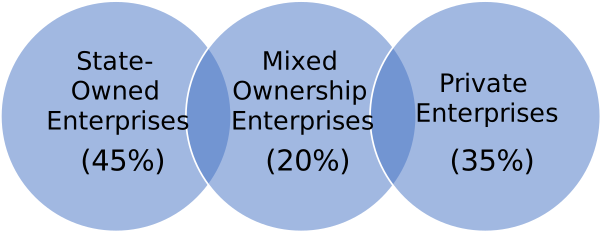
For example in the UK, you do have the occasional partly-owned BP, but otherwise...

Let's start with the famines in the US. How many have there been thanks to US economic policy been inflicted to the American people?Actually they worked just fine, by many metrics. They also had plenty of problems -- major ones. The United States has plenty of problems, too. — Xtrix -
Why are We Back-Peddling on Racial Color-Blindness?Classism and racial prejudice (in every direction) serves extremely well to keep the the overwhelming majority of working people divided against themselves. And it isn't just prejudice. Class interests are real.
Putting an end to racism, exploitation, class divisions, and so on would break many of the pylons on which the structure of ruling class power rests. It would also break boundaries which various groups have erected around themselves. We could have a people's revolution; that doesn't seem likely. Even less likely is the Ruling Class shooting themselves in the head. Not going to happen, — Bitter Crank
Well said, Bitter Crank.
And I guess because there is social mobility upwards and also downwards, then the color of your skin is the last refuge for this division. Your observation also reinforces my thinking that the political discourse in the US is to divide and rule.
It surely not doesn't, because what we intend for the society to be is a meritocracy. And that results also in a class society. The question is if there is enough social mobility.I don't believe that a classless society exists; I also don't believe that a society without deeply ingrained biases exists. — Bitter Crank
Well, those don't work. The success has been basically that now a white racist will look over his shoulders before uttering the n-word.As far as I can tell, there is no national intention of putting an end to racism. There is plenty of lip service for the idea; there are numerous programs; there are all sorts of initiatives to nudge people towards being nice to one another. — Bitter Crank
We could have a people's revolution; that doesn't seem likely. — Bitter Crank
I agree with you. The US would be ripe for a unifying movement and one emerging would be theoretically possible, but I think it's unlikely. What is more likely is that you will have radical movements on the left and on the right that then will absolutely hate each other. In public debate poignant commentators who annoy the other side will be cherished. Yet it's not a debate when you don't listen to the other one. And what else those in power now could hope for? Other than they don't instill the divide into violence on the streets.
The US of course will go it's own way. All I can say that the Nordic model of "Folkhemmet", national home, has at least worked in the past as it has been alliance with the social democrat movement and the conservatives: the conservatives understanding that the welfare of the working class and the poor are very important and the social democrats understanding that the capitalist system has merits too. The real power in a left-right alliance is to have the ability to agree on few basic important issues and then let the less important details be the center of the political fight and heated political debate. When policies get to the level of agreement as the US supporting Israel (lousy example, but you get the point) then things happen. Here the parties are at their throats, as typical, but when it comes security policy and Russia, suddenly they are in unison. Naturally they don't openly admit it.
Lol. Well, something like that. We don't have diversity training. Yet. I assume it will come here too.No, you are a well-traveled urban sophisticate, and if you are not urban then you are urbane. — Bitter Crank
Race taxonomies are a pseudoscience as agreed on this thread, so "spoiled identities" do happen. All those "diversity workshop leaders" have to get their jobs! At least there are women and sexual minorities among the white Finns in the workplaces."Spoiled identity" can be a savage experience. It has happened to me once or twice. One of the good things about our rootlessness is that one can uproot and plant one's self somewhere else fairly easily. One need not be forever stuck with the spoiled identity. — Bitter Crank
As Finns have lived in the same place for literally thousands of years, that identity based on language and your family roots is really hard to be transformed. At least for the US there is an identity that everyone can be an American. Finland along with other Nordic countries are struggling with this as there hasn't been such an option to become one earlier in the national myth. My wife, even if she has dual-citizenship now, thinks that she will be never be accepted here. And she doesn't like so much Finns in general (hopefully at least there's one exception). I just pick on her sometimes that I have darker skin than she has. -
Why the ECP isn’t a good critique of socialismThat depends. Just because Finland and Sweden were keen to join, it doesn't mean it applies to all European countries. — Apollodorus
Umm...yes.
Norway and Switzerland. Now the UK. And that's basically it.
Others have been quite OK to join. Perhaps added to the three above is Serbia, because NATO bombed it. Even if the US really and openly supported the Serbian opposition that finally ousted Milosevic (not done by CIA, but the State Department), now Serbia is an ally of Russia. Just an example how flawed the US foreign policy can be...
Others have been quite happy with the EU. One really shouldn't forget this as one reads or hears these specific narratives of just how rotten the EU is. -
Climate change denial
Of course not!Property works yes, but it's not the only thing that can get people to care about something, and it need not be on the level of the individual either. — ChatteringMonkey
Being a fan of a sports team is something that can bind the rich man and the poor man. These kind of issues that both the poor and the rich can both support are unfortunately quite rare. Yet they are extremely essential. One thing that usually works, is patriotism. Assuming the whole country doesn't work at all and simply sucks. Even Stalin as a shrewd politician understood this an made the fight against the Nazi "the Great Patriotic War" for those who ought to have been globalists at heart.You'd be surprised what sportsfans would do for 'their team', yet there's no property-relation of any kind... there just needs to be some identification. — ChatteringMonkey
A good reference would be then to look at what Texas is doing. If things there change, that is important.But okay maybe we can get there if general culture everywhere shifts along the same lines... it's kind of crossing our fingers though and hoping that we will get there in time. — ChatteringMonkey
That is the real obstacles for the change needed. People that worry that they will become paupers, that everything will stop and die where they live. The fear for example in the rust belt in the US is real and that fear basically gave us Trump. I think this political clash will obviously grow larger in the future.It's like the coal-mines in the seventies or eighties that were struggling to survive in my country. We pumped in tons of money in an effort to preserve the industry and the jobs it provided, only to have to shut them down anyway a decade later. If they had the vision to transition earlier by investing in other industries, it would have been better for everybody involved. — ChatteringMonkey
For the industry I think reality has dawned on them. Just like BP preaches to it's workers that it now stands for "Beyond Petroleum" the writing is on the wall. Hence the desperation in the old coal mining areas is real and hence the voters there will give their votes to any Trump there is that promises them help.
It's a similar fear of the people who get their income farming in Brazil in the new areas claimed from the forest. They see the outside pressure as literally something stealing their livelyhood. Hence for a populist like Bolsonaro it's easy to choose what strings to pull.
Hence articles which depict the situation in Brazil are like this:
Carlos Rittl, a Brazilian environmentalist who works at Germany’s Institute for Advanced Sustainability Studies, said the numbers were “humiliating, shameful and outrageous” – and a clear sign of the damage being done to the environment since Bolsonaro took office in January 2019.
"This is an area a third the size of Belgium – gigantic areas of forest that are being lost simply because under Bolsonaro those who are doing the destroying feel no fear of being punished,” Rittl said.
“Bolsonaro’s great achievement when it comes to the environment has been this tragic destruction of forests which has turned Brazil into perhaps one of the greatest enemies of the global environment and into an international pariah too.”
So does the media report on the things in Brazil. Yet what are the feelings in Brazil among those who support Bolsonaro?
-
Why are We Back-Peddling on Racial Color-Blindness?
And I'm surely not asking that.Having spent 40+ years in education and social services, I am well aware of unique and individual differences that confound stereotypes. But at the same time, one sees that people definitely fall into groups of particular traits. We do not, can not, begin each new person-to-person encounter as if we were meeting a species never before encountered. — Bitter Crank
Yes.Because people are very similar, we can behave in ways that will reliably reduce or increase friction and conflict or ease interactions and reduce conflict, for example. There are plenty of positive aspects to 'everybody is alike'. — Bitter Crank
Perhaps the American problem can tried to be explained by an example one of my wife's friends told. This friend is a Mexican, with her father being Canadian and the mother Mexican. She looks like an American brunette WASP, very Anglo-Saxon with pale skin. She speaks perfect English with a Canadian accent and her appearance get's her into trouble in Mexico City as people assume she is a gringo. She was for a while in school in the US and made friends in her class easily. Then one day the principle remembered that she was Mexican and asked if she was willing to help some new Latino students in the school with their English. She agreed and didn't understand what would happen to her then. Word got around that she was a Mexican and immediately her prior friends disappeared and didn't invite her into their doings. She had broken the community divide as she should obviously ought to have known that Latinos only hang in their own group.
Just like the English uphold fervently their class system, so do Americans their own system. And I'm not personally confident about this new anti-racism really putting any end to racism. It just makes it different. -
Why are We Back-Peddling on Racial Color-Blindness?
Lol, quite a strawman there.This is silly, as though if a person ‘believes in stereotypes’ they’re slaves to them and can’t distinguish individuals. — praxis
Try to take control of the narrative then. I assume you can do even there if it is about something else than race.Stereotyping itself is not the reason that racism exists, obviously. Stereotyping does exist though, so it’s best to try dealing with it intelligently, taking control of the narrative as they say in PR talk, rather than ignoring it. — praxis
?It may sound odd but a powerful method for achieving social cohesion is for leaders to identify others. A charismatic leader may intentionally create a rift, or exploit an existing one, in order to help galvanize a group identity. ‘The chosen ones’, or those that share our values, norms, purposes, etc., don’t need to behave honorably towards the others because they are lesser. Unscrupulous leaders of this kind don’t want you to believe in stereotypes. They want you to be color-blind. It’ll make it easier to fool you. — praxis
Social cohesion basically refers to the extent of connectedness and solidarity among different groups in society. Creating rifts and galvanizing one individual group's identity is the opposite of social cohesion.
My country avoided an ethnic conflict with the simple fact that the Swedish-speaking community here never identified themselves as Swedes, but Finns. And the Finnish speaking majority never saw them as Swedish, as foreigners, either. I found only one very nationalistic student paper from the 1930's which referred to the Swedish speaking people being Swedes. And even that paper didn't see the people as a threat or enemy, even if the Swedish speaking elite had "priviledges" at that time starting from the fact that the Capital Helsinki was just transforming from a Swedish speaking town to a Finnish speaking city. Hence We never have such political unrest as even Canada has seen in the French speaking part. Yes, there a small debate about the role of the Swedish language in schools, but it's something that basically belongs to a democracy. There's no hostility between these two genuinely ethnic groups. -
Why the ECP isn’t a good critique of socialism
And what YOU should try to understand that who make integration happen are those who really desire it ARE THE COUNTRIES THEMSELVES. Not only their elites, but the people also. Then integration and EU enlargement happens. Then even trade deals happen. If there is suspicion and bad relations, nothing but empty talk will happen.It is a very gradual and carefully calibrated process that is designed and implemented by an army of experts. — Apollodorus
Perhaps you cannot understand it, but I surely can. I come from a remote part of Europe which is dominated by Russia. And I know that if the Soviet Union would have annexed us in 1939, absolutely nobody would have cared a shit about it. On the contrary, it would have been seen as nearly inevitable. Hence their was always an extremely popular desire to somehow integrate with the West, but we had to do it extremely carefully as not to anger the bear. Once the Soviet Union collapsed, Finland (and Sweden) didn't waste time in joining the EU (EEC).
For the Warsaw Pact countries it was absolutely necessity to integrate to the West after all that they had endured under the Soviet regime. For them NATO was even more important.
Or think about the integration of Spain and Portugal to the EU. Franco's Spain was one thing, but so was Portugal under António de Oliveira Salazar also. Integration to the EU is seen also in a positive light in the countries that have integrated into it. In the EU, perhaps only Germany, France and the Benelux countries feel like they are in the heart of Europe and EU, other countries feel as they are on the fringes and don't think that they are in the heart of Europe.
Yes, and that went nowhere, because a) no Zapadniks in power and b) the Kosova war left a very bad taste for Russia and Russians. In the early 1990's Russians were genuinely open at the idea of integrating to Europe. At the end of the decade, the feeling was over. Even before Putin came to power the honeymoon had ended.So, you can see that the plan for Russian integration into the EU was hatched at the same time that Russia was being opened up to Western capital and it was part of the larger EU expansion to the east and south. The Barcelona Process (BP), the precursor to the 2008 Mediterranean Union, was initiated in 1995, at the same time as the EU-Russia Partnership and Cooperation Agreement (PCA) was signed ....
The PCA aimed to achieve “Russia's progressive integration into the open international trading system” and “the gradual integration between Russia and a wider area of cooperation in Europe”. — Apollodorus -
Climate change denial
The official line is that they have 21st Century Marxism and it works just well as they aren't fixated to dogmatic principles or take Marxism as a religion. Others would say that it is government controlled capitalism as they do use the market mechanism and there is private property.The standard line of most people still stuck in capitalist propaganda. So it has to mean that. Why? Because socialism "never works." End of discussion.
They are ruled by the communist party. But magically, the gains they've achieved is "capitalism"? — Xtrix
Yes. China opening up was important. Starting from the Shenzen area opposite to Hong Kong. Actually it was the typical rags to riches story that has happened in many countries.
With socialism, they got their atomic bomb and intercontinental missile, yet then there was the possibility of famine still. Today this isn't so.
Yes, marxism-leninism, stalinism or maoism didn't work so well. They really genuinely sucked. You have even two countries with similar culture, heritage and history that were divided with one part being capitalist and the other socialist. These examples leave nothing in doubt. -
Why are We Back-Peddling on Racial Color-Blindness?
Yet then how to behave on that stereotype is the issue. And notice yourself that you said "reasonably accurate". As I've said, believing in stereotypes to be "reasonably accurate" then makes some people to believe in stereotypes and they don't take people as individuals. Who cares, if it's reasonably accurate. And racism creeps easily to those often funny stereotypes. If there is a lot of social cohesion, those stereotypes won't matter so much: people try to behave honorably towards strangers. If there is a rift or hostility between groups of people and there is a lack of social cohesion, it will immediately show.It isn't just prejudiced people that see patterns. People also behave in patterns. That's why stereotyping yields reasonably accurate results. — Bitter Crank
Yet if the stereotypical person is an applicant of some form, someone in need of help or so, to get over the stereotype and treat him or her as an individual is a little bit more is important than when just observing passers by. -
Why the ECP isn’t a good critique of socialism
But they surely won't do it as an EU force on behalf of the EU. They will either do it a) as part of NATO, b) as part of a US lead alliance or c) own their own.France and England had enough military power to deal with any Arab state. Even more so, with NATO involvement. — Apollodorus -
Why are We Back-Peddling on Racial Color-Blindness?Here in 'Merika we have this natural talent called “stereotyping”. With a mere glance we can all but instantly assess a complete stranger. With attributes such as age, weight, fitness, bearing, and attire, we can estimate social status, and perhaps much more, practically instantly. If there were a corresponding label for a particular set of attributes and the social status they’re associated with, a label like “MATESMaWLI”, for example, then that label would come to mind. It would come to mind regardless if anyone wanted it to, if they possessed knowledge of the term. In America we call poor single middle-age men losers. Good thing I’m married! — praxis
Praxis, I think you just informed me from where the structural racism comes from in your country. :up:
(Yeah, “MATESMaWLI” would be a great definition for a certain male type.) -
Why the ECP isn’t a good critique of socialism
EU having military power? NATO is different from the EU.It doesn't matter if the EU is a "loose entity". What matters is that it represents the interests of the banking and industrial corporations that founded it in the first place. And it has the economic and military power to implement its plans. — Apollodorus
You should perhaps prove here that they really instigated the uprising. You see, it's one thing to favor an uprising, even help it. Another thing to instigate it from scratch.Unfortunately, the Arab uprisings instigated by EU and US intelligence didn't quite work out as expected — Apollodorus
Well, the Middle East is the ultimate American disaster movie.Now we've got a fine mess to deal with. — Apollodorus
It just gets worse and worse.
Imagine the time when there was CENTO, the so-called Baghdad-Pact, when Nasser asked the CIA if it would be OK for him to do a military coup? Then when Iraq had it's revolution and opted for the Soviet assistance there were US "Dual Pillars" of Iran and Saudi-Arabia. Afterwars there was the Iranian revolution and you got "Dual Containment" as a US policy. Then brief unity when Saddam tried to snatch Kuwait with even the Syrians being part of the US lead alliance. But then came Dubya with the invasions of Afghanistan and Iraq. How well those went we all know.
The final scene of the train wreck would be if the "next Iran" would be Saudi-Arabia with the Saudi monarchy being overthrown. The Americans would just enthusiastically love to loath and hate the Saudis. Would fit in perfectly there with Iran and Pakistan. -
Is it no longer moral to have kids?
This goes a bit to another thread, but...Therefore, whether we stop putting carbon in the air, or continue to do so, prosperity can be expected to decline dramatically. — hypericin
It doesn't have to be so.
In fact, if people are more prosperous, they will do and they can do more to fight climate change. To tackle climate change one has to make huge investments. Those investments won't happen if nobody is making them. If we insist on making people poorer and wreck our economies, those crucial investments won't be done. We will end up using the old emitting technology as then there is no other option.
And there are many options we can do.
Let's take the example of France: It has the 7th largest GDP in the world. It's overall carbon emissions is 19th. Hence many countries with far smaller industrial output have far more carbon emissions. Why?
France has opted for nuclear power, just to give one reason. It hasn't been cowed by the Fukushima accident (or earlier by the Chernobyl accident) to drop all it's nuclear power plants. It has let other countries to decide the energy policy on the ignorant whims of the voters. For example Sweden opted by a referendum to banish all nuclear power at a certain year and go for alternative energy production. When the year came Sweden was actually putting out more nuclear energy than it did during the referendum.
So just for starters, what if all countries would mimick the French? -
Climate change denial
Yes, there is something positive about the NIMBY.Anyway I would even agree with the statement that communism isn't any better, or maybe even worse, at dealing with environmental problems. People get antsy very fast if they are confronted with environmental problems in their backyard, there I would agree that democratic societies are more responsive in solving those issues. — ChatteringMonkey
Now the socialist system did have a lot of committees and so on, yet what was lacking was the huge thing that turns people to behave differently: when they are landowners. Might sound funny, but there's a big truth to this. Let's say a person is working in a student body as a student. He or she has then some incentive as a student on what the body does. Now put him or her to be a landowner and the issue about the use of his or her land. Likely he or she won't take it so lightly. Socialism needed for people to be as devoted to the "common thing", the country, as an individual landowner can be to his or her land. That is a big thing to ask from people and that's why some refer to what the Soviet Union did to it's environment as Ecocide.
The basic problem is that people are OK with restrictions, limitations or fees when they aren't personally affected. Yet they can and will go with draconian measures if everybody goes with them. The pandemic response has been a good example of this. My best friend died last year (not of Covid) and in his funeral there was only the priest, his mother and father and one uncle. He had more friends than me and more relatives. Now to argue that the government here could decide that more than five people cannot meet would have sounded quite incredible few years ago. But here there were no complaints about it, perhaps in all two or three small demonstrations have happened in the whole country.Usually their response is essentially that they won't do anything about it if it costs them anything. They are waiting for the government to take action, to take some policy-measure to support renewables or some other government incentive that addresses the issue... but the government generally won't do anything if it isn't something that would be supported by a large part of the population, which is only democratic I suppose. — ChatteringMonkey
Yet for draconian measures, you need a big catastrophy.
I think it matters at least to the Democrats. Let's not forget Al Gore and his favorite subject.What is different is that China at least have the capability of a longer term vision because they aren't bound to a 4 or 5 year democratic election cycle... and in a system that allows for longer term vision there is at least the possibility that climate change is something that can be valued. The CCP knows climate change will come back to haunt them because they think they will still be in power when the effects become apparent... A Trump or a Biden on the other hand don't really care because it probably won't matter one iota to them. — ChatteringMonkey
Yet notice that a lot in the environmental standards and environmental protection happens in the US in the state level with California having a big role. If California sets some standards, manufacturers apply to them. You could argue that on the federal level there for example hasn't been a true energy policy or industrial policy, yet the US can do a lot even without the White House getting involved. Don't think that one person, the US President, actually can do much. A lot happens without him too.
Yes, the CCP has had quite successful 5-year plans and has long term plans. But note that such have been there with other capitalist countries, that have been quite successful.
In all, we need cooperation, yet as this is a case of "learning-while-doing", it can be also good that countries adapt various policies as then we can see what have been the best ones. There is no silver bullet: our climate is such a complex maze that we will be learning new things and lessons as we go. Many things that we now look to be good ideas might later be showed to have been disasters. -
Why are We Back-Peddling on Racial Color-Blindness?
Americans have this fixation on race. And it's not going anywhere. I do understand that poverty and race do go hand in hand in the US still. But still. If you want it to be the most important issue, then I guess it will be that.Such is the paradox. They don’t apply racism to fight racism. Hence the term in the US “positive discrimination”. — NOS4A2
I personally think that Robin DiAngelo is a great personification of a racist turned to be this anti-racist accusing every white person being such a racist as she still is. And corporations will give her the big bucks to preach this. How progressive. -
Why are We Back-Peddling on Racial Color-Blindness?Yes, you wrote that.
But let's say we have a marginalized group like "middle-age to eldelry single males with low income". Not easy for them to get into higher paying jobs or to get rental flats. Lot of problems in this group at least in my country. Yet is it better to refer them as a group as "MATESMaWLI?" So in order to help MATESMaWLI-persons, we have to make this divide between MATESMaWLI and other men? -
Why the ECP isn’t a good critique of socialism
Milosevic is a bit different issue because that started totally from the incapability of the Yugoslav states, mainly because of Milosevic, to break up as peacefully as the Soviet Union did. A long story of Yugoslav making. Not something like Bush deciding to invade Iraq because...why not?I didn't say all the countries that were expected to join were hostile to the idea. But definitely Serbia's Milosevic and some Arab leaders. — Apollodorus
We actually don't give credit enough to the Soviet era politicians who could dissolve the Union without larger violence. The events in Ukraine clearly show that the possibility of a similar bloody civil war as in Yugoslavia was a real possibility in the Soviet Union. That could have been a war in the millions of deaths and not so nice to me, as my summer place (where I'm now,actually) is only 10 kilometers from the Russian border.
The EU is such a loose entity that it really doesn't itself have such imperial aspirations.The EU needed to get its hands on Arab (North African and Mid Eastern) oil. — Apollodorus
Not likely. Only if the Russia emerging from the Soviet Union would have been controlled by strong and resolute Zapadniks. Yet the Zapadniks didn't take power. Putin, the FSB and the Siloviks took power in reality.BTW, personally, I think that the (unofficial) plan extended to Ukraine and even Russia. — Apollodorus
If they would have taken and new Russia would have taken a divide with it's past, then perhaps the most awesome alliance would have happened: The US-Russian bond in fighting the Global-War-on-Terror. I can imagine the horror of the liberals in the US. But Republicans? They would have loved it!
When you think of it, a pro-western Russia would be a dream ally for the US: has ample military strength and the willingness to use it. Doesn't get scared of Russian casualties. Is totally OK in fighting a dirty war anywhere. Would be truly willing to fight a Global-War-on-Terror (even now hinted at that). Has a great intelligence network. Would be lucrative market for military joint ventures, just think about Lockheed joining up with Sukhoi or Mikoyan-Gurevich. Those cheap Russian aeronautic engineers would be great for US defence contractors.
And furthermore, the Chinese would be absolutely scared shitless about US-NATO on their northern borders. -
Why are We Back-Peddling on Racial Color-Blindness?
Yet isn't the problem that your talking about groups, focusing and upholding groups and not individuals? Really, I think it always starts with the formal application that you have to fill in asking your race. Asking for sex or nationality might have some value, but why race?Politicizing the issue to garner public support and gain a position of power, all the while not having any intention of significantly helping the marginalized group, could be one way. — praxis
You see there isn't the application that asks if one is lower/middle/upper class. You don't literally segregate people into classes by saying them in which category they are. Simply the income and wealth separates classes by living and other things. Yet there are ways to avoid that this separation doesn't become a huge problem. We don't need to have people openly and actively dividing people to these classes. That there are rich and poor is obvious. Yet smart city planning can avoid the situation where the rich seclude themselves in one place and the poor end up in a slum or ghetto. That's the way to do it. And it doesn't start asking people in which class they belong to. -
Climate change denialIt's really nice when cities turn green. And in many ways city planning has improved especially from the 50's and 60's. But the most important thing is to have a plan. Cities growing without any plans are the problem.
(How about that waste management? Street in Lagos after rains)
-
Why the ECP isn’t a good critique of socialism
Did the EU aim to expand Southwards??? I know Turkey was a possibility, but I've not heard about Morocco, Algeria, Tunisia, Egypt or Libya anytime being on the line to be member states.However, I think the story is a bit more complex than that and it's got to do with the same multinational corporations.
Remember that the European Union (EU) aimed to expand eastward into Eastern Europe and southwards into North Africa and the Mid East. — Apollodorus
The only potential would be Israel and yes...that really isn't going to happen.
(Although the Israelis have participated in, won and hosted the Eurovision Song Contest, btw)

The EU having a get-together club with it's neighbors is another thing and a totally fine thing to do. But notice from the description from Wiki the last sentence:
Yeah, this is a conversation club.The Union has the aim of promoting stability and integration throughout the Mediterranean region. It is a forum for discussing regional strategic issues, based on the principles of shared ownership, shared decision-making and shared responsibility between the two shores of the Mediterranean. Its main goal is to increase both north–south and South-South integration in the Mediterranean region, in order to support the countries' socioeconomic development and ensure stability in the region. The institution, through its course of actions, focuses on two main pillars: fostering human development and promoting sustainable development. To this end, it identifies and supports regional projects and initiatives of different sizes, to which it gives its label, following a consensual decision among the 42 countries.
And do notice one very, very important thing both when talking about EU membership or talking about NATO membership: the countries themselves wanted to join. Far too much emphasis is giving for example to Clinton wanting the votes of Americans with ties to Eastern Europe and far less on how much the countries themselves wanted NATO (or EU) membership. There was this window of opportunity, because some (very ignorant people) even talked about Russia joining the NATO.
When it comes to EU membership, both Norway and Switzerland held membership talks with EU, but came to the conclusion that nah, they are better out. With NATO, some countries like Sweden and my country has not formally requested membership as it would be politically a hot potato in these countries. And when Western countries asked about there being a possible defence coalition among Sweden, Finland and the Baltic States (that NATO wouldn't have to be involved), both Sweden and my country were absolutely horrified. Once the Baltic countries did join the NATO (and EU) there was a sigh of relief if Finnish military officials immediately noticed that NATO didn't raise a finger to do anything actually to defend the Baltic states...until the annexation of Crimea by the Russia (far later).
For that objective, the EU and its US partners had to get rid of all the "dictators" (some real, some perceived) that presented any opposition to EU expansion. This is what created the big mess you see in North Africa and the Mid East. — Apollodorus
Hm. I accept that there was this neocon moment when the Global War on Terror was rolling and the idea was to do this. But that's it. The Eastward expansion of EU/NATO happen with quite rosy feelings: the Czech, the Poles and other Warsaw Pact countries joined very nicely. Belarus was never in the picture.
To topple the dictators is this American idea, which one commentator called Donald Trump extremely well portrays in his 2011 commentary on why Libya should be invaded by the US:
Americans thinking like Trump above is the real problem. -
Why are We Back-Peddling on Racial Color-Blindness?They apply it. — NOS4A2
And what, pray tell, are you not applying it to? Human beings. — praxis
Then it's confusing. Because then those who say they are fighting racism are basically also upholding it.
At least I try to treat people as individuals. I don't believe in stereotypes. If there are 50 people belonging to some group, be it race, sex, age, nationality, class, occupation or whatever, 1 of them will likely be just like the stereotype we have of that group. 49 people won't be with many being as far as possible from the stereotypical ideas. -
Why the ECP isn’t a good critique of socialism
Yes.Also, I, perhaps unsuccessfully, tried to indicate a distinction between communism and socialism (say "market socialism", to be clearer). There are countries which at least lean in this direction, which work. — RolandTyme
There is a very successful political ideology called social democracy. It's so successful, that most who call themselves socialist absolutely hate it.
And the countries? They are capitalist societies with usually a large public sector. Yet they are just fine with a private sector, the market mechanism, free enterprise and so on. If you talk about countries like Sweden, Norway or my country, just to give examples. -
Why the ECP isn’t a good critique of socialism
Yes. After the Soviet Union collapsed, there was truly a historical opening for Russia to integrate to West. Then Russians were truly open for the West. But that brief opening was wasted. It ended with the Kosovo war and the NATO attack against Yugoslavia (Serbia). Yet you would had to have truly larger than life politicians on both the West and in Russia. But you had just average politicians. The Americans thought of Russia being past and didn't think of it much. Hence when a director of the FSB and a career KGB spy was chosen to the position of the Russian President, the opening had surely past.Second, Russia in 1992 was “advised” by the (Rockefeller-founded) World Bank to privatize as much and as fast as possible. — Apollodorus -
Do we need a Postmodern philosophy?
That's the first dividing line with well to do countries and others. There is no so cohesion, nobody will help a stranger.If I don't manage to take care of myself, it's death in the gutter for me. — baker
Seeing abandoned children in the gutter made me understand why people would fall for such crazy ideas as marxism-leninism. Then it makes sense to send the rich to hell. Unfortunately many other things go to hell then also. -
Climate change denial
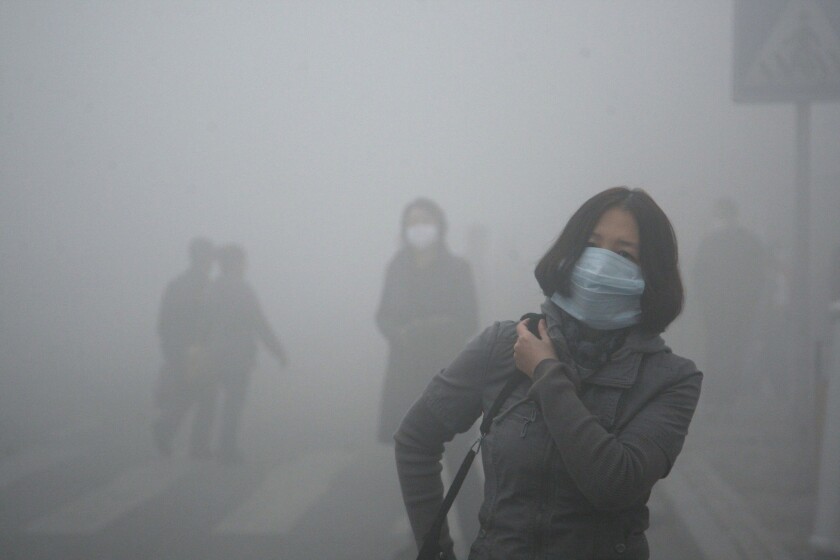
When we do muster the political will, the standard response is that it isn't enough. We sideline positive news. Our critical media is showing us where we fail. In China that critical media isn't tolerated. Needless to say, for example the smog problem is far more difficult in China than in let's say West European large cities or even New York. London doesn't have the famous smog as it had earlier. There is pervasive bias that shows in the ecological reporting from a totalitarian country and a Western democracy.The west on the other hand? Well we all know the story, a lot of political and societal uncertainty... can we still muster the political will to get projects on such scale done? — ChatteringMonkey
For example the air quality in New York is multiple times better than in Chinese Mega-cities. Just think how American media would treat politicians if it would be the other way around.

The Soviet Union and Communist China have literally pillaged their environment and environmental issue were not all important under Marxism-Leninism. The problem is that there were none of those safety-valves that a democracy has. There are no watch-groups or simply private landowners to make notice. When everything is owned by the state, who cares what happens?
(A smelter surrounded by an ecological disaster zone in Norilsk.)
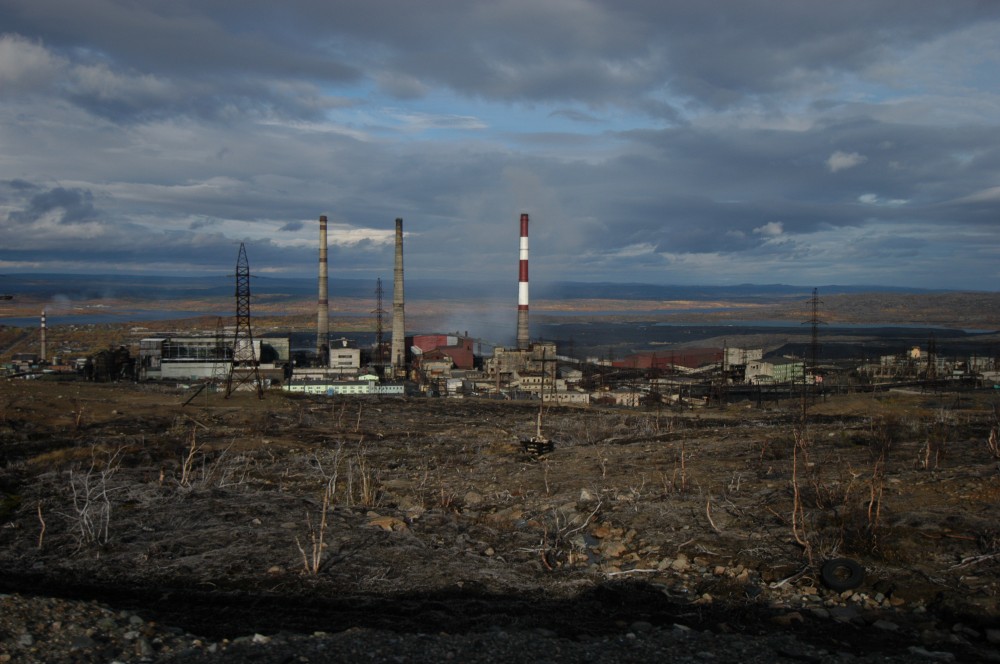
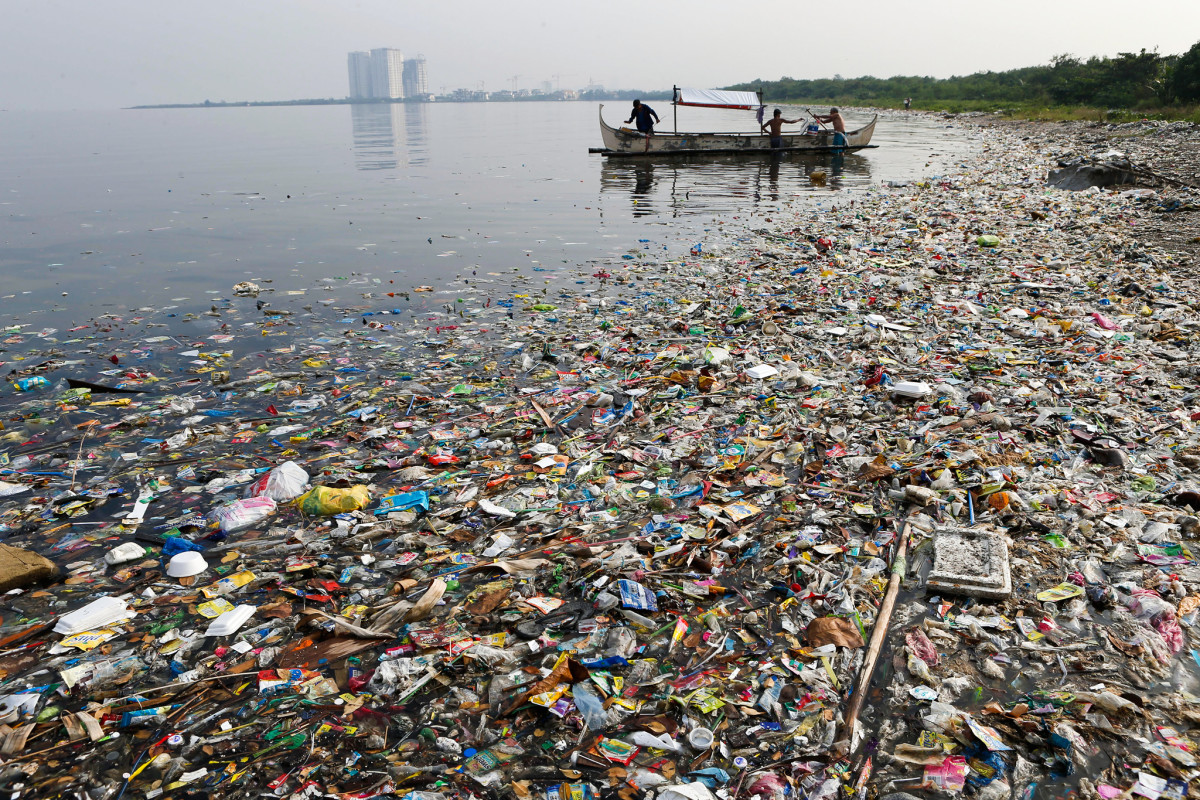
Environmental protection isn't at all anywhere in large Asian countries as China (and India) where it is in the West. Just to give an example, think about the large river systems:
Up to 95 per cent of river-borne plastic polluting the world's oceans pours in from just ten rivers, according to new research.
The top 10 rivers - eight of which are in Asia - accounted for so much plastic because of the mismanagement of waste.
About five trillion pounds is floating in the sea, and targeting the major sources - such as the Yangtze and the Ganges - could almost halve it, scientists claim.
-
Why are We Back-Peddling on Racial Color-Blindness?I believe that “race” is a pseudoscientific taxonomy, and that whole swaths of people should not be demarcated within those abstract boundaries. I believe that such a fake demarcation has allowed racists to run roughshod on entire groups of people, and I simply refuse to adopt it in my thinking. — NOS4A2
Okay good, you agree that such demarcations allow or facilitate abuse rather than cause it. If you’re actually interested in solving a problem it’s usually best to deal with the cause of it. — praxis
Do you apply these pseudoscientific taxonomies to human beings? — NOS4A2
So do modern anti-racists reject or apply the pseudoscientific taxonomy? -
Climate change denial
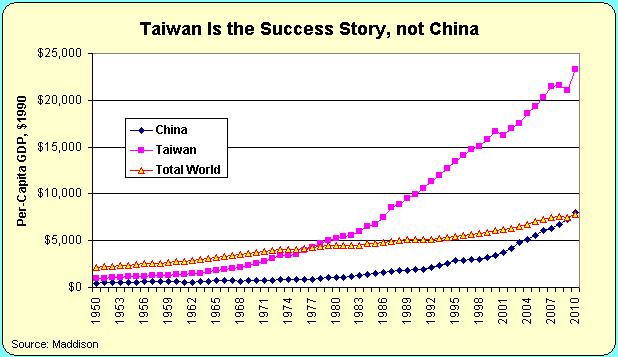
It means that they changed their socialism to controlled capitalism, basically fascism, and then they got their take off. The Great Leap or the Cultural Revolution didn't bring more prosperity and economic growth. Even India got it's rapid growth when it left socialist programs out.So the fact that China's kicking our ass in growth means what exactly? — Xtrix
Socialist central planning is literally doing away with the market mechanism. It doesn't work. It's totally different from having let's say "an industrial policy" as many capitalist countries have had. South Korea, Taiwan are great examples how industrial policies have been successful transforming a poor country to a wealthy one.
Hence the real question is, how awesome would China be if it had similar economic growth as Taiwan has had?
-
Climate change denial
Why more confidence?I have more confidence in their ability to turn it around faster than Western countries. Apparently they tend to underpromise and overshoot on declared reduction-targets, unlike the west. — ChatteringMonkey

-
Climate change denial
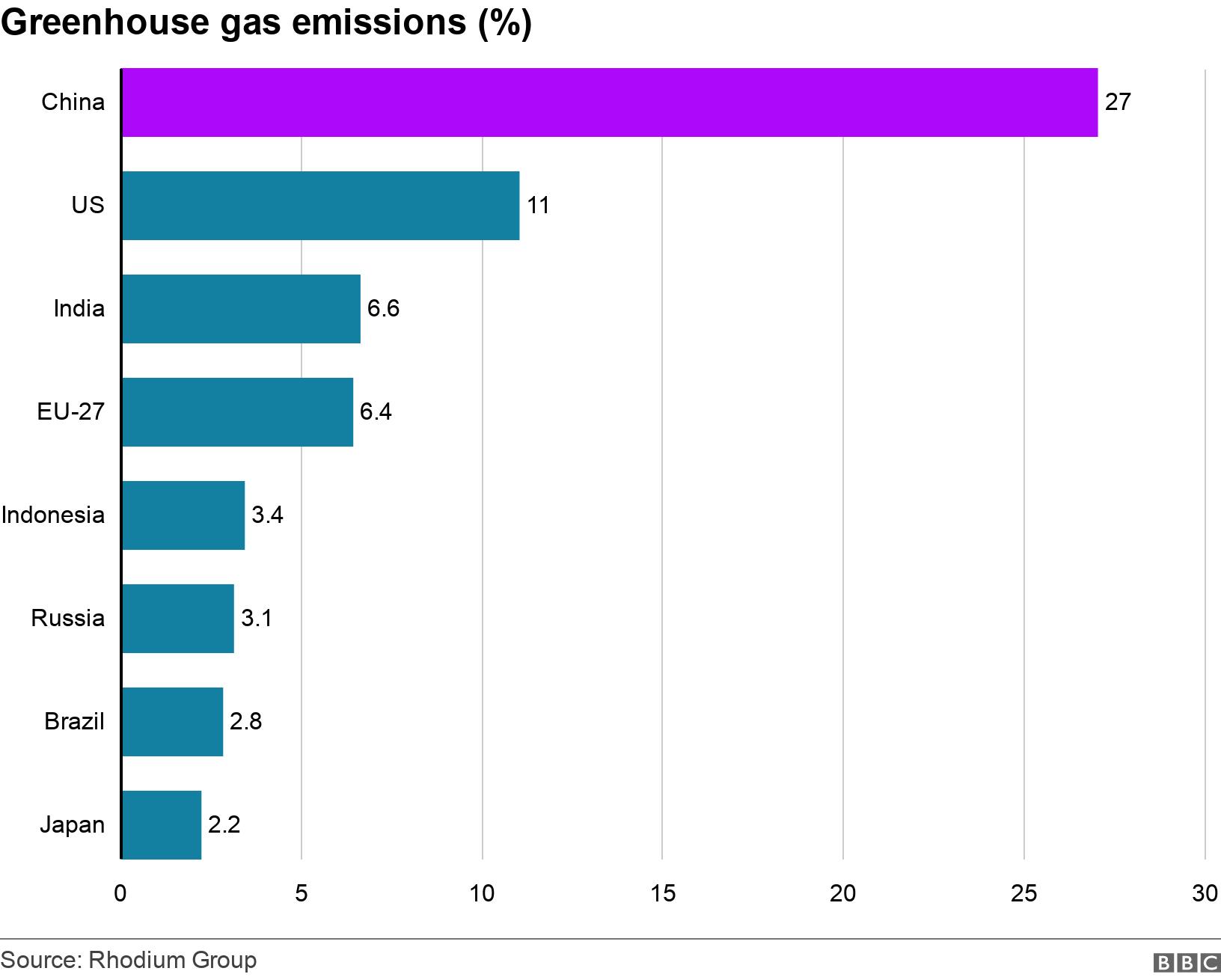
When it comes to the actual climate change, it's absolute emissions that ACTUALLY DO MATTER, as you said later. Otherwise Qatar would be far more important than the US or China.Comparing absolute emissions and relative rise in emissions isn't really telling us much, — ChatteringMonkey
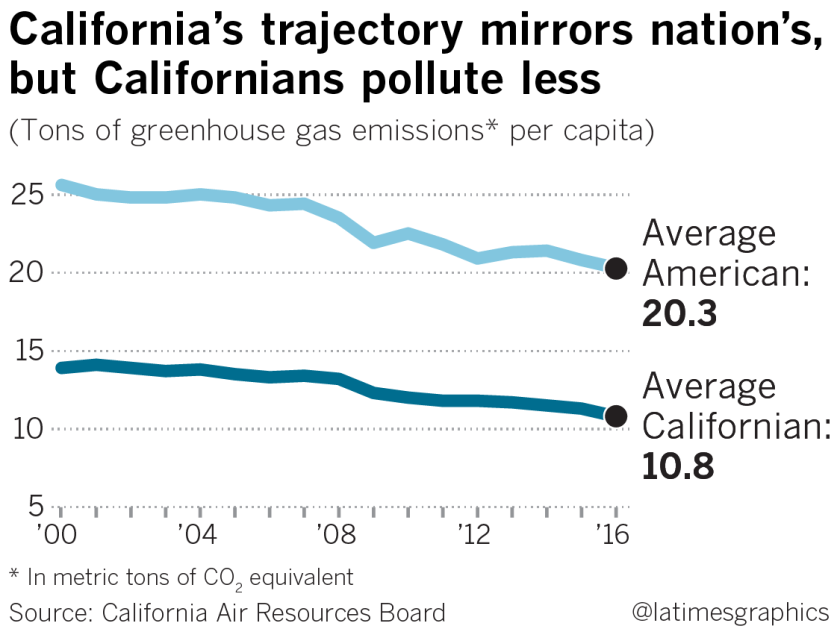
And it also has the ability to decrease it's emissions, which it actually has. And likely can take the example from some states that have been more successful than others. The frightening aspect is WHEN China get more and more wealthier. There's a lot of more potential demand both in China and India than there is in the US, hence those countries are crucial here.The US, the beacon of capitalism, still has double the emissions per capita of China. — ChatteringMonkey
Again, the most important issue is to deal where the growth is. Not where positive reductions are taking place, even if continuing that trend is important. -
Climate change denial
Capitalism has made few far more richer than others, but it also has improved our prosperity far more than central planning of socialism ever did. Worth mentioning that socialism was (is) far more disastrous for the environment. Environmental factors simply weren't thought of.Yes, capitalism creates winners and losers, and the winners tend to like their winnings. — boethius
If we look at where we have been successful, we have the case of handling the ozone layer hole, which at the largest was in the Antarctic in 1994 and now is estimated to shrink in size to what it was in 1980. Let's look at just why we were successful:
- the problem was easily noticed and measurable.
- CFC gasses being the culprit was identified (as early as 1974).
- CFC gasses were used mainly by rich countries.
- there was will to take action on the problem (Montreal accord in 1987, Kyoto in 1997).
- replacing CFC gasses was totally possible and the development continues.
The rich countries reduced their use of ozone depleting substances by 99,2% where the developing countries reduced only by 72,5%. What can we learn from this?
The fact is that prosperous wealthy countries can adapt and change their production and set new rigorous standards were the poorest countries poorer countries aren't able to. This is important to understand when the issue is something like deforestation, which happens basically in poorer countries.
We can cope with the problems when more countries are like the Netherlands, less are like the DRC. It may sound paradoxical, but the truth is that more development will be the solution. We will have more awareness of the problems and more ability to cope with the problems, to change our ways. Yet if we have more failed states, more poverty, then less will be done.
Then there is the question of China. Again a non-democratic country where environmental issues aren't as important as in the West thanks to it's socialism (or fascism). To show how important China is when it comes to CO2 emissions, here's a telling video showing the total CO2 emission by country from the 1960s onwards. Notice what happens with China on this 2000s.
What China does is really the crucial issue. -
Do we need a Postmodern philosophy?
Is it really hard to understand that extreme povetry, that you really don't have anything, is different from relative poverty, that you have less than your wealthy counterparts?Is this really so hard to understand? — baker
Keep on bitching about despair of people in the wealthiest country where people don't starve to death, where institutions work, where poor do get assistance, unlike in other parts of this World and then insist that it doesn't matter at all just where we draw the line when we talk about poverty.What does it help you if you are rich by the standards of some banana republic, when you live in a first world country and struggle to make ends meet, constantly living on the edge of exhaustion? — baker
The simple truth: in which country you are poor does matter. No way to refute it.

ssu

Start FollowingSend a Message
- Other sites we like
- Social media
- Terms of Service
- Sign In
- Created with PlushForums
- © 2026 The Philosophy Forum