
Comments
-
Climate change denialSince the "Only-Magma!" -guy has hopefully left us, here's a question for others.
The natural reason for more (energy) production is population growth. Yet population growth is decreasing globally and likely will in the future make the global population hit a peak and from there on the population will get smaller. With advances in technology that would sound at first an environment where we can tackle our present problems.
Yet the problem is that our society is built on growth. Our system to finance those technological innovations and advances are built on a growth model. The debt-based monetary system needs economic growth. The social welfare models we use need growth to pay for them. With decreasing populations you might have a perpetual economic bust where not much improvements and advances will happen. The technology might be there, but it wouldn't be implemented. Fossil fuels might be used, because there's no money to build new alternatives because of the economic slump. Decreasing populations might sound like a good thing, but it might wreck havoc with our great plans to change the society from a carbon based to renewable energy based society.
Has any thought been given how to tackle this issue? What do people think here? -
Climate change denial
And the civilizations you are referring to? Seems to me the civilizations in history were far more fragile to collapse.Once systems get overwhelmed, they collapse. Has happened to previous civilizations, can happen to ours. — boethius
I disagree.I don't think population matters much. — boethius
Population growth is the natural reason for economic growth and demand growth. If populations are stable or decreasing, that is a huge issue on this issue. You don't have only decrease in use because of technological advancement, but also due to demand decrease. That is a huge issue. Besides, earlier population growth was seen as the primary reason for doom, starting from Malthus, which isn't something unimportant now.
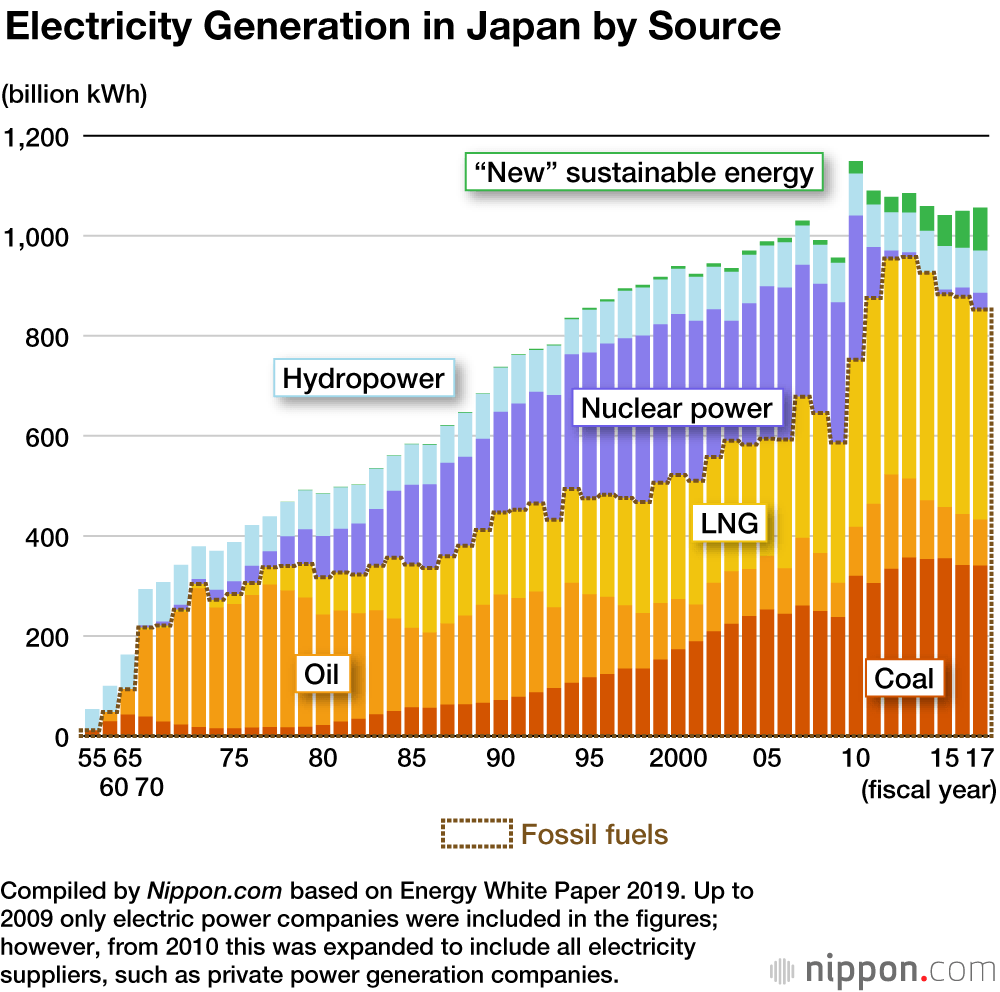
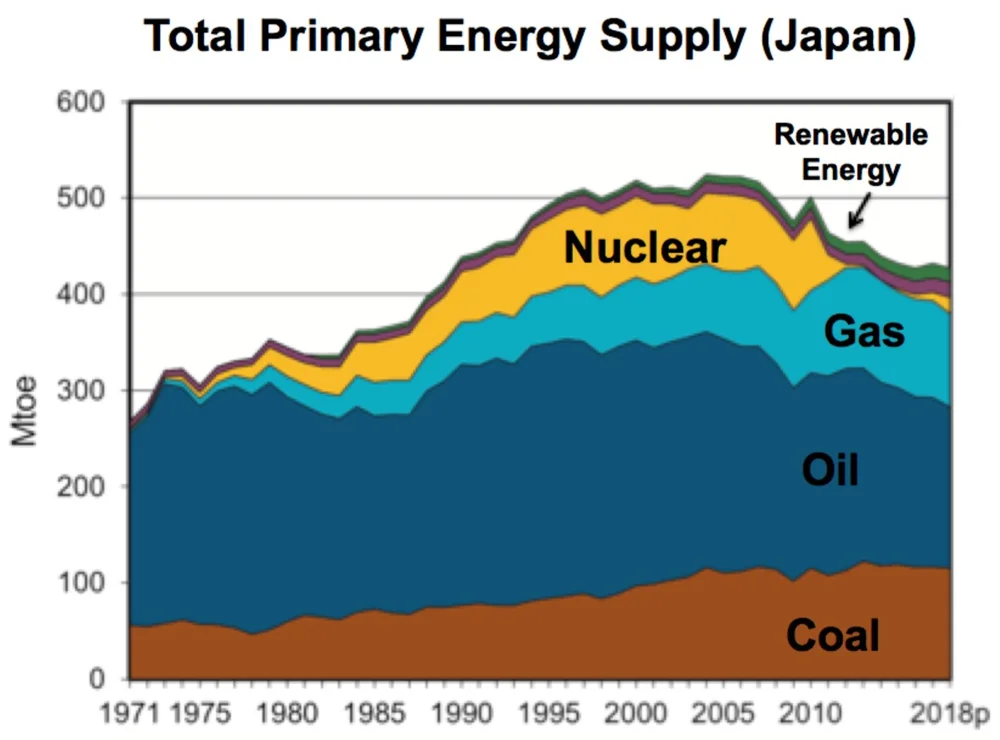
Japan has a decreasing population. Notice what has happened to it's need of energy:
Technology has always been the real factor that the doomsayers have gotten wrong. The typical disaster-in-the-near-future predictions have simply ignored how technology can change the situation and also how markets adapt. And affluence? This isn't a simple thing. The naive idea would be to think that a more affluent economy would have a bigger impact. This actually doesn't go that way: the more affluent society can take into consideration environmental issues and ecological issues far better than a poorer one. Just compare West European policies and practices to let's say those in poorer countries. I think it was Jared Diamond who noticed that the biggest environmental crisis tend to happen in the poorest countries.However, in the equation of Impact = Population x Technology x Affluence; it's the technology and affluence that can be changed significantly in relatively short periods of time — boethius -
Climate change denial
1) I blame the media.But the real question is why there isn't wide spread awareness and powerful movements, or then why the movements that do exist have so far failed. The denialist industry was and still is well funded, but it's not really a given they would win, and they've only really "won" in the US; here in Europe there's not really much climate denialism, but the policies are weak sauce; the "concerned" politicians of Europe never get together and do anything of significance.
I'm honestly not sure; it's not like the information is in secret books that an institution will systematically burn both the books and anyone possessing them. "Truth" seems to have gotten out far worse obstacles. — boethius
The journalists pick up the most damning forecast (from a variety) and run with the worst possible early outcome. Some scientists are perfectly fine to go with this in order to "wake up" the people, so they go with the worst earliest hypothetical outcome. And once that worst hypothetical outcome didn't happen twenty years ago, people can come skeptical about the alarmists.
Just to name a few, in the 1960's it was the population explosion that would lead to severe famines even in the West. Then the possible torching of the Kuwaiti oil fields would lead to something like the nuclear winter. And the list of these alarmist forecasts with dates that have long gone are there. I know that referring to them will make many people extremely angry. That the forecast didn't hold seems to be totally irrelevant, as the cause is beneficial.
2) Then I blame that some issues have been overcome. DDT has been banned. The Montreal Protocol on Substances that Deplete the Ozone Layer has been working: Since the ban on halocarbons, the ozone layer has slowly been recovering and the data shows a trend in decreasing area of the ozone hole – subject to annual variations. It has even closed sometime. We have already hit peak conventional oil production and oil production hasn't grown for some time.
3) And finally, I think that the society can cope with even more problems. We can have this economy limping with the pandemic limitations for years. We can not travel as much as before. Tens of millions of jobs have been lost in the tourism sector and flights have basically halved. We can change our behavior and never ever shake each others hands. Who needs so much travel? The fact is that our societies can endure radical changes. Thanks to the pandemic, carbon emissions have fallen at the most rapid rate since WW2. Primary energy consumption fell by 4.5% in 2020, the largest decline since 1945, yet solar Wind, solar and hydroelectricity all grew despite of this plummeting demand.
Above all, in 2020 we saw the lowest population growth in the World since at least 1950 with 1,05%. Just in 2012 the growth rate was 1,2%. It may be that some of us (those younger) will witness peak human population. -
The United States Republican Party
There are obviously a multitude of ways to participate in politics and the democratic process, but usually the thing for many is voting.You're completely wrong about the first point. It's typical of those who apparently believe voting is the only political action available, in fact (not to say you're one of them, but this line of argument is often used by them). — Xtrix
Wasn't the term essentially useless to you, as many other terms?Count me in for overthrowing capitalism, for that matter. — Xtrix
That is the way people look at it, yet there is the illogical idea of a third party being a spoiler: that especially if the third party is going for the voters that have voted for your party, it will cause the opposite side to win. This is why polarization works for the duopoly.Some say he only helped Clinton get elected. — Xtrix
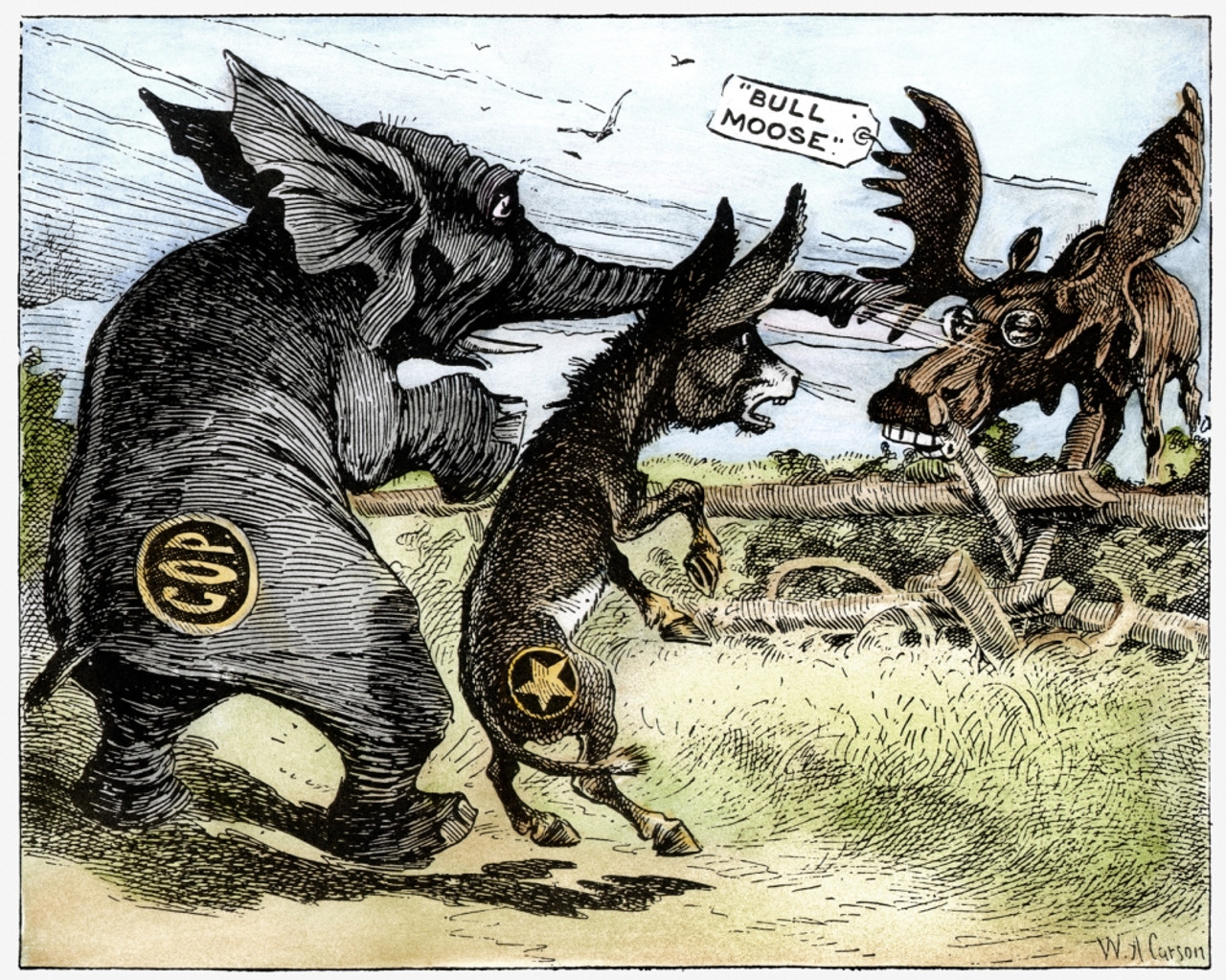
Good that you mentioned Perot. I think he was an unfortunate kind of "third party" is the political movement was centered around one person, likely who will run for the highest executive position. These parties are so loose, are totally dependent on the whims of this single person and will simply vanish once the great leader has died. In fact, Ross Perot isn't the only example, Teddy Roosevelt even tried the third party gambit after already been a President.
(He was fit as a Bull Moose for the Progressive Party.)
-
Where is the Left Wing Uprising in the USA?
Bernie and AOC have done their job well.Most of the far (and not so far) left has been conned into working inside the system to change – no, reform :shade: – the system, that is, just rattling the cage of the status quo. — 180 Proof
But when the next elections come things will change...if you only vote for the Democrats, that is. And then when things don't change...they will surely change in the next elections!!! -
Is Society Collapsing?In the 1980's there were roughly 70 000 nuclear weapons in the World and in 1983 during a NATO exercise the Soviet Union was really fearing an American out-of-the-blue nuclear attack by President Ronald Reagan. The Soviet Union readied it's nuclear weapons for impending first strike by the US, but luckily the US didn't notice it.
Now there are well under 20 000 nuclear weapons in the World and neither the US or Russia have nuclear forces at such high level of readiness as in the 1980's. Many of those Soviet nukes ended up as fuel for American nuclear power plants and giving electricity American cities (they were targeted to destroy). So some things have become better and some dangers have been avoided.
Naturally there won't be a time when we will not see anything dangerous on the horizon and no problems around to be solved. And so it doesn't look so scary. Just a little. -
The United States Republican Party
You accept the party when you just hope that the party would change it's course as an internal event. Or think that it's meaningless to vote for any other party however disappointed you are in the party: that your vote would be then "lost".What exactly are you implying by "accept"? — Xtrix
One should care what parties are in favor of them. It's not actually socialism, you know. Many right-wing parties at least in Europe are for them. Good example is Sweden. Put often to be an example of socialism, the country is quite capitalistic and "capitalism friendly". Modern Social Democracy isn't totally against capitalism.If universal health care and free public education is socialism, fine. If not, that's fine too. Who cares. — Xtrix
It really isn't my thing as a foreigner to do that. I'm still quite happy at politics in my country. The US-type polarization hasn't yet landed here. Hopefully the bullying never reaches these shores.Right, because you're doing so much to change it by complaining about it on the internet. — Xtrix
What I'm saying is that many people have these illusions on how much power the current political parties have and assume that the landscape is totally fixed. It isn't. In the US example a third party could rise to oppose the duopoly if it would have the strategy to start from the grass roots level, from communal and state level. Not thinking that a rapid dash of a third contender in the Presidential elections would do the job. It won't. To improve (or restore) democracy, one first has to believe in it. -
Donald Trump (All General Trump Conversations Here)Interestingly this was already reported far earlier, even during the election.
And it makes sense. Putin is a career spy and the former head of the FSB. He took direct control also of the Crimea operation, which gained total strategic surprise. Some other politician in Russia might have doubts to do anything like this in the US elections in case of a pullback if the other candidate won. Putin understood how wrecked the system is and how easily the issue would be confused to a conspiracy theory.
Heck, if Putin wouldn't have admitted that the "little green men" were really Russian paratroopers, there would still be those who would claim that they were just Crimean volunteers (that suddenly just had in their closets the newest BDUs that Russia uses).
But of course, there's going to be those diehard that won't believe this at all, and that precisely what Putin had in mind: a Hillary Clinton administration would have been right from the start one giant hearing after hearing.
For me the final thing was the Helsinki-summit. It was simply not normal behaviour from any President, especially of the US President.
“impulsive, mentally unstable and unbalanced individual who suffers from an inferiority complex”
That's the Trump I have seen. -
The United States Republican Party
Well, do you have an universal health care system that other western countries have? Or do you think Biden will give you basically free tertiary (university-level) education like my country has?So I really don't see this as fair criticism, especially once the reality of the situation is understood. — Xtrix

Put that to be the benchmark.
Well, if you accept the two party system, then don't be surprised when nothing really changes.True, the two-party system is awful. That the DNC didn't want Bernie and managed to beat him back is also true. The fact that they're not in favor of many of Bernie's proposals -- also true. I've said all that before myself, and this is widely known. Move on from that. — Xtrix
Besides, a lot of younger Americans don't actually want socialism in the classic sense. What they want is a welfare system equivalent to other western countries in the most richest country and not all the wealth going to the wealthiest.
And some conservatives will hope that the Republicans would push things to their liking also. So you both will uphold the two party system.I don't care for Biden or the Democrats. They happen to be our only realistic bet for anything close to being done, and they're clearly more susceptible to being pushed in the right direction. — Xtrix
Well, those two parties are counting on you to do that. And then it's just business as usual.
-
The United States Republican Party
At least you are an optimist. I wouldn't be so much.But with the influence of Bernie's movement, I think that's beginning to change. — Xtrix
Americans have this strange idea of "changing the party from the inside". The revolutionary thing that these two parties have done is to brainwash American voters to think that the parties own invention, "the primaries", are part of the actual election.
Bernie is more like the lure for those young Americans who basically are for social democracy (or that kind of stuff), yet Bernie will bow down to the party machine once the actual decision time comes. Bernie is all too happy to be "the second runner up" to what the party leaders want. And if he gets some legislation through, some success in moving the party to left, that is all he wants. You see, the Democratic Party isn't a social democratic party. Hence it simply won't go for universal health care or workers rights as a fully fledged social democratic party would do. In the US you have a centrist and a right-wing party. Simple as that.
(Yes....Bernie. An alternative? Really? Change will happen?)
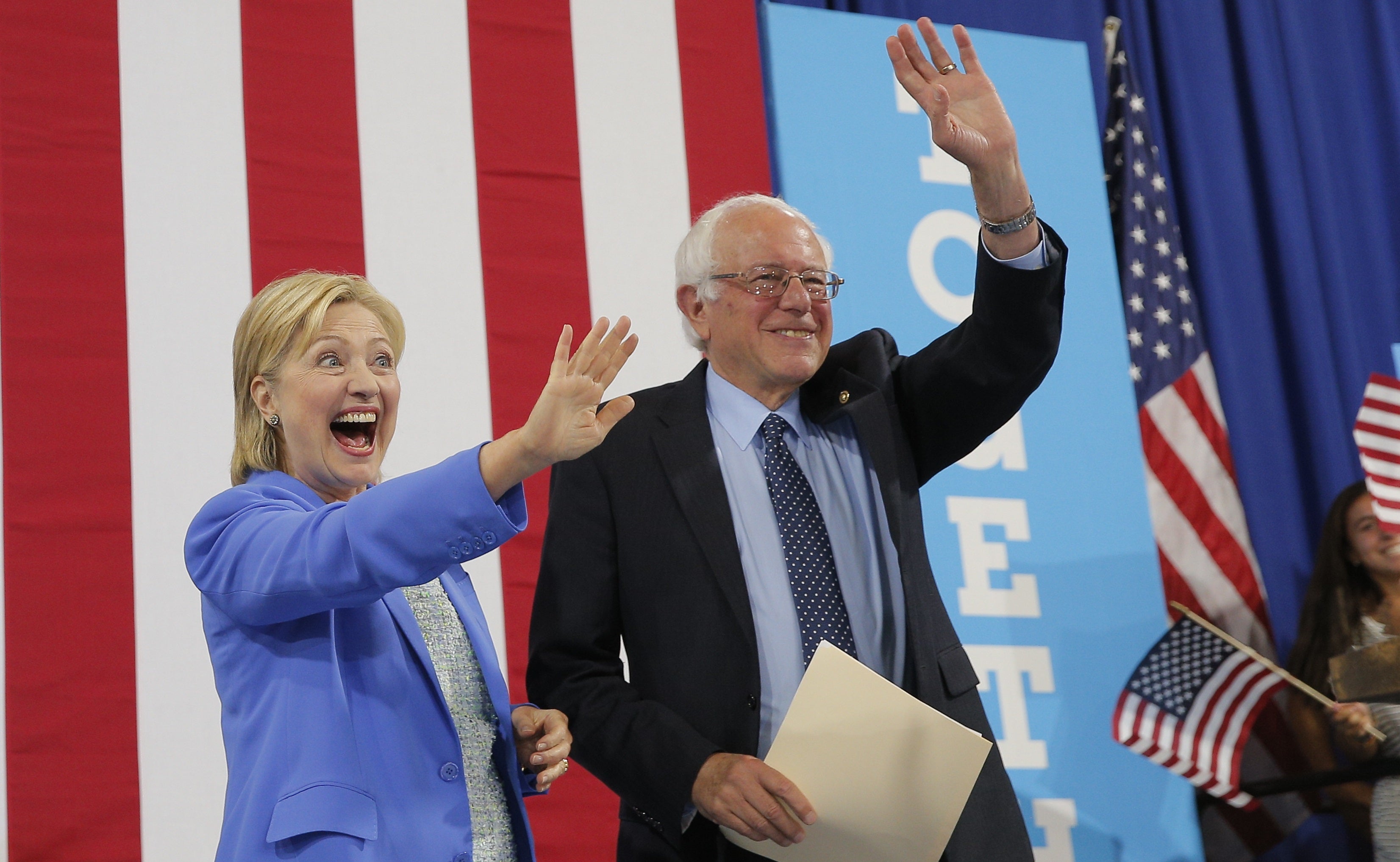

Same way Ron Paul lured libertarians to vote for the Republican party, I should add.
(Are these guys supposed to be libertarians or Republicans or RINOs?)

-
Taking from the infinite.
Can you put a time for it when this change happened?Actually all the infinities are ordinals. Even the cardinals are ordinals these days, though they didn't use to be. That was all explained in the post I wrote that you were kind enough to thank me for, while announcing that you weren't going to read it. It's true that most people have heard about the transfinite cardinals and not the ordinals, but FWIW, ordinals are logically prior to cardinals, in the modern formulation. — fishfry -
The United States Republican PartyThe utter inability to see fault in both parties is interesting, but very typical. As a foreigner, I think both parties are quite dubious here: first the Democratic Party had an obvious long lasting racist history and then the Republicans were all too happy to get the former white base that the Democrats "lost" during the 60's with the Civil Rights etc. That puts both parties to shame. It reeks to just a calculated political move that for both didn't have much to do with ideology.
What is also important to notice that these parties can change quite rapidly, basically last time it happened in just one decade. Today's parties might not be the ones from five years from now.
And the sad thing is that these two parties sustain their power grab of the political field by making it so toxic and polarizing. -
The United States Republican Party
That parties have dramatically changed in time is in my view a noteworthy fact, not something totally unimportant.Yes, it is totally unimportant. You see, the United States Republican Party used to be liberal and the United States Democrat Party used to be conservative. — James Riley -
The United States Republican PartyDoesn't that seem childishly black and white? As if the other side isn't equally corrupt?
There are some philosophical differences, otherwise people are people. — frank
No, Frank, it does not. We are not talking about "the other side." We are talking about fascist nationalist racist evil. The truth has a liberal bias. Good does not sit around and give the benefit of the doubt to King George, Jefferson Davis, Nathan Bedford Forrest, Emperor of Japan, Adolf Hitler, Donald Trump or any other worthless POS. — James Riley
So the history that Jefferson Davis was from the Democratic Party is totally unimportant here? It doesn't matter what a political party was for earlier (before the parties switched voters)? I'd still think that both parties have their own skeletons in their closet. You can just argue that one has more than the other.

You should not forget the most important thing with Madoff: He pleaded guilty basically immediately and did not plea bargain with the government. When the person is so exhausted from upholding the ponzi scheme, that he voluntarily gives it up....then US laws are enforced. Hooray.In America (and probable elsewhere as well), the Bernie Madoff law of the jungle applies: the rich & powerful elites only get prosecuted, even convicted and imprisoned, when they flagrantly steal from and/or harm other rich & powerful elites. — 180 Proof
A lot of similar con men just waited for the stocks to recover...and didn't go to jail. In fact, nearly nobody else went to jail (unlike back in time with the Savings & Loans crisis). -
The United States Republican PartyThat may be.
A Crack-up Boom is surely a possibility that is happening just now. Doubling the balance sheet of the Federal Reserve IN ONE YEAR has to have effects. Last time it was during the 2007 recession. How many more times will it work? Inflation is picking up, yet hyperinflation is a totally different creature. And the monetary velocity is plunging. At least with the lockdown.
Balance sheet of the Federal Reserve:
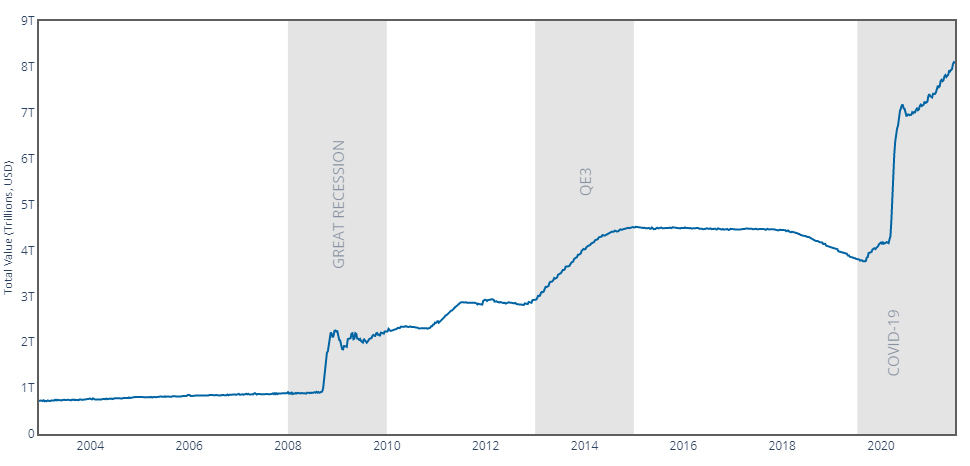
A financial collapse could spell doom for the two-party system. After the pandemic lockdown the last thing the American voter wants is a repeat financial crisis (or the same one coming back). At least it would be a severe political crisis under any circumstance. Basically the US would start to resemble more and more Mexico and less Canada. Yet it should it be noted that the doomsayers have been predicting imminent collapse since 2007 (or earlier). That's fourteen years ago. -
What is the Obsession with disproving God existence?Yes, but not umm...me. :yikes:
I guess many political parties will say that they are doing Gods work. Although believing in “The laws of nature and nature’s God” sounds rather peculiar. I wonder what kind of debate has gotten a result like that. -
The “loony Left” and the psychology of Socialism/Leftism
I'm not sure if there's any sarcasm in what you say.You don't get it.
Everybody else is racist and sexist. Everybody else is stupid or brainwashed and chooses to believe in religious fairy tales over material reality. Only people like me are strong enough to face reality in its true form and understand that the people must actively take power from our powerful oppressors and in turn reclaim control our own destiny. If we need to break a few eggs to make the omelette then so be it - that's a sacrifice I'm willing to make to my own mental health if it means a better future for humanity. — K Turner
Well, off you go to the barricades... -
The United States Republican PartyWell, sometime in the future this hole system based on debt might need drastic "restructuring".
That might not be so nice. But then again, it wouldn't be the first time when a lot of people lose their life savings. -
The United States Republican PartyI think Trump's success was from the fact that he seemed like a disruptor, so it's not really two sides at odds. It's a growing grassroots movement to ditch both parties. — frank
This is true.
So far it has been the GOP that has felt this more. Yet both parties have had the ability to somehow cope with this when you look at the timeline.
With the GOP it was first the Ron Paul candidacy, then that transformed to the "Tea Party" and then finally to Trump getting the nomination and becoming president. With the DNC it has been a somewaht similar line: first it was the Occupy Movement, then the Bernie Sanders tickets. The DNC has for at least now has not lost the control of the party and has been able to counter the protest movement and criticism with AOC and Bernie etc.
Yet it's doubtful if the two party system can refrain the political turmoil IF their is a hard economic downturn. If the economy survives well enough, there will be no problem. But if you have now a downturn after all the stimulus, then it might get really, really ugly. -
The United States Republican Party
Or it's the polarization of politics in the US.It seems these days the differences are becoming more extreme, with the Republicans going insane. — Xtrix
The Republicans just look more insane for you. Here it should be good to take a few steps back a glance at the politics from another viewpoint.
The reason is that for both parties it has worked well to portray the other party simply going off their rocker. It's the idiotic "Culture war" discourse that takes over nearly every aspect of political discussion. Yet it works. It's the modern social media way of portraying the other side. Claiming to be on the center doesn't work.
The fact is that it seems that there is nobody in the center anymore and the those on the extremes will surely attack people who are in the center. Yet I think many Americans still are in the center.
Yet even if Trump himself was a quite disaster, notice that many Trump administration policies have been continued by the Biden administration (of course not with any public declaration). Hence there is continuity, just as there was when Obama took office from Bush.
I think that the storming of the Capitol has calmed down the desire to embrace the polarization as the US hasn't had huge political fights during the spring and summer. At least many politicians have had enough of this and it tells. Of course, the situation is still tense in the US. One act of violence can again light the flames again. Yet for some time I have not picked up video clips of burning cars, protesters and the police clashing or the military deployed to the streets of some American city. I'd hope it would stay that way.
And now time will tell how much influence Trump actually has with the party. Will all those Trump endorses succeed in getting the nominations in the party? Trump isn't a leader, he is more like an influencer at this stage.
As conservative activists gathered over the weekend in Texas, the state's outgoing Republican Party chairman, Allen West, announced he will challenge incumbent Gov. Greg Abbott in a primary next year, even though Abbott has the coveted Trump endorsement.
Beyond Texas, the value of Trump's endorsement will be tested in North Carolina, Alabama and other states with competitive Republican primaries in which the former president has picked a candidate.
Some delegates to the Conservative Political Action Conference at a high-end Dallas hotel said they respect Trump, but he won't necessarily determine their vote in elections.
"It's a factor, but I don't know if it's going to be the decisive factor," said Deb Blencowe, 63, a community college teacher from nearby Collin County who leans toward West over Abbott in next year's GOP primary. -
The “loony Left” and the psychology of Socialism/Leftism
This is the problem with idealists and radicals.I think what tends to happen is that extremists start with some idea (like the Communist Manifesto) that sounds good on paper and that appeals to them emotionally, after which they get carried away and can no longer think rationally. And that's where "revolution", "jihad", or other forms of violence take over. — Apollodorus
Philosophers (or the philosophical types) are often idealists. They get carried so away with the ideology as they put on these ideological glasses on that blend everything to show how great their ideology is and hides the view any negative aspects. And anyone looking at the issues without those glasses and even remotely making a remark about the negative aspects will be seen as the enemy of the wonderful ideology, who then should be attacked.
There are those especially in the intelligentsia who do fall for the "Let's change the World totally"-argument that radical ideologies offer. As these usually have been among the smartest guys or gals around the block, they think that it's their calling, their chance to change the World. They have found their cause (at least for a while, that is). And as they are so smart, that change they are hoping for has to be important, radical, huge. Off with the old futile ideas! And this fits the progressive leftist as well as the right wing libertarian anarcho-capitalist. -
The United States Republican Party
Political agendas, principles and objectives aren't there to be taken literally, but to show what the political party favors and will think to be important. They are more a guide to the political discourse and viewpoints the politicians have than to actual policy decisions. When making actual individual decision there are other issues at hand also.I see no reason to take what’s written down too seriously. It’s kind of a joke, actually. — Xtrix
Yet what they emphasize is no joke. Similarily with the Texas Democrats.
That some industry is subsidized or, well, basically the whole government is running on money printed by the Central bank, doesn't change either the Democrats or the Republicans having their differences.
And as long as the ordinary people vote for the two-party system, this will go on.Both parties are beholden to wealthy interests, and the rest is a matter of degree. — Xtrix -
Climate change denial
More of a view of Scientism than actual science.Science is also a body of knowledge; a worldview, to contrast with an ideological worldview. — counterpunch -
Climate change denial
Societies will function as they do. Don't think you can change them.We need to look beyond ourselves, and apply the right technology for the right reasons — counterpunch
We are living now through a time of a global pandemic. We got many vaccines in break neck speed that usually have taken many years to develop. The implemented policies have been quite out of the normal and rapid. Yet the society has functioned as before. Markets have worked, it has been "business as usual" even if it has been totally out of the usual.
Hence this issue has to be dealt realistically, not to assume something that won't happen.
- and that's science — counterpunch
Science is a method of study.
What you are referring to is policy, which a totally different animal. -
The United States Republican PartyWhat about today? — Xtrix
Good question.
Usually parties would have an official webpage where this information would be easy to find. At least the information, what the party says itself it has as it's agenda. With the two American parties that is a bit difficult as they are far more looser entities than political parties in other countries. Hence one should not forget that it is the United States and the state-level shouldn't be forgotten.
Just to take an example, here are the stated guiding beliefs of the Republican Party of Texas. Texas is a red state and one of the most important states for the GOP. Here is the mission statement of the RPT:
PRINCIPLES
We, the Republican Party of Texas, believe in this platform and expect our elected leaders
to uphold these truths through acknowledgement and action. We believe in:
1. “The laws of nature and nature’s God” and we support the strict adherence to the original
language and intent of the Declaration of Independence and the Constitutions of the United
States and of Texas.
2. The sanctity of innocent human life, created in the image of God, which should be protected from fertilization to natural death.
3. Preserving American and Texas sovereignty and freedom.
4. Limiting government power to those items enumerated in the United States and Texas
Constitutions.
5. Personal accountability and responsibility.
6. Self-sufficient families, founded on the traditional marriage of a natural man and a natural
woman.
7. Having an educated population, with parents having the freedom of choice for the education of their children.
8. The inalienable right of all people to defend themselves and their property.
9. A free enterprise society unencumbered by government interference or subsidies.
10. Honoring all of those that serve and protect our freedom.
When you look at that above, it actually does say what modern GOP is all about. Now just compare the above to what the Texas Democrats will tell about themselves and their values:
Our Shared Values
Texas Democrats believe democratic government exists to achieve as a community, state, and nation what we cannot achieve as individuals.
We believe in equal opportunity, fairness, freedom, family, community, and a responsibility to ourselves and each other. These are the values our elders passed down to us, the values we hope to share with our children, and the values we expect from our elected officials.
The Texas Democratic Party is a movement of millions of Texans coming together to fight for our Texas values. We know our state cannot succeed when the deck is stacked against working Texans and their families.
At our core, we are all about a fair shot for all. That’s why Texas Democrats have a plan for jobs with fair pay, strong neighborhood schools, health care for all, debt-free college, investment in job training and technical education, a dignified retirement, and expanded family leave options, so Texans never have to choose between their job or caring for a sick loved one. We will never stop fighting for an economy that works for everybody, not just those at the top.
The idea that the parties don't have any ideology isn't the case. Them sharing the power as a duopoly in the US creates the environment for corruption and other problems. Yet the polarization of American politics can be understood just by looking at the principles and the values written above. Especially, when the two above are the only real alternatives. -
Climate change denialI understand your point, but just like with the discussion you have had with @Xtrix about fusion energy where your opinion is just "I'm not optimistic", so too can it be that others are "not too optimistic" about geothermal as a silver bullet answer to everything (as it has high initial capital cost and with the present technology you don't find hot rocks everywhere). Yes, increasing geothermal energy production surely is one thing to do.
In fact many renewables could make the claim to handle all our energy needs "if only" enough should be invested in them and the technology would be improved. But it simply won't happen like that: energy production methods will compete against each other on the market and the price mechanism will select the ones which will dominate the energy sector. And even if for a long time, basically from the time humans had the ability to burn wood, fossil fuels have dominated energy production as it has been the cheapest way to produce energy, it hasn't been that people have used only fossil fuels.
There simply are various ways to produce energy and they simply won't go away. I suspect you don't have anything against hydropower? Those dams already built will likely to be used in the future too.
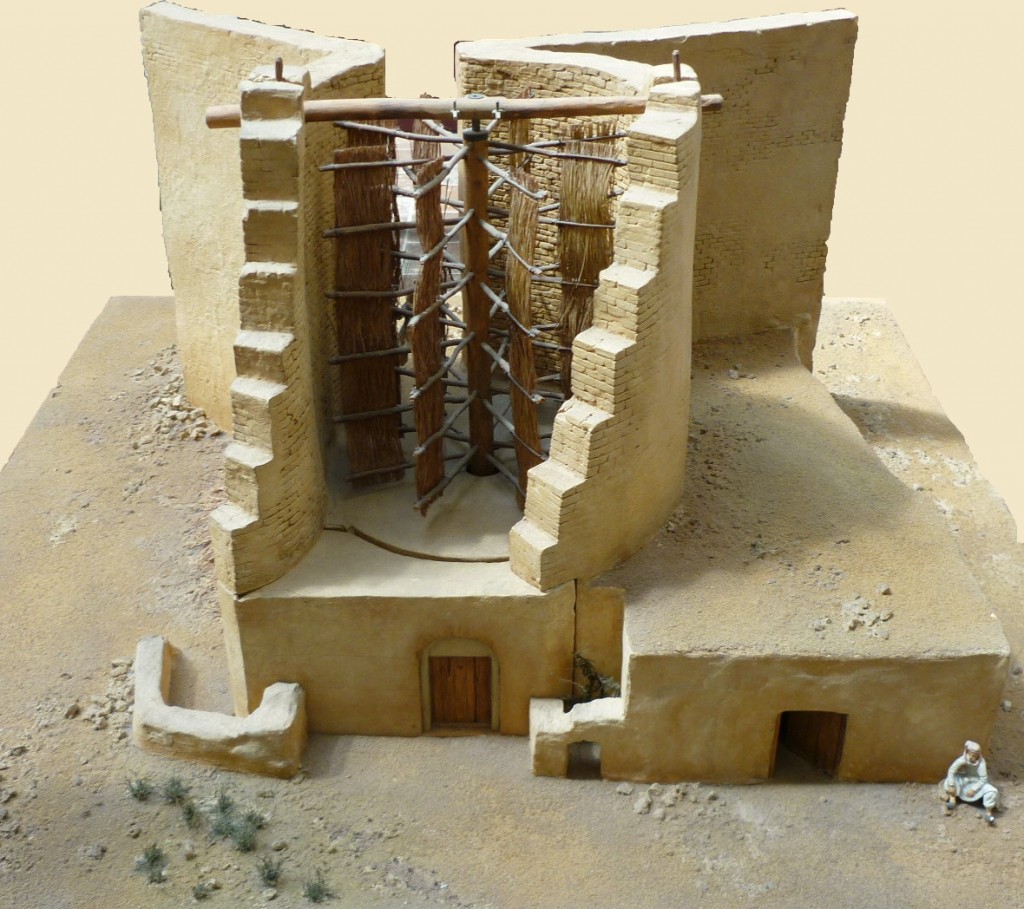
Oldest hydroelectric powerplant was built in 1882 in Fox River, Wisconsin. Yet the first water wheels go back to Antiquity (just as the idea of windmills).
Model of a Persian Windmill. Note that the Panemone windmill has a vertical axis rotating a millstone:
-
Climate change denialExactly! The problem lives in the real world. Energy policies are fashioned by sovereign nation states in service to their interests, and the sum of all national energy policies does not add up to a global energy policy rational to the climate change threat. Hence, we need a global approach to climate change. — counterpunch
Hence?
A global approach that is the sum of the most important nation states, perhaps 20 or so of the largest energy producers, that in aggregate tackles the crisis is what we should aim for. Actually what you said is the real answer: the sum of the largest national energy policies that does add up to tackle the climate change threat. And still those national energy policies will differ...as countries are in different environments. What works for Iceland might not exactly work for Finland. It's not realistic to think that somehow everybody will morph to being Borgs and get to the same conclusion as you have. And why cannot there be a multitude energy resources?
That wouldn't be necessary. Imagine a global effort to develop magma energy technology, and that energy applied initially to carbon capture and storage and desalination and irrigation - thus, mitigating climate change directly, and adapting to climate change due to occur. Energy generating capacity could be developed without disrupting energy markets - and used directly to achieve environmental benefits without imposition upon anyone. — counterpunch
I lost your logic here... Can you explain this better?
Unless you ask - is there a simple logical answer to this? And as it turns out, yes, there is! — counterpunch
There simply is no simple logical answer as this isn't just a "logical" question! Societies that have formed independent nation states is the reality that we live in. To assume it's "logical" to just rule them out not looking at the energy question from their own view isn't realistic. There's no golden bullet. That's just how we operate. -
Boycotting China - sharing resources and adviceBoycotting a particular country is like running away from danger, but not necessarily running to safety. — baker
A boycott is a hostile action which leads typically to even more tense diplomatic relations between two countries when the boycotts are made on the national level. It should be noted that it's two separate things if some pressure group wants to boycott an entity or nation create legal trade barriers. Next level up is a blockade, which is basically an act of war. -
Climate change denialIt's not an unreasonable question to ask - if it is possible that humankind might survive? Turns out it is possible - and here's how! What's messianic about that? — counterpunch
Yet what energy policies we choose on this planet is the aggregate sum of the various energy policies the nations states choose and what competition on the free market gives us. The fact is that energy production is such an existential question for our societies that it will be a question of national security to every country. They won't give up the independence to choose their energy production (they are called sovereigns for a reason).
There simply isn't one "logical" answer to this. "Science" doesn't give us one answer. As everybody has noticed, we here on this Planet do not decide these questions as one entity (or have them decided for us by one entity).
If there will be the technology that gives us cheaper geothermal energy anywhere, even in Finland, than by any other production means and this technology is available to everybody, then geothermal will surely dominate.
It's a similar question like if we get low price and highly efficient fusion power online, it will be the answer to a lot of our current problems. But there's that if: if it's price competitive. -
Climate change denialLikely at the global scale, energy production will always be a "diverse mix", that's for sure.
In my view, geothermal has been used quite a long time in places with volcanic activity. How about in Finland, where there is a solid bedrock of stone with only ancient traces of past volcanic activity?
The use of geothermal energy in Finland is restricted to the utilization of ground heat with heat pumps. This is due to the geological conditions as Finland is a part of the Fennoscandian (or Baltic) Shield. The bedrock is Precambrian covered with a thin (<5 m) cover of Quaternary sediments. Topography is subdued and does not easily produce advective re-distribution of geothermal heat by groundwater circulation systems. Due to crystalline character of the bedrock, rock porosity and its water content are low. This practically excludes geothermal systems utilizing hot wet rock. -
Climate change denial
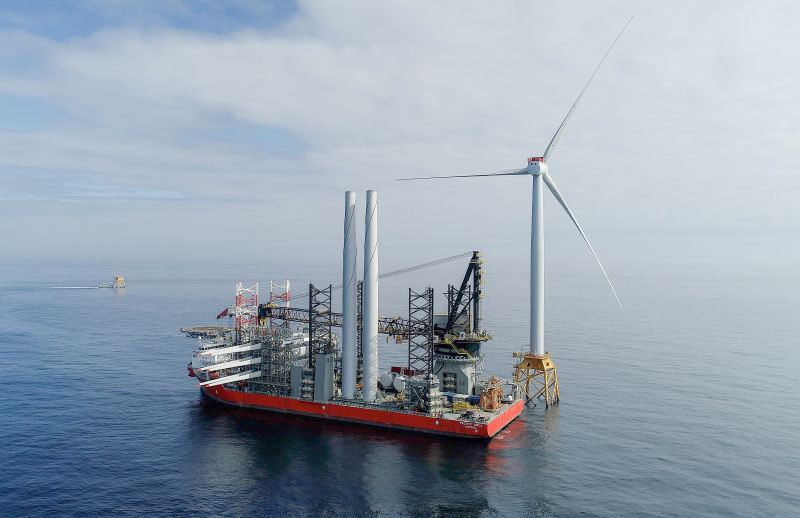
Yet that is the very promising aspect of this technological development: alternative renewables have come down dramatically in price. I think the reason is that enough players do notice the writing on the wall and understand that the dominance of the fossil fuels is going to diminish, hence there is a real competition for the new market shares.Renewables are maybe "cheaper" now in the abstract, if you'd have to start from nothing, but we're never actually starting from nothing. — ChatteringMonkey

Offshore wind turbines are huge, btw. And out of sight of the NIMBY types.
-
Climate change denial
Cheaper to whom? Likely sooner or later the iron laws of free market capitalism will take charge, but the transit isn't usually so quick.This make no sense at all, why are they doing this? Even if they don't give a damn about effects on climate change, you'd think they choose the cheaper option. — ChatteringMonkey
I assume that once they have a large coal power plant infrastructure and companies building the power plants, things go with the already input motion. And then there's the political aspects: Trump isn't the politician that wooed and will woo areas where coal mining is important.
Remember? Trump digs coal. Many other politicians do like the votes from coal producing areas too.

Turning around energy policy is easier said than done. And those countries that produce coal will surely look at it also as a security issue in times of war or sanctions etc. If you have domestic resources, they are better than resources that have to be bought on the global market.
Of course the writing is on the wall already. From this chart below the number of jobs in the coal mining sector has halved to 44 000 jobs. So no wonder those areas would be desperate for politicians promising a change.

-
Climate change denialI'd be curious to know what kind of debate there was in Japan before they decided to build a bunch of coal burning plants. — frank
Actually now they are coming to grasp how utterly stupid this is.
(Bloomberg, April 2021) A joint venture in Japan has scrapped plans for a coal-fired power plant, leaving the country with no new construction on the horizon as companies drop the dirty fuel amid tighter emissions rules and strong growth outlook for renewables.
Kansai Electric Power Co. and Marubeni Corp. won’t move forward with a 1.3 gigawatt coal power project in Akita prefecture that was slated to begin operations in 2024, a unit of Kansai Electric said Tuesday.
The firms decided to cancel the project due to the government’s tighter environmental rules and banks curbing financing for carbon-intensive projects, the Nikkei reported ahead of the announcement. The companies are considering building a cleaner biomass facility instead, the Nikkei said.
While there are still several coal projects currently under construction, Japan has no plans for additional new plants, according to BloombergNEF. A 1.2 gigawatt coal project in Yamaguchi prefecture was also canned earlier this month as electricity demand was expected to remain flat, while renewable energy expands.
So just several coal plants are under construction. But they do also have two nuclear power plant under construction. Here's how nuclear energy is being built (stats by IAEA):
Country Number of Reactors_____ Total Net Electrical Capacity [MW]
ARGENTINA 1 ________________ 25
BANGLADESH 2 ________________ 2160
BELARUS 1 ________________ 1110
BRAZIL 1 ________________ 1340
CHINA 13 ________________ 12565
FINLAND 1 ________________ 1600
FRANCE 1 ________________ 1630
INDIA 6 ________________ 4194
IRAN, ISLAMIC REPUBLIC OF 1 ___ 974
JAPAN 2 ________________ 2653
KOREA, REPUBLIC OF 4 __________ 5360
PAKISTAN 1 ________________ 1014
RUSSIA 3 ________________ 3459
SLOVAKIA 2 ________________ 880
TURKEY 3 ________________ 3342
UKRAINE 2 ________________ 2070
UNITED ARAB EMIRATES 3 _______ 4035
UNITED KINGDOM 2 ________ 3260
UNITED STATES OF AMERICA 2___ 2234
With that, let's compare that above to coal plants being under construction.
(The Guardian, June 2021) Five Asian countries are jeopardising global climate ambitions by investing in 80% of the world’s planned new coal plants, according to a report.
Carbon Tracker, a financial thinktank, has found that China, India, Indonesia, Japan and Vietnam plan to build more than 600 coal power units, even though renewable energy is cheaper than most new coal plants.
The investments in one of the most environmentally damaging sources of energy could generate a total of 300 gigawatts of energy – enough to power the UK more than three times over – despite calls from climate experts at the UN for all new coal plants to be cancelled.
Catharina Hillenbrand von der Neyen, the author of the report, said: “These last bastions of coal power are swimming against the tide, when renewables offer a cheaper solution that supports global climate targets. Investors should steer clear of new coal projects, many of which are likely to generate negative returns from the outset.”
So just five Asian countries are building over 600 coal plants with over 300 gigawats (300 000 MW), while only 51 nuclear power plants are built producing under 54 gigawats of power.
Anyway, there is an very interesting and eye opening Global Coal Plant Tracker , which I advise to people to look at. A lot of info on coal plants!
(Here's what it looks like:)

-
Climate change denialDefinitely. But we'll have to transition to another energy source sooner or later. There's a limited amount of hydrocarbons to burn. — frank
Limited yes, but never forget the price mechanism: with higher price, more costly production methods and resources become profitable. And here is where the "feelgood" narrative of wishful high minded thinking stumbles upon ignorance of the actual reality. It is far too easy for the high minded to simply declare that we have to consume less.
The best example in my view are the hostile attitudes towards nuclear energy, a zero emissions energy resource. Countries that have made decisions either to go off or radically reduce nuclear energy have either simply not kept their promises (Sweden) or then built coal plants (Japan) or resorted to export energy typically from coal plants (Germany). Japan, where nobody did die in the Fukushima accident (but many thousands in the actual Tsunami in 2011) just shows how illogical energy policy can be:
(Feb 5th, 2020 the NY Times) It is one unintended consequence of the Fukushima nuclear disaster almost a decade ago, which forced Japan to all but close its nuclear power program. Japan now plans to build as many as 22 new coal-burning power plants — one of the dirtiest sources of electricity — at 17 different sites in the next five years, just at a time when the world needs to slash carbon dioxide emissions to fight global warming.
Electricity production by fossil fuels has increased in Japan:
-
Climate change denialI agree. I spent a while immersed in the Bronze Age collapse, which was probably a result of natural disasters, war, and civil unrest.
In a short amount of time, two cultures just disappeared. No one factor would have brought the bronze age down. It was the combination of forces.
So the troubled times ahead will have climate change amplifying whatever stresses are native to the situation. — frank
Yet the Bronze Age collapse didn't mean that humans became extinct. The wording which many here use of an "existential" threat in my view shouldn't taken literally as an extinction event of the human race. Earth has had mass extinction events and some say that the change that now species are dying at such rate that one can say that this is a mass extinction event. However the collapse of our present way of life is something totally different from the extinction of the human race. There never has been such an adaptive animal as us, so the idea that climate change will doom us is in my view an exaggeration.
What happens to our current society is another thing. Yet even if that "collapses", it really doesn't mean an existential danger to the human race.
And to make this point, notice that we are living through one of the worst pandemics which was just a few years ago a hypothetical scenario, and we have adapted. -
Climate change denialBetter than building rabbit-proof fences, yeah. This mentality is what I was thinking of btw:
— Kenosha Kid
@KasperanzaI mean yeah there's all this science, but what are we supposed to do about it? Just cut out fossil fuels without a real replacement? To me that's scary. Epstein's point is that fossil fuels protect and enhance people's lives. Fossil fuels protect people from heat waves. And yet the environmentalists want to limit them. I find it to be worrisome.
This is very typical in my experience. It'd be like trying to ban guns in the US, people would just lose their minds. — Kenosha Kid
Sometimes it's hard to even face the facts how these things work. Like a Democrat administration banning guns in the current political environment wouldn't do wonders to the already vitriolic political environment. The same problems are when we let's say talk about replacing fossil fuels. The way things work in our global economy is that you would have the cheaper alternative energy resource. Even that still would leave the plethora of uses that for example oil has, which shouldn't be forgotten.
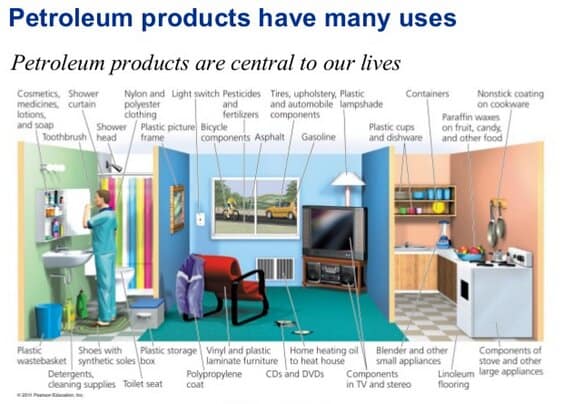
And perhaps there is the distinction of whom we want to listen. We will listen to the scientist and to the activist we agree with. Yet many would be hesitant to listening to economists or people from the corporate sector who basically are in charge of these issues (as we don't trust them). Yet the issue isn't just environmental, it is economic, logistical and political. All those issues have to be tackled before we have the true environmental solution. Otherwise the politicians will just fool us with grand promises of getting solutions in a decade or two that will not become reality. -
Climate change denial
Well, then we should not say that the goal is to save the World, but just to say to help us and the few next generations of humans after us.I'm talking about human life, not general biological life. So in case that wasn't clear, there you go. Yes, bacteria will probably go on without us. That's little consolation to me, my grandkids, or my great-great grandkids. — Xtrix
A holistic view is sometimes quite important. You see, if you start from thinking about yourself and then come to conclusions to what to do, you might not think about the broader effects your actions do.That doesn't provide perspective at all, really. Not if we're talking about human life. Because, if you notice, we haven't been around that long. Behaviorally modern humans, maybe 200 or so thousand years. Better to look at that record. Also best to take a look at what scientists say about this and why it's important. — Xtrix
Understanding that we are a part of nature too, helps think of the situation better in my view. -
CoronavirusYou can't sell bat soup as a well grounded, rational hypothesis while not only immediately the Wuhan lab hypothesis as mere conspiracy theory AND do this with either your request or tacit expectation that digital media will remove posts and videos about the lab hypothesis AND publish fact checker denials that this is a mere conspiracy theory — Bylaw
This is the problem. And that those who have a lot to lose (who even might face legal suits) then being on the WHO team looking at the Wuhan lab possibility doesn't raise the confidence.
The confidence can be also lost by the totally absurd line when the pandemic erupted that "masks don't work". That was the low point of trying not to have people hoarding them when even health care workers had problems to get them. A far better line would have been: "Masks work, but now there is such a bottleneck in the production that we advise ordinary people not to use them before the supply issues are resolved". Face the truth, say how things are. (And btw, market mechanism did work and now there are enough masks)
This isn't helping much as there are so many totally bonkers views spreading distrust about vaccination and about modern medicine in general. Unfortunately public discourse is totally incapable of separating the loony from the more credible arguments and the typical line today is to censure everything by simple algorithms. -
Climate change denial
Then the solution is simply to create a cheaper energy resource that burning fossil fuels. Even in aircraft design they are looking for using other fuels.There are multiple potential tipping points. See above for some links, or you can Google "climate tipping points."
Climate change in this context refers to a rapid change in the Earth's climate driven by human activities, especially the burning of fossil fuels. — Xtrix
But I guess the perspective still is on our own asses, because life on Earth will surely adapt to situations where the polar caps have melted etc. We humans on the other hand might have huge problems.
Global temperatures, historical:
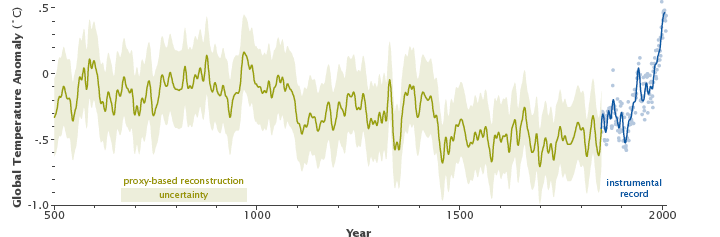
And a bit more perspective to those changes:
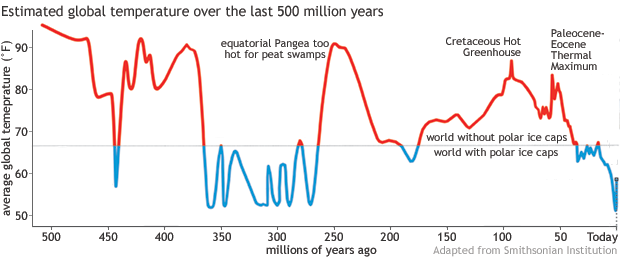
Perhaps one philosophical question (as this is a Philosophy Forum) is the following: Do we look at ourselves as being part of the fauna on Earth or do we have the somewhat Christian view that this is a garden that has been given us to keep and make the separation with nature and us. Some might say that this is totally unimportant, but actually it's very important.There are lots of apocalyptic scenarios, but also lots of survivalist scenarios. Even some of the apocalyptic ones are quite optimistic: we might wipe ourselves out, maybe take a lot of species with is, but leave a living planet that obtains some kind of harmony. That's not necessarily a bad outcome. — Kenosha Kid
As never in the timeline of life on Earth has one single species been so dominant and abundant, it's not surprising that it can teeter on a collapse based on it's own existence. The whole advanced economy (that we call globalization) is needed to sustain such large populations. But at least I'm an optimist. We have already seen Peak-conventional-Oil (production). And we are living during one of the worst pandemics in history.
Still life is quite good and I can discuss this issue with people I don't personally know that are on other continents.
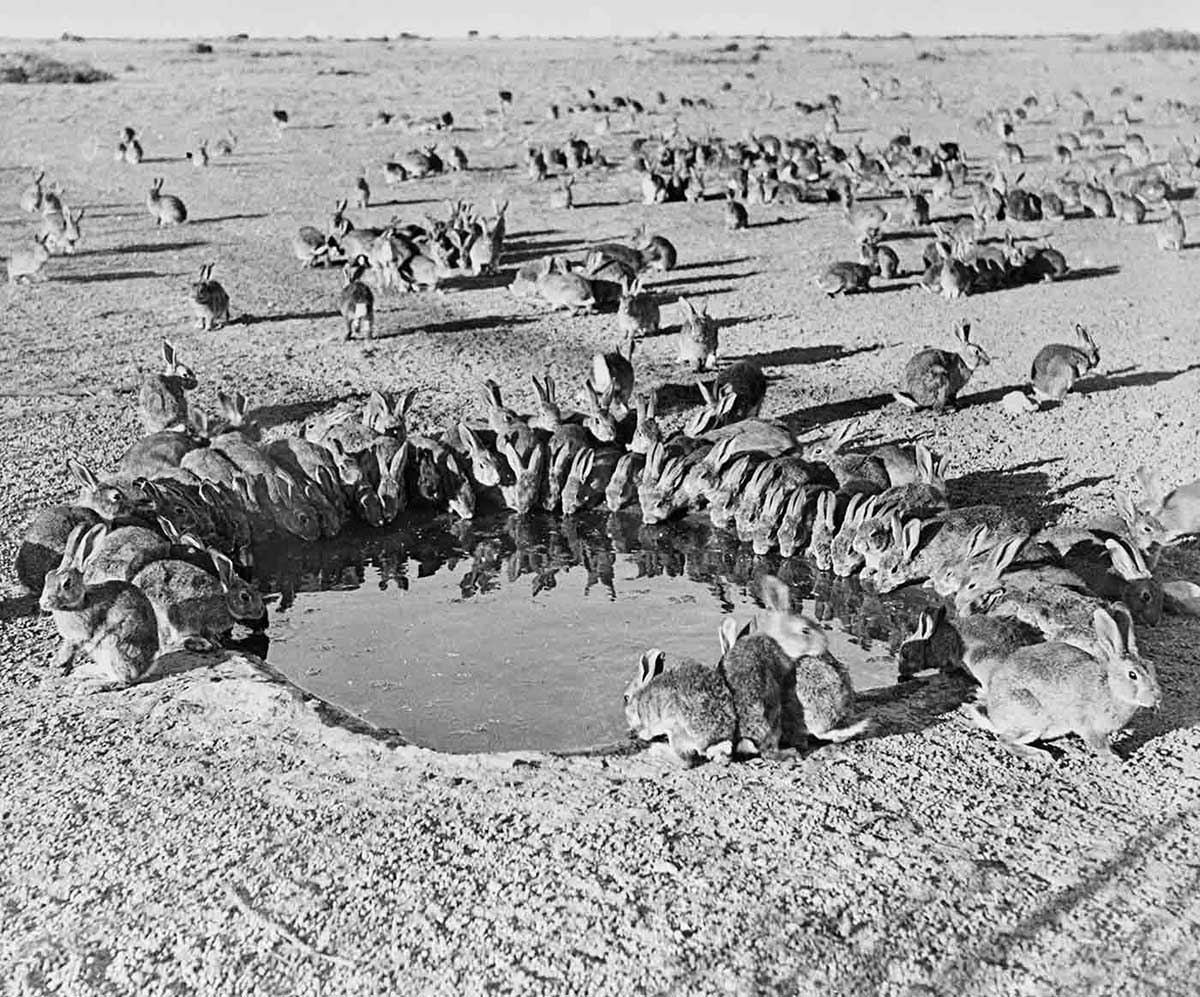
(Some other species have difficulties, when humans have introduced them to habitats without enough predators...building more advanced societies would help.)
-
Climate change denial
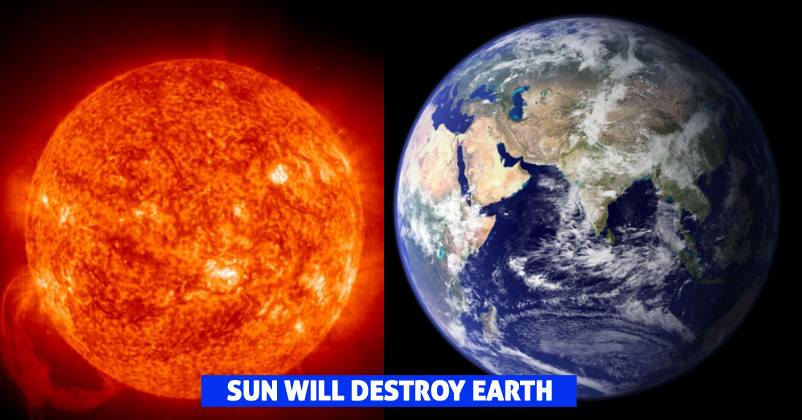
No, the sun will not kill all life on this planet for some 5 billion years or so. The future after that is bleak for life on our planet.Is it already too late? — Xtrix
First you should define just what is the tipping point you refer to. Or what you have in mind with climate change.If so, will we reach tipping points no matter what policies we enact? — Xtrix
No. If people take your question literally and not as a figure of speech. (Do you know the environment in Venus?)Will we actually turn ourselves into Venus? — Xtrix
If it's not too late, what exactly can we do to contribute to mitigating it? — Xtrix
A lot of things. Radical changes, not so radical changes and everything between. Unfortunately there the actual policy actions, the scientific socio-economic policy discourse, and the politicized agenda-driven public debate have veered all into different realms.
But we can have an effect on our environment. Even if I'm not so sure that with the current numbers of nuclear weapons detonating all of them would actually cause a nuclear winter. A super-volcano eruption would make global warming not the climate change we are worried about.

ssu

Start FollowingSend a Message
- Other sites we like
- Social media
- Terms of Service
- Sign In
- Created with PlushForums
- © 2026 The Philosophy Forum