
Comments
-
On AntinatalismI have no problem with this statement of the issue, but anti-natalists, at least as represented here on the forum, take it a lot further. They draw harsh conclusions based on that evaluation, propose a draconian solution, and, some of them at least, want to inflict that solution on others who disagree with them. — T Clark
Antinatalism is the best solution for all the problems I have laid out over the years. It is draconian to force others into a system, without caring that this creates collateral damage. I'm going to be a broken record because some records are classics:
I. Keep in mind that no actual person is deprived if not born. However, some actual person will always experience harm if born (the Benatar asymmetry argument).
II. Being born means moving into a constantly deprived state. In other words, prior to birth, there is no actual need for anything, after birth, needs and wants are a constant (Schopenhauer's deprivational theory of suffering).
III. Life presents challenges to overcome and burdens to deal with. When putting a new person into the world, you are creating a situation where they now HAVE TO deal with the challenges and burdens. It does not matter the extent or kind of adversity, the fact that a parent forced a new person to deal with challenges and burdens of life in the first place, is not good. Forcing something to play a game that cannot be escaped, or to burden someone with tasks that cannot be escaped, including enduring one's daily life challenges, is not right, no matter how much people later "accept" or "identify with" the game they were forced into (i.e. the "common man's view" used so much to counter the antinatalists "extremism").
IV. Contingent harm is harm that is situational. You simply do not know how much harms there are in life for a certain person. This creates huge collateral damage that was not meant for the child to endure, but he/she must do it nonetheless. Some people will find the "love of their life" others will be loveless for life. Some will struggle to keep food on the table for themselves, others will become highly successful in a career. Having the capacity for achieving one's happiness, does not mean this will occur for any particular person. In fact, if we are to be really real here, the ones that will be successful with much of what most consider "happiness" are using the ones that will fail at this. Why? One cannot know who will be successful or not prior to birth, so you must take chances with peoples' lives to see the actual outcomes.
V. We are used as "technology/progress" advancers by a circular-production system. We rely on the productive forces to make stuff, and are forced into a system where we are constantly producing and forcing others to produce with our consumption. Once this system subsumes everything, there is no escaping being a part of its productive forces. We try to "self-help" people into accepting a "job that you like!!" so that this seems less painful, but we are just extensions of the machines we create. Plastics, chemicals, metals, materials of all kinds, mining, transportation, engine-building, building-building, any damn product in the world, manufacturing, utilities, engineering, etc. etc.
I can keep going, but I won't. You get the picture. Antinatalism prevents suffering for all, and forcing people into the world. No ONE loses out by not being born, but EVERYONE loses in some way by being born. My inaction to create someone hurts, literally NO ONE. Someone else's action to birth someone, always creates some harm, and if we believe that being deprived is a negative state, there is constant suffering there too. -
On AntinatalismI don't think this whole "you're an anti-natalist because you're depressed" argument is a legitimate one. Whatever the psychological basis of schopenhauer1's beliefs is, he is right to expect us to argue the merits of his ideas. — T Clark
Of course he has the right to say that. He just doesn't have the right to inflict his judgment on the rest of us. — T Clark
Well stated. That was what I was trying to convey :up: -
On AntinatalismSee, and that's a form of black-and-white thinking along with overgeneralizing. You prevent the unborn fetus to make up their own mind in regards to the issue, and project a fatalistic, pessimistic, and highly negative outlook on their future life, which manifests in the form of denying the fetus ANY life. That's just wrong, and I'm the first to point it out or make explicit. — Wallows
First off, there is no "unborn fetus", unless we are discussing abortion. It's just a potential person. But, no you are not the first person nor the last to try to psychologize pessimism into a psychological stance rather than a philosophical one. I've written thousands of posts with probably hundreds of various arguments for pessimism. I can go over structural suffering of deprivation, how foisting challenges to overcome is wrong, no matter what the attitude of the foisted upon, collateral damage, you name it. Benatar's asymmetry is a good place to start- no one is deprived, but harm is prevented, etc. In fact, I just had another argument about de facto being used as a source of circular labor, that is supposed to be ameliorated by the inherent "goods" to justify being used as such. I can give many arguments, but you will then just say "that's black-and-white" thinking. Nothing will suffice at that point. No one has to go through any form of experience in the first place. -
On AntinatalismNo trolling implied. — Wallows
Again, there are only two or three antinatalists here. Slim-pickins.. Of course you are going to have the satisfaction of almost anyone else who comments agreeing with you :roll:. So, I'm doing my own psychoanalysis here..as you were in your OP.
Anyways, I don't really know what your argument is, except vague assertions that antinatalists are projecting onto the fetus. Well, literally, that is all we can do when we discuss a future person, project onto that future person, so that's not saying much. The antinatalist at the end of the day, does not want to bring more people into the world due to some sort of either structural/contingent form of suffering, or combination thereof that the world either "is" or "contains". At the very strongest case, there would be an appeal to how the world is structurally suffering for everyone, no matter what contingent circumstances the person experiences. At the very weakest end, they can say that AT THE LEAST, no collateral damage to some future person occurred. But, you knew all this I'm sure. So, I don't know what you're getting at other than trolling for the sake of trolling. -
On Antinatalism@Wallows
What's the point of even bringing this up if you are only going to have, what, two antinatalists on this forum defend it against the hordes of non-antinatalists? That is a bit of trolling if you ask me. BUT I'll indulge your trolling attempts...
So the problem that @Andrew4Handel brings up is a real one for the individual in a society. That is that people cannot choose the historical development and societal institutions/setup that he/she is brought into. That is just a fact. There is no "really" escaping it either. Your options are... be beholden to the forces of this behemoth technological economic giant and get by with the six or so "goods" to overlook the cirucular productive forces that we are forced into, or do the following- kill yourself, become a part of the underclass (homeless), become some sort of monk/hermit. These last three are not great choices, and the main de facto choice of just complying with the circular productive forces with six or so goods, is the default. These are just not great choices to be forced into. Keep the productive circular thing going with six goods to tide you over, experience contingent harm, and deal with problems and overcome them. By the time you realize that you don't want to be a part of ANY of these choices, IT'S TOO LATE. There is no collateral damage being not born. Nor is it a mission to bring anyone into the world. People are not just more productive forces of labor to be ameliorated with the six or so "goods" of existence (physical/aesthetic pleasure, relationships..).. But that's exactly what they become. It might not be intended that way, but that is the situation people become when brought into the world. It's not EVEN a matter of perspective on this.
Despite his bitter protestations, I'm bringing in @Bitter Crank because I think he might shed some light on how we are circular forces of production.. He will shrink away from total pessimism on this.. but I think he has some wise insights on the whole shebang. -
The HARDER Problem of Consciousness
I dont know what it is. That's the phenomena to be described. One can say causally imagination is certain brain states but metaphysically, how my experience IS my brain states- well that is the question at hand! -
The HARDER Problem of ConsciousnessSo then we'd have to figure out why you'd think that consciousness can't be properties of physical stuff, but consciousness can be properties of nonphysical stuff, whatever nonphysical stuff would be. — Terrapin Station
Nonphysical stuff would be like "imagination", "color green", "sound", "the concept of happiness", etc.etc . It is also called "mental states" or "experience". Green is presumably part of a lightwave frequency. Green, the visual sensation, is presumably a lightwave frequency hitting the rods and cones of an eye, causing the auditory nerve to do X, Y, Z, causing the eye apparatus to do 123, causing the first layers of cortical neurons to do 678, etc. etc. sometimes synchronosuly, sometimes asynchronosuly, brain events are happening. But what is this "green" quale..subjective experience as opposed to the physical substrate?
Let's take a property you mentioned, melting. Why doesn't melting have experiential qualities to it? What is it about neurons that have experientialness? Calling something a property does not make the hard question go away. If that were the case, long ago the hard question would have been discarded as not an issue. David Chalmers would not read this and go, "oh shit, what was I thinking!!" :rofl: -
The HARDER Problem of ConsciousnessRight. At the moment I'm just trying to clarify whether you agree that all physical things "have" various properties. Because it wasn't clear to me on the earlier comment whether you'd agree with this. — Terrapin Station
So where does that get us? Ice melting, and other physical processes are presumably..physical. How it is that one property- the mental, is experiential and not just physical stuff, is the question at hand really. Calling it a property that emerges, is restating what we already commonly think of when discussing consciousness. That doesn't really add much though. Neurobiological organisms, in a certain environment have consciousness is not saying much either. Restating the problem. Unless you pose that melting ice is experiential, you are missing the point of the hard question. Other processes are physical without experientialness..why does this process have experientialness? It is the experientialness that is the issue here. That's what makes it so different than other properties in the first place. -
The HARDER Problem of ConsciousnessDon't you believe that all physical existents "have" various properties? For example, wouldn't ice with a melting surface layer be much more slick than a tar pit, so that a rock on its surface will much more easily be transported across the surface by, say, a steady 20 mph wind? — Terrapin Station
Those are not properties of experience. We are investigating properties that have experientialness to them, no? Properties like melting points are not experientialness, though one can experience them happening once experientialness hits the scene. The very property of experientialness allows us to investigate other properties. The question is not whether it is simply a property or not, per se, though that can be debated, but what makes this property experiential. What is this thing we call experience and why is it related with matter? -
The HARDER Problem of ConsciousnessThe problem, as it is, is simply that there is not yet adequate language for what you want to explain. It's the beetle-in-a-box. Co-opting existing public language and giving it a private interpretation doesn't help, it just muddies the waters. As we've seen with modern physics, it's continued scientific investigation that exposes hidden assumptions and forces us to rethink the kinds of questions we're asking and whether they even make sense. — Andrew M
I see your argument as not advancing anything other than what we know. People experience quale, we can converse about it. The question is not about whether your quale is different than my quale. The question is WHY or WHAT is quale as compared to the physical substrate which it is correlated with? How is it that certain physical substrates have a "what it's like" (e.g. quale) aspect to it, unlike every other thing in the universe which does not have this. By only providing causal explanations (like evolution, neuroarchitecture, etc.) you are only getting at the easy problems of how physical substrate correlate, but not how it is that physical substrate can be mental phenomena (i.e. experience). -
The HARDER Problem of ConsciousnessBut you're not addressing this: wouldn't consciousness have to be a property of something? Some sort of existent? — Terrapin Station
Yes, I am. It is existent, but how is it that this property is metaphysically the same as the physical substrate. If properties are just "something" of the ethereal realm that are "slapped" onto the physical, you don't have much of a theory outside plain old dualism. -
Work should be based on quantity of boredom involvedNow wait a minute. I learned how to garden from my dad. He had a shovel (a spade), a pitchfork, 2 heavy garden rakes, and a hoe (the implement, not the other kind). He also used a hand-pushed cultivator. I'm still using his pitchfork. That's it. He did all his work himself by hand after work and on weekends. Never used artificial fertilizer (he used leaves). On this ground he grew beets, carrots, onions, Swiss chard, leaf lettuce, cucumbers, tomatoes, pole beans, and corn. The beets, tomatoes, pole beans, and corn were canned in a pressure cooker or big kettle of boiling water (depending). Cucumbers were made into pickles and canned. Apples were bought from orchards and canned. — Bitter Crank
Yum. Sounds healthy.
I suppose packaging seeds was a boring job. And somebody had to drive around the countryside stocking seed displays in hardware stores. Hey, you could do that. It would be fun. Out on your own; going into small town hardware stores, selling seeds and preaching the anti-natalist gospel. — Bitter Crank
I suppose this would be ideal..I'd use the spade to dig the ditch I would inevitably defecate in, and sleep under the bridge for my shelter as I peddle the seeds to the hardware stores :).
If you want to know what was boring, it was canning hundreds of jars of food every summer and fall. It was tedious and hard work at the same time. — Bitter Crank
I can imagine! -
The HARDER Problem of ConsciousnessObviously consciousness is a property of something, no? Why would you think of it as being "magic"? — Terrapin Station
Again, the Cartesian Theater is the "magic".. not literal of course. At some point, there is a hidden dualism or a Cartesian Theater whereby the physical processes happening get "transformed" into "experience" first-person style. Thus, nothing is explained.. experience explodes onto the scene.. words such as "emerges" then mean little except for.. I don't know "magic". -
Work should be based on quantity of boredom involvedI've grown strawberries in my garden--they weren't worth the trouble. Raspberries -- much easier, because they just take over and rule. The soil on my lot is either poor or way too shady. I know how to grow vegetables and corn, but one needs a large garden, decent soil, and little shade to grow a significant amount of food for a family. Plus, I'm getting a little old to undertake urban agriculture. — Bitter Crank
Your garden is just a hobby.. You need the plastic, the concrete, the pipes, the water, the billions of other things that engineers and happy inventors thought so that there can be output which costs billions of units of Boredom to produce. Your hobby garden is someone else's widget hell. -
Work should be based on quantity of boredom involvedFunnily enough, I had just been thinking along related lines when I came across this discussion. When most people speak of “work”, they refer to tasks that they would not voluntarily do but require some form of monetary incentive for due largely to the boredom you mentioned. And so when we put efforts into what we enjoy doing and for which no pecuniary recompense is forthcoming, we are widely regarded as “not working” and by extension of not being productive. Of slacking off, lounging about, or—with vicious ethical precision—of being takers rather than givers. So why is it that work, that socially necessary currency of mutual respect, should be generally defined as boring with non-boring alternatives treated with such suspicion, and what does that say about the way we live now? — Baden
I agree. I would suspect because non-boring alternatives would leave little to be desired for getting all this "stuff done". Someone needs to make the water meters, no? Someone needs to make the bricks, the sidewalk, the electronics on your air conditioner, the copper that transmits bits of information, the etc. etc. etc. ..someone has to monger all this minutia!! Someone's happy invention on a team somewhere in GE corp. makes it that millions of tedium has to get done to produce it for the output.. My point is, how do we quantify all the tedious boredom such that it is measured against the "satisfaction" of the output? -
Work should be based on quantity of boredom involvedIf we're doomed anyway (many think we are) we might as well enjoy the show. Throwing in the towel, leaning back against a tree, and just observing might actually have some salvific power. Ceasing to strive, is, after all, the opposite of what has gotten us to our sad state of ourselves being bored to tears by technological production even as we breed our way to a more complex destruction. — Bitter Crank
Absolutely. But not everyone can be a Jack Kerouac watching the world progress away in tedium. -
The HARDER Problem of ConsciousnessThe ability to discriminate objects by color has a utility, and this particular means of discriminating color just happens to be what developed as a consequence of genetic drift and environmental factors. — Relativist
You are answering the hard question with easy question answers. The question is WHY is it that there is such thing as a subjective feeling of quale in the first place? Or rather WHAT is this subjective feeling of color? If we say it is X, Y, Z physical phenomena, how is it that a physical phenomena IS this quale feeling.. The easy questions deal with simply causal explanations... neural architecture, evolution, correlates of consciousness.. that is not what I am asking though.. -
The HARDER Problem of Consciousness(whatever THAT is) — Relativist
THAT is the exact thing that is trying to be understood.
It's true that there is a range of wavelengths that corresponds to green, but this scientific information is not identical to the experience. A person who has never experienced green can learn everything that can be known about the color from the perspective of science and art, but they will still lack the non-semanticknowledge by acquaintance of the color. — Relativist
Yep, so why is it THAT experience at all (whatever it is) is attendant with the physiological phenomena (i.e. the scientific perspective)? What is this "experience" (the THAT in your previous post)? -
Work should be based on quantity of boredom involvedCan someone address the economic absurdity of this thread? If you increase pay for boring jobs, you'll just incentivize people to learn to endure boringness and we'll have or best and brightest watching paint dry and our dumbass thrill seekers will be operating on the brains of those who instituted this new economic model for minimum wage. — Hanover
I did not mean for the thread to be about paying people based on boredom. Rather, I want to quantify boredom in some way (like we try to quantify subjective-value in current economic models when making demand curves), to show how much boredom-disutility is actually created with all this "progress". Oh you created a new widget that needs new jobs! Great, how much boredom-disutility is now going to come of this? In other words, the economy should really be measured in terms of how much boredom-output we are generating, not just product/service/wage/work output. What are outputs except the things that are ENJOYED by people? How much dis-enjoyment comes out of all that "satisfaction" from the outputs themselves? -
Work should be based on quantity of boredom involvedI just don't see a way of our species, and quite a few other species as well, making it through to the other side. "It was good while it lasted" is one response. A less sanguine response is that if it is not good in the future, then it wasn't good in the past either. What looked like great progress was actually a great disaster. — Bitter Crank
Agreed. But, we are looking from two different angles. You are talking about ecological disaster, which very well might be inevitable. What about the idea about "progress" to begin with? We have people like Michael Faraday, Boltzman, Volta, Ampere, Watts, Boyle, etc. We have the person who invented the transistor, the microprocessor, (or teams of people). "Progress" happens when individuals who are minutia-inclined and intelligent work with materials and get outcomes that "make stuff happen" with them. Entrepeneurs finance this and bring it to market as usable products (using other engineers). This creates really boring jobs, that create outputs so people can pay for them and use them in their spare time.
Bitter, I would like to make a series where I interview all the greatest minutia-mongerers and boredom-braggadoccios alive and ask them, how their mind works.. What is it like to monger all that minutia so well, and what they think of the consequence of bringing it to a production setting whereby millions of boring minutia-mongering (but uncreative) jobs come about as a result of their initial creativity. Because that is what progress is.. the incremental push of more mongering of minutia from ideas that came before and applying it to some materials in the present, experimenting and getting a result that "does stuff". The consequence is the collateral damage of environmental degradation. Perhaps, more minutia mongerers can progress our way out of it, most likely not. But the collateral damage of environmental degredation is not my focus, but how and why the minutia mongering continues, and the collateral damage of work-boredom, rather.
Also, I'm trying to convey that the six "goods" that life is supposed to be experienced for, and the experience of having to overcome challenges (like work-boredom) just don't make sense in the first place.. Hence my critique on the inane circularity of work to make output, to entertain and live, to work to make output.. etc. There is just our restless wills which need stuff to happen. Minutia monger progress is just the latest version of this...It is restlessness personified. The goods are not that good, but we cherish them enough that we need more people to experience the circularity of our lifestyle. -
Work should be based on quantity of boredom involvedOh there is also the ridiculous notion that "getting paid" solves the problem of work-boredom. The assumption is that pay gets rid of the problem, because we overlook our subjective state of the actual work itself because we will get to use the money received towards goods and services. This doesn't actually get rid of the boredom, it is just a culturally-accepted practice that we should overlook our disinterest in a task at hand for a later reward. Getting rid of the work itself, would be actually solving the problem of work-boredom. Or course this will not happen. But somehow people NEED to be born to experience the phenomenon of work :rofl: . People just have to be made so they can work to make output, so that people can entertain themselves and live so they can work to make output so that people can entertain themselves and live so they can work to make output....
Oh right, and the six "goods" of life are the REAL reasons behind this lunacy circularity (accomplishment, relationships, learning, flow-states, physical pleasure, aesthetic pleasure). That is it, people just NEEEEED to experience these things by living, and going through the circularity. Work-boredom is just the necessary vehicle to allow for these six goods to be experienced.. WAHOOOO!!! Yay, I get to spend most of my life in quiet work-boredom because I can feel physical pleasure and the accomplishment of stuff, and whoaa..friends and stuff too?? Wow life sure is meaningful Mister!! Maybe one day I can spout off a lot of mathematical equations and pouring over Wittgenstein minutia on a philosophy forum too! :cheer: . I mean that's better than drinking ebola infested water out of a puddle scrounging for garbage in a garbage heap!! Clean, safe, living environment is all that is needed.. followed by our "capacities' to allow our goods to flourish!!! YAAAYY!!!!! -
The HARDER Problem of ConsciousnessI suggest that there are non-verbal concepts, and this includes qualia like greenness. The "concept" of greenness is that mental image that we perceive. The word "green" refers to this quale. The range of wavelengths associated with greenness are those wavelengths that are associated with this quale. Color-blind humans who lack the ability to distinguish red from green do not know greenness - they only know ABOUT greenness. — Relativist
But they still have some experience- even if not the same as a majority of people. What is this experience as compared to the wavelength/neural states that correspond with the experience? This isn't a semantic question, but a metaphysical one. By simply restating that there are qualia like greenness (or whatever subjective experience the person has, like in the case of colorblindness), and that there are wavelengths associated with green, we aren't saying much except what we already know. So how are you dissolving this problem? -
Work should be based on quantity of boredom involvedI accept and acknowledge that you feel differently about this than I, and many others, do. I agree that my ideas of what is best don't apply to you. So, what's the problem? — T Clark
If we play out our two scenarios:
My Belief: I think the world is not worth starting for someone else.
Consequence: No new person is born. No one actually exists to "be deprived" of any goods of life. No collateral damage will ensue, of a person who might think life was not worth living. More importantly, whatever the child's attitude, no child will exist that will experience suffering, period.
Your belief: You think the world is worth starting for someone else.
Consequence: A new person is born. Collateral damage may ensue, of a person who might think life was not worth living (counter to your intention). More importantly, whatever the child's attitude, suffering will incur for an actual person.
My belief leads to no collateral damage, yours will. This is all because you assume someone should live a whole lifetime from a belief you had about the world. Yours has real negative consequences for someone else, all based on your view of life at the time of procreation. Mine will not result in any negative consequences (a lifetime chances of experiencing them in fact). -
Work should be based on quantity of boredom involvedWe've all been through this argument with you before. Many of us don't share your feelings about life. I'm almost never bored. Actually, maybe never. I've done a lot of tedious work in my life, but in most cases I've known that the tedium is necessary in order to complete a job that is worth doing. — T Clark
Right, so while doing boring work, you live in the ethereal Platonic realm and Buddhist nirvana nothingness, in your mind, thus allowing your physical body to detach and do its tedious task :roll:.
This is about you, not most of us. You need to go get a life. I would have a lot more respect for your opinions on this subject if you would accept and acknowledge that others feel differently and your ideas of what is best don't apply to us. — T Clark
AHH, and here is the major conceit. This is EXACTLY what I can say about the decision to create a new child. -
The HARDER Problem of Consciousness"Green" in its ordinary public sense is not a qualitative state, it's a property of certain objects that human beings can point to (trees, grass, etc.) There's a qualitative/experiential aspect in the pointing, but not in the objects. — Andrew M
This is muddled. WHAT is the "qualitative state" then? That is the hard question. Qualitative states exist, you are proposing. I agree. Also, physical occurrences that correspond with the qualitative state exist, as you said:
The scientific usage of "green", while related, has a different referent (i.e., we're pointing at something else, namely a range of light wavelengths). — Andrew M
By saying they have a different referent, you are just restating that it appears to be a different phenomena. How is it that these two things are related, or are one in the same though? Hence the hard question. If they are not related, then you still have the question, "What are the qualitative states"? What is quale, as compared with the scientific explanation that causes or corresponds with quale?
As I see it, problems are solved by differentiating our experiences, developing a public language around them, and generating testable hypotheses. That is what scientists (and to some extent all of us in our everyday lives) do. The philosophers' role is to resolve/dissolve the conceptual problems that arise. — Andrew M
Conceptual problems arise sometimes, when there is legitimately no good explanation how two phenomena that seem different are the same. That is the hard problem. -
Work should be based on quantity of boredom involved@Bitter Crank@T Clark @Valentinus@fdrake
So I guess a question from this is, what does producing more output matter when the collateral damage is this heaping gobs of boredom?
As I said, its circular and self-defeating. And who cares about maintaining a lifestyle
pays them enough for them, and their families, to live a decent life with decent housing in a reasonably safe neighborhood, good healthy food, health care, good education for their children, etc. etc. Let's do that. Then we can worry about boredom. — T Clark
If this just means more boring healthy, safe lives? What is the point? You are losing as you are producing more output. It's as if ALL of what life means is being healthy and safe, and having some hobbies to tide you over in the free time. This is NOT worth living. Safe, healthy lives, of boring work, frustrating hours toiling, or dealing with management/hierarchies, a few hobbies, and vacation days does not mean, "Let's start reproducing more of this!" to me. This seems like a lot of routined, uninteresting days repeated infinitum for future generations to push along to the next generation, to push along, etc. etc. Meanwhile the boredom index keeps getting higher. The circular flow of boredom continues. -
Work should be based on quantity of boredom involvedAn interesting way to arrive at the same conclusion as empathy. — fdrake
I simply want to quantify the amazing heaps of boredom that the modern economy produces, and add that as a factor of disutility into the economic equation- something economics does not take into account. Subjective value-theory doesn't capture it. Subjective boredom-theory will :). -
Work should be based on quantity of boredom involvedNever going to happen. Silly. Not even really necessary. What is needed is a way for every able-bodied person to have a job which is safe and which pays them enough for them, and their families, to live a decent life with decent housing in a reasonably safe neighborhood, good healthy food, health care, good education for their children, etc. etc. Let's do that. Then we can worry about boredom. — T Clark
OR, encourage people not to have children, realize that most of life consists of boring routine, and that the supply and demand of the modern economy is maddeningly self-defeating, as the satisfaction from any given output generates the dissatisfaction of large amounts of (so far) unquantified boredom. -
Work should be based on quantity of boredom involvedSo yes, the total boredom output is soooo huge one can hardly grasp it. — Bitter Crank
And there is the major point. The output of boredom is soooo huge and most of modern people's lives consist of this. I guess it's worth living because you get to go back to it every weekeday and do maintenance and some entertainment on the weekends. Yeah, life is not an Eden, who said it was. Yet, somehow it's meaningfulness abounds in its routines and the small amount novelty from the routines, and we should put more new people into the world to continue and experience this? Long live mechanical living! Survival, maintenance, entertainment, repeat. This is somehow worth experiencing. People have just got to experience it. Cultivate your flowers. Snap that widget into place. Rake the leaves. Pour the cement. Extrude the wire.
Have you ever heard of 'hash numbers'? I once had a temp job adding up hash numbers for Cargill Incorporated, a giant ag. product company. The hash numbers were made up of item numbers, maybe a date, invoice number, tons loaded in the box car, one code for corn, another code for wheat, another for beans, and so on. One went through the shipping form and added up these arbitrary numbers. The total was supposed to agree with a number on another form. If it didn't, it meant that somewhere in the data an error was lurking. We were using 10 key adding machines with a paper tape. I did that 8 hours a day for 3 weeks. I think they decided that I wasn't good enough at this crucial job to keep on paying me. Merciful god, they let me go.
Now that was one meaningless, tedious, dull, fucking boring job! It's probably done by a computer now. As well it should be. — Bitter Crank
But this is what I'm talking about, exactly. Modern economy is just a huge boredom generating monstrosity that we put more workers in by procreating them. Oh, and that computer program that may have taken over that job, was probably really boring to create for that computer programmer. It just got pushed up the chain, at least for the time it was programmed. -
Work should be based on quantity of boredom involved
Just think of the tiniest, minutest, insignificant little part and then realize that someone had to manufacture that, inventory it, ship it, etc. It's mind bogging how much boredom is produced in the modern economy. We must find a way to measure this boredom output! -
The HARDER Problem of ConsciousnessIn answer to your question: the quale "green" is an experience - a representation of a physical attribute, that is produced by the visual cortex which then passes into short-term, and then long-term, memory. — Relativist
Representation of a physical attribute? That sounds like where you are sneaking in the ghost or the "Cartesian Theater". It usually happens somewhere. -
Work should be based on quantity of boredom involvedYeah, I am dodging your formula. I will think about it. — Valentinus
Okay, I'll wait for it :D. If you want, add some more drudgery photos from drudgery jobs. -
Work should be based on quantity of boredom involvedI am patient with other construction acts. Some colleagues shake their heads at my willingness to make sure each preparation is done. My form of life is intolerable in their view. It gets complicated in the world of actual production. — Valentinus
So what is your Boredom rate? a/h * hours per time period = B remember :D. -
The HARDER Problem of ConsciousnessA lot of philosophical language is implicitly dualistic. And it can make problems look more intractable or mysterious than they would otherwise be. — Andrew M
Then what's an example of a solution? Or do we just not debate philosophy of mind and problem solved? I don't see how the problem is not a problem by using different language, or rather, I don't even see how that language would be employed. When I say "green" as a qualitative state and "green" as a wavelength of light hitting the eye and producing all sorts of neurological states and arrangements, they seem different. How would you suppose to not have the difference without adding the ghost? -
Work should be based on quantity of boredom involvedI do not foresee a time when we will actually see sanitation workers getting $15,000,000 a year for clearing those underground sewers, and brain surgeons and NFL players getting $20 an hour. But the principle is sound. I was really very well rewarded in therms of satisfaction for the best jobs I have had, and no amount of money was enough for the drag-ass, boring, tedious, pointless jobs I've had. — Bitter Crank
I definitely agree with you, but my intention was not to say, "Hey, lets compensate people according to a boredom scale", but rather, "Hey, look how much boredom and minutia mongering our economy is based on!". It is staggering how much boredom goes into the electrical system, the electronic components of any device, computers, construction, other utilities, manufacturing, transportation, and all the rest. It is just staggering amounts of boredom being spread around through the need to survive.
This economy is built on enormous, heaping gobs of boredom. Engineering team's inventions, formulas, schematics, leads to millions and billions of uninteresting jobs. I do not necessarily see it as anything amazing. With the small amount of enjoyment that the very few who CREATE technology receive, comes the HUGE amount of boredom that most will implement and maintain. And no, there are not enough artistic, literary, outright fun, educationally satisfying jobs to go around to cover the huge difference. The "good" from the output of jobs just gets counteracted by the "negative" of the boredom that is also created.
Look fun!!
Look fun!!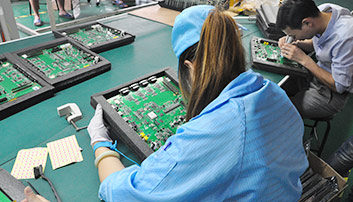
Look fun!!
Look fun!!
Look fun!!
-
The HARDER Problem of ConsciousnessThe Cartesian conceptualization needs to be rejected entirely, both in whole and in part. There is just ontology that we flesh out in (public) language, whether ordinary or specialized. — Andrew M
Yes, I see this type of phrase a lot of rejecting the "Cartesian" conceptualization. But exactly does that mean? The hard problem still remains. It seems to me a sort of de facto panpsychism perhaps. I don't know. -
The HARDER Problem of ConsciousnessYes, I saw that and agree. I'm not satisfied with anyone's solution to the hard or harder problems. You end up biting one or more bullets no matter which way you go. — Marchesk
Here is a potion of a Wikipedia article on Searle's biological naturalism:
On the other hand, Searle doesn't treat consciousness as a ghost in the machine. He treats it, rather, as a state of the brain. The causal interaction of mind and brain can be described thus in naturalistic terms: Events at the micro-level (perhaps at that of individual neurons) cause consciousness. Changes at the macro-level (the whole brain) constitute consciousness. Micro-changes cause and then are impacted by holistic changes, in much the same way that individual football players cause a team (as a whole) to win games, causing the individuals to gain confidence from the knowledge that they are part of a winning team.
He articulates this distinction by pointing out that the common philosophical term 'reducible' is ambiguous. Searle contends that consciousness is "causally reducible" to brain processes without being "ontologically reducible". He hopes that making this distinction will allow him to escape the traditional dilemma between reductive materialism and substance dualism; he affirms the essentially physical nature of the universe by asserting that consciousness is completely caused by and realized in the brain, but also doesn't deny what he takes to be the obvious facts that humans really are conscious, and that conscious states have an essentially first-person nature.
It can be tempting to see the theory as a kind of property dualism, since, in Searle's view, a person's mental properties are categorically different from his or her micro-physical properties. The latter have "third-person ontology" whereas the former have "first-person ontology." Micro-structure is accessible objectively by any number of people, as when several brain surgeons inspect a patient's cerebral hemispheres. But pain or desire or belief are accessible subjectively by the person who has the pain or desire or belief, and no one else has that mode of access. However, Searle holds mental properties to be a species of physical property—ones with first-person ontology. So this sets his view apart from a dualism of physical and non-physical properties. His mental properties are putatively physical. — Biological naturalism
Immediately I would see that the first person ontology becomes the "ghost in the machine" that he purports to reject. It is exactly that question of how micro-states (third-person) IS or BECOMES (is over time) macro-states. Just to say "we have micro-states" and "we have macro-states" is to simply restate and beg the question. -
Platonic Realism and Its Relation to Physical Objects
Just need the basic inferencing capacity in place and the more advanced calculating becomes cultural learning. Caveman didn't need primes but he did need inferencing. -
What is logic? How is it that it is so useful?An abstract object. In fact, for Frege it references as extension (of a second-level concept). — Kornelius
Why can't leprechauns be an abstract object? It may not be a mathematical object, but why not an abstract one? Being a set would be a definition of a mathematical object perhaps, but not all abstract objects are subsumed in that. Economics for example is an abstract object. creativity is an abstract object, etc. How does his definition differentiate between any of these? -
Platonic Realism and Its Relation to Physical Objects
Recognize the two things versus one can be a pattern.
schopenhauer1

Start FollowingSend a Message
- Other sites we like
- Social media
- Terms of Service
- Sign In
- Created with PlushForums
- © 2026 The Philosophy Forum