
Comments
-
What Does Globalization Do to Art?I'm 70, and most of my life was lived in the darkness and savagery of the pre-Internet age. I am very, very, very glad that the Internet exists. I grew up in a backwater so I wasn't a consumer of "high culture" offered at institutions. I was a regular user of libraries, listener to 331/3 rpm records and radio, viewer of films on big screens in large theaters, and so on.
I think it is wonderful that I can access music, film, text, art, politics, news, porn, etc. on this remarkable system. No doubt, live music, live art, and real painted canvas beats the quality of what I see on the screen. But being able to call up a particular work and examine it beats hiking over to the library and hunting for a book with the picture in it. It beats having to take trips around the country to see real art hanging on museum walls. It beats spending $25 to $85 to hear a first rate orchestra playing 2 pieces by Beethoven and 1 by Sibelius.
Art is also information, and even if the aural fidelity is moderately good, even if the pixels per square inch are far less than the real thing, well... tough. Most of the information still comes through. -
What Does Globalization Do to Art?Are you suggesting "true" art (which you say is still very difficult to create) would be art that is less immersed in the artists culture?
I put "true" in quotation marks because Mondrian used the word. I have no idea what "true" art would be. Well, a Chinese stroke for stroke copy of Mondrian, Rothko, or Rembrandt wouldn't be "true". It would be a real fake.
No, I am not suggesting that true art (whatever that is) would be more or less immersed in the artist's culture. It is just plain difficult for a serious artist (as opposed to a dilettante) to find his or her voice/vision/real self... and then express it so that he or she knows that what is on the canvas or score or page is what he or she intended to be there, and that there is a good chance that the viewer, hearer, or reader will receive the work as intended. Art is hard. Truly sublime art is harder.
— Noble DustAnd I was never arguing that there was a time where artists weren't immersed in their own cultural milieu or something like that. — Noble Dust
One thing that makes art more difficult these days is the investment habits of the 1%. Art sales have become a commodity speculation market. It has no affect on dead artists, of course, but warm, live artists can't avoid the cold hand of commerce. What dealers and auction houses (like Christies) are most concerned about is value. Specialists in the trading and gallery businesses do concern themselves with the quality of the art itself, but the businesses in which they work look at art the same way that investors look at stock, tons of copper, freezers of pork bellies, or boatloads of raw tuna. Buyers are buying art for more than just monetary reasons, certainly. many wealthy buyer will really relate to the works they buy. But some people are going to buy a work because they think it will appreciate steadily over the next 10 years.
(I have nothing to do with art sales, I just read about it in books written by usually appalled authors.) -
What Does Globalization Do to Art?From the artist's point of view, I would think that producing excellent, "true" art (by the artist's judgement, at least) is still very difficult. I can't think of an artist who wasn't immersed in their own culture. How far would one have to go back to get away from other artists -- Lascaux? There would always be "other art" of some sort impinging on the artist's imagination.
-
What Does Globalization Do to Art?Piet Mondrian lived between 1872 and 1944. Pre-internet yes, but how "pre-modern" really? Dutch Mondrian lived in a small country with other artists, museums, books, libraries, photographs, and eventually sound recordings (granted, not very good sound for quite a while after their appearance) and film. Even radio, at some point.
Now, When Bach was 20 and just starting out, (1705) he walked 500 miles from Arnstadt to Lubeck and back to hear the 68 year old Dietrich Buxtehude play the organ. Buxtehude was well known among musicians, and they could read the scores, IF they could get ahold of them--which they might not. Once Bach got to Lubeck he decided to stay and soak up as much Buxtehude as he could (much to the annoyance of his employers in Arnstadt.) That's closer to pre-modern.
Here's a sample of Buxtehude, just in case you haven't heard his music.
-
The First Words... The Origin of Human LanguageOn a point of neuroscience, swear words are more emotionally expressive vocalisations - said by the cingulate cortex, as it were - rather than prefrontally orchestrated speech acts. — apokrisis
Which is why many aphasic stroke victims can curse, but can utter nothing else. -
The First Words... The Origin of Human LanguageBroca's area is really just another part of the pre-motor frontal planning hierarchy. So we evolved careful voluntary control over the use of our hands to chip flints and throw spears. — apokrisis
And to communicate. Some people have to talk with their hands (and not sign language, exactly) and since the development of writing, some people insist on having a stylus, pen, pencil, or keyboard at the ready in order to communicate important stuff. I'm somewhat keyboard dependent. -
The First Words... The Origin of Human LanguageOr "go fuck yourself".
Clearly language developed very rapidly--we moved from
umpha umpha — Sir2u
to
fuck — Banno
toFollowed by "you." — Thorongil
to the more grammatically and anatomically complex "go fuck yourself" all within the first 10 minutes of the dawn of spoken language. Which suggests that there were concepts bubbling up in the forebrain just waiting for verbal expression. One fine day an ambitious neuron burrowed all the way from the prefrontal cortex into Broca's area and VOILA! speech. -
ATTENTION! Petition to Introduce Guidelines Against SlanderFinally, expect this discussion to be closed soon. — Baden
I'd better hurry I guess, Baden raised his axe 8 minutes ago, as of this moment.
No, I don't think we should have any rules about slander. First, as far as I can tell, everyone here is operating behind the front of a 'user name' and beyond that, very little information is known. There are no reputations at stake here, I don't see how any of us could actually be materially harmed (in the real world) by anything said here. One could certainly be offended, annoyed, hurt, angered, etc., but that's different than ruining someone's reputation.
Second, the thin-skin disease seems to be spreading. It's not epidemic yet, but there are now two or three cases, and that's enough to start a wider infection. Please apply skin thickener to your sore spots, everyone.
Third, (just my opinion) everyone here has been, is, or will be guilty of writing something that somebody else considered rude, inappropriate, disgusting, stupid, etc. Except me and thee, of course, and even thee has been slightly irritating lately.
The object of any rule of behavior (in this forum) is to prevent productive discussion from becoming impossible owing to too much sturm and drang. Rules don't require that anyone adopt opinions they really don't believe in; it does require everyone to exercise some degree of skill in expressing opinions which would, if expressed too baldly, cause a firestorm.
Now, Agustino--just to pick a fine fellow at random as an example--is a skilled writer with very strong opinions--all to the good for a forum like this. (I've strenuously disagreed with him on lots of topics. I may even have called him a crypto fascist, or something -- I can't quite remember) and I am quite sure that it is well within his operational capabilities to express unpopular opinions in a graceful way that won't result in firestorms. That goes for just about everybody here. There are only a few who seem to lack the capacity to be at least somewhat slippery when it comes to saying the unspeakable.
And, you know, sometimes the unspeakable needs to be said, even though the speaker will get burnt at the stake for saying it. -
Difference between Gender and SexS/He says he has been depressed for years, but since taking the hormones s/he is no longer depressed. — Cavacava
The half-dozen transsexuals that i know who take hormones and gained some facial hair and a bit more leanness; or breasts and more roundedness; and got a new wardrobe and a new name seemed happier after they did this than before. And, as I said earlier, I have no objection to someone carrying out some or all of these these procedures if they are happier for doing it.
I just don't agree that they changed from men into women, or from women into men. Medical procedures aided and abetted their imagination, and made it possible for them to pretend more effectively. 42 year old Jack who is now 42 year old Jill share the same brain, the same pre-surgical history, the same genetic make up, the same body (even if Jack's penis is now part of Jill's vaginal pouch).
Manliness and womanliness are package deals (so to speak) that include being embodied in a certain kind of body, having certain chromosomal arrangements and genetic characteristics, having certain organs, having inclinations that fall within a general range, and so on.
That doctors assist patients in "changing their sex" doesn't make it a fact that they have changed sex. Doctors do a lot of things because patients want things done, have the money to pay for the procedures, and the procedures fit into the standardized professional rules.
People are quite willing to have scalpels carve their flesh--enlarging, reducing, enhancing, augmenting, tightening, loosening, lifting, lowering, removing, or adding to features. The person may be happier with an enhanced butt, bigger or less pendulous breasts, a more pendulous penis, less lard around the middle, and so on. Some of what people have done resembles reupholstering more than health care. People also take hormones on their own to get the kind of bodies they want from spending vast amounts of time in a gym and being very careful to stay thin. -
Difference between Gender and SexAnd then I'm trying to relate this in my own mind to Eldridge Cleaver's discussion of the intersection of race and gender in Soul on Ice, about the hyper-masculine black man and the ultra-feminine white woman. But that is probably too complicated and controversial for this thread. — unenlightened
It's probably too complicated, and it's been a very long time since I read Soul On Ice. -
Difference between Gender and SexI suppose I was wondering to what extent it is a self-conscious performance of heterosexual norms, and to what extent it is 'involuntary' in he way that straights come to feel that they absolutely 'are' the roles they have been assigned. — unenlightened
Since 99.999% of gay men are born of and raised by heterosexual men and women, we can assume that those were the first roles they were exposed to during the period of personality formation as children. Heterosexual roles may not be all over the map, but they do vary some from person to person, place to place.
What a person (male, female, gay, straight) discovers that they have become when they are old enough to think about it in depth is pretty much fixed. It isn't that changes can not be made, but it is hard to redesign one's personality. -
Difference between Gender and SexI guess the question would be assigned by what? Not that anyone knows. — prothero
No, we don't know--but there are some clues about what might be happening in pre-natal development. For instance, gay men tend to have older brothers. The effect of bearing several prior males may change something in the pre-natal environment. Perhaps there is a hormonal difference in the womb at some point that makes a difference. Genes? Antibodies? Right -- no body knows for sure.
There are, in fact, a lot of factors that apparently influence pregnancy outcomes that are not understood, or not well understood. -
Difference between Gender and SexI do not mean to advocate for this many gender options — prothero
I didn't think you were advocating for the long list. -
Difference between Gender and SexBitter Crank Can you say something from your experience about the roles of 'butch and 'fem', which I understand are sort of mirror gender roles in the homosexual community? Or am I hopelessly out of date? — unenlightened
Some homosexual boys and men display stereotypical masculine affect, style, and public behavior. They are "virile", they are macho, the are mechanics, soldiers, executives, etc. (or... butch). Some homosexual boys and men display less or much less stereotypical masculine affect, style, and public behavior. What they display ranges from toned-down masculine affect, style, and behavior to definitely feminine affect, style and public behavior (or... fem). Their occupational roles generally skew somewhat toward more stereotypical female jobs.
"Butch" and "fem" may or may not transfer very well to private sexual behavior. Sometimes the public presentation carries over to the private presentation, and sometimes it is reversed. (And there are all sorts of gradations).
Some guys who are divas at the bar turn out to be pile drivers in bed, and some guys who are toughs on the street turn out to be pussies in bed. (But not always: sometimes the diva and the tough don't switch to opposites.)
Many (most?) people accept the idea that sexual orientation is 'assigned' rather than 'chosen'. I suspect that the affect and style, maybe the public presentation of one's sexuality may also be more assigned rather than chosen. A lot of behaviors are like fetishes -- they seem to be present (in some form) from a very early age, and they seem to be more or less unyielding to change.
But... whatever affect, style, or public presentation men have, gay men and straight men have different sexual orientations, have consistently different object choices in sex partners (one same sex, the other opposite sex), and this pretty much stays the same for life.
Is that what you were looking for? -
Difference between Gender and SexWell many are rejecting the traditional binary sexual or gender identity categories. On facebook one has the following options.
The following are the 58 gender options identified by ABC News:
Agender
Androgyne
Androgynous
Bigender
Cis
Cisgender
Cis Female
Cis Male
Cis Man
Cis Woman
Cisgender Female
Cisgender Male
Cisgender Man
Cisgender Woman
Female to Male
FTM
Gender Fluid
Gender Nonconforming
Gender Questioning
Gender Variant
Genderqueer
Intersex
Male to Female
MTF
Neither
Neutrois
Non-binary
Other
Pangender
Trans
Trans*
Trans Female
Trans* Female
Trans Male
Trans* Male
Trans Man
Trans* Man
Trans Person
Trans* Person
Trans Woman
Trans* Woman
Transfeminine
Transgender
Transgender Female
Transgender Male
Transgender Man
Transgender Person
Transgender Woman
Transmasculine
Transsexual
Transsexual Female
Transsexual Male
Transsexual Man
Transsexual Person
Transsexual Woman
Two-Spirit — prothero
With caution and trepidation (heated reactions out there) may I mildly suggest that 58 gender options is bullshit.
This multiplication of categories represents nothing but self-absorbed snow-flakery. "I am so very unique and singularly unusual--and I speak for the community of [blank] like me..." It's a very recent phenomena and I don't think there is any rational reason to accept it at face value. I doubt very much whether 99.9% of the people claiming to be transsexual women, as opposed to transsexual females, as opposed to a trans women as opposed to trans females... blah blah blah, can coherently explain the difference. Then there are terms like Neither, Neutrois, pangender, and so on.
I rest my objections on the understanding that physically we are not unlike the rest of the animal kingdom. We are either male or female, or there is something abnormal. We can not transcend biology very far. An xy male can pretend to be an xx female; he/she can take hormones, have surgery to add or subtract parts, change his/her gait, his/her habits, his/her hair, his/her weight, and so on, but he has not become a female. He is a man acting as if he were a woman.
And, by the way, I don't object to his/her doing that. If it makes someone happy, great. But I don't have to believe their sex has actually changed.
What I am willing to accept is that there is a
straight, bisexual, and gay male and female sexual template.
There are people who have (quite possibly irrational but deeply held) beliefs that they exist outside the straight/bisexual/gay male and female template.
Within the template, there are many ways that people can find sexual fulfillment. It isn't any sort of a straitjacket.
Aside from sexual specific behavior, men and women can take on each other's socially defined roles and perform them satisfactorily: men can fix cars, feed babies with a bottle, be a soldier and kill people, be a nurse and take care of people, (and so on and so forth) and so can women. They may not like doing the opposite gender's job, and they don't have to like it.
There are a small number of people who have chromosomal abnormalities whose bodies have not developed normally. The fact of abnormality should not be taken as a mark of inferiority. People who are born deaf, for example, are abnormal -- they aren't inferior. -
Difference between Gender and SexMany people think their sexual orientation is natural -- it's a given of nature, whether they are gay or straight. You say (correctly) that some presumably straight people discover that they are actually gay. I don't believe any of the many gay men I know have discovered they were actually straight. (I'm not considering bisexuality here, at the moment.)
-
Leave the statuary in place.In the area of race relations, there is very little high ground for ANY American to occupy.
Most Americans are beneficiaries of the Aboriginal American genocide. Every house, factory, farm, bank, apartment building, sidewalk, store, freeway, oil well, mine, or mill is located on expropriated land. The wealth of America was extracted from and produced on the land of the displaced or exterminated American Indian.
Slavery was visited upon Africans, and slaves were worked primarily on plantations, but not exclusively, and not exclusively in future Confederate states. Southern states, southern planters, southern importers or exporters, southern manufacturers, southern slave markets -- just about the entire southern economy -- depended on capital under the control of New York banks (primarily). Northern firms conducted much of the trade in southern goods. Slaves and plantations were insured by northern companies. Much of the slave trade was conducted by companies in Connecticut or Rhode Island.
The wealth northern businesses accumulated from the south benefitted wealthy families, institutions, and northern states. Brown University in Providence, Rhode Island, for example, benefitted from the slave trade. Just one among numerous beneficiaries.
The northern business establishment that benefitted from slavery also benefitted from the civil war, and benefitted from reconstruction. When you control so much money, it is difficult to not benefit from just about anything.
Many family histories of Americans include branches of antebellum southerners, slave owners, slaves, army soldiers who fought against the American Indians in the genocidal wars, and so on and so forth. Immigrants who came here in the early 20th century? They were, in many cases, egregiously sexist and racist, to boot -- even if they themselves were oppressed people.
And white people? The bulk of white people shipped over to the colonies were white trash the English wanted to get rid of. For the most part, the early white trash remained below the mean level of accomplishment. They stayed working class. Waves of white riff raff came to the United States to find a better life than they could get in Norway, Italy, Germany, Ireland, Russia, the Balkan and Baltic states, etc. 99% of them did not become part of the rich 1%, or even the better off top 10%. They stayed working class. The American Ruling Class has never respected the white working class much more than it has respected any other part of the American demographic. -
Leave the statuary in place.Sure you do. You stole spaghetti from China, meatballs from Sweden, Tomatoes from the Mexicans, and you have such beautiful women because the Romans stole appealing ladies from all over. And Lotzza Motzza. Your wine is bought by American bohemians so they can put candles in the grass-wrapped chianti bottles. Instead of Champagne you have Asti Spumante. The one thing you have that you all invented yourselves is your big mouths, stuffed with bologna.
-
Leave the statuary in place.We are daily insulted and injured by racist Europeans, African Americans, and western hemisphere natives who insist that Columbus discovered America, when every village idiot in Alabama knows that Leif Ericsson discovered Canada 500 years before fourteen hundred and ninety two when Columbus sailed west, the natives to screw. AND we didn't pillage and oppress the natives, to boot. (As you well know, the Norsk never oppressed or harmed ANYONE!)
In reparation for your hideous racist behavior, we demand that everyone in the western hemisphere submit to a 500 year regime of Scandinavian Design, Danish Modern, and FinnStyle and everyone learn Norwegian. That'll teach you to lie about history! (And you can jolly well learn to love lutefisk too.) -
Leave the statuary in place.I don't think you could disengage the enemy that easily and regroup like you could in more modern wars. — Chany
I don't think so either, but they moved remarkable swiftly GIVEN the enormous logistical problems of supply both armies had to cope with. Just think about horses; there were about 4 or 5 soldiers per horse. 40,000 soldiers, 10,000 horses. Feeding and taking care of both two and four legged armies was a planning nightmare, but they did it. The rank and file didn't ride; it just took that many horses to move guns and equipment, supplies, ammunition, feed, horseshoes, etc. and to remove the human wounded. There were long wagon trains between depots and battle fields, moving continuously. -
Leave the statuary in place.You know if it was put to a vote and the majority voted... — prothero
That's crap — Cavacava
Process matters.
As far as I know, very few people in Minneapolis associate Lake Calhoun with John C., slavery, states' rights, or anything else. It is still called Lake Calhoun, but "Bde Maka Ska" -- the Sioux name --has been added to signs. Bde Maka Ska means White Earth Lake, but other tribes (driven out by the later arriving Sioux) called it Loon Lake.
I find the process quite problematic. The request for a name change was made by an on-line petition by about 1000 people. 1000 on-line signatures, 400,000 citizens. The Park Board decided to go ahead and change the name after Yale changed a building name. "The changes are part of a national trend away from place names that honor racist or otherwise fraught figures." according to the Minneapolis Star Tribune.
"Racist or fraught figures." Now that's a very wide opening for dubious decisions. -
Climate change deniers as flat-landers.I'm on board for big changes. I want to see a livable world for future generations, and not just far future generations.
"Screwed either way" because the rank and file of the world's population won't be making the decision. Almost certainly those who will decide will have the most to lose -- the ones who own the carbon producing infrastructure (which is huge).
I am heartened that city, county, and state level governments in the US, at least, (Europe seems to be better coordinated and China has a command economy apparatus) are moving forward on wind and solar energy while the Feds are burying their heads in a coal pile. Other countries -- in Africa, for instance -- are also using wind to good effect. Carbon salvation isn't just around the corner, but there is hope. -
Sexism"Racists, homophobes, sexists, Nazi sympathisers, etc.: We don't consider your views worthy of debate, and you'll be banned for espousing them." — Baden
It will be easy to identify neo-nazi views--they are (supposedly) outside commonly recognized norms of rational thinking. Racism, homophobia, and sexism, however, fall outside, inside, and astride the commonly recognized norms of rational thinking BECAUSE the book hasn't been closed on what are acceptable and unacceptable ideas about sexuality, race, and homosexuality.
Whoever it was who wrote the guidelines probably had a picture of racists, sexists, and homophobes in their mind, and were confident that they would be able to pick out violations of the rules. Perhaps they can. But it is as likely that the moderators will have fairly fuzzy ideas of how sexists, homophobes, and racists write, and will get it wrong -- at least sometimes. (That's not a deficiency on the part of moderators. It's just life.) -
SexismHey, I found both Trump's actual behavior and his own reported behavior toward women during the campaign to be quite wrong. I don't know whether Agustino thinks "all women" are attracted to crude, sexually aggressive males or not. I doubt very much that he thinks that. I would allow, however, that it is possible some women are. Why? Because men and women both are capable of irrational sex-role (and other) behavior, that when they observed it in other people would readily identify it as unwise, but are none the less sometimes themselves attracted to it.
As Freud observed, "People are not masters of their own houses." -
SexismAnd that is the tangle we get into when trying to lay down rules about how men and women can talk about alleged sexual/gender differences, imagined sexual/gender differences, and real sexual/gender differences (maybe it is sexist to think there are differences?).
Some people maintain that there just are no differences (other than anatomical) between men and women. It seems to me that evolution would have led to differences beyond the anatomical. But the "biology is not destiny" crowd dislike that kind of idea. To some extent biology is destiny -- Guys, just try to conceive a baby in your belly. -
SexismAgustino is speculating about how women on TV (not all women in general) secretly desire to be humiliated by Trump. He notes that this is hypocritical, because they publicly profess to be appalled. (There could be some truth to this, in some specific cases, could there not? I think people are prone to hold irrational desires--men and women both.)
It is, I suppose, sexist and certainly unflattering. It would be more serious if the comment were directed at women here because it would be more personal and hurtful. Men and women speculate on the motives and flaws of each other's behavior all the time and while it may be sexist and unflattering, it doesn't rise to the level of a "hanging offense".
It may be sexist to suggest that women are not as good at math, or music, or art as men are, but that seems to me to be a possible opinion. Camille Paglia noted in her book Sexual Personae that women have had two centuries of extensive access to art instruction and art materials without producing much notable art. Is that sexist? -
SexismMongrel concluded her learned comments with "Hey Bitter Crank. Why don't you go fuck yourself?" This confused Mr. Dogar:
I legitimately cannot tell what's real and what's banter in this thread, but seemingly the burden of proof lies on you. — Dogar
I didn't feel any lacerations from the verbal lash wielded by our esteemed colleague, Ms. Mongrel, so it would seem that her admonition "Why don't you go fuck yourself" was probably closer to banter than a real suggestion.
Were I to have felt lacerated, it would be evidence that my skin was thinning out -- an unfortunate condition I had suggested that SHE might be suffering from. (I use a personal deflector shield which is fairly effective at neutralizing caustic comments (comments far worse than "go fuck yourself").
My response to you is 100% banter, with just enough edge to it so that if Mongrel read it she will be further annoyed--not annoyed a lot, of course, since this is a civilized cyber salon.
We try not to actually enrage each other because we just never know when someone will finally lose their grip on reality and will tear themselves away from the computer and begin devastating the countryside in acts of appalling mayhem. While the spectacle of wise and learnéd philosophers melting down and going ballistic is really quite interesting, it is dangerous. -
The Last WordToasted bread with sardines is fantastic with beer. — Sir2u
Is that some sort of sick joke? Sardines are fine either straight from the can or in spaghetti sauce on pasta; I can't quite imagine them on toast. Maybe you could season the sardines with some of that yeast spread. What's it called? -
Climate change deniers as flat-landers.It isn't the case that no solutions can be suggested; suggestions have been made. There are two problems with the suggestions: The tolerable suggestions do not result in enough of a reduction in CO2 and other greenhouse gases such as methane or CFCs to help a lot. The intolerable suggests could (probably) result in large enough reductions in green house gases to limit warming, but would also be extremely, and intensely, disruptive to most aspects of life.
Were we to abruptly stop processing petroleum, stop burning coal, switch to a 95% vegetarian diet, sharply reduce manufacturing, begin massive reforestation projects, reduce total world population, and so on we might bring global warming to a halt -- not instantly, but in a century or so. Some side effects of this approach would probably include: Economic collapse; massive social upheavals including revolutions; extreme dislocations of population; increased deaths due to exposure to heat and cold (not in the same places at the same time); a loss of health care infrastructure; and so on, and on.
"Severe disruptions" should not suggest inconvenience; it should suggest hell on wheels.
If we were to take the extreme measures and stretch them out over a century of time, then we would probably not achieve a stabilization or reduction in global warming. The consequences of not controlling global warming include: rising sea levels and flooding; the loss of trillions of dollars worth of infrastructure; more severe and more erratic weather; major environmental changes making food production much more difficult; increased insect disease vectors would result in several tropical diseases becoming much more wide spread (like malaria). Food production (meat or vegetable) would decline as a result of heat, resulting in widespread starvation. There would be massive migration and severe social conflict.
So, either way we're screwed. -
Leave the statuary in place.Meanwhile, In Durham, NC protestors (from various leftist organizations like IWW, Workers World Party, etc.) pulled down a statue of an ordinary confederate soldier (neither an officer nor a heroic equestrian statue). Fortunately, no one was hurt by being to close to the falling statue.
-
SexismHe also said in a thread about Trump that most women would enjoy the particular "treatment" he bragged about giving them during the campaign. It was pretty vile. — John Harris
You also: go get the quote and put it up for examination. Why should anyone take your word for it? (And please differentiate between what Trump said and what Agustino said about, or in response to, Trump. -
SexismMongrel, are you experiencing thinning skin? It's a real hazard for anyone participating in a public forum, even this quite civilized, moderated one.
I am a bit surprised that you decided to take your dispute with Agustino public. I'm not worried about Agustino's feelings -- he's quite capable of taking care of himself. But you're likely to not achieve a great victory in this.
Why don't you give us a string of Agustino's alleged sexist comments? If you reported them by PM to the moderators, then you presumably have them in the record of your PMs.
The bulk of his sexist remarks were made a few months ago. He made a few more a few weeks ago. — Mongrel
Well, dig them up and put them on display.
As for sexism, racism, etc., of course there are sexists and racists here. "We the People" are sexist and racist. Maybe, perhaps, possibly "we the people" wish to be, and it could be that we will be less sexist and racist in the future, and if we do, congratulations to we all. But not yet. -
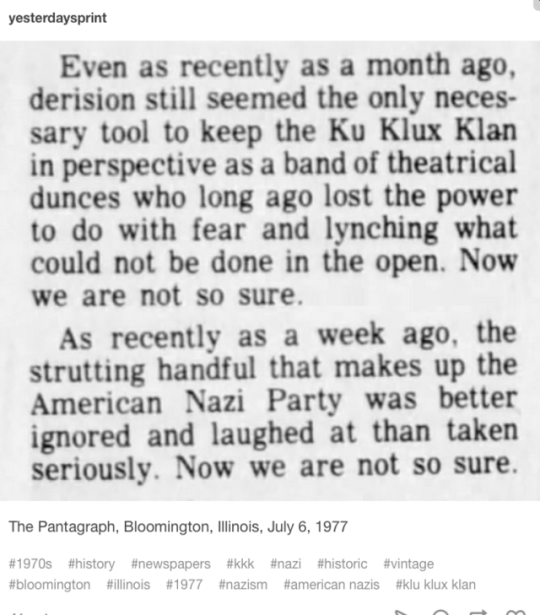
Leave the statuary in place.For the lonely neo-nazi, here is a Christmas Carol to brighten the hot southern summer.

BC

Start FollowingSend a Message
- Other sites we like
- Social media
- Terms of Service
- Sign In
- Created with PlushForums
- © 2026 The Philosophy Forum