
Comments
-
We are part of some sort of natural/cultural project of continuanceSure routine and variation are a reciprocal pair.
I'll just state this again.
What I mean is that antinatalists, and nihilists too, have a hungry heart -- it has not been satisfied yet. You are hungry for something. Actually, lots of people who are neither antinatalists nor nihilists are equally hungry. For assurance? Meaning? Certainty? Clarity? Belonging? Love? Something basic. — Bitter Crank -
Philosophyforums.com refugeesThe US can choose who can immigrate to the country by virtually any criteria it chooses — Thorongil
Agreed. This is part of the "sovereignty" deal. Sovereign nations not only can, but have a responsibility to control their borders. If they don't want short or left-handed people, they don't have to admit them.
I thought there was something in the constitution about not having an established religion. — unenlightened
There is--the establishment clause. The Government can not "establish" a religion like the Church of England or Islam. (This was added to protect religion from the state, not just the other way around.)
In the present case, the argument can be made that Christians and other non-Muslim minorities in the Middle East are the most in danger and in need of assistance — Thorongil
The current Islamic persecution of Christians is closely connected to the 1979 Islamic revolution in Iran, the Shiite / Sunni civil war after the collapse of the Saddam Hussein regime in Iraq, and ISIS and Al Qaeda in the middle east and elsewhere, like Nigeria. The percentage of Christians still living in the middle east has fallen from 10% (1900) to about 3% today. Israel and Lebanon are the only two middle east countries where Christians are free to practice their religion.
Yazidis and Zoroastrians also experience continuing oppression under Islam.
Some sort of vetting is necessary in any event, since the US cannot be expected to take in all the refugees in the world indefinitely. — Thorongil
And nobody else can either. There are scores of millions of refugees from all sources, not just the million or so that made it to Europe recently.
Refugee advocates have a vested interest in refugee settlement. Groups like Catholic Charities and Lutheran Social Services are responsible for a lot of the settlement activity, for which they are paid under contract with the State Department. Aside from contracts, advocates are highly focused on whatever their particular issue is.
Have we decided that economic migrants and refugees are a force of nature which are no more controllable than the weather? What are India and Burma going to do when Bangladesh finally floods later in this century? Burma almost certainly will be unable to help a lot; India hasn't solved it's own envirommemtal problems, let alone taking on an influx of 30 million rising-ocean refugees. -
Philosophyforums.com refugeesI heard that God is starting to use the phrase, "so help me Trump" whenever He has to take a Divine Dump.
-
We are part of some sort of natural/cultural project of continuanceall the other tropes I usually bring up via antinatalism — schopenhauer1
Many people do pair bond without any intention of continuing the species, you know.
I have thought, think, and will probably continue to think that anti-natalism is a cry from the heart. By that I don't mean antinatalists are profoundly unhappy (maybe you are, maybe you are not -- I don't know). What I mean is that antinatalists, and nihilists too, have a hungry heart -- it has not been satisfied yet. You are hungry for something. Actually, lots of people who are neither antinatalists nor nihilists are equally hungry. For assurance? Meaning? Certainty? Clarity? Belonging? Love? Something basic.
Antinatalism IS a trope: it's a virus. It's a meme. (and no, I don't think these things perpetuate and spread themselves. We are the vector.) -
We are part of some sort of natural/cultural project of continuanceRather, it is the implication that the individual does not matter here except as a vehicle in a broader process. — schopenhauer1
In one way this is true, and in another way it is not true. In the grand, multi-galactic scheme of things, one squirrel getting run over, one human at work, doesn't matter. But in the same big scheme of things--from a different perspective--individuals are all that matter--life is present only in individual creatures, not as an over-arching abstraction. Humans matter on an individual basis. Just try to not matter to yourself. -
We are part of some sort of natural/cultural project of continuanceIf you want teleology and purpose, why don't you just take up with the God of Abraham, who will give you both? You don't have to give up genes to do it, either. Just assign evolution and its mechanisms to the methods which God employs to carry out his teleological, purposeful will.
It seems like you are trying to find meaning by smuggling it across the border inside a package of evolution.
Don't like Jehovah? Zeus maybe? Amazon.com has other god-models you can order and have delivered by lightning bolt. -
If A.I. did all the work for us, how would humans spend their time?The Lutheran insight that work is a central human act remains:
Martin Luther…the works of monks and priests, however holy and arduous they may be, do not differ one whit in the sight of God from the works of the rustic laborer in the field or the woman going about her household tasks…all works are measured before God by faith alone.
It doesn't matter whether the work is domestic duties, civic duties, or wage-earning employment: work is holy.
If human labor is replaced by entirely mechanical production, then it will be a life-and-death matter to redefine the meaning and value of ordinary people, and ordinary work. Without vocation, (however that is defined) Homo Operatur will be hard pressed to fill his years with meaning, or even survive. -
We are part of some sort of natural/cultural project of continuance
If the cosmos began without meaning, it would still have no meaning UNLESS something happened to create meaning.
Genes and memes are not meaning creators. Neither are physical forces, biological processes, evolution, earthquakes, and so on. They are real, but they don't make meaning. There can not be pawns in a meaningless world. The pieces for which pawns are stand-ins have meaning.
Something happened.
Meaning makers came into existence. Meaning makers, of necessity, have the capacity to impose meaning on a meaningless world. We meaning makers can create and destroy pawns; we can generate ideas that "trend" mightily. If we were to disappear, the cosmos would return to meaninglessness. -
Does 'nothing' denote anything?Billy Preston resolves the question.
Nothin' from nothin' leaves nothin'
You gotta have somethin' if you want to be with me
Nothin' from nothin' leaves nothin'
You gotta have somethin' if you want to be with me
I'm not tryin' to be your hero
'Cause that zero is too cold for me, Brrr
I'm not tryin' to be your highness
'Cause that minus is too low to see, yeah
Nothin' from nothin' leaves nothin'
And I'm not stuffin', believe you me
Don't you remember I told ya
I'm a soldier in the war on poverty, yeah
Yes, I am -
The psychopathic economy.I found the antidotezine article very informative and somewhat surprising. Thanks for linking it in here.
It didn't increase my level of paranoia.
It isn't the collectors, analyzers, and correlators of big data that worry me. Advertising companies have been working toward individual tailored ads for quite a few years. (Target Corporation can now tell within 60 days when a female Target card user has become pregnant based solely on purchases of certain products that do not have anything to do with pregnancy or child care.)
What worries me is big data's bad-actor customers -- people like Donald Trump, or the Brexit campaigners. Their clear-enough stated political goals are what is scary, not so much how they go about targeting ads.
I want the politician to be truthful about who they are, what he or she believes, what he or she has done in the past, what he or she plans to do, and how he or she plans to do it. That's what I'll vote on. -
Original and significant female philosophers?So do you disapprove of men in drag? — Mongrel
As long as the results are sufficiently absurd, no.
Caption for picture: Duchess Kate has long been a fan of wearing nude pantyhose to cover up her legs.
Question: Is there some other reason for wearing pantyhose?
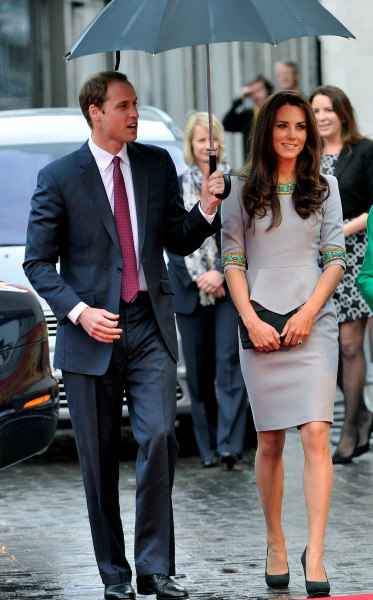
Fortune Magazine answers the question, "Why pantyhose sales are still surprisingly strong" -
Original and significant female philosophers?Another exception: I will never hire a male nanny to look after my children. I have a deep suspicion of male nannies, and I hold that right to be sexist in this regard. — Emptyheady
I agree.
Very wealthy and powerful people used to employ both governors and governesses to educate their children. "Nanny" isn't quite the same thing -- more of a glorified babysitter. I would question why, exactly, a guy wanted to be a "nanny". Private tutor, sure; nanny, no. I would suspect the male nanny of being some sort of (heterosexual) wimp. (w.i.m.p. = whingy ineffective male person). -
Original and significant female philosophers?Attractiveness and culturally appropriateness do not seem to be relevant to me. — Emptyheady
Many people would agree that you have not perceived attractiveness and cultural appropriateness as relevant to yourself. [just joking, of course...]
"telos" of a particular job... applying "telos" to say, small appliance repair or long lines supervisor at the old AT&T seems like a $10 word for a 10¢ concept. Maybe the telos of a philosopher..., male or female, would be appropriate. -
Original and significant female philosophers?This is some dumb shit right here — Heister Eggcart
I have found that my shorter, less nuanced posts are getting read more, and generate more response. You may think my style preferences are some dumb shit, but at least you responded. Thanks! -
Original and significant female philosophers?You have a right to think whatever makes the most sense to you. — Mongrel
↪Bitter Crank Are you fucking kidding me? — Mongrel
So, are you really in favor of people thinking whatever makes the most sense to them or not?
The comment was about the STYLE of filling male roles, not that females can't fill male roles, or males can't fill female roles. If women and men were both drafted here the way they are in Israel, being a female soldier would be routinized. It isn't in the US.
If you find my style preferences to be an affront, then I say, that is too fucking bad. -
Original and significant female philosophers?You must know, as "a very conflictual person... I enjoy conflicts" that conflicts can be extremely risky -- not that one will necessarily be shot (except if you live in Chicago) but one is more likely to get fired, passed over for promotion, demoted, shunned, etc. if one is too conflictual. At the very least, you'll find that the only people who want to be around you are also conflict-addicts. (I also love a good conflict, as long as it stays verbal OR I have overwhelming arms superiority.)
-
Original and significant female philosophers?I don't find it attractive or culturally appropriate when (heterosexual) women take male roles (soldier, firefighter, steel construction. philosopher) and fill them in an "as-if-they-were-male" style that amounts to caricature. The same goes for (heterosexual) men in typical female roles who ape women's styles of job performance. Waiters don't have to act like waitresses, so to speak.
-
Original and significant female philosophers?Women avoid excessive risk taking, and women are less likely to put up with living in a laboratory, making morning toast on a bunsen burner. Getting to the top appears to require laser focus on THE GOAL. But most men also don't take excessive risks, and like to be free in the evenings, and don't enjoy bureaucratic dog fights that much.
-
Original and significant female philosophers?I was quoting you, about your allegedly accidentally flagging empty heady.
-
Original and significant female philosophers?Lol I accidentally flagged your comment man... sorry :-# — Agustino
Heh, heh, heh. I accidentally flagged your comment. -
Original and significant female philosophers?I am actually baffled by your insightful post. I often don't read them. — Emptyheady
The same thing, only less of it. Better? 145 words v. 307.
Camille Puglia says women have had plenty of opportunity to be great painters. Apparently they don't have what it takes (like, the male gaze).
The standard distribution will not be mocked. Most (99.009%) people never do anything great because most people have ordinary abilities. Whether it be mathematics or horse shoeing, genius is rare. Very perceptive, creative minds seldom occur. Smart people are a small minority. Most of us live in the big hump in the middle. That's OK because we mediocrities in the big hump actually keep the world turning.
The people on the top (or out there in the .001% of high achievement) clawed, bought, or bullied their way to the top. It takes more than genius--it takes balls. And connections don't hurt, either. Most women don't have balls, but a few do. -
Original and significant female philosophers?
Camille Puglia discussed why there are very few great women painters. She observed that this is the case despite women having plenty of access to artist-training--several hundred thousand women taking drawing and painting classes (over the previous 2 centuries). She attributes the dominance of male painters of great stature to "the male gaze" -- the priority of looking. Visuality is more important to men than to women. Could be.
If you take the population as a whole over the last 2 or 3 thousand years (what... 10 billion people?) very very few people did exceedingly well at anything in the areas of 'cultural production'.
Performing far above the plane of the average, truly excelling in cultural production, is limited to a small number of people. The barrier to high-level performance isn't in the stars, isn't solely in oppressive systems of discrimination, it's in us. The "package" -- genius, high levels of creativity, unusually profound insight, high ambition, aggressive competitiveness, is rare. 99.99% of us are not going to be notable at anything.
Take any field -- mathematics to shoeing horses -- people will perform somewhere on the normal distribution, from really very good to just very bad.
One would suppose that women and men are as evenly represented in the thin, extreme ends of the distribution as they are in the fat middle. It seems like the conditions of success at the high extreme end are such that only those with social support (family connections, wealth, social status, etc.), high levels of competitive drive--aka aggressiveness, or the ability and willingness to survive as loners, are going to make it.
What it takes to succeed at the high extreme end just might not be all that attractive to women.
And maybe, a lot of what academically oriented men do just isn't that interesting to women either. -
The Last WordBecause of your abilities, your needs, or the clogs (sabots, actually)?
I heard the devil was planning on drowning the Dutch. -
A Criticism Of Trump's Foreign PolicyAll workers have become temps. — Benkei
People? Not so much. — Benkei
The other day I picked up Air Conditioned Nightmare by Henry Miller (author of Tropic of Cancer, Tropic of Capricorn, Sexus, etc.) which is based on his 1939 trip across the US. For the previous 10 years, he had been living in the Parisian hothouse of expatriate artists and writers. The first chapter, Good News! God is Love! is a rant set off by the contrast of witnessing the brutality of Pittsburgh and having just finished a biography of Ramakrishna.
The theme of revulsion at the dehumanization of 1939 Great Depression America is still going strong in subsequent chapters. I don't know whether his scathing prose does justice to his reaction to the barbarism he sees. The oppression of the ordinary man by the rich was less disguised then than now--maybe.
Anyway, his ranting is fresh and alive. Ruthless exploitation, dehumanization, oppression, brutality, and so on are very much with us. Maybe it is not quite as grim--2017 compared to 1939. Or, maybe I would need a decade of pleasant exile to see it anew. It wasn't just poverty. It was the crude, barely concealed violence that he encountered in specific people.
"All workers have become temps" is literally true for a large share of the workforce. They may not be called temps, but they are. One difference between 1939 and 2017 is that immiseration is perhaps a slower process for the working class, certainly--but middle class too. I takes a while to strip a family of all assets, all resources, all the compromises and adjustments they can make before they are literally broke and broken. (Just like in 1929 - 1939, not everyone was thrown out on the street. 3/4 of the workforce was then working; it's probably about the same now--if you go by the real unemployment and seriously under-employed/part-time rates. -
Vengeance and justiceWell, isn't an eye for an eye ''deserved and proportional''? Yet the law seems to disregard/condemn such a philosophy. — TheMadFool
An eye-for-an-eye system is proportional justice. If somebody attacks you, and you lose your eye, you are not entitled to more than the justice of depriving them of their eye. Without proportional justice, retribution is unlimited. For my eye, you might lose your life, and the lives of your wife and children as well.
Most justice systems these days are proportional. For instance, in the case of accidentally killing somebody, you might not be liable for punishment at all (like in the case of hunting accidents where there was no premeditation, no clear negligence, etc).
An eye-for-an-eye system was a major advance over the unlimited retribution system (and this was... roughly 3000 years ago, at least in some civilizations). In Chicago, these days, crossing the street into rival gang territory can result in your losing your life. The sanctity of Crip territory is more important than the life of a Blood whose GPS (gang positioning system) was in error. -
Facts are always true.Well then, if it isn't, wtf kind of fact is it? If I said it is a true fact about my statements...
-
Facts are always true.OK, it is a true fact that more precision is needed in my statements. Maybe.
-
Facts are always true.But it's not, and adding the word "here" shows that you know it. On the other hand, "1 gallon of H2O weighs 8 pounds always and everywhere on Earth" is true. There is no case for the relativity of truth here, unless you just mean that a statement can turn out to be either true or false depending on how clear it is, or depending on your interpretation. Interpretations are relative, but interpretations are implicit reformulations--which is where things get interesting. — jamalrob
I'm fine with truths like "3+5=8"; "the table of elements is accounts for all the matter that we have encountered"§; "the Declaration of Independence was written in 1776"; and so on. These truths state facts that can be proved, and whose proof is universally accepted.
But then there are other kinds of truths and facts. "William the Conqueror won the battle at Hastings." Fine, fact and truth match. "His victory resulted in beneficial changes in England." As far as I can tell, truth and fact match here, but it is possible to disagree with the facts and truth. "William's victory ruined the English language" is true, in that Old English was transformed. Whether "ruined", "corrupted," "transformed", or "enriched" are all true or not depends on how you define ruin, corrupt, transform, and enrich. There are facts supporting various interpretations. Isn't there more than one 'truth' here?
Then there are a lot of treasured statements about truth which that are not connected to any facts at all.
Beauty is truth, truth beauty,—that is all
Ye know on earth, and all ye need to know.
John 8:32 you will know the truth, and the truth will make you free."
Do you swear to tell the truth, the whole truth, and nothing but the truth...
John 18:38 "What is truth? retorted Pilate."
"Philosophy is a search for THE TRUTH." So, is philosophy in search of truths that match facts? Like "Fish absorb oxygen through their gills."
§Dark matter is thought to exist, thought to be necessary, but we haven't 'apprehended it' yet. -
Facts are always true.2+2=4 is always and everywhere true. 1 gallon of H2O weighs 8 pounds always and everywhere is true here, but it wouldn't be true on Mars. So, a gallon of water weighing 8 pounds is relative to the planet on which it is being weighed. It isn't always and everywhere 8 pounds in weight.
John Keats' concluding line to An Ode on a Grecian urn...
'Beauty is truth, truth beauty,—that is all
Ye know on earth, and all ye need to know.'
sounds good but as far as I can tell, it isn't true. It depends how you define beauty and truth. As for that being all we know on earth, no -- that is not true either. It certainly isn't true that that is all we need to know. None the less, some people maintain this is all true. So Keats' truth is relative--in my book. (I have very mixed feelings about Keats. It's been a long time since I read him. I suppose I should give him a second chance.)
"Having more than one wife at a time is immoral." Some would say that is true, some would disagree.
Evidently truth is relative. -
Facts are always true.The fact of Joe's belief doesn't contradict the fact of rain falling. What is contradictory is Joe seeing rain and continuing to believe that it is not raining.
Joe is entitled to his own beliefs, but he isn't entitled to his own facts. -
Facts are always true.This is quite sensible. Where'd you get this from? — Heister Eggcart
Naturally, you are referencing my sensible post which was about to appear when you mistakenly addressed praise to Wayfarer. People are ignoring my posts again, so I have to seize whatever recognition i can. -
Facts are always true.Of course it is both a fact and true that Joe believes it is not raining. He hasn't been outside recently. That's one thing. Another thing: Is it raining? If you walk out the door and see that rain is falling, then the fact that it is raining is true. Actual rain can not begin to dissolve the fact of Joe's believing it is not raining until Joe opens the door and sees that it is raining.
If he opens the door, sees that it is raining, closes the door and says it is not raining, he is wrong about the rain. But it remains a fact that he believes it is not raining.
President Donald Trump believes the crowds watching his inauguration were larger than the crowds watching President Barack Obama's inauguration. He has been apprized of the fact that his crowd was smaller. He, however still believes that his were bigger.
For President Trump, it must be true that his crowds were bigger. He says it is a fact that they were bigger. What is true and factual is that President Trump holds a mistaken belief, and that is a fact which is true.
Whether Mr. Trump is demented, obstinate, or just plain stupid, the fact is that he is President. The truthfulness of his having taken the oath of office and now lives in the white house is a fact with which it is difficult to become fully comfortable. That is a fact for people who didn't vote for Frump. For the people who did vote for Slump, it is not true that it is difficult to feel comfortable about his living in the white house, his finger poised above the little red button that will trigger the end of life as we know it. They believe that the Stump is very clever, all wise and good, and will only drop his finger on the little red button if is in the interest of making America great again. Heil Skunk. -
Objectivism: my fall from reasonFlannery O'Connor said,
I hope you don’t have friends who recommend Ayn Rand to you. The fiction of Ayn Rand is as low as you can get re fiction. I hope you picked it up off the floor of the subway and threw it in the nearest garbage pail. She makes Mickey Spillane look like Dostoevsky.
I read a couple of Rands novels a long time ago... they were OK -- not great, like a lot of things.
Don't beat yourself over the head too long for having a love affair with Ms. Rand. Quite a few people have patronized her establishment. And others of us have patronized other establishments which we heartily regret. Mea Culpa. Mea Culpa. Mea Culpa.
I feel human again, it's hard to explain. — Sylar
Of course you feel better. It always feels good to shed the filthy clothing of a recent enthusiasm, take a long hot shower, and get into something new and different. It sometimes happens that we hearken back to our former enthusiasms, like the Children of Israel, wandering around in the desert, hearkened back to the flesh pots of Egypt. Again, normal human behavior. Don't feel guilty about it. Just resist the temptation to crawl back to whatever it was.
And welcome to THE Philosophy Forum. -
Opportunity for 'Fulfillment' of potential.given the ideals of Christian justice — Robert Lockhart
I am not sure what "Christian justice" is. What are you referencing? The Sermon on the Mount, the Roman legal code? Canon Law? The Napoleonic code? English common law? What?
The fact that in the Germany of the 1930’s – 1940’s, for example, the Nazi hierarchy found no difficulty in recruiting an army of enthusiastic volunteers to staff their death camps acts as evidence to indicate that every population must include numerous individuals who similarly would be prepared to engage in such nefarious activities were the opportunity to be provided, but who in practice, in the absence of such opportunity, die innocent by default.
Apart from the disturbing disclosure this period of German history permits then of how deceptively closely, beneath the calm sea of normal society, the potential for such chaos to be unleashed must always lie, there is also the reflection, that if the individuals comprising the Nazi hierarchy had themselves been born elsewhere, they similarly would have died innocent of their crimes, albeit by default. — Robert Lockhart
Over the last 3 years I've been reading about the history of the Nazis and WWII in the period 1922-1945. One of my conclusions is that "the sea of normal society" was neither calm nor normal. The German government and German business (industrial sector, particularly) began waging economic war soon after WWI ended. A variety of cartels (such as IG Farben) set out to dominate critical components of industrial production throughout the world. Using patent law, (sometimes) hidden cross-linked ownership of companies, (sometimes) secret agreements (such as that between Standard Oil and DuPont with IG Farben) restrictive trade rules, and so on, the German Cartels interfered with industrial development in France, the UK, the US, and numerous other countries.
At the same time the German government and the cartels were building the industry and materials needed for the next war. Germany had the time to import and stockpile all sorts of raw materials and semi-processed industrial materials it would need--and wouldn't be able to get--once the next war commenced.
The Nazi party also had almost a decade to engineer social changes so that people would cooperate with, or at least sit still and tolerate the horrors to come. The ruling class of Germany -- in place before WWI, willingly and knowingly carried out this program. The abomination of Nazi Germany didn't happen "to Germany"; the abomination was created by Germany.
Had the big names in German industry and politics been born someplace else, everything else being equal, they might have done the same thing to some other country.
“How many Cromwells lie here – Innocent of their Country’s blood?” — Robert Lockhart
Some of those Cromwells lying in their graves just didn't have the chance Oliver did. Given the chance... -
A Criticism Of Trump's Foreign PolicyWhile 'free trade' would seem to be a good thing for everybody, it seems to be a good thing for some and a bad thing for others. Moving manufacturing to Mexico, for instance, is a benefit to Mexican workers, American corporations, maybe American-workers-as-consumers (in the short run), but not to American workers in the short or long run.
A Ford produced in the US keeps all of its economic multiplier-effect here. Parts suppliers for the assembly lines generate more multiplier effect here. American workers benefit, corporations earn smaller profit, consumers might pay more for the car, but if the American economy is more robust, they can afford to.
The same goes for a long list of products. [Benkei knows all this, of course. Some others, maybe not.]
On the other hand, a fortress economic approach isn't workable either. If we don't buy on the world market, we can hardly expect to sell, either. But the trade deals tend to favor (strongly) those in a position to profit--the familiar top 1% - to 5% of the population.
It should (imho) come down to devising policies that benefit the greatest number of citizens, not the wealthiest citizens. -
A Criticism Of Trump's Foreign PolicyFour Disclaimers:
a) I did not vote for Trump. b) Trump is certainly not stupid. c) Trump is certainly not learnéd. d) Trump is not a nice man.
Wide and varied learning (not necessarily very deep) is a prerequisite for an able president, in both foreign and domestic policy. Trump probably did not leave Fordham and Wharton School (U-Penn) with a lot of knowledge. Few people learn vast amounts in their undergraduate education. Wide and varied knowledge comes from a lifetime of reading, listening, experience, and thoughtful discussion. Trump didn't pursue that course (just as many other people do not.)
His personal narcissism is paired with a national narcissism which he shares with substantial parts of the Republican Party. Or, maybe the whole Party has national narcissism -- not quite sure. The willingness to use Taiwan to poke China in the eye is a good example. It overlooks the changes that have occurred in the world since the USA was the undisputed military and economic power. The idea that Mexico would pay for our wall against their citizens was ludicrously self involved. Moving our embassy from Tel Aviv to Jerusalem (something that none of our allies (nor most enemies) have done is insensitive, shall we say. It might feel good now, but it is going to make Mideast policy more difficult to execute (unless the policy is Armageddon). Vladdy Putin may be Trump's kind of guy, but Putin is not a bosom buddy of the United States.
Trump's ranting (by himself and through his press secretary) over the Media's cruel and unusual claim that his inaugural attendance wasn't as large as Obama's first inauguration is simply pathetic--and disturbing. The press secretary denounced "media lies" at the CIA building in front of a wall inscribed with "You will know the truth and the truth will make you free." Apparently the writing on the wall had no effect. (It is perfectly obvious from aerial photos that Obama's first inaugural crowd was bigger--but who's counting?)
Trump is entitled to his own opinions; he isn't entitled to his own facts.
A man who (apparently) doesn't know much about American and world history is going to blunder more than most. A man who is too internally driven isn't going to listen to warnings from his intelligence agencies, congressional leaders, think tanks, or anybody else. He's cruising for a bruising. -
The Role of GovernmentTrue - there is always room for one party to oppress another. It's been observed in psychology. — TopHatProductions115
Observed in psychology... It's the history of mankind. -
The Role of Government"It is the proper objective of government to...
— TopHatProductions115
A. do whatever its constituent population wants it to do
B. do whatever it can get away with
C. do whatever theorists think it should do — Bitter Crank
This does apply to your list. For instance, some governments enforce the law in the manner of "whatever they can get away with." Dictatorships almost always do it that way.
Governments do what the most influential population wants it to do, like, keep taxes low on corporations. -
The Role of GovernmentAll governments, at one time or another, have done all sorts of things. Can we narrow that down?
Government interacts with the power of the citizenry. If governments rule (or serve) with the consent of the people, then there is an interface between the people and the government. I don't see this reflected in your list. Governments are quite often layered. The US has Federal and State governments, with separate powers assigned. Education, for instance, is a function of the states. Diplomacy is a function of the Federal government. Within states, local school boards actually run schools. There are cities, counties, and townships, all having assigned functions. In rural areas, for instance, it is the small township level that plows the rural roads in winter, and maintains them in the summer. The Federal government does not plow snow if it can avoid it.
I'm not sure what you want in the end, but many governments do not really do what other governments do. for instance, "upholding the national identity" means what exactly? How does the government of the US do that, compared to the British monarchy? Upholding national identity means more in some places than others. It's confusing. -
The Role of GovernmentIt is the proper objective of government:
to serve or rule its people - there is a big difference between "serve" and "rule". Separate these two.
to develop and maintain its infrastructure - usually divided between state and private interests
to provide logically-necessitated services and resources - What does this mean to you?
to uphold its national identity - No; this is a function of religion, cultural orgs, education, etc.
to represent and/or address the interests and concerns of its people - Yes.to amend law and policy to further a nationally-recognized directive when deemed necessary - What does this mean to you?
to facilitate the transfer of power when deemed as required - This is in conflict with "to ensure the survival of itself"
to facilitate and legally scrutinize its internal and external economy - Why 'legally scrutinze'?
to objectively sustain national stability - Sure -- as long as stability doesn't get out of hand.to discern the boundaries by which all people are to be governed -Is this a function of the government or the courts and the people?
to legally enforce law within a reasonable restriction - Sure.
to maintain a consistent and objective stance of neutrality, transparency, and factuality in all circumstances - Why should the government always be neutral, transparent, and factual? This would interfere with functions such as diplomacy and spying on enemies.
to objectively sustain its activities within a nationally-recognized restriction - What does this mean to you? Beats me.
to ensure the survival of itself and its people to the best of its ability - Governments are usually VERY GOOD at making sure they survive.
BC

Start FollowingSend a Message
- Other sites we like
- Social media
- Terms of Service
- Sign In
- Created with PlushForums
- © 2026 The Philosophy Forum