
Comments
-
A listing of existentsProperties are particulars — Terrapin Station
Typically, properties are considered to be examples of universals, not particulars. -
Probability is an illusionPhysics/mechanics???!!! We've put men on the moon. Surely a humble dice is within its reach. — TheMadFool
To quote Regis, Is that your final answer? -
Probability is an illusionThat said let's consider the system (one roll of a dice) mechanistically. We know from basic physics that given all the information (force, direction, mass, etc.) of the system (one roll of a dice) we can predict the outcome with perfect accuracy. In other words the system (one roll of a dice) is, well, deterministic (certainty assured). — TheMadFool
How do you figure this? Practically speaking, physical science is always subject to some degree of inaccuracy. -
Abolish the Philosophy of Religion forumI think philosophy should bend over backwards to be inclusive rather than exclusive. Poor argument is its own best censor.
-
A listing of existentsI don't think we have to assume reductionism. Chemical properties emerge from physical systems which have evolved to a certain level of complexity, but chemical properties are not reducible to physical properties. They are undeniably real, and form the basis of further empirical inquiry. So why should consciousness be any different than that?
-
A listing of existentsYes, I thought that consciousness "having" an idea ought to be different from conscious qua idea. Unless we are saying that an idea can have an idea?
-
A listing of existentsIf mental constructs exist then I guess a fortiori consciousness must also exist.
-
What is progress?As personal progress, for sure!
I am starting to think that, culturally, we have reached the tipping point of decadence and are now cartwheeling down into decay. -
The complexities to a simple discussion, do you know what I am talking about?I had horrible social anxiety until I was about twenty. I recall having to give a short introductory presentation to my grade 9 english class (everyone did) and nearly passing out at the front. I think having the hyper-analytical mind only exacerbates the problem.
For the social anxiety, I took martial arts, which removed a lot of my anxiety about physical contact and gave me a lot more confidence. For the hyper-analytical mind, I think you need to work towards developing a "functional public persona". You can develop new mental habits of NOT overthinking, contextual awareness I guess you'd say. Like being at work. You discipline yourself to really limit your responses to what is appropriate to the context. Learning to accurately assess a context is actually quite a valuable skill. Initially, 'don't overanalyze' is probably good enough! -
Should journalists be religious?My interest and whatever knowledge I have of that subject specifically starts with Durkheim and anomie.
-
Should journalists be religious?I personally have never seen or read anything that contested the suicide rate data, and it is a subject that has received a lot of attention, since it was so central for Durkheim.
-
Should journalists be religious?Durkheim's "anomie" hypothesis, that a dramatic climb in the suicide rates towards the end of the 19th century was related to a disconnection of individuals from traditional standards and a breakdown of traditional values, has been borne out in some 20th century studies, ie. among Catholics vs. Non-Catholics. https://www.journals.uchicago.edu/doi/abs/10.1086/228544
-
How important is (a)theism to your philosophy?Sure. It just doesn't have anything to do with atheism versus agnosticism, etc. — Terrapin Station
No, it has to do with what constitutes evidence for the existence of God, which is the more fundamental question, certainly to the position of atheism (a la Dan Dennett's argument, for example).
I've elaborated the same argument 3 times now, that's all I can muster for this thread....cheers! :) -
How important is (a)theism to your philosophy?As I said to Mr. Terrapin, anyone claiming to see snafboggles pretty clearly doesn't require refutation, he refutes himself quite effectively with the claim. People who do good deeds in the name of the belief in a god, well that really isn't obviously contradictory in any way. In fact, it makes some sense.
-
How important is (a)theism to your philosophy?Of course, I just don't have a name for the many, many things that I don't believe in. Or espouse my non-belief in them as a significant position.
-
How important is (a)theism to your philosophy?Again, do you have a lack of belief in unicorns? Or Santa Claus? The position of weak atheism makes even less sense than strong atheism. At least strong atheism is a self-consistent prejudice.
Unless by weak atheism you mean agnosticism.... -
How important is (a)theism to your philosophy?Yes and atheism assumes there is no evidence for God. Which is what seems to be at issue now.
-
How important is (a)theism to your philosophy?Actually, I would argue we are talking about what constitutes evidence for the existence of God. Which is what I described.
-
How important is (a)theism to your philosophy?As I tried to say, if someone says, "I like digging holes because the view is so great from down there," then the statement reveals its absurdity. But maybe the person is speaking metaphorically. Maybe he or she really does get a better view, introspectively speaking , from the bottom of a hole. This would be my take on what I would consider to be "credible" theistic claims. Pragmatically speaking, I could accept theism insofar as it endorses moral guidelines that are enacted in actual behaviours. Such a theism would be credible and, if the guidelines were followed, genuine. Pragmatically speaking, any unverifiable 'metaphysical' elements simply don't matter. Pragmatically speaking.
-
How important is (a)theism to your philosophy?Yes but the claim of atheism is analogous to saying "a round square doesn't exist". Everything that doesn't exist because it is 'counter-logical' fits into that category, a very large category indeed. It is begging one very specific question. It exists for one reason and one reason only and that is to contradict theism. Which is simply a poor motive in my estimation. If theism is indeed empty then it is its own best disclaimer.
-
I, God must be atheist, am quitting the site... I feel stupid compared to many of you hereHoping that anyone with a thousand posts to their name will eventually find their way back....whatever differences of opinion we may have we are all united by a common love and respect for this thing we call philosophy. We are only richer for your contribution.
-
How important is (a)theism to your philosophy?Yes, where internal religion (spirituality) meets religion qua institution.
Institutions invariably seem to drift tragically away from the criteria of their own foundations, don't they? -
How important is (a)theism to your philosophy?Don't get me wrong. I respect faith. One cannot know everything and sometimes one is forced to enact values that possibly can't be justified in any other way. As long as one's enacted values match one's espoused values I feel that faith can be perfectly coherent in some cases.
-
How important is (a)theism to your philosophy?If anything agnosticism is far more sensible than atheism. If something doesn't exist why bother taking a philosophical stance on it? Atheism as an argument is really anti-theism, isn't it.
-
How important is (a)theism to your philosophy?I would have voted agnostic had the choice been offered. I am open to either possibility, in the absence of conclusive evidence either way.
edit: didn't even check the end of the thread, I see ssu has similar ideas. -
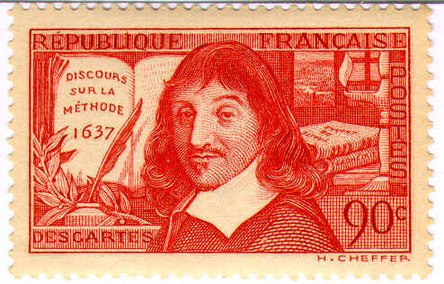
What is progress?I feel that Descartes here goes against your argument. He would see us as the masters and possessors of nature rather than its shepherds and protectors. — Mark Dennis
Actually I agree, but I think that particular perspective results from him being a product of his age. Which just goes to show how different fields of knowledge all have to advance in concert. The whole concept of "ecology" doesn't really become evident until you overpopulate and overindustrialize the world! -
a model of panpsychism with real mental causationNot sure what you mean by "criteria for explanations"?
The fundamental forces of physics are gravitation, electromagnetism, the weak nuclear force, and the strong nuclear force. Chemical properties abound. Flammability isn't explicable by any of the fundamental forces of physics. However the fundamental forces of physics can account for the formation of new macroscopic systems (gas clouds, stars, planetary bodies). These new environments, to the extent that they are stable, create the conditions of possibility for novel formations which exhibit novel properties giving rise to new rules. -
a model of panpsychism with real mental causationThe subjective world of the self is a property of brains. It's not something different than brains that is generated for some purpose. It's what brains are like/it's simply qualities brains have. It's what those materials, in those structures, undergoing those processes, are like. It's not something separate from that. — Terrapin Station
True. Chemical properties are "properties" of physical systems, however chemical properties are not explicable in terms of the laws of physics. Rather they are a new set of "rules" which emerge as a result of the formation of a complex-stable physical system creating a fundamentally new type of context. Likewise for other superordinate systems, biological, psychological, etc. Different systems can be connected without one necessarily being reducible to the other. -
What is a Human like?A human is capable of great sacrifice, yet is often selfish. Great kindness, but is frequently cruel. A human is both stubbornly good and stubbornly bad.
-
Two objections to the "fine-tuned universe" argument for intelligent design
Wholeheartedly agree with this characterization. What we do know is that complex systems can and do achieve various stable states. If we don't even know what all the variables are, we really can't assume there is anything particularly unique about this specific one.Agree with your assessment of the first premise. Assumes the answer, it also assumes we are at an end point in our understanding of our universe or even what universes with the slight variations of physical constraints would look like either. — Mark Dennis -
Irrational ManI'm not necessarily that concerned with the political arguments viz pro-choice/pro-life there. I'm interested in shedding light on the practical implications of human actions. And the fact that seemingly human's act irrationally without complete awareness of them doing so... — 3017amen
Hmm. The whole "requires time" premise seems to me a red-herring based on an exclusive definition of synchrony vs diachrony. A thing can cognitively be "in time" without necessarily "taking time." As a simple example, painting a picture takes time (diachronic) but the complete picture can be observed "all at once" (synchronic).
Most interesting to me is your last observation that people act irrationally without awareness of doing so. This reminds me of the age old question, why do people choose bad instead of good when, ex hypothesi, bad is harmful and good is beneficial. People must somehow think that they are acting rationally even though they are acting irrationally. Bad faith? -
How should we react to climate change, with Pessimism or Optimism?Yes, I assumed that the significant case falls into the modal categories described. The only case for "broad pessimism" I can think of is this: There is a strong chance that it will rain tonight, but the pessimist waters his garden anyway. Kind of silly, but the only kind of case that I can construct where pessimism leads to action.
-
How should we react to climate change, with Pessimism or Optimism?To me, adaptive pragmatism demands evaluating what you should and shouldn’t be pessimistic or optimistic about. I can be optimistic about my ability to act to make better a pessimistic view of the future. As opposed to being irrationally optimistic about the future despite all the evidence of why you shouldn’t be optimistic about it. Our outlooks aren’t always uniform for every single thing. — Mark Dennis
I think this is the key. What we are really talking about here is optimism vs. pessimism in the case of serious and complex situations with lots of unknowns. In that context, to me, optimism takes the form of believing that "we can make a difference" not just that "the best result will ensue" (a la Leibniz). Pessimism that "there is nothing we can do". -
Perfection: Is it possible?Many systems are deeply complex and fluctuate a lot — I like sushi
Is this really true though? A defining characteristic of a complex system is that it tends to transition rapidly (tipping points) from one stable state to another stable state. -
Perfection: Is it possible?I think the fitness of something to a purpose is a really good way to conceptualize perfection.
-
Perfection: Is it possible?I like the idea as perfection as "fitness for" also. It works with a process philosophy.
-
The significance of meaning
And linking to abiogenesis - I just read about an experiment in constructing simple cells from inorganic elements. The idea was to create a solution containing 90 elements necessary for a very simple cell, along with lipids to create the necessary cell membrane. Stochastically/statistically, it was completely improbable (impossible) that any containers would form containing all 90 elements. Nevertheless, they did form. What happened was that some containers formed with zero elements, while others formed with the requisite 90 elements. This can be explained if there is an attractor governing (representing?) a stable system state corresponding to the existence of the "cells". i.e. the elements have an "affinity" for one another in some complex, but measurable/calculable sense. Overriding stochastic behaviour.Like the 'strange attractor' towards which a dynamic system tends to evolve? Yes, I hadn't thought of that. — Chris Hughes
Pantagruel
Start FollowingSend a Message
- Other sites we like
- Social media
- Terms of Service
- Sign In
- Created with PlushForums
- © 2026 The Philosophy Forum