
Comments
-
How do we know that communism if not socialism doesn't work?
That’s a good point. I mean, slavery works. Utilitarianism can justify injustice so long as the greatest number are happy. -
How do we know that communism if not socialism doesn't work?
It’s communist in name, intention, ideology, belief, and practice. It’s just that “capitalism” is largely a bugaboo. No economic system which is not capitalist has ever existed anywhere in history of states, the only difference being in who ought to manage it. -
How do we know that communism if not socialism doesn't work?
I think China has proven it does work. A couple years ago they had the 100th anniversary of the founding of the Chinese Communist Party, for example. But it has also proven that communism, like all grand collectivist ideologies, is tantamount to state capitalism. So long as the republican form of government is the framework upon which they build their dreams, it will never come to anything else. -
Why are We Back-Peddling on Racial Color-Blindness?
The pseudo-scientific justifications for using race have long been discredited. One does not have certain phenotypes because he belongs to some subgroup of human beings, but because his parents formed a distinctly new and unique pool of genes from which he would grow. So using the color of one’s skin or the color of someone’s eyes as a marker of something other than this is foolish. -
Why are We Back-Peddling on Racial Color-Blindness?
Aside from the stupidity of using race as a taxonomy with which to order human beings into this or that category, the negative effects of racism alone should be enough to lead reasonable people to abandon it. So I find it odd and troubling that people would keep pushing to maintain it. -
Why are We Back-Peddling on Racial Color-Blindness?The appeal of race consciousness and racial identity politics to supporters of it is that they get to retain the use of race as a heuristic in their thought, and all the perversions that necessarily arise from it. An example is on display in the criticisms above, where the race of the speakers and not their arguments are all that needs be considered, even if proponents of color-blindness are of all supposed races. The racial heuristic—used as it was in the old racism as it is today, and in the exact same fashion—serves to stop and hinder thought precisely when it is needed most.
-
Why are We Back-Peddling on Racial Color-Blindness?
The pendulum metaphor doesn't work for me because I think it is all fruit from the same poisonous tree. The current racism is largely an extension of the old racism. The same taxonomies, the same tribalisms, the same methods—it's all there. -
Why are We Back-Peddling on Racial Color-Blindness?Activist scholarship is dog shit, in my opinion. Woke corporate racism, that Diversity, Equity, Inclusion mantra, flows straight from that rotten core. The Skokal and grievance studies affairs basically prove that they peddle in nonsense.
-
Joe Biden (+General Biden/Harris Administration)This is funny.
Democratic representative Jamaal Bowman pulled a fire alarm on Saturday in a Capitol office building before a House vote on a stopgap measure to avoid a government shutdown.
The alarm prompted the Cannon House office building to be evacuated and triggered outcry from Republicans including the House speaker, Kevin McCarthy, who compared the New York congressman’s actions with those of the January 6 rioters.
https:/theguardian.com/us-news/2023/sep/30/democrat-jamaal-bowman-fire-alarm-house
Obstructing an official proceeding is what Trump was indicted for, as were many of the J6 protesters. Since “no one is above the law”, and “people should held to account”, I guess we should expect Bowman’s indictment soon. Hilarious. -
The Mind-Created WorldWe continually have to view our own nose. This isn't because "the brain receives, organises and integrates cognitive data, along with memory and expectation, so as to generate the unified world–picture within which we situate and orient ourselves", but because the nose is too close to the eyes. It appears to us, as object, constituted by its relations.
Still, even though it is a constant presence in our perspective, we barely notice our noses and rarely talk about them, especially when describing to others what we see. Van Gogh’s nose never shows up in his Café de nuit, for example. Why? Far from generating a unified world-picture, the mind tends to ignore the reality. Perspective is inextricably bound to the body, an object, constituted not only by its relations, but by its being, something any account of mind is forever lacking. -
Why are We Back-Peddling on Racial Color-Blindness?
I don’t doubt that. But it’s difficult to be xenophobic towards members of groups that do not exist, like a race, rather than towards groups that do exist, like people who are not a member of your community. -
Metaphysics as an Illegitimate Source of Knowledge
I think you’re right. But the question for me is: upon what grounds should I stand? Making sense of “what is there” seems to me paramount, and not entirely fruitless. -
Joe Biden (+General Biden/Harris Administration)A congresswoman’s job isn’t to govern, I’m afraid. Her job is to legislate, to oversee the executive branch, and to fund the federal government (or not). It looks to me like they are doing their jobs.
The witness Jonathan Turley laid out his claims as to why the impeachment inquiry was justified here:
The record currently contains witness and written evidence that the President (1) has lied about key facts in these foreign dealings, (2) was the focus of a multimillion-dollar influence peddling scheme, and (3) may have benefitted from this corruption through millions of dollars sent to his family as well as more direct possible benefits. The President may be able to disprove or rebut these points, but they raise legitimate concerns over his role based on the accounts of key figures in the matter. Consider just ten of the disclosures from the prior investigation:- Hunter Biden and his associates were running a classic influence peddling operation using Joe Biden as what Devon Archer called “the Brand.”[1] While this was described as an “illusion of access,” millions were generated for the Bidens from some of the most corrupt figures in the world, including associates who were later accused of or convicted of public corruption.[2]
- Some of the Biden clients pushed for changes impacting United States foreign policy and relations, including help in dealing with Ukrainian prosecutor Viktor Shokin investigating corruption.[3]
- President Biden has made false claims about his knowledge of these dealings repeatedly in the past, including insisting that he had no knowledge of Hunter’s foreign dealings which Archer has declared “patently false.”[4] The Washington Post and other media outlets have also declared the President’s insistence that his family did not take money from China as false.[5]
- The President had been aware for years that Hunter Biden and his uncle James were accused of influence peddling, including an audiotape of the President acknowledging a New York Times investigation as a threat to Hunter.[6]
- President Biden was repeatedly called into meetings with these foreign clients and was put on speakerphone.[7] He also met these clients and foreign figures at dinners and meetings.[8]
- Emails and other communications show Hunter repeatedly invoking his father to secure payments from foreign sources and, in one such message, he threatens a Chinese figure that his father is sitting next to him to coerce a large transfer of money.[9]
- A trusted FBI source recounted a direct claim of a corrupt Ukrainian businessman that he paid a “bribe” to Joe Biden through intermediaries.[10]
- Hunter Biden reportedly claimed that he had to give half of his earnings to his father[11] and other emails state that intermingled accounts were used to pay bills for both men, including a possible credit account that Hunter used to allegedly pay prostitutes.[12]
- At least two transfers of funds to Hunter Biden in 2019 from a Chinese source listed the President’s home in Delaware where Hunter sometimes lived and conducted business.[13]
- Some of the deals negotiated by Hunter involved potential benefits for his father, including office space in Washington.[14] At least nine Biden family members reportedly received money from these foreign transfers, including grandchildren.[15] For Hunter Biden, this included not just significant money transfers but gifts like an expensive diamond and a luxury car.[16]
These are only some of the serious corruption allegations facing the President, but each could raise impeachable conduct if a nexus is established to the President.
https://jonathanturley.org/2023/09/30/ten-reasons-why-the-biden-impeachment-inquiry-is-justified/
It’s odd if you had missed this because it has been public record for quite some time, but then again it’s not odd because none of it is what you want to hear. - Hunter Biden and his associates were running a classic influence peddling operation using Joe Biden as what Devon Archer called “the Brand.”[1] While this was described as an “illusion of access,” millions were generated for the Bidens from some of the most corrupt figures in the world, including associates who were later accused of or convicted of public corruption.[2]
-
Why are We Back-Peddling on Racial Color-Blindness?
I do. But I think racism is an aberration of thought and belief rather than a feature of some particular system. -
Metaphysics as an Illegitimate Source of KnowledgeI think you’re right insofar as metaphysics is an exercise in imagination and intuition. But I also think metaphysical inquiry can help other forms of inquiry by eliminating the inpossible from our questioning, serving to constrain the scope of empirical studies to a reasonable domain of inquiry, and tempering the mind for such a task.
-
Why are We Back-Peddling on Racial Color-Blindness?
It has also been used as catch-all phrase for woke racism, which may or may not have anything to do with CRT proper. The worst thing the opposition can do is to seek its silence. The surest way to lead pliant minds to wonder if there is something important in CRT would be for governments to ban it. It’s enough to just point at the racism, which can be opposed from any angle. -
Why are We Back-Peddling on Racial Color-Blindness?
You assume on the basis of race and descent, like every racist in the history of mankind. If you hadn't made assumptions on the basis of race and descent, asked instead of assumed, you wouldn't be capable of making sweeping race-based claims without evidence. Good riddance. -
Why are We Back-Peddling on Racial Color-Blindness?We have back-peddled so far that Critical Race Theory and its racist assumptions are mostly mainstream. The pseudoscience and false taxonomies of race are given state prestige. But thankfully views critical of CRT, their paramilitary wings, and their attempts at societal subversion haven’t been made completely verboten.
In the UK, where I believed sense had gone the way of the dodo, a small opposition has found itself protected by law.
The headline in the Times: “Law protects opposition to critical race theory, judge rules”.
https://www.thetimes.co.uk/article/law-protects-opposition-to-critical-race-theory-judge-rules-rmrj2qnzt
https://archive.ph/La6Mf
Is the tide turning? -
Joe Biden (+General Biden/Harris Administration)
Anybody who desires a functional government acting in good faith
The big, bloated, and corrupt institution could use some time off. -
Joe Biden (+General Biden/Harris Administration)The impeachment inquiry into Biden has begun.
https://www.bbc.com/news/world-us-canada-66954626.amp
Now we have to deal with the inevitable politicization of the impeachment process, thanks to the two previous charades. I wish the politicians would take the higher road and leave the choice to their voters, but then again, we’re well beyond high road at this point and it would be a mistake to think that the GOP is not just as politically craven as the Dems.
The Dems seemed to think there was not enough evidence for an impeachment, and kept saying so, except it’s an impeachment inquiry. There is plenty of evidence of for an inquiry. It looks like the inquiry will be the impetus for subpoenaing bank records and all that, so any hard evidence ought to be forthcoming. Biden ought to be supportive of this because there is so much of a cloud around his name that this should clear up the air. -
The meaning of meaning?
How do you account for something like a stop sign? If a foreigner asks you what it means, and you say, it is a spiritual recommendation to stop, meditate, and appreciate the immediate surroundings, you are quite objectively wrong.
We know what a stop sign means because over our lifetime we have come to learn what a stop sign means. We know the word “stop”, use it often, understand the colors associated with stopping, see others stopping when pulling up to it, and so on.
If a foreigner grew up learning that it was a go sign, that the sign meant “go” and the people around him treated it as such, he would see it as a go sign. I suspect we continually generate and supply the meaning to the signs rather than the other way about.
This isn’t to say that the signs are arbitrary. Far from it. -
The meaning of meaning?The meaning is invariably in the human being. The meaning of a word, for example, is only constant at the point of a speaker or listener, her body, and never in the signs and mediums. This is why we cannot understand the meaning of a sign by looking at it. Nothing called “meaning” is in the sign. Nothing called meaning is conveyed from one point to another by way of linguistic vehicles. There is no meaning in guttural soundwaves and scratches on paper. Philosophy ought to steer clear of this magical thinking and approach a biological or individual account of meaning, leaving the word-chopping to the linguists.
-
Ukraine Crisis
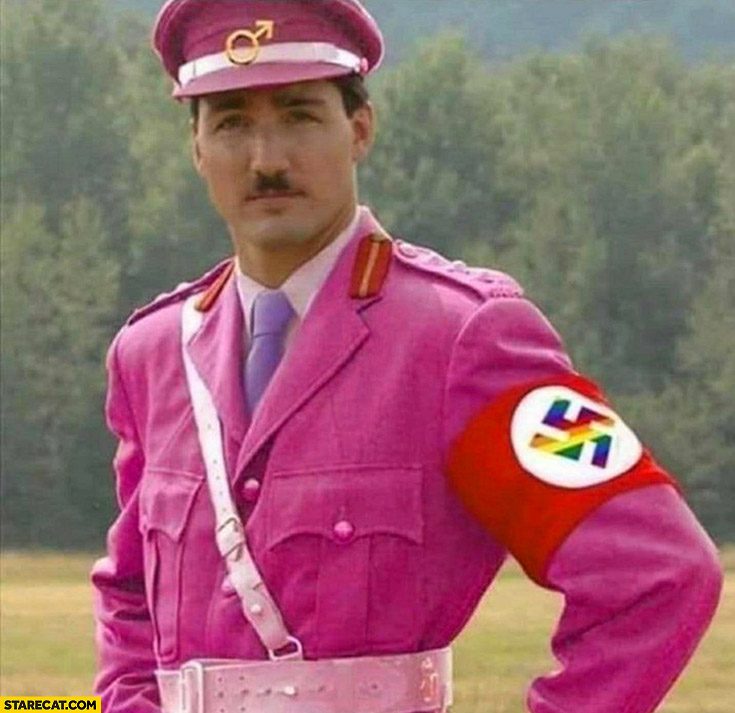
You’d be surprised. I would argue Canada places more power in the hands of its leader than does any other western country. Trudeau invoked the Emergency Act to quell protests critical of his government’s handling of the pandemic, for example. These powers allowed him to engage in nefarious activity against his own citizens, like directing banks to freeze their accounts. Imagine if the US president tried to do that.
-
Art Created by Artificial Intelligence
I feel the same way about all things digital. Maybe it’s the medium, or that all of it is largely a string of ones and zeroes, and a portrait of the artist as a person who moves a contraption around on his desk, clicking it every once in a while. Of course artificial intelligence could do that better than a human being, when you think about it. -
Object-Oriented Ontology - Graham Harman Discussion
If you assume that everything exists (which I do), including hobbits, determining what a thing exists as becomes paramount to their ontology. For me it's as simple as writing the word "Hobbit" on a piece of paper and taping it to that object. Without being able to find a little man called a hobbit, I'd have to place it on the book "The Hobbit" or on some guy reading the book, or a bunch of neurons. These objects—the book, the guy reading it— are the ones at risk of being undermined by considering the Hobbit to be an object. Anyways, interesting stuff to think about. -
Donald Trump (All General Trump Conversations Here)
I already said that Pomerantz and another prosecutor resigned. As you have clearly read from the article, there are more prosecutors involved, including Bragg himself.
Mr. Trump is his own most dedicated promoter and for years has acted as a booster for the value of his buildings and his brand. The possibility that Mr. Trump’s exaggerations could be criminal has long intrigued prosecutors, and the Manhattan district attorney’s office at one point came close to indicting Mr. Trump on charges that he had misrepresented their value.
The current district attorney, Alvin L. Bragg, declined to pursue that case, but later indicted the former president in connection with a hush money payment to a porn star.
https://www.nytimes.com/2023/09/26/nyregion/trump-james-fraud-trial.html
What happened to the baseball team analogies? -
Object-Oriented Ontology - Graham Harman DiscussionI like the phrase and I too have an object-oriented ontology. I also express a “flat-ontology”, I suppose, at least insofar as objects cannot be identical to their relations.
But I think it’s wrong to look at objects as the ultimate stuff of the universe if each one is unique and never exhausted by its relations. The principium individuationis suggests pluralism, that there is an infinite variety of objects.
I don’t think something like The Civil War or abstract or fictional ideas are can be considered objects, either, and that to do so risks undermining the actual objects involved in thinking about and expressing those ideas.
Anyways, I'm going to take a look at the book. Thanks for sharing. -
Donald Trump (All General Trump Conversations Here)
I was quoting one of Ankush Khardori's sources from his article in New York Magazine.
“That was never conveyed to the team,” one of the sources told me, while cautioning that it was at least conceivable that there were discussions among Vance, Pomerantz, and Dunne that were not shared with others in the office. “The authorization,” at least so far as the source could summarize, was to continue investigating. “It was never, ‘All right, go forth and indict,’” the source continued, “because there was nothing, there just wasn’t anything … There was nothing to indict.” If anything was expressed during this period, it was that “this would be a great civil case.’” Indeed, Attorney General Letitia James’s office brought such a civil case last year that largely followed the same outline.
https://nymag.com/intelligencer/2023/02/mark-pomerantzs-revealing-fight-with-alvin-bragg-over-trump.html -
Donald Trump (All General Trump Conversations Here)
I was writing about the prosecutors in the district attorney's office (note: "the prosecutors", "the criminal prosecutors", not "the attorney general") investigating Trump for the exact same thing. If you do not recall two of them quit earlier this year. This was because, to their chagrin, "There was nothing to indict", ie, no crime, no evidence of any crime. They had nothing and were angry the DA refused go along with it. Obviously, you know nothing of this, nor should I be required to fill in the holes of your knowledge, but hopefully this clears it up for you. -
Donald Trump (All General Trump Conversations Here)
How is that possible when the sentence you quoted refer to other people? It’s clear to me where the distortion lies. At any rate, that’s my public service for the day. -
Donald Trump (All General Trump Conversations Here)
I didn't say she chose not to bring a criminal case. I said "prosecutors refused to pursue the case". You even quoted it. Is this your idea of good faith? -
Donald Trump (All General Trump Conversations Here)
This is like saying a baseball team refuses to play basketball.
When dealing with Fooloso be prepared nonsensical analogies and other sophistries.
You can't think of any reason why criminal prosecutors would refuse to pursue a case? -
Joe Biden (+General Biden/Harris Administration)Another odd find in the Biden saga. Still, no evidence Joe was involved. Just his address, his son, his family, Air Force 2, and so on.
House Oversight Republicans say new bank subpoena shows Hunter Biden listed father’s Wilmington house in wires with China
The Republican-led House Oversight Committee subpoenaed a bank for Hunter Biden’s records and obtained two wire transfers from Chinese nationals to Hunter Biden in 2019 that listed President Joe Biden’s Wilmington, Delaware, home as the beneficiary address, the panel announced Tuesday.
https://www.cnn.com/2023/09/26/politics/house-oversight-republicans-hunter-biden-bank-subpoena/index.html -
Donald Trump (All General Trump Conversations Here)
I know what a civil and criminal case is and the difference between liable and guilty. No need to scurry around and gather disparate quotes and authors, which I never read in any case.
NOS4A2

Start FollowingSend a Message
- Other sites we like
- Social media
- Terms of Service
- Sign In
- Created with PlushForums
- © 2026 The Philosophy Forum