
Comments
-
A Theory of Information
Let's try to see where we agree or disagree on the Intuition vs Reason debate. Which of the following definitions would characterize your understanding : "Reasoning is rational thinking using logic, while Intuition is unconscious, A> a paranormal gift, B> a magical awareness not accessible for normal humans, or C> a connectivity to an all knowing esoteric field." Or does your Fifth Dimension theory provide another option?The problem with discussing this only in relation to ‘intuition’ and ‘reason’ is that we don’t really understand or agree on what these concepts are or how they operate objectively in relation to science. — Possibility
Of course. That's the distinction between Subjective knowing (I feel angry) and Objective knowledge (I sense an increase of adrenaline). It's the mystery of Consciousness that I can't know directly what's in your mind. Which is why rational humans, and not intuitive animals, have developed methods for objectifying their thoughts in conventional words and concepts. Some animals, such as ants, communicate their feelings about factual information (e.g. a source of food) via chemicals. Dolphins communicate their emotional states, and some factual information, via squeaks and body language. Do you suppose they have a deeper (or higher) understanding of the world than the founders of religions (holistic, oceanic oneness) , or empirical scientists (reductive, particular details), who communicate their feelings and facts via language and mathematics? Can we humans have the best of both worlds, higher and deeper?I cannot expect your experience of knowing ‘intuitively’ to be the same as mine, in the same way that there is no such thing as a universally recognised instance of ‘anger’. — Possibility
Some neuro-biologists like to think they can trace all mental activity back to neuronal functions. But a few neuroscientists, such as Christof Koch, are beginning to take a more holistic approach to understanding the mysteries of Consciousness. The physical functions of brains are not fully understood, but the correlations between measurable brain activity and felt mental concepts are undeniable. So, it behooves us find the link (or common denominator) between brain and mind. In my thesis, that common measure (both physical and metaphysical) is universal Information.we cannot keep pretending that concepts such as ‘intuition’, ‘reason’ or ‘emotion’ always refer to measurably identical physical instances — Possibility
The Feeling of Consciousness : Koch notes that, “much ink has been spilled over arguments that quantum mechanics is the secret to consciousness”. However, after years of research, he saw “no need to invoke exotic physics to understand consciousness”.
http://bothandblog6.enformationism.info/page18.html
Note : the names of metaphysical Feelings are metaphors based on physical sensations, such as touch, vision, smell.
That's why I have focused on a different word, Information, to describe those "different patterns of experience". Raw Information has the potential to take on infinite Forms or Patterns.And we need to recognise that we could very well be referring to two quite different patterns of experience, and therefore different conceptual structures, while using the same word. — Possibility
In my own thesis, that state "irrespective of temporal or spatial relevance" is what I call Enfernity (dimensionless eternity & infinity). So perhaps we have some common ground here. I begin to see where you are coming from. But I would call it "non-dimensional".mental relations irrespective of temporal or spatial relevance - all refer to five-dimensional reality. — Possibility
I can see the analogy, but the question is how we could predict the future state of the waveform upon the collapse of the stateless wave-function. How does "observation" trigger a phase transition from non-local to local, or from possible to actual. I have toyed with some scenarios, but the topic is way beyond my competence in science and philosophy, not to mention mystical knowledge. :nerd:I’m not suggesting that the wavefunction is a useful tool in predicting future states - I’m suggesting that its probabilistic nature provides a useful analogy to describe the existing structural relation between belief and action. — Possibility -
A Theory of Information
Such antagonism arises primarily when objective scientific facts clash with subjective religious beliefs. For example, the Theory of Evolution seemed to turn divine miracles into mundane mechanics. So, Intelligent Design proponents counter-attacked the scientists by using their own weapon of Reason against them. Both sides in the ongoing debate have a "strongly intuitive social sense", but different opinions about what qualifies as "valid information". Christians and Muslims both have Intelligent Design arguments online, but they get their valid Information from different scriptures --- different revelations of "truths beyond intellect". Can intuition tell you which revelation is true, or would you prefer to roll the dice, or to laboriously reason through the evidence? :chin:Likewise, many ‘rational folk’ have a strongly intuitive social sense, even though they’re vocally dismissive of feelings as valid information. — Possibility
Note : The BothAnd philosophy is intended to reconcile the world's inter-social divisions by accepting the necessity, and validity, for both Intuition and Reason in human intercourse. But each side must "doubt a little of their own infallibility". ___Benjamin Franklin
https://www.pbs.org/benfranklin/pop_finalspeech.html
Reasoning vs Intuition : Many people regard Reasoning the opposite of Intuition. Reasoning is rational thinking using logic, while Intuition is unconscious, a paranormal gift, a magical awarenessnot accessible for normal humans, or a connectivity to an all knowing esoteric field.
https://thinkibility.com/2012/11/17/reasoning-versus-intuition/
[ Normal mundane Intuition is how most human thinking works. But magical, esoteric Intuition is a claim that must be taken on faith. So choose your prophet wisely, or your faith could lead you astray.]
"Beloved, do not believe every spirit, but test the spirits to see whether they are from God, for many false prophets have gone out into the world." 1 John 4:1 -
A Theory of Information
I doubt that the average person dismisses mundane Intuition as irrelevant. But they may not be aware that most of what they think of as Reasoning is actually Intuitive. Instead, the dismissal occurs when one man's intuition clashes with another's. For example, the 20th century mystic Gurdjieff once dissed his contemporary mystic Aleister Crowley, as "dirty inside". Since mystical revelations are subjective, they are internally (among believers) cohesive, but externally (in the objective unbelieving world) divisive.The information isn’t hidden from them, it’s dismissed by them as irrelevant, illogical, impossible, meaningless or simply uncertain. They don’t recognise how they apply feeling to a predictive distribution of attention/awareness that determines their thoughts, words and actions. On the other hand, those who consider themselves more ‘intuitive’ tend to struggle with integrating the quantitative specifics of their actions into a later explanation. — Possibility
In cases of clashing faiths, an ecumenical (Rational) approach to "the way" may be necessary to untangle the various "my ways" of intuitive mystics. That's why the Catholic Church typically ignored its mystics, until they became famous after death, and could then be conformed to the Catholic "way" by pigeon-holing them as "the saint of _____", and ignoring any teachings that deviated from official doctrine.
Mystics have always been associated with Occultism because their visions and revelations are inherently hidden from their non-mystic followers, who relied on their gurus as a source of "information" about transcendent realms. The "explanations" of their intuitions are typically idiosyncratic, and often incompatible with official (rational) church doctrine. So, the problem is, which transcendent authority do you believe : the Holy Roman Church, or the Holy Roller Mystic? Can intuition resolve that dilemma? Or is plodding Reason more likely to parse the true from the false? Some people trust their intuition more than their reasoning powers, but others have learned that intuition can lead them astray. Mystics, who sit on mountaintops, or live in cells, don't have to worry about making sense to unbelievers.
I assume that "predictive distribution of attention/awareness" is a long way of saying "intuition. And "integrating the quantitative specifics . . . into explanation" is another way of saying, to translate feelings & opinions into facts & reasons. :cool:
Mystic : one who believes in the spiritual apprehension of truths that are beyond the intellect.
William James : A great many people think they are thinking when they are merely rearranging their prejudices.
Aleister Crowley : He founded the religion of Thelema, identifying himself as the prophet entrusted with guiding humanity into the Æon of Horus in the early 20th century.
George Gurdjieff : his method for awakening one's consciousness unites the methods of the fakir, monk and yogi, and thus he referred to it as the "Fourth Way".
[ presumably Jesus was the third way. And Lao Tse had a "Way" (Tao) of his own. ] -
A Theory of Information
This quote sounds like it might be relevant to human consciousness. But the terminology is more appropriate for quantum theorists or neuroscientists. Could you break it down for me, with examples from our ordinary experience of knowing via Intuition or Reason? I can accept that our voluntary behaviors, our actions, are usually based on uncertain and incomplete information. They are instead, derived from intuitive judgments of relative values of the most favorable outcome (probabilities) of optional actions. In other words, we evaluate what little we know about a complex situation, in order to estimate which actions will result in the optimum Effect for me. That predicted, positive or negative, abstract Effect is felt as a visceral Affect (mediated by neurotransmitters such as dopamine).My view is that the human organism acts similar to a quantum system, determining all action based on trusting a probabilistic prediction (analogous to a wavefunction) not just of how to direct its efforts - in terms of quantitative energy relative to spacetime - but also how to direct its attention, as in qualitative awareness, connection and collaboration. — Possibility
Intuition gives us a quick overview of possible outcomes --- like watching a movie in fast forward --- from which we select what seems to be the best path to a desirable future state. Therefore, we "direct our attention" to that optimum path, and ignore the ones that seem to be less profitable. However, in some cases, the situation is so complex that Intuition is a poor guide to action. So, we slow down the movie and examine it frame-by-frame, by Reasoning, to see if we missed any important details that may affect the overall meaning of the movie.
Most human behavior is more or less successfully guided by Intuition, but our innate ability to judge probabilities (statistics) is poor. We tend to be more confident of our intuitions than is warranted. That's why modern scientists rely on computers to fact check their original estimates. Unfortunately, while computers are good at predicting Effects, they are poor at anticipating Affects (how it will make me feel). So, the method of Bayesian Statistics was developed to take advantage of human intuition for subjective affective evaluations.
Intuitive statistics were not derived from our understanding of quantum randomness, but of our self-correcting procedures to improve first guesses with more information. However, Rational computer statistics could, in theory, make use of wavefunction calculations to sharpen their ability to predict future states. I'm just riffing here. So this little diversion may have missed the point of the quote above. And I still don't know what it has to do with "five dimensional reality". :joke:
Intuition vs Reason : https://www.amazon.com/Thinking-Fast-Slow-Daniel-Kahneman-ebook/dp/B00555X8OA/ref=tmm_kin_swatch_0?_encoding=UTF8&qid=1590345423&sr=8-14
Quick Decisions : https://theconversation.com/you-make-decisions-quicker-and-based-on-less-information-than-you-think-108460
Judgment Under Uncertainty : https://www.cep.ucsb.edu/topics/stats.htm
Intuitive (Bayesian) Statistics : https://en.wikipedia.org/wiki/Intuitive_statistics -
A Theory of Information
I'm sorry if my thick skull frustrates you, but I still have no idea what you are talking about. Can you translate the quote above into words a non-specialist can understand? The technical terms bolded are not in my everyday vocabulary. Although I can look up the individual definitions, the whole sentence still doesn't mean much to me (me no Grok).The way I see it, we continually structure, test and restructure this non-numerical data with uncertain quantitative data (as described above) in the mind, reducing into a dual ‘wavefunction’ - what we call a neural interoception of affect: a probabilistic prediction of effort (quantitative) and attention (qualitative) requirements for the organism, which then determines and initiates the observable/measurable actions (thoughts, words, movement, etc) of the quantum system (ie. the organism) in relation to other systems. — Possibility
Are you saying that Quantum Uncertainty is "the fifth dimensional aspect of reality"? If so, what difference does that make to me? Is it the "dimension" of Intuition? Do intuitive people, such as artists, have access to a source of information that is hidden from more rational folks? Do they "measure" that alternate "reality" in terms of feelings instead of math or logic? :chin:
Wave Particle Duality : Bohr regarded the "duality paradox" as a fundamental or metaphysical fact of nature. A given kind of quantum object will exhibit sometimes wave, sometimes particle, character, in respectively different physical settings. He saw such duality as one aspect of the concept of complementarity
https://en.wikipedia.org/wiki/Wave%E2%80%93particle_duality
[ Note : Complementarity is the essence of my BothAnd philosophy, but it's not derived from an understanding of the Schrödinger equation ]
Schrödinger equation :
Interoception : sensitivity to stimuli originating inside of the body
https://en.wikipedia.org/wiki/Interoception
Affect : touch the feelings of (someone); move emotionally.
Grok : understand (something) intuitively or by empathy.
As I said above about the concept of Enfernity (Eternity/Infinity) "We can only discuss that imaginary concept in terms of metaphors & allegories, based on our sensory experience, and our rational evaluation." I need relatable metaphors for invisible abstractions. :joke:although you won’t clarify in what way it fails to make sense in your mind — Possibility


-
Illusionary reality
If so, then Philosophy is nothing. :cool:↪Gnomon
That's just giving it a name. Metaphysics is nothing, — Banno
Metaphysics : Arguably, metaphysics is the foundation of philosophy: Aristotle calls it "first philosophy" (or sometimes just "wisdom"), and says it is the subject that deals with "first causes and the principles of things".
https://www.philosophybasics.com/branch_metaphysics.html -
What on earth is energy?
Yes. Information requires some kind of Mind to contain & process specific Concepts. But in my thesis, Generic (creative) Information is the Universal Substance of Spinoza. It's not only abstract, but also Metaphysical. And, so is Energy.But there must be substance if there is to be anything. Information by itself is abstract. There must be mind or substance to hold the information in being. — EnPassant
According to modern physics, energy is not a physical thing, but the process of Change, and the invisible, intangible "substance" of Matter. (E = MC^2) You have never seen Energy per se, but your senses are tuned to detect changes in matter caused by inputs of Energy, or loss as Entropy.
Spinoza used the term "substance" in the sense of fundamental essence, rather than the more common meaning of material stuff. And I use the term "Information" in its original sense of the abstract contents of a mind, rather than the 1s & 0s in a computer, embodied in energy states (modes). :nerd:
Universal Substance : The most distinctive aspect of Spinoza's system is his substance monism; that is, his claim that one infinite substance—God or Nature—is the only substance that exists.
https://www.iep.utm.edu/spinoz-m/
According to Spinoza, everything that exists is either a substance or a mode. A substance is something that needs nothing else in order to exist or be conceived. Substances are independent entities both conceptually and ontologically. A mode or property is something that needs a substance in order to exist, and cannot exist without a substance [matter is a Mode of existence, and energy is the Substance that creates the mode of existence]
https://www.iep.utm.edu/spinoz-m/
What is Energy made of? : https://physics.stackexchange.com/questions/14444/what-is-energy-made-of
Information : http://blog-glossary.enformationism.info/page11.html -
Illusionary reality
Physics without math is Philosophy : i.e. Metaphysics.Physics without the maths is nothing. — Banno -
What on earth is energy?
Yes. I have concluded that ancient people used the word "spirit" (literally invisible living "breath") as a metaphor for what we now call "Energy". It's the power of agency, the ability to cause change, the potential for useful work. Animists were closer to modern science than the later Judeo-Christian notions of a non-physical Soul for humans only. But Science has determined that even physical Energy is equivalent to what we now call "Information". And, before Claude Shannon, "Information" referred only to mind stuff. So, Matter, Energy, and Mind are different forms of the same thing : Information.Again, mind and energy may be much the same thing. If energy is mind then energy is what is traditionally termed 'spirit'. — EnPassant
Mass Energy Information Equivalence Principle : https://www.researchgate.net/publication/335673226_The_mass-energy-information_equivalence_principle
Information : Claude Shannon quantified Information not as useful ideas, but as a mathematical ratio between meaningful order (1) and meaningless disorder (0); between knowledge (1) and ignorance (0). So, that meaningful mind-stuff exists in the limbo-land of statistics, producing effects on reality while having no sensory physical properties. We know it exists ideally, only by detecting its effects in the real world.
For humans, Information has the semantic quality of aboutness , that we interpret as meaning. In computer science though, Information is treated as meaningless, which makes its mathematical value more certain. It becomes meaningful only when a sentient Self interprets it as such.
When spelled with an “I”, Information is a noun, referring to ideas & things. When spelled with an “E”, Enformation is a verb, referring to energy and processes.
http://blog-glossary.enformationism.info/page11.html -
A Theory of InformationI don’t think you’re sorry at all. — Possibility
Sorry. I've changed my mind. I will waste a bit more of my Time dimension on this off-topic digression --- for my own edification.
I'm currently reading a Kindle book by Bernardo Kastrup, More Than Allegory. It's talking about the "transcendent" realm that is revealed in religious myths and mystical visions. "These are transcendent truths, for they escape the boundaries of logic, time, and space. . . . Where the intellect stops intuition picks up. We can sense truth even if we cannot articulate it in words . . . Unreliable as this sense may be, it is our only link to a broader reality." I've just begun to read the book, so I'll reserve judgement til I can see where he's going with this.
Although he doesn't use the actual word "dimension" to describe the mythical & mystical transcendent realm --- presumably above & beyond the sensible boundaries of the four-dimensional space-time universe --- some of his other terminology reminded me of this thread. Since I couldn't get any direct answers from Possibility about the nature of those postulated multi-dimensions in our off-topic discussions, I'm assuming the vague evasive answers indicate that they are knowable only by Intuition rather than Reason. Although Kastrup is a computer scientist, and presumably uses Reason in his mundane work, when discussing Transcendence, he calls Reason the "obfuscated mind". So, he asks about Intuition, "what can it know about nature that the intellect cannot?" He explains that intuition works with emotional Symbols, not rational Facts.
After raising some perennial philosophical questions, he says "the possibility that presents itself to us is that our neglected obfuscated mind . . . could offer us answers". Later, he makes an ambiguous statement : "although this transcendent view is not literally true, it is potentially truer than anything our intellects could possibly come up with." Are our metaphors & allegories & myths somehow more real & true & meaningful than the mundane facts of science & reason? That seems to be the point of Kastrup's book. If so, how do we discern Truth from Error among the thousands of myths in the world. Is Truth whatever feels good? As Joseph Campbell said, "follow your bliss!" If so, Islamic terrorists believe they are following their bliss to Allah's Paradise, while non-Islamists think the murderers and rapists are taking a short-cut to Jehovah's Hell.
At the beginning of this thread, I took the posts of Possibility seriously, assuming that the invisible transcendent dimensions referred to, would eventually be related back to the visible mundane world of physical senses, and the "obfuscated mind". But eventually, I began to wonder if I was being punked. Whenever, I requested specific information, all I got was assurances that the vaguely defined Higher Dimensions actually exist in some sense. But I remain none the wiser for all my efforts to understand what the mysterious Referent of "Higher Dimensions" might be. Is that failure due to my bad faith or to that of the proponents of invisible parallel worlds?
As a recovering Fundamentalist Christian, I no longer take assurances of invisible or transcendent domains on faith. But, based on my Enformationism worldview, I have concluded there must be One Transcendent "dimension" : Enfernity (Infinity & Eternity), which is timeless, spaceless , and dimensionless. Hence, as Kastrup said, it's beyond "the boundaries of logic, time, and space." Which is why I make no claims to know anything about that completely abstract non-reality. We can only discuss that imaginary concept in terms of metaphors & allegories, based on our sensory experience, and our rational evaluation. And nothing we say about it is literally true. :cool:
Referent : the thing that a word or phrase denotes or stands for.
Bad Faith : acting inauthentically
Dimension : a measurable extent of some kind, such as length, breadth, depth, or height.
How do we measure non-spatial dimensions --- with feelings? Do we know them with spiritual eyes? -
Illusionary reality
Hoffman's theory is based on a specific understanding of how evolution has constructed the human body and mind. His concept of Model Dependent Realism, which goes back to Kant's notion of "ding an sich", says that we never know the "real" object, but only a mental image of the object (subjective meaning), constructed in the mind from abstract inputs of energy (quantum dots of photons). You could think of the human mind as an old-timey telegraph operator. What his senses receive are meaningless dots & dashes of energy, which must be translated into ordinary language with conventional meanings. So, yes, Matter is like the telegraph sender, "outside the senses" of the receiver.Oh, icons sounds like a pretty good way to describe it. Though we see things by using light, which according to my understanding are collections of specific amounts of energy, doesn’t that mean matter is actually something outside our senses? So we use something invisible that might not exist as an icon for something that does exist, sounds like a pretty roundabout way of doing things. — Braindead
Why not just transmit meaning directly into the receiver's mind? Apparently evolution doesn't have ESP. So, just as the eye is built backward, with blood vessels in front of the light sensitive retina, Evolution sometimes gets the job done in a "roundabout way".
For an even more roundabout explanation, In terms of my own unconventional worldview, Reality begins as Generic Information (mind stuff), which is the precursor of Energy, which then is transformed into Matter via phase changes. And light bouncing off that matter is received by the senses, and then transformed back into Mind Stuff via brain functions. Hence, the stuff you "see" is two steps away from ultimate reality. But that's another long & winding story in itself. :joke:
Model Dependent Realism : Crick was a Metaphysical Realist : “we believe that experience accurately depicts the thing-in-itself”. By contrast, Hoffman, “despite the consensus of experts, . . . doubted that natural selection favors perceptions that describe reality”.
http://bothandblog6.enformationism.info/page22.html
Generic Information : omnipotential EnFormAction which generates all things. Similar to Plato's Forms.
http://blog-glossary.enformationism.info/page8.html -
What on earth is energy?
Yes. It's Information. My unconventional personal worldview is a Theory of Everything. And it's based on the quantum equivalence of Energy and Matter and Mind. From that equation, all of your questions can be answered. :smile:Can one define that which defines everything? — Benj96
Information : http://blog-glossary.enformationism.info/page11.html
EnFormAction : http://blog-glossary.enformationism.info/page8.html -
A Theory of Information
I agree. From our exchanges on this thread, I gather that your non-spatial dimensions are devoid of content. Hence nothing for a meaningful discussion to build on. And a waste of fourth dimension Time. :yum:There’s no point in having a discussion with you, — Possibility -
Illusionary reality
Kant called that "illusion" Transcendental Idealism. In that case, ". . . what we think we see, is not absolute reality but our own ideas about reality."If matter doesn’t exist then what do we see? I don’t know. There’s obviously something there, but it has no true substance, which is why I call it an illusion. — Braindead
Donald Hoffman uses more modern terminology, when he calls those "illusions" Icons; alluding to the little symbols on a computer screen. Instead of throwing up his hands at our illusory reality though, he presents a metaphor by which we can make sense of Plato's shadows-in-the-cave, and make use of the encoded information they provide about the "absolute" reality outside the cavern of deception.
Matter is a form of Energy that our physical senses are tuned to detect. So, for all practical purposes (i.e. Science), matter is reality. But for the theoretical purposes of philosophy, there is more than meets the eye. :nerd:
Reality is not what you see : http://bothandblog6.enformationism.info/page21.html
Argument Against Reality : https://www.quantamagazine.org/the-evolutionary-argument-against-reality-20160421/
Model Dependent Realism : https://en.wikipedia.org/wiki/Model-dependent_realism -
Coincidence?
Sounds like Jung's notion of Synchronicity. But mundane psychological theories, such as the Availability Heuristic and Confirmation Bias make more sense to my mundane mind. :nerd:Other times I have heard or thought about a certain thing that no one would normally talk about, only to have that very topic pop up repeatedly. — Braindead -
A Theory of Information
So, is this a kiss-off? Are you dumping me for another more intelligent, inquisitive, and humble forum poster? Have you found someone who actually understands what you're talking about? I'm hurt. But I'll be interested to see what that other guy has to say about occult dimensions. :cool:but if it’s your attempt to come across as knowledgeable on the subject of dimensions, then I’ll just applaud you and be done with it. — Possibility
Quantum Enigma : "Can you believe that physical reality is created by our observation of it?"
That's one interpretation of the mysterious black-box "enigma". But I have a different "wild guess" : that the creator/observer is not "us", but the Whole of which we are tiny holons. I agree that the quantum paradoxes are due to our misunderstanding of Consciousness, but what is the correct interpretation? Can we define dimensions into existence? Who's right; who's wrong; who knows?
https://www.amazon.com/Quantum-Enigma-Physics-Encounters-Consciousness/dp/019517559X#customerReviews
PS__I'm sorry if this post sounds flippant. But I assure you I have seriously tried to grasp the various ancient and New Age notions of occult dimensions, planes, and heavens, but they just don't make sense to me. Apparently, I'm expected to take their existence on faith or hope. But what difference will that Gnostic knowledge make to me? Will it give me superpowers? Will I achieve enlightenment? Will it expand my mind? I've seen no evidence of that, except as self-delusion. The Muslim Paradise is easy to envision, because it appeals to basic human aspirations and emotions. But it doesn't appeal to my own Reason. My personal worldview is four dimensional, and completely mundane --- no magic at all --- and its metaphors are not intended to be taken literally. It merely serves as a Pragmatic guide to Reality, with no need for faith. -
The structure of philosophy
Since I am not an academic philosopher, I don't spend much time thinking about such questions. So I doubt that I would have anything significant to add to the structural diagram you have in mind. My suggestions above were mostly about the graphic presentation. With a static stack of boxes, it doesn't have much meaning for those not already knowledgeable about the technical details of philosophical minutiae. Valentinus seems to be better suited to critique your work. :chin:This suggests that consequentialist or teleological ethics shouldn't be at odds with deontological ethics, because they are not different answers to the same question, they are answers to different questions. — Pfhorrest -
A Theory of Information
If I am so arrogant & ignorant, why do you care what my opinion of your Multidimensional Reality might be? From your early posts I began to entertain the possibility that you may know something that would add more "dimensions" to my personal worldview, and to my understanding of reality. But I'm still waiting for that revelation. With my references to abstruse scientific theories, I may have given the impression that I am a part of that exotic academic world. I'm merely an onlooker, not a participant.But your resistance to even attempting to understand how your belief system relates to quantum potentiality is coming across as blatant ignorance and exclusion, NOT a lack of intelligence. — Possibility
Your Multidimensional Theory is not the only one I've investigated, and then "excluded" from my personal worldview because they are not relevant to my interests. Even if there are 11 spatial dimensions in String Theory, what difference does it make to me, here locked into the 4D reality of my physical senses? I am aware that many people believe in invisible dimensions that only the elect are aware of. For example, Muslims are told that there is a seventh heaven, which is a realm of intense happiness and bliss, that only the faithful will ever experience. If so, it behooves me to accept God's Final Prophet and bow to his revelation. I'm not sure what the dimensional number is, but potential Islamic Martyrs are assured that there is an invisible Paradise, with 72 beautiful virgins to please every adolescent male sexual fantasy. But, those extra dimensions have no relevance to my non-Islamic belief system. And I'm no longer a hormone intoxicated teenager.
I googled "Quantum Potentiality", and found a few returns, mostly referring to some of Heisenberg's mathematical musings about the significance of superposition. But I'm not able to follow his math. Another site may be closer to what you are talking about on EscadelicNet. It seems to deal with some of the same scientific & philosophical topics that I link to in the Enformationism thesis. And it also uses the Matrix movie as a metaphor for the Mind/Body paradox. As I get time, I'll look around the site. But at first glance, it seems to require much more formal training in quantum theory and higher math than I bring to the table. I'm not qualified to critique the criticisms of the Standard Theory, much less the theory of the Syntellect Hypothesis. :cool:
The Physics of Information : Twisting your mind to see reality from the quantum gravity viewpoint is no easy task.
https://www.ecstadelic.net/top-stories/the-physics-of-information-quantum-potentiality-to-classical-actuality-of-your-experiential-reality -
The structure of philosophy
So, what is the "general thrust" of this thread and your book : that there are general categories of philosophical questions? . . . that there are relationships between those categories? Are you adding any new information to the ongoing philosophical dialogue? If so, how would you characterize that novel concept? Does your personal "topical structure" overturn older ideas, or reveal heretofore unknown significance within the space of philosophical possibilities? If the answers to these questions were revealed in the OP, please give me a refresher. :confused:I think you're misunderstanding the whole general thrust of this thread. — Pfhorrest -
The structure of philosophy
I was using the term "ideology" in its philosophical sense as a unique system of ideas, not in the pejorative sense of someone else's erroneous political beliefs.It’s not of an ideology, but of the topical structure of philosophy itself, how the different subfields relate to each other. There’s no specific views of any of those fields embedded in this structure. — Pfhorrest
I'd still like to see a diagram of how those category boxes relate to each other, and to the whole system of philosophy. A simplistic interpretation of the un-linked boxes is that Language somehow determines Action. That seems to be a vaguely Postmodern worldview. But it's obvious that most languages, including slang, contain implicit beliefs, encoded into words, that affect behavior subconsciously. So, I'm assuming you have something less obvious in mind. That's why a diagram of structural relationships (links between sub-categories) would increase understanding of the message you're trying to convey.
Perhaps your concept could be encapsulated into a single label (word or phrase) that would be suggestive of the overall meaning of your concept or worldview. For example, my coinage of Enformationism was intended to imply a worldview based on the universal role of Information (Spinoza's Single Substance), as opposed to the ancient notions of Spiritualism (spirit is all) or Materialism (matter is all). Information is both Spirit/Mind (metaphysics) and Matter/Energy (physics). What is your diagram about? :chin: -
The structure of philosophy
But without a Logical or Hierarchical or Causal flow diagram, it's just a static snapshot of a complex ideology. :cool:Their relations to each other in space depicts their relationships (which are explained more in words earlier). And there isn’t a hierarchy, it’s not like one is prior to another; you could approach it all from multiple angles and order them accordingly for each. — Pfhorrest -
The structure of philosophy
This is a start. A picture is worth a thousand esoteric words. But, I need some arrows or links between boxes to indicate functional interrelationships, and a logical (or value or causal) hierarchy. Just static categories floating in space give no sense of dynamic structure.I took a stab at it, not super easy to read because it's a 3D structure that's not animated like the one you linked, but I tried to compensate with transparency, so it's something maybe: — Pfhorrest
From what I see here, Language (conventional meaning) works through all those other experiential categories to produce Values (the meaning of life upon which our personal actions are based). Taken all together, this may be a diagram of a generic worldview. :nerd:
PS___There are some 3D presentation software packages that provide tools for just such multi-dimensional models. One option is a PowerPoint add-on. Some claim to be free, but some may be costly. -
A Theory of Information
Sorry, I'm neither a string theorist, nor a mathematician, nor an academic philosopher --- nor an esoteric Theosophist. So deconstructing, or meta-analysing, exotic metaphors is not my thing. I'm not motivated to seek a "deeper understanding" of invisible un-imaginable dimensions of hyperspace or astral planes. I guess I'll have to stick to mundane metaphors that I actually know something about, and that relate to the real sensible world.You seem to be using metaphors from these theories to bolster your own, without any deeper understanding of how the analogies are applied. . . . To be taken seriously in your reference to these theories, I think you need to be able to deconstruct the many metaphors we use to understand what each of these relational structures are like in order to more clearly conceptualise how they fit together. — Possibility
I did read Carlo Rovelli's book, but just skimmed over any references to dimensions that are meaningless to me. I'm also familiar with Rob Bryanton's Imagining the Tenth Dimension website and book. But it's all Greek to me. I'm still waiting for you to dumb it down for me. Is that something you can do? Or are you content to just belittle my intelligence? :cool: -
A Theory of Information
That sounds similar to the way I conceive of Energy (EnFormAction), which is the potential for creating and destroying structure. For example, physicists metaphorize light energy as a spray of photons, like a machine gun. Yet, the Light we see is just a fraction of the whole spectrum of energy throughout the universe. Universal Energy is, not a material thing, but a metaphysical oscillation between max & minimum potential. Expressed in 1s and 0s, it's a creation code. That concept is hard to describe & to grasp, and is far outside my field of competence. But it's a consequence of my metaphorical understanding of what Energy and Information actually consist of : mathematical (mental) relationships.the relational structure’s resemblance to an endless, oscillating field . . . . then show that what’s particularly missing from the physics here is an understanding (or even recognition) of qualia. — Possibility
Anyway, I imagine Energy as an alternation between Enfernity (unbounded potential -- infinite possibilities), and Nothingness (zero potential). In the graph below, positive creative potential is at the peak of the wave, and negative destructive potential is at the trough of the wave. But the neutral baseline down the center is Zero potential. As the wave oscillates, it creates space, and as it advances from peak to peak, it creates time. Thus, plenipotential metaphysical Energy (creative potential) constructs the physical space-time reality that we experience via our senses.
Ironically, the potential (power) of Energy consists of Information in the form of mathematical ratios (1/0; 1 : 2; this compared to that). "Relational structures" that can be expressed as percentages of the Whole. The best book on this topic, that I'm familiar with, is Into the Cool : Energy Flow, Thermodynamics, and Life, by Eric Schneider and Dorian Sagan. But I'm not interested so much in the physics of Energy, as in the Metaphysics : the Qualia. Even there I'm dabbling in ideas that are above my pay grade. And my understanding is still incomplete. But it gives some meaningful foundational structure to my Enformationism worldview. :nerd:
Potential : the relationship (ratio) between what-is, and what-could-be; Actual and Possible.
Into the Cool : https://www.amazon.com/Into-Cool-Energy-Flow-Thermodynamics/dp/0226739376
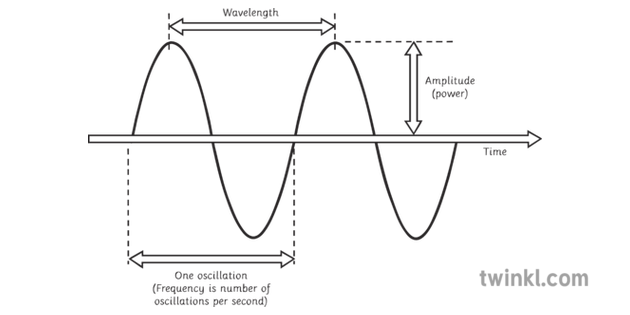
-
Constructive Panpsychism Discussion
In short, NO.Question to you, Gnomon: Are you an endorser and apologist for the substance of this article by Goff? Do you stand for him? — tim wood
I'll defend my own ideas, but not those of a philosopher perfectly capable of defending himself. :smile:
Panpsychism :
In popular usage, this term is taken to mean that even stones and atoms are conscious in the same sense that humans are. But that’s nonsense. In my theory it only means that the potential for emergent consciousness is included in the energy / information that constitutes those elementary Objects. The elementary mind-stuff eventually emerges as self-consciousness in holistic Selves.
https://qz.com/1184574/the-idea-that-everything-from-spoons-to-stones-are-conscious-is-gaining-academic-credibility/ -
Why are we here?
:up: :joke:Consciousness creates the illusion of change by percieving the unchanging forms in sequence, like the illusion of motion created in viewing a film strip. — praxis -
A Theory of Information
The "prescriptive side" of my philosophy is left to each individual to work out in their own local context. All I do is describe the BothAnd principle of Complementarity. Philosophers have written thousands of erudite words on ethics. But it's all summed-up in the Golden Rule. I am not qualified to "prescribe" morality for anyone but myself. :smile:Does your system have an account of that prescriptive side of things — Pfhorrest -
The structure of philosophy
The "telling" in your first post went right over my non-academic head, as usual. Even though I'm an Architect, those multidimensional structures are very difficult for me to visualize --- too many moving parts --- and the technical terminology would require lots of Wikipedia study to understand the interrelationships. It's like trying to imagine a 12 dimensional geometrical object, with multiple faces labelled in Latin or Greek.basically what my book exists to illustrate, showing rather than telling — Pfhorrest
Have you ever tried to draw a diagram --- a "showing" --- perhaps similar to the 3D Political Spectrum diagram in the link below? I'm trying to be encouraging, but my bafflement is hard to conceal. :brow:
3D Political Spectrum : https://medium.com/@even.aesphasian/3d-political-spectrum-4870f06f2f49 -
A Theory of Information
Except for the interest in Economics & Political Science, this sounds very similar to my own path into philosophy. As a child, my family was only interested in Bible knowledge and Practical education. So we didn't discuss broad academic topics. It's only since I was retired by the Great Recession, that I have had time to devote to the impractical notions of general Philosophy. And I am a generalist by nature, so I don't often get bogged-down in narrowly specialized topics --- except of course for those that apply to my own metaphysical hobby.I got interested in philosophy because I had broad academic interests in lots of topics and kept looking for more and more fundamental cores of those collections of interests, and that lead me eventually to physics on the one hand and something like economics or political science on the other hand, and then into basically metaphysics and ethics beneath each of those, so when I eventually found philosophy that seemed like it, the core field with connections to all the other fields. — Pfhorrest
For selfish reasons, I could be enticed to read some of your work, if I could see where it might fit into my personal interests, or where it might apply to my personal worldview of Enformationism, or to my personal philosophy of BothAnd. I have some superficial knowledge of Economics and Political Science, but have never delved deeply into those areas of philosophy. Unfortunately, I find that most academic philosophical writing is too abstract & abstruse for my casual pragmatic interest. Can you dumb-down your philosophy to my philistine level? :brow: -
A Theory of Information
Apparently, you have mixed-up some of Plato's theory with Aristotle's theory of Forms. For Plato, the Forms "exist" abstractly in a non-physical timeless changeless state called Eternity. But for Aristotle, the Forms exist concretely only in physical things in the realm of space-time. The latter definition is what I would call "embodied Information", which is similar to immaterial potential Energy that has transformed into actual physical lumps of Matter.A> If forms are unchanging then there can't be 'ideal' forms, . . . B> An unchanging thing cannot exist in a realm where things change, to put it simply. — praxis
In my thesis, the Potential for all possible Forms exists in what I like to call Enfernity (eternity & infinity). I coined that neologism because Enfernity is not two different things but a single state of BEING, with unlimited potential for all possibilities. There are no actual things in Enfernity, but only the un-manifest potential for things & beings.
So, the "Ideal" Forms in statement A> above are not things that change. and the real things in statement B> are not ideal forms, but actualized instances of infinite potential. To put it simply, A> is not B>. :nerd:
Plato's Forms : https://en.wikipedia.org/wiki/Theory_of_forms
Aristotle's Forms : https://www.britannica.com/story/plato-and-aristotle-how-do-they-differ
A.N. Whitehead's Actual Occasions : what I call "instances" above
https://en.wikipedia.org/wiki/Process_and_Reality
Potential :
1. possible, as opposed to actual:
2. capable of being or becoming:
Eternity :
1. a state to which time has no application; timelessness.
Potential :
Unrealized or unmanifest creative power. For example, the Voltage of an electric battery is its potential for future current flow measured in Amps. Potential is inert until actualized by some trigger. In the Enformationism metaphor, the real world was originally an idea in the Mind of G*D, with the infinite possibilities of Omniscience, that was realized by an act of Will.
http://blog-glossary.enformationism.info/page16.html
Note : For theoretical purposes, "G*D" is a metaphor to illustrate how unchanging timelessness could convert unreal Potential into real Things. You don't have to take it literally. In any case, it's the G*D of Philosophers, not of Priests.
God of Philosophers : The God of the philosophers, Pascal remarked, is not the God of Abraham and Isaac
https://maritain.nd.edu/jmc/etext/AAP04.htm -
A Theory of Information
A "perfect circle" is a metaphysical mathematical definition (an idea), not a physical thing. FWIW, I don't believe that a physically perfect teapot is orbiting the sun in a perfectly circular path.So you believe that, for instance, people differ in their perception of a geometric circle, or rather in their concept of a circle? Also, do you believe that perfect circle's exit in "real world space-time" or do ideal forms only exist in the "realm of ideas"? — praxis
I don't really give much thought to such questions. And I am not a disciple of Plato. I just refer to his notion of "Ideals", as a way to illustrate the difference between physical (matter) and metaphysical (mind) forms of generic Information. My concern in the Enformationism thesis is to understand the Real space-time world.
Except for the ideas in my own mind, I know nothing about Ideal Forms. Metaphysics is the realm of subjective concepts, which are invisible & intangible, but meaningful --- ideas make "sense" to the sixth sense of Reason. A perfect circle can only be proven to exist, in the metaphysical realm of ideas, by definition. Do you believe in ideas? :cool:
Russell's Teapot : He wrote that if he were to assert, without offering proof, that a teapot, too small to be seen by telescopes, orbits the Sun somewhere in space between the Earth and Mars, he could not expect anyone to believe him solely because his assertion could not be proven wrong.
https://en.wikipedia.org/wiki/Russell%27s_teapot
Meta-Physics : http://blog-glossary.enformationism.info/page14.html
Proof by Definition : https://explainingmaths.wordpress.com/2009/10/27/proof-by-definition/
https://en.wikipedia.org/wiki/Mathematical_proof -
A Theory of Information
The blog Glossary has a definition of "Ideality", that gives an overview of the concept. But it's really more extensive than that summary. Basically, I agree with Plato that the ultimate "reality" is a state of infinite potential that he called "Forms", which are the mental recipes or designs for material things. But I also agree with Aristotle when "he stated that reality does not make sense or exist until the mind process it. Therefore truth is dependent upon a person's mind and external factors". https://www.bartleby.com/essay/Aristotle-and-Platos-Views-on-Reality-PK7GFXYTJIn one part it says,"Ultimate or absolute reality (ideality) doesn't change, but your conception of reality does." Can you explain what you mean by that? — praxis
So the Enformationism thesis is an attempt to reconcile the ideal "reality" of eternal Forms with real world space-time "appearances". Donald Hoffman's recent book, The Case Against Reality, may give you one perspective on the relationship between physical Reality and metaphysical Ideality. There's nothing supernatural about mundane Metaphysics. It's merely the realm of ideas and meanings that emerged when Life & Mind emerged from physical evolution. The Forms are timeless and unchanging, but our perceptions of them differ for each perceiver. Metaphysical beauty is in the mind of the beholder, but the ideal Form of beauty is like a mathematical constant.
I'm sure this brief "explanation" will sound like non-sense, if you don't accept the philosophical validity of Platonic Idealism, as the general case for specific instances of Aristotelian Realism. :nerd:
Window to Reality : http://bothandblog6.enformationism.info/page21.html
Meta-physics : Physics refers to the things we perceive with the eye of the body. Meta-physics refers to the things we conceive with the eye of the mind. Meta-physics includes the properties, and qualities, and functions that make a thing what it is. Matter is just the clay from which a thing is made. Meta-physics is the design (form, purpose); physics is the product (shape, action). The act of creation brings an ideal design into actual existence. The design concept is the “formal” cause of the thing designed.
http://blog-glossary.enformationism.info/page14.html -
A Theory of Information
. . . . followed immediately by "I favor Realism". Obviously, a holistic BothAnd attitude toward the world does not compute for an Either/Or "philistine". But it's how the BothAnd principle works.I haven’t read anything about his theory, being the filthy philistine that I am. It’s curious that he claims to have resolved the rift between idealism and materialism and yet says himself “I favor Idealism.” — praxis
Note : my use of the term "philistine" in a previous post was generic, and not directed at anyone in particular. But, if the shoe fits . . . . :joke:
Both/And Principle :
My coinage for the holistic principle of Complementarity, as illustrated in the Yin/Yang symbol. Opposing or contrasting concepts are always part of a greater whole. Conflicts between parts can be reconciled or harmonized by putting them into the context of a whole system.
http://blog-glossary.enformationism.info/page10.html -
A Theory of Information
The "substance" I'm offering is universal Information/EnFormAction, which is the single substance of the world, and the "structure" of everything in it.You seem to still be trying to convince readers to abandon their strictly materialist/spiritualist views, but offer little substance in your thesis for those of us who already have, and nothing convincing for those who haven’t. — Possibility
I'm afraid I don't know what kind of "structure" you are looking for : something material & physical instead of mental & metaphysical? Please give me an example of a structural definition of the metaphors of "quantum fields" and "information fields". Actually, there are no things in the field, only structural relationships.metaphor is only a suggestion of structure. It isn’t structure — Possibility
Quantum Field :
In theoretical Physics, a quantum field is a metaphorical mathematical "structure", not an actual place, to allow scientists to understand ghostly things they can't see. The field is imaginary and has no physical material, but only Virtual particles that have the potential to become real. In the Enformationism theory, the state that preceded the Big Bang is imagined as an Enfernal quantum field, with potential Platonic Forms from which actual material things could be created.
http://blog-glossary.enformationism.info/page17.html
Is your theory testable physically, like Special Relativity via observations of physical objects, or mathematically, .like String Theory via computer simulations? Every aspect of Enformationism theory is scientifically testable, except the ultimate Axiom, which must be accepted as a given.I’m working towards a conceptual structure that is ultimately testable. — Possibility
A Theory of Everything is a belief system. :cool:but what I think you may be presenting at this stage is more of a belief system than a ToE. — Possibility
String Theory Testable? : https://www.math.columbia.edu/~woit/wordpress/?p=533 -
A Theory of Information
We seem to have similar Post-Materialism worldviews, but coming from different directions, and with different terminology. I'm still interested in seeing how they agree and how they disagree. But as I said before, I need some kind of "hook" (something meaningful to me) in order to relate to your rather esoteric notion of "Dimensional Awareness". What difference do those "higher dimensions" make for my life? Are they the abode of gods, demons, angels, or simply "The Force", who directly intervene in reality, to provide blessings & curses? I have no personal experience with "higher dimensions" beyond Einstein's fundamental four. But because we entertain the possibility of Mental Reality, I suspect that Praxis would lump your worldview and mine into the anti-science category of New Age mumbo-jumbo. So, I understand his animosity toward such superstitious non-sense.Don’t get me wrong, I understand where you’re coming from, I agree in principle with the concept of Both/And, and I support your efforts. — Possibility
This link says that, "Cross-Dimensional Awareness is an ability that senses and can often travel between parallel universes (alternate universes) or other planes of existence". That sounds like the New Age notion of the Astral Planes, which is completely ignored by the Enformationism thesis. It also seems popular with video gamers, as fodder for their imagination. But I have no personal experience with either the multiple dimensions String Theory, or the Higher Planes of mystical religions. How do you become aware of those Parallel Universes : by meditation, drugs, gnostic revelation? Even string theorists admit that their 10 or 11 dimensions may exist only as mathematical abstractions, that humans have no direct experience of, and have no empirical evidence. So, they are accused of Mysticism, by more pragmatic scientists.
https://evolutionactivated.fandom.com/wiki/Cross_Dimensional_Awareness
It's true that Isolated bits of Information are meaningless. It's the links between entities that provide the structure of meaning.Those invisible imaginary links are the true structure of reality.‘Information’ as a building block does not constitute a structural relation - it’s a concept that basically means ‘building block’, and says nothing about how it fits together at a metaphysical level, without an established structural relation like ‘space’ or ‘time’. — Possibility
Not so! The immaterial structural relations of Information are of the essence in the thesis. When we talk about anything immaterial (no physical properties), we can only discuss then in terms of metaphors drawn from out experience with the physical world. Is your "cross-dimensional awareness" discussable in conventional materialistic language, or do you have to resort to as-if metaphors & analogies & neologisms, such as "gyrokinesis"? https://evolutionactivated.fandom.com/wiki/GyrokinesisIt has to do with the way you associate the metaphysical elements of your theory, using metaphor and neologisms instead of structural relations. — Possibility
FYI, I have never said or implied that superior attitude in any of my writings. So the accusation says more about you, than about me. But, enough about me. :cool:It’s uncharitable to then declare your terms to be ‘intelligent’ and any alternative definition of existing terms as ‘common’. That’s not going to endear your argument to anyone. — Possibility
Structure of Reality : The best guess I've come across is that Consciousness is not just a “spandrel” in evolution, but a fundamental element of the structure of reality.
http://bothandblog.enformationism.info/page65.html
Raymond Tallis : "there's nothing in the material world that, like a thought, has a subject attached to a predicate . . . self-reference . . . aboutness . . . Where there are classes, there is generality, there is possibility, and where there is possibility, entities or states of affaris may or may not exist can be proposed." Philosophy Now #137. -
A Theory of Information
Obviously, you haven't read the thesis or the blog. The only thing I claim "ownership" of is the Enformationism concept : that Information is the "single substance" of the world (props to Spinoza). My website and blog are full of references and links to historically significant philosophical ideas. Here's a few that I specifically find historical precedence in : Platonic Idealism, Aristotelian Realism, Stoicism, Panpsychism, Hegelian Dialectic, Deism, Secular Humanism, Holism, Hindu Philosophy, Systems Theory, Information Theory, and many others. The website and blog are full of links that "acknowledge" my debt to the history of philosophy and science.but you’re claiming ownership of a worldview that’s been around in various formats for millennia, and only requires a more complex structure in relation to modern knowledge. My argument is that you’re not acknowledging the historical progress — Possibility
Do you claim "ownership" of your own novel philosophical concepts, or do you give the information away for free? The latter is what I'm doing on this forum, and other venues. I'm hardly evangelical, but I sincerely believe that some form of Information-based worldview will eventually take its place among historically significant philosophies and scientific paradigms. What you and others interpret as "arrogance" is merely persistence in pursuing the construction of my own personal philosophy. If I sound confident, that's not characteristic of me as a timid introvert. But, since my thesis is essentially a Theory of Everything, It allows me to give a well-supported answer to skeptics on almost any topic.
Again, you haven't read the thesis that you are critiquing. So, you are skewering a straw man. There may be holes in the thesis, but I am still in the process of filling them, in part by getting critiques on this forum. See if the link below will fill your "hole" with understanding of how those conflicting worldviews can be reconciled, via the concept of Monism/Holism, as opposed to the dualistic view of Descartes. See the Materialism link below, for my consilience between those antagonistic old domains.But the glaring hole in your philosophy can be found in how you reconcile Spiritualism with Materialism — Possibility
You seem to be responding to the very narrowly focused posts on this forum. I have repeatedly provided links to my own reasoning, and that of other philosophers & scientists. Ironically there seem to be more scientists than philosophers thinking along the same lines of the ubiquity of Information. Enformationism is not a typical academic thesis paper, written on an obscure arcane topic. It is, instead, a scientific & philosophical & religious Theory of Everything. History will decide which new paradigm will replace the ancient notions of Materialism (atoms & void) and Spiritualsm (body & soul), which were, in their day, theories of everything.
Is that because there is nothing "novel" in your worldview? Are you just parroting famous philosophers, instead of pioneering a new perspective on the world? A glossary might help to get your ideas across to a wider audience, as long as they can see some validity in an idea they don't yet understand. I'm sure you know that truly novel ideas are typically rejected by holders of an older paradigm. Check-out the "Rejected" link below.I claim no novelty or ownership of this particular worldview, let alone definitions of terminology. — Possibility
"Paradigm Shift" : sounds similar to my own thesis. Does your multi-dimensional paradigm have a formal name and a core concept, or is it just a motley collection of loosely-related ideas? Have your "accessible" ideas been well received by holders of an older paradigm? I still don't fully understand your Dimensional theory, but I think it could be generally compatible to my Information theory.And my focus is on making the paradigm shift accessible to current thinking, not gaining followers to my guru-ness. — Possibility
“…First, it is ridiculed. Second, it is violently opposed. Third, it is accepted as being self-evident.”
Ha! I am a guru for a cult of one. I have no followers. One poster on an extinct forum, asked my permission to use the label "Enformationist" to describe her personal worldview. I said, "sure", but her interpretation was closer to New Age philosophy than mine. Anyway, she is not an acolyte of any guru. :halo:
Quote from another thread : "I was taking the opportunity to illustrate the dimensional awareness that forms the basis of my theory. Gratuitous, I know" : ___Possibility.
I think I asked for a definition of "Dimensional Awareness". But the answer was still vague to me. Perhaps a glossary of unconventional terms would made your proposed paradigm more accessible to "current thinking". :cool:
Materialism versus Spiritualism : http://bothandblog4.enformationism.info/page14.html
6 World-Changing Ideas That Were Originally Rejected :
https://www.lifehack.org/articles/lifestyle/6-world-changing-ideas-that-were-originally-rejected.html -
A Theory of Information
Why do you think that most ground-breaking philosophers are notable for being hard to understand? "Philosophy is supposed to be difficult." https://www.theguardian.com/books/booksblog/2011/feb/25/philosophy-technical-everyday-englishLike Whitehead’s writing, however, it is the neologisms that hobble one’s ability to relate a new worldview to their existing one. — Possibility
I'm frustrated. but not deterred, by the inability of philosophical forum posters to learn a few new words that define a novel worldview, which is merely an update and reconciliation of old incompatible views. I could understand, if the man on the street wanted me to "talk down to them" with common words and conventional meanings. Voltaire said, “If you wish to converse with me, define your terms.” That's what I'm doing : trying to converse with intelligent people in intelligent terms.
Probably a key notion of Enformationism, that people have difficulty with, is my usage of the old word "metaphysics", with a new post-quantum interpretation of Aristotle's subject matter in volume II of his Physics. In the common language, "metaphysics" refers to such immaterial things as ghosts, demons, ESP, magic, and so forth. But that's not what Aristotle was talking about. Instead, "Examples of metaphysical concepts are Being, Existence, Purpose, Universals, Property, Relation, Causality, Space, Time, Event, and many others. They are fundamental, because all other concepts and beliefs rest on them." http://getwiki.net/-Metaphysics
Each of those terms has both common and technical meanings, not just in my thesis, but in 21st century Science and Philosophy. Since Einstein, the ancient concepts of "space" & "time" have been turned inside-out (e.g. empty space is something that can be warped). So, by providing a Glossary and explanatory articles, I just want to make sure we are singing out of the same songbook.
Apparently, you haven't looked at the BothAnd blog. That's where I develop basic ideas of Enformationism with reference to "the way we interact with the world on a daily basis". Blog posts now number 107 articles. Does that sound like a shortcut?Reducing that information down to thoughts, words and behaviour - the way we interact with the world on a daily basis - is where the real philosophy begins. And you’re trying to shortcut the process. — Possibility
Was Immanuel Kant "arrogant" to "control the meaning" of his philosophy by defining in detail such terms as "Categorical Imperative" and "Noumenon"? https://kantphilosophy.wordpress.com/technical-terms-of-kantian-philosophy/an arrogant attempt on your part to possess and control meaning — Possibility
What you don't seem to grasp is that, "encouraging a disconnect between" conventional concepts, is the opposite of what I'm trying to do. I have constructed a "structure" (in which Information is the modular building block) that relates such old worldviews as Spiritualism and Materialism to a larger context. But, in order to reconcile Spiritualist views with Materialist views, holders of those views will have to give-up their confidence that each is the Whole Truth. Instead, they are both valid, but partial worldviews. They tend to dismiss and denigrate holders of the opposite view. But I'm trying to show that they are actually complementary views.You end up encouraging a disconnect between what we already share and the new information you’re presenting, rather than demonstrating a structure by which we can understand the relation. — Possibility
Kant, Hegel, & Whitehead used lots of neologisms, but didn't provide a separate glossary to remove any ambiguities. Do you think that made them feel superior? Were they simply trying to show how smart they were? I find some of the terms of your worldview (as expressed in forum posts) incomprehensible. Is that a sign that you're arrogant, and concerned only with image? Or is it because your ideas are unconventional, and require some hard thinking to make sense of a new paradigm? :cool:but you seem rather attached to the ambiguity of your metaphorical ‘structures’. Perhaps it makes you feel superior, — Possibility
BothAnd Blog : The BothAnd Blog and the Enformationism website are written for laymen who are well-read in Science, Philosophy, and Religion topics. But since they are based on an unconventional worldview, many traditional terms are used in unusual contexts, and some new terminology has been coined in order to convey their inter-connected meanings as clearly as possible. This glossary is intended to supplement the website articles and blog posts with definitions specifically tailored to the subject matter. For the most comprehensive understanding though, I recommend starting with the website, which has its own glossary and references from several years ago. -
A Theory of Information
Having rejected the religion of my youth, I came to the Enformationism concept from the direction of Science, instead of Spirituality. However, as I learned more about the science of Information, I came to appreciate the Spiritual worldview more than before. So, I have adopted and continue to develop the harmonious personal philosophy of BothAnd.↪Gnomon
I like your thesis, but personally I don't take all that much interest in the processes of physical material, because to come to a comprehensive, or theory of everything, understanding, certainly one amenable to science, is an onerous task. When physical material is little more than a tool, a substrate.
What is of more interest is the ideal(mind), and more fundamental (let's say spiritual for example) levels of reality. But trying to rendering those in a way acceptable in academia is even more of a quagmire.
Along with a susceptibility to the accusation of pseudoscience, woo, or plain idealism.
I find there is more likely to be a meshing with academia via personal spiritual development. — Punshhh
Enformationism is indeed a Theory of Everything. And it's an "onerous task", but I'm now retired, and have made it my hobby. Dealing with Philistines is just part of the game. :razz:
Those who cringe at any hint of Metaphysics do indeed play the "woo" card, due to Materialist prejudice, and without any understanding of the worldview behind the words. BothAnd includes both Idealism and Realism, which does not compute for those with two-value black/white either/or worldviews. My "spiritual development" has nothing to do with Navel Gazing or Gurus, but more with plain-old Philosophy : "love for wisdom". :chin: :pray:
BothAnd Philosophy : My coinage for the holistic principle of Complementarity, as illustrated in the Yin/Yang symbol. Opposing or contrasting concepts are always part of a greater whole. Conflicts between parts can be reconciled or harmonized by putting them into the context of a whole system.
http://blog-glossary.enformationism.info/page2.html
http://bothandblog5.enformationism.info/page6.html
BothAnd Principle :
http://blog-glossary.enformationism.info/page10.html
Philistine : a person who is hostile or indifferent [ to alien ideas ], or who has no understanding of them. -
A Theory of Information
Yes. My Enformationism theory may be too technical & cutting-edge for the average reader --- limited by holding an outdated scientific paradigm (e.g Classical vs Quantum Physics). The thesis repeatedly states that it is not to be "equated" with Shannon theory, but is a different kind of theory, with a different application : fuzzy-logic people instead of digital-logic machines.↪Gnomon
I’m not really that interested in your ‘thesis’. I was just pointing out that it looked very much like you equated whatever your or someone else’s idea of ‘information’ was to what Shannon was doing. In the text you posted there was no well-defined line between Shannon’s ‘information’ and yours. — I like sushi
I appreciate the hint that my usage of the term "Information" could be misconstrued as a perversion of Claude Shannon's theory. But I view Enformationism as an expansion of that theory. Whereas, for telephone transmissions, Shannon converted analog mental information (words) into digital robot/computer information (bits & bytes), my thesis observes that some far-sighted scientists are beginning to look more closely at the original form of Intelligence : the Natural kind. Any successful Artificial Intelligence --- quantum computers perhaps --- must adopt analog methods. Maybe Shannon is the pervert.
Whereas Shannon converted analog human ideas into two-value Boolean logic, in order to reduce it to a simple-invariable-certain form that dumb machines could process, the new era of Information theory uses multi-value Fuzzy Logic, which is more like human reasoning, and deals with degrees of uncertainty. Digital information uses either/or logic, where values are limited to 1s or 0s, nothing in between. Analog information uses all values (infinite) between 1 & 0. This is replicated in Quantum Computers, where the state of Superposition covers all possible values for a Virtual particle. In other words, there is "no well-defined line" between 1 & 0, it's a continuum. :nerd:
Shannon vs Boltzman Information : Therefore, in this article we use the concept of entropy only for macroscopic equilibrium systems, while the SMI may be used for any system.
https://www.mdpi.com/1099-4300/19/2/48/htm
SMI : Shannon Measure of Information (objective)
Macroscopic Equilibrium Systems : includes subjective human reasoning
Analog Thinking : So the next time you think about any issue or topic, pause to consider what thinking paradigm you are adopting. Can you deliberately let go thinking in categories and frameworks and focus on understanding the situation as it is? And can you in particular consider carefully the merits of opinions you don’t agree with and the opinions that come from people you dislike?
https://medium.com/@hsabnis/digital-vs-analog-thinking-6a45bd1993ed
Fuzzy Logic : a form of many-valued logic in which the truth values of variables may be any real number between 0 and 1 both inclusive.
https://en.wikipedia.org/wiki/Fuzzy_logic -
A Theory of Information
If you would do more than skim the thesis, you'd discover that I do "reference existing work" in sidebars, end notes, and bibliographies. The only "new thing" I take credit for is the concept of Enformationism as an update for the outdated paradigms of "Spiritualism" and "Materialism".The only thing that seems kind of sketchy to me about your approach is the neologisms and kind of... style, and terminology... that makes it seem like this is some "crazy" new thing you came up with all by yourself -- and maybe you did a lot of it, which is fine and plausible, but it could put off a lot of people who might just dismiss this as some loony ramblings. It kind of sucks to say but I imagine if you tried to use fewer neologisms and more standard terminology, reference existing work in the same vein wherever possible, explain the things that have already been explored, and then note your own variations or additions on top of that, I think it would "sell" (figuratively speaking) a lot better. — Pfhorrest
The neologisms are necessary because the thesis overturns popular paradigms of Religion and Science. So it uses a lot of old concepts, "standard terminology", that take on new meanings in the Information Age. For example, "information" used to refer to mind-stuff. The kind of immaterial stuff that spies would risk their lives to bring back to Intelligence Agencies. But today, most people use the term in reference to the digital "1s & 0s" that fast-but-dumb computers process. The new trend in Information Theory is to return to the old analog information processing of human minds, and to redefine obsolete terms, such as "Soul" and "Metaphysics".
The links in my posts, which few bother to look at, are intended to show that my "crazy, looney" ideas are shared by many other scientists and philosophers. Unfortunately for me, "looney" New Agers were the first to adopt the new implications of Information and Quantum Theories, and to find their roots in ancient religions, such as Buddhism and Hinduism. The notion that Information, rather than Matter, is the fundamental substance of the world is an old idea (Plato's Forms), but it is being adopted by a growing number of modern scientists and philosophers (who are credited in numerous links and notes).
I am not bothered by the incredulity of some forum posters. Even paradigm-busting Einstein "refused to believe in the inherent unpredictability of the world. Is the subatomic world insane, or just subtle?" [ https://www.quantamagazine.org/einsteins-parable-of-quantum-insanity-20150910/ ] I take their criticisms in stride, and use them to make my thesis stronger. But, since I am neither a scientist nor a philosopher, it will always be my personal worldview. For the broader world, it will take on a variety of forms that are beyond my power to control. :cool:
Neologisms : But the primary reason for using a special label for a technical definition is so the writer can control its meaning precisely.
http://bothandblog4.enformationism.info/page6.html
http://blog-glossary.enformationism.info/page19.html
Enformationism Welcome Page : This informal thesis does not present any new scientific evidence, or novel philosophical analysis. It merely suggests a new perspective on an old enigma : what is reality? . . . .
I am neither a scientist, nor a philosopher, so the arguments herein carry no more authority or expertise than those of anyone else with an interest in such impractical musings. This is intended to be an open-ended thread, because it’s a relatively new and unproven concept, and because the ideas presented here are merely a superficial snapshot of what promises to be a whole new way of understanding the world : philosophically, scientifically, and religiously.

Gnomon

Start FollowingSend a Message
- Other sites we like
- Social media
- Terms of Service
- Sign In
- Created with PlushForums
- © 2026 The Philosophy Forum