
Comments
-
Some questions about Naming and NecessityYou got the reference to Quine, but Srap didn't. Does that mean the reference was successful and unsuccessful at the same time? — frank
Yes! -
Some questions about Naming and NecessityVery interesting. Can you recall a reference for this?
Kripke does re-introduce the idea of essence, but in a form quite different to the classical approach, in being extensional rather than intensional. -
Some questions about Naming and NecessityThat is,
seems to me to be mistaken, becasue we do not usually need any "apparatus" in order to check who it is we are thinking about. Indeed, the idea is odd.I'm holding out for reference as a potentially private game. Talking, so often, is talking to ourselves, and we need all the apparatus of talking-with-others to do it. — J
Consider Did I know it was a picture of him? -
Some questions about Naming and NecessityTrue. But I still referred to the tree. I don't need your buy-in for that. — frank
I wouldn't quite accept your thinking, or even talking to yourself about the tree, as a bonafide reference. I am more incline to think the prime examples of reference involve a public shared speech act, and that such self-talk is secondary. This, becasue, one does not usually need to reassure oneself that the reference being made is correct, or question what it is your are thinking about. Not that we can rule that out, but it would seem to be unusual.
We need to understand reference in the first instance by looking at fairly standard cases, then considering oddities. -
Some questions about Naming and NecessityI can't tell if you mean the whole thing, or the individual parts. How can I know? — frank
By answering both and seeing to which @Srap Tasmaner responds? Answering one, and seeing if the response fits that answer?
Generally, by moving the conversation on, and seeing what the result is, and then making an inference about Srap's intent. -
Some questions about Naming and NecessityBut couldn't we get around that in the way I suggested earlier?:
We could rewrite "The man over there who I think has champagne in his glass" as follows: "The man over there about whom I say, 'He has champagne in his glass'."
— J
This way, it's a behavior, not a mental intention, and the speaker still can't be "wrong about the reference", because it doesn't depend on whether the man really has champagne, only on whether the speaker says he does. The man is being identified as the subject of a statement, not as a person with a drink in his glass. — J
Going back over this, it seems to me that the reference is now fixed by the indexical, "the man over there", and not by the description "He has champagne in his glass". -
Australian politicsPentagon launches review into AUKUS deal to ensure it meets Trump's 'America First' agenda
The Australian Embassy in Washington declined to comment when contacted by the ABC.
Review: After America: Australia and the new world order – Emma Shortis (Australia Institute Press), Hard New World: Our Post-American Future; Quarterly Essay 98 – Hugh White (Black Inc)
Recognising quite what an ill-conceived, ludicrously expensive, uncertain project AUKUS is, and just how unreliable a partner the US has become under Trump, might be a useful step on the path to national strategic self-awareness.
We really could stop the conflicts in Ukraine and Gaza if Xi had a word with Putin and the US stopped supplying Israeli Prime Minister Benjamin Netanyahu with the weapons and money to slaughter women and children. But climate change would still be coming to get us. -
Some questions about Naming and NecessitySo talk about stipulation and teaching all you like, but it doesn't get you to that level of originary reference you're chasing, the intentionality you cannot be mistaken about. It relies on that; it doesn't explain it or even describe it. — Srap Tasmaner
This is good stuff. A couple of points.
The type of stipulation used would be a status function, a "counts as" Statement. There is a mutuality in the stipulation - we think of it as the adult teaching the child, but it's more like a joining in to a conversation - consider how we each learn a name. Sometimes a definite description is available, sometimes - often - not. Always, involves a community.
And there need be no "intentionality you cannot be mistaken about'. Back to the derangement of epitaphs. We can set rules up, as needed, but then they will fall, or be pushed.
Non of which detracts from what you said.
On the other hand, if we do not have some such agreement, we might not be able to continue. There's adequacy between certainty and incomprehension."Yes, you successfully referred to the tree because I agree that that is called a tree." — frank -
Some questions about Naming and NecessityIf you want to teach someone "blork" means that thing, you have to already be able to successfully refer to that thing. — Srap Tasmaner
Consider "Let's agree that this thing is Blork". Who teaches who here? Isn't the choice to use "blork" an agreement, if not a commitment?
There's an indexical built in: "this". Indeed, can we have a language without such an ability? It would be a mere syntax, a string of letters or sounds.
Reference goes all the way down. -
Beliefs as emotionA well-rounded account. Of course deontology doesn't have to overlook 'the human practices of mistakes, reconsideration, excuses", and a deontology that can at least account for these might be an improvement.
The warning against treating beliefs as mental or brain states is well made, and part of what is being addressed somewhat obliquely in 's account. The neuroscience is not yet up to the task, and may never be.
I'm not sure I follow your idea of "lowering" a belief from a disposition to an emotion, although treating them as dispositions may overcome one objection to treating them as emotions - that an emotion is an occasional thing, I am angry now, and will calm down later...whereas a belief endures even when not considered. One still believes that the Earth is round, even when not giving it conscious consideration. -
Is there an objective quality?
And the question becomes, external to what? If the world is always, and already, in a context and a language, then there is nothing "external" to the interpretation.There’s probably a need to go deeper into this, partly as a way to address the ‘you can’t have values if there’s no external validation of the good’ — Tom Storm
Which brings us back, I think, to how it is that Tim can understand the divine, without thereby interpreting it.
So for Tim the world is already divided up. Whereas for me the division is something we do, and re-do, as our understanding progresses.
And so I again throw the question back to Tim, why should we accept that your divisions are the absolute ones?
And it seems to me that he can answer with an argument, or simply rely on faith. But his reliance on faith is not a reason for others to follow his account. So I think he needs to present some sort of argument.
I can't see how he can do so without thereby giving some sort of interpretation of how things are. -
Is there an objective quality?
An interesting thought. I fond it hard to see how a first philosophy (again, a loaded term) might be articulated without being interpreted. But I supose that just marks my position on the issue.You might find some who would claim that interpretation is not an issue at the level of first philosophy, and that would be an important way of categorizing their method. — J -
Is there an objective quality?
Quite so. However I often find it difficult to see much argument in his posts. They read more like just-so stories—rich descriptions of how he pictures the world, but with little in the way of justification for that picture. It's one thing to affirm a vision; it's another to show why we should accept it.(Tim) is well-read, a deep thinker and orients himself within the classical tradition, like some others here. — Tom Storm
Consider:
Here's a false dilemma - that either there are truths prior (a loaded term) to humanity, or nothing was true until man's communities arose. Perhaps we can say truth is not invented by humans, but neither does it exist in some Platonic realm, independent of all interpretive conditions. Instead truths become available within human discourse—not arbitrarily, not as illusions, but as intelligible articulations of a world we are always already in relation with....this is different from saying that there is no truth prior to "interpretation within a context of belief, intention, tradition, and reception." To say that would be to say that nothing was true until man's communities arose. Yet the order of human discourse is not the order of being, the former is contained within the latter, not vice versa. — Count Timothy von Icarus
And notice the "might" in
Again, a false dilemma. The “might” is doing slippery rhetorical work—it creates the appearance of modesty while still reinforcing the idea that unless you accept some First Cause, you're left with unintelligibility. There’s no reason to think that rejecting a First Cause commits one to irrationalism or incoherence.A First Cause, First Principle, and First Mover might follow from the idea that explanations need to be intelligible and do not bottom out in "it just is" and the spontaneous movement of potency to actuality—that's another question however. — Count Timothy von Icarus
And this admission:
conflating causal explanation with justificatory structure. To move from “our judgments have causes” to “therefore they must be grounded in a First Cause” is to blur the line between what explains a belief’s origin and what justifies its content. It's precisely the kind of category mistake that thinkers like Davidson, Sellars, and Brandom have warned against.It comes from the assumption that our language and judgements have causes. — Count Timothy von Icarus
One alternative is that aesthetic judgement is embedded in community and culture, tradition and workmanship, coherence and responsiveness, and is it learned and communicable, an aspect of human growth. Aesthetic judgements are part of the stories we tell each other about what it worthwhile. This view places aesthetics firmly in the human, not the divine. -
Is there an objective quality?
This is spot on. It marks the link here between Tim's approach to aesthetics and his comments against liberalism and in favour of elite education.Appealing to an absolute standard of the good doesn’t settle the issue, it merely relocates the disagreement to whose interpretation of that standard prevails. — Tom Storm
It would appear that Tim thinks he has understood the Devine.
But why should we take his word for it? -
Is there an objective quality?Shifting ground here.You started with
Now it'sI am not more inclined to think that man, with our without his institutions and "games," is the sui generis source of beauty in the cosmos (or goodness, or truth for that matter). — Count Timothy von Icarus
I am saying something about the things judged good/beautiful must be prior to the act of judging/thinking itself, else the objects themselves would only be arbitrarily related to the judgement. — Count Timothy von Icarus
If you are now saying only that the flower is prior to the flower being called pretty, then you have dropped your main gambit. But it does not follow that judging the flower to be pretty is arbitrary.
"The properties of objects do not determine how they are judged" is rubbish. The flower is judged to be pretty because fo the properties it has.Anything could be judged any which way, because the properties of objects do not determine how they are judged. — Count Timothy von Icarus
It's also dependent on the eyesight of the person doing the judging, together with the language they use and the community in which they use it.That something is judged to be blue is dependent on the object judged. — Count Timothy von Icarus
So we are still at:
Why supose there is a "sui generis source of beauty ". Do you supose that that in order for beauty to be real, it must have a source, and that source must be outside human life? I don't agree. I'll throw the burden back to you to show that such a thing is needed. — Banno -
Is there an objective quality?The world is always, already interpreted. It shows up for us through our practices, our language, our forms of life. To suggest otherwise is to appeal to a view-from-nowhere—a fantasy of access to the world prior to interpretation.
So I have to ask: aren’t you smuggling in a theological or metaphysical assumption, something like a First Cause or transcendent source? Why suppose that beauty must have a ground outside human life—outside history, culture, or shared understanding?
Why does this need for an external “source” apply to aesthetic judgments in particular? Does language require a source beyond human life? Do games, rules, rituals, or cultural artefacts?
We don’t create beauty from nothing—perhaps. But why assume the alternative is no creation at all? Isn’t that a false dichotomy? Why not acknowledge that we shape, interpret, and respond to the world from within it—not outside it? That we bring forth meaning without having to posit some metaphysical “before” or “beyond”?
This need to find beauty’s origin “elsewhere” seems to rest on an unexamined assumption: that what’s meaningful or real must come from outside us. But why believe that? -
Is there an objective quality?Can man create something from nothing? — Count Timothy von Icarus
We did not starting from nothing. We start embedded in the world and in a community. -
Some questions about Naming and Necessity
So you don't get my intent?I think I know what you're saying, but I can't be certain. — frank
That's fine, we could keep chatting and see if we can reach some agreement, or at least some point form which we might move on. That strikes me as more important than sorting out the Gavagai. -
Some questions about Naming and Necessity
Well, seems to me that referring to something can fail in a few different ways, and that it might be worth paying them some attention. I treat them as speech acts, and so bring on board the sort of analysis found in Austin and Searle.The act of referencing does not succeed or fail. — frank
The intent can only ever be inferred. -
Is there an objective quality?
Yep.Wouldn't a "simple statements of fact" also involve: "an interpretation within a context of belief, intention, tradition, form, and reception?" — Count Timothy von Icarus
Glad we have a point of agreement.
Is it worth my saying I don't usually read your long cut-and-paste quotes? Will it save you the effort? I will presume that if you have an argument of substance you will present it in the body of your post.
Why supose there is a "sui generis source of beauty ". Do you supose that that in order for beauty to be real, it must have a source, and that source must be outside human life? I don't agree. I'll throw the burden back to you to show that such a thing is needed. -
Some questions about Naming and Necessity
-
Some questions about Naming and Necessity
All sorts of problems with meaning as speaker intent. The most significant one is that we do not have access to what you intend, only to what you say. So we can't use your intent to fix the referent.he's being identified as being the object of a thought of the speaker. — J -
Some questions about Naming and NecessityReference is set by the speaker. — frank
Set, maybe. There's more.
The example is set at a party, presumably with many men and various drinks. The speaker says "The man over there with champaign in his glass..."; it's water, not champaign, but enough for the hearer to understand that the speaker does not mean any of the other blokes with a beer.
Pretty obviously, the reference is a success if the hearer and the speaker are in agreement as to who is being talked about.
Champaign or water, we have enough to move the conversation on.
And we can conclude that the reference was a success, despite the description being wrong.
I see you made the same point. -
Measuring Qualia??
Good.But this commentary leaves the confines of your Wittgensteinian box. — Hanover
"Qualia" are either a something about which can share nothing, or they are the subject of the common terms we already use to talk about our experiences.
The private language argument does not conclude that we do not have sensations.
Indeed.Surely pain is measurable. — Outlander
Hanover has misunderstood the argument twice today.
Could we show ChatGPT what pain is? It does not have the mechanism required, obviously. But moreover it cannot participate in the "form of life" that would enable it to be in pain. -
Is there an objective quality?They are not rules and I do not say they are universal, but I do think they are practiced widely in the West. Possibly elsewhere, I have not made a survey. — Tom Storm
There's a key difference here. @Hanover seems to be looking for a set of rules that are practiced. But what answers the question, and what you have provided, is a set of rules that ought be practiced.
So Hanover points out in triumph that they are not practiced everywhere, missing the point entirely. -
Is there an objective quality?Specifically if there was one thing you needed no matter what. (I am still open to opposing ideas)
Do a number of factors combined have to meet some standard? — Red Sky
No sooner is the "one thing you need no matter what" specified than some smart arse provides us with a counterexample.
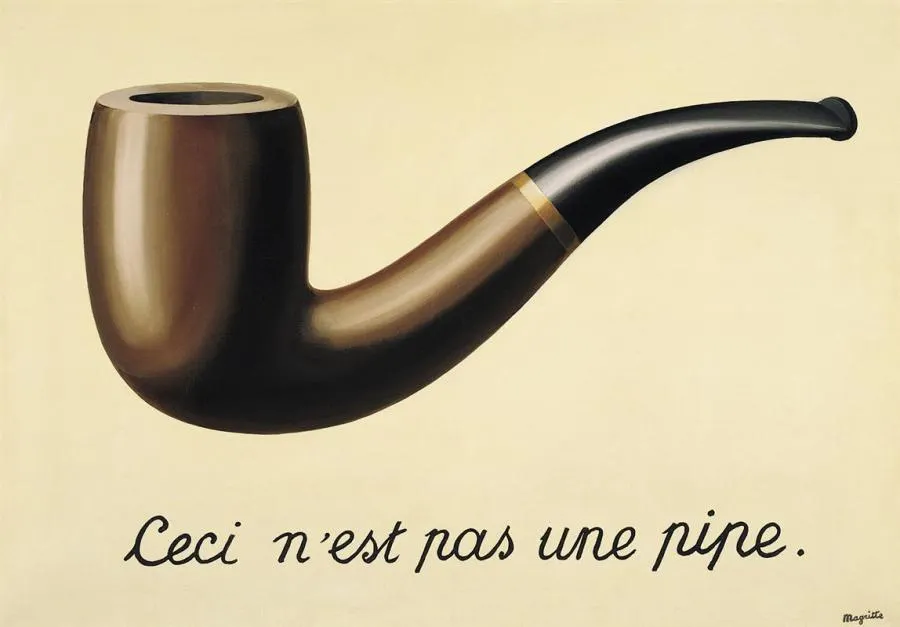
Aesthetics is not a search for One Ring To Rule Them All, but a conversation between artist and viewer, triangulated with the piece. A fancy way of saying that the quality of the piece does not in some way inhere in the piece, but is found in the conversation.
It's the story that makes the piece valuable. -
Is there an objective quality?
All well and good, provided that we do not conclude that there must be an "objective " aesthetic value. That there is some agreement on aesthetic value does not imply that there is a fact of the matter.My point was merely that disagreement is poor evidence for a lack of objective aesthetic value/criteria. People disagree about virtually everything. — Count Timothy von Icarus -
Is there an objective quality?
If the conclusion here is that there cannot be 'a science to art that resulted in proven, repeatable "good art"' then we are in agreement. Art is not algorithmic. Few things are.My point is that if there was a science to art that resulted in proven, repeatable "good art," then any artist that doesn't do that would be a fool doomed to failure. However, we frequently see art that "breaks the rules" change how we think about art and what makes it "good." — MrLiminal -
Is there an objective quality?There is equivocation here, but not the one your think. It's very unclear what you are trying to say, despite the erudition. "Noumenal" is even less useful than "subjective". Science works because of agreed-upon standards of evidence and repeatability, not because it gets at “things-in-themselves.” You appear to be making the merely rhetorical move of redefining "objective".
-
Is there an objective quality?
That's a deeply mistaken account of Wittgenstein, for whom the most important things were aesthetic and ethical.I understand that it's not that Witt denies the internal meaning is there, but it's that he ushers it out as superfluous — Hanover -
Is there an objective quality?~~
The answer given for aesthetics is applicable to ethics and science. I gave aesthetic examples becasue that's the topic here.I took though Davidson's critique to be that objectivity is universally muddled thinking. If the point he makes is simply that aesthetic judgments in particular don't lend themselves to objective reasoning... — Hanover
Aesthetic and moral judgements tell us how we want things to be, other judgements tell us about how things are. That's a useable distinction.
It often seems that folk misapply this is/ought distinction, thinking it is the same as that between subjective and objective. Such folk are apt to say that morality and ethics are subjective while science is objective. That's a mistake.
We end up with folk thinking that "though shalt not kick puppies" is about the way things are, when it is about the way things ought be. They look for proof that one ought not kick puppies in the wrong place. -
Knowledge is just true information. Isn't it? (Time to let go of the old problematic definition)Cool.
What we can do is map out the interrelations between our words, though. So we differentiate knowing and believing. We can say "I believed it was raining but I was wrong" but not "I knew it was raining but I was wrong". We can believe things and be wrong, but if we know something we are not wrong.
But what can we say about the difference between these and justice? Or information? -
Beliefs as emotionthese terms are referring to the same physical item — I like sushi
Hang on - again, is the suggestion that reason and emotion are physical things?
Yeah, I concur. But we have agreement that the topic is wider than that, including at least substituted statements that are held to be true.It did shock me how many people took 'belief' to mean 'unsubstantiated' irrespective of the context. — I like sushi
Care to fill this out? It doesn't match my understanding of the state of neuroscience....all brain states can be expressed as emotional. — I like sushi -
Is there an objective quality?
Pretty much.Is what I wrote above an example of such a background of agreement or have I strayed too far? — Tom Storm
This is to the point - wants a "basis" so he can "condemn their art you find abhorrent"; and that basis is all around us and includes our community of learning and language.But a consensus like this doesn’t rest on some timeless truth. — Tom Storm -
Is there an objective quality?Ah, better. A good comeback. But you've moved over to ethics, and we probably should remain in the area of aesthetics, for the sake of the theme of this thread
So ChatGPT's argument would be something like, replacing moral with aesthetic,
This is the trap:
Either you accept that aesthetics is objective, and so your theory is committed to standards that transcend culture, history, and agreement.
Or you give up on objectivity and admit that any community’s coherent aesthetics framework is as valid as any other — including Star Wars societies or McDonald's. — ChatGPT
But it's a false dilemma. Aesthetic claims - that the roast lamb in the oven as we speak, slow cooked with six veg, to be served with greens - is better than a Big Mac, is not just an expressions of feeling nor statements of fact—but an interpretation within a context of belief, intention, tradition, form, and reception. It arises as a triangulation of speaker, interpreter and dinner. It's not objective, but it's not relative, either. It is cultivated and critiqued, without requiring foundational aesthetic truths, because it is an integral part of a holistic web of taste that extends beyond the speaker and even beyond the interpreter into the world at large. Further, no such aesthetic scheme is incommensurable with other such schemes.
We do not need some absolute aesthetic algorithm in order to make aesthetic judgements, but instead make them in a community as we discuss the gravy, decide if the potatoes really did need to be scraped in order to brown, and choose between the chard and the Brussels' sprouts.
No simple algorithm or rule will suffice for every aesthetic judgement. It's an activity in which we engage and improve.
And the lamb smells wonderful. Bah. -
Is there an objective quality?Unable to load conversation 68464d0f-584c-8007-9245-f61243387086
-
Is there an objective quality?Maybe it means the same thing. — Jamal
No!
The objective/subjective dichotomy is a mistake. Much clearer to use charity and truth, after Davidson. -
Is there an objective quality?That word - objective - again causes more confusion than clarity.
If had only said that disagreement can only take place against, and so presupposes, a background of agreement, instead of saying it presupposes objectivity.
But yes, great post. -
Beliefs as emotionGood to see you here.
Those different things – hope, resolve, and so on – are they but species of belief?
The standard analysis has three parts: attitude, the believer and the statement believed. A simple account might have the cognition found in the statement, the emotion found in the attitude, and as you suggest the responsibility in the individual. Bringing in responsibility is a neat twist.
I'm plotting a post linking belief to action, something only addressed obliquely in the article.
Hope you have time to read an consider the article. -
Beliefs as emotionNo, no thumbs up. Its not a good thing. Disagree with me! Show me were I'm wrong!
Banno

Start FollowingSend a Message
- Other sites we like
- Social media
- Terms of Service
- Sign In
- Created with PlushForums
- © 2026 The Philosophy Forum