
Comments
-
Riddle of idealism
It would seem to me that we have direct access to the "representation" itself, which is a real thing that has causal power. The "representation" would be an effect of prior causes. So, in effect, we have direct access to one effect of reality - our own mind - and we determine what the world is like by determining the causes of the effect. We can only get at the world through the effect of the mind. The mind is a real thing with causal power.Kant is interesting because because although we can only know the world through our representations of it, Kant, in all his rigour, says that the same applies to the self: self-knowledge is not exempt from representation and the self has no special status in this regard: "I, as intelligence and a thinking subject, know myself as an object that is thought, insofar as I am given to myself … like other phenomena, only as I appear to myself … I therefore have no knowledge of myself as I am, but merely as I appear to myself." Elsewhere: "Of this I or he or it (the thing) which thinks, nothing further is represented than a transcendental subject of the thoughts = X … This I or He or It … is known only through the thoughts that are its predicates, and of it, apart from them, we cannot have any concept whatsoever".
This is the basis of what alot of commentators have referred to as the Kantian 'split subject': a subject at once both an object like any other and that which is a condition of any knowledge whatsoever. In the words of Markus Gabriel: "We have no grasp of that which constitutes our world even though it is we who perform said constitution. The uncanny stranger begins to pervade the sphere of the subject, threatening its identity from within. Kant is thus one of the first to become aware of the intimidating possibility of total semantic schizophrenia inherent in the anonymous transcendental subjectivity as such". The possibility of madness is one of the marks of the real in the subject - in thought - and not merely 'beyond it'. Kant himself vacillates on this point and it causes all sorts of issues, but there's definitely a way to read Kant as opening the issue of 'subject as object' in a way that's worth pursuing. — StreetlightX
What is the "representation" made of relative to what is being represented? If the "representation" is such that it isn't related at least in it's ontological substance to what is being represented, can we really say that it is a representation of something else? How would it be a representation if there isn't some aspect that is similar between what is being represented and the representation? Doesn't there need to be some kind of causal relationship to say that something is a representation of something else?
Having access to a real thing that isn't just a representation but is also the cause of other "representations" - like your behavior and the words that you write or say - is having access to the part of the world itself. It is the basis upon which idealism is founded. Idealists believe, and I would agree with them on this point, is that the mind is real and is part of the world because it has a causal relationship with the world, being both an effect and a cause itself. If the mind can establish causal relationships with the rest of the world, then a good monist would declare that everything is mental.
For me, "mental" is an anthropomorphic, and therefore an inappropriate, term. I prefer the term, "information". Everything is information. How is declaring that everything is information different than declaring everything is mind? It seems to me that mind includes a central executive, or an information processor, that performs value-judgments with sensory data - determining what is important at that moment. Another name would be, "attention" - amplifying certain signals that are deemed meaningful to some goal present in the mind. Information is just information - without any values being integrated. -
Riddle of idealism
Well, yeah. Idealism is weird.Really weird. — praxis
I dunno. Probably the same as an idealist would being that they believe that little minds exist in the cells and atoms of their bodies.I wonder how a Preformationist would explain evolution. — praxis
What I had in in mind - and of course this isn't systematic, which is why it's in the misc forum - is how idealistic philosophy seems to proceed. Berkely, for example, rummages around his mind looking for something that isn't mental, can't find anything, and declares that all is mental. — Pneumenon
Of course, many idealists are also more sophisticated than that. They rummage around their mental locker looking for something they can know that is not in their own minds, and find nothing. Accordingly.... you get the picture. — Pneumenon
Exactly. So how does an idealist escape the logical conclusion idealism leads to - solipsism?
It's quite a jump from rummaging through the mental locker and declare that it's all mental to declaring what presently isn't in the mental locker still exists and is also mental. If it's not presently in the mental locker, how and where does the idea of your mom exist? Where does the idea come from when it comes to be present in the mental locker - someplace else that is mental? How would you know if your mother only exists as an idea when you think it?
I wonder if trees believe everything is bark. -
Riddle of idealism
Exactly. Anyone understands that solipsism is the logical conclusion that one reaches after having philosophized enough (and to say that someone has philosophized enough is to say that logic was involved) about idealism.I should also mention that this seems more like Solipsism, than Idealism. — Alvin Capello
Idealism is essentially claiming the existence of homunculi all the way down. My brain has one, each neuron has one, each cell, each atom in my body are all possesed by homunculi. -
Metaphysics in ScienceWhen you can propose an experiment that supports your metaphysical claim then your metaphysical claim becomes a scientific claim. Metaphysics is just scientific conjecture.
In a sense, metaphysical claims are like religious claims. They both make claims that don't have any evidence to support them and don't propose experiments that could falsify or verify their claims.
Many religious people try to point out that religious claims are not scientific claims because it requires faith and that the supernatural is beyond the scope of science. But their claims are about the natural world in the sense that they are proposing causes to the natural world. How can something that isn't natural have an effect on the natural if they were't part of the same reality?
Metaphysical claims are in the same boat. While metaphysical claims at least don't necessarily indulge in this dualistic natural/supernatural thinking, they have the same amount of evidence as religious claims - none. With evidence and falsification being our means of determining what ideas are more useful than others, any metaphysical claim would be just as useful as any religious claim. -
Origin of religion and early hunter gatherers
Google "selfish vs self-centered".I understand there can be a difference based on context, however self-centered is sometimes used to mean selfish. — christian2017
I see philosophers throw around these terms, "knowledge" and "understanding" without any clear meaning to those terms. What do you mean, "understanding is a spectrum"? You can be aware of something, but until you come up with an explanation of what you are aware of, then you can't say that you have an understanding of what it is you are aware of. Understanding is derived from explaining. How did they explain death?Considering this is conjecture on both our parts, how would either of us prove it either way. The forum topic was food for thought. But once again neither of us can prove to what extent they understood death. To some measure they did, because understanding is a spectrum. — christian2017
Sure. Humans are a different type of social animal. Do you think that this cohesion would have happened on a massive scale if humans didn't have large brains and opposable thumbs?True. But how would you expect these early hunter gatherers to make this leap without alot of knowledge considering they didn't have a writing system.
Have you ever read Noah Harrari's "Sapiens". He argues one of the things that enabled cohesion on a massive scale among humans was fictional concepts like money(gold) and religion. — christian2017
I don't see myself as making "promises" when using other's labels to label myself. I'm describing myself with a symbol that approximates my ideas - so that others will know where I'm coming from.'m thinking that the 'glue' of a shared fiction is in the perceived value or 'promise', if you will, that it contains. Things like money and religion are very different things, yet they function to provide cooperative behavior across the globe, and I imagine the common denominator is value, or rather, the promise of value. For instance, you identify as a Libertarian and by identifying as such you are in a sense making a promise that you will act in particular ways. If a group of sapiens all agree to act in a particular way, to cooperate across the globe, that is obviously very powerful.
Scientists across the globe cooperate using the same method and this is clearly powerful for any number of applications, but any particular application? Philosophers across the globe cooperate and exchange ideas, but do they agree on any particular philosophy?
If someone identifies as a scientist or philosopher what can I expect from them? I can expect that they value rationality and that's good because I also value rationality. Still, they may have all sorts of beliefs and values that I don't share. The designation of scientist or philosopher is not specific enough to have much meaning for me. Currently, if someone identified as a stoic I'd be very interested in being their friend. — praxis
Tell me, what promise are you upholding when the government decides to print more money, thereby devaluing your money? What say did you have? Money is a great example of this "fiction". There's a reason why all governments of every country are in "debt". When governments go under and new governments arise, debts are erased, and money is revalued. It seems like money is a means to limit citizens' power and to give government unlimited power over them.
When I mentioned political ideologies I was pointing out how we use these labels to put people in boxes when many people don't fall neatly into any political group. Other people treat their political ideology like a religion - as their side being righteous and the opposing side being evil incarnate. Ethics is a means of controlling the population - no different than religion.
Science, on the other hand, seems at first glance to be unique among mankind's activities. It is objective, making use of methods of investigation and proof that are impartial and exacting. Theories are constructed and then tested by experiment. If the results are repeatable and cannot be falsified in any way, they survive. If not, they are discarded. The rules are rigidly applied. The standards by which science judges its work are universal. There can be no special pleading in the search for the truth: the aim is simply to discover how nature works and to use that information to enhance our intellectual and physical lives. The logic that directs the search is rational and ineluctable at all times and in all circumstances. This quality of science transcends the differences which in other fields of endeavor make one period incommensurate with another, or one cultural expression untranslatable in another context. Science knows no contextual limitations. It merely seeks the truth. -
Origin of religion and early hunter gatherers
I didn't say, "selfish". I said self-centered. There's a difference. It seems to me an inherent human quality to think oneself as "important", or "valuable". These are subjective, mental properties that we project onto the world that isn't important or valuable. It just is.The hunter gatherers had limited knowledge so saying they are just simply selfish is an oversimplification. — christian2017
They didn't "understand" death. They were aware of it, but didn't understand it. There's a difference. If they understood it, then how did they understand it other than how their religion described it?They understood death better than the animals that were less verbally talented but they didn't understand death the way you or i do. — christian2017
Also, language isn't needed for understanding. Understanding is needed in order to learn a language, so understanding is prior to language-use.
By making observations of the world and making sure that they aren't projecting their wants and needs (like being accepted in the social group) onto what it is they are observing.How would our ancestors have adopted science (considering scientific understanding is a spectrum?)? — christian2017
At root, science identifies and integrates sensory evidence (which is the nature of reason). Science is essentially based, not on experiment, but on observation and logic; the act of looking under a rock or into a telescope is the quintessentially scientific act. So is the act of observing and thinking about your own mental processes--a scientific act is completely private. (Proof of one's conclusions to others comes later, but that is argumentative, not inquisitive.) Science is willing to accept and integrate information from any observational source, without concern about persuading other people.In the beginning it was hard to get writing materials and a phonetic alphabet came with time and these two things are very important for science. The Native Americans didn't have these as far as i know which is why just like everyone else they resorted to religion. — christian2017 -
Why do we confuse 'needs' for 'wants' and vice versa?For me, there are four things that count as needs:
-Water
-Food
-Shelter
-Medication — Shawn
You forgot social acceptance. As a social species, human beings need social interactions. Many people will do almost anything to get attention from others. Attention from others would qualify as "medication" for their low self esteem.
I tend to believe that biology is the source of our needs and our wants (art, politics, etc.) etc. are cultural manifestations of our biological needs. -
Origin of religion and early hunter gatherersI'm sure i'm far from the first to have this idea but perhaps religion began because humans have more
complex speech/communication than most animals, and....
thus
1. we understood death better than other animals in terms of communicating decomposure and physical details associated with it.
2. we feared death more because abstract thought tends to encourage severe depression. (how many animals commit suicide?)
3. we were a social animal so we felt the need to encourage good behavior in these small tribes. Primitive people are more prone to resort to religion to encourage ethics. — christian2017
1. If we understood death, we wouldn't need religion. Religion is a knee-jerk knowledge-gap-filler. When our ancestors didn't understand something (which was a lot), they asserted a religion.
2. Exactly. We fear what we don't understand. Religion alleviates that fear for a lot of people still today
3. Absolutely. As Praxis pointed out,
that shared fictions like religion or money help to bind groups in cooperative behavior and that this has proven to be an extremely successful survival strategy. — praxis
But then this raises another question: Is religion a viable source of encouraging ethical behavior today? If not, then what changed - the religions, or us?
4. I'm adding another point as to the origin of religion: Humans are inherently self-centered. We believe the world was made just for us, and that there is a plan, or purpose, made just for us.
It seems to me that art, ethics, rights and political ideology also fall into that same category of "fictions that help bind groups in cooperative behaviors." What about science? Is science a shared fiction? Has science proved to be an even better survival strategy? If so, then maybe "extremely successful" isn't a proper characteristic of the outcome of shared fictions. How do we know that we wouldn't have been more successful if our ancestors adopted science instead of religion? -
What can logic do without information?
Concept is just a mental category. We categorize part of our brute visual experience as the concept, color, and language isnt necessary to do this. We can mentally categorize the world without using words. They are communicated as words. The concept stays inside your head and are translated into words, scribbles and sounds, to communicate the concept that is in your head to others.It is communicated as a concept. Black to white grayscale is a simple concept of linear variable, brightness varies from 0 to 255 for example. So then RGB frame for color concept is combination of three such variables: Red, Green, Blue. But it might not be a simple combination, don't know. — Zelebg
If language is only social, and you can only derive concepts from language, then how did the first person acquire concepts? -
CoronavirusGotta love Gov. Cuomo. He just stated that he would like you to "voluntarily" not go out to parks and play any contact sports, but if you don't voluntarily do that, then he will make it mandatory. WTF? Typical "libertarian" socialist-speak. "You can do what you want, but if you don't do what we say, then we'll force you to do what we say."
Gotta love those democratic-socialist New Yorkers who are acting like Libertarians in not following orders handed down from the state.
The WH says if you recently were in NY then you should self-quarantine. How about not leaving NY at all and self-quarantining yourself in NY if you are already in NY. NY is already under a mandatory lock-down, so how it it that people are leaving NY?
This is the typical, illogical, reactionary, emotional responses you get from a govt elected by idiots (both democrat and republican). -
Justin's Insight
First, you talk about learning, then the next sentence talks about "fixed action responses". I don't see what one has to do with the other unless you are saying that they are the same thing or related. Does one learn "fixed actions", or does one learn novel actions? One might say that instincts, or "fixed action responses" are learned by a species per natural selection, rather than an organism. Any particular "fixed action response" seems like something that can't be changed, yet humans (at least) can cancel those "fixed" actions when they are routed through the "high level stuff". We can prevent our selves from acting on our instincts, so for humans, they aren't so "fixed". They are malleable. Explaining how "fixed action responses" evolved in a species is no different than explaining how an organism evolved (learned) within it's own lifetime. We're simply talking about different lengths, layers or levels in space-time this evolution occurs.Granted the high level stuff is still up for interpretation as to how it works, but what I have laid out is the fundamental ground work upon which basic learning occurs. The specific neural circuitry that causes fixed action responses are known to reside in the spine, and we even seem them driving "fictive actions" in utero (before they are even born) that conform to standard gaits.
Forgetting and remembering is a function of memory, and how memory operates and meshes with the rest of our learning and intelligent systems + body is complicated and poorly understood. But unless you believe that infants are born with per-existing ideas and knowledge that they can forget and remember, we can very safely say that people are not born with preexisting ideas and beliefs (we may not be full blown tabula rasi, but we aren't fully formed rembrants either); only the lowest level functions can be loosely hard-coded (like the default gait, or the coupling of eye muscles, or the good/bad taste of nutritious/poisonous substances). — VagabondSpectre
Some on this forum talk about knowing how vs knowing that. If a chicken can walk after a botched decapitation, then it walking entails "knowing" how to walk, or are those people using the term, "know" too loosely? Do "fixed action responses" qualify a "knowing how"? What about the level of the species? Can you say that a species "knows how" to walk, or do only organisms "know how" to walk? Also, knowing how to walk and actual walking didn't exist at the moment of the Big Bang. So how did walking and knowing how to walk (are they really separate things?) come about if not by a similar process to what you call "learning" - by trying different responses to the same stimuli to see what works best - kind of like how natural selection had to "try" different strategies in solving the same problem (locomotion) before it "found" what worked and is now a defining feature of a species (walking on two legs as opposed to four)? It is interesting that we can use these terms, "try", "found" etc. when it comes to the process of natural selection and how computers work. It reminds me of what Steven Pinker wrote in his book, "How the Mind Works".
And then along came computers: fairy-free, fully exorcised hunks of metal that could not be explained without the full lexicon of mentalistic taboo words. "Why isn't my computer printing?" "Because the program doesn't know you replaced your dot-matrix printer with a laser printer. It still thinks it is talking to the dot-matrix and is trying to print the document by asking the printer to acknowledge its message. But the printer doesn't understand the message; it's ignoring it because it expects its input to begin with '%!' The program refuses to give up control while it polls the printer, so you have to get the attention of the monitor so that it can wrest control back from the program. Once the program learns what printer is connected to it, they can communicate." The more complex the system and the more expert the users, the more their technical conversation sounds like the plot of a soap opera.
Behaviorist philosophers would insist that this is all just loose talk. The machines aren't really understanding or trying anything, they would say; the observers are just being careless in their choice of words and are in danger of being seduced into grave conceptual errors. Now, what is wrong with this picture? The philosophers are accusing the computer scientists of fuzzy thinking? A computer is the most legalistic, persnickety, hard-nosed, unforgiving demander of precision and explicitness in the universe. From the accusation you'd think it was the befuddled computer scientists who call a philosopher when their computer stops working rather than the other way around. A better explanation is that computation has finally demystified mentalistic terms. Beliefs are inscriptions in memory, desires are goal inscriptions, thinking is computation, perceptions are inscriptions triggered by sensors, trying is executing operations triggered by a goal. — Steven Pinker
What do you mean by "emergent product", or more specifically, "emergent"? How does the mind - something that is often described as "immaterial", or "non-physical" - "emerge" from something that isn't often described as "immaterial", or "non-physical", but is often described as the opposite - "material", or "physical"? Are you talking about causation or representation? Or are you simply talking about different views of the same thing? Bodies "emerge" from interacting organs. Galaxies "emerge" from interacting stars and hydrogen gas, but here we are talking about different perspective of the same "physical" things. The "emergence" is a product of our different perspectives of the same thing. Do galaxies still "emerge" from stellar interactions even when there are no observers from a particular vantage point? There seems to be a stark difference between explaining "emergence" as a causal process or as different views of the same thing. The former requires one to explain how different things "physical" can cause "non-physical" things. The latter requires one to explain how different perspectives can lead one to see the same thing differently, which as to do with the relationship between an observer and what is being observed (inside the The Milky Way galaxy as opposed to being outside of it, or inside your mind as opposed to outside of it). So which is it, or is it something else?Because we have to distinguish between the underlying structure and the emergent product. Appealing to certain concepts without giving a sound basis for their mechanical function is where the random speculation comes in to play. I minimize my own speculation by focusing on the low level structures and learning methodology that approximates more primitive intelligent systems. Ancient arthropods that learned to solve problems like swimming or catching fish (*catching a ball*) did so through very primitive and generic central pattern generator circuits and a low level central decision makers to orchestrate them. In term of what we can know through evidence and modeling, this is an accepted fact of neurobiology. I try to refrain from making hard statements about how high level stuff actually works, because as yet there are too many options and open questions in both the worlds of machine learning and neuroscience. — VagabondSpectre
Well, I was talking about if I cut open your skull, I can see your brain, not your experiences. Even if I cut open your brain, I still would't see something akin to your experiences. I've seen brain surgeons manipulate a patient's speech when touching certain areas of the brain. What is the experience like? Is it that you know what say, but your mouth isn't working (knowing what to say seems to be different than actually saying it, or knowing how to say it (think of Steven Hawking), or is that your entire mind is befuddled and you don't know what to say when the brain surgeon touches that area of your brain with an electric probe? How does a electric probe touching a certain area of the brain ("physical" interaction) allow the emergence of confusion ("non-physical") in the mind?Also, you don't see my brain; you don't even see my experiences; you experience my actions as they express, which emerge from my experiences, as orchestrated by my brain, within the dynamics and constraints of the external world, and then re-filtered back up through your own sensory apparatus. — VagabondSpectre
Solutions to hard problems often come in looking at the same thing differently. The hard problem is a product of dualism. Maybe if we abandoned dualism in favor of a some flavor of monism, then the hard problem goes away. But then what is to say that the mind is of the same stuff as the brain, so the why do they appear so differently? Is it because we are simply taking on different perspectives of the same thing, like I said before? Is it the case that:We cannot address the hard problem of consciousness, so why try? We're at worst self-deluded into thinking we have free will, and we bumble about a physically consistent (enough) world, perceiving it through secondary apparatus which turn measurements into signals, from which models and features are derived, and used to anticipate future measurements in ways that are beneficial to the objectives that drive the learning. Objectives that drive learning are where things start to become hokey, but we can at least make crude assertions like: "pain sensing neurons" (measuring devices that check for physical stress and temperature) are a part of our low level reward system that gives our learning neural networks direction (e.g: learn to walk without hurting yourself). — VagabondSpectre
Then the mind "thinking" how to catch a ball is the same as the brain "performing" mathematical calculations? — Harry Hindu
Well, that's a first that a philosophical question has actually been answered. Maybe you should get a nobel prize and this thread should be a sticky. The fact that you used a scientific explanation to answer a philosophical question certainly makes me give you the benefit of the doubt, though. :wink:There are a few obvious implications that come from understanding the 'low level" workings of biological intelligence (and how it expresses through various systems). I would say that i have addressed and answered the main subject of the thread, and beyond. A homunculus can learn to catch a ball if it is wired correctly with a sufficiently complex neural network, sufficient and quick enough senses, and the correct reward signal (and of course the body must be capable of doing so). — VagabondSpectre -
Justin's InsightThe chick has never eaten before. It has no underlying concepts about things. In the same way that a baby doesn't know what a nipple is when it begins the nursing action pattern. We know because there is no such thing as being born with existing experience and knowledge; if we put chicks in environments without grains or bugs to eat, they start pecking things anyway (and hurt themselves). — VagabondSpectre
That depends on what knowledge is. We possess knowledge that we don't know we have. Have you ever forgotten something, only later to be reminded?
As usual with this topic (mind-matter) we throw about these terms without really understanding what we are saying, or missing in our explanation.
Interesting. This part looks like something I have said a number of times before on this forum:That's where the crudest form of central decision making comes into play. Evolution cannot hard code a reliable strategy once things start to get too complicated (once the task requires real-time adaptation), so brains step in and do the work. Even in the most primitive animals, there's more going on than hard-wired instinct. There is real time strategy exploration; cognition. the strategies are ultimately boot-strapped by low level rewards, like pain, pleasure, hunger,and other intrinsic signals that give our learning a direction to go in. — VagabondSpectre
I am a naturalist because I believe that human beings are the outcomes of natural processes and not separate or special creations. Human beings are as much a part of this world as everything else, and anything that has a causal relationship (like a god creating it) with this world is natural as well. Evolutionary psychology is a relatively new scientific discipline that theorizes that our minds are shaped by natural selection, not just our bodies. This seems like a valid argument to make as learning is essentially natural selection working on shaping minds on very short time scales. You learn by making observations and integrating those observations into a consistent world-view. You change your world-view with new observations. — Harry Hindu
The brain is a biological organ, like every other organ in our bodies, whose structure and function would be shaped by natural selection. The brain is where the mind is, so to speak, and any change to the brain produces a change in the mind, and any monist would have to agree that if natural selection shapes our bodies, it would therefore shape how our brains/minds interpret sensory information and produce better-informed behavioral responses that would improve survival and finding mates. — Harry Hindu
Larger brains with higher order thinking evolved to fine-tune it's behavior "on the fly" rather than waiting for natural selection to come up with a solution. You're talking evolutionary psychology here. In essence, natural selection not only filters our genes, but it filters our interpretations of our sensory data (and is this really saying that it is still filtering our genes - epigenetics?). More accurate interpretations of sensory data lead to better survival and more offspring. In essence, natural selection doesn't seem to care about "physical" or "mental" boundaries. It applies to both.
So then, why are we making this dualistic distinction, and using those terms? Why is it when I look at you, I see a brain, not your experiences. What about direct vs. indirect realism? Is how I see the world how it really is - You are a brain and not a mind with experiences (but then how do I explain the existence of my mind?), or is it the case that the brain I see is merely a mentally objectified model of your experiences, and your experiences are real and brains are merely mental models of what is "out there", kind of like how bent sticks in water are really mental representations of bent light, not bent straws. -
Justin's Insight
Frequency is a property of light. Color is a property of minds. I don't need frequencies of light to strike my retina for me to experience colors. I can think of colors without using my eyes.Myth? Color is a frequency-property of light/EM waves. Change the frequency of light and color changes i.e. without changes in frequency there are no changes in color.
Although frequency may not be the sole determinant of color for there maybe other explanations for the origins of color, existing color theory bases colors on frequency of light. — TheMadFool
Interesting thought, colors seem to be a fundamental building block of the mind. I know I exist only because I can think, and thinking, perceiving, knowing, imagining, etc. are composed of colors, shapes, sounds, feelings, smells, etc. - sensory data - and nothing seems more fundamental than that. -
Justin's Insight
How do you know what is in a chick's mind? What does it mean for the chick to not know what it is doing at first? It seem to me that the chick is showing intent to feed, or else it wouldn't peck the ground. How do you know that what it does instinctively, is what it intends to do in it's mind? For an instinctive behavior - one in which it is not routed through the filtering of consciousness - what it does is always what it wants to do. It is in consciousness that we re-think our behavior. I'm famished. Should I grab John's sandwich and eat it? For the chick, it doesn't think about whether it ought, or should do something. It just does it and there is no voice in their mind telling what is right or wrong (their conscious). What is "right" is instinctive behavior. Consciousness evolved in highly intelligent and highly social organisms as a means of fine-tuning (instinctive) behavioral responses in social environments.The 'pecking' motion that some birds (but especially baby chickens) do is actually an automatic hard-wired reflex that gets triggered by certain stimulus. However the chick doesn't know what its doing at first, or why; it just thrusts its beak randomly toward the ground. — VagabondSpectre
Based on your theory, there is no reason to have a reward system, or intent. What would intent be, and what would it be useful for? How did it evolve? If the chick uses stimuli to peck the ground, then why would it need a reward system if natural selection already determined the reward as getting food when the chick pecks the ground, so it passes that behavior down to the next generation. Odds are, when a certain stimuli exists, it pecks the ground. The reward would be sustenance. Why would there need to be a pleasure signals, or intent when all is needed is a specific stimuli to drive the behavior - the stimuli that natural selection "chose" as the best for starting the pecking behavior, because that stimuli and the pecking behavior is what gets food. There would be no need for reward (pleasure signals (what is a pleasure signal relative to a feeling of pleasure), or intent because the stimuli-behavioral response explains the situation without the use of those concepts.
What was the stimuli? If the stimuli was a visual or smell of the bug or grain that started the instinctive behavior of pecking, then what purpose if the reward? If it already knows there is a bug or grain via it's senses, and that causes the instinctive behavior, then what is the reward for if they already knew there was a bug or grain on the ground?Once it manages to snatch something tasty (like a bug or grain), it can start to optimize the pecking motion to get more "reward" (a hard wired pleasure signal that plays an essential role in the emergence of intelligence and intention). — VagabondSpectre -
On Language and the Meaning of Words
I don't know, maybe your assumption that the low-hanging phil 101 fruit is done with is wrong.Should I just give up on this whole project? Now that the boring low-hanging phil 101 fruit is done with, right as we’re finally start to do some more substantial stuff... — Pfhorrest
I didn't take time to read the wall of text in your link, but you seem to think that using words only entails making sounds and scribbles. If that were the case, then what separates any sounds or scribble from words?
Any theory of language that doesn't take into account the fact that words are seen and heard (we use our senses to be aware of language use just as we use our senses to be aware of everything else in the environment), and that language-use requires that these scribbles and sounds be seen and heard, not just made, for language to occur.
"Push" and "pull" are inappropriate terms to use when describing utterances and questions. It makes it sound like thoughts are moved from one person to another. "Copy" is a more apt term that describes what it going on.The first and perhaps most obvious of these distinctions is that of statements versus questions. This distinction is about the direction that thoughts are being communicated between people. Roughly put, by statements I mean utterances that "push" a thought from the speaker to the listener, and by questions I mean utterances that "pull" a thought from the listener to the speaker. — Pfhorrest
Think of scanning a hard copy of a document and then emailing it to your friend who then prints it out and now has their own hard copy. Not only do you still have the original thought, but you translated your original into a different type of media (paper and ink to electronic) and then your friend receives the electronic form and translates it back to paper and ink. We do the same thing when using language. Our thought is translated into another medium (paper and ink or sound waves) that are then received and translated back into the thought that those scribbles or sounds invoke in the reader/listener. -
Justin's Insight
Read it again. I'm talking about what YOU said. YOU are the one using terms like "physical", "immaterial", "higher consciousness", "lower consciousness", etc. I'm simply trying to parse your use of these terms and ask you questions about what YOU are trying to ask or posit. I haven't put forth any kind of argument. I am only questioning YOU on what YOU have said.You said
The reason you say that this "physical" act is done by some other part of the brain is because you've already passed the performance to another part of the brain.
— Harry Hindu
which implies that you think learning involves a top-down process where the skill is passed down from the higher consciousness to the subconscious. The headless chicken disproves that claim. — TheMadFool
And I asked you how does intent make the body move? How does deciding to learn to ride a bike make the body learn how to ride a bike? Where is "intent" relative to the body it moves? Why is your experience of your intent different than my experience of your intent? How would you and I show evidence that you have this thing that you call, "intent"?As for intent in re the brain, think of it as the decision making body - it decides what, as herein relevant, the body will do or learn e.g. I decide to learn to ride a bike. The actual learning to ride a bike is done by another part of the brain, the subconscious. — TheMadFool -
Justin's Insight
If you didn't define "intent" or show how it has a causal influence on the brain, then no, you didn't come close to addressing my earlier points that both you and TMF have diverted the thread from by bringing up one chicken who could walk after a botched decapitation.If you take my answer to your sarcastic question seriously, then it also answers some questions about "intent", which I won't hazard to define. If you're not interested that's alright, but I'm sure many others are, so please forgive my use of your post as a springboard for my own. — VagabondSpectre -
Justin's Insight
You're avoiding the questions and this post doesn't address any of the points I have made.The part of our mind that generates intent isn't necessary for carrying out physical activities. If the chicken can walk without a head then surely learning to ride a bike, which is nothing more than glorified walking, can be done without the intent-generating part of the brain, completely at the level of the subconscious. — TheMadFool
All you have done is provide an explanation as to why the part of our mind that generates intent isn't necessary. Then why does it exist? What is "intent" for? You're the one that proposed this "intent" in our minds and now you're saying it isn't necessary.
I wonder, if a child lost it's head before learning how to walk, if the child would be able to walk after losing it's head? Why or why not? -
Justin's Insight
Why is it that when I look at you, I see a body with a brain, not your mind? If I wanted to find evidence of your mind, or your intent, where would I look? Would I see what you see? If I see a brain causing the body to perform actions, and you experience intent causing your body to perform actions, why the difference?No, I'm trying to clarify what you are really asking in your OP. I asked (I wasn't asserting anything) if the brain and mind were doing the same thing, but if we are using different terms to refer to the same thing - thinking and performing - and the terms have to do with different vantage points - from within your own brain (your mind thinking) or from outside of it (someone else looking at your mind and seeing a brain performing mathematical calculations).
— Harry Hindu
Either your English is too good or my English is too bad :rofl: because I can't see the relevance of the above to my position. Either you need to dumb it down for me or I have to take English clases. I'm unsure which of the two is easier. — TheMadFool
Are you saying that your intent moves your brain into action? How is that done? Forgetting you said that is forgetting how your position is incoherent.Forget that I said that. I wanted to make a distinction between the part of the "mind" (brain function) that generates intentions with respect to our bodies and the part of the mind that carries out those intentions. — TheMadFool -
Justin's InsightYou're in the ballpark on this one. The only issue I have is I don't see the involvement of higher consciousness in learning to ride a bike in the sense that your consciousness is directly involved in deciding which muscles to contract and which to relax and how much force each muscle should exert. — TheMadFool
How did you learn to ride a bike? What type of thoughts were involved? Didn't you have to focus on your balance, which in fine control over certain muscles that you might or might not have used before? What about ice-skating which uses muscles most people haven't used (in your ankles) that have never ice-skated before.
The reason you say that this "physical" act is done by some other part of the brain is because you've already passed the performance to another part of the brain. Using your theory, learning to ride a bike would be no different than knowing how to ride a bike. Learning requires the conscious effort of controlling the body to perform functions the body hasn't performed before. Once you've learned it, it seems to no longer require conscious effort to control the body. Practice creates habits. Habits are performed subconsciously.
I think part of your problem is this use of terms like "material" vs. "immaterial" and "physical" vs. "mind". You might have noticed that haven't use those terms except to try to understand your use of them, which is incoherent.
What is "intent" at the neurological level? Where is "intent" in the brain? -
Ancient Greek, Logic and Reason
Citation?I'm possibly being simple here but there are fundamental differences between reason and logic. For instance, logic say,
A = B, therefore B = A
Logically this is sound, because logic is interested in sequence.
Reason, however, knows this is not true because reason is interested in Order. — Antidote
Logic is the same as reason. If you are using one, you are using the other because one formally defines the other. If you are being reasonable, you are being logical.
Merriam -Webster says:
Logic:
A. a science that deals with the principles and criteria of validity of inference and demonstration : the science of the formal principles of reasoning.
B. a particular mode of reasoning viewed as valid or faulty
Logical:
capable of reasoning or of using reason in an orderly cogent fashion -
Justin's InsightSo, what you mean by performance is being carried out by the lower consciousness/the subconsciousness and this friendly exchange of ideas between us is the work of our higher consciousness. The difference in opinion we have is that for me both higher and lower consciousness is thinking but for you thinking seems to apply only to higher consciousness. — TheMadFool
No, I'm trying to clarify what you are really asking in your OP. I asked (I wasn't asserting anything) if the brain and mind were doing the same thing, but if we are using different terms to refer to the same thing - thinking and performing - and the terms have to do with different vantage points - from within your own brain (your mind thinking) or from outside of it (someone else looking at your mind and seeing a brain performing mathematical calculations).
When you are learning how to do these things for the first time, you are applying your "higher" consciousness. For instance, learning to ride your bike requires conscious effort. After you have enough practice, you can do it without focusing your consciousness on it.The higher consciousness doesn't decide which muscles to contract and which to relax and calculate the force and direction of my fingers in typing our text. Rather the lower consciousness/the subconscious carries out this activity. — TheMadFool
So, if the higher level passes the work down to the lower level, what exactly is it passing down - mathematical calculations? Thoughts? What? At what point does the brain pass it down to the lower level - what tells the brain, "Okay, the lower level can take over now"? How does the brain make that distinction?
So, is the subconscious just an object of thought in the higher level, or is it really a "material" object in the world independent of it being objectified by the higher level? You seem to be saying that brains and the subconscious are objects before being objectified by the higher level. If they are already objects in the material world, then why does the higher level of the brain need to objectify those things? What would it mean for the "higher" level to objectify what is already an object?Nevertheless, the complexity of the brain necessitates a distinction - that between higher consciousness and lower consciousness/the subconscious. The former refers to that part of the mind that can make something an object of thought. What do I mean by that? Simply that higher consciousness can make something an object of analysis or rational study or even just entertain a simple thought on it. Our higher consciousness is active in this discussion between us, for example. — TheMadFool -
Questions about immaterial mindsIf the row isn't 'new stuff', then neither are the ducks, being themselves just more arrangement of stuff that was already there. At what point is there actually stuff? It seems the scientists have never found it, and hence the unstable foundation of what is typically exemplified as 'materialism'.
Anyway, I was hoping to see more discussion on this original intent of this thread. — noAxioms
The "stuff" is relationships, or information.
Several of the questions presuppose the idea that minds can exist separated from the body. I ask, "What is the point of a mind separated from a body?" and "Why would I have a (faulty) copy of myself?"
The mind is working memory containing information about the relationship between body and environment. It is how the body tracks the state of the body/environment relationship, relative to a conceptual body/environment relationship (homeostasis). Humans (and dolphins) have the neocortex, which is associated with conscious thought and self-awareness, and may be where the mind resides. Or maybe the mind isn't a result of the activity of just part of the brain, but all of the brain in sync when the evolutionary add-on, the neocortex, evolves. If it is the former, then there could be multiple "minds" in one brain - each being the processing of one particular module in the brain added by natural selection, and could be the cause of our conflicting mental states and urges. If the latter, then there would only be one mind per brain where internal conflict would be the result of having conflicting goals in one mind. -
Ancient Greek, Logic and ReasonFirstly, I have to point out that I'm as dumb as a lump of wood, so I need things to be explained in as simple terms as possible, what is the difference between "reason" and "logic"? I ask this because the Ancient Greeks (Plato and the like) created logic, but when you look at the definitions of logic, they talk about "reason". Now, before Ancient Greek, there was no logic system in place because the Greeks hadn't come up with yet. However, the Egyptians had already built their pyramids by then, and "being the 1st wonder of the world" nothing has surpassed it. They also farmed land, etc etc.
Now, they were using the power of reason there, not logic. So can someone please help out a stupid person like me and draw up their thoughts? — Antidote
Logic is an assortment of rules, or indicators, that define a type of thinking - reasoning. If you are using logic, then your are using reason, or being reasonable. If not using logic, then you are not using reason. You are learning, imagining, remembering, supposing, or one of the other types of thinking that we do. Reason/Logic, coupled with observation, is science. Logic is to reason as the scientific method is to science. The former is a formal set of rules that define the latter. The rules are meant to make a formal distinction between different types of thinking and their uses. -
Justin's InsightHowever, as far as my argument is concerned, "thinking" means everything that occurs in the brain, whether our consciousness is aware of it or not. — TheMadFool
Then the mind "thinking" how to catch a ball is the same as the brain "performing" mathematical calculations? -
Justin's Insight1. It's impossible for Justin to possess an ability to catch thrown objects without actually performing some mathematical calculations.
2. Humans possess the ability to catch thrown objects and we, unlike Justin, routinely catch objects without even thinking of mathematics let alone doing any actual calculations. — TheMadFool
You seem to be conflating "performing" with "thinking". Does Justin "think", or "perform"? Is there a difference between "performing" mathematical calculations as opposed to "thinking" of mathematical calculations?
What about brains? Are brains programmed? The model is just as much part of reality as what is being modeled. The model has causal relationship with what is being modeled and has causal power itself (it changes your behavior based on the model and what is being modeled).Not at all. It's the requirement of computers - they process binary code, and anything they're programmed to do must be coded. But it's a way of modelling reality, not reality itself. — Wayfarer
Looks like you are being run by an IF-THEN program. A high-level language is a representation of the machine language that computers understand. So is your mind a representation of what is going on at the neurological level. You're not aware of the mathematical calculations your neurons are performing. You mind's mental imagery is a representation of what is going on at the neurological level, just as you aren't aware of what is going on inside the computer by just looking at the screen, but the screen is a representation of what is happening inside the computer.Thing move, I move, must make it so that one thing move in certain way in relation to other thing; if move good, catch ball. — StreetlightX
Here is an excerpt from Steven Pinker's, How the Mind Works, that might shed some light here:
Mathematics is part of our birthright. One-week-old babies perk up when a scene changes from two to three items or vice versa. Infants in their first ten months notice how many items (up to four) are in a display, and it doesn't matter whether the items are homogeneous or heterogeneous, bunched together or spread out, dots or household objects, even
whether they are objects or sounds. According to recent experiments by the psychologist Karen Wynn, five-month-old infants even do simple arithmetic. They are shown Mickey Mouse, a screen covers him up, and a second Mickey is placed behind it. The babies expect to see two Mickeys when the screen falls and are surprised if it reveals only one. Other babies are shown two Mickeys and one is removed from behind the screen. These babies expect to see one Mickey and are surprised to find two. By eighteen months children know that numbers not only differ but fall into an order; for example, the children can be taught to choose the picture with fewer dots. Some of these abilities are found in, or can be taught to, some kinds of animals.
Can infants and animals really count? The question may sound absurd because these creatures have no words. But registering quantities does not depend on language. Imagine opening a faucet for one second every time you hear a drumbeat. The amount of water in the glass would represent the number of beats. The brain might have a similar mechanism, which would accumulate not water but neural pulses or the number of active neurons. Infants and many animals appear to be equipped with this simple kind of counter. It would have many potential selective advantages, which depend on the animal's niche. They range from estimating the rate of return of foraging in different patches to solving problems such as "Three bears went into the cave; two came out. Should I go in?"
Human adults use several mental representations of quantity. One is analogue—a sense of "how much"—which can be translated into mental images such as an image of a number line. But we also assign number words to quantities and use the words and the concepts to measure, to count more accurately, and to count, add, and subtract larger numbers. All cultures have words for numbers, though sometimes only "one," "two," and "many." Before you snicker, remember that the concept of number has nothing to do with the size of a number vocabulary. Whether or not people know words for big numbers (like "four" or "quintillion"), they can know that if two sets are the same, and you add 1 to one of them, that set is now larger. That is true whether the sets have four items or a quintillion items. People know that they can compare the size of two sets by pairing off their members and checking for leftovers; even mathematicians are forced to that technique when they make strange claims about the relative sizes of infinite sets. Cultures without words for big numbers often use tricks like holding up fingers, pointing to parts of the body in sequence, or grabbing or lining up objects in twos and threes.
Children as young as two enjoy counting, lining up sets, and other activities guided by a sense of number. Preschoolers count small sets, even when they have to mix kinds of objects, or have to mix objects, actions, and sounds. Before they really get the hang of counting and measuring, they appreciate much of its logic. For example, they will try to distribute a hot dog equitably by cutting it up and giving everyone two pieces (though the pieces may be of different sizes), and they yell at a counting puppet who misses an item or counts it twice, though their own counting is riddled with the same kinds of errors.
Formal mathematics is an extension of our mathematical intuitions. Arithmetic obviously grew out of our sense of number, and geometry out of our sense of shape and space. The eminent mathematician Saunders Mac Lane speculated that basic human activities were the inspiration for every branch of mathematics:
Counting -» arithmetic and number theory
Measuring —> real numbers, calculus, analysis
Shaping —> geometry, topology
Forming (as in architecture) —> symmetry, group theory
Estimating —> probability, measure theory, statistics
Moving —> mechanics, calculus, dynamics
Calculating —> algebra, numerical analysis
Proving —> logic
Puzzling —» combinatorics, number theory
Grouping —> set theory, combinatorics
Mac Lane suggests that "mathematics starts from a variety of human activities, disentangles from them a number of notions which are generic and not arbitrary, then formalizes these notions and their manifold interrelations." The power of mathematics is that the formal rule systems can then "codify deeper and non-obvious properties of the various originating human activities." Everyone—even a blind toddler—instinctively knows that the path from A straight ahead to B and then right to C is longer than the shortcut from A to C. Everyone also visualizes how a line can define the edge of a square and how shapes can be abutted to form bigger shapes. But it takes a mathematician to show that the square on the hypotenuse is equal to the sum of the squares on the other two sides, so one can calculate the savings of the shortcut without traversing it.
Consider this request: Visualize a lemon and a banana next to each other, but don't imagine the lemon either to the right or to the left, just next to the banana. You will protest that the request is impossible; if the lemon and banana are next to each other in an image, one or the other has to be on the left. The contrast between a proposition and an array is stark. Propositions can represent cats without grins, grins without cats, or any other disembodied abstraction: squares of no particular size, symmetry with no
particular shape, attachment with no particular place, and so on. That is the beauty of a proposition: it is an austere statement of some abstract fact, uncluttered with irrelevant details. Spatial arrays, because they consist only of filled and unfilled patches, commit one to a concrete arrangement of matter in space. And so do mental images: forming an image of "symmetry," without imagining a something or other that is symmetrical, can't be done.
The concreteness of mental images allows them to be co-opted as a handy analogue computer. Amy is richer than Abigail; Alicia is not as rich as Abigail; who's the richest? Many people solve these syllogisms by lining up the characters in a mental image from least rich to richest. Why should this work? The medium underlying imagery comes with cells dedicated to each location, fixed in a two-dimensional arrangement. That supplies many truths of geometry for free. For example, left-to-right arrangement in space is transitive: if A is to the left of B, and B is to the left of C, then A is to the left of C. Any lookup mechanism that finds the locations of shapes in the array will automatically respect transitivity; the architecture of the medium leaves it no choice.
Suppose the reasoning centers of the brain can get their hands on the mechanisms that plop shapes into the array and that read their locations out of it. Those reasoning demons can exploit the geometry of the array as a surrogate for keeping certain logical constraints in mind. Wealth, like location on a line, is transitive: if A is richer than B, and B is richer than C, then A is richer than C. By using location in an image to symbolize wealth, the thinker takes advantage of the transitivity of location built into the array, and does not have to enter it into a chain of deductive steps. The problem becomes a matter of plop down and look up. It is a fine example of how the form of a mental representation determines what is easy or hard to think. — Steven Pinker -
Metaphilosophy: What makes a good philosophy?
Is this a true statement? If not, then how would it be useful to you or anyone else? If so, then philosophy wouldn't be personal because the truth in the statement would be useful to everyone that shares the same world.Ultimately a philosophy is personal, it has very little to do with truth or statements — A Seagull
They're only communicated if the communicator believes that it's "personal" insights would be useful to others, thereby making it an objective (applicable to others) philosophy, not personal or subjective.they are only useful if one wants to communicate one's philosophy. — A Seagull -
Coronavirus
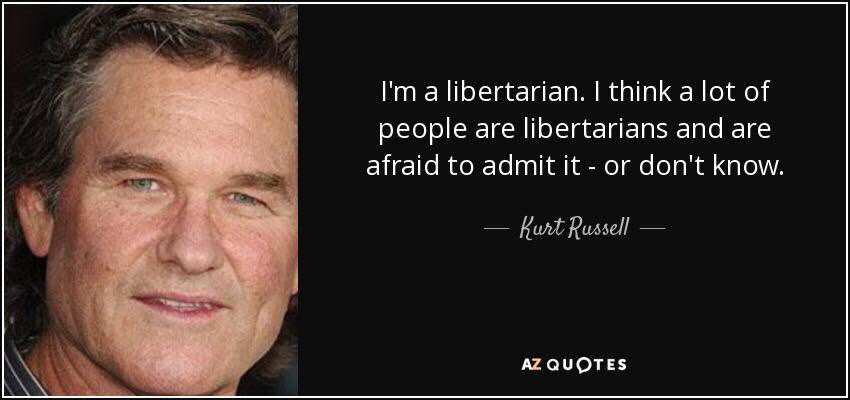
Like I said in the rest of the post that you cherry-picked, if you don't like people telling you what to do, you're a Libertarian and don't even know it. In other words,Why didn't I follow your instruction then? If I "need" others to tell me what to do?
Seems your theory doesn't link predictions to observations. Maybe time to junk your theory because it's not validated by what you can see with your very eyes. If I "needed" people to tell me what do to, I would have done what you say, thankful that you took the lead on this issue. — boethius
...spoken like a true Libertarian.Don't tell me what to do bro. — boethius
Your "theory" entails not using your eyes to read the rest of someone's post before responding to it. :roll: -
CoronavirusDon't tell me what to do bro. — boethius
But if you're a socialist, you need others to tell you what to do. You need the govt to tell you to wash your hands and to maintain social distancing, and not to go out in large groups. You're like a little worker ant who gets all its instructions from its Queen Mother.
Libertarians don't need to be told what to do. So you're a Libertarian and don't even know it. -
Coronavirus
They are still free to try and tread on me, but then can they handle the consequences of their actions? This is basic human psychology and natural behavior that all organisms engage in. Invading ones territory will illicit a response from the organism whose territory you're invading. Wil you come out unscathed? Will it be worth it? These are questions reasonable people would ask themselves. Reasonable people who don't rely on someone else to tell them how to live their life. Some people are weak and look to others to define them and tell them how they should live. That isn't me. If that's you then thats good for you, not me.Put that's telling people how to live. You're telling them not to tread on you. — boethius -
Coronavirus
Proof? Lol. The proof is in the definition. If you don't understand the basic concepts of what you are talking about than what are you even doing discussing it? Go educate yourself.There's no proof of this. — boethius -
Coronavirus
You still dont get it. Libertarians arent concerened with telling others how to live. They only rule is "Do as you will but dont tread on me".But you still need a government to tell people to live within the laws that you have in your system, and maintain the institutions to accomplish that. — boethius -
Coronavirus
Really? Care to point out where you said that?Yes, I've made that assumption clear. One of the unknown risks of the disease is re-infection rates of the same strain, which can happen with some disease, and of course mutation into a new strain.
If you're just repeating my points, thanks for pointing that out. — boethius
All of which wouldn't matter if China had closed their borders first and didn't produce misinformation from outset. The outrage about this whole crisis is misplaced. People are so emotional about Trump that they blame him more than the Chinese. It's pathetic to see one's politics overcome one's reason.Yes, I think it very plausible China wanted to maintain air travel to make sure everyone else suffered as much or worse, in a zero-sum game view of geopolitics.
However, we've had all the data needed to make an optimum containment strategy regardless of what China wants. The West didn't pursue an optimum containment strategy, for neo-liberal ideological reasons according to my analysis, and the West is now paying the price for inviting the virus in to grow in an explosive manner, and soon essentially everyone will pay the price.
There were lot's of policy tools available to slow the spread to something manageable and all the information needed to design such policy since the start of the year. — boethius -
Coronavirus
Lol. Do you even understand what that means? It means that we don't need a bloated govt to tell everyone else how to live. A Libertarian is fine with a restructured police force (the one we have now gives them too much power to avoid the repercussions of abusing their power and they often do). Libertarians want less govt and that means minimizing any one group or individual imposing their ideals on others.But don't you want to impose your morality of fiscal conservatism and social liberalism on everyone else? — boethius -
Coronavirus
The implications is those that survive will be immune. Viral Vaccines are often an injection of a lesser form of the virus so that your body builds immunity to the real thing. Some people even get a symptoms of the flu after getting the vaccine.Flu vaccine doesn't really change the conclusion, as it does not provide 100% immunity, flu is constantly evolving to defeat the vaccine policy.
And what is essentially for certain is there won't be a vaccine for this first wave, which I'm currently focusing on as lot's of members of the discussion don't seem to understand the implications of this first wave. — boethius
Thanks, China.What's different today is that global travel, because there was no travel freeze when it could have made big difference, has done a great job of mixing up the disease in the major economies in a short period of time. — boethius -
Coronavirus
There is no need to pretend. A Libertarian is both a fiscal conservative and a social liberal. Libertarians are often mischaracterized, which is probably why you don't even understand what a Libertarian is.I think that a true libertarian’s ideas might sound more reasonable if they pretended to be a conservative or liberal — praxis
Socialists can only be authoritarian as they think they know what is "good" for everyone, and want to impose their morality on everyone else. It really is no different than a religion.Anyway, a ‘socialist’ could stand for a wide range of things. — praxis
Harry Hindu

Start FollowingSend a Message
- Other sites we like
- Social media
- Terms of Service
- Sign In
- Created with PlushForums
- © 2026 The Philosophy Forum