
Comments
-
Wittgenstein's Blue & Brown Books [Open Discussion]Notably, the Preface to the BB is addressed to Russell to look over with "so many points ... just hinted at". I read that as a modest plea for additions and corrections from a slightly but not too different perspective.
were Dr. Jekyll and Mr. Hyde two persons or were they the same person who merely changed? We can say whichever we like. We are not forced to talk of a double personality. — Blue Book
At a time, according to W aboveOne has one mind in one's skull. — j0e
these words are different instruments in our language. — Blue Book
but then
the answer of the common-sense philosopher is that surely there is no difficulty in the idea of supposing, thinking, imagining that someone else has what I have. But the trouble with the realist is always that he does not solve but skip the difficulties which his adversaries see, though they too don't succeed in solving them. The realist answer, for us, just brings out the difficulty; for who argues like this overlooks the difference between different usages of the words — Blue Book
The correct answer was skirted in
Shall we then call it an unnecessary hypothesis that anyone else has personal experiences? -- ... is this a philosophical, a metaphysical belief? Does a realist pity me more than an idealist or a solipsist? -- In fact the solipsist asks: "How can we believe that the other has pain; what does it mean to believe this? How can the expression of such a supposition make sense?" — Blue Book
A solipsist's philosophy denies 'others', therefore, since there are no others, only "I" can have pain. The solipsist's experience is purely internal without an outside world. Can a solipsist possibly agree to W's insistence of language making sense publicly? Absolutely not, and my fish in its aquarium agrees with that thinking too. -
Is my red innately your redbelief in mental furniture. Contra Witty, of course. Also, more salient for me, Goodman. — bongo fury
Mental furniture that would present us with mental objects has major drawbacks. The mind, like the outside world, is a complex chaotically functioning place out of where rational thought is only a small presentational fragment.
While the outside world is third person accessible and open to public observation and survey, the mind is private and we have no-one else to ask whether a feeling, sensation, motive, or attitude is really there at all rather than being a momentary illusion. We cannot directly see into our minds without some intermediary higher level conceptual modeling.
When I talk to the doctor over the phone complaining of sporadic leg pain, I have trouble relating that general sensation in words specific enough for diagnostic needs. Even at the office, the doctor must poke and prod for a couple of minutes until the problem is narrowed to the right strained ligament. Why is that? Isn't much of experience unavoidably social, conducted primarily through language?
BTW, aren't both Witt and Goodman attempting to solve the same problem of what can be said? Reformulating philosophy might not be enough to fill the gap between the mind and the word. -
Is my red innately your redOne at a time, please. — bongo fury
Seeing color is difficult to untangle from our philosophical perspective because we need to ignore physical, physiological, and psychological approaches to color as irrelevant to our direct model of reality. We only need to start with rational thought and its public language which above all the scientific minutia that might be raised as objections to what we do.
Having said that I'm not objecting here to any philosophy, I'm just pointing to a couple of very anti-intuitive yet on second thought perhaps obviously correct facts.
Physically we can only see light which comes in many shades of grey.
Our three 'color' sensors at the back of the eye record three slightly different black and white image frames every 1/25th of a second or so. One is brighter, more sensitive, in the higher wavelengths, one at the lower, and one in the middle range. Each 'pixel' records nothing but intensity in its range. Analogously, this is like using three connected black-and-white movie cameras, each with a different filter, RBG. The input is amazingly simple with subtle differences that are transmitted through the simplest chemical channels, much like copper wires, for complex computational processing by the brain.
What the brain does with this 'sensation' is 'perception'. The two are not distinguished in direct realism resulting in a simpler more manageable model.
So, external stimuli are only red if we say so, preferably based on universal, if not then cultural agreement. -
An Analysis of "On Certainty"At least all of the above.
Color is not entirely out there for us to see even under fixed conditions. Color is an evolutionary theatrical interpretive production of our minds. With more colors we can better distinguish finer details in images. Twilight removes saturation and color from the world and we literally see less. That's why driving around in the evenings is more dangerous.
Naming can only roughly cover subjective, therefore directly incomparable, ranges of colors. Can we see shades of burgundy or green without some agreed upon standard ostensive palette? -
An Analysis of "On Certainty"
Science can only quantify instrumental readings. The readings are interpreted (guessed) to reflect some scientific aspect of nature. Personal experiences are very far from those instrumental readings because we are only presented learned useful perceptions that we can name and potentially act upon.absorption, reflection, diffuse, and opacity spectra under different lighting conditions — ernest meyer -
An Analysis of "On Certainty"
I know with certainty that I have a back even though I cannot see it. Furthermore, this is personal subjective knowledge that I cannot doubt. You or Witt could, but I cannot.But Moore said he did know that "here is one hand", which raises the question - how is it possible for Moore to know that "here is one hand". — RussellA
It's important to distinguish this kind of personal certainty from Cartesian certainty of my mind, and also from personal sense-perceptual experience and opinion, and also from public scientific fact.
The color red is innate to people with normal color vision, calling it red is a learned cultural convention. To a young child there are no shades of red. Adults, especially people like artists or winemakers, educate themselves to notice shades and to expand their vocabulary for finer distinctions. Scientific measurements are not part of common discourse at all. We cannot see electromagnetic waves and what colors we do see is through complex perception preconditioned by cultural experience.
Wittgenstein's knowledge is different than Moore's I know. Empirical certainty for Witt is next to impossible, raising undeserved concerns about skepticism. However, in the reverse, if we had strong knowledge then we would be guaranteed certainty in the package. -
Graylingstein: Wittgenstein on Scepticism and CertaintyIs your post not an example if absolute truth? — Harry Hindu
I couldn't possibly know that because I deny that your 'absolute truth' has any meaning to anyone else, further more, I challenge you to demonstrate that it does have philosophical meaning.
Your attack on 'relativism' is an ad hominem attack against persons unnamed. Once you name them they will throttle your self-refutation argument based on their own language games. For you to succeed, you would have to have them grant your philosophy and its terms such as absolute truth. But there is no reason in the world that they should or be expected to make an illogical claim of your philosophy prior to your argument just to please you.
Self refutation requires a person to say something deliberately or obviously illogical first so that you can then demonstrate that using logic. In Aristotle's argument he says just that. -
Graylingstein: Wittgenstein on Scepticism and CertaintyOC2 is relativism. Relativism is the view that truth and knowledge are not absolute or invariable, but dependent upon viewpoint, circumstances or historical conditions. What is true for me might not be true for you; what counts as knowledge from one viewpoint might not do so from another; what is true at one time is false at another. — AC" — T H EDoes this statement not assert the absolute truth about Relativism? Statements like this defeat themselves. In asserting the truth that there is no truth, you end up pulling the rug out from under your own argument. — Harry Hindu
There is no absolute truth outside of absolutist dogma. To an antirealist, pluralist, or relativist 'absolute' truth is complete nonsense because it does not belong to any naturally sensible or logically rational language game. Before you can challenge any of these people, it is entirely up to you to say what in the world an absolute truth is. Remember that Truth is not a Platonic or platonic object but the value of a binary evaluation. Binary evaluations don't work across all plural contingent realisms, and especially not outside all realism. They may be logically inapplicable. -
Graylingstein: Wittgenstein on Scepticism and Certainty" 65. When language-games change, then there is a change in concepts, and with the concepts the meanings of words change.
95. The propositions describing this world-picture might be part of a kind of mythology ...
97. The mythology may change back into a state of flux, the river-bed of thoughts may shift.
99. And the bank of the river consists partly of hard rock, subject to no alteration or only to an imperceptible one, partly of sand, which now in one place now in another gets washed away, or deposited.
166. The difficulty is to realise the groundlessness of our believing.
256. On the other hand a language-game does change with time.
336. But what men consider reasonable or unreasonable alters." — W — T H E
OC2 is relativism. Relativism is the view that truth and knowledge are not absolute or invariable, but dependent upon viewpoint, circumstances or historical conditions. What is true for me might not be true for you; what counts as knowledge from one viewpoint might not do so from another; what is true at one time is false at another.— AC — T H E
To say that "Relativism is the view that truth and knowledge are not absolute or invariable, but dependent upon viewpoint, circumstances or historical conditions" is partially but not sufficiently correct in a Wittgensteinian context.
Each language game has its own rules, concepts, and meanings. In a narrow sense, at times and given circumstances, it might (or might not) be possible to have knowledge and to express truths. In other language games those same words could be meaningless or have different meanings, so propositions formerly expressed are not untrue but meaningless now, and what was known is a question mark now. -
An Analysis of "On Certainty"What if he raised his arm and said "this is an arm"? How would that act of holding up his arm be different from the act of holding up his his hand? How do you propose that we could confirm whether he's actually holding up a hand, or an arm? — Metaphysician Undercover
This is also correct. The rules for empirical knowledge are different than those for deductive mathematics. Empirically we can never ever be certain because nature and our senses are incorrigibly open to interpretive vagueness as well as to physical and sensory illusions. -
An Analysis of "On Certainty"If Moore held up his hand as said: "This is a hand" we could look and confirm that it is indeed a hand. If he raised his hand and said instead: "This is a foot" we would know that it is not a foot. — Fooloso4
I don't think that holds. We can justifiably deny that his foot is not a hand, but there is no way to be certain, and that's the key distinction, that what we see empirically is indeed a hand. Fake barns may look like real barns but we cannot under any circumstances be certain beyond some empirical probability. If the criterion for knowledge is certainty, which is not true for any science, then we cannot have empirical knowledge. -
What is a 'real' philosopher and what is the true essence of philosophy ?I see the relativist viewpoint as very weak, because it avoids any commitment to any specific one. — Jack Cummins
Relativist opinions are not competing truths one stronger than another in comparison. They are opinions contingent on more or less universal circumstances, some are scientific laws, some are social conventions, and some others are personal subjective realities. What really has never been shown is that absolutely absolute truths exist at all, anywhere anytime. Moral absolutes are highly desirable dogmas, relative absolutes so to speak, but not absolute logical necessities. Plato's (relative) absolutes dogmatically require a god of logic and transcendent eternity to logically hold. He understood this much, do we? -
An Analysis of "On Certainty"Because someone asserts that they know, that in itself is not enough to conclude that one does indeed know. That one knows needs to be demonstrated in one of the language-games of knowing. — Sam26
To assert that I know is different from agreeing that you know that I know and again from a dogmatic we know.
No-one can reasonably doubt Moore when he says that he knows his hand, But how could Wittgenstein possibly know that Moore's hand is real and not a fake hand, and again, no scientific encyclopedia is going to help in telling us that we know whether Moore does or does not have a hand.
Therefore it would appear that both Moore and Wittgenstein are correct in their assessment of knowing but not in telling us about the type of knowledge they mean by knowing. If they cast aside metaphysical differences as nonexistent or irrelevant then they can argue past each other forever.
Sure, so we can dismiss Descartes as being unreasonable when he set out to doubt everything. But the ancient skeptics did provide reasons for their doubts. — Marchesk
Descartes doesn't need to provide a reason for his doubt because it is self-explanatory in the same way that Moore only needs to raise his hand to prove to himself that he has a hand. This kind of subjectivism is self-sufficient, absolute and certain in all respects to the subjective I. A second or third person demonstration is redundant. The ancient skeptics had a different empirical knowledge to doubt and not this self-proving subjective kind. -
Platonic Realism & Scientific MethodIt's the theorem that's discovered/created first. Then the search for a proof. Math is not just challenging others to solve a stated problem, although for many that is a competitive aspect highly desirable. — jgill
Seems to me that proofs can neither be independently created nor discovered. Even together, creativity with serendipitous discovery aren't sufficient to make an Euler. Something is still missing. Then there is the issue of computer generated proofs. What kind of thinking is involved there? -
Platonic Realism & Scientific MethodProofs in mathematics are said to be discovered, as they are logical possibilities that arguably would exist even if no one discovered them. — Janus
A popular science-math weekly used to offer challenges for readers to submit original proofs for mathematical theorems. The Pythagorean theorem received about a hundred different proofs from creative readers. -
The paradox of Gabriel's horn.Peirce would say that there is no point missing, because there are no points at all until we deliberately mark one as the limit that two adjacent portions of the line have in common. If we make a cut there, then the one point becomes two points, since each interval has one at its newly created "loose end." — aletheist
We don't have two adjacent portions before the marker. The marker is a pointer that demarcates but does not split the line thereby making it discontinuous. The marker is not part of the line. A materialist overlay is unnecessary in math. It's cheaper to think of it as an abstract pointer anywhere to an abstract endless line in one dimensional space. -
Platonic Realism & Scientific Methodif you can represent something mathematically, that you can use mathematical logic to make predictions about it. The greater the amenability of an object to mathematical description, the more accurate the prediction can be — Wayfarer
Doesn't quite sound right from a philosophical perspective. Realism is about things and objects, but science is not. Both math and science are primarily about relations where point objects only serve as instances to an equation or to a law. 'Platonic' realism in science only acts as mental scaffolding to assist in visual modelling of possible worlds of whatever specialty is under examination. Thus the 'reality' of a mathematician might be in the world of tessellations or knots, that of a chemist in spatial orientation and partial charges of molecules in interactions. Plato himself of course had nothing to do with any of these 'realities', numbers were copies or combinations of Ideal metaphysical objects. -
The paradox of Gabriel's horn.In line with Aristotle's solution to Zeno's Paradox, my view has continua (not points) being fundamental. I think the mathematics of calculus would be almost entirely unaffected in moving to a continuum-based view, — Ryan O'Connor
Why isn't Aristotle's solution just circular because it makes the results of a mathematical construction prior to the construction itself? Plato starts with a line boundless in both directions, then designates bounds to derive segments. Think of it this way, first mark any point on the line as the Origin to divide the line into a half-open dichotomy, then designate any other point as the unit marker to construct a fixed continuous interval. If I give up points as bounds, then how would I have anything but an endless line? -
Non-Cognitivsm
Wouldn't that depend on whether you are seeking a logic based objective prescriptive ethics or a pragmatic de facto psychological or social explanation? -
The Origin of the First Living Cell with or without Evolution?
Evolution is the process of any change over time. In a more narrow biological sense, evolution is random spread of differences followed by statistical natural selection of traits. General evolution is not at all concerned with the peculiarity of life on this planet but with the universe as a whole and all of its developments.In simple terms - that single evolutionary mechanism is the Living Cell, and there is no conceivable way that anyone has found to produce the true complexity of the 1st living cell from the sterile chemicals of the early Earth, without a prior living cell to do it. That is the dilemma. — Gary Enfield
In a more narrow biological sense, evolution is random spread of differences in living organisms followed by statistical natural selection of traits. Here,we are making Life an object on a pedestal. As important as life is to us living, nature might not be making this distinction.
Where the test comes in is in borderline cases like viruses that have some but not all classified features of being alive. Are viruses alive? Did viruses come before or after bacteria? -
In Defense of Modernity
So then I suppose that you would likely favor presentism and materialism that simplifies judgment closer to immediate wants and sensibilities. That would be an ego centered psychological approach but also subjectivist in terms of reality, in other words that there is only one reality and it is mine, and when I die the world comes to an end unconditionally. Or am I pushing the position too far into some channel? -
In Defense of Modernityhaving someone scream in agony for many years and not be able to commit suicide is more severe than suicide. I think having time, energy, and resources to commit suicide is actually a privilege in many ways. People in past often didn’t have adequate means to commit suicide — TheHedoMinimalist
Could be. In societies where culture, state, religion, or obligation were placed higher than personal needs, execution of the physically or socially unfit and suicide were acceptable and regularly practiced, I suppose on the grounds of achieving higher good or to end the pain..
https://www.forbes.com/sites/robinandrews/2017/06/26/executions-and-suicides-the-terrifying-tale-of-two-deadly-japanese-volcanoes/?sh=7e2fa3cd1a46
Though I would think that for a philosophical hedonist considering all options, it might follow more to avoid the greater evils and pains first before seeking comparatively more transient pleasures. -
In Defense of Modernity
I think of modernity not as an age or a period in history but as exponential progress in some ways and exponential decay in others as humanity moves forward. Which leads to rapid growth in the gap between what is good and bad with the world. A prime positive example is technological progress, but so is the alarming ballooning overpopulation and ensuing loss of planetary resources. Perhaps Orwell's Nineteen Eighty-Four didn't actually happen in 1984 but it's coming. -
Internet negativity as a philosophical puzzle (NEW DISCLAIMER!)
Interactions on the internet are a sample of humanity as a whole. Whatever you see, whether seen by you as positive or negative depends on where you are looking. Many nice religious sites have nothing but positive content. In philosophy, people who agree with you are not doing you any favors because while agreement is psychologically supportive it is in fact intellectually damaging to whatever your actual purpose is in posing a philosophical point. Only serious critiques are of any use to you, whether clothed in positive or negative verbiage.Why do human interactions on the internet tend to skew negative, as opposed to positive? — GLEN willows
What is human behavior? Is that some sort of material object?What does this say about human behaviour?" — GLEN willows -
Comment and Questionhow could anyone argue that consciousness ISN'T simply an integral aspect of the material brain - DESPITE the fact that the can't be explained scientifically? If they aren't - where are they? Isn't this still hopeless dualism — GLEN willows
I'm quite sure you have this backwards. The reason you confound doctrinal materialism with brain physiological oriented scientism is to pretend to an explanation for the only thing we can be certain of, our selves.the whole belief in a separate consciousness is based on folk psychology — GLEN willows
And that's the crux of the problem of dualism, we don't know how to logically relate our selves to a barely comprehensible illusory outside world with any of our theories. We are inventing absurd explanations out of ignorance.I don't believe in dualism - b/c of the interaction problem. — GLEN willows
But is this at all necessary? Isn't it possible that dualist hypotheses with connectivity CAN be constructed without anyone asking but where is this theory in space and how can I grasp it with my fingers? -
On physics
Heraclitus's Fire has quite a bit to do with science because Heraclitan Logos, rather than being an after the fact explanatory story, is intended to be independent universal powers beyond the limitations of everyday human personal experience. Fire, more than a traditional substance, is the motivator that drives the world even when there are no humans to explain or to make sense of what goes on.
Newton's time and space are prerequisite assumptions without which his Laws don't quite add up, but for the most part, the Laws are good enough.Again, could the Time and Space of Newton be reinterpreted to mean the laws of physics (Logos?)? — Gregory -
Joe Biden (+General Biden/Harris Administration)
How pravda -- The ying-yang gods of america, saint Bernie and the teflon Don -
CoronavirusEvidence is mounting that having COVID-19 may not protect a person against getting infected again with some of the new variants emerging around the world
This is beginning to sound more like the usual winter influenza where a newly mixed vaccine needs to be administered annually just to keep the serious cases down to manageable numbers.
But periodic lockdowns would slow if not eliminate both. -
Defining a Starting PointThe present moment IS the starting point. — Present awareness
Why not the ending point? Or the only real moment? -
CoronavirusIt's a completely predictable part of living so close together. That we weren't prepared is nothing short of criminal. — Isaac
Who are the criminals, the doctors, scientists, or those ignorant politicians? Maybe viruses are just too smart for us, they can mutate in a day but it takes the best science much of a year to fight back. Viruses aren't as smart as large asteroids or supervolcanoes but definitely smarter than global climate change. -
Joe Biden (+General Biden/Harris Administration)
Yes. In nature, as opposed to math or logic, no two things are ever identical or equal in every way. They may be equivalent in certain respects but not equal. All electrons may be interchangeable meaning equivalent in fact, but no two are ever physically identical in every way. Scaling up, it becomes ever more the case.Are you against equality as a fact? — Kenosha Kid
1. Gender, race, etc. are categories of people that are more or less applicable to an individual.
2. Individual competence is an independent factor and is strongly related to the appointee's background and demonstrated effectiveness matching the job requirements in the exact circumstances.
3. An appointment is a position of social and economic power dependent on an appointee's ability to wield that power.
Biden's nominees attempt to tip the balance of power (3) in favor of representatives of various historically disadvantages groups with the implication that this power will be further delegated down the line. Ideally, that responds to the demands of minorities and other liberal allies such as Sanders followers.
The problem is that 1. and 2. are independent of each other, and if you would dare to research this, then first you would not be funded, second, you would not be published, and this before you ever did the research. That's because past research has already corroborated the inequality between groups of people, and the research caused a scandal, an uproar, and pretty much finished he careers of the scientists who did it. And no, I will not give the references. This does not mean that person X regardless of sex, race, etc. cannot be the best at what they do, simply, that statistical science will doubt it on statistical grounds. The reasons were much debated when I was in graduate school with the discussions being strongly steered away from the findings. In summary, the greatest person can be any genius, but inequity persists due to genetic selection (dare I say it?) as well as socioeconomic circumstances and cultural values.
The point is that if the world (or my much-needed brain transplant surgery) is at stake, I want the genius to do the job and not a well-respected minority representative. -
Joe Biden (+General Biden/Harris Administration)
A neutral surveys of the breakdown of Biden's appointments might be helpful.Anyway, proof not required here, just any indication that what you're saying is remotely true. — Kenosha Kid
CNN
PPS
Brookings
What is noteworthy is the delay in the Senate on confirmations of appointees which, to me, only signals the entrenched trumpism of the Republicans. One should hope that exceptionally qualified appointees should receive relatively higher degree of support from both sides.
No, you don't get it. You are taking a neutral questioning remark to be racist. Perhaps I am operating in one of your blind spots?Oh, I get it. Him saying that racism is bad suggests that black people aren't qualified to do their jobs kind of thing. — Kenosha Kid
I take it that you actually believe this statement of Biden's and that now Biden intends for 'equality' to become not just an American ideal but an American fact.Our history has been a constant struggle between the American ideal, that we are all created equal, and the harsh, ugly reality that racism, nativism, and fear — Biden's Inauguration speech
What in your view is 'equality' and how does that apply to a group or to an individual? Is Black Lives Matter the same as Black Power? If not, which one should we be talking about?
NYmag, 'Equality' -
Joe Biden (+General Biden/Harris Administration)
As he should. No?Biden has signed 30 executive orders in his first week, ... Compare that to Trump’s 6 and Obama’s 5. Whatever he’s doing he’s doing it fast — NOS4A2 -
Joe Biden (+General Biden/Harris Administration)It's your claim. It's not on others to explain it to you. — Kenosha Kid
Not all claims require proof by the claimant. If I claim Biden can't swim is the proof on me? Perhaps positive claims require proof but negative claims need only a single counterexample? Or perhaps I need only appeal to explicit idealistic motivations from the inaugural address as proof for misplaced intentions in naming people to key administration posts?
Ideals and speeches are wonderful for the masses of followers, but putting those ideals into practice as a social experiment on a grand scale as a bet on our future as a nation should be questionable and be questioned. -
Joe Biden (+General Biden/Harris Administration)
To be fair to me, why would I think that Trump's initial appointees were political choices rather than based on competence? What norms should I use?
America barely weathered a lethal threat to its constitutional structure, a danger that continues to loom.
If I were Biden, I would want to make an impact urgently in the first 100 days. To do that, leaders of proven competence and accomplishment are needed now, regardless of affiliation. Pleasing my political loyalists and allies can wait. Else the rosy days of victory will quickly fade into disappointment about lack of achievements and empty rhetoric. -
Joe Biden (+General Biden/Harris Administration)Am I the only one a alarmed by the many socially correct rather than competence and accomplishment based appointments of the new administration? Ideology and loyalty seems to take precedence over competence, accomplishment, and character once again, reminiscent of the former evil administration, only in the opposite direction. If quick fixes to huge problems don't come in the first 100 days then will disappointment and apathy follow?
-
Economics ad AbsurdumEven when nothing is produced, desperate lives make for desperate measures. In a materialist world lotto fever can rule the markets. With the internet, small speculators can quickly create their own momentum for a while.
The Wall Street frenzy over X Corp., a losing retailer began when an army of small-pocket investors on Reddit started throwing dollars and buy orders at the stock — in direct opposition to groups of wealthy investors who, based on basics were counting on the stock price to plunge. ... shares of X Corp. have spiked well over 1000%. ... A pair of hedge funds that placed big bets that the money-losing retailer's stock will crash have largely abandoned their positions. The victors: an army of smaller investors who have been rallying online to support X's stock and beat back the professionals. -
In which order should these philosophers be read?cannot philosophy be comprehended by reading translations? — deusidex
Western philosophy almost entirely consists of discussions on minor points made by Plato. To appreciate any of this one must first read Plato and Platonic commentary to help sort out philosophical history, issues, representations and misrepresentations.
Ancient Greek is an impossible read for nonspecialists, therefore we are wholly reliant on arguable translations and interpretation of arguable translation. There is plenty of first rate commentary available via the internet in English but even then philosophical keywords must be parenthesized from the original Greek and all possible meanings be sufficiently researched from dictionaries and footnotes of commentaries.
The process above is minimal to make any sense of the enormous amount of philosophical output we see today. For example, Plato exposed but did not sufficiently distinguish acquaintance, opinion, wisdom, knowledge, and partial versions of each. At which point can we make any sense when using words that refer to these concepts? Are these in motion or fixed, psychological or public, subjective or objective? What are we naming? In practice, a clear modern exposition of a sentence from the Meno or the Theaetetus has made many a professional carrier.
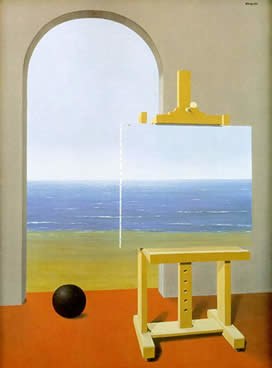
magritte
Start FollowingSend a Message
- Other sites we like
- Social media
- Terms of Service
- Sign In
- Created with PlushForums
- © 2026 The Philosophy Forum